Tesseract House by Phaedrus Studio: A Geometric Suburban Home in Toronto
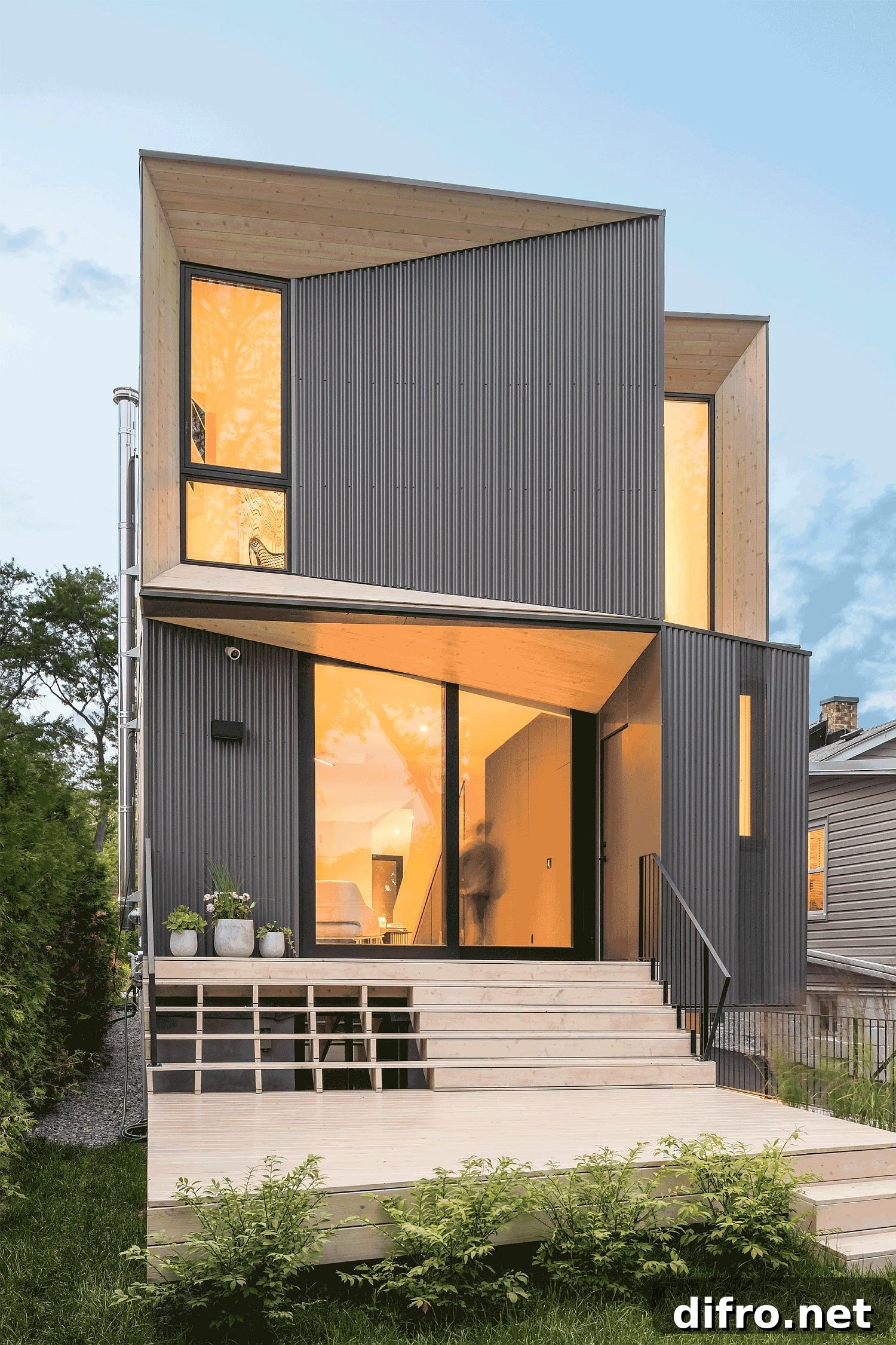
Most suburban homes fall into familiar categories: renovated classic houses that preserve a traditional street facade with modern additions at the rear, or contemporary designs that modestly reference local styles to blend into the neighborhood. The Tesseract House by Phaedrus Studio, located in a modern lakeside suburb of Toronto, deliberately breaks that pattern. Inspired by the geometric form of a tesseract, the house presents a striking, sculptural street presence while remaining a practical, budget-conscious family home.
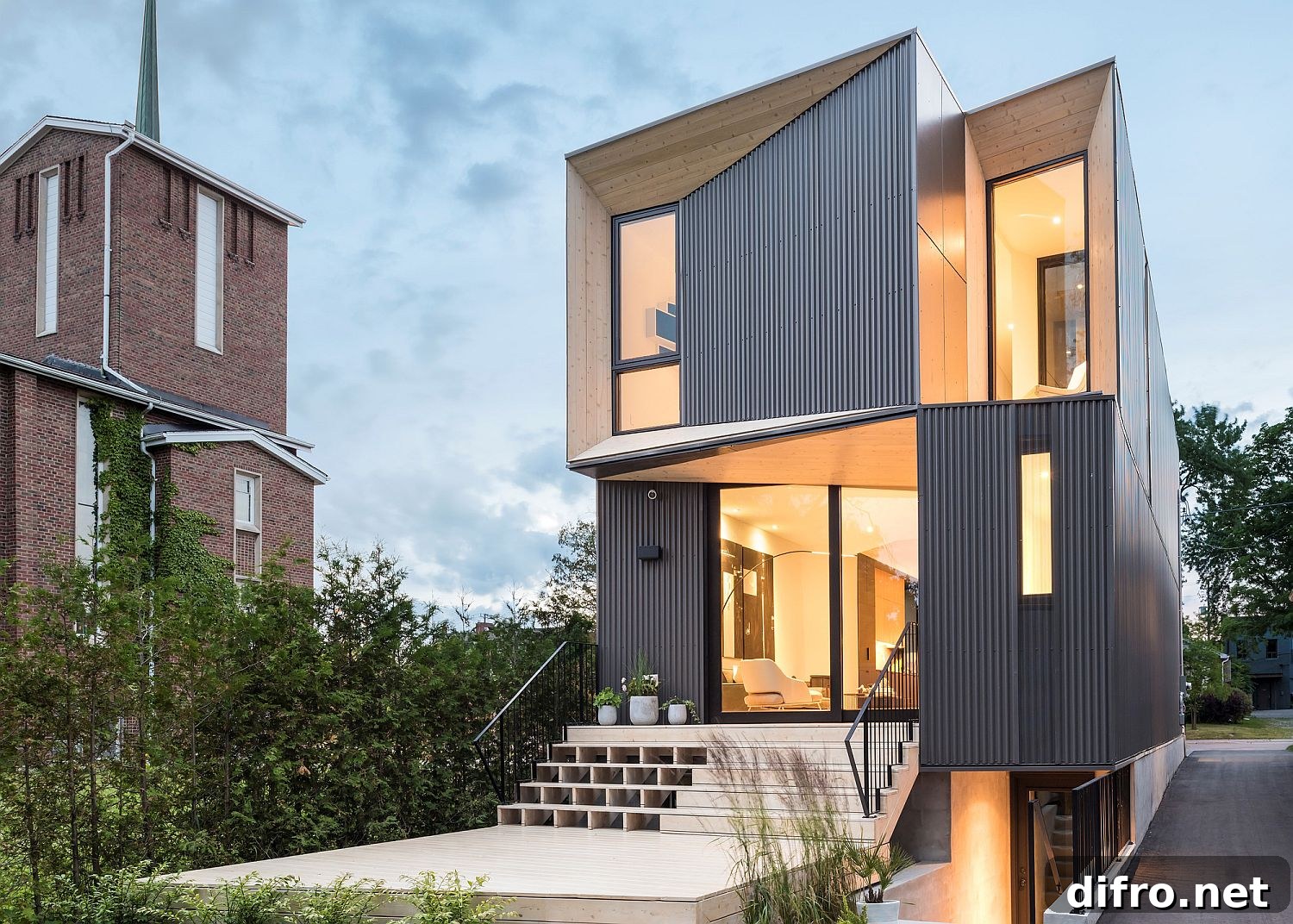
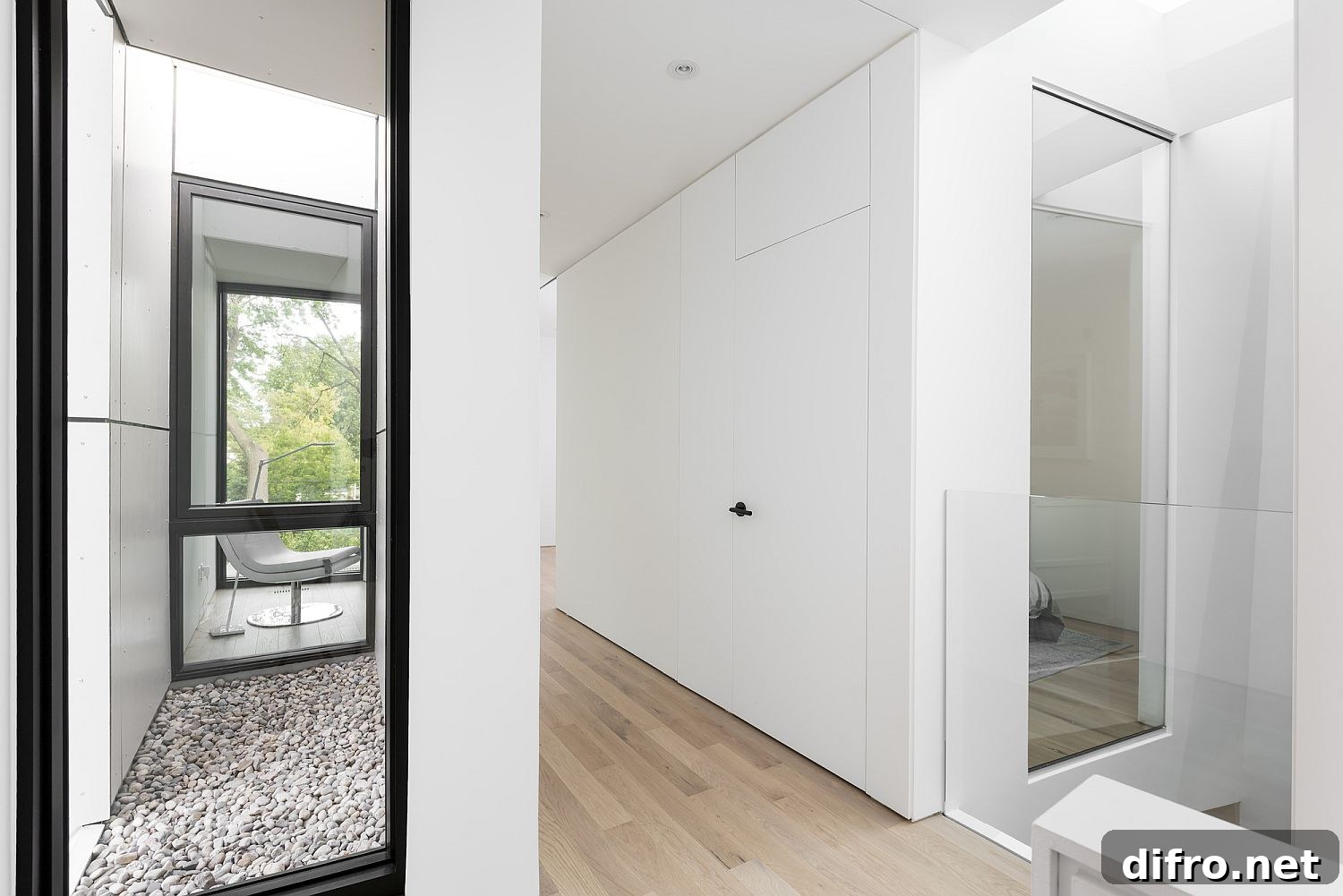
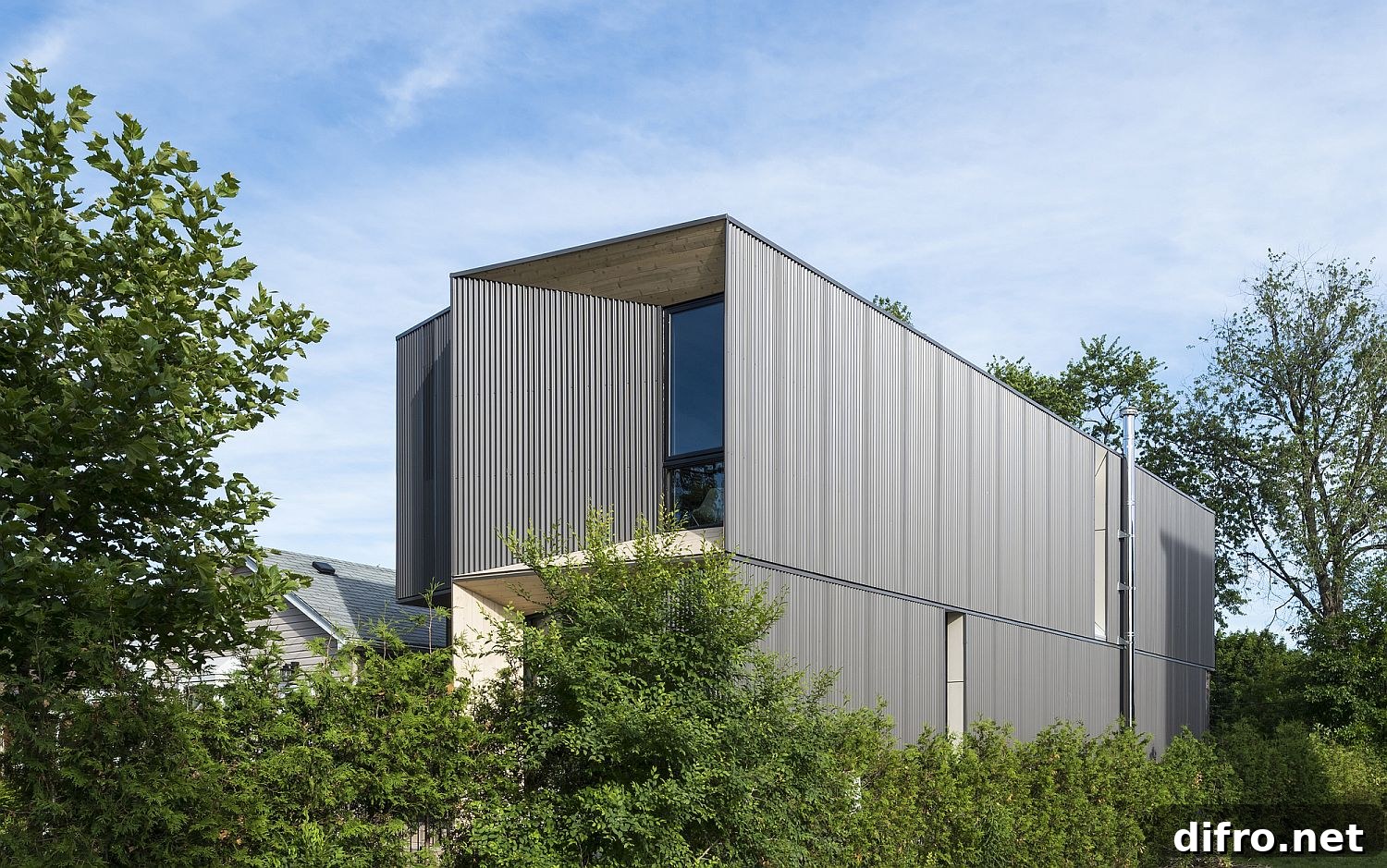
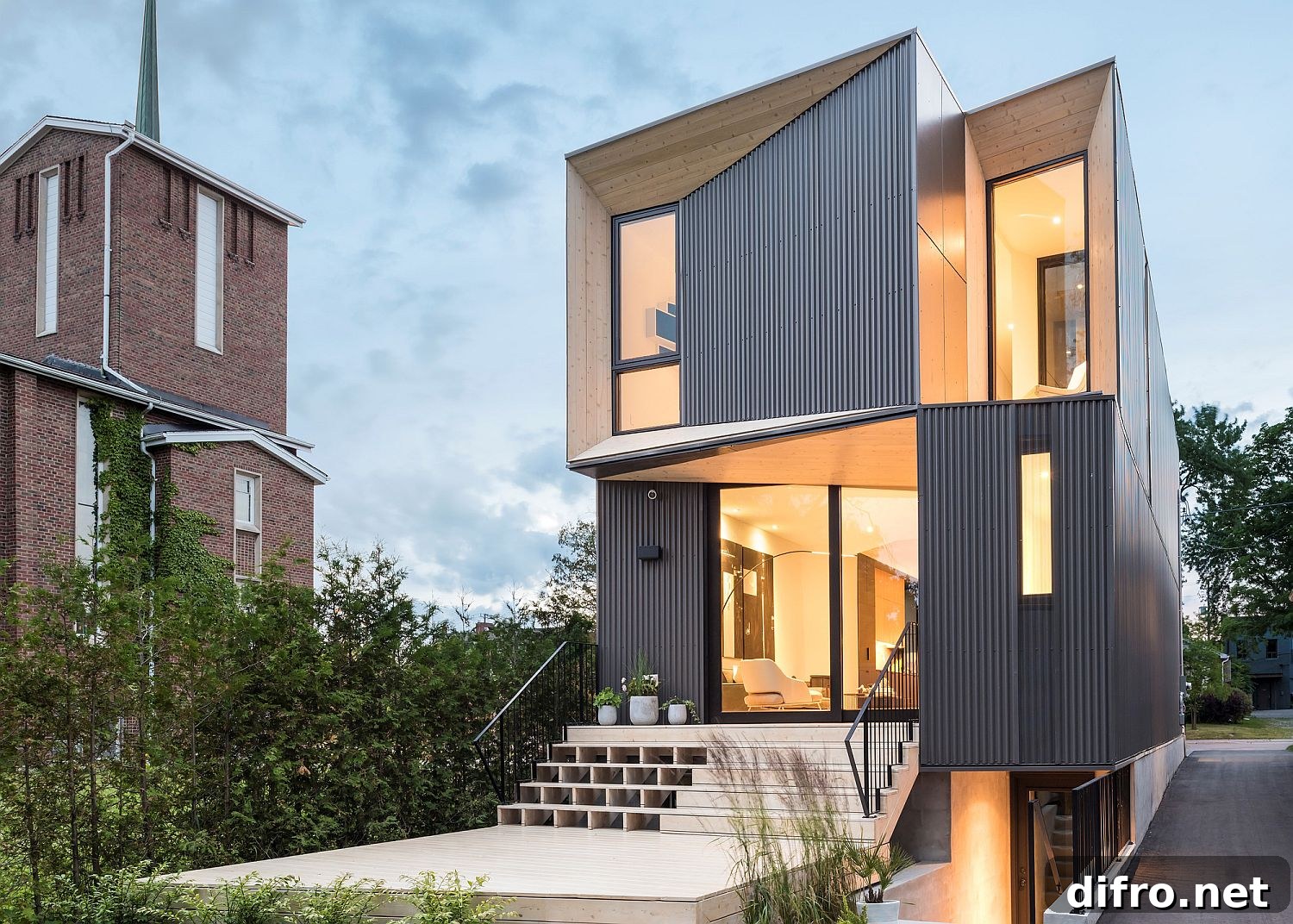
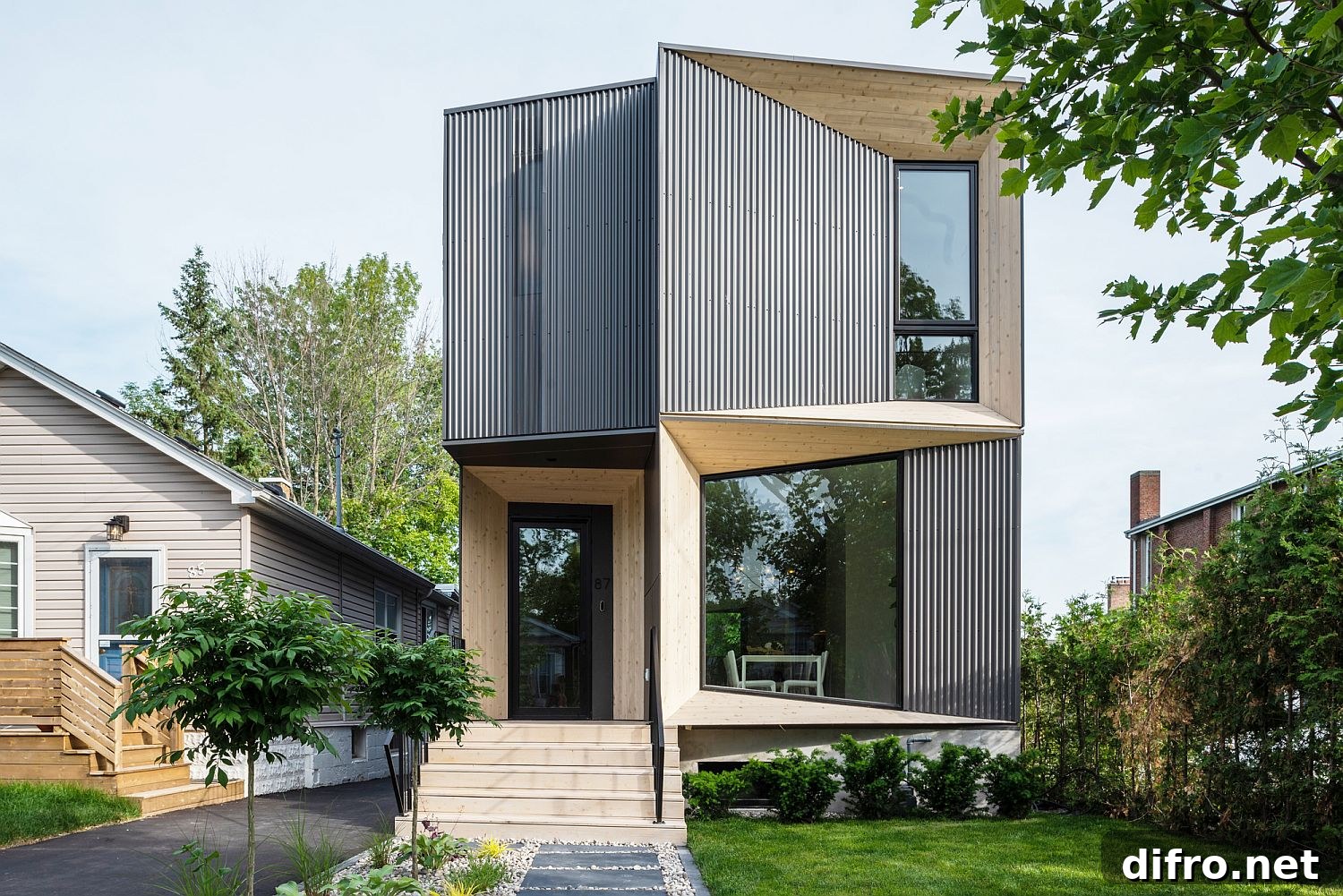
The facade is the project’s immediate statement: layered volumes, precise geometry and contrasting materials create visual depth and rhythm. Gray wood cladding alternates with generous glazed panels and textured wall sections to shape a facade that reads differently throughout the day. Large windows carve into the massing to frame views, admit daylight deep into the interior and animate the exterior when illuminated at night. Inside, a calm, neutral palette—white surfaces warmed by natural wood tones—helps the geometry read clearly while soft lighting creates a welcoming atmosphere after sunset. [Photography: Ryan Fung]
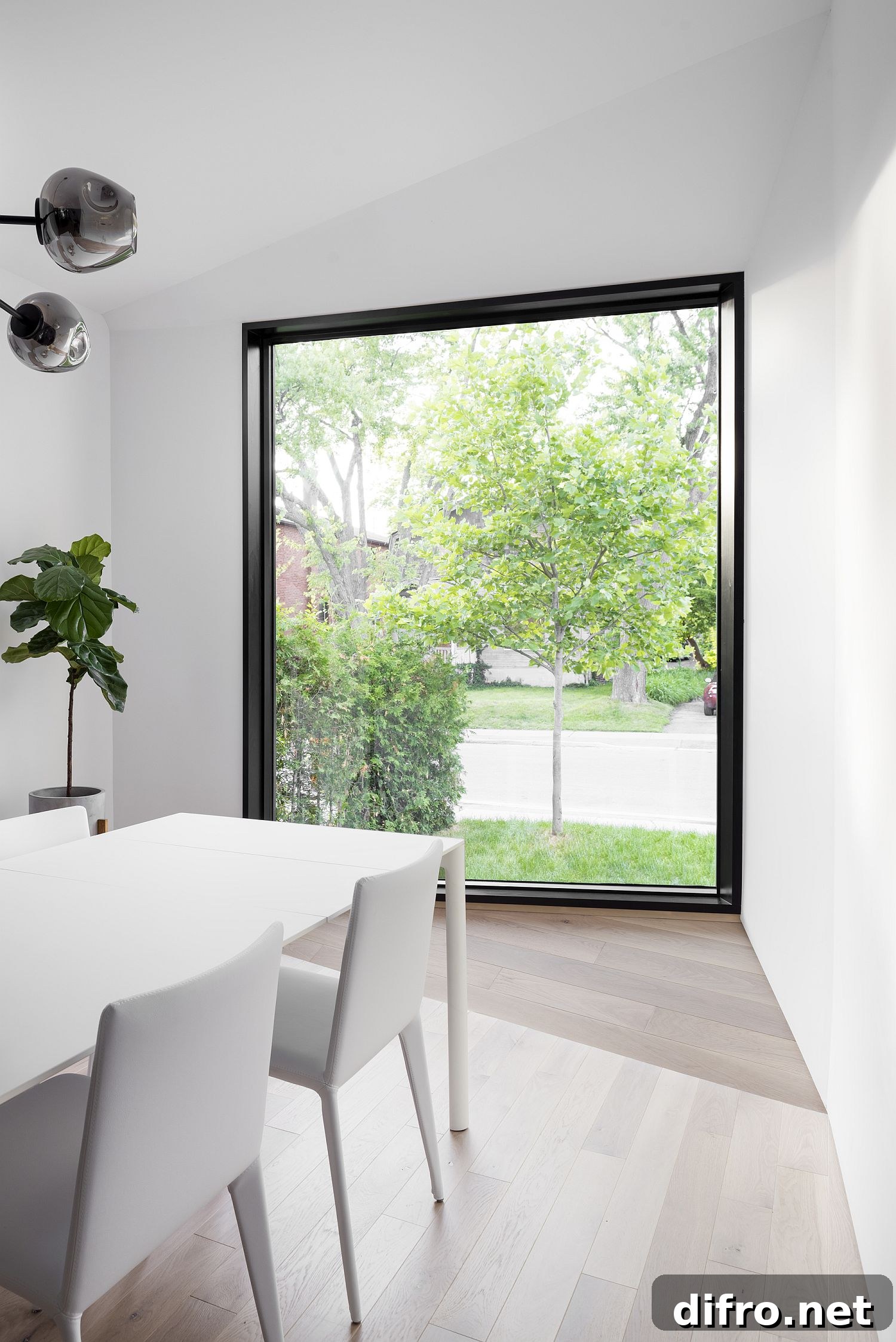
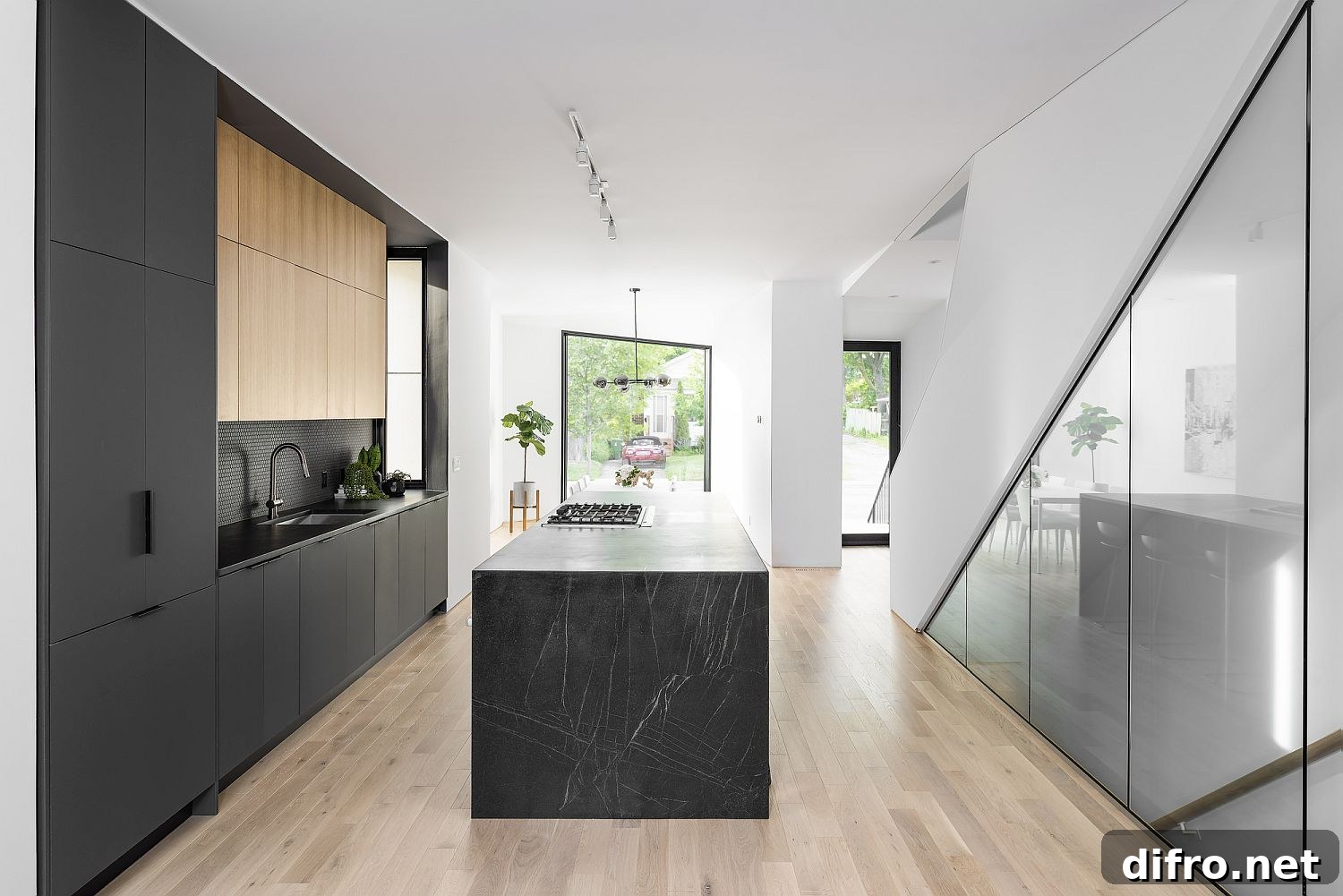
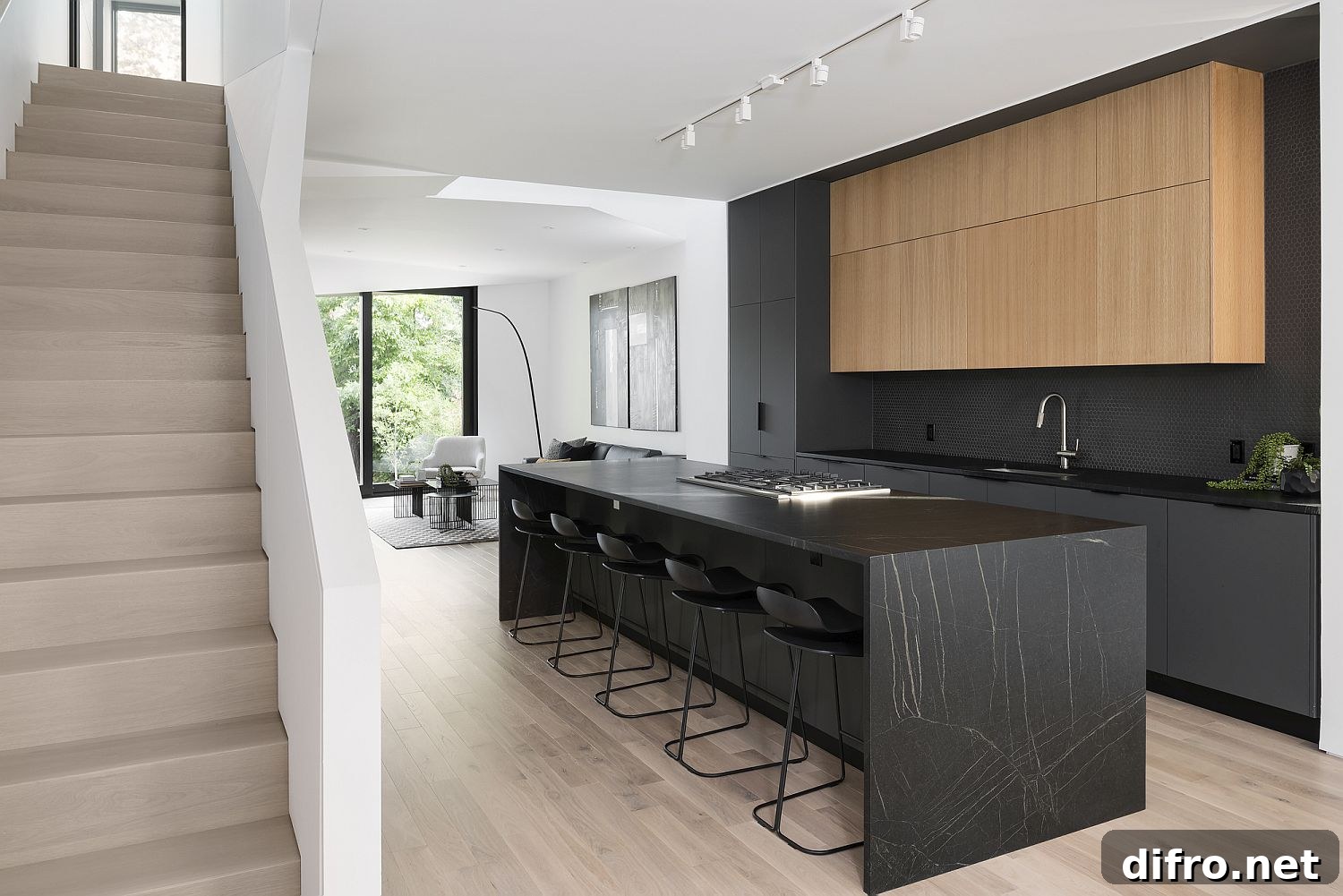
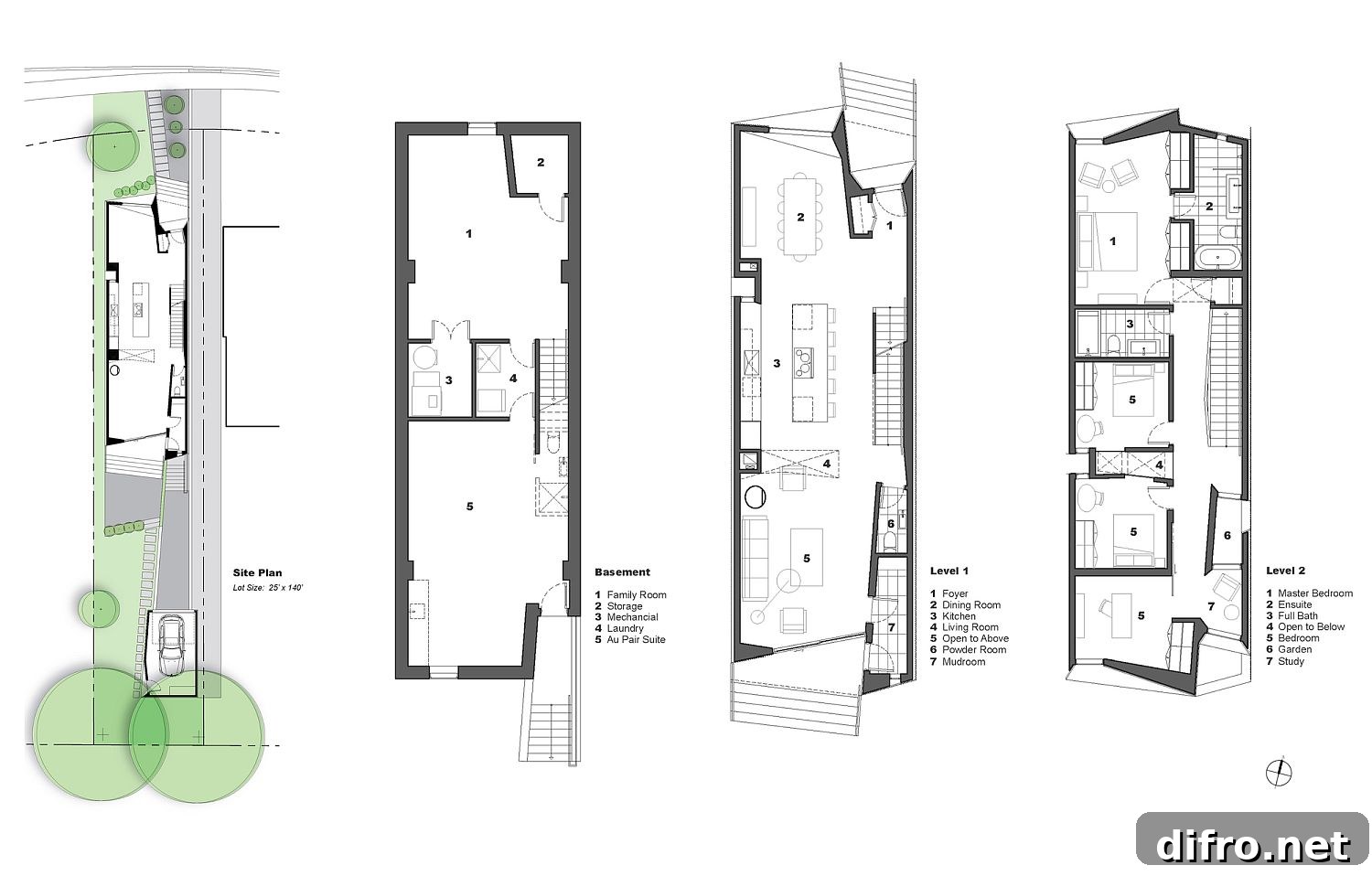
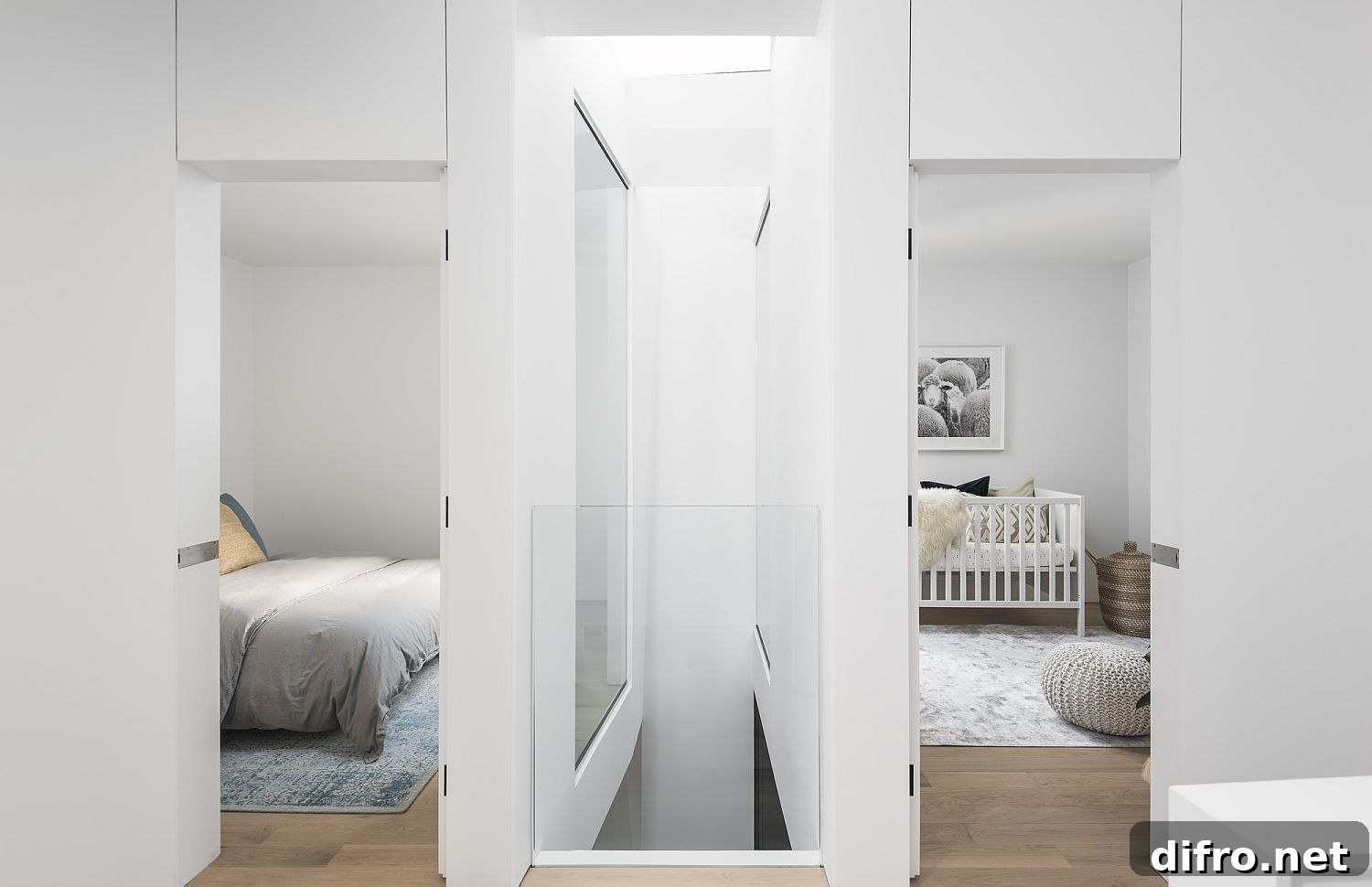
Functionally, the house is organized across three main levels to meet the needs of a contemporary family. The lower level houses utility spaces and a family room, made comfortable and bright by an oversized window that brings daylight into a space that might otherwise feel subterranean. The ground floor is an open plan arrangement where living, dining and kitchen zones flow together and connect directly to the rear yard—an important link between indoor and outdoor family life. Upstairs, private rooms, including bedrooms and a nursery, take advantage of quieter exposures and filtered light.
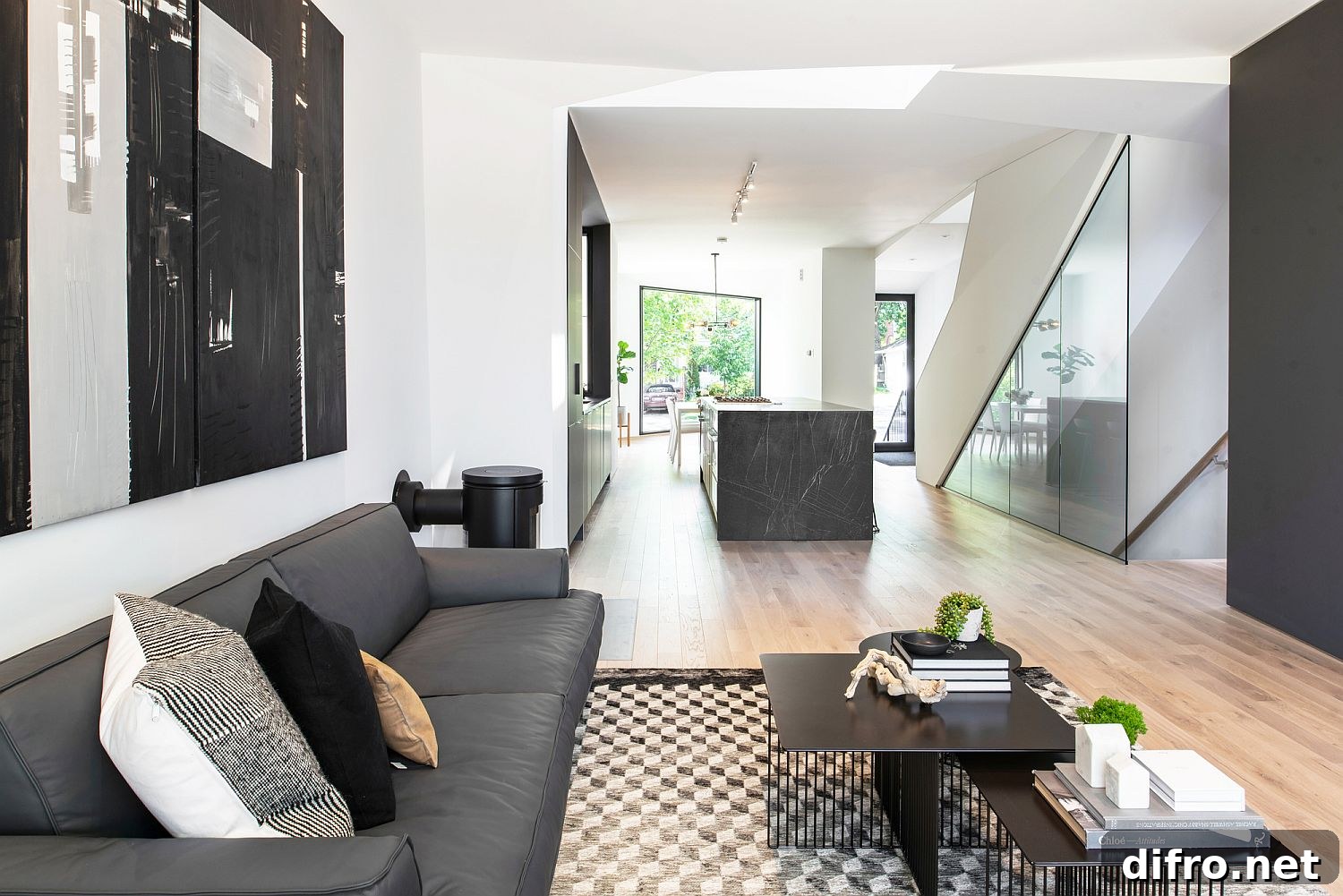
Material choices reinforce the house’s crisp, contemporary identity. A restrained selection—gray timber cladding, white-painted walls, warm wood finishes and occasional dark stone—keeps the interiors visually calm and cohesive. The kitchen is a standout within this restrained scheme: a dark stone island becomes a focal point against a clean white backdrop, offering both visual contrast and practical workspace. Elsewhere, a polished black-and-white sitting area anchors the living space with minimal furnishings and a matching rug, speaking to a pared-back modern aesthetic.
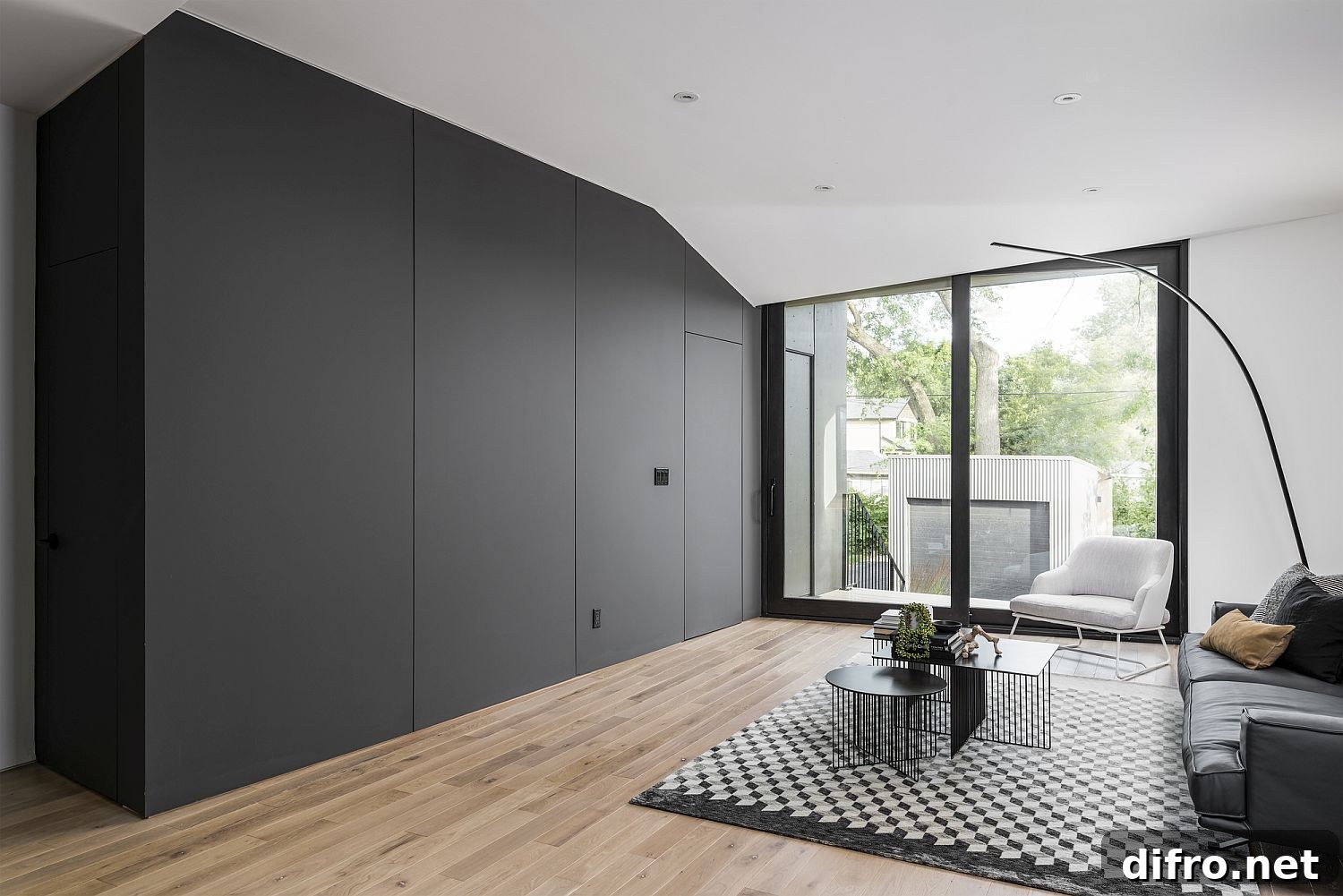
The project has no programmatic limitations, enabling the design team to experiment with, and implement ideas that would not typically be seen in more conventional homes. The responses to the site constraints informed the big design ideas in order to allow the house to function well as a dwelling as well as be of the highest comfort standards, in relation to having access to natural light and fresh air.
That statement captures the intent behind the design: freedom to explore non-standard forms and to respond directly to the site’s opportunities and constraints. The resulting exterior massing and interior plan both prioritize daylighting, cross-ventilation and clear connections to outdoor spaces—attributes that improve the everyday comfort of the family who will live here.
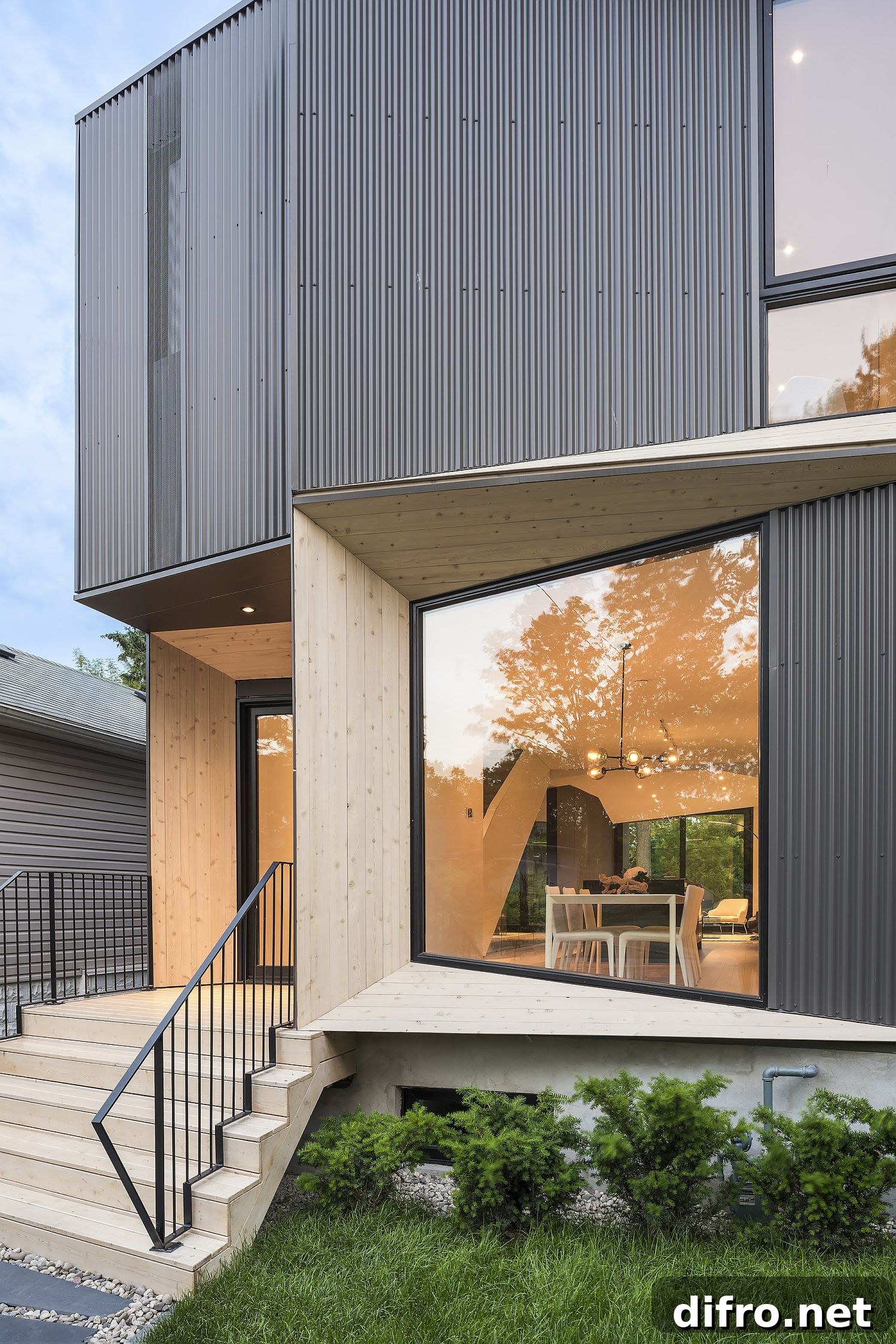
Although conceived on a modest budget, the Tesseract House demonstrates how focused design decisions—careful massing, selective materiality and strategic daylighting—can yield a home that feels considered and contemporary without excess. The house is a compact, multi-level family home tailored to suburban living, offering practical spaces for daily life while making a confident architectural statement on the street.
In summary, the Tesseract House is an example of how contemporary architecture can enliven a suburban street while remaining family-oriented and cost-conscious. Through smart planning, deliberate material choices and a focus on light and air, the design achieves both visual distinction and comfortable, practical living spaces.