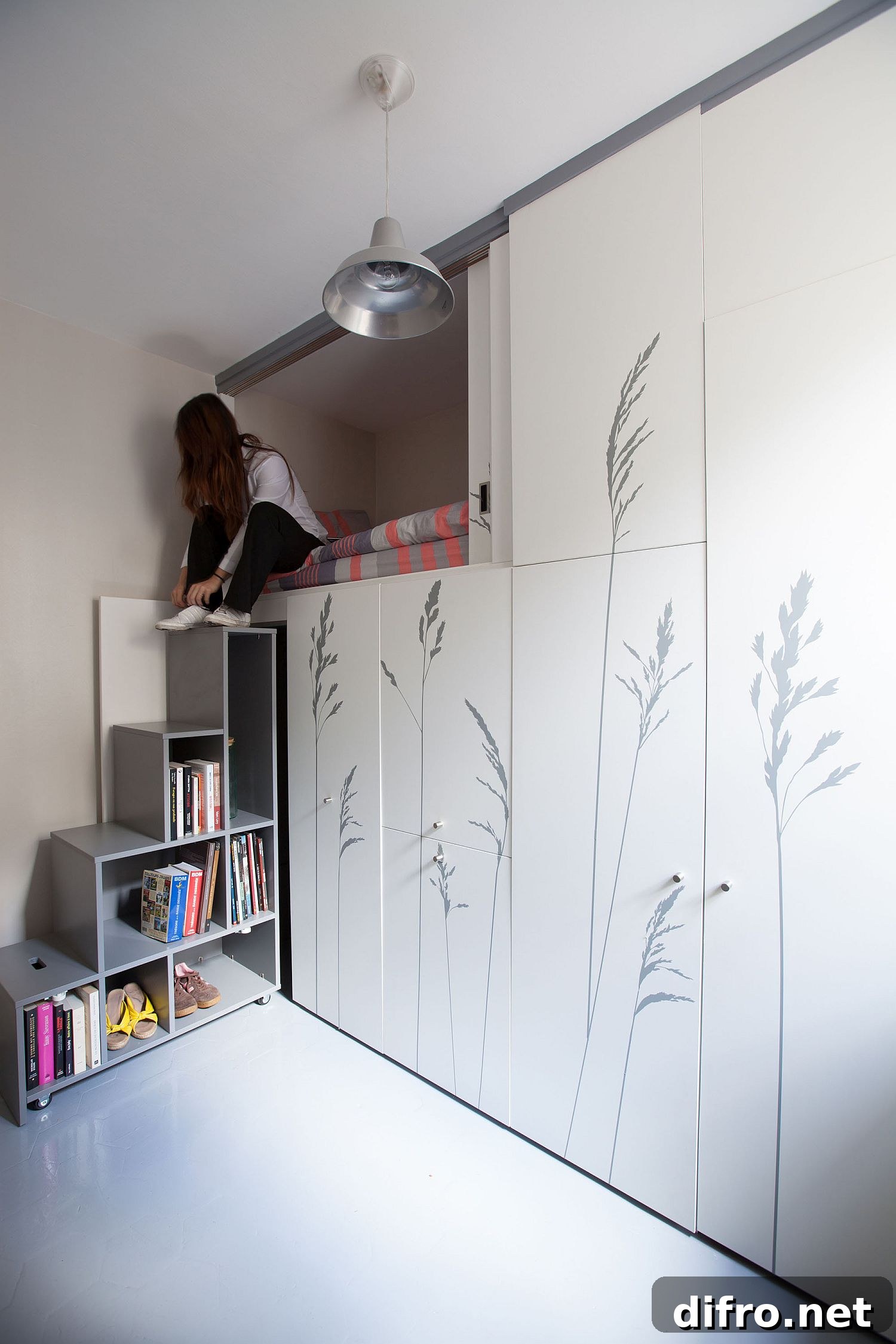
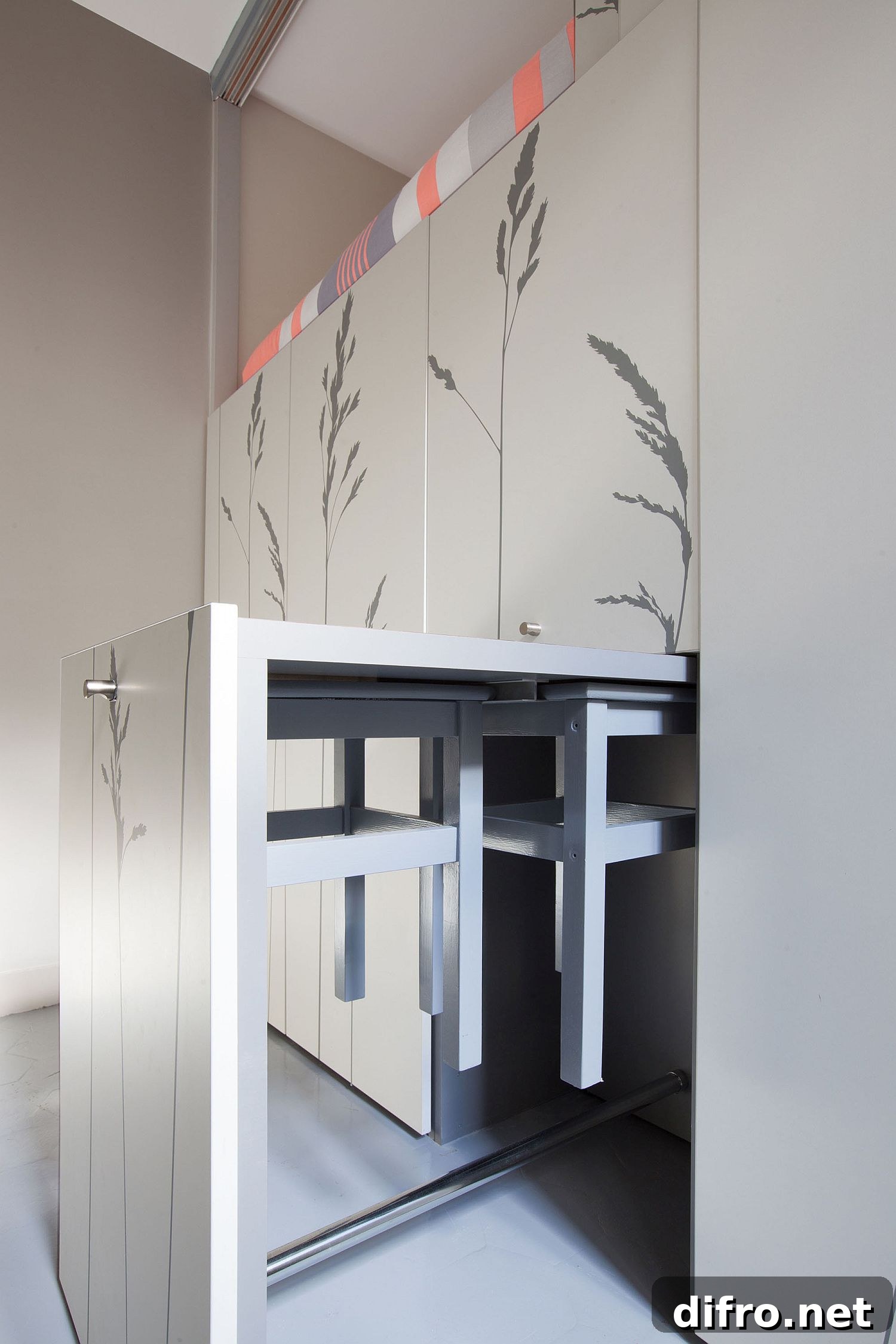
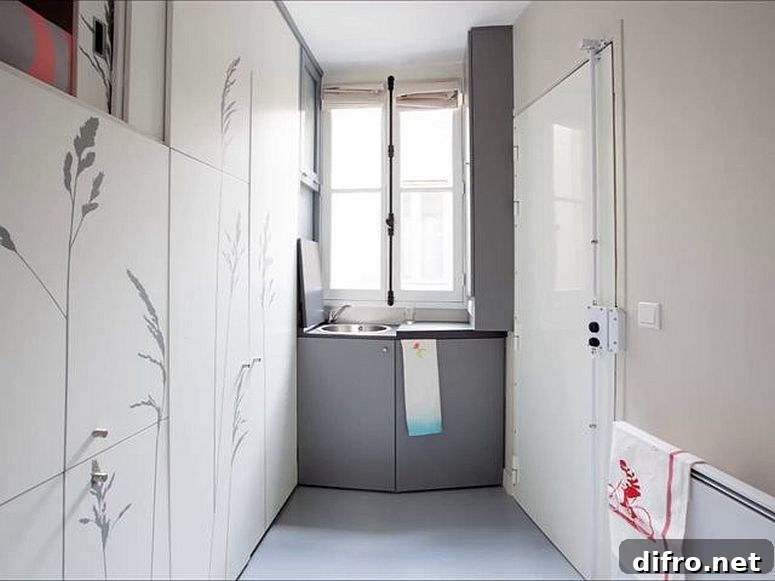
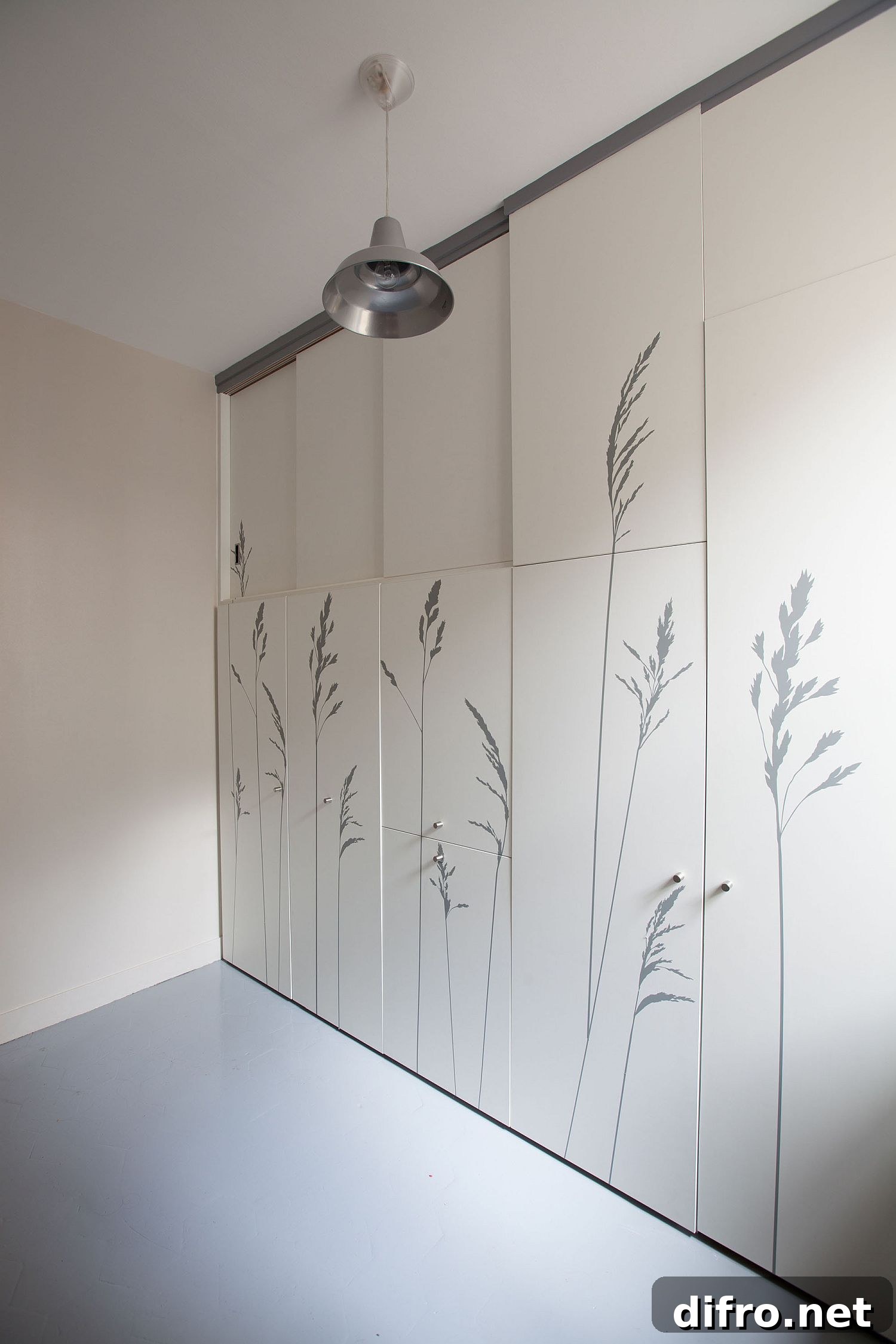
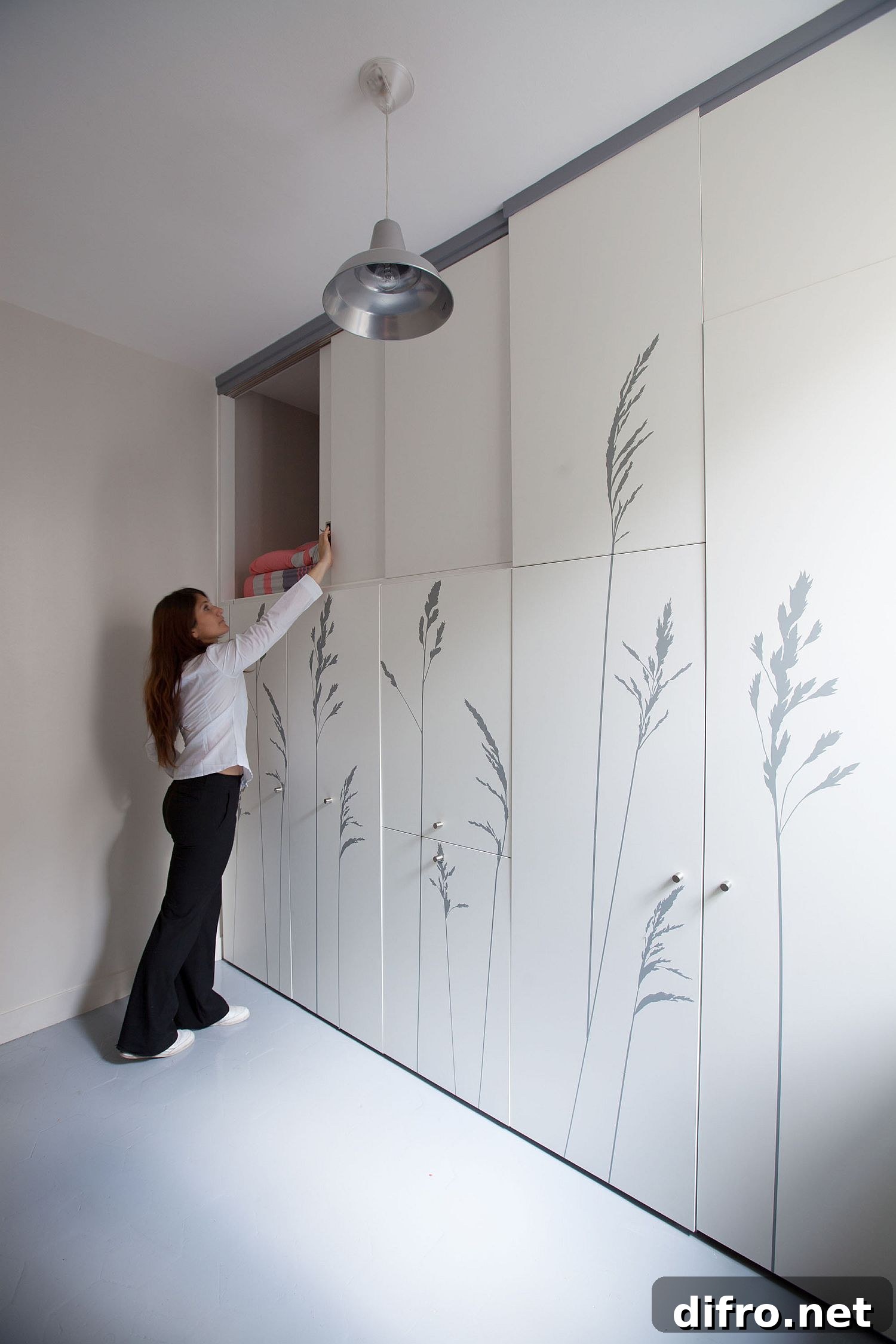
This exceptionally compact apartment in Paris measures just 8 square meters and is a striking example of intelligent, human-centered design. Once a maid’s room on the attic level of a classic Parisian building, the unit has been fully transformed by Kitoko Studio into a self-sufficient micro-apartment. The brief was clear: incorporate a kitchenette, a lofted sleeping area, a dining space, storage and a bathroom within a very limited footprint while maintaining a feeling of openness and comfort. The solution centers on a custom, multifunctional wall that integrates seating, a foldaway table, steps that double as storage, and concealed wardrobe space—maximizing function without crowding the space.
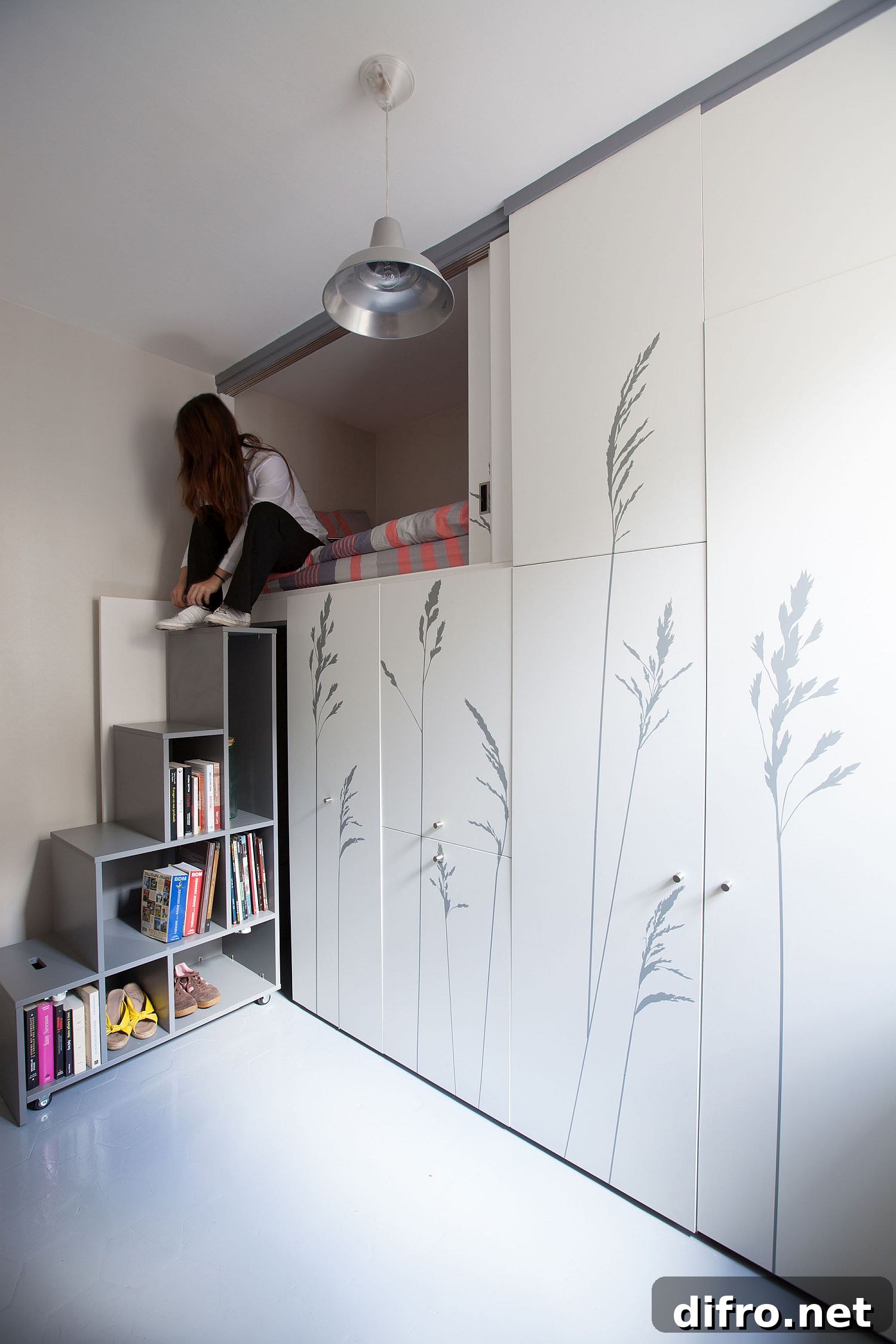
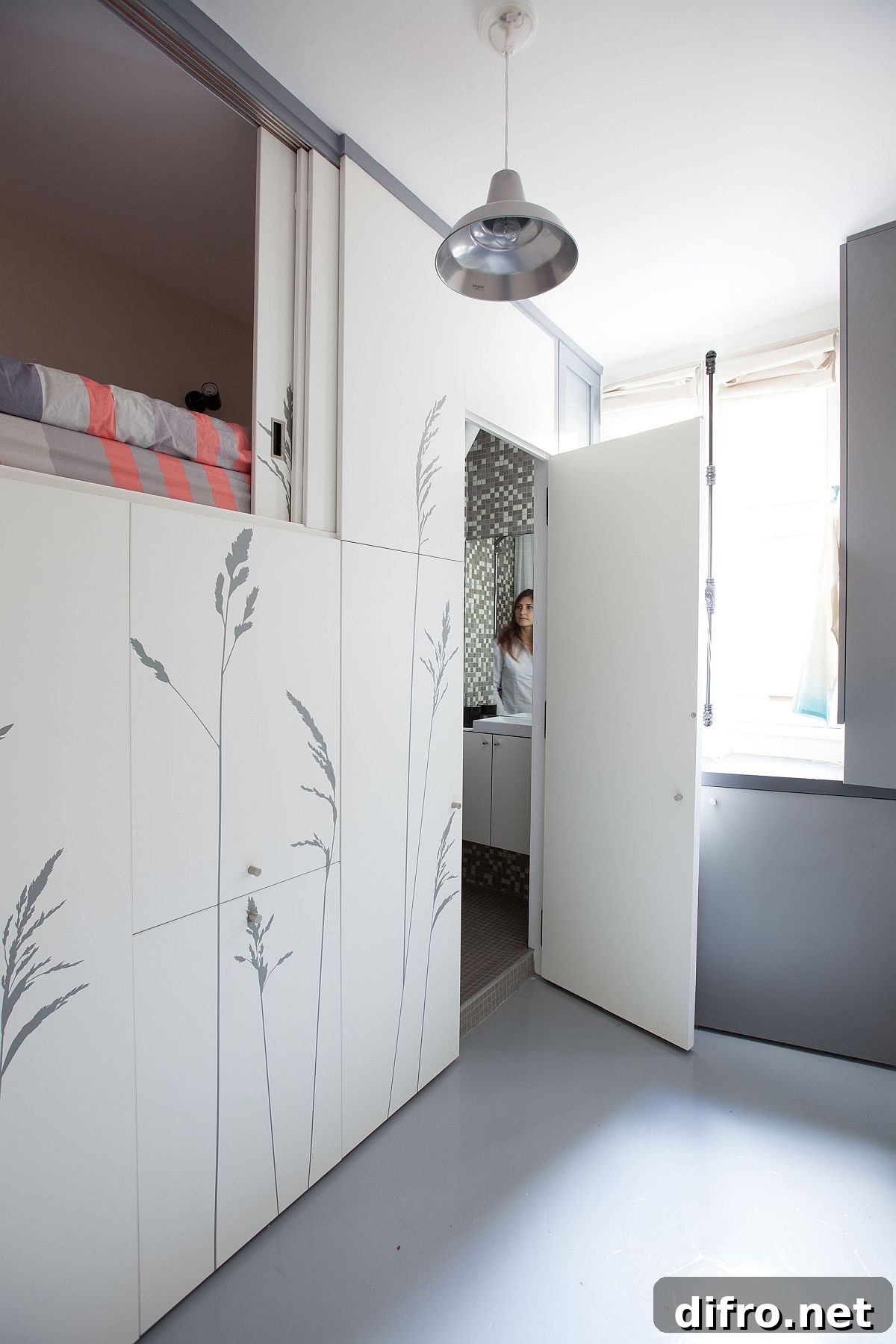
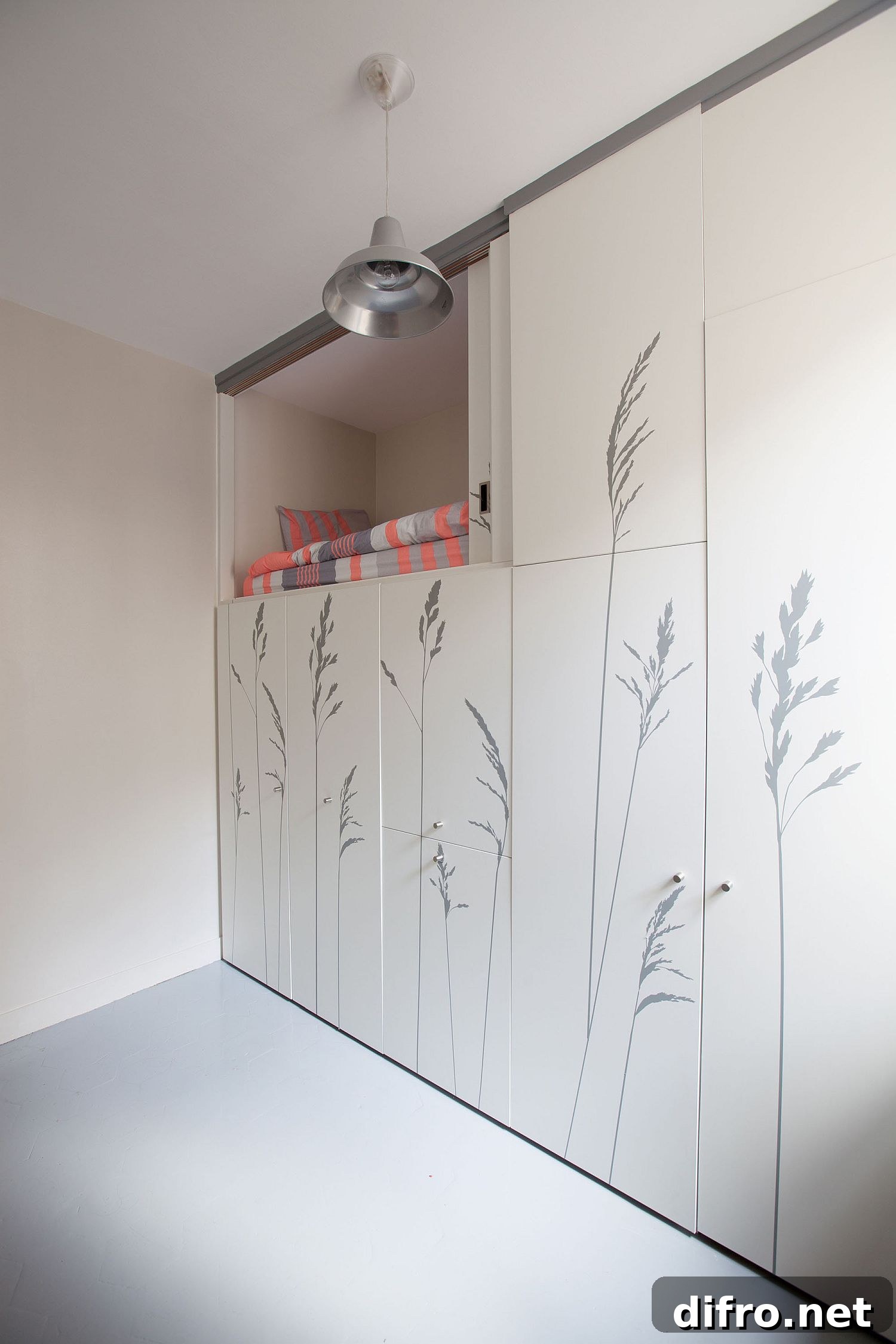
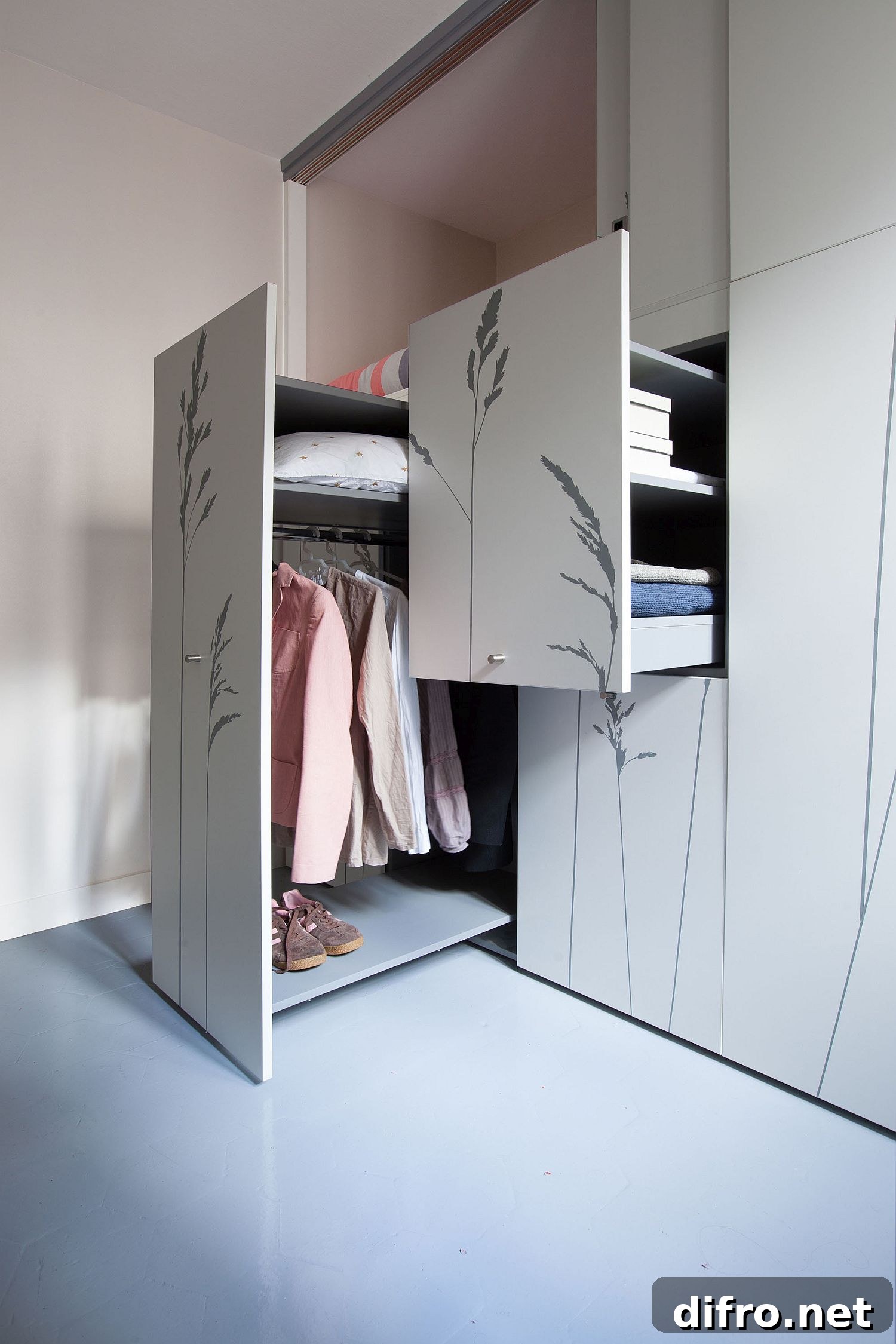
The conversion demanded a complete rethinking of the original layout, since maid’s rooms were not designed to operate as independent dwellings. A bright white palette and carefully considered surfaces reflect and distribute natural light throughout the interior, making the compact footprint feel more open. The sleeping area is tucked into a loft above the living zone, freeing the floor for daily activities. A restrained gray kitchenette occupies a corner, providing essential cooking facilities without dominating the room. Cleverly positioned storage beneath the loft keeps clothing and personal items organized and out of sight.
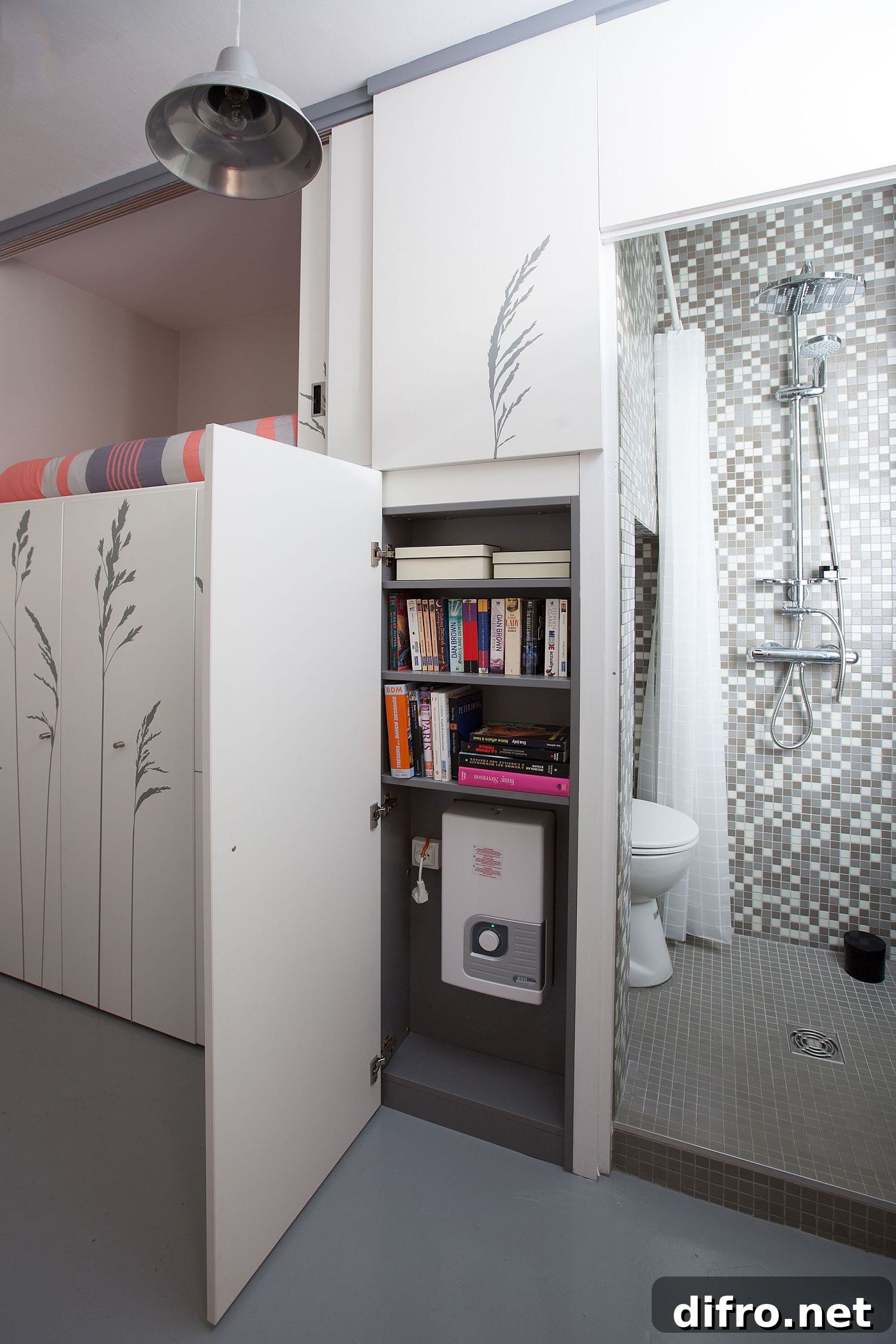
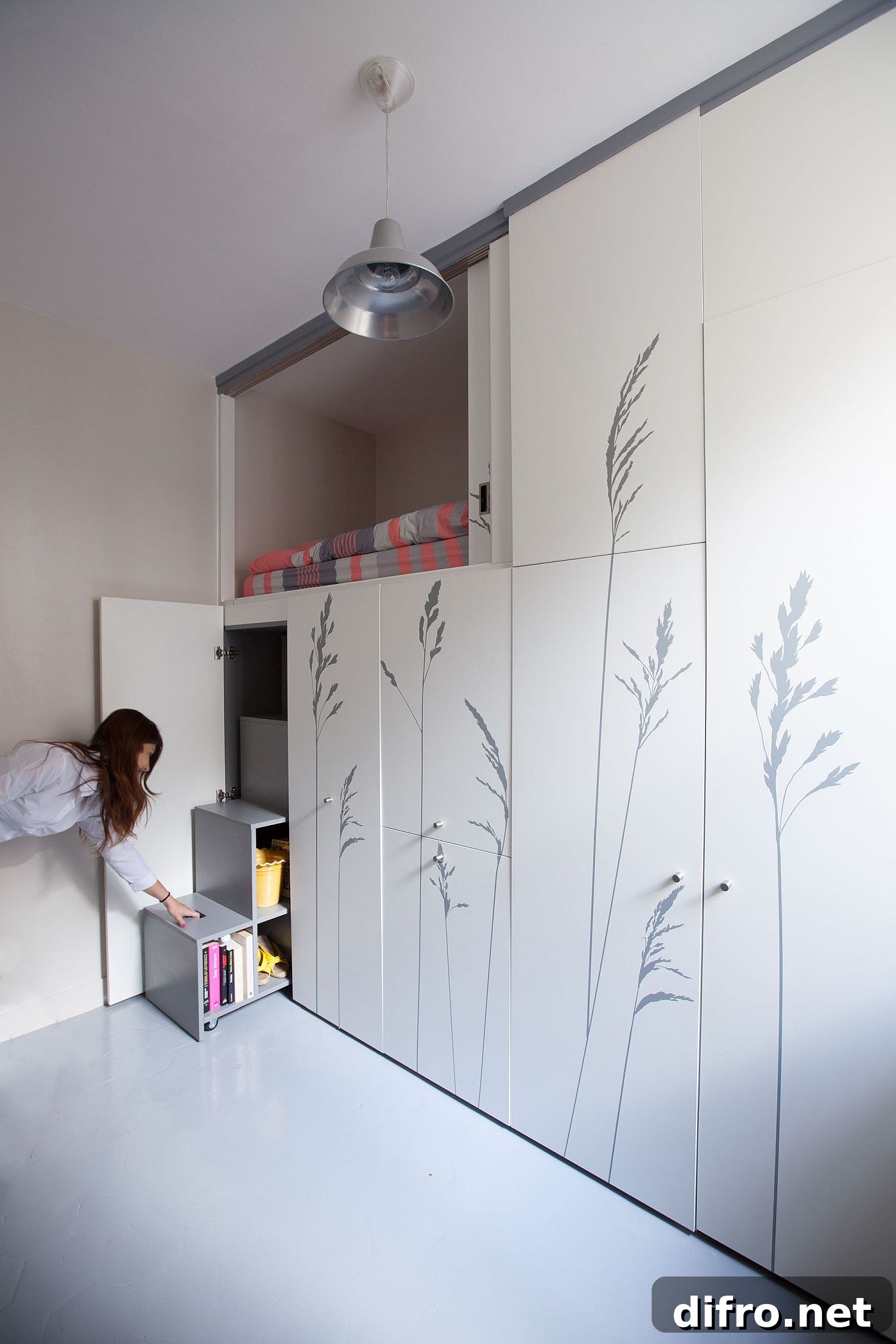
Photographer credit: Fabienne Delafraye.
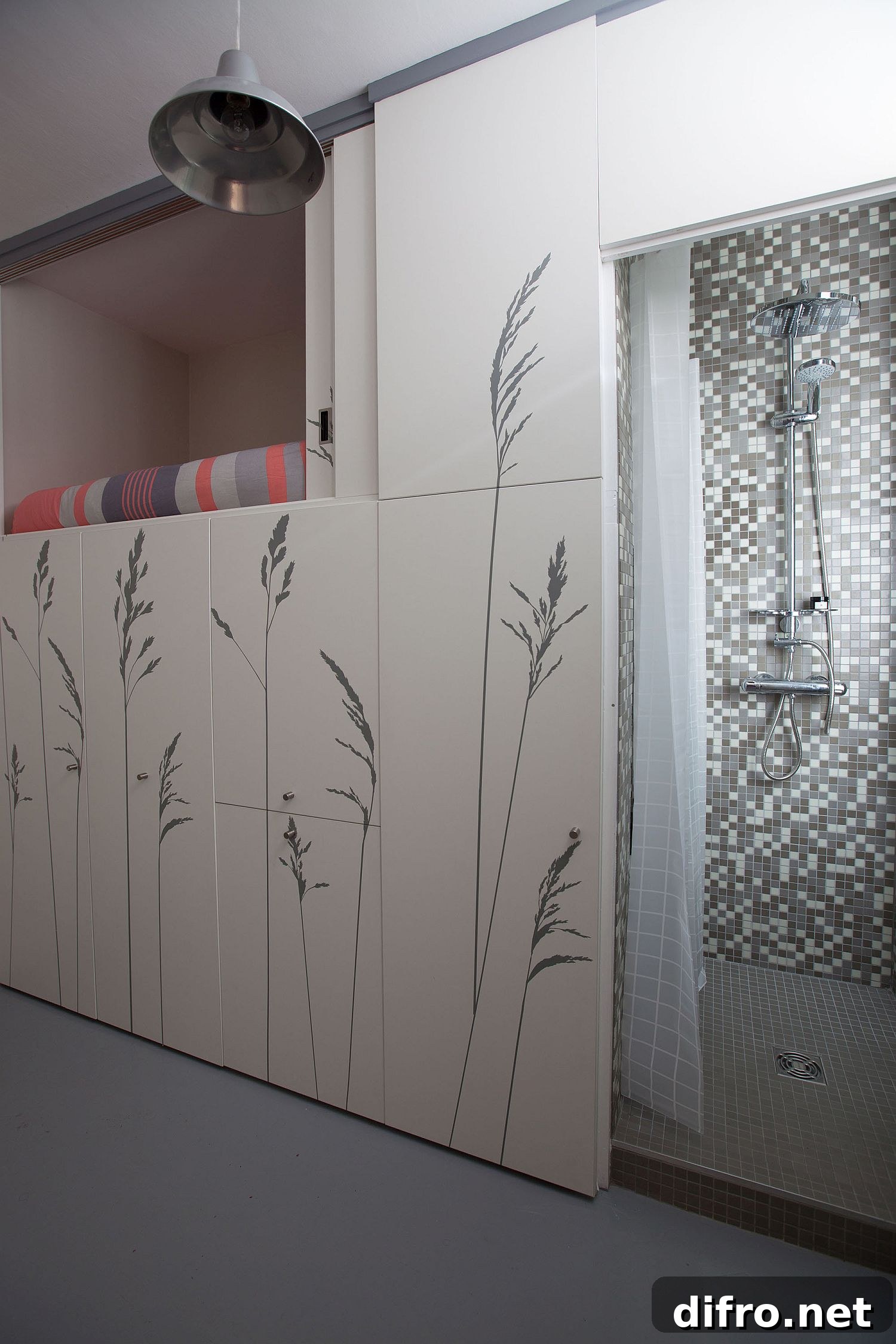
“The architectural response we made in order to implement many different functions refers to the concept of the Swiss Army knife. The Swiss Army Knife is a simple knife but, by a game of sliding and folding, it can contain a multitude of tools in a very small object. Therefore, the new maid’s room is a modular transcription of such an object…”
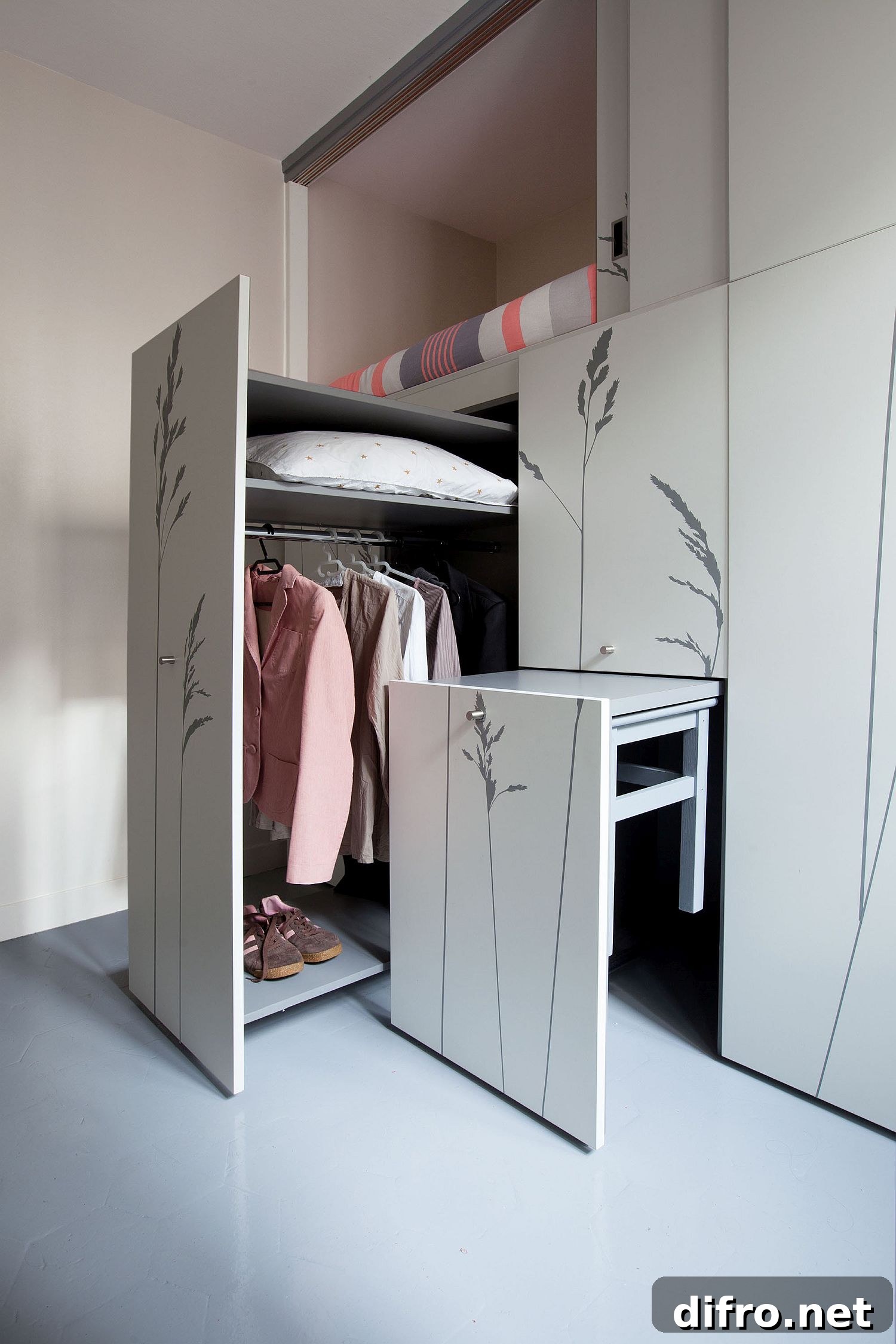
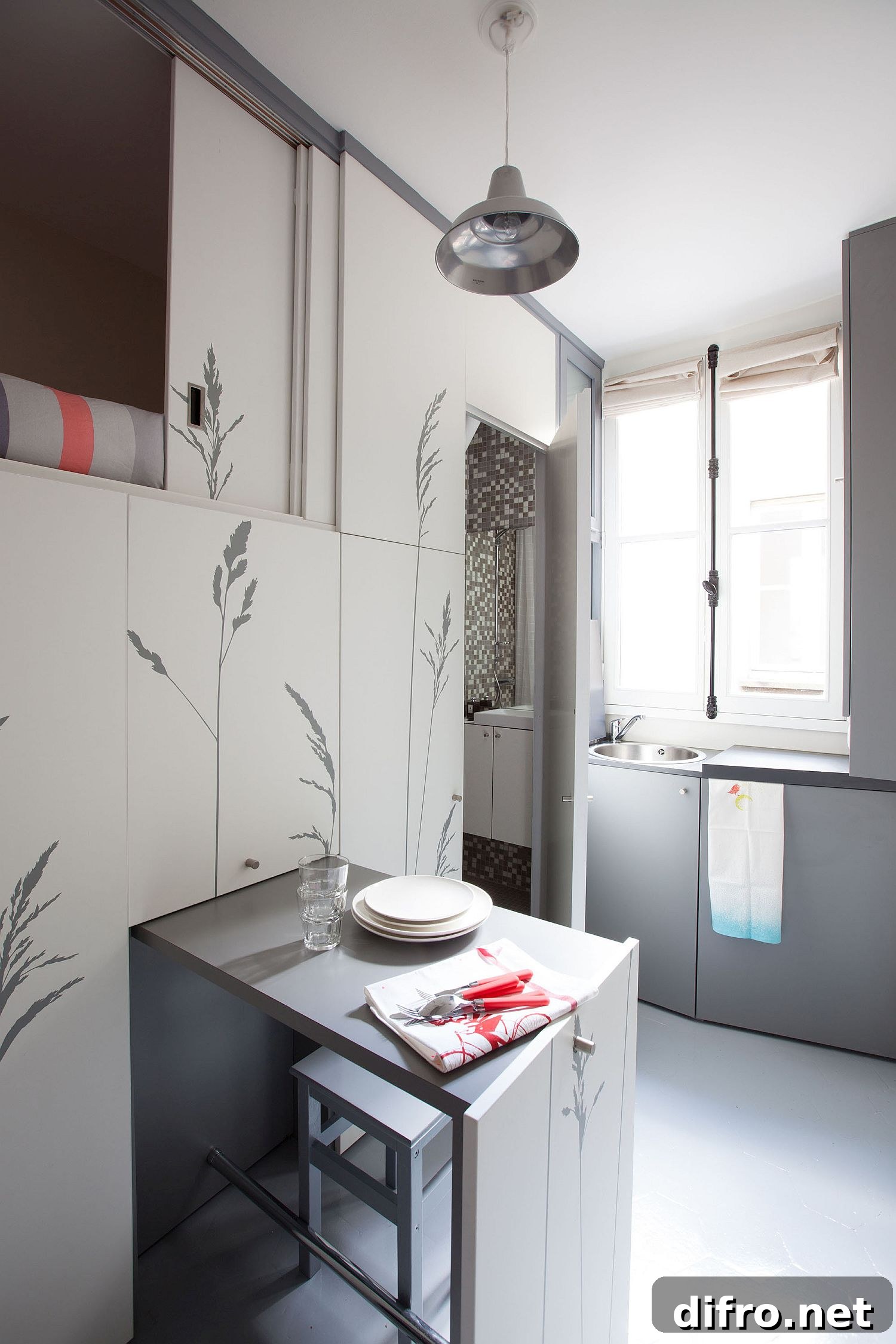
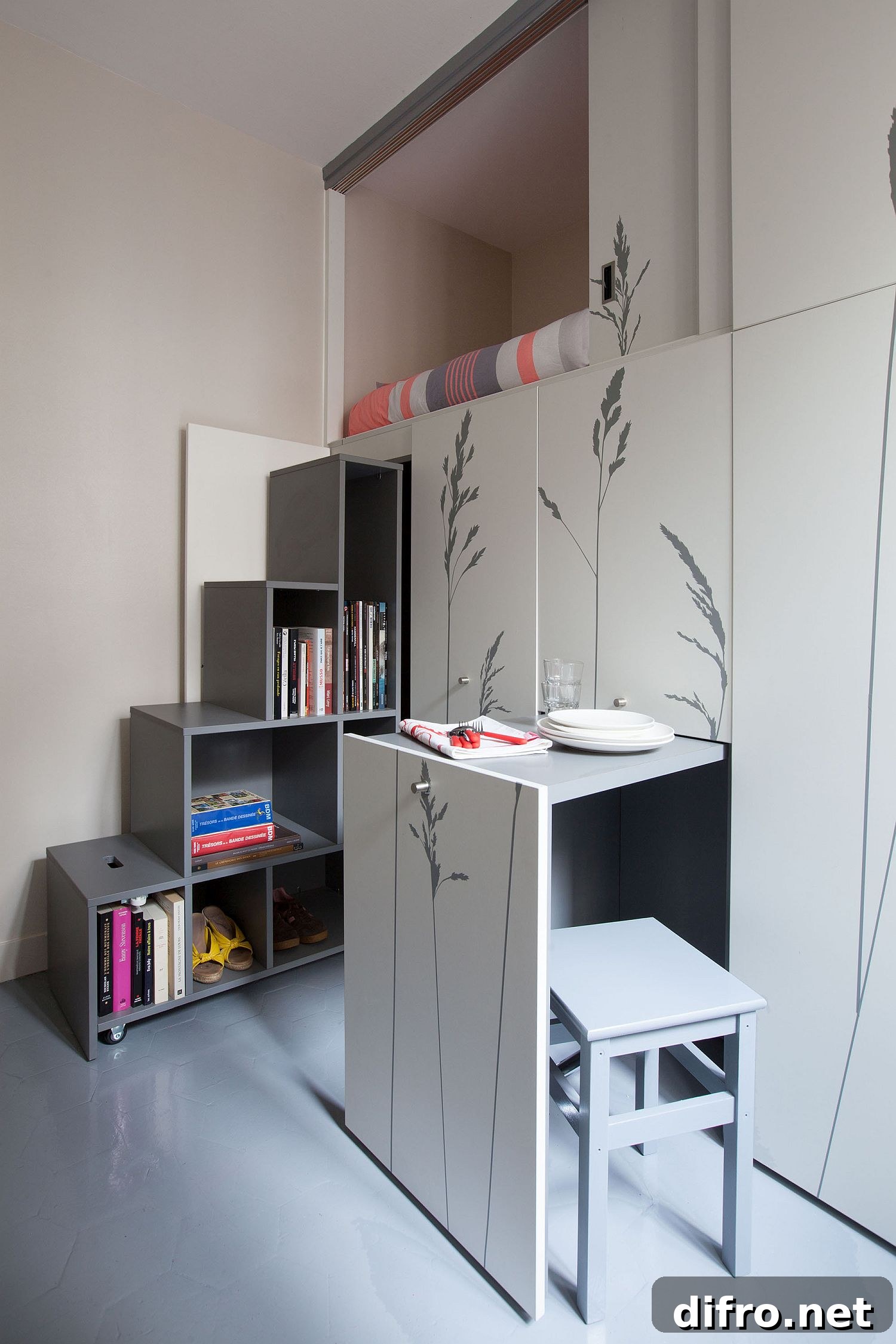
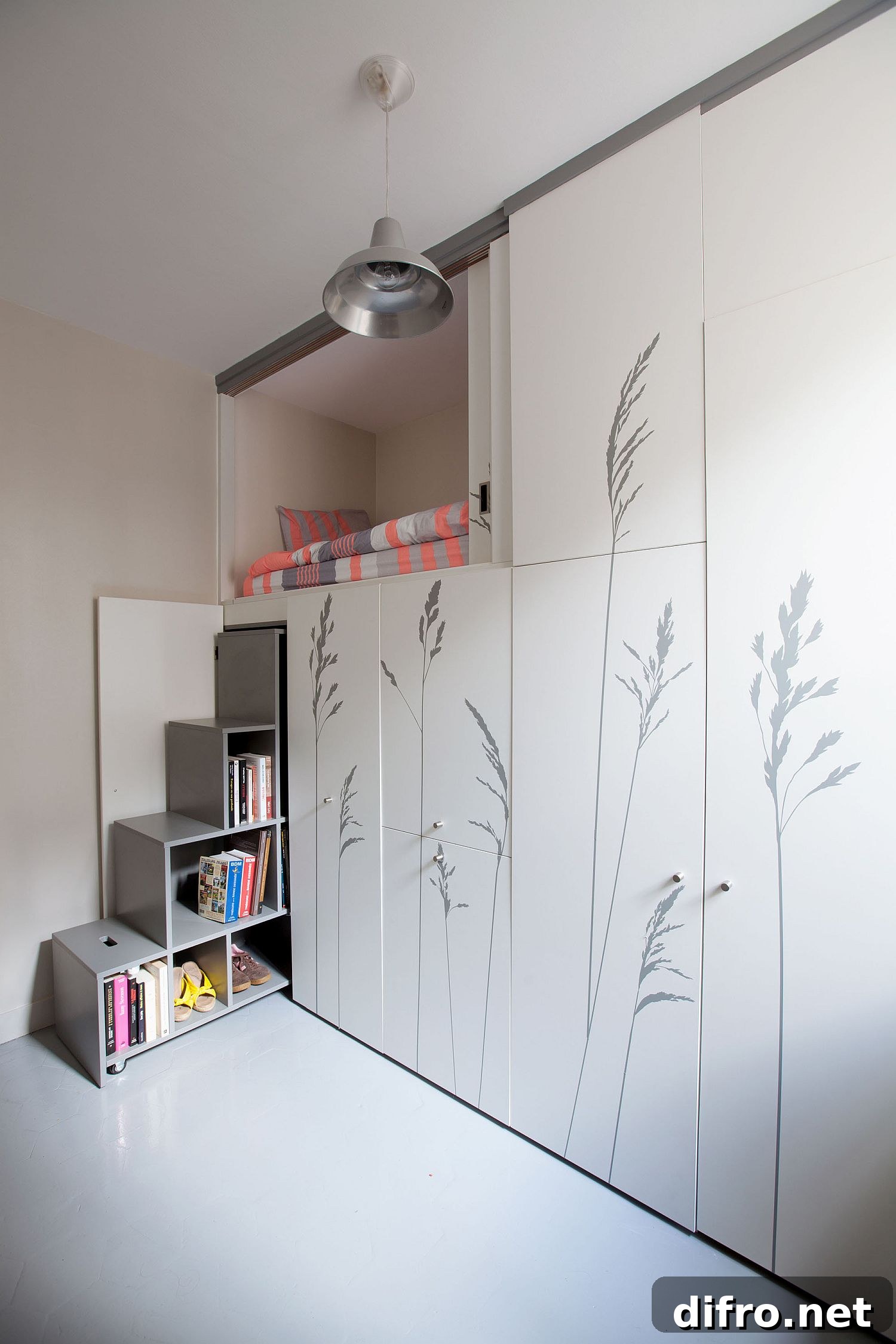
Key spatial strategies make this tiny Paris apartment livable and efficient: multifunctional furniture that folds or slides as needed; vertical zoning that separates the sleeping area from day-to-day living; and integrated storage that eliminates clutter. The staircase to the loft serves multiple purposes by housing drawers and compartments, while small stools tuck away neatly under an anchored bench. These layered solutions allow the resident to shift the apartment’s configuration quickly—transforming the living area into a dining zone, opening up storage, or accessing the sleeping loft without disrupting the rest of the space.
This Paris micro-apartment demonstrates that small living can be both elegant and practical. By thinking in three dimensions, prioritizing multifunctional elements and keeping finishes simple, the designers created a tiny home that feels complete rather than cramped. For anyone planning a compact renovation, the main takeaways are clear: use vertical space wisely, integrate storage into structural elements, and choose modular furniture that adapts to daily needs. The result is a compact but fully equipped home that proves clever design can multiply usable space in the smallest of footprints.