A small entryway often feels like a design challenge: too narrow to place many pieces, yet too bare to leave untouched. However, with intentional choices and a bit of creativity, a compact foyer can become one of the most striking parts of your home. Because it’s the first space people see, a thoughtfully styled entryway sets the tone for the rest of your interior. Instead of focusing on size limitations, think about functionality, welcoming touches, and a concise style that feels intentional. Below are practical, stylish ideas to help a small entryway feel larger, more inviting, and full of personality.
1. Choose Oversized Décor
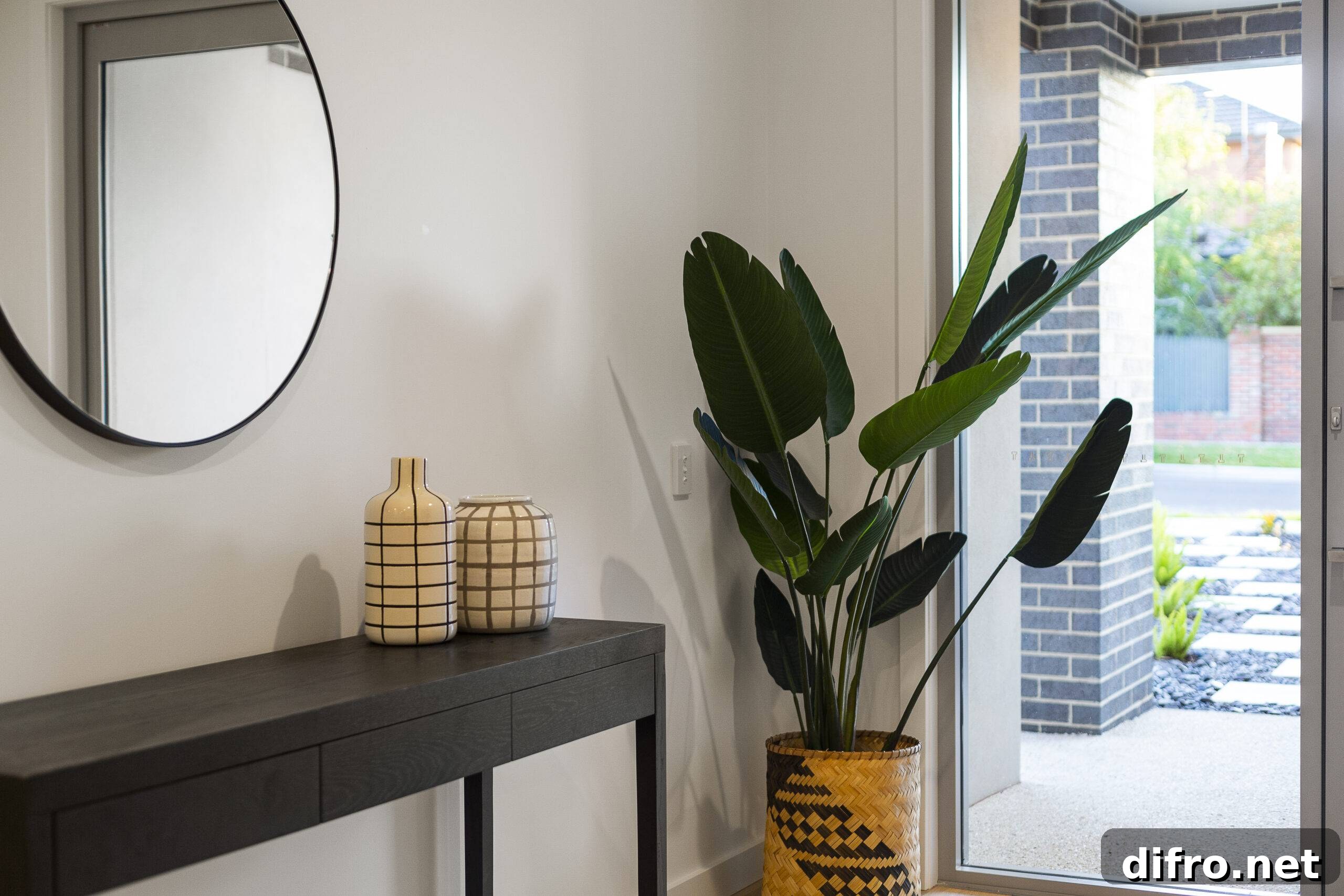
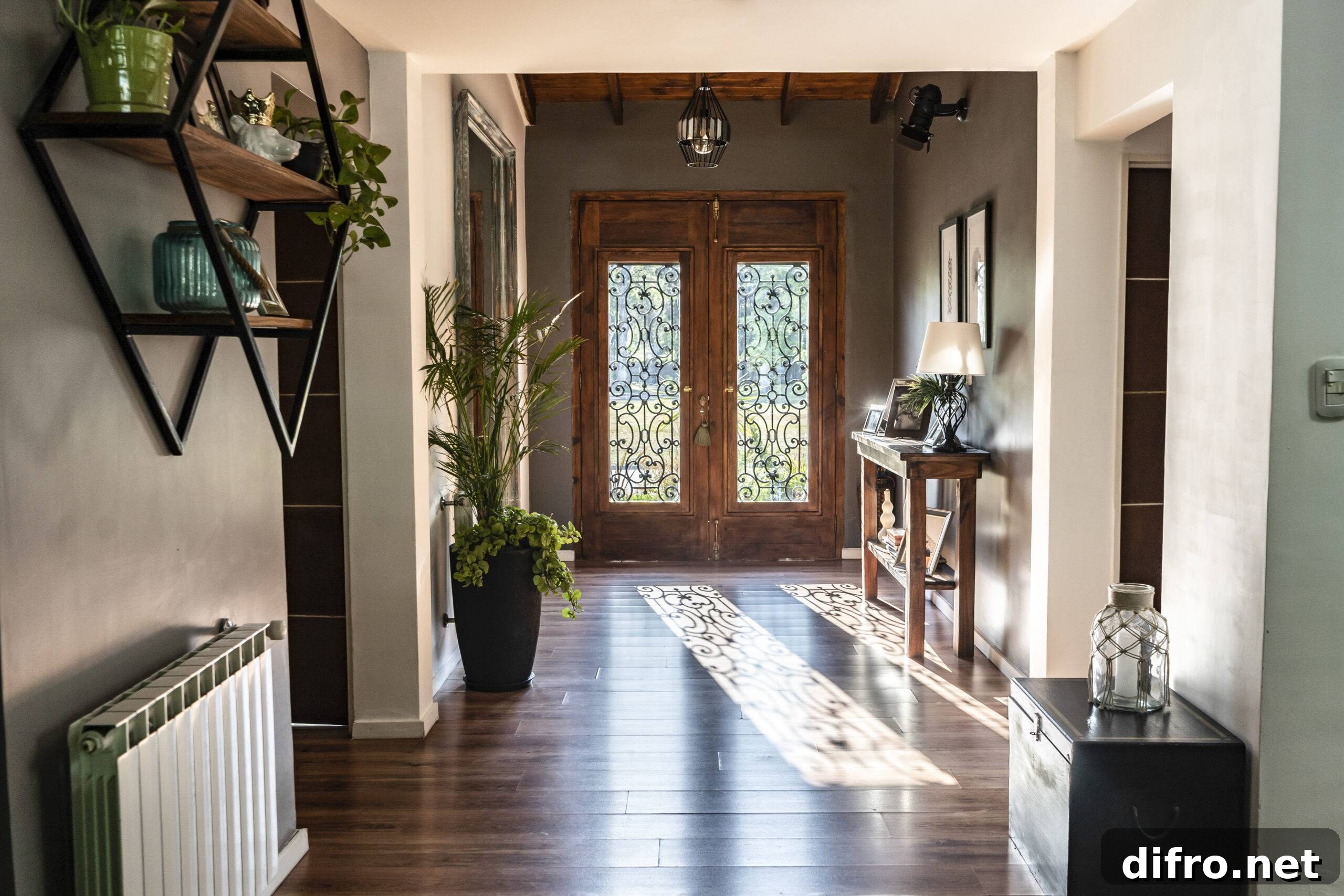
It may sound counterintuitive, but a few large, well-chosen items can actually make a small entry feel more spacious. A dramatic wall mirror, a bold piece of artwork, or a statement light fixture creates a sense of scale that distracts from narrow proportions. These larger focal points pull the eye and establish a deliberate design, so keep secondary accents minimal to avoid visual clutter. An oversized mirror also reflects light and movement, which instantly brightens and visually expands the area.
2. Add a Statement Rug
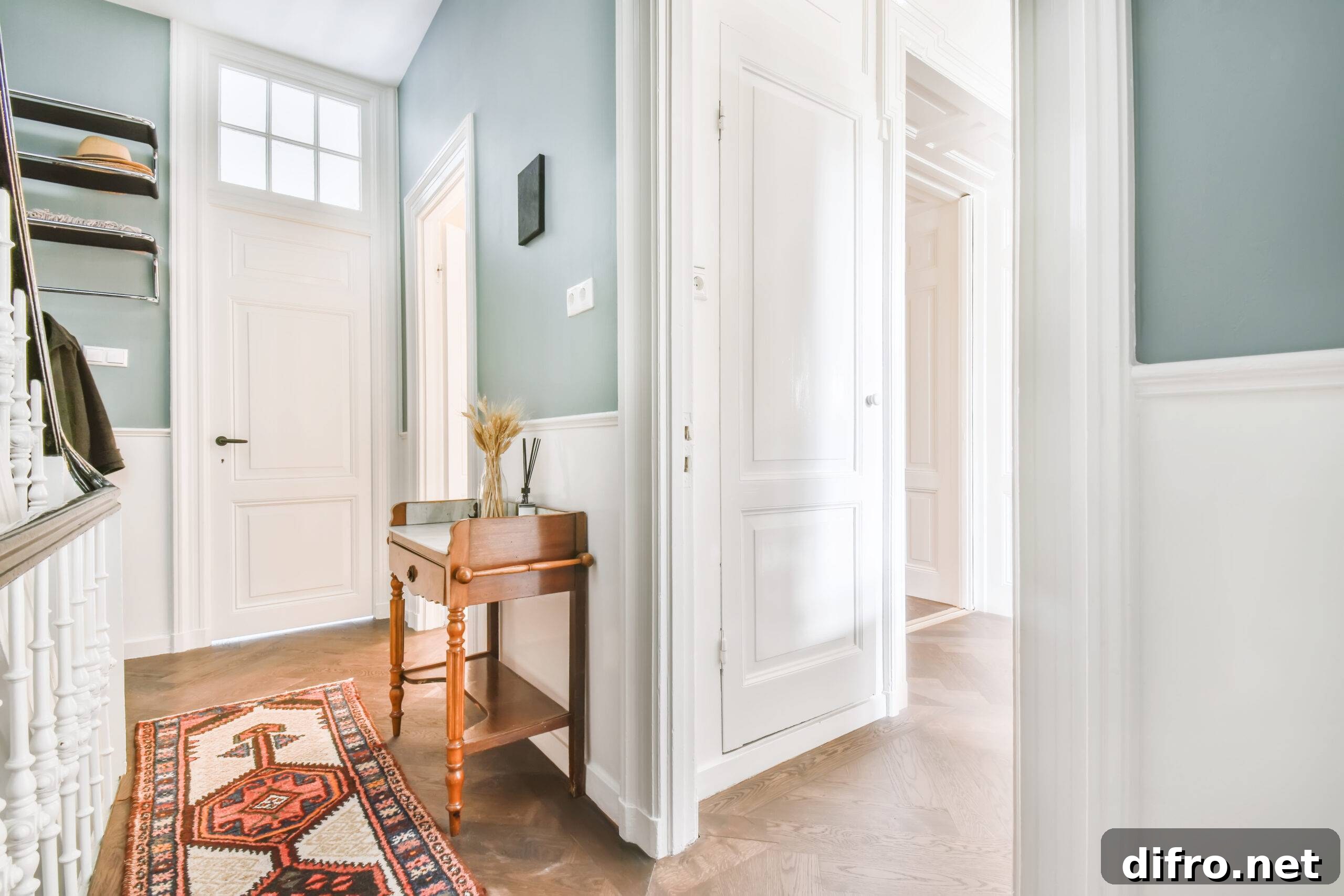
A bold, patterned rug can instantly anchor your entryway and communicate personality the moment someone steps inside. Runners work particularly well in narrow spaces, but a small, striking rug beneath a console or bench also provides visual grounding. Choose durable, low-maintenance materials—washable fibers or stain-resistant blends—so the rug stays fresh despite foot traffic, shoes, and pets. Aim for a pattern and color palette that complements your overall home style while remaining practical for everyday use.
3. Get a Floating Shelf
When floor space is limited, a narrow floating shelf or wall-mounted console delivers surface area without crowding the entry. Use it for keys, mail, a small lamp, or a decorative bowl. Because the floor beneath remains open, the area feels less cramped and easier to clean. Pair a floating shelf with wall hooks or a slim peg rail for coats, bags, and umbrellas. This combination keeps essentials organized while preserving the flow of the space.
4. Create a Mini Gallery Wall
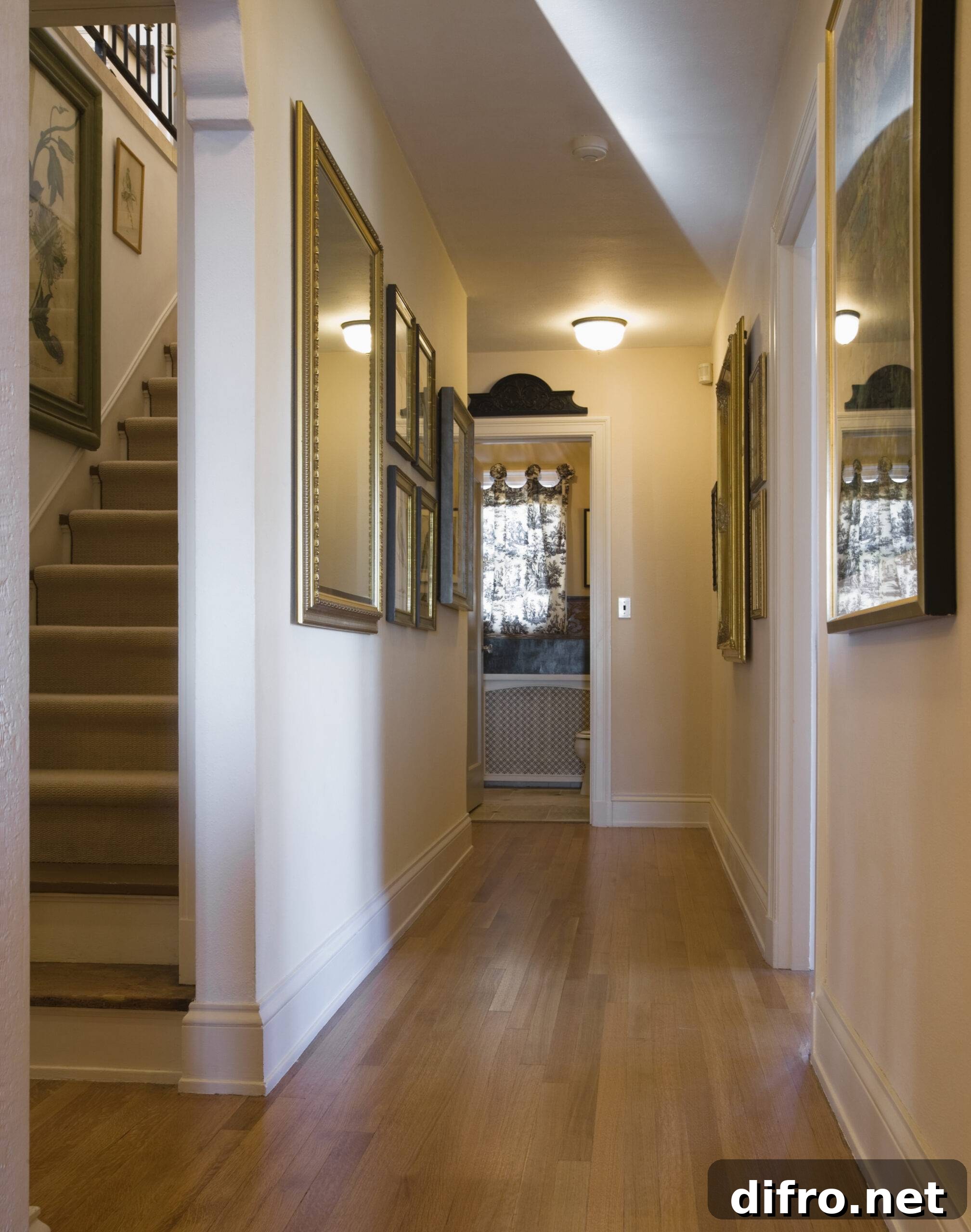
A compact gallery wall is a simple way to inject warmth and personality into a small hallway. Arrange a mix of smaller frames, postcards, and prints in a cohesive layout—either in a tidy grid or an organic cluster. A gallery deflects attention from the room’s dimensions and gives visitors something interesting to focus on. For a tidy look, use lightweight frames and plan the composition on the floor first, then transfer it to the wall.
5. Create a Ceiling Feature
Don’t overlook the ceiling when decorating a small entryway—the overhead plane is an excellent canvas for visual drama. A bold paint color, patterned wallpaper, decorative molding, or warm wood paneling draws the eye upward and gives the impression of added height. Pair a distinctive ceiling with simple walls and minimal furnishings to keep the overall effect elegant rather than overpowering. A unique ceiling becomes an unexpected focal point that elevates the entire entry.
6. Incorporate Functional Artwork
In a compact entry, choose decor that looks beautiful and serves a purpose. An oversized clock, sculptural coat rack, or a decorative pegboard blends form and function—providing storage while acting as an art piece. Functional artwork helps keep essentials within reach without sacrificing style. These multiuse pieces are ideal for small spaces where every item should justify its place.
7. Choose a Statement Door
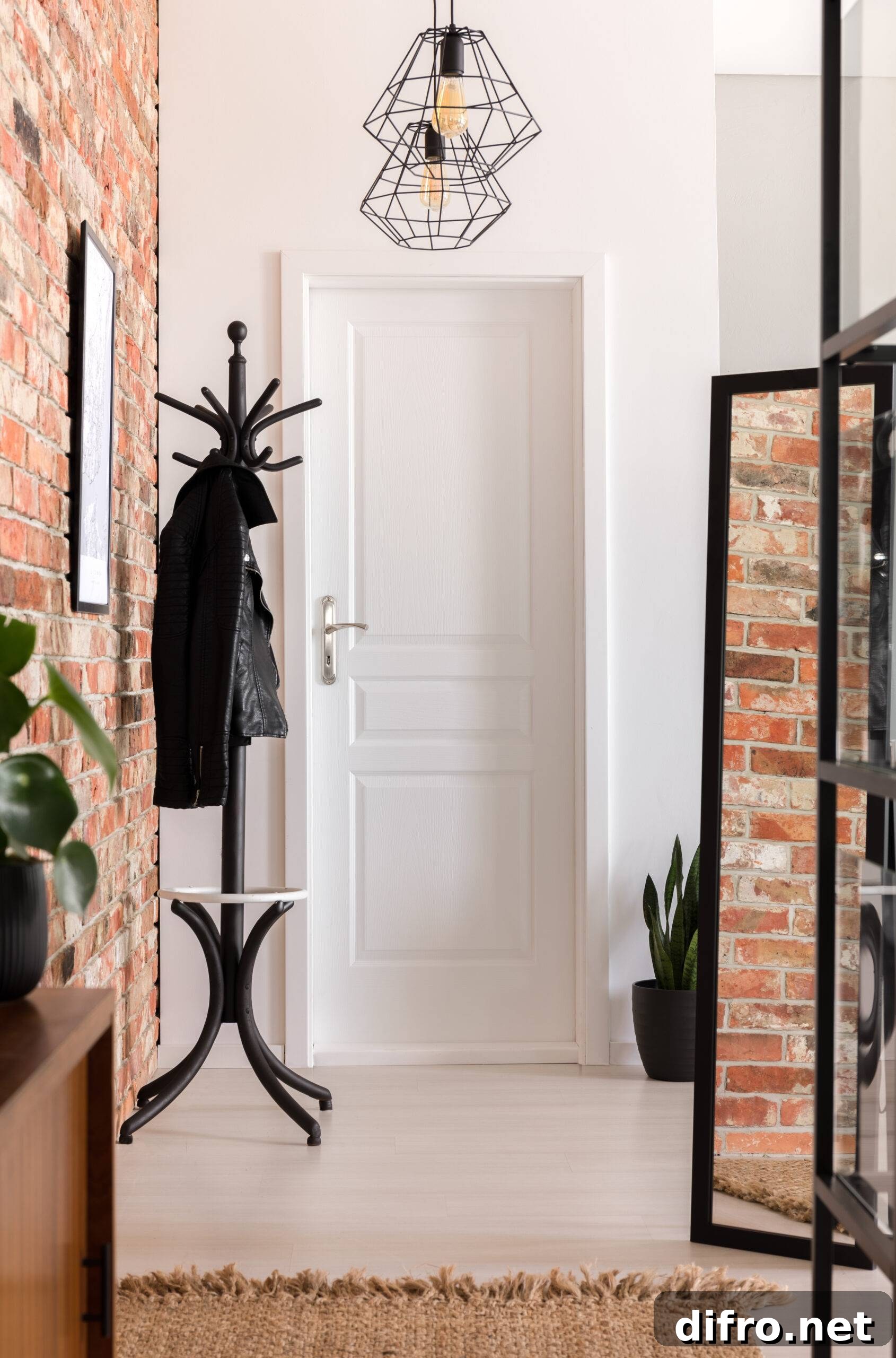
Your entryway starts before you step inside—so make the front door part of the design. A bold paint color, an interesting finish like matte black or weathered wood, or decorative panels and glass inserts immediately set a welcoming tone. A door with a frosted or glazed window also increases natural light, helping the interior entry feel brighter and more spacious. Even small upgrades to hardware or trim can make a big visual difference.
A small entryway doesn’t have to feel limiting. With a clear plan that balances scale, storage, and personality, you can transform a narrow foyer into a welcoming, functional space that makes a memorable first impression. Focus on a few standout elements—a large mirror, a quality rug, purposeful storage, or a dramatic door—and keep the rest simple. Thoughtful details and smart layouts will make even a tiny entry feel intentional and elegant.