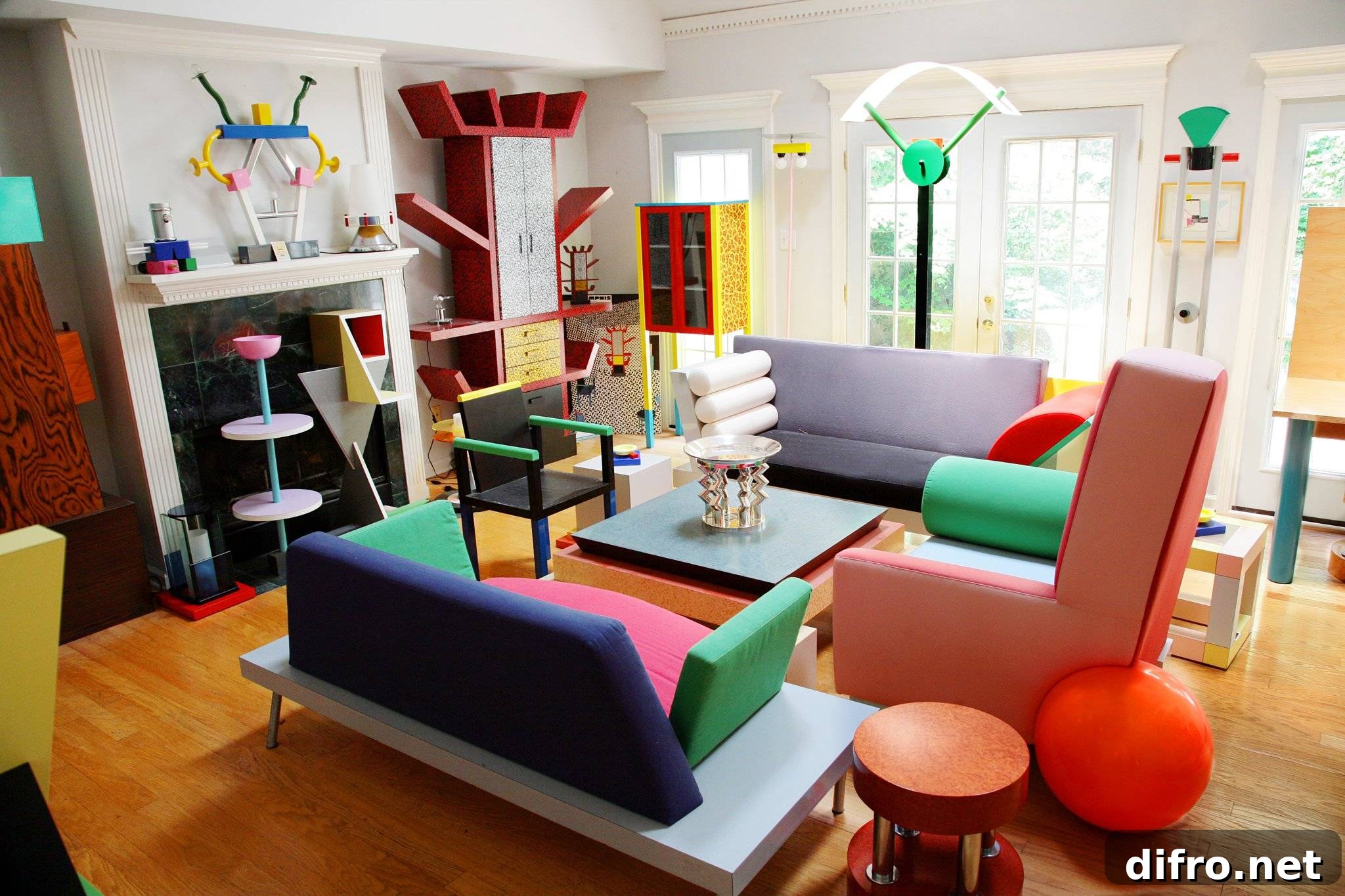
Welcome to the vibrant world of Memphis design: a daring interior style defined by bold color, playful shapes, and energetic geometry. Originating in the early 1980s, Memphis introduced a joyful, eclectic alternative to the restrained minimalism of its time. Drawing on pop culture, retro aesthetics, and nods to Art Deco and Pop Art, Memphis design blends nostalgia with deliberate unpredictability—transforming interiors into lively, unforgettable spaces.
This article explains the origins of Memphis design, outlines its defining characteristics, and shows practical ways to bring this spirited aesthetic into your home. Whether you want to add a single accent piece or reimagine an entire room, the Memphis approach encourages experimentation, color play, and the freedom to break conventions.
The Origins of Memphis Design
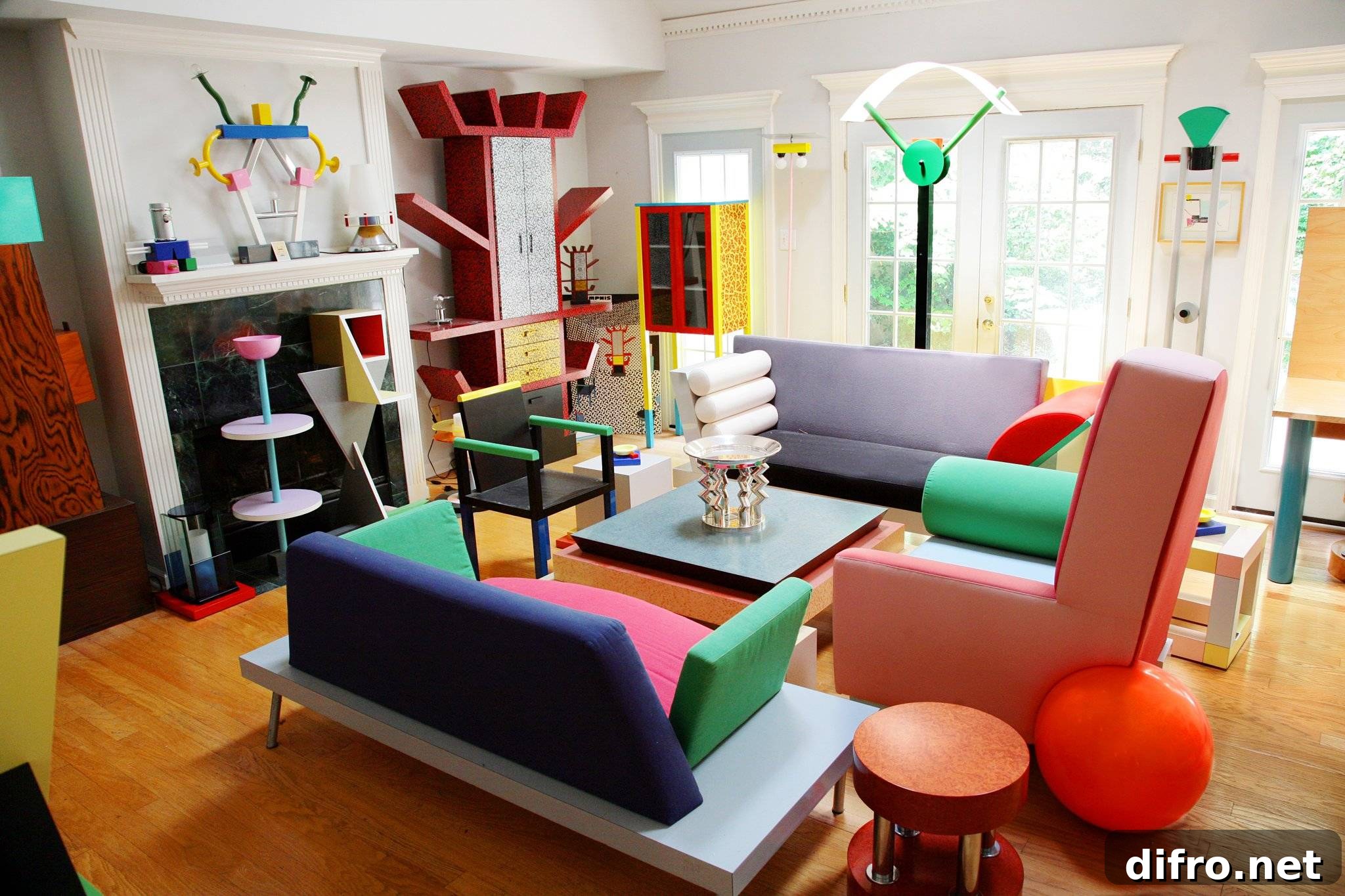
Memphis design began as a revolt against established design rules. The movement was launched in Milan in the early 1980s by a collective of architects and designers led by Ettore Sottsass. They rejected strict functionalism in favor of exuberance, color, and unexpected forms. The collective chose the name “Memphis” after a Bob Dylan lyric as a playful nod to popular culture and a cultural mix of influences.
Rather than hiding ornament or following rigid rules, Memphis embraced surface, pattern, and the joy of design as an expressive medium. Its early work mixed references from music, technology, and mass culture with historical movements like Art Deco and Pop Art, producing pieces that were provocative, optimistic, and instantly recognizable.
Memphis Style in Contemporary Interiors
Memphis design remains divisive—some consider it theatrical or eccentric, while others celebrate its fresh, liberating spirit. In recent years the style has enjoyed renewed interest as designers and homeowners seek alternatives to neutral, minimalist interiors. Contemporary interpretations often blend Memphis’s bold visual language with modern restraint: think a single statement sofa, a patterned accent wall, or a sculptural lamp integrated into otherwise simple rooms.
That balance—between retro exuberance and contemporary restraint—makes Memphis especially useful for designers looking to add personality without overwhelming a space. The style’s playful edge works well in living rooms, home offices, kitchens, and hospitality environments where visual drama is welcome.
Key Elements of Memphis Interior Design
Bold Colors and Geometric Patterns
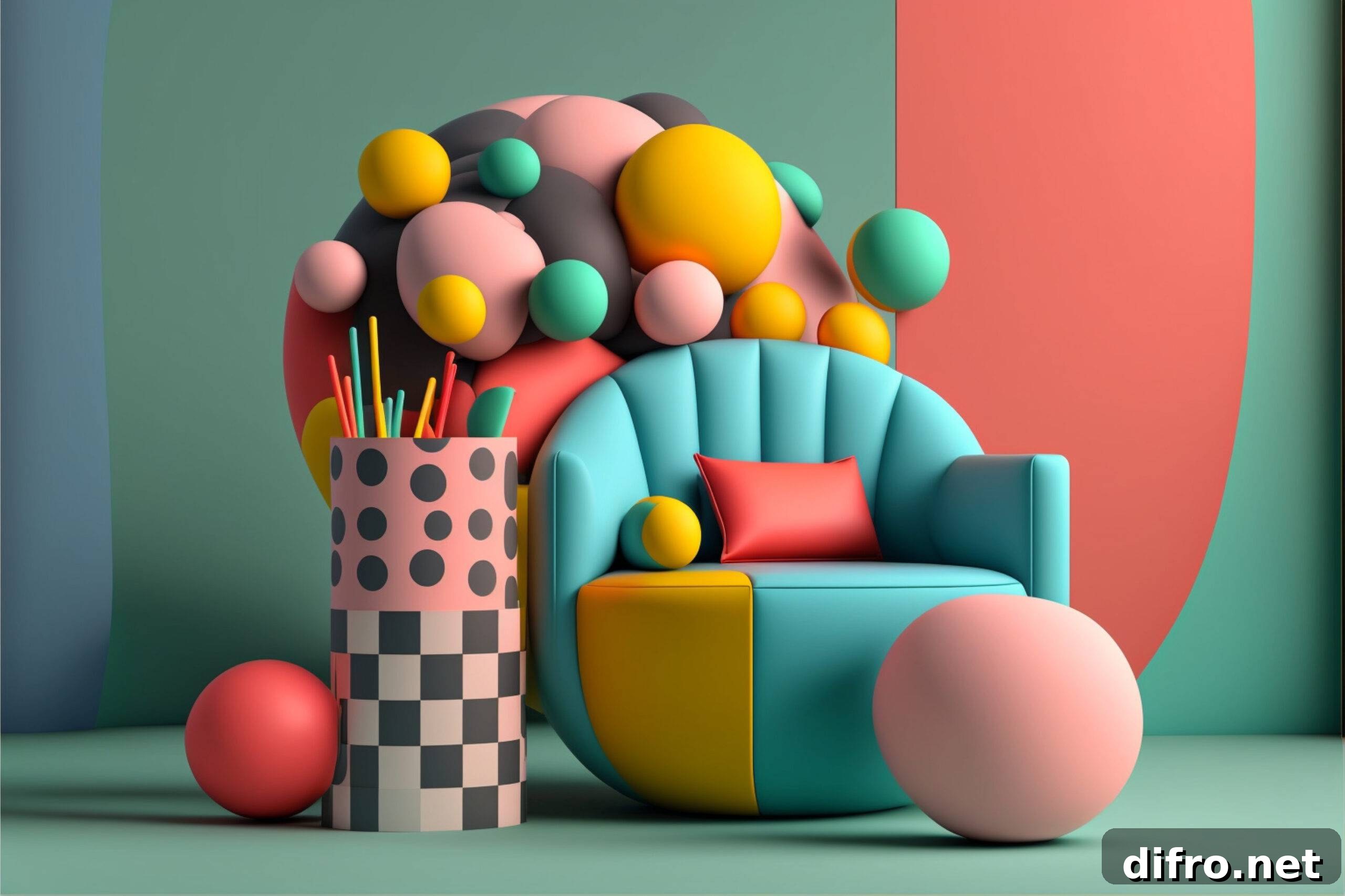
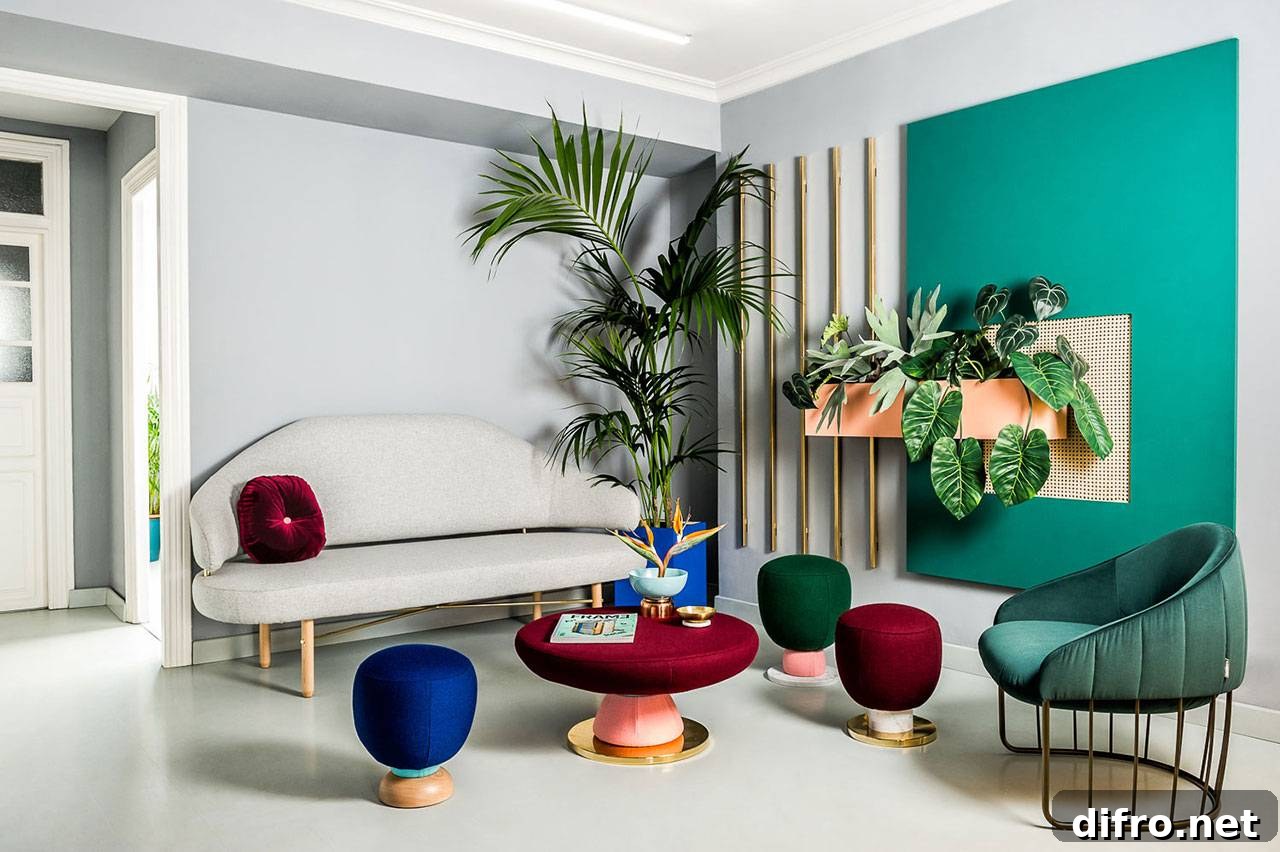
- Vivid, high-contrast palettes are central to Memphis design—think electric blues, hot pinks, vivid yellows, and bright reds.
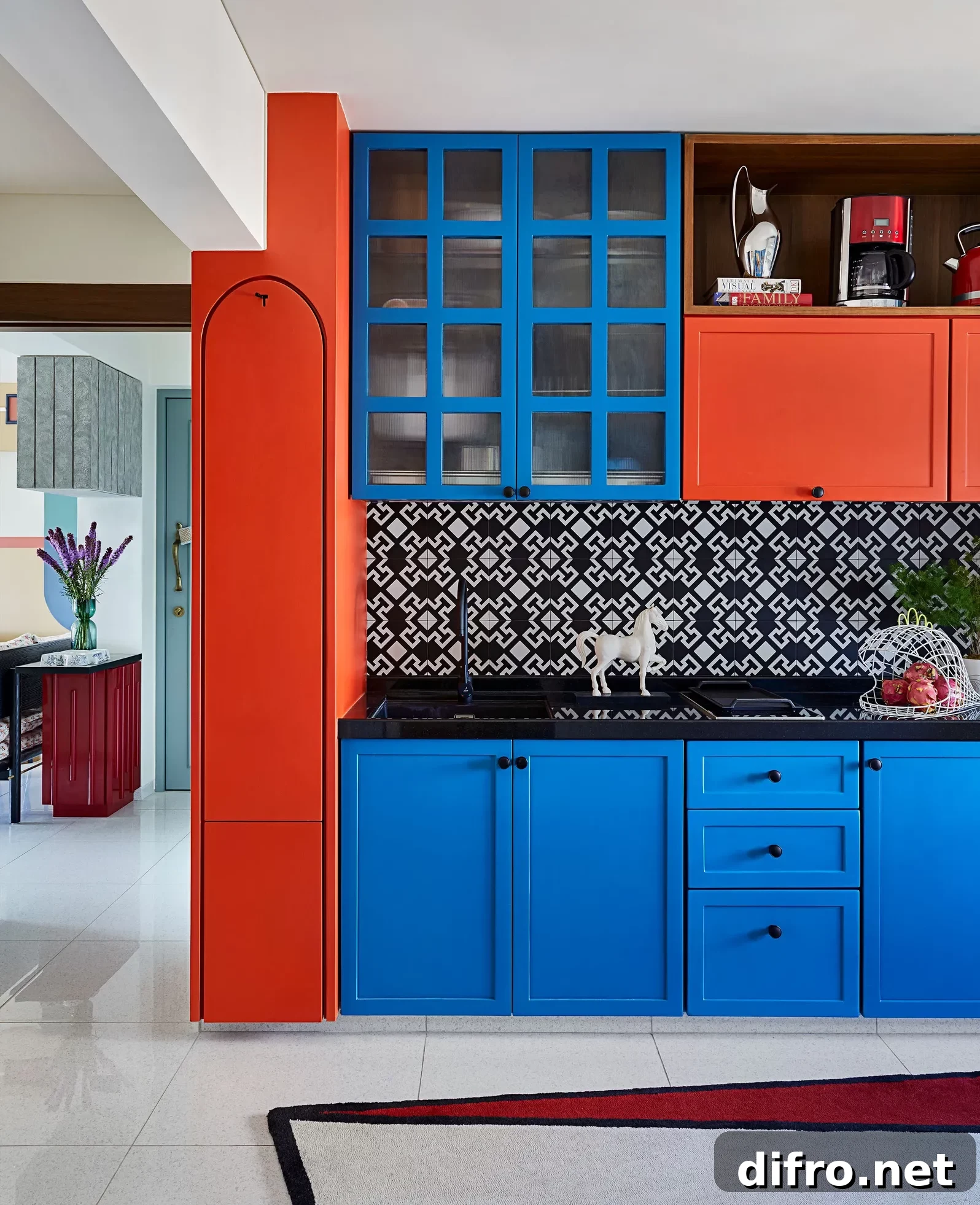
- Color blocking—placing large shapes of contrasting color next to each other—creates strong visual statements on walls, furniture, and cabinetry.
- Geometric motifs like squares, triangles, circles, and zigzags add rhythm and movement; these patterns appear in textiles, wallpapers, and surfaces.

Playful Shapes and Unconventional Silhouettes
- Memphis furniture often features asymmetrical forms, exaggerated curves, and whimsical cutouts that defy classic expectations.
- Silhouettes can be sculptural and humorous—squiggles, angular frames, and eccentric proportions appear frequently.
- Arranging pieces in unexpected, layered compositions promotes a dynamic, visually engaging atmosphere.
Eclectic Materials and Textural Contrast
- Memphis celebrates material variety: laminate, plastics, metals, glass, and glossy or matte finishes coexist to create tactile interest.
- Mixing textures—slick plastics with soft textiles, reflective surfaces with matte finishes—enhances depth and surprise.
- This approach encourages playful combinations; durable modern materials are used as design features, not merely for function.
Pop Culture and Retro References
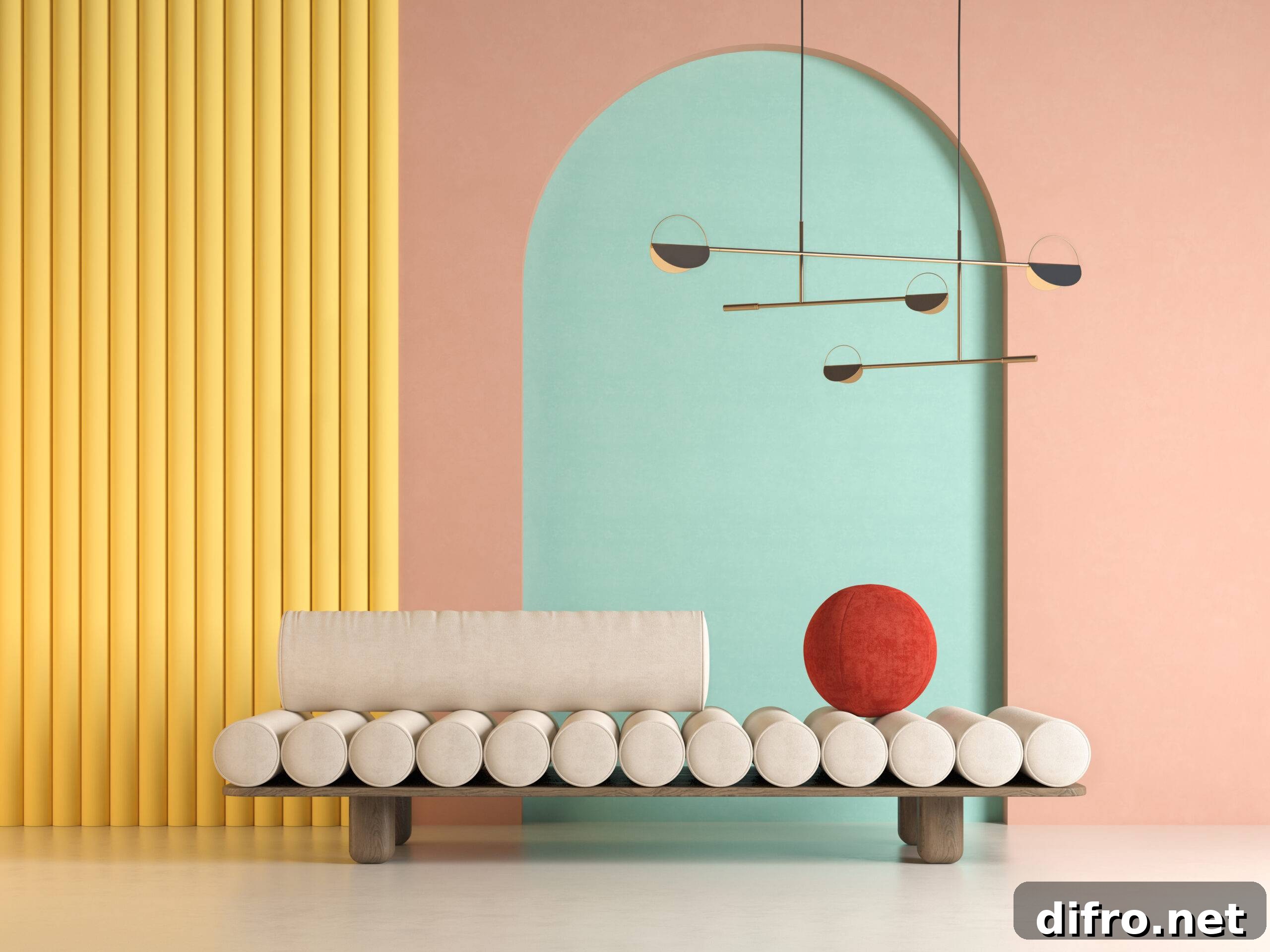
- Memphis design often includes neon accents, graphic motifs, and references to music and technology that echo the 1980s cultural landscape.
- Influences from Art Deco and Pop Art show up in bold color, geometry, and visual layering.
- These retro touches add whimsy and character, making rooms feel curated and expressive.
How to Bring Memphis Style into Your Home
Memphis design invites experimentation. You don’t need to overhaul your entire home to enjoy its effects—start with thoughtful, targeted choices and build confidence over time.
#1 Start Small
Begin with accents: cushions, a single statement chair, a lamp, or a patterned rug. These items introduce Memphis energy without committing to major renovations. Once you’re comfortable, layer in larger pieces or a bold wall treatment.
#2 Create a Cohesive Color Strategy
- Choose a primary palette of two or three bold colors and a neutral base to keep the look intentional rather than chaotic.
- Use color blocking to define zones or emphasize architectural features—cabinets, a fireplace wall, or shelving can benefit from this technique.
#3 Balance Pattern and Texture
- Mix geometric patterns with solid fields of color to avoid visual overload. Alternate large-scale motifs with smaller repeats.
- Combine glossy surfaces with soft textiles to add tactile contrast. Materials like laminate or molded plastic work well with woven rugs and velvet cushions.
Memphis design is fundamentally about self-expression and delight. Whether you adopt its loudest elements or choose subtle references, the style rewards imagination. Use contrast and surprise deliberately: pair playful shapes with calm backdrops, or let a single colorful piece anchor a neutral room. With a few considered choices, you can capture the energy of Memphis design while keeping your home balanced and livable.