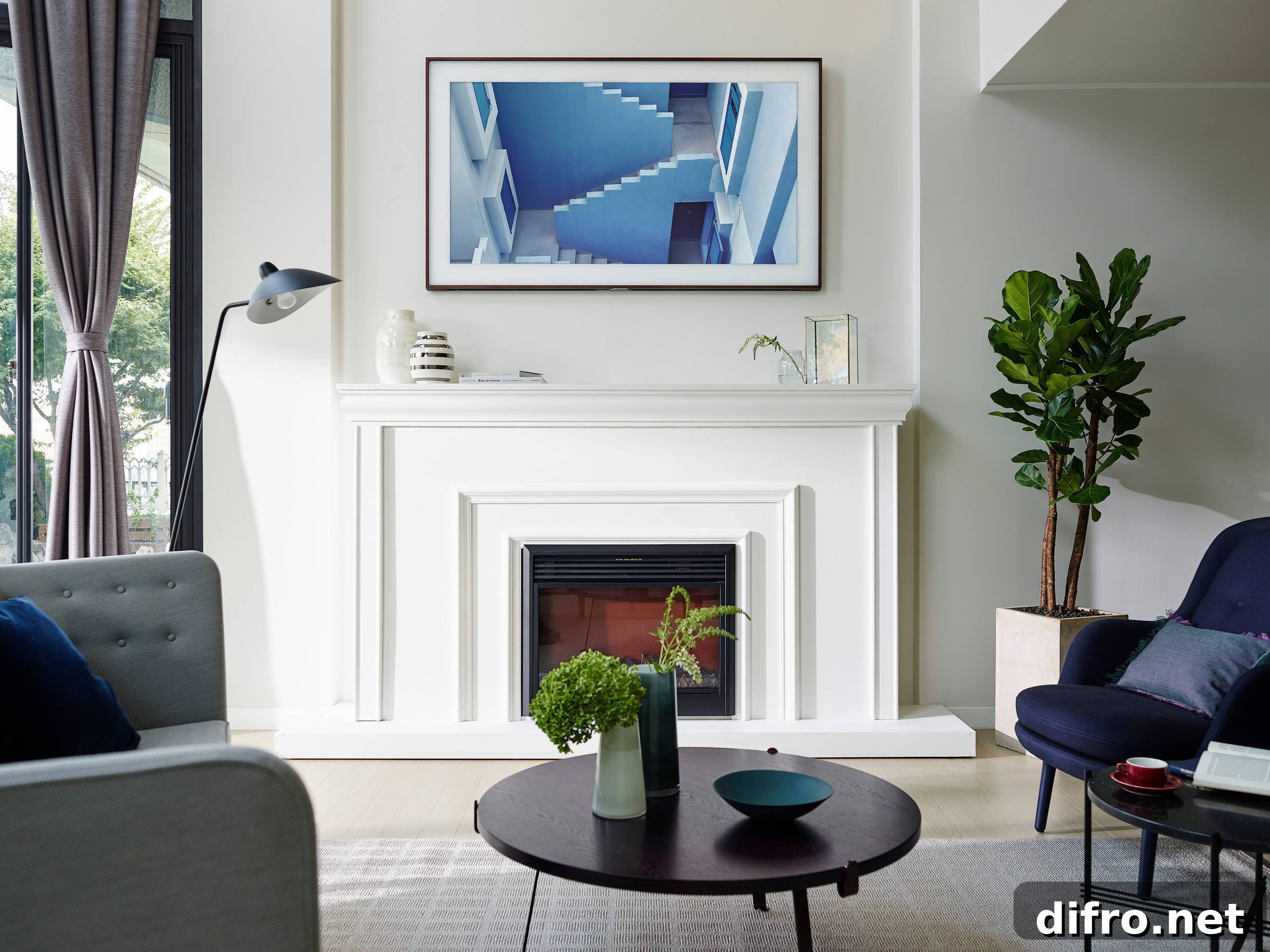
Many homeowners want a television available for entertainment but prefer it not to dominate the room’s design. Fortunately, there are many tasteful ways to hide or integrate a TV so it complements your living room without becoming the focal point. Below are elegant, practical ideas that work in a variety of styles and budgets—from tech-forward solutions to simple, DIY-friendly options.
TV that turns into art
High-end models now offer an “art mode” that transforms the screen into a framed image when not in use. These TVs display curated artwork or your own photos, matching the room’s color palette and creating a minimalist look that blends with decor. This solution is ideal for living rooms where style and atmosphere matter as much as function.
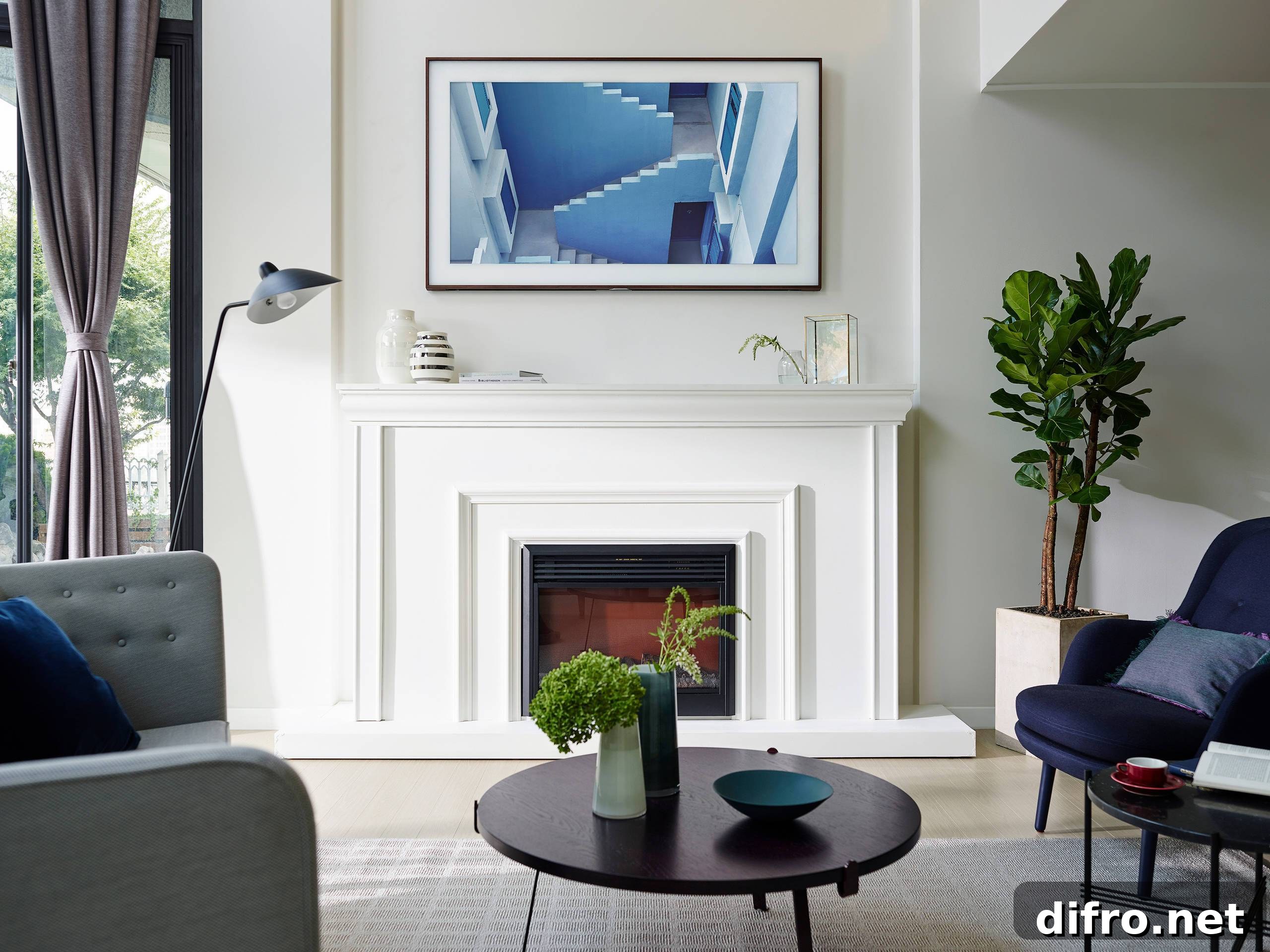
Conceal it with art
If your fireplace or mantel is already a room focal point, consider a retractable art panel that slides down to reveal the TV only when needed. This approach keeps a beautiful painting or print center stage while offering quick access to the screen. Mechanized or manual retracting panels work equally well depending on budget.
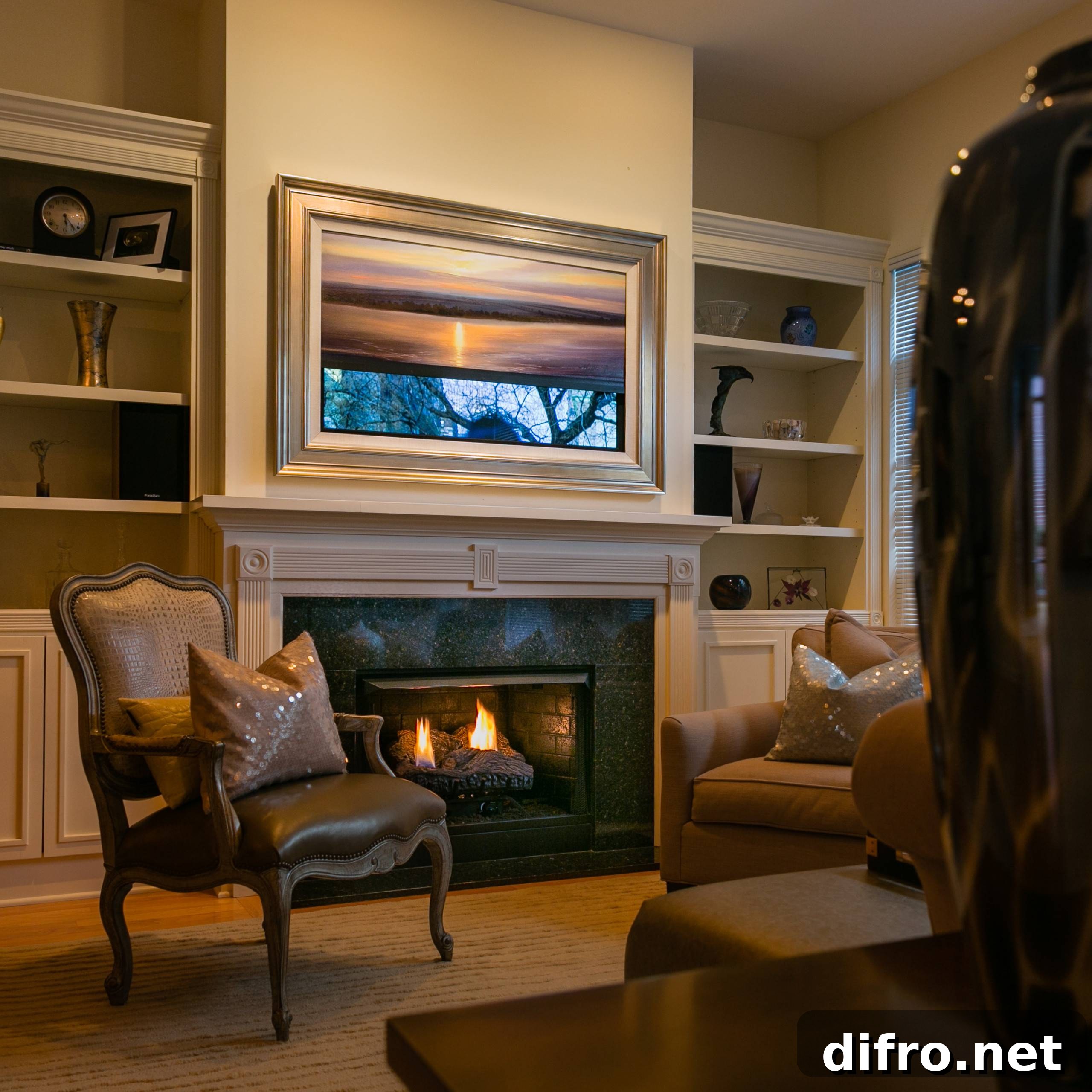
Make the TV part of the decor
When you use the TV frequently, blending it into a coordinated design can be smarter than hiding it. Surround the screen with built-in shelving, matching finishes, or a symmetrical arrangement of decor so the TV reads as an intentional element of the overall composition rather than an intrusive black rectangle.
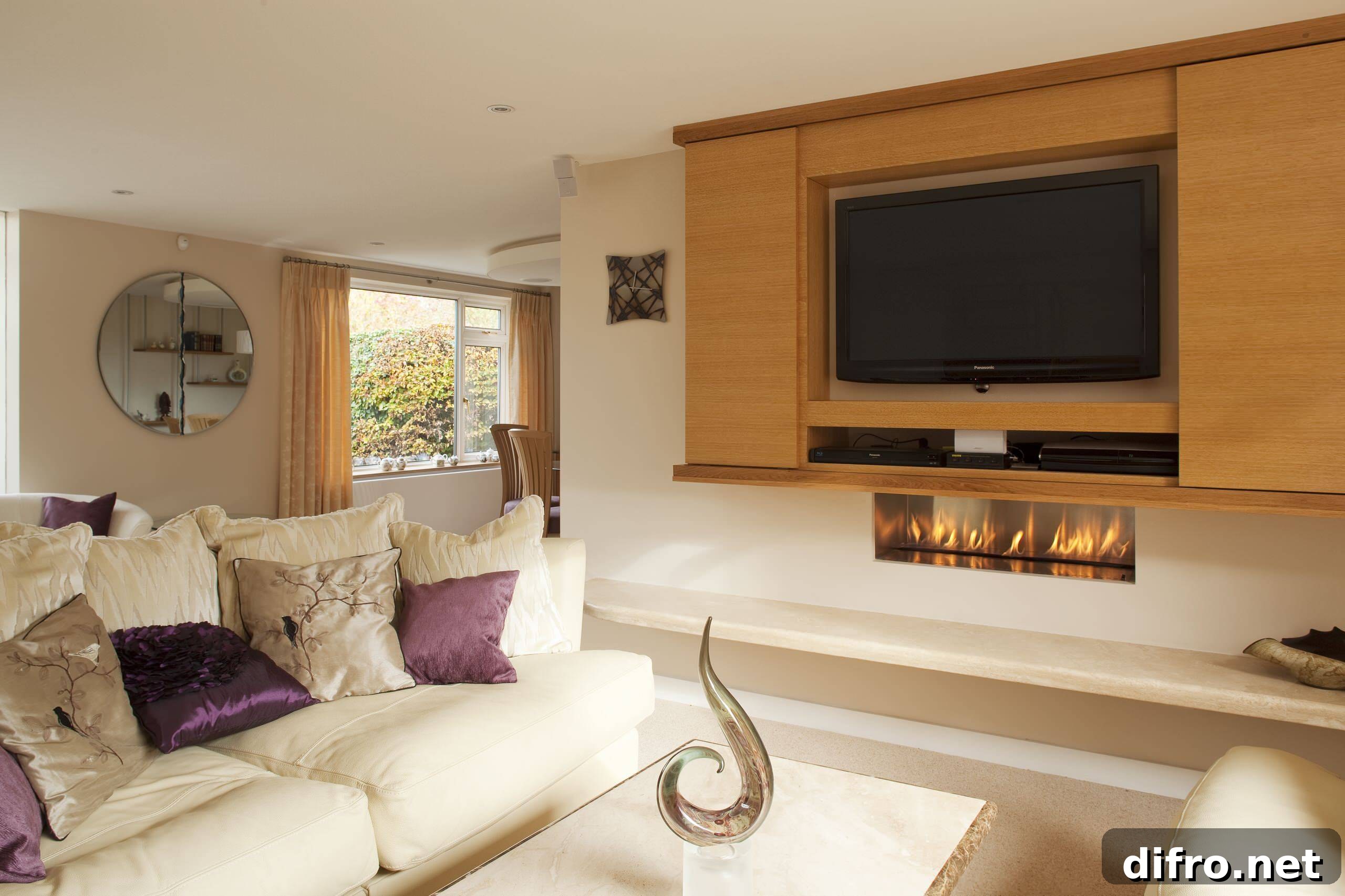
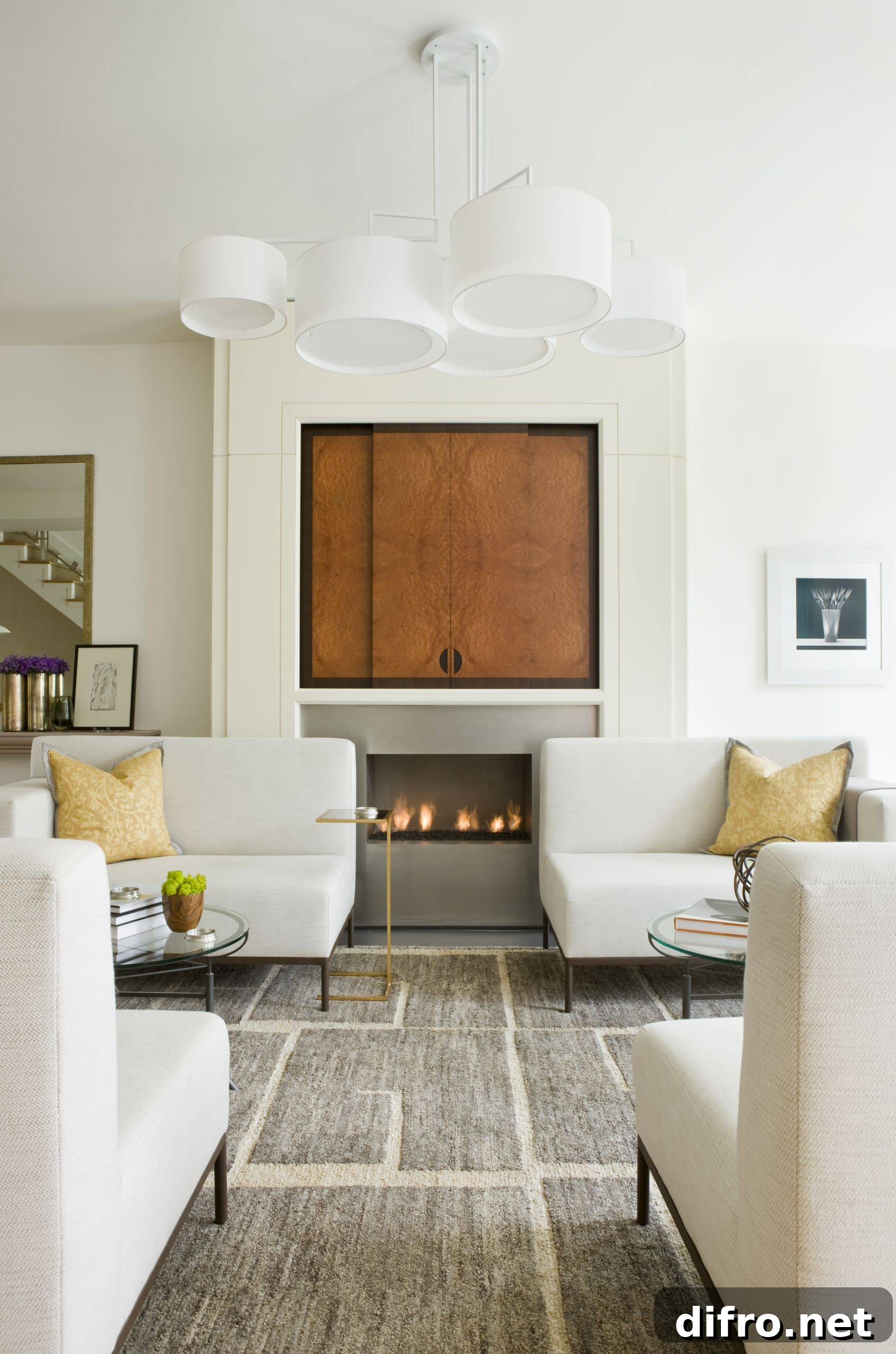
Cover with sliding doors
Paneled walls with sliding doors are a refined way to hide audiovisual equipment. Sliding panels can fully conceal the TV and its wiring when closed and provide easy access when you want to watch. This solution is particularly effective in open-plan spaces where you want to control what’s visible at different times.
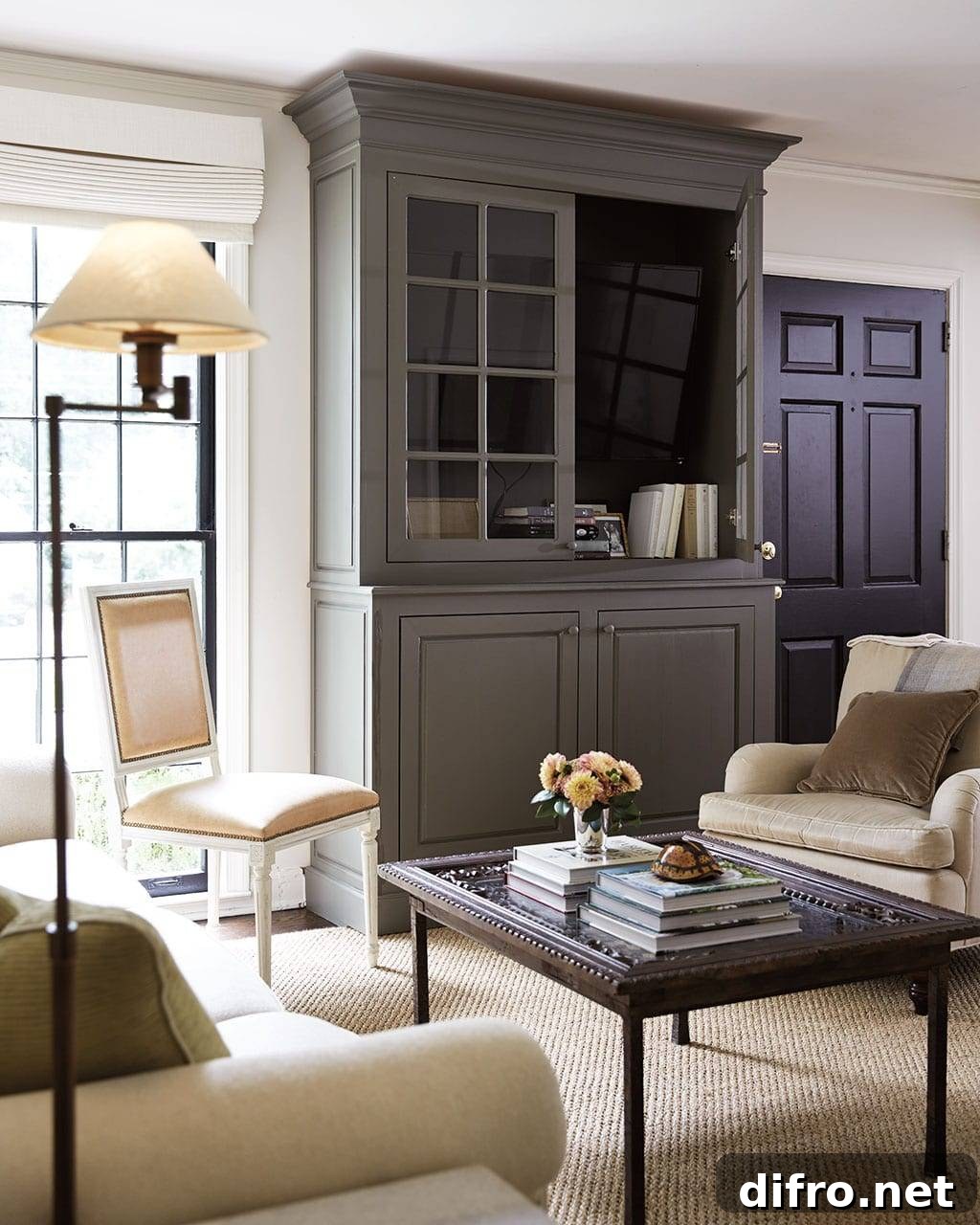
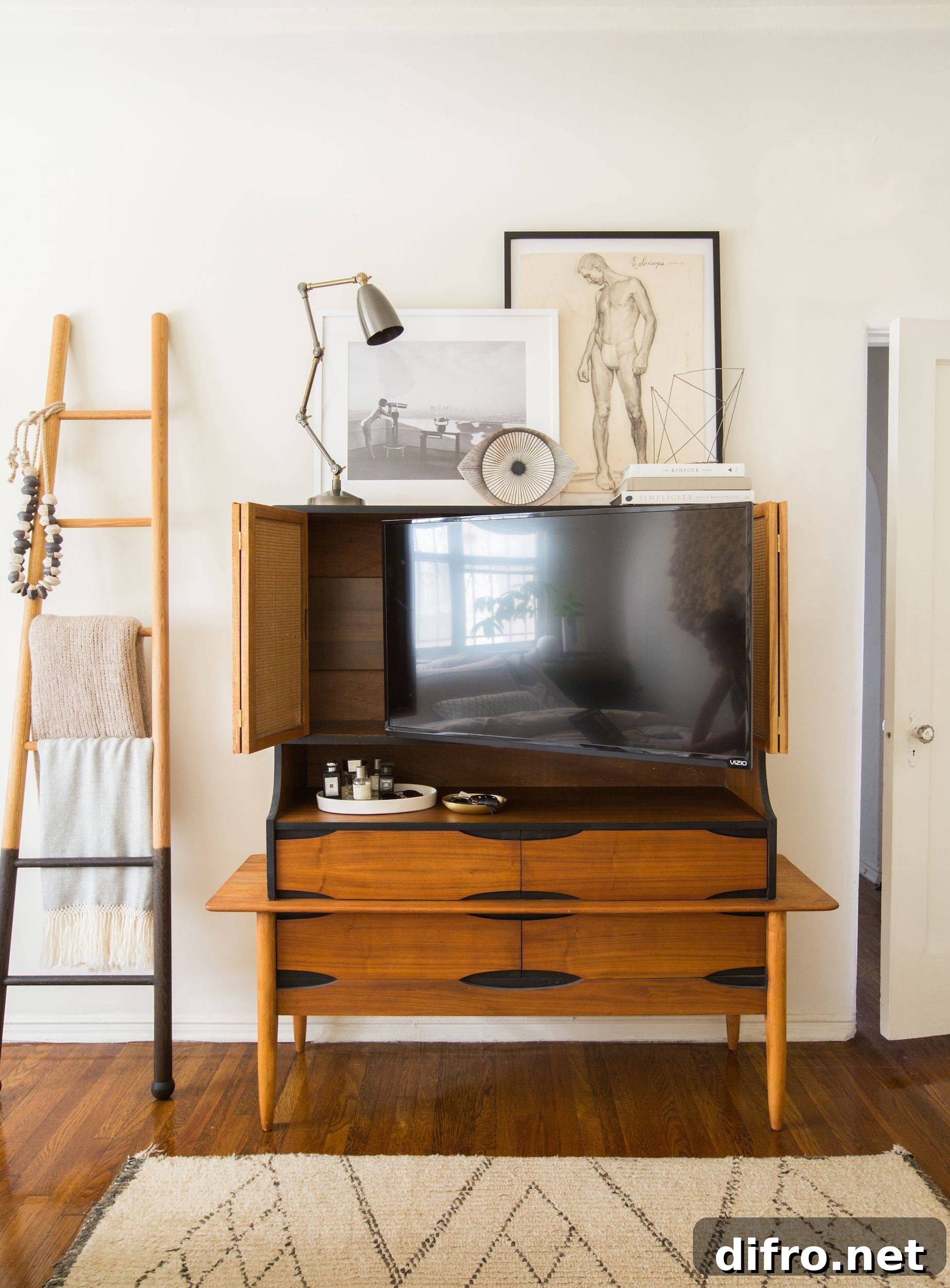
Hide the TV in a cabinet
For homeowners who favor rustic, vintage, or traditional interiors, placing the TV inside a cabinet that matches the room’s furniture is a practical choice. Closed doors return the room to a living-space look without visible tech. This approach is ideal in rooms where television watching is occasional rather than the primary function.
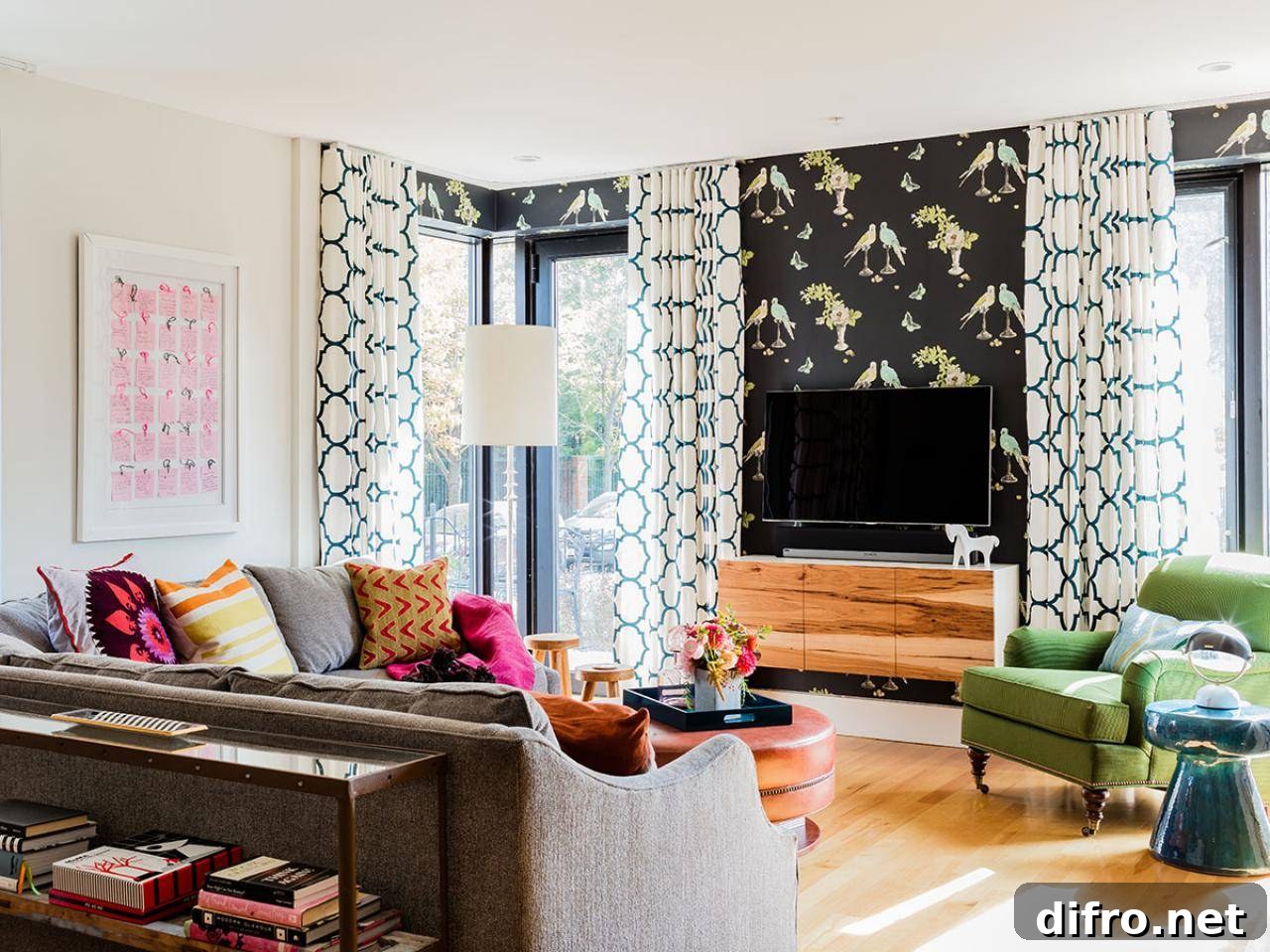
Blend with a dark wall
Painting or papering the wall behind the TV in a deep or dark tone helps the screen recede visually when it’s off. A dark single-color backdrop camouflages bezels and cables and creates a moody, cinematic atmosphere when the screen is in use. Keep in mind that dark walls can make small rooms feel smaller, so this works best in larger or well-lit spaces.
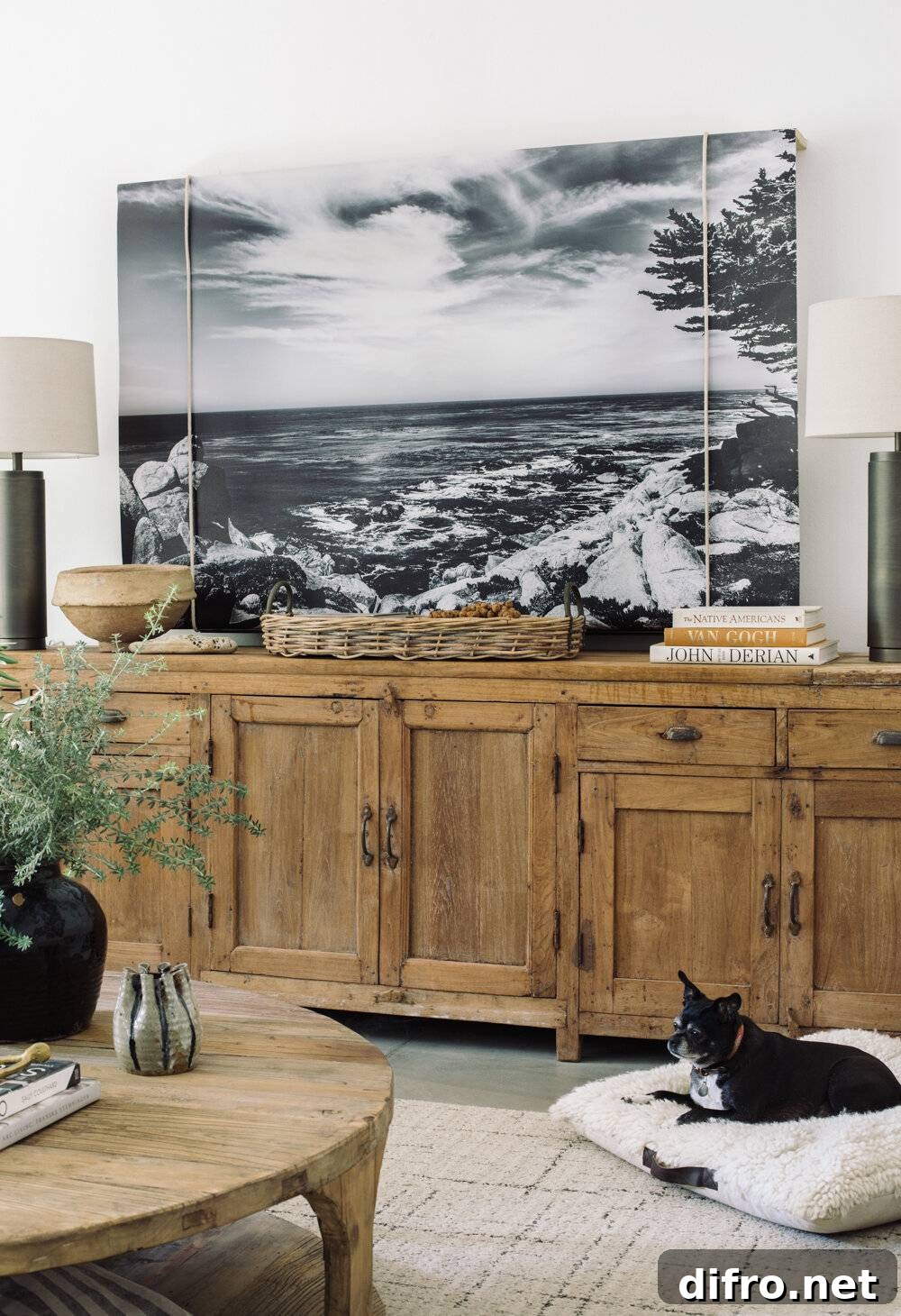
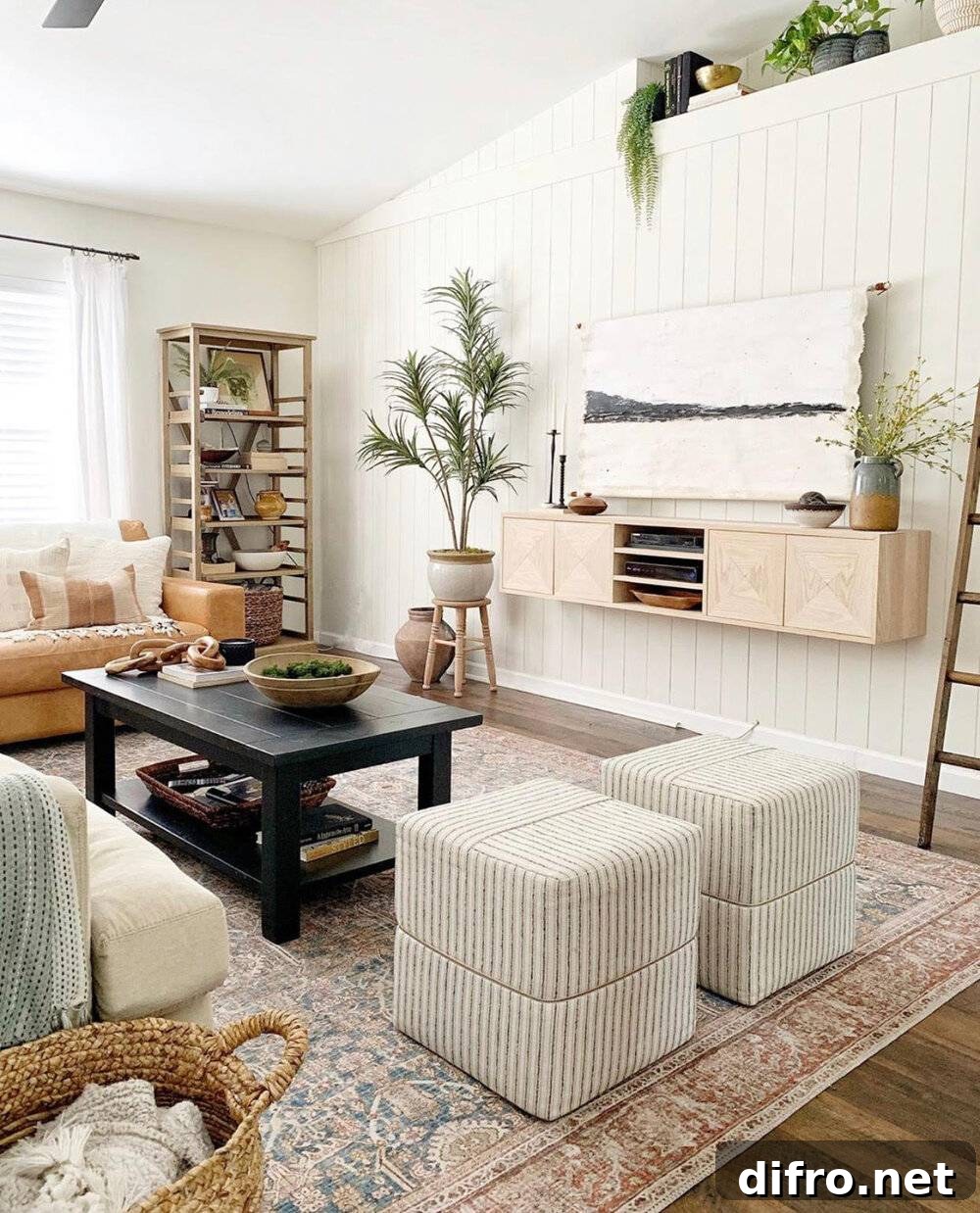
Roll-up solution: art or tapestry
A roll-up canvas or tapestry is a budget-friendly, customizable solution. Mounted on a simple roller mechanism, a printed canvas or fabric panel can be pulled down to hide the TV in seconds and retracted when you want to watch. This DIY-friendly option lets you choose any artwork, pattern, or texture to fit your room’s mood.
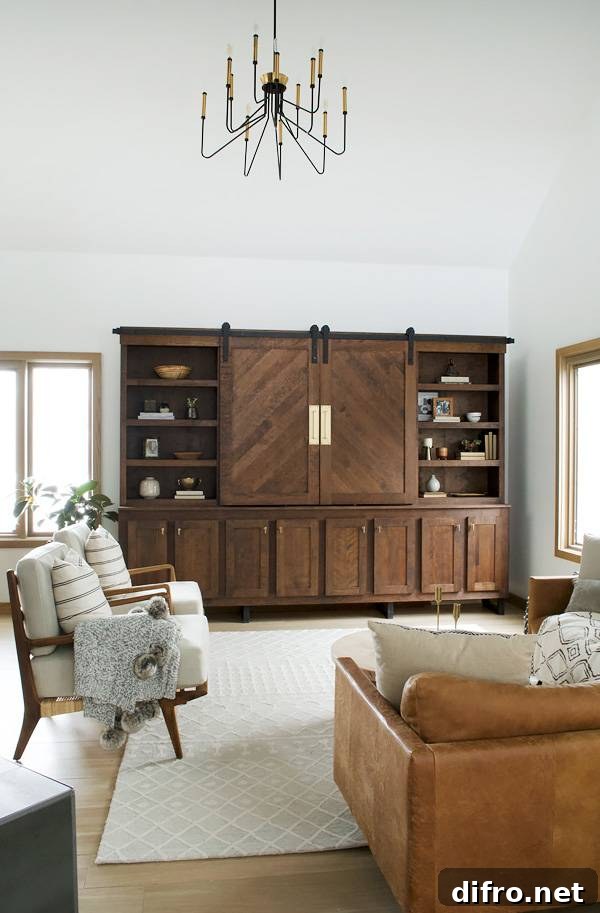
Custom entertainment center with sliding doors
For dedicated media rooms or homeowners with multiple devices—gaming consoles, receivers, and speakers—a custom-built entertainment unit offers the most flexible storage and concealment options. Sliding or barn-style doors hide components and cords while providing ample storage for accessories, creating a tidy, tailored appearance that suits any interior style.
Whether you prefer an elegant high-tech display, a handmade roll-down canvas, or built-in cabinetry, there are many ways to keep a television from overwhelming your living room. Choose a solution that reflects how often you use the TV, your budget, and your room’s overall aesthetic to create a space that feels both functional and beautifully composed.