
At Decoist, we continue a series of conversations with interior designers, bloggers, and influencers to share their stories, experiences, and design philosophies. These interviews give readers a behind-the-scenes look at the people shaping today’s interiors and provide practical insight into how professionals approach their craft.
While we regularly cover trends and home design ideas, this series highlights individuals who inspire us—creatives whose work we follow and whose perspectives help define contemporary design conversations.
This week we sit down with Heather Harkovich of Heather Scott Home & Design. Based in Austin, Texas, Heather has spent more than 15 years building a studio and reputation for thoughtful, livable interiors. Her work has been featured on television and in design outlets, and she shares projects and ideas across Pinterest, Instagram, and Facebook as well as through her studio portfolio.

What started your passion for design and what inspired you to get involved in this industry?
My interest in art and interiors goes back as long as I can remember, but I didn’t initially see interior design as a career path. I worked in brand marketing for several years, and it was only after visiting a local home boutique that I enrolled in an interior design certification class as a hobby. That first class changed everything: I discovered a natural inclination for spatial planning, color, and composition, and I realized design was more than a pastime—it was the work I wanted to pursue professionally. Within six months my husband and I made a bold decision to leave our jobs, relocate, and launch our business. What began as a boutique home decor shop in Austin has grown into a full-service interior design studio over the last 16 years.
From your perspective, is home design more of an art or science?
I see home design primarily as an art. There are certainly principles and systems—proportion, scale, circulation—that can be taught and learned, which gives design a scientific element. But the intuitive ability to create harmony, to recognize how textures, colors, and objects will interact in a space, feels like an artistic gift. That sensibility is often what sets great designers apart: a refined eye and an instinct for composition that can’t always be replicated through rules alone. In that way, interior design aligns with other creative fields like photography, where technical knowledge supports but does not replace artistic vision.
What’s an often overlooked part of homes that needs more attention when it comes to style & design?
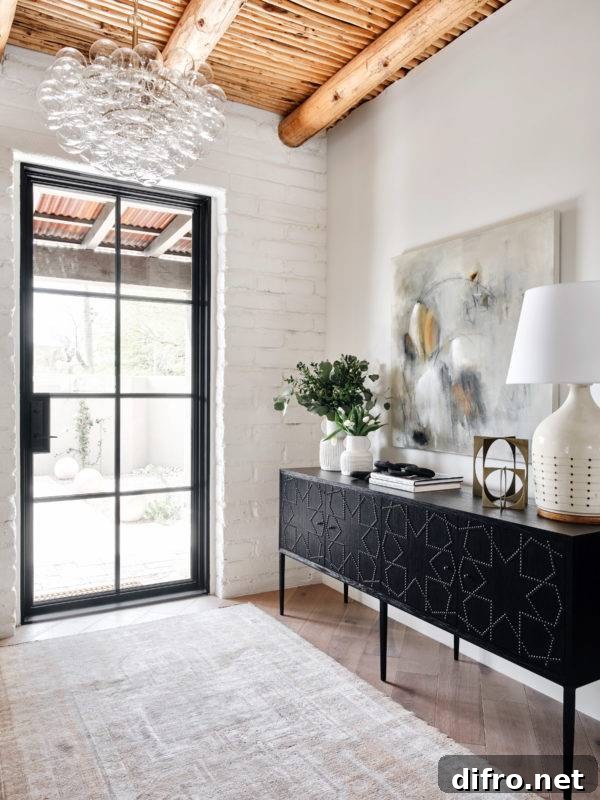
The entryway is frequently underestimated. It offers one of the best opportunities to communicate who you are and how you live: a simple vignette of meaningful objects, a curated console, or a striking light fixture can set the tone for the entire home. Entries don’t need to be large to be impactful; even a compact foyer can tell a story about the family, display a small collection, or provide a practical transition zone. Designing a welcoming and intentional arrival experience should be a priority, because first impressions matter.
What’s the most frustrating part of your job? And the most rewarding?
Right now, long lead times are the most challenging aspect of the work. We love orchestrating dramatic reveals for clients—moments when a room is complete and the response is emotional—but when key pieces take months or even up to a year to arrive, those planned unveilings become harder to pull off. Staggered deliveries can dilute the impact of a reveal and make it difficult to achieve the cohesive finish we aim for. That said, the most rewarding part remains seeing clients’ reactions when a space finally comes together. Their patience and support during delays have been encouraging, and keeping open communication helps strengthen the client-designer relationship as we work to complete a home thoughtfully and with care.
What advice do you have for budding designers?
If you intend to be a full-time designer rather than a hobbyist, spend time working within the industry first. I recommend working for established designers—ideally for several years—before launching your own practice. Design is about much more than creative decisions; it’s also a business. Learning project management, client communication, budgeting, procurement, and how to run operations from people who’ve walked the path is invaluable. Observe both successful strategies and mistakes so you can model what works and avoid common pitfalls when you start your own company.
Are you a designer or an influencer in the design space and want to be featured in this series? Let’s talk. Reach out to us at [email protected].