Curved House by Daluz Gonzalez Architekten in Basel
Smart residential design responds to the unique constraints of a site while addressing the needs and lifestyle of its occupants. The Curved House by Daluz Gonzalez Architekten in Basel exemplifies this approach: a carefully calibrated addition placed within an existing property that already contains a larger main house. Designed for a young couple and positioned adjacent to the parents’ home, the new residence negotiates privacy, shared outdoor space and functional living through a considered formal language and material palette.
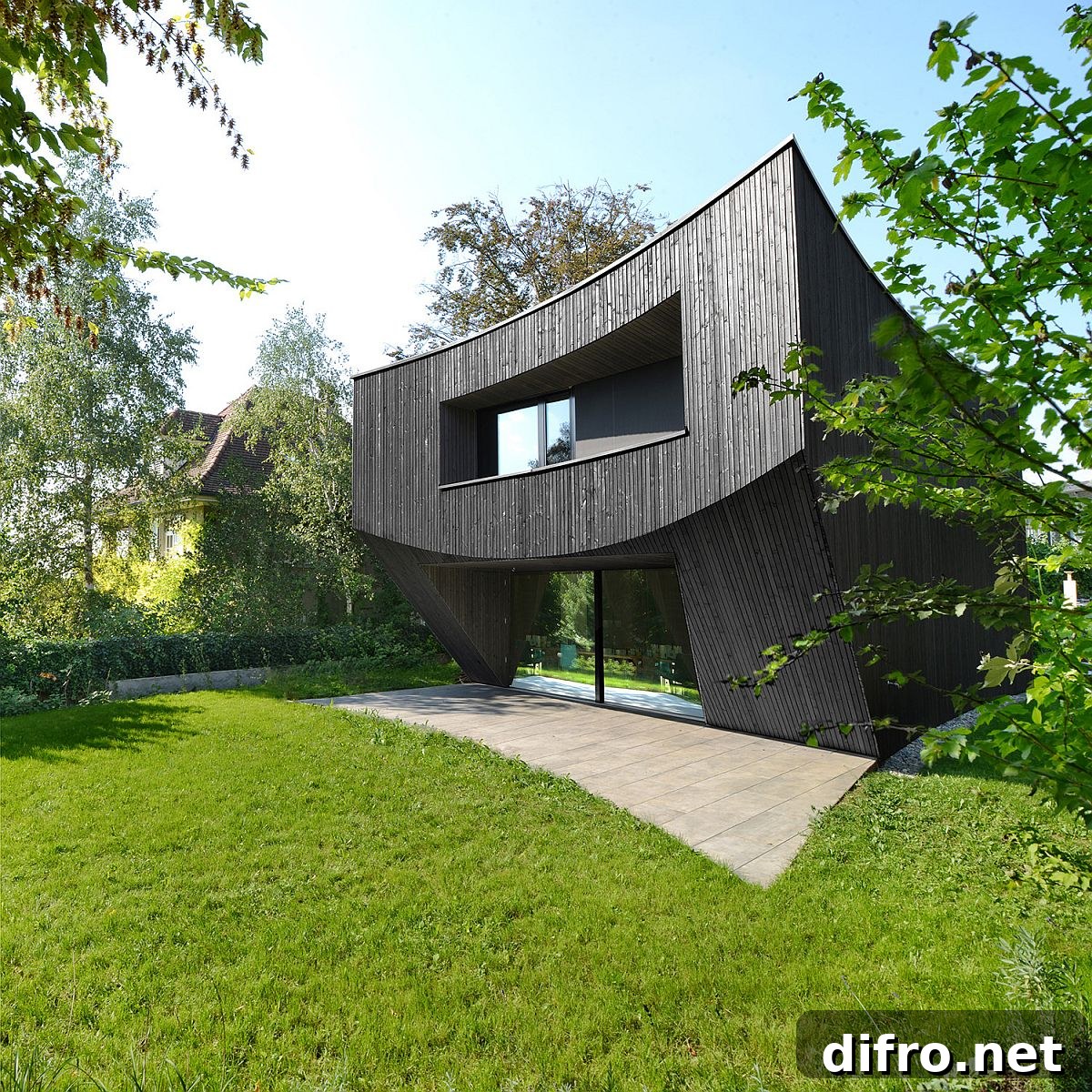
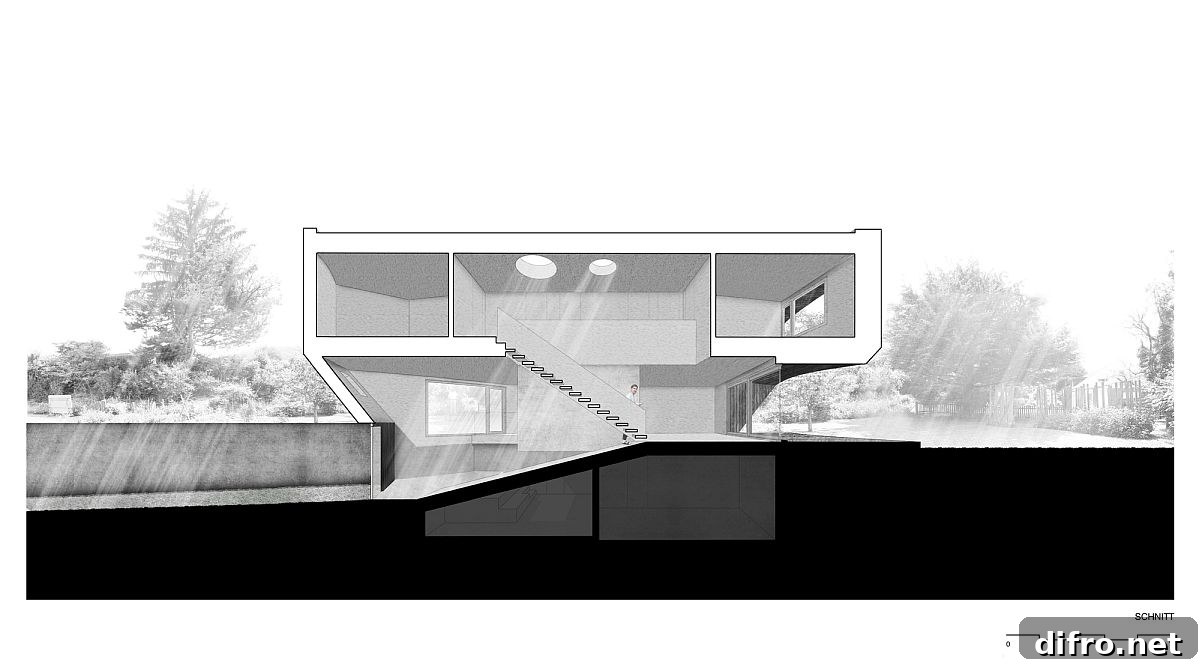
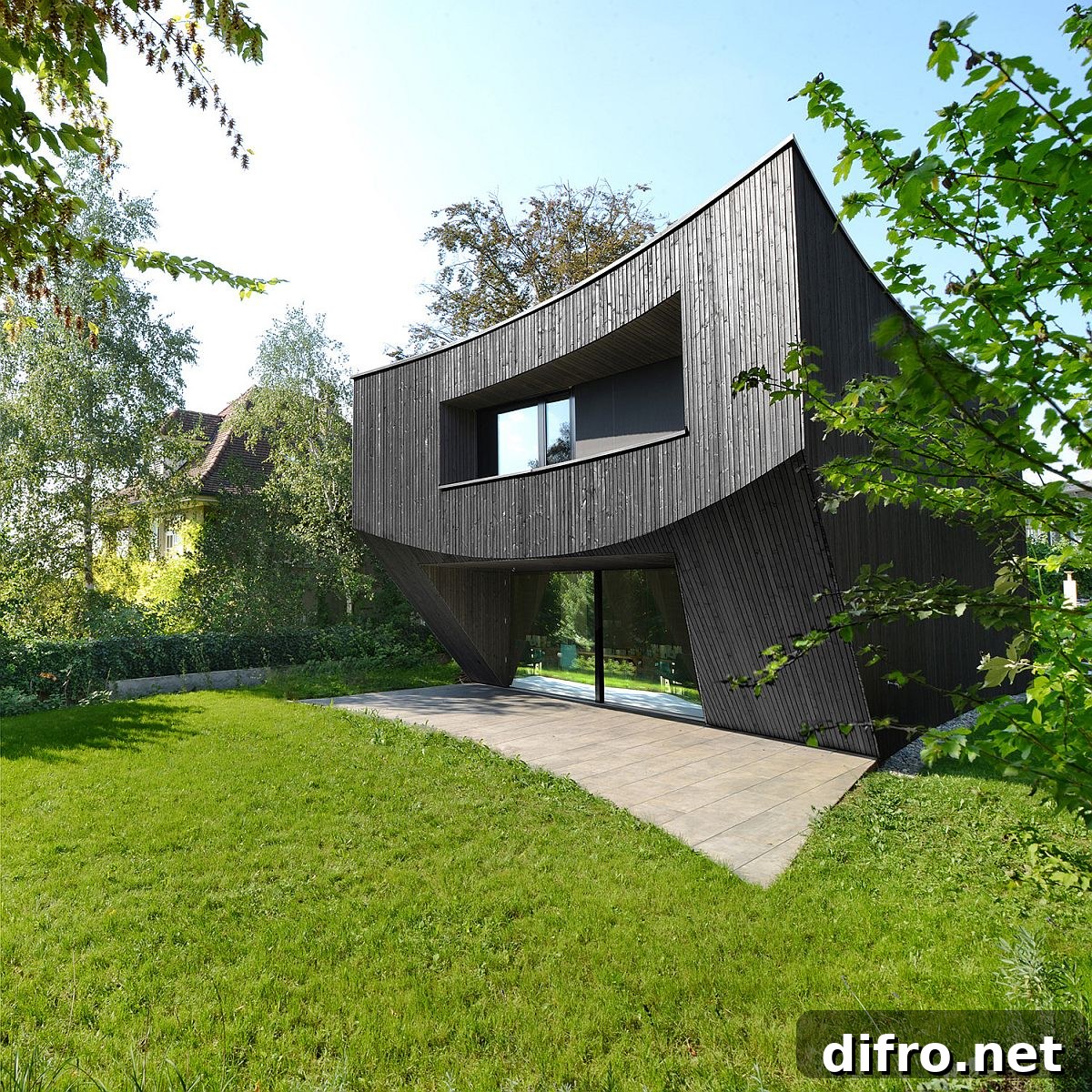
The design responds to a narrow lot and a long north-south orientation by introducing a distinct lower-level curve that gives the house its name and strong identity. That curved wall on the lower level helps the building sit comfortably alongside the semicircular main house already on the property, while creating a sculptural presence that reads as both contemporary and respectful of the existing context.
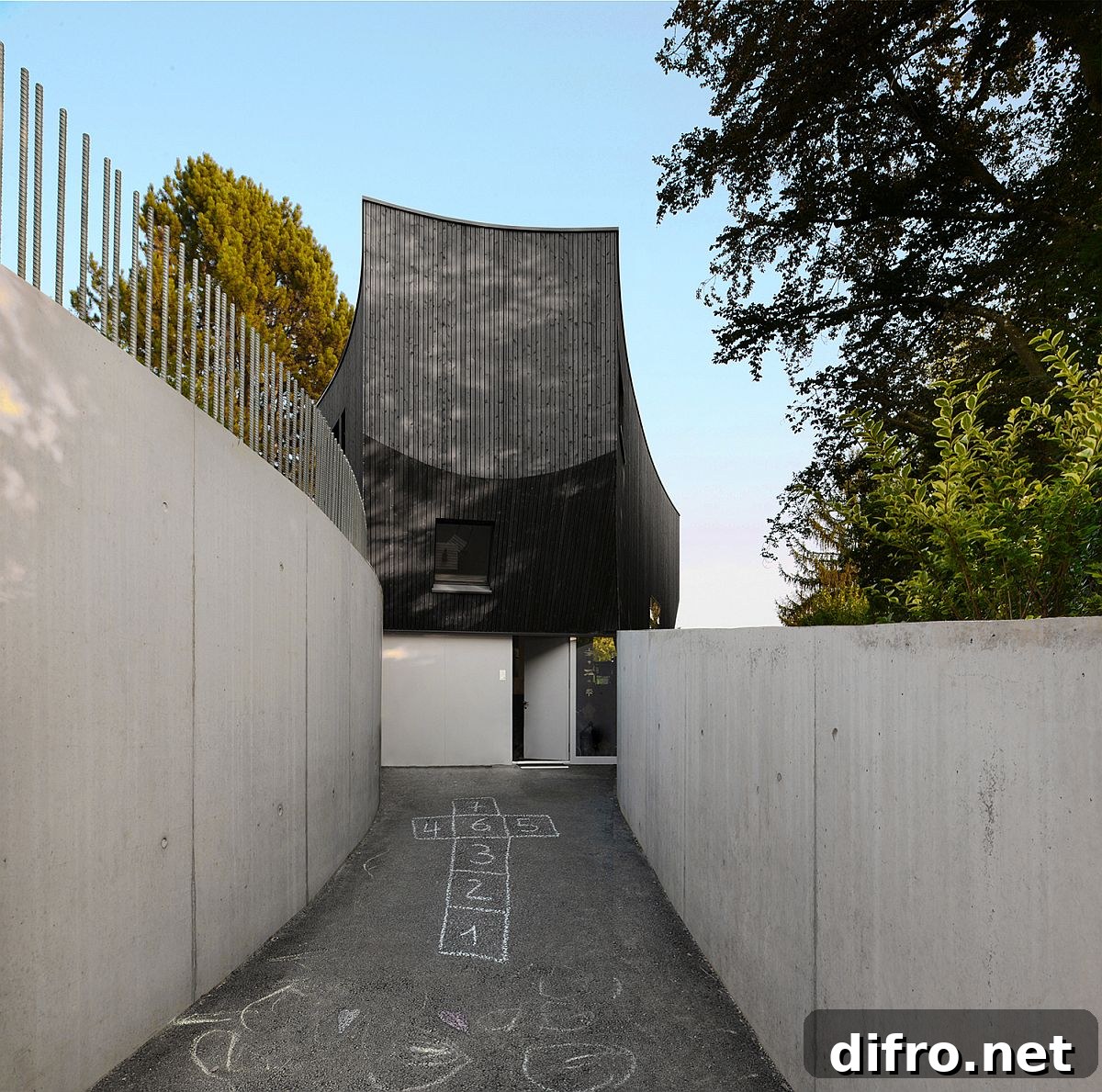
Externally the house is fully clad in timber that lends warmth and texture against a robust concrete base. The combination of wood and concrete creates a visual contrast that also signals the balance between tradition and modern performance: wood offers a familiar, human scale while the concrete base establishes a durable foundation. Large glazed openings, glass walls and generous skylights bring abundant daylight into the interior and connect living spaces to the garden.
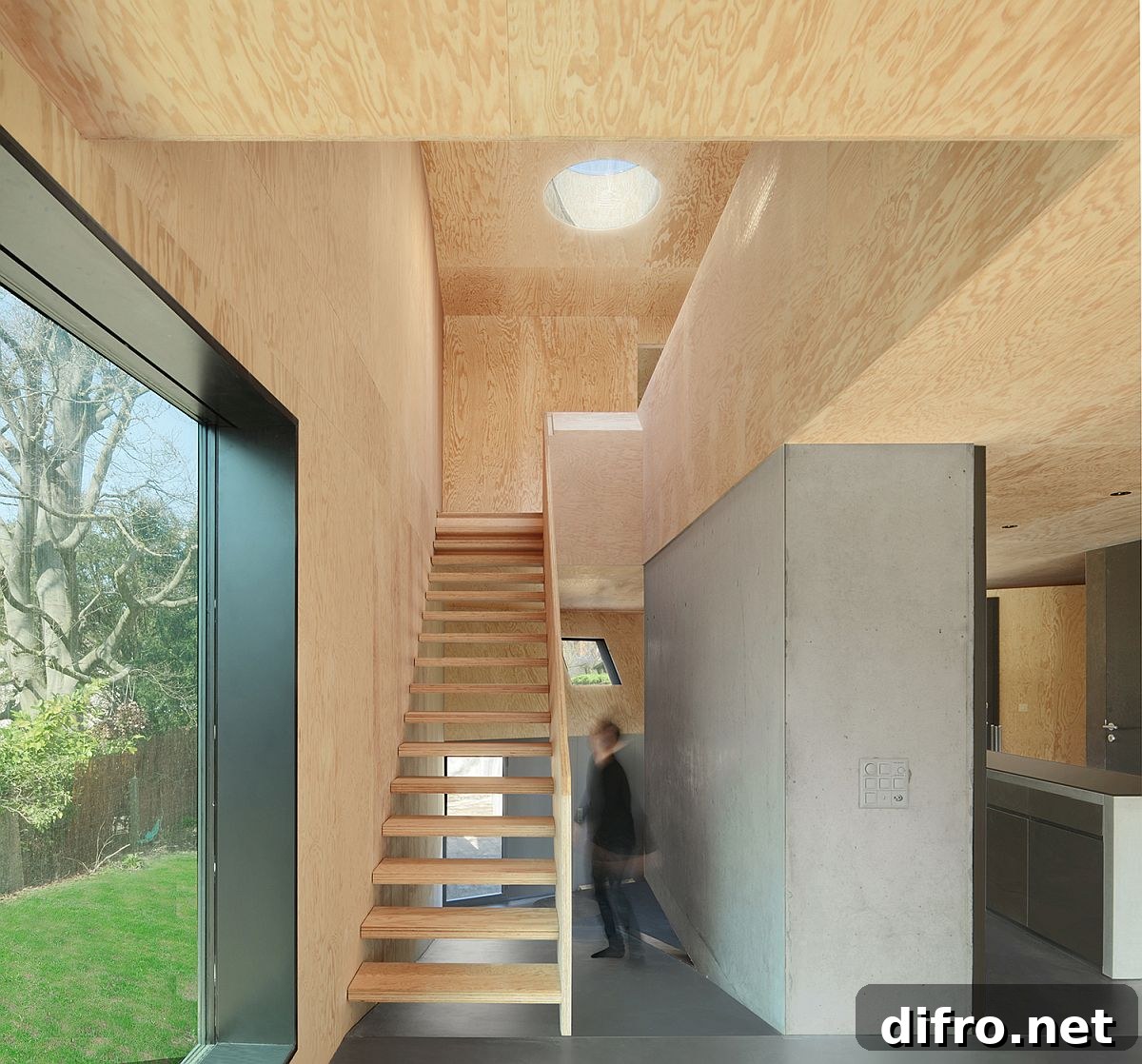
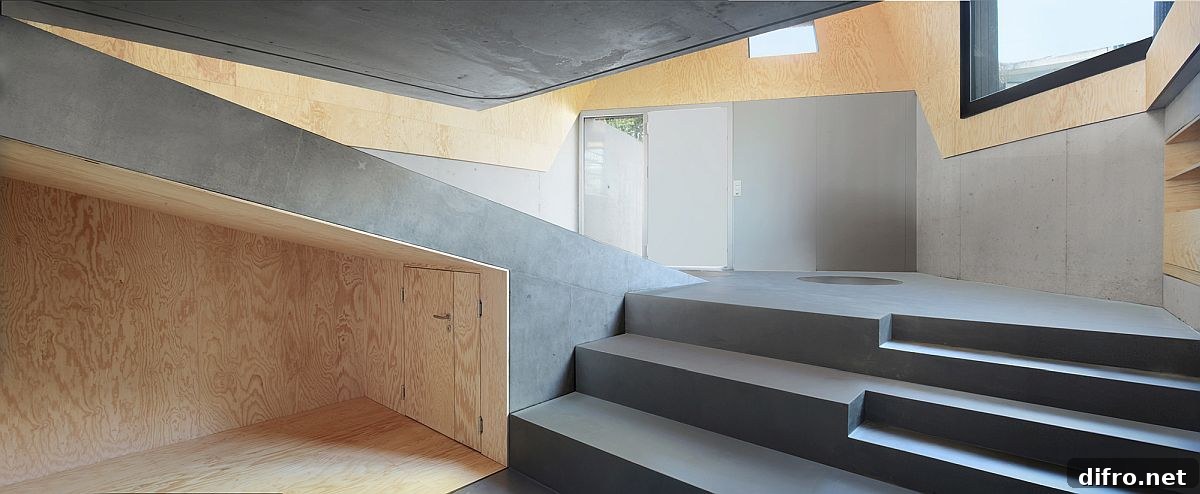
Inside, the material story continues with exposed concrete and warm wooden surfaces that define a restrained, minimal interior. The planning maximizes usable space across an inventive floorplan: open-plan living areas orient toward the garden, while private rooms are tucked away to preserve seclusion from the neighboring family house. Skylights and high-level glazing distribute natural light deep into the plan, reducing the need for artificial lighting and enhancing the feeling of openness.
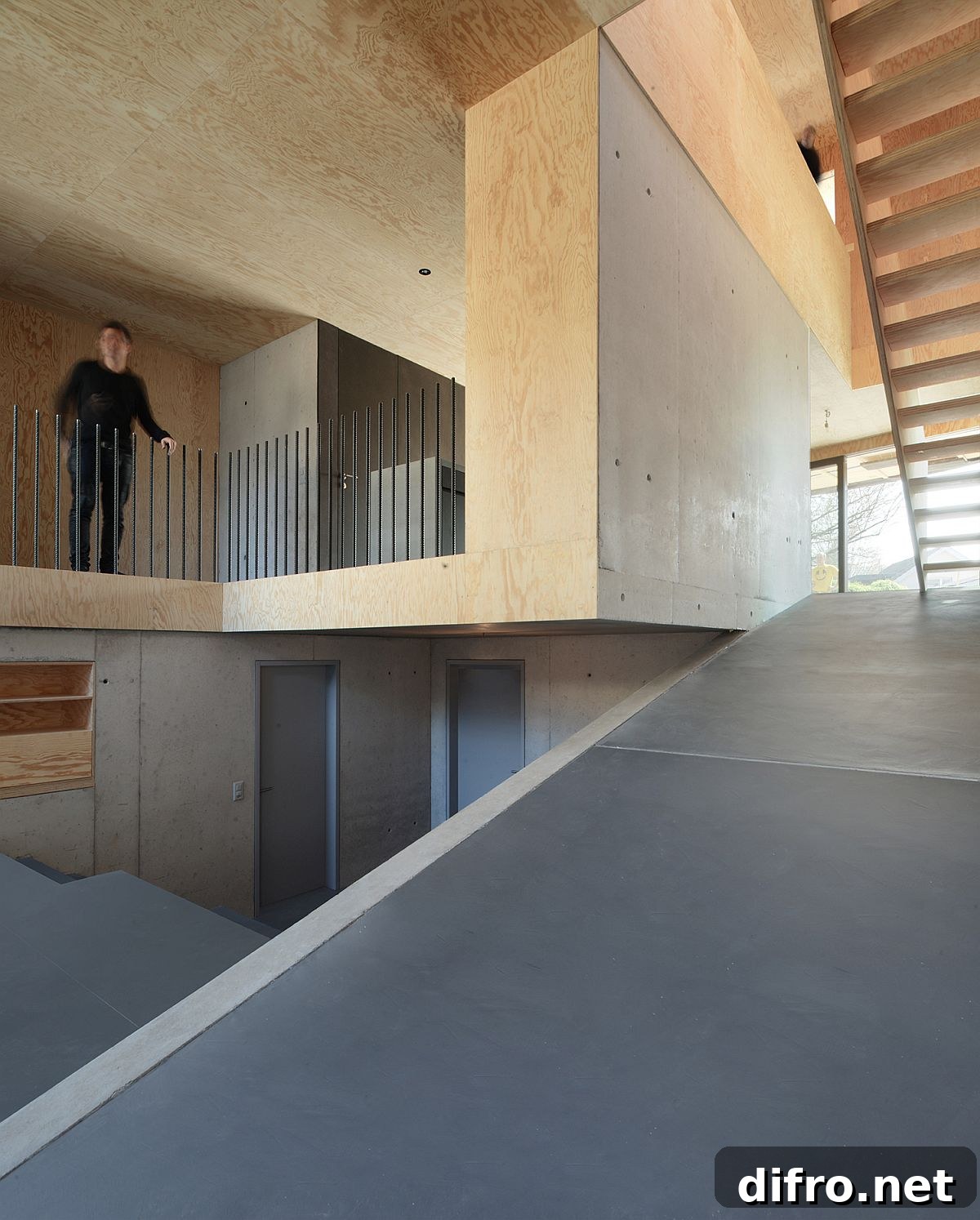
Traditional Swiss construction techniques inform the detailing and craftsmanship, while contemporary architectural thinking shapes spatial relationships and daylight strategies. The result is a house that feels both familiar and fresh: the timber cladding references local building traditions, and the pared-back interiors prioritize function, material honesty and comfort.
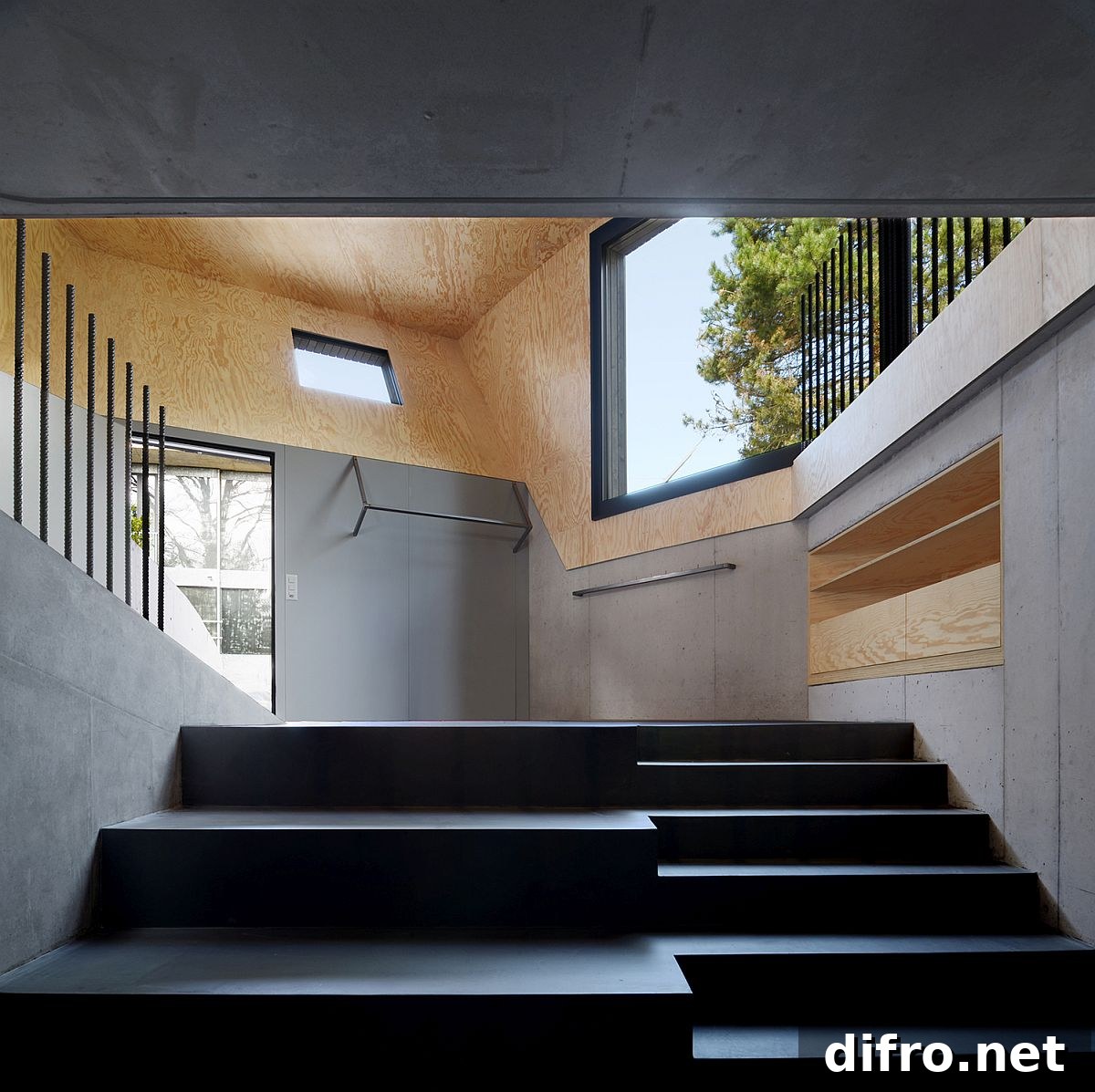
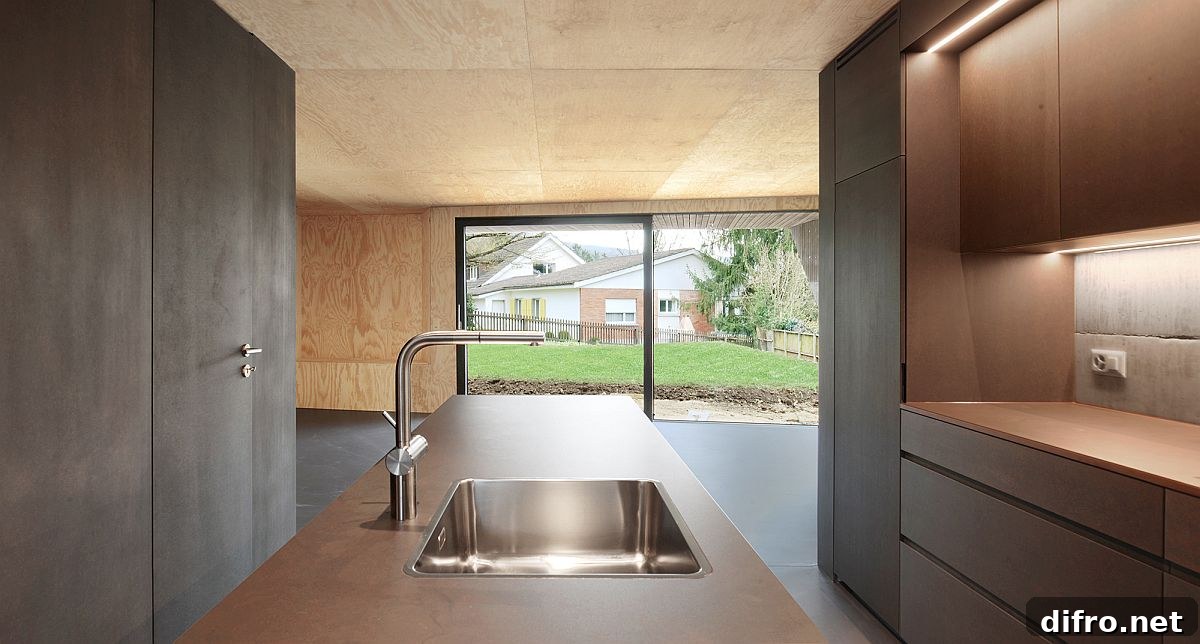
Circulation through the house is deliberately composed: a mix of stairs and a gently sloped ramp adds visual interest and makes transitions between levels feel intentional and varied. These elements also reinforce the architectural narrative—moving from robust, grounded concrete to warmer, more intimate wooden-clad spaces.
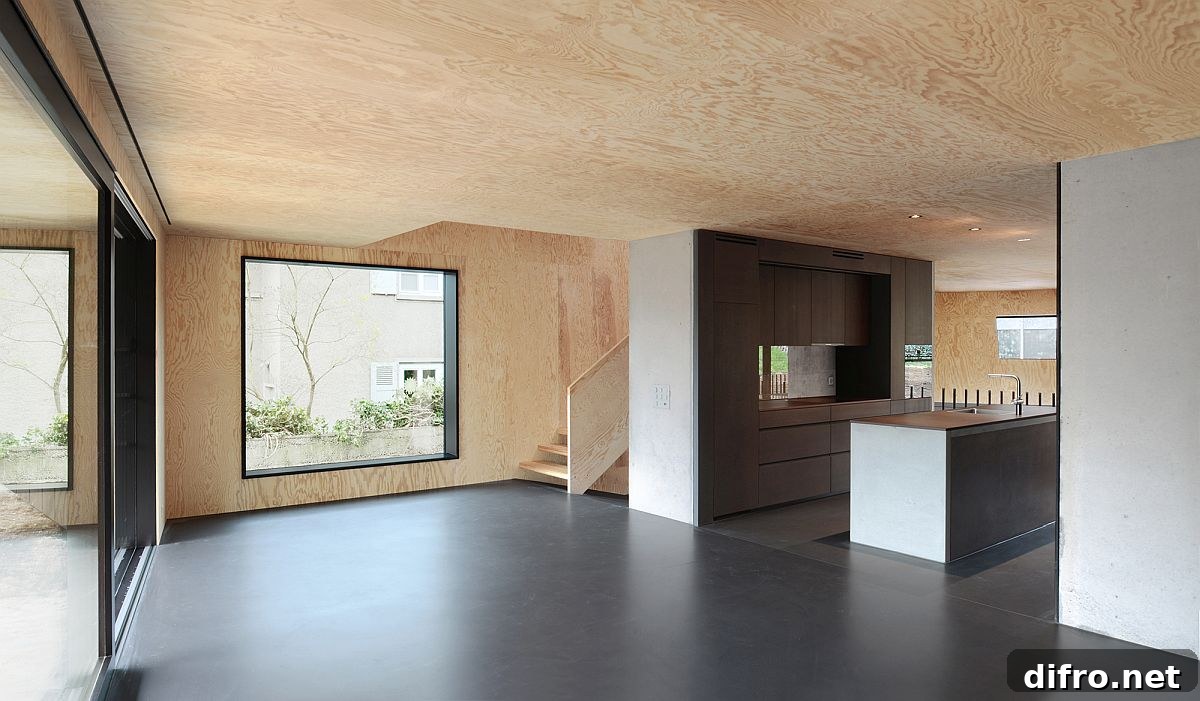
The reduced dimensions of the place, with North-South orientation on the long side, and the desire to share part of the garden, made it necessary to understand how is working the main house. This large semicircular house, was made in the 80s by the architect Max Schnetz. The spatial rotundity and the proximity to the future building, established a formal language to design the new object.
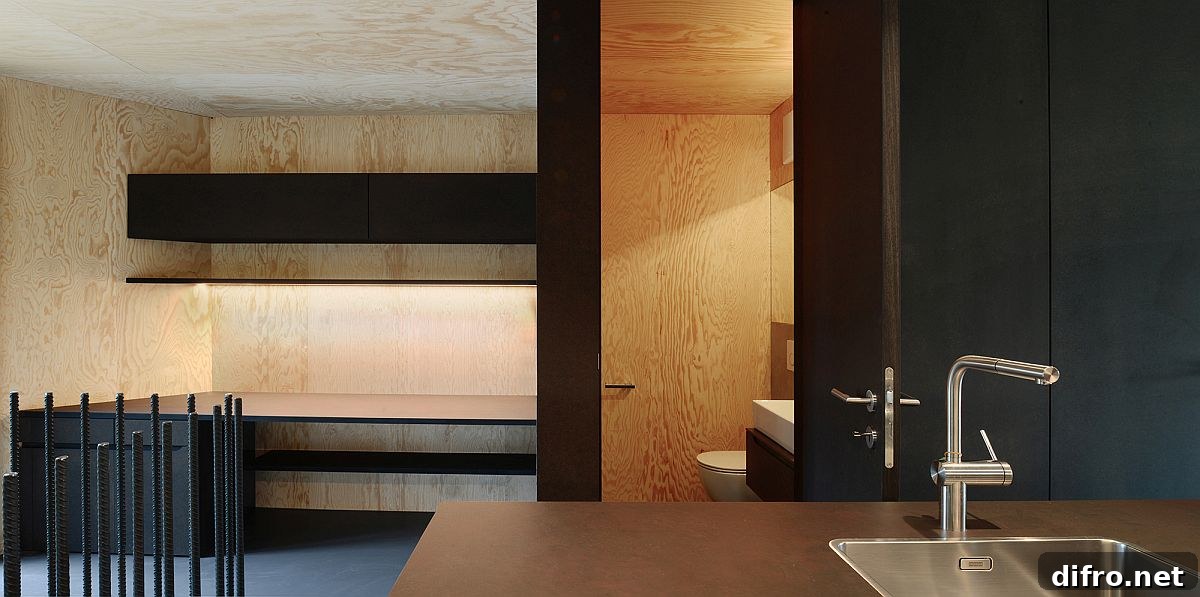
Overall, the Curved House demonstrates how careful consideration of site constraints, adjacency and program can result in a compact home that feels generous, light-filled and harmoniously integrated into its family setting. The interplay of curved geometry, timber cladding, exposed concrete and daylight yields a distinctive home that balances privacy with connection to the shared garden and the surrounding context. Photography: Alexandra Kreja.