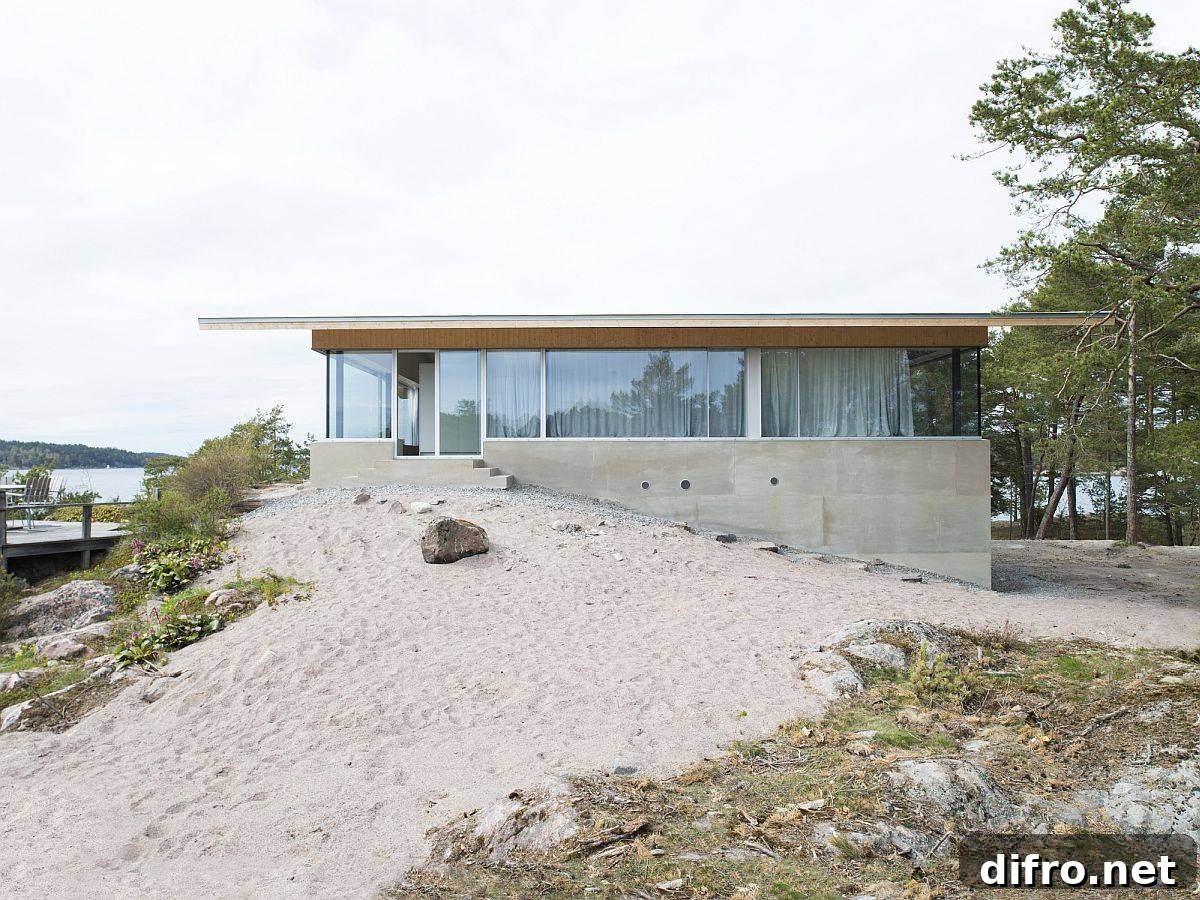
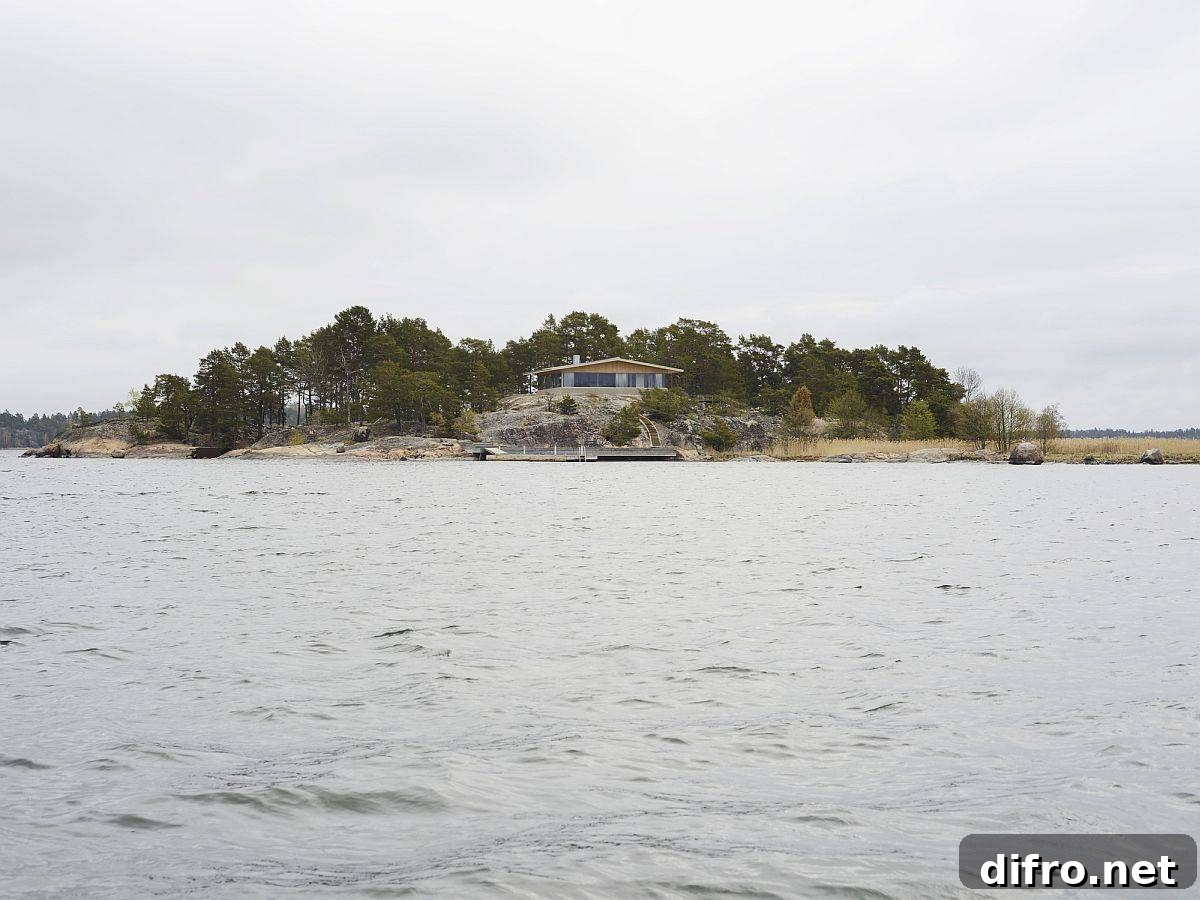
A private island in the Stockholm archipelago is a coveted setting where even a modest vacation house can feel like a luxurious, restorative escape. On one such island stands the elegant Lilla Rågholmen House, designed by Arrhov Frick Arkitektkontor. Perched on a rocky promontory, the house commands sweeping views of the water, the surrounding landscape and the horizon beyond. Its restrained, minimalist design aims to be as unobtrusive as possible, letting the natural site and panoramic outlook remain the primary focal points.
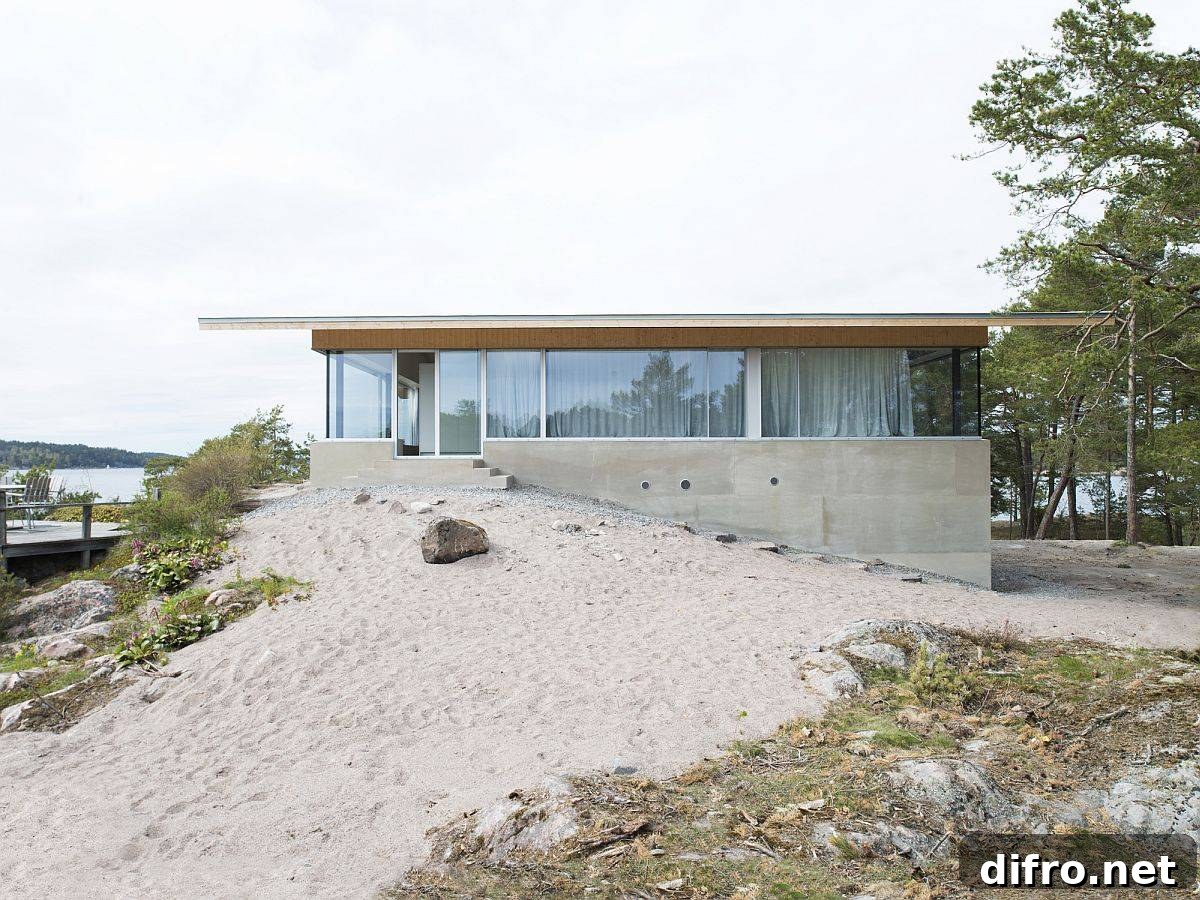
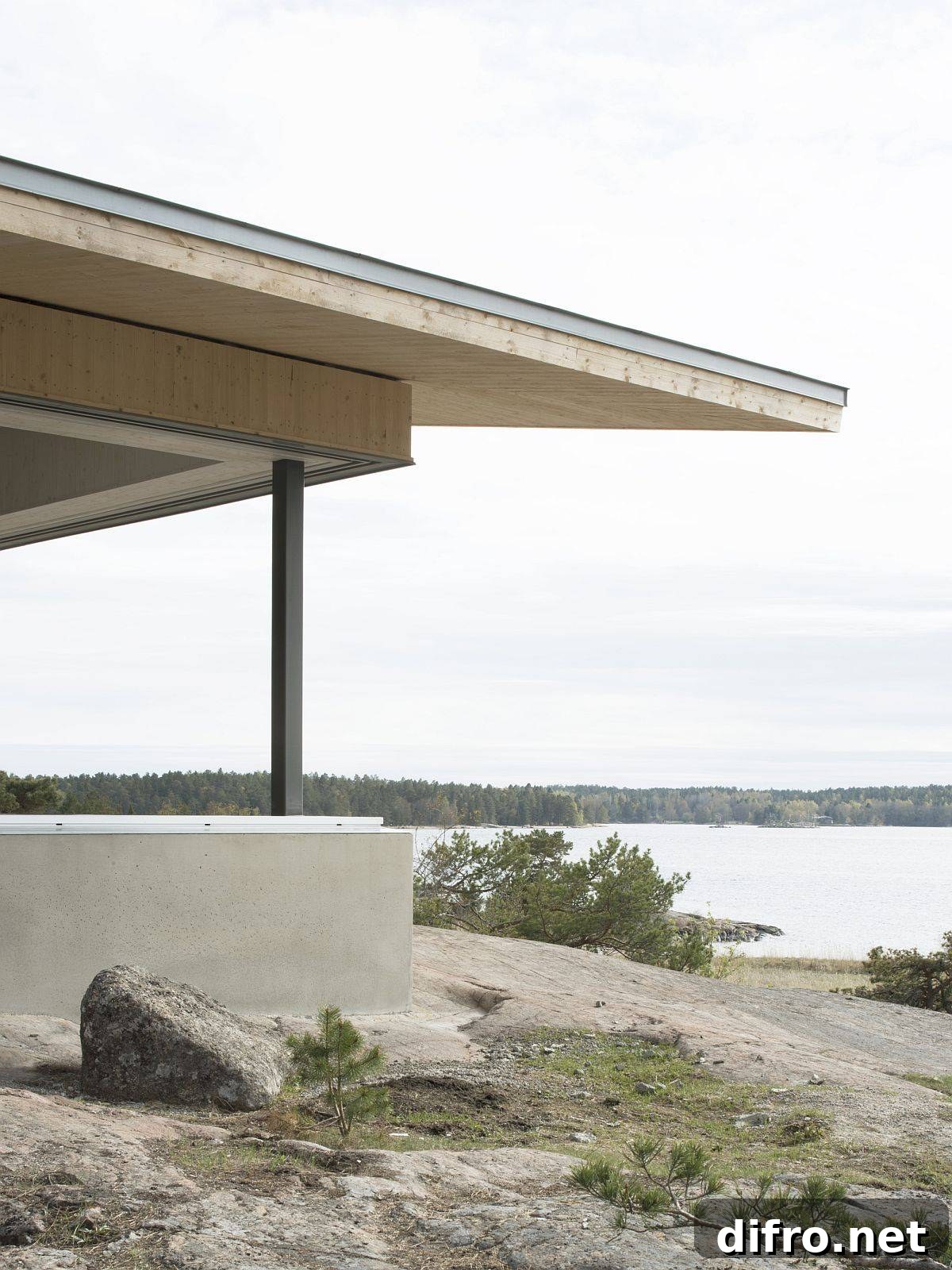
The house is anchored to the uneven, rocky terrain by a solid concrete plinth cast directly on the exposed rock. This plinth not only provides a stable structural base but also frames outdoor living, creating a generous terrace and seating area that extends the internal living spaces into the landscape. A low, overhanging wooden roof stretches beyond the glass enclosure, offering shade and shelter while visually tightening the building’s relationship with the site.
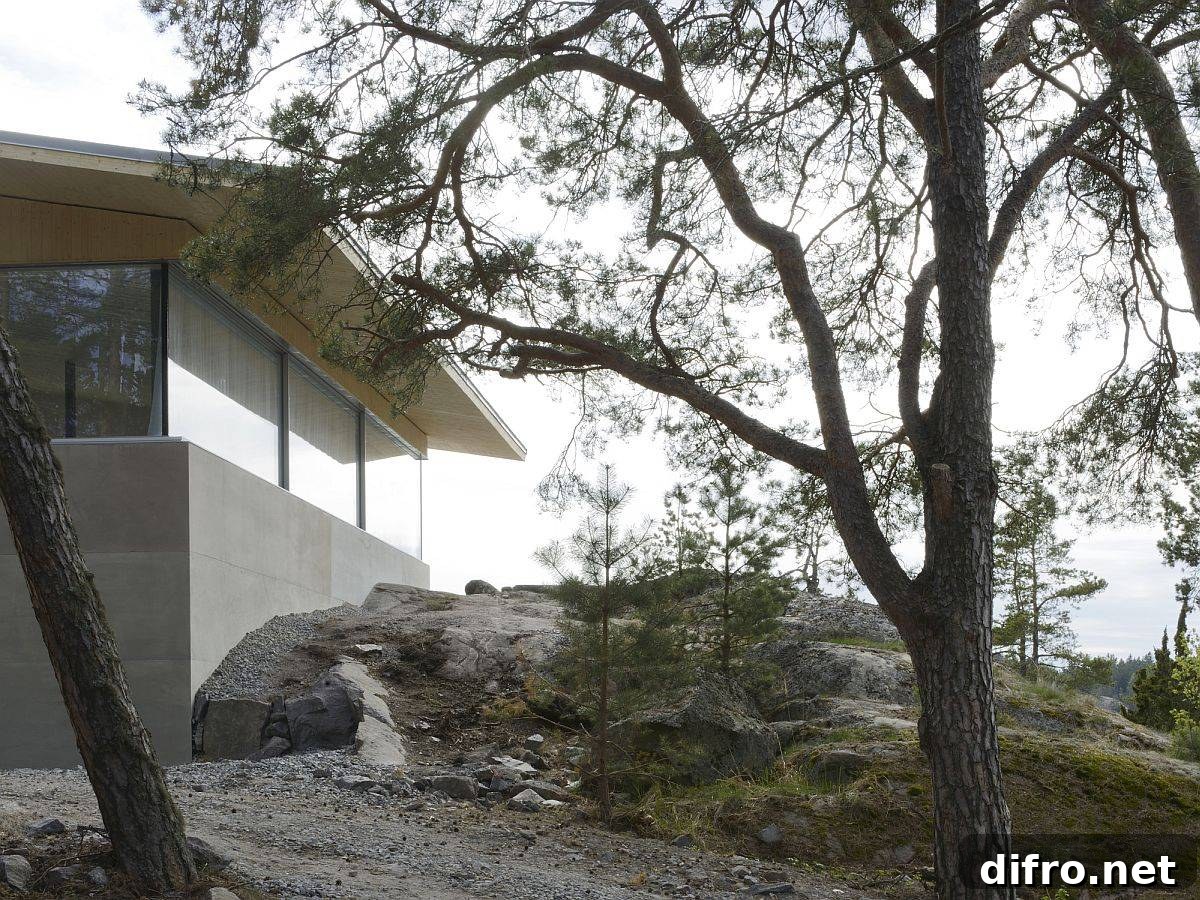
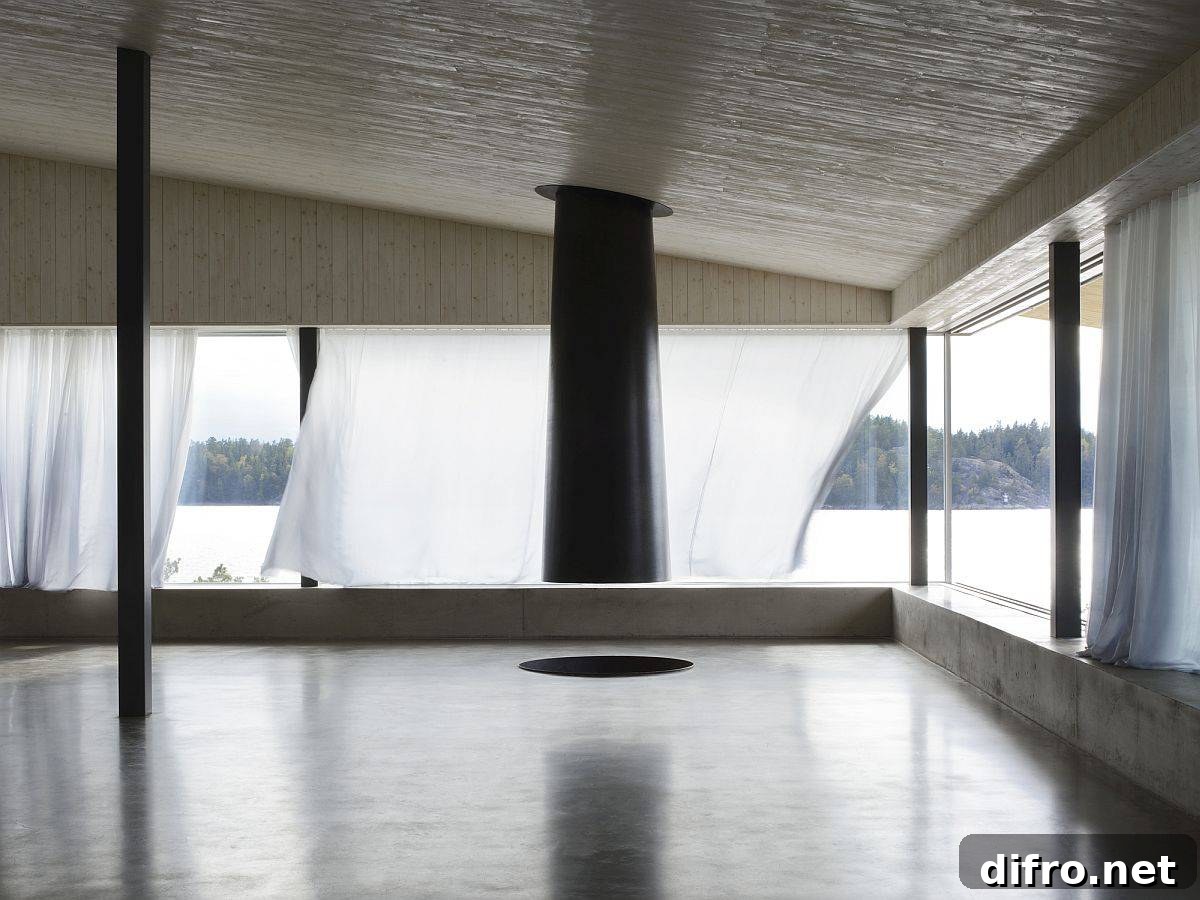
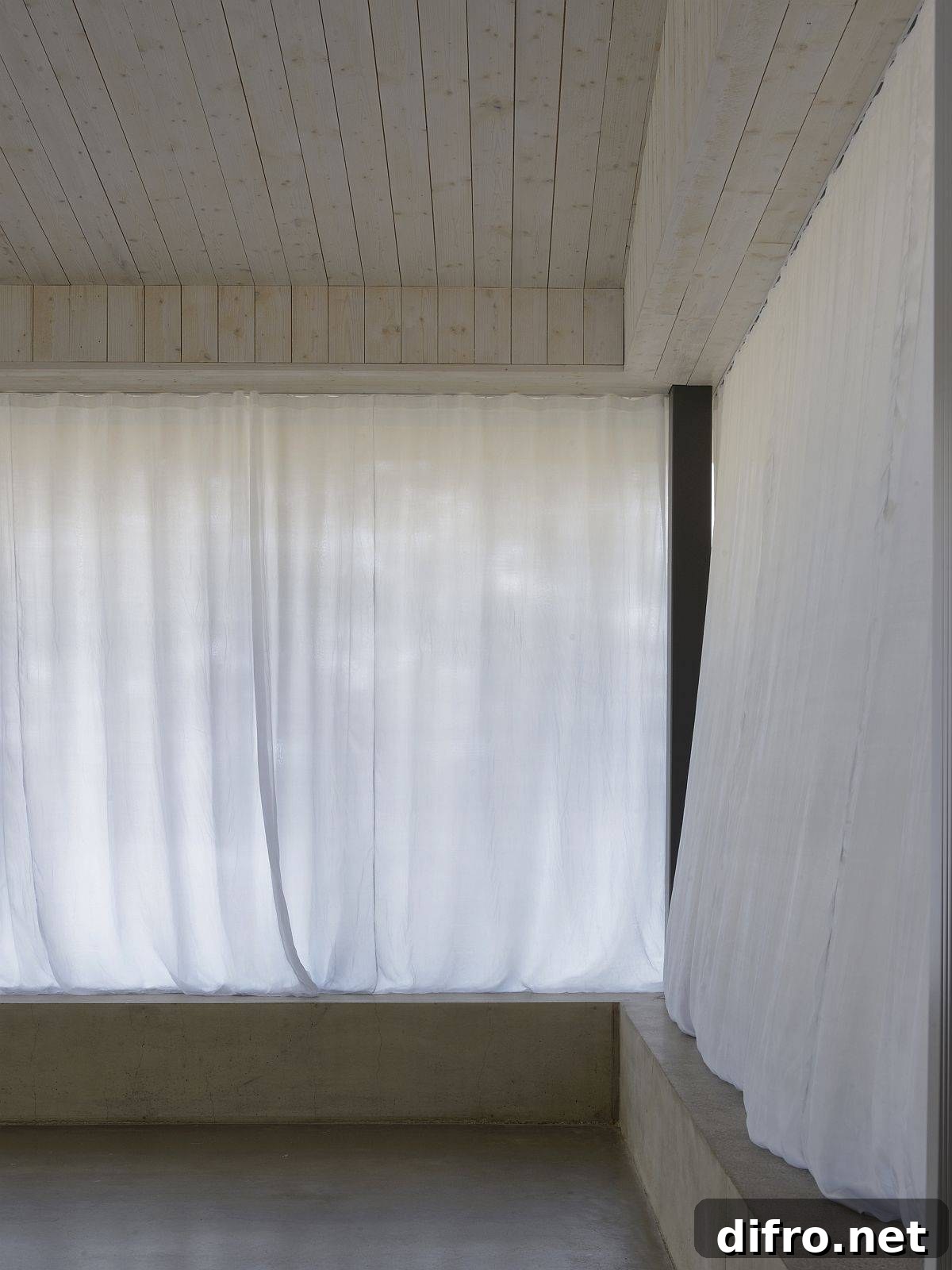
Glass walls wrap the pavilion-like living volume, welcoming abundant natural light while maintaining uninterrupted views in every direction. The glazing is thoughtfully detailed: very wide 4.2 metre panes telescope toward the corners, visually erasing the boundary between inside and outside. To modulate light and privacy, sheer white curtains can be drawn, softening the bright summer sun while still allowing a diffuse glow to fill the interior.
At the heart of the main living room hangs a striking contemporary fireplace that appears to float in space. Suspended from the ceiling, the fireplace becomes a central, sculptural element and a focal point for gatherings, adding warmth and atmosphere to the otherwise austere material palette. Adjacent to the living area, a compact but well-considered kitchen and dining space complete the communal zone, while more private sleeping quarters are arranged to benefit from the same panoramic outlook.
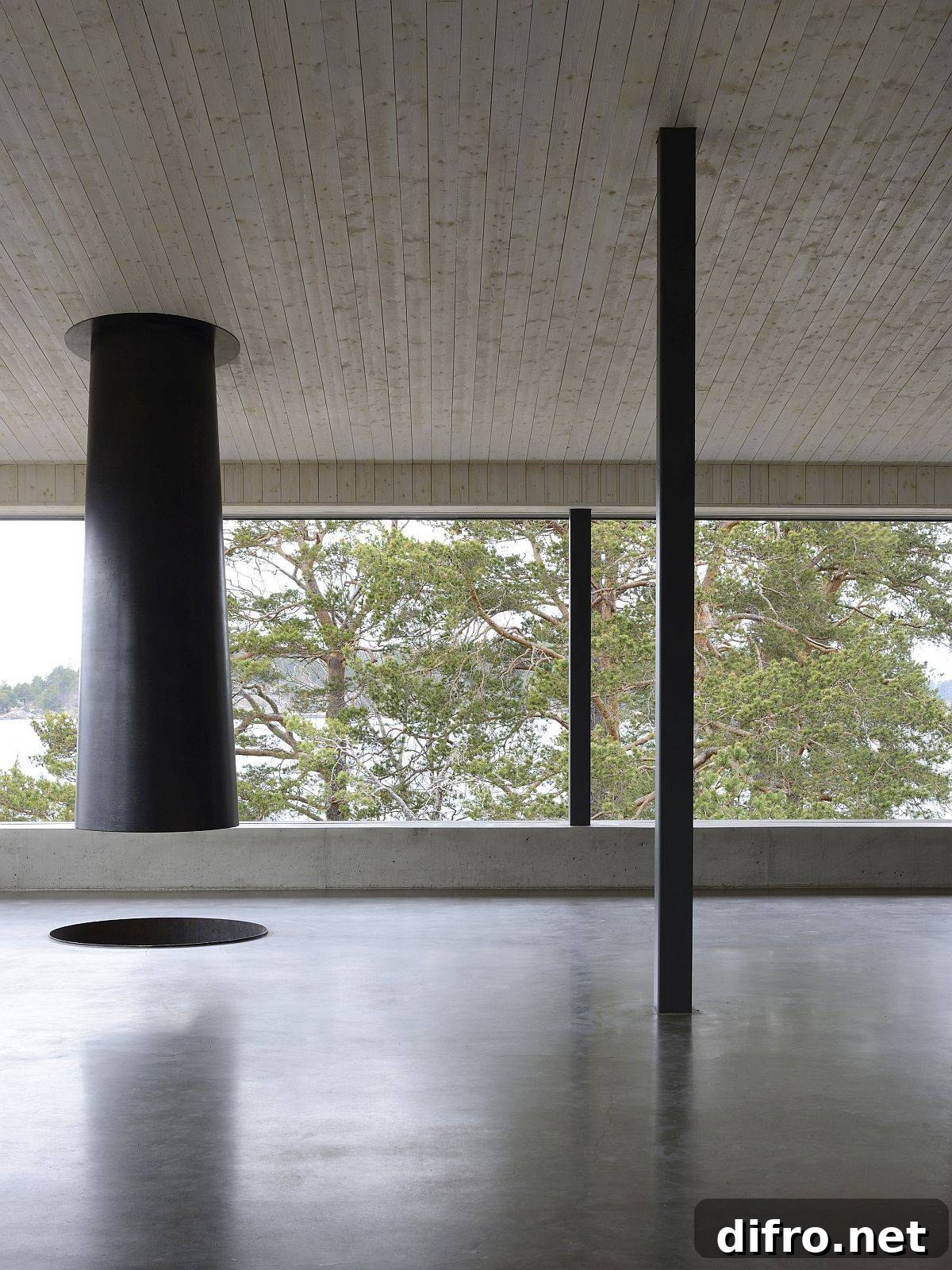
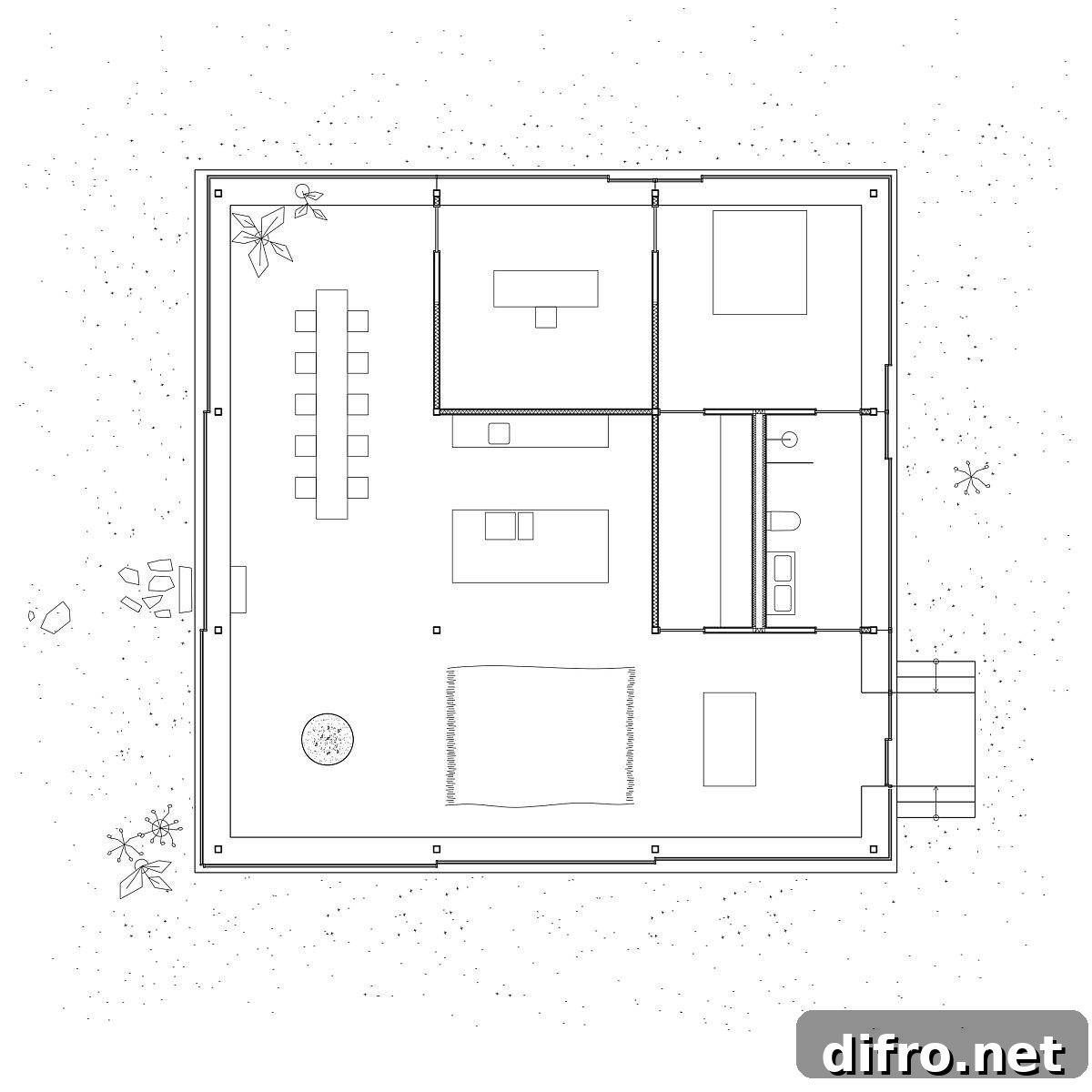
The structural logic is deliberately simple and readable. From the concrete plinth, a square grid of 16 slender steel posts rises to support the broad, overhanging roof. This regular structural framework allows the interior to be largely free of load-bearing walls, creating an open, pavilion-like space enclosed primarily by glass. The composition emphasizes horizontality and low scale, which helps the house sit lightly on its island setting.
Inside, a pared-back palette of concrete floors and a warm wooden ceiling keeps the focus on views and daylight. The minimal interior finishes underline the house’s intention: to serve as a calm, uplifting retreat rather than a showy architectural statement. The generous glazing, combined with carefully placed curtains, allows occupants to enjoy direct connection with the landscape while controlling glare and privacy as needed.
The rocky hill that gives the house its vantage point is an integral part of the design. By casting the concrete base directly onto the exposed rock, the architects ensured a secure, permanent connection to the terrain while minimizing the need for extensive site intervention. The result is a building that reads as both grounded and lightweight: solid where it meets the earth, transparent and open where it meets the sky and sea.
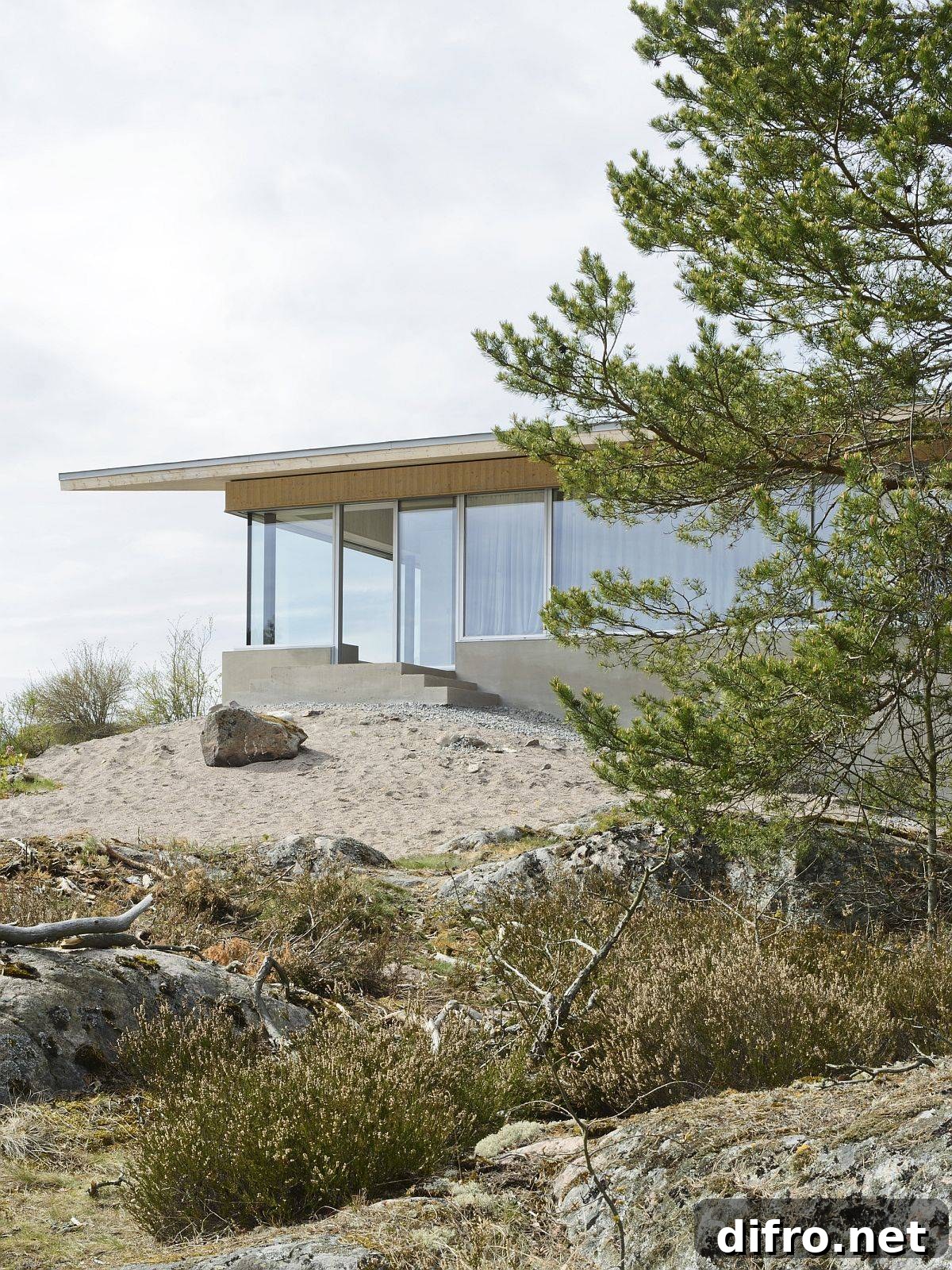
The house’s simple diagram — concrete plinth, a regular grid of steel columns, an overhanging timber roof and glass enclosure — results in a refined, contemporary retreat that prioritizes experience, light and landscape. Uninterrupted vistas from both the interior and the outdoor plinth foster a cheerful and relaxed living environment, ideal for a vacation home on a small island.
Photography: Mikael Olsson
The house is grounded by a concrete plinth, cast directly on the exposed rock of the site. From the plinth, a square grid of 16 steel post extend upward to support a low slung, overhanging wooden roof. The pavilion like space is entirely enclosed in glass, with 4.2m wide windows telescoping towards the corners, eliminating the boundary between inside and outside space.