JL Madeira Office by Metro Arquitetos Associados
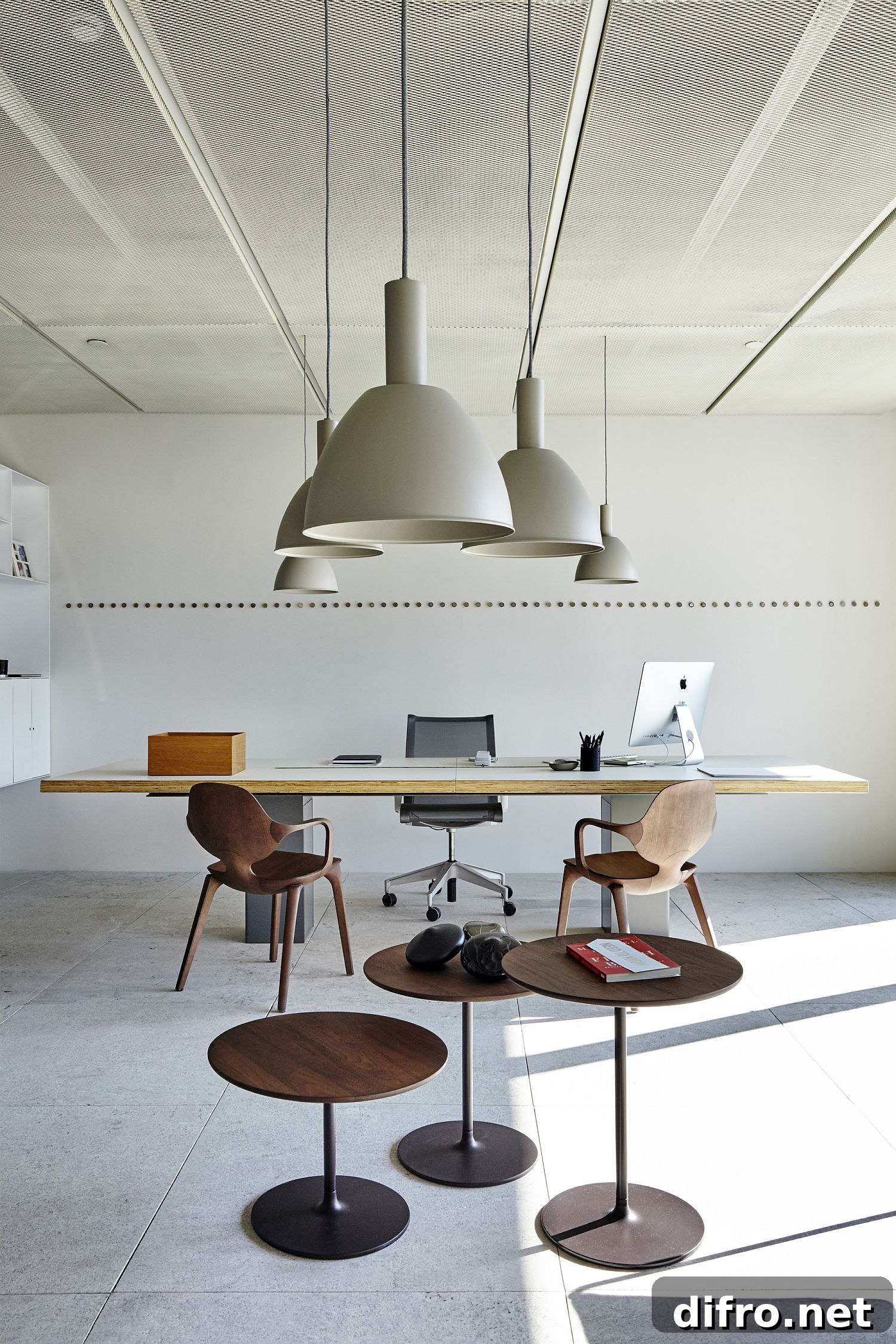
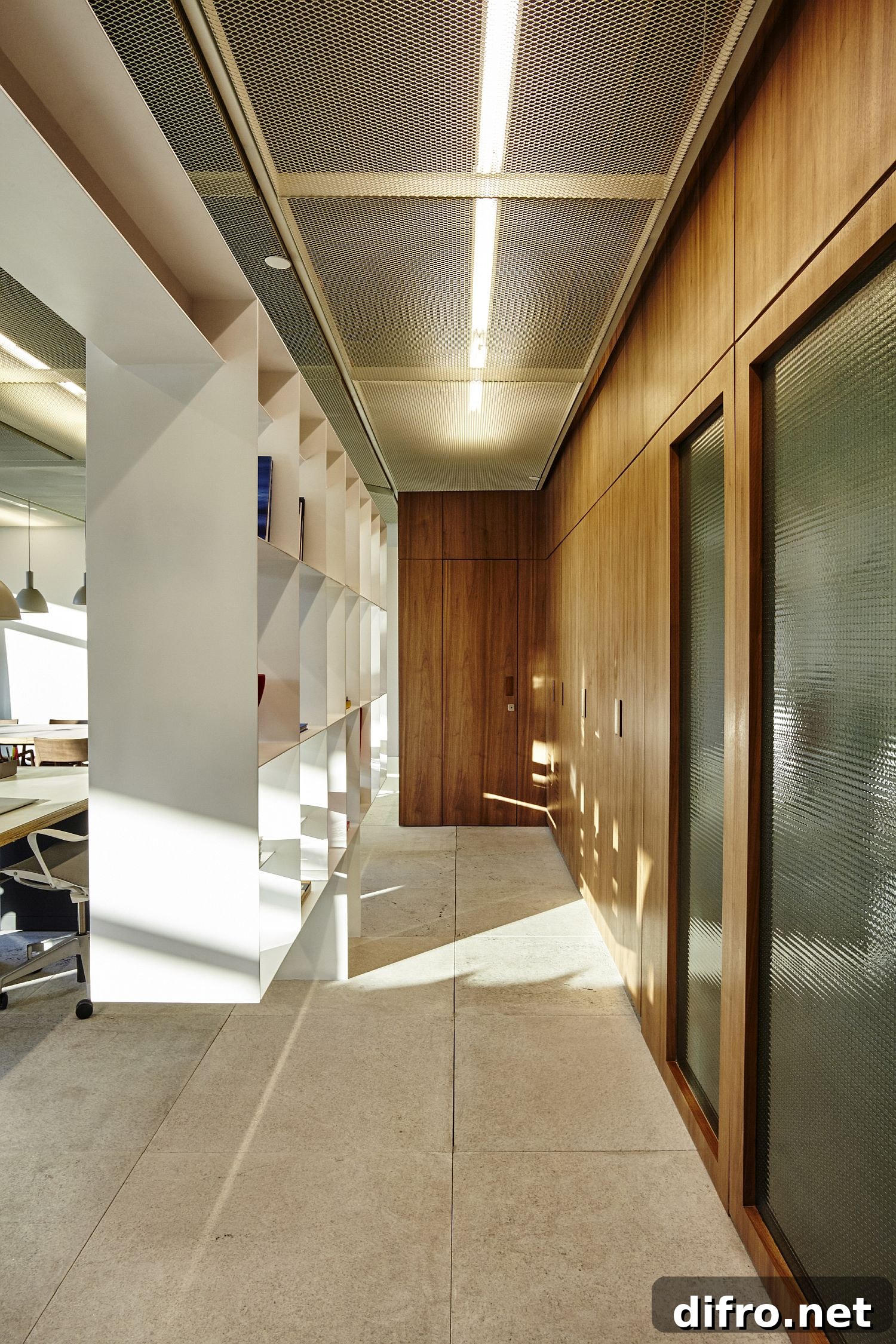
The JL Madeira Office, designed by Metro Arquitetos Associados, transforms two adjacent commercial units into a cohesive, light-filled workspace tailored to the client’s needs. Rather than creating a uniform, clinical environment, the architects embraced warmth and texture: wood and white surfaces define the interior palette, while generous natural light brings each material to life. The result is a contemporary Brazilian office where raw finishes meet refined modern details.
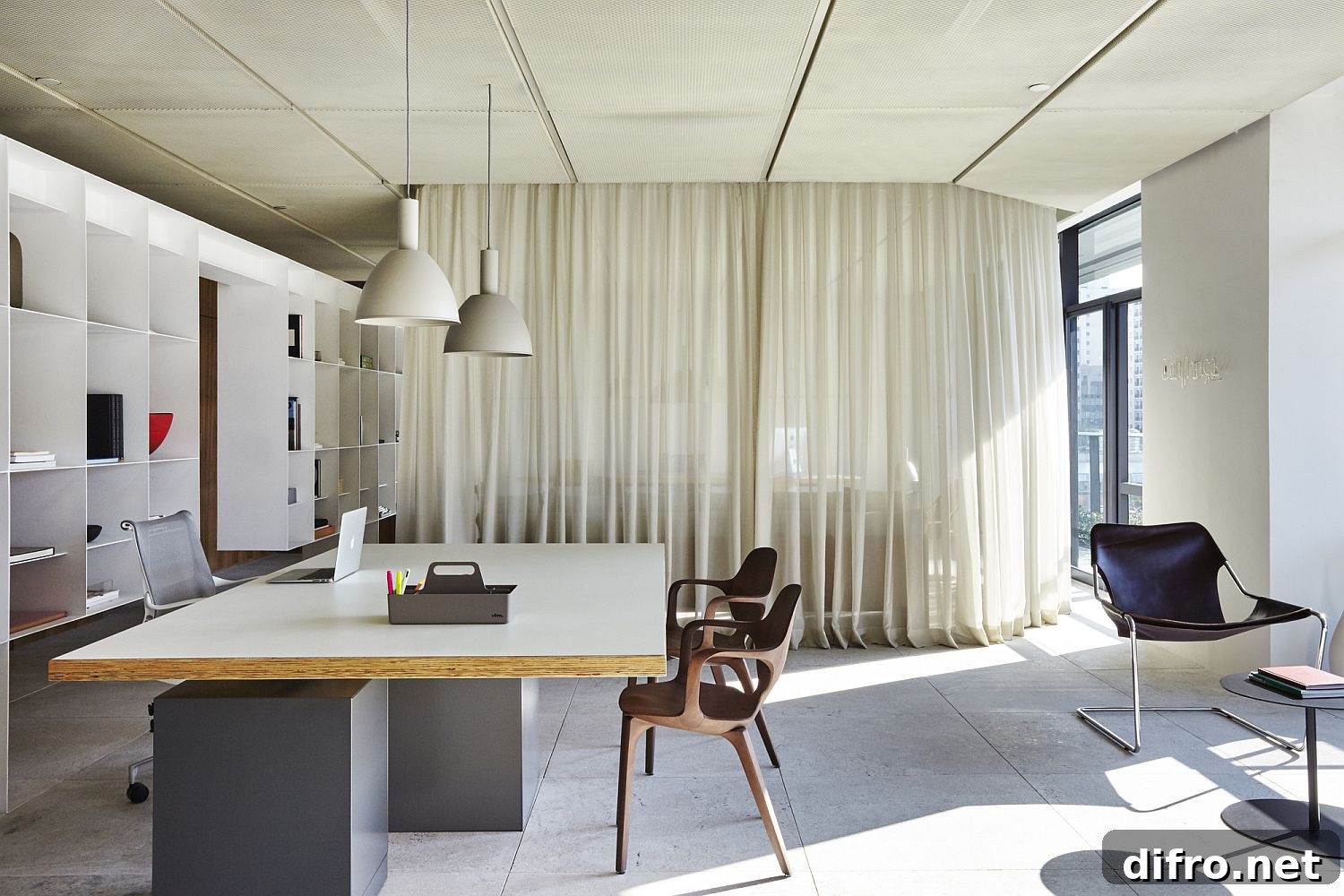
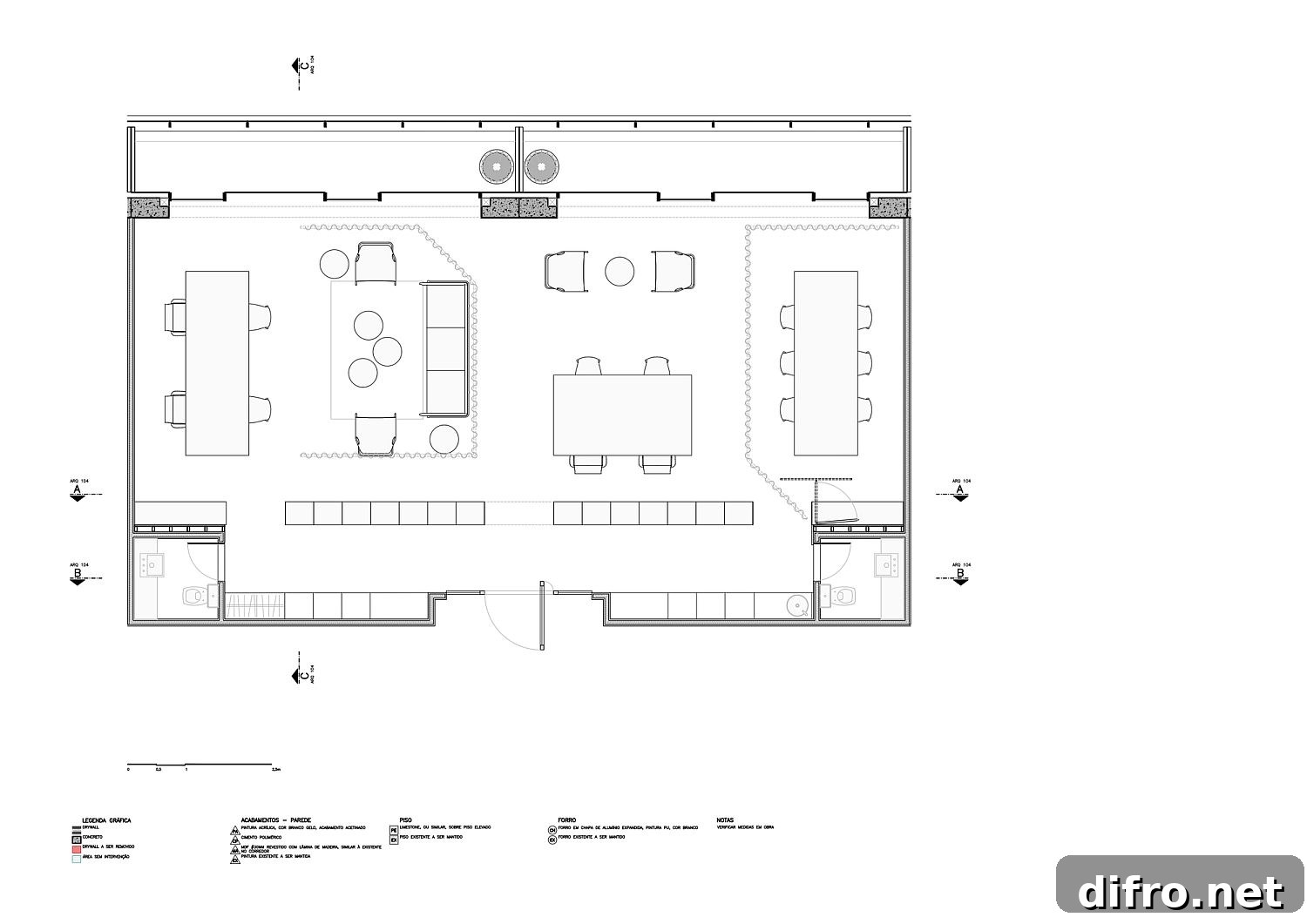
By merging two units, the project expanded spatial possibilities without sacrificing efficiency. A former corridor, now reimagined, serves as the reception and entrance area, welcoming visitors with a calm, layered composition. Adjacent to this entrance is a small library that adds visual contrast and color through its shelves and curated display—an intimate touch that doesn’t overpower the overall neutral scheme.
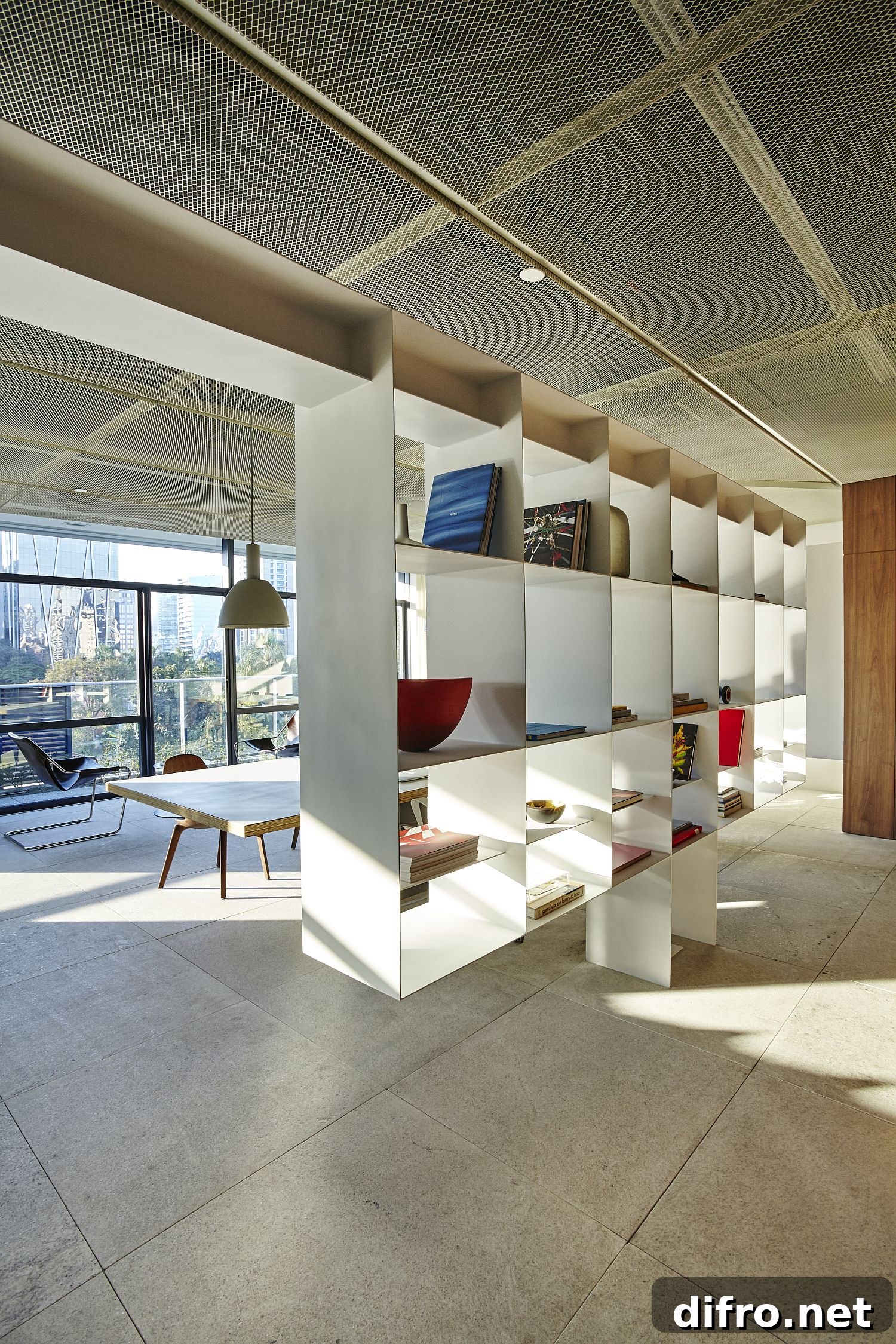
The layout places functional “wet” areas—bathrooms and service spaces—near the core, while private living and meeting zones sit tucked beside them for convenience and privacy. Frosted glass doors and subtle partitions admit daylight while maintaining discretion for confidential conversations. This balance between openness and privacy is one of the office’s defining strengths.
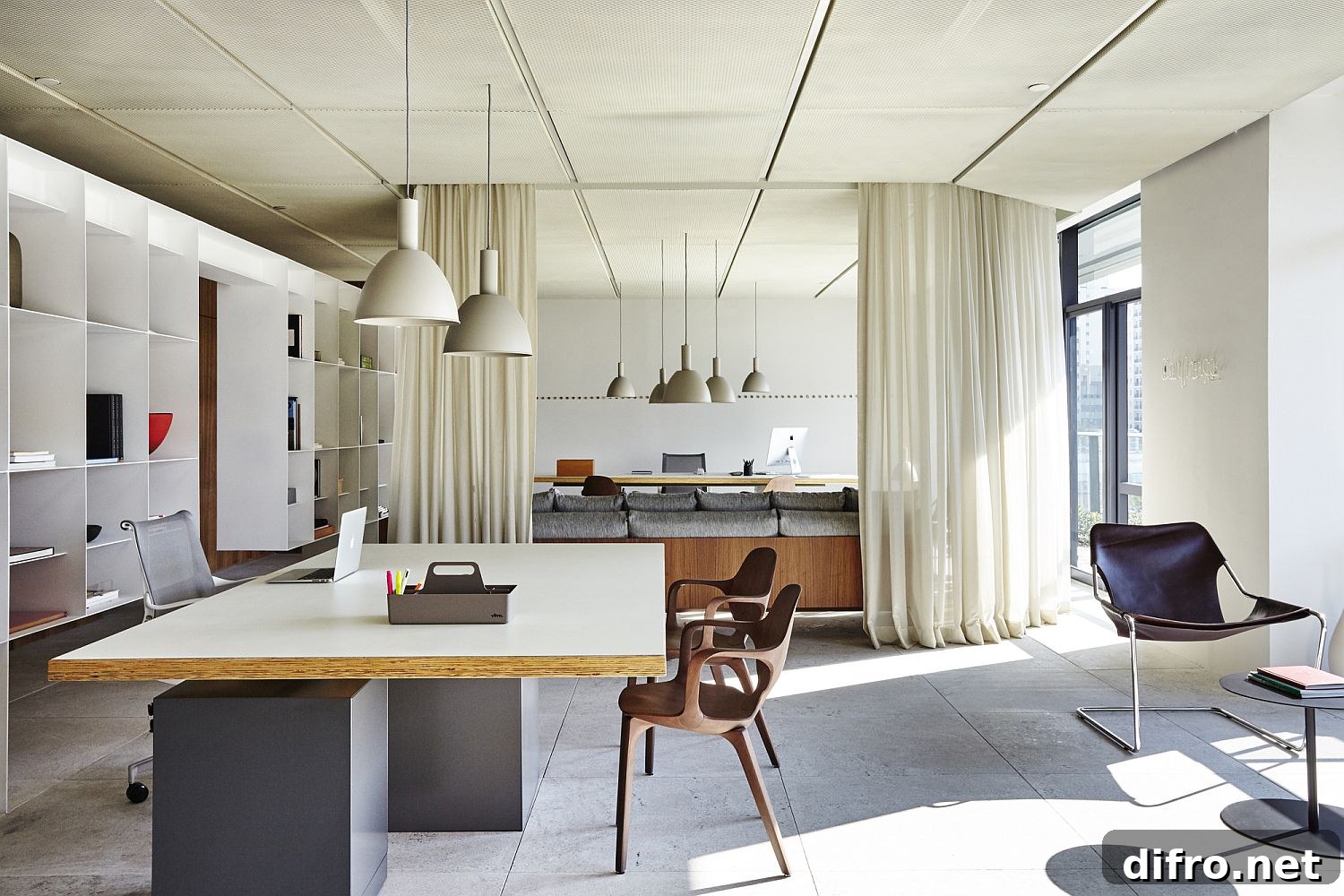
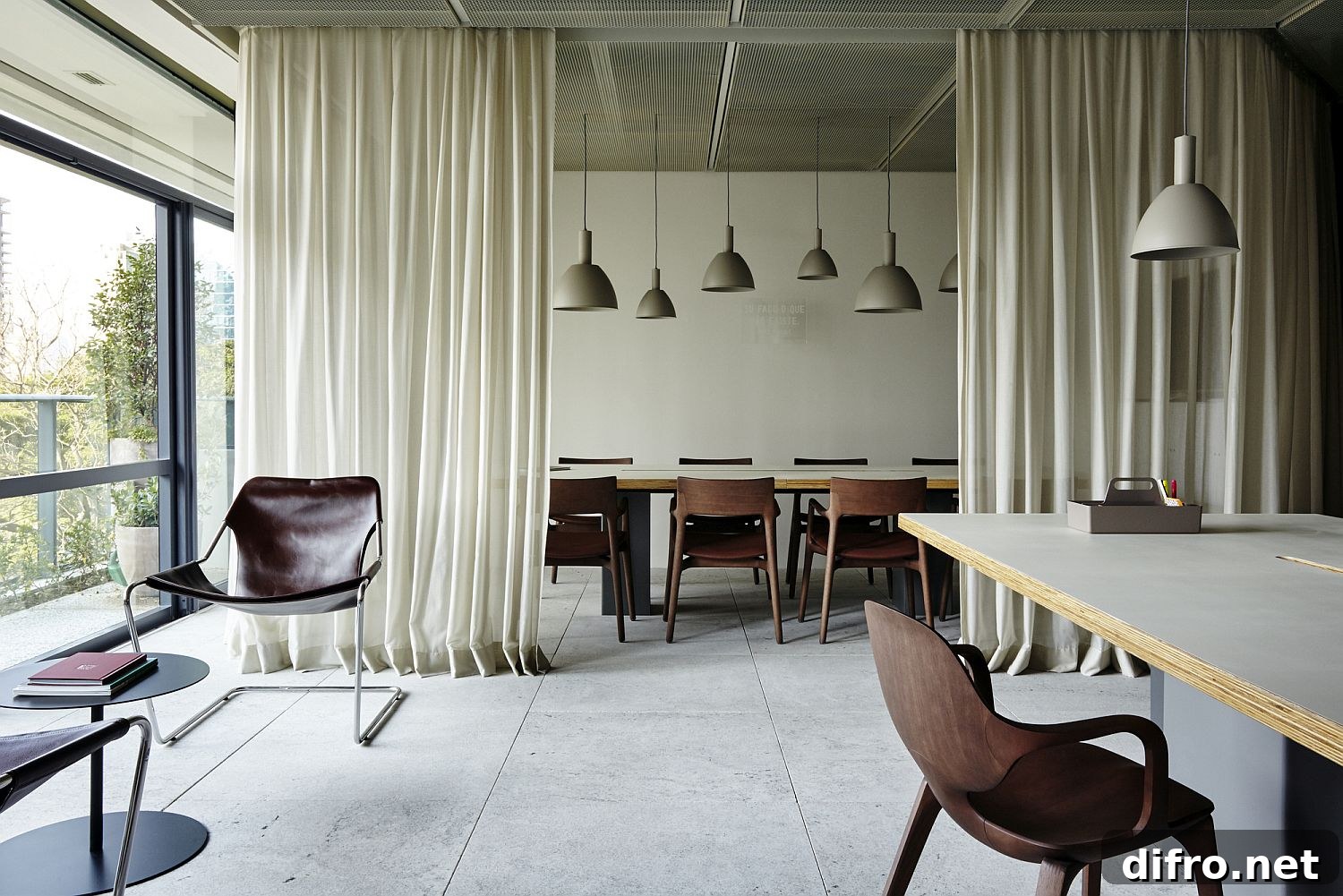
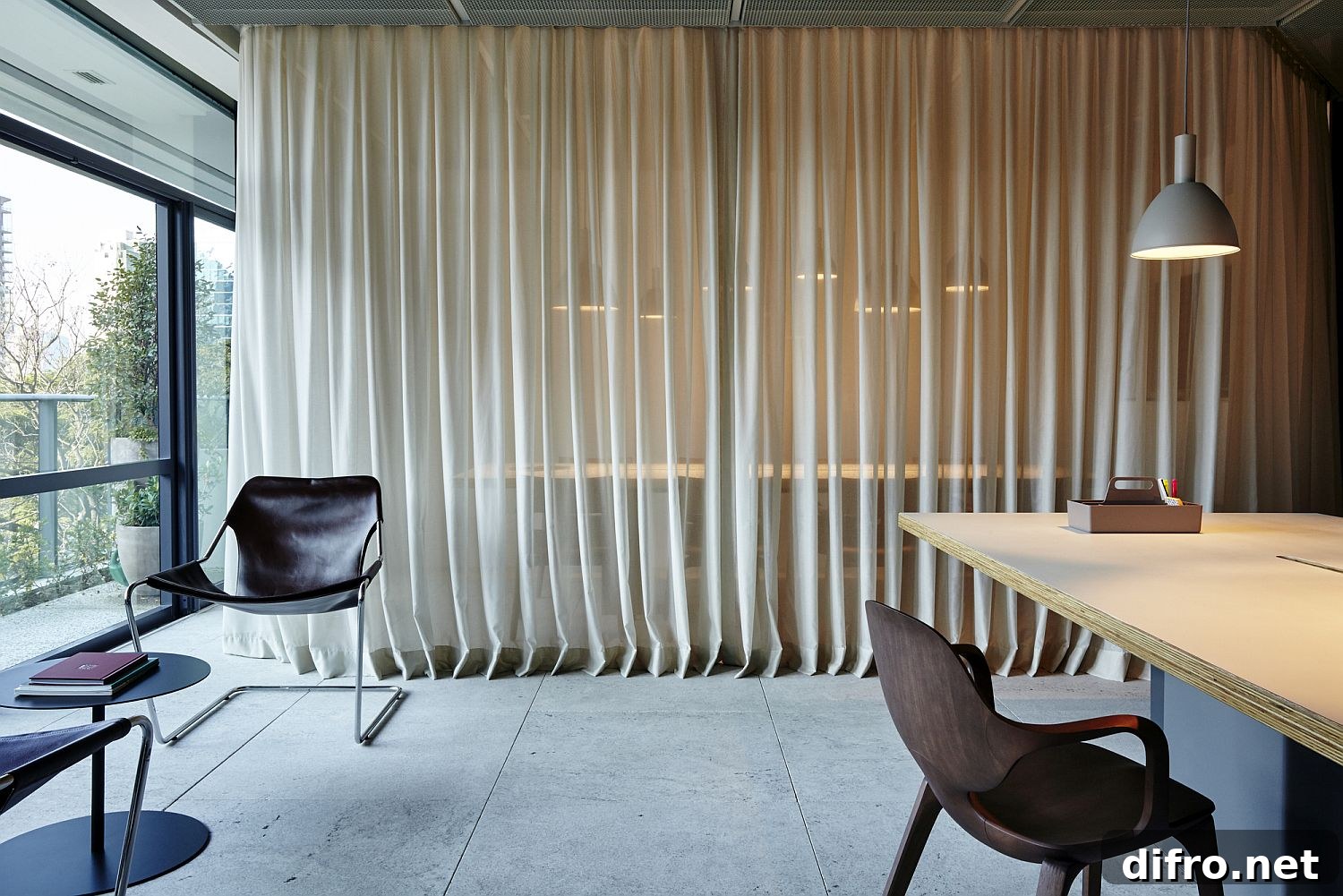
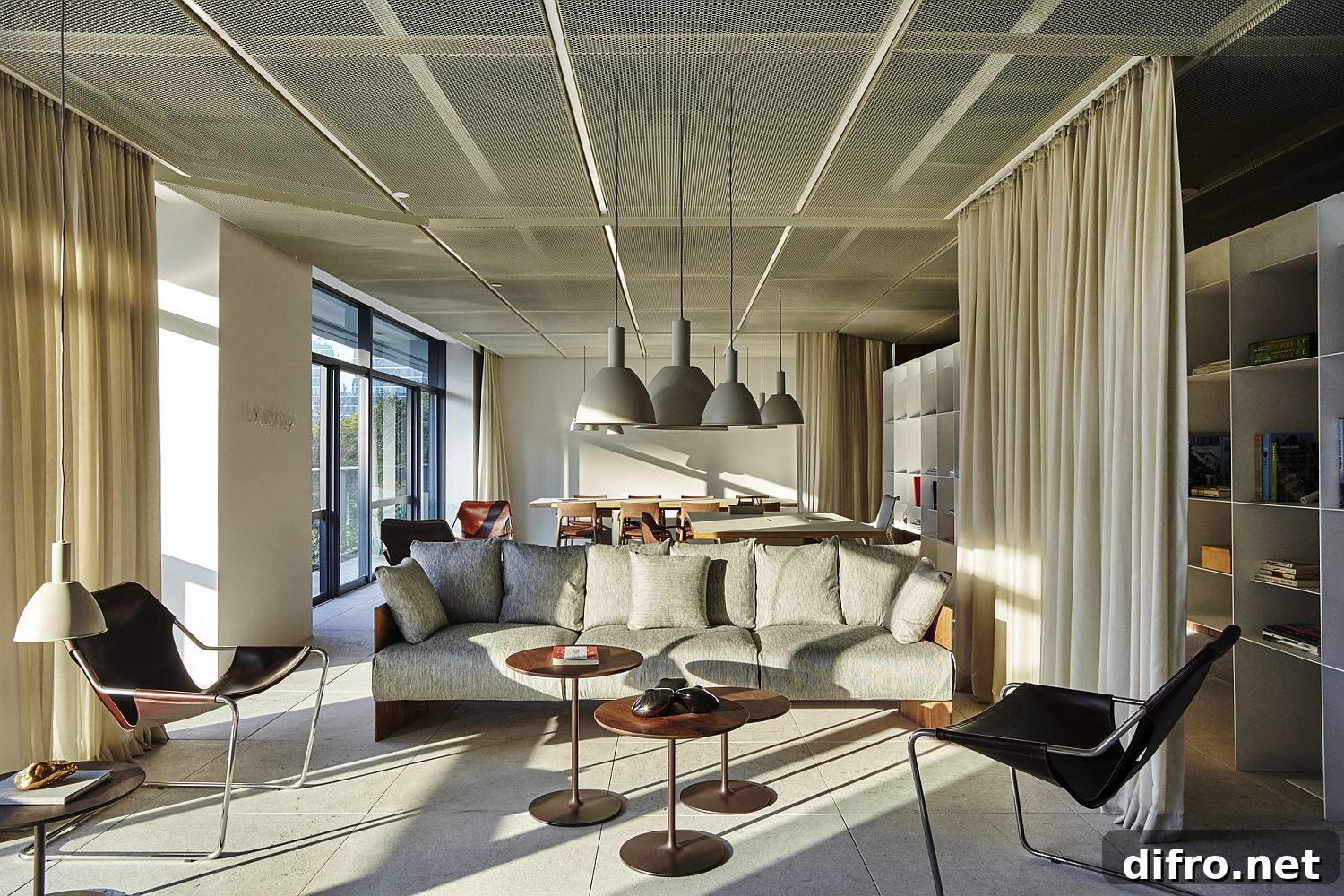
One of the most inventive strategies in the design is the use of curtains and drapes to define zones. Instead of building permanent walls, flowing textiles separate the meeting rooms and private workspaces from public areas. This approach offers flexibility—spaces can open up for collaborative sessions or close down for focused, confidential work—while adding a soft, tactile layer to the interior.
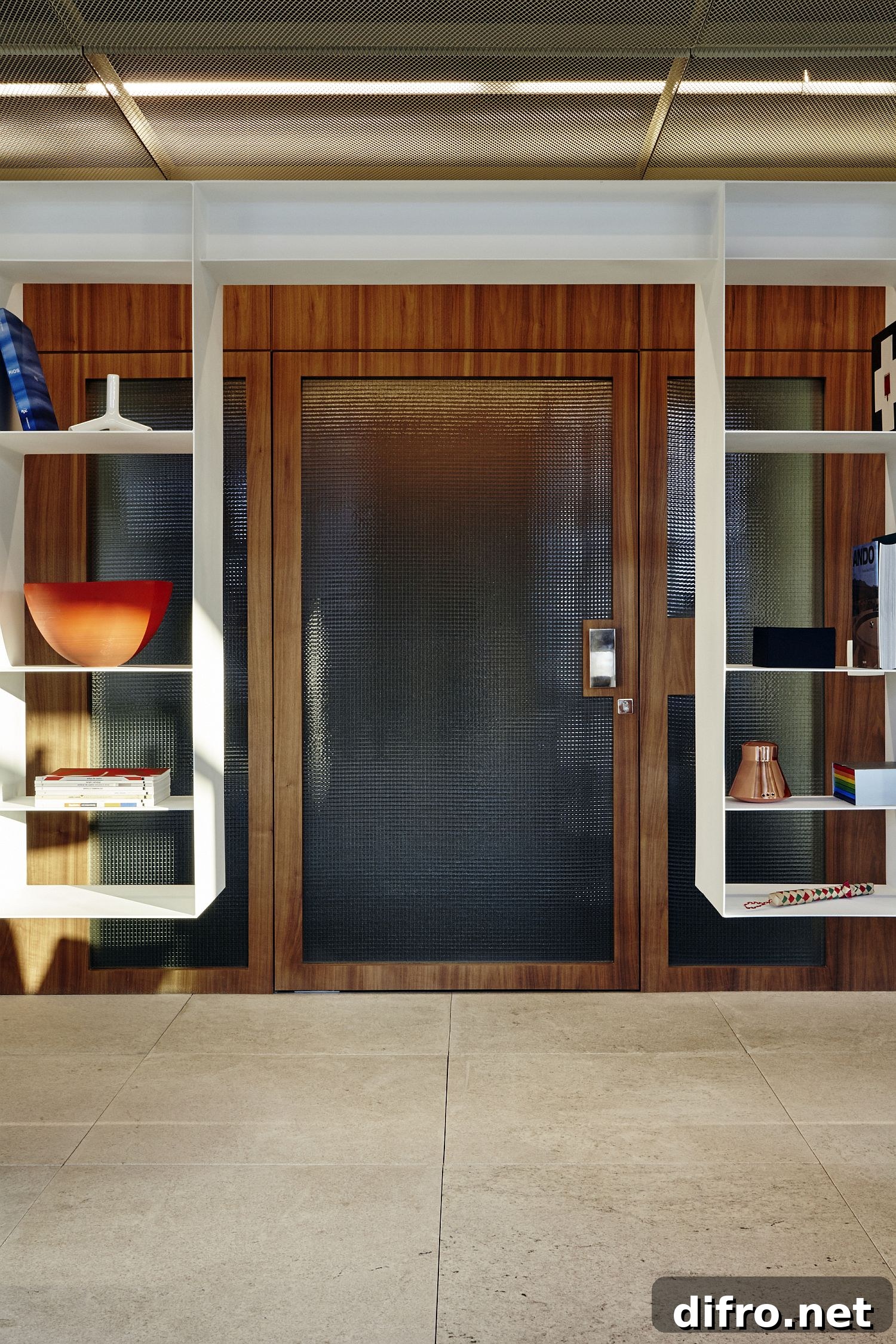
Material contrasts add depth: warm timber surfaces and shelving sit against white walls and polished concrete ceilings, creating a layered visual language that feels both cozy and contemporary. The exposed concrete above introduces texture and an industrial edge; meanwhile, wooden furniture and bookcases humanize the space and provide practical storage.
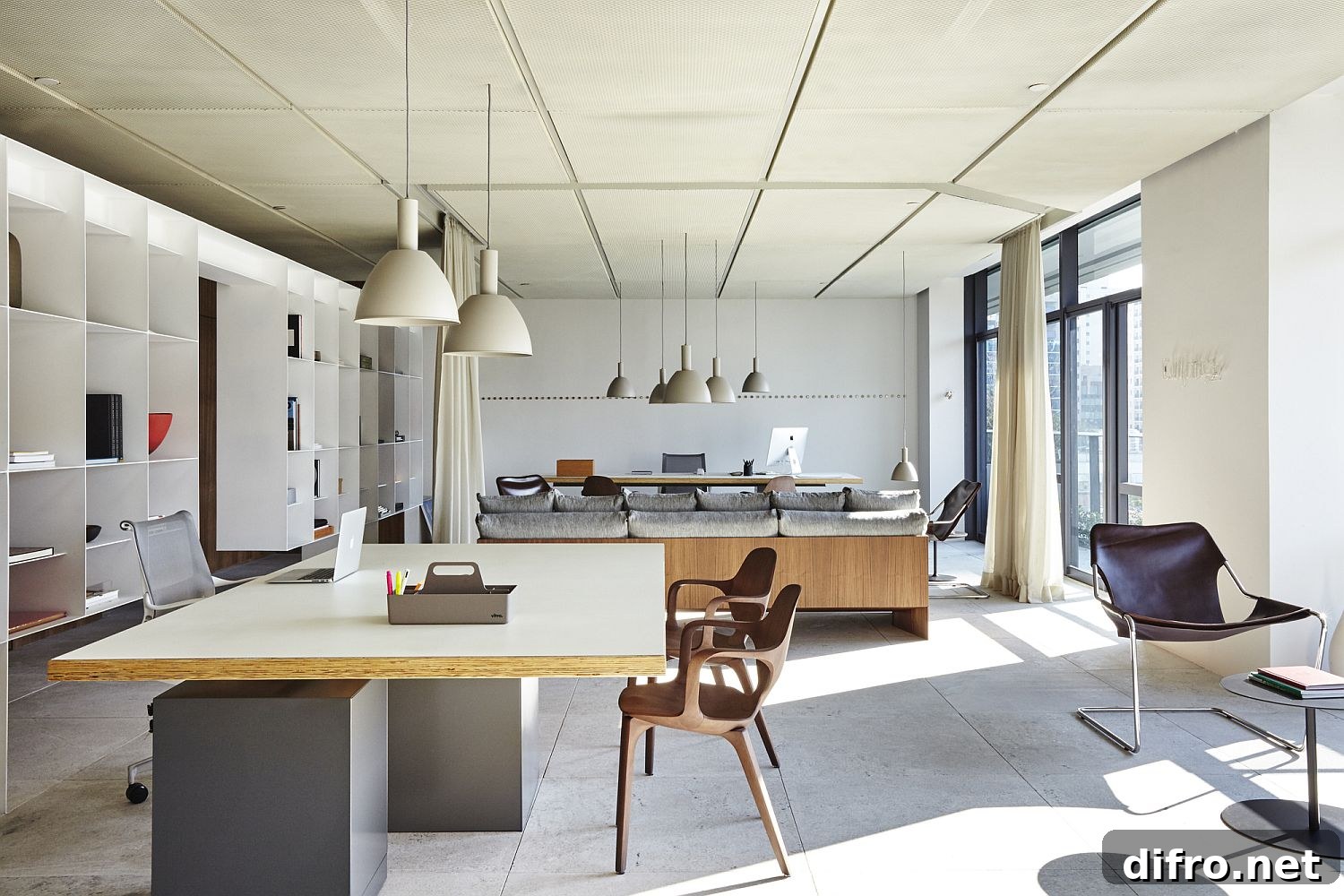
Lighting in the office is carefully considered: white pendant fixtures hang above work zones to provide direct, comfortable illumination, while recessed lighting creates an even ambient layer. The blend of pendant and recessed lights keeps the environment relaxed and ergonomic—well suited for long workdays and meetings alike.
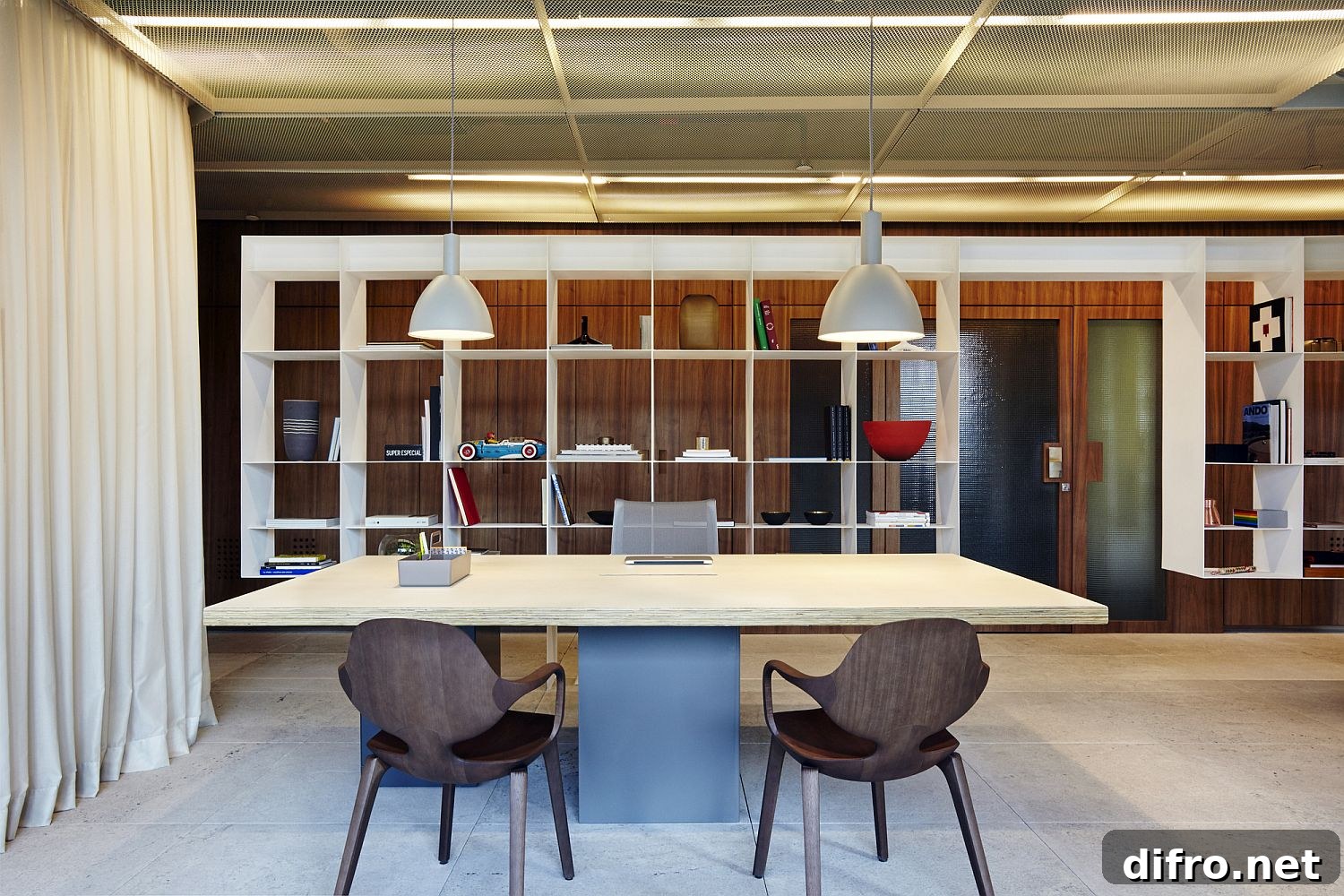
Furniture choices also contribute to spatial definition: a variety of chairs and seating types mark different zones and encourage different modes of use—from focused desk work to relaxed conversation. Built-in shelving and compact storage solutions make efficient use of floor area, keeping circulation routes clear and preserving a sense of openness throughout the plan.
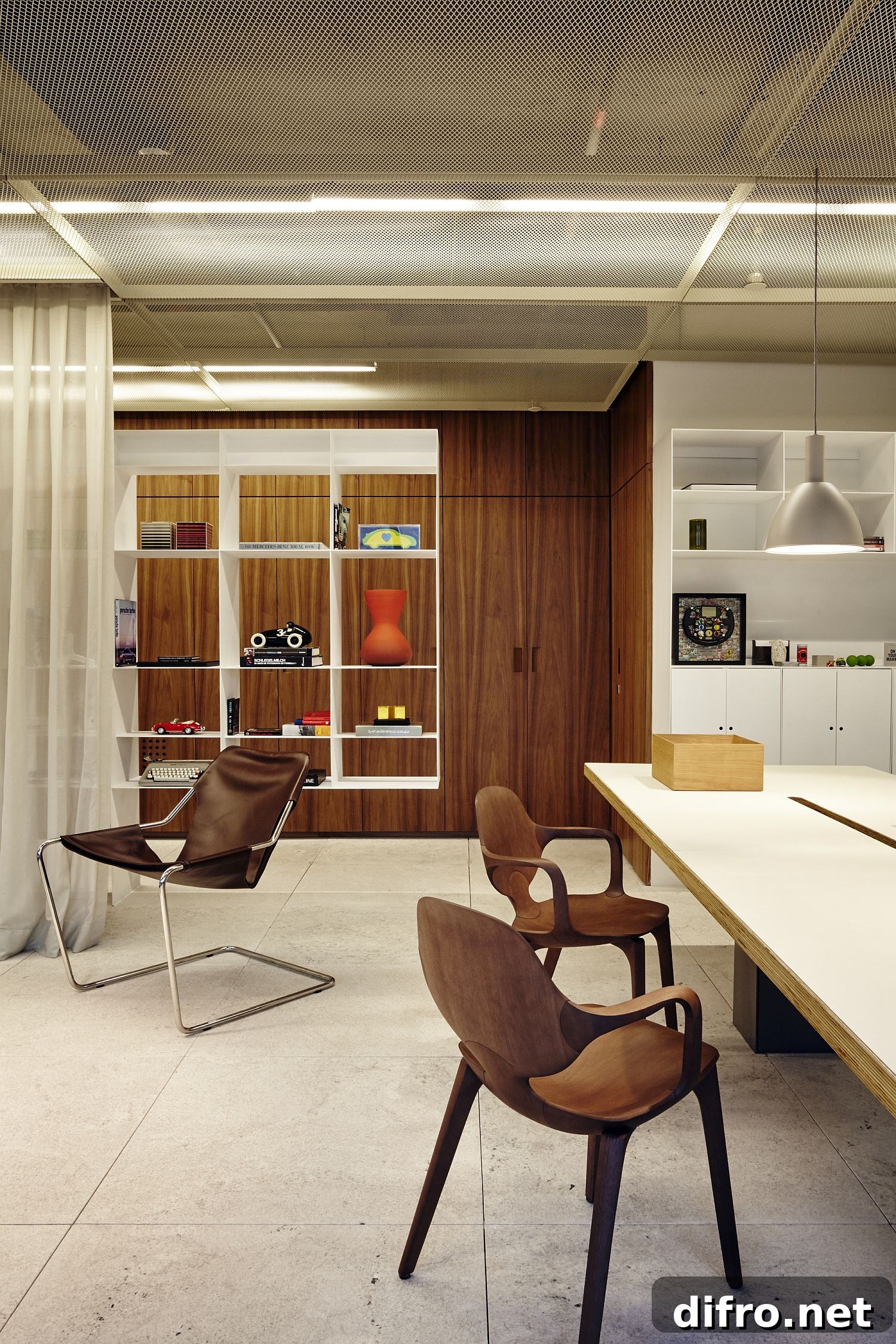
The photographic documentation highlights these thoughtful choices, capturing how natural light, materials, and flexible partitions work together to produce a calm, efficient workplace. The project shows how modest interventions—reconfiguring a corridor, combining units, and using textiles instead of walls—can produce a dramatically improved experience without extravagant measures. Photography: Ilana Bessler.
Related: Colorful drapes and creative partitioning ideas that inspire flexible, contemporary office design.