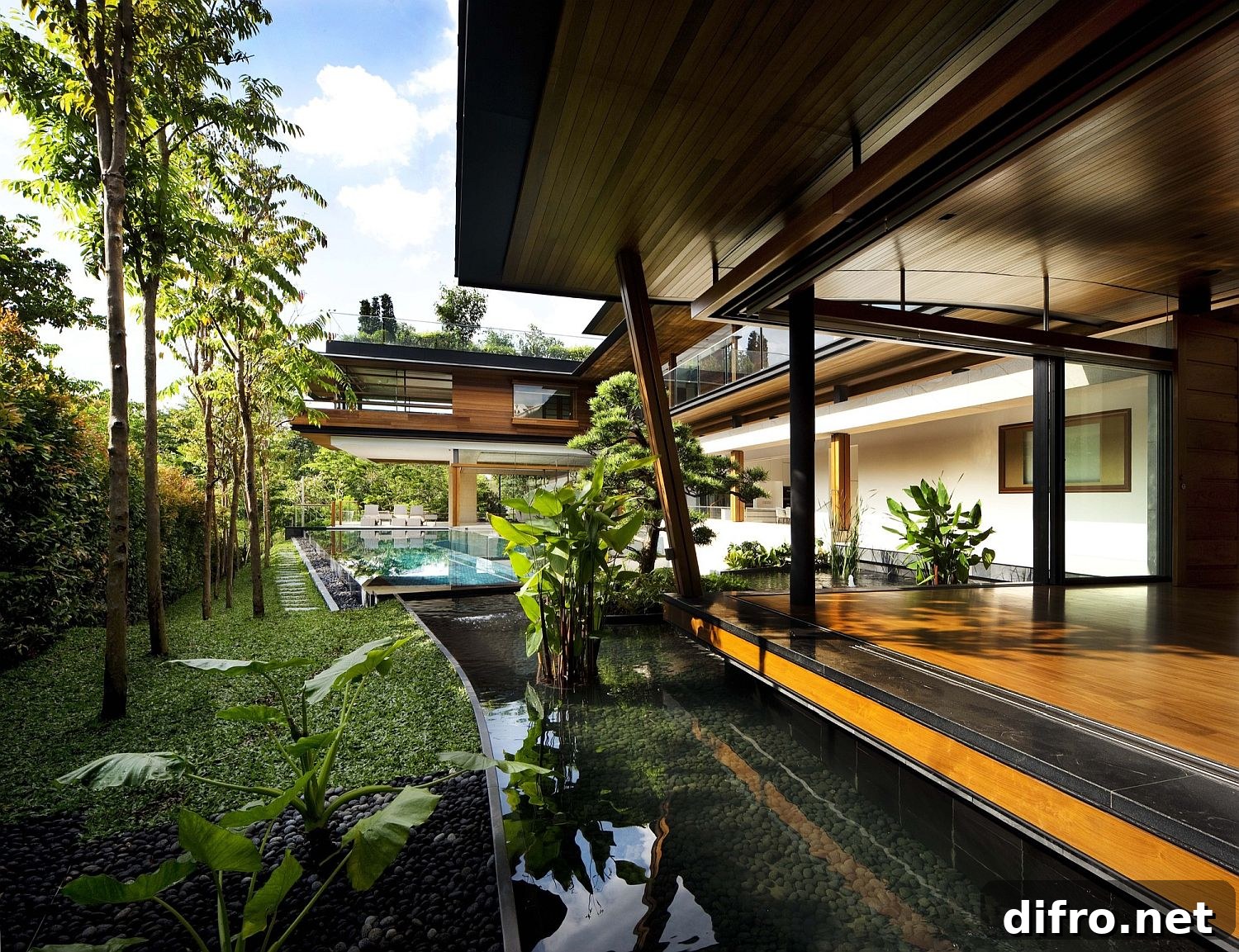
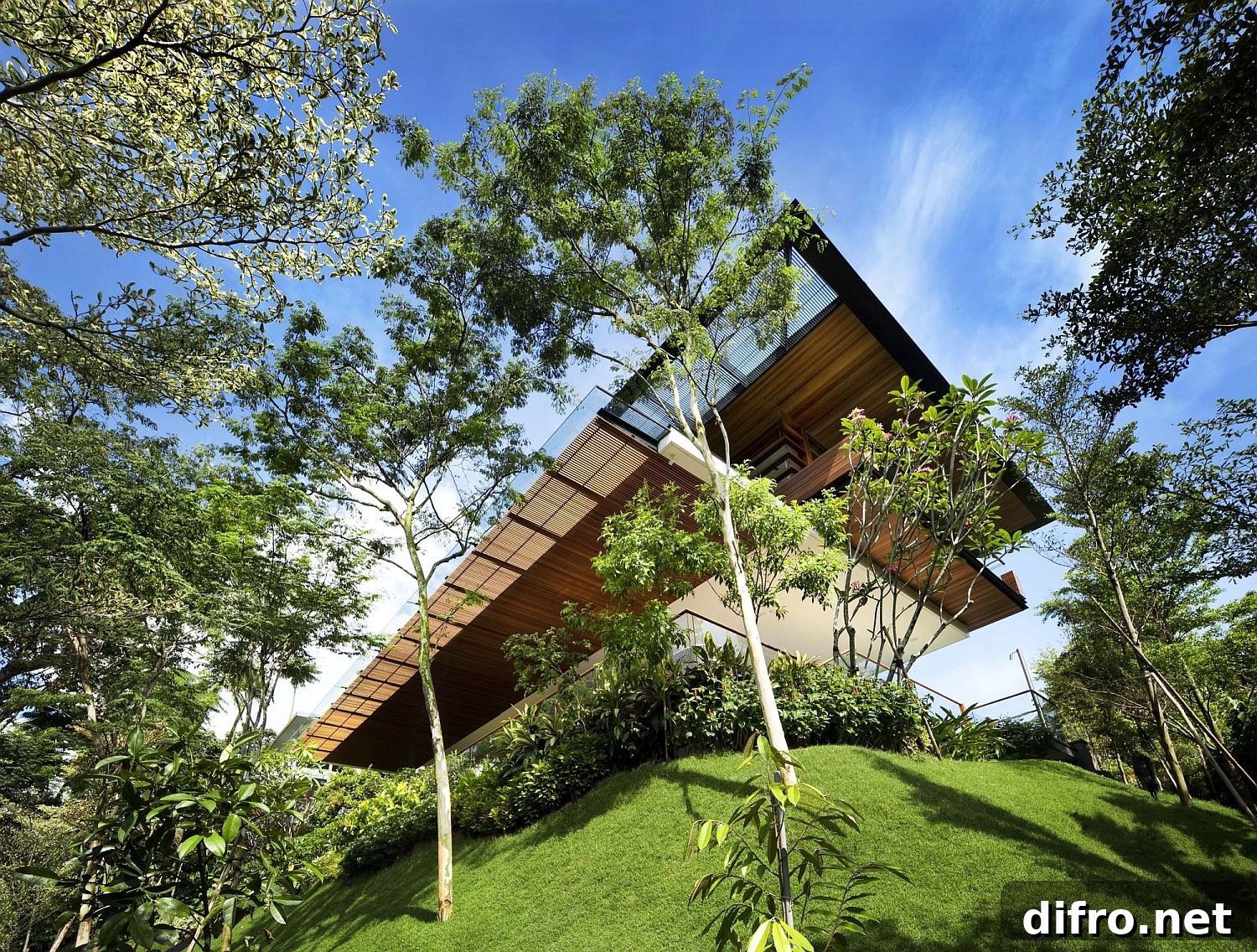
The Botanica House in Singapore is a striking example of architecture that embraces nature at every turn. Designed by Guz Architects and sited on a steep, contoured lot, the home uses the natural slope to organize its volumes and outdoor spaces. Its most immediate advantage is the view: the residence overlooks the Singapore Botanic Gardens, a UNESCO World Heritage site, and its design is intentionally oriented to make the most of that green panorama. But the house itself is an oasis, defined by sweeping decks, curving swimming pools, sculptural waterfalls and integrated planting that blur the boundary between built form and landscape.
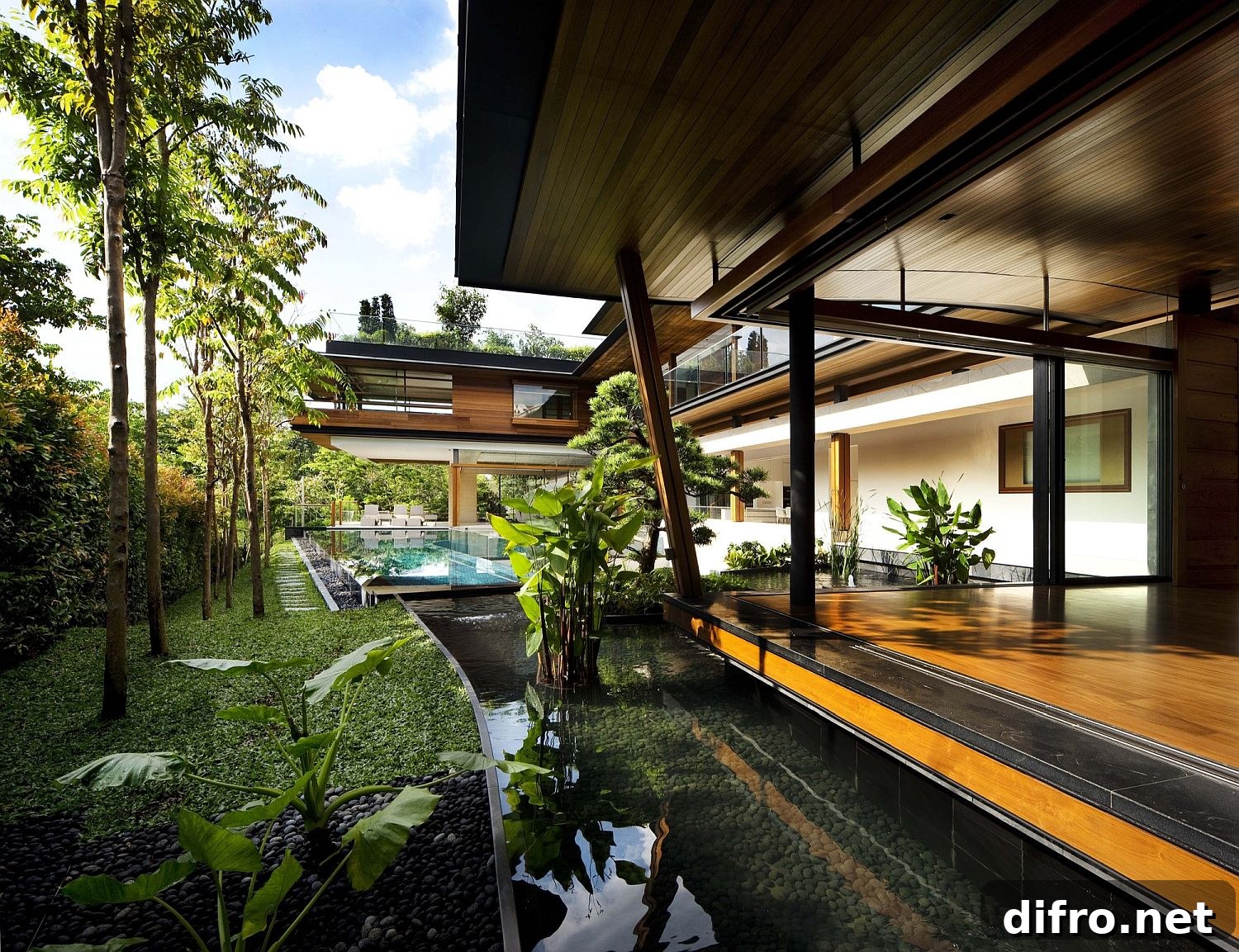
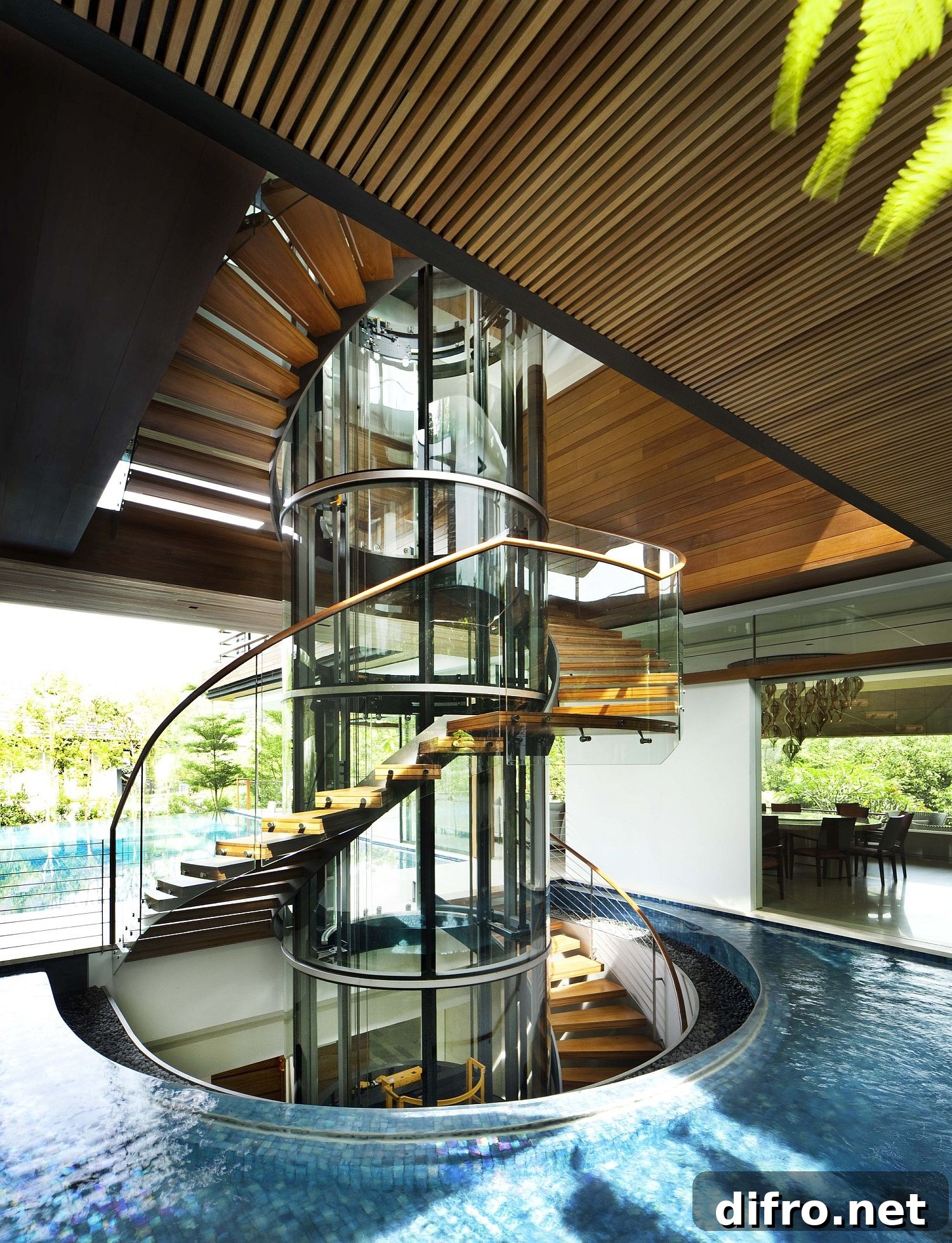
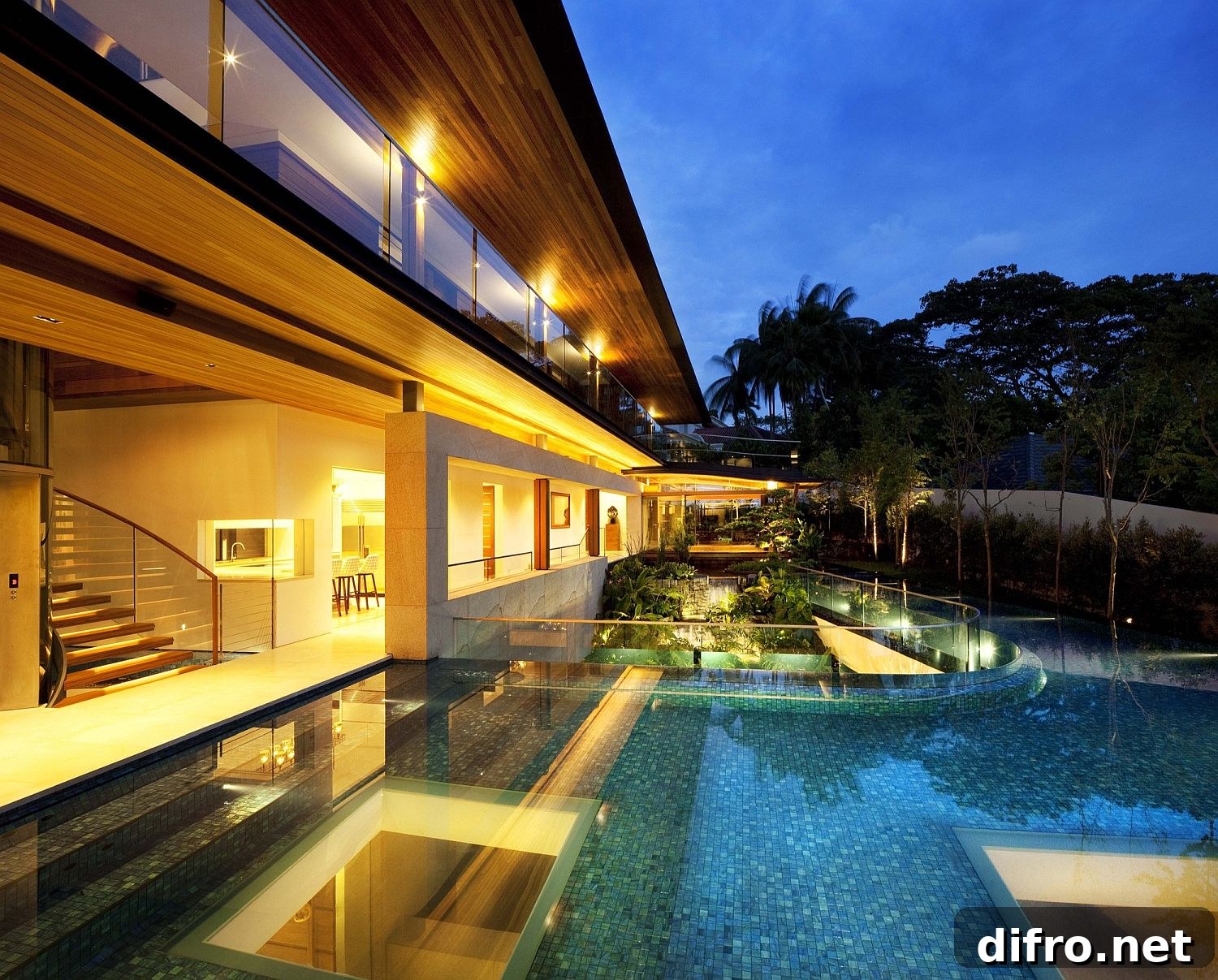
From the outset the architects worked with traditional Feng Shui principles to achieve balance among the elemental forces—water, earth, wood and light—while also making the most of the site’s topography. A central spiral staircase threads through the house and is embraced by curving pools and water features, creating a strong visual axis and a cooling microclimate. Open living areas spill outward onto timber decks and terraces so that indoor and outdoor activities feel continuous. Private bedrooms and intimate social spaces are arranged to enjoy both the garden views and quieter corners within the home.
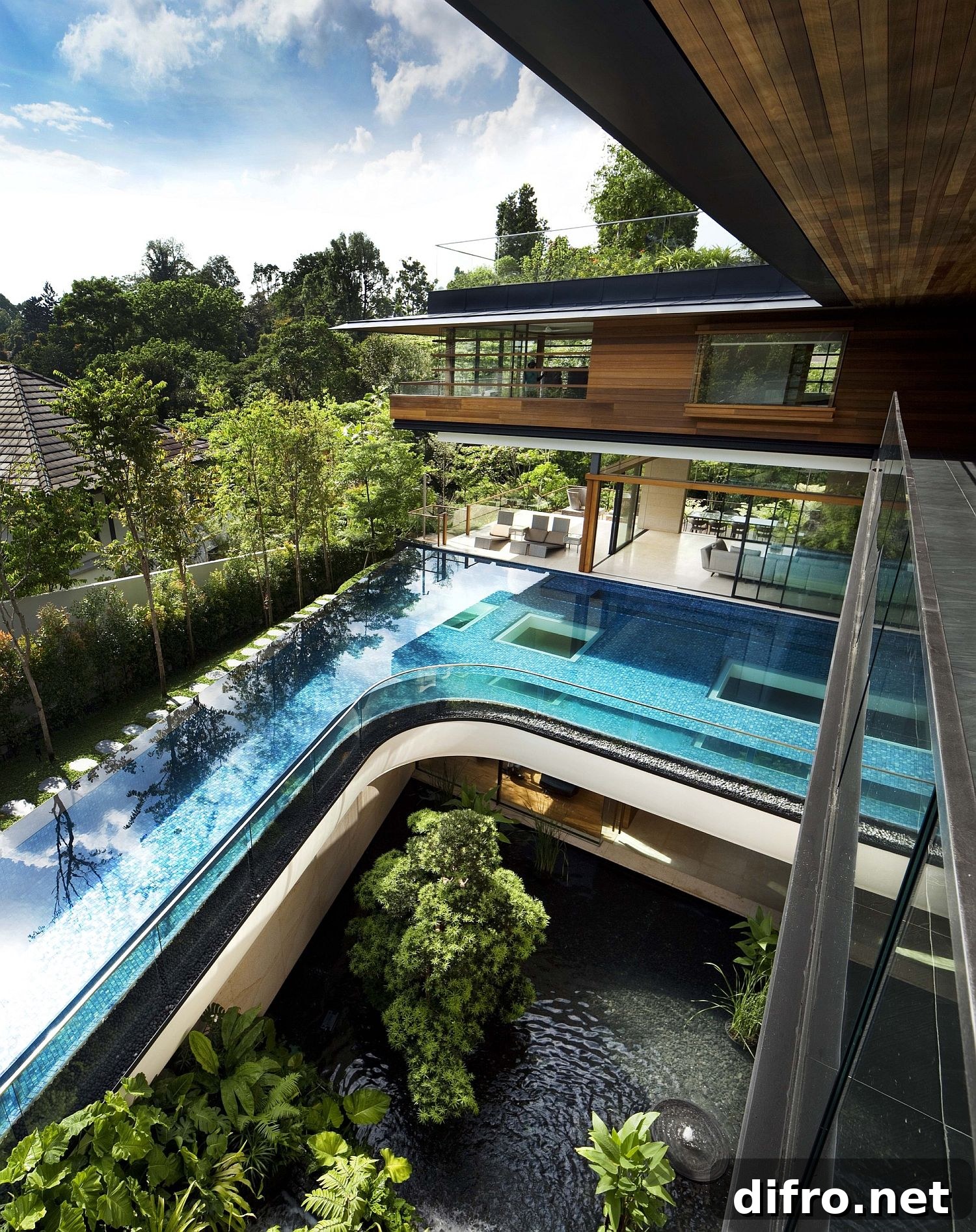
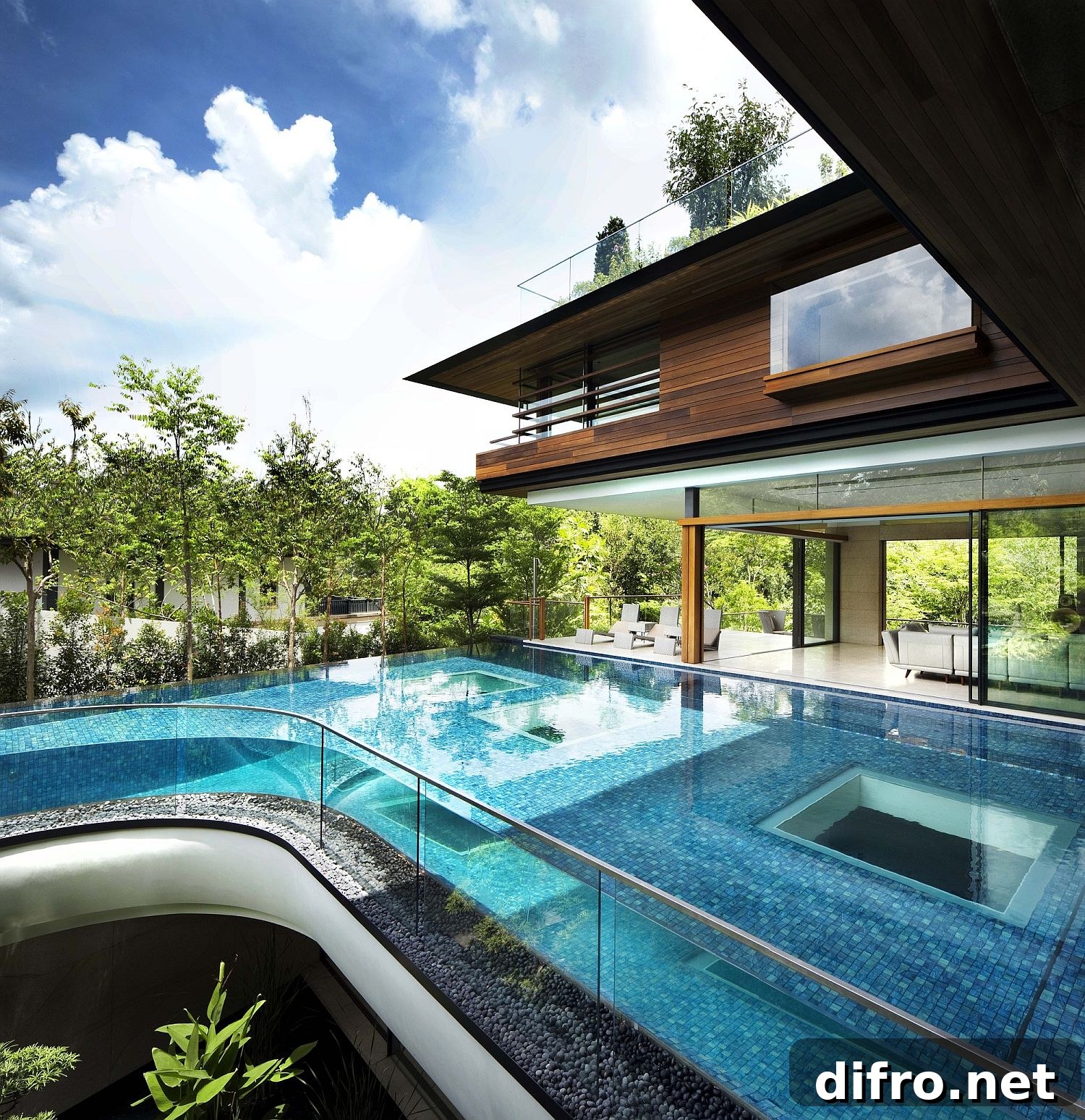
Multiple levels and terraces allow water to move thoughtfully through the site. Pools and waterfalls are both aesthetic elements and part of a larger strategy to connect spaces vertically and to introduce the sensory qualities of nature—sound, movement and reflection—into everyday life. The architect’s decision to locate the entry at the basement level responds to the difference in elevation between the platform and the road. A sunken courtyard with a landscaped pond and a waterfall creates an airy, nature-infused arrival sequence that sets the tone for the rest of the house.
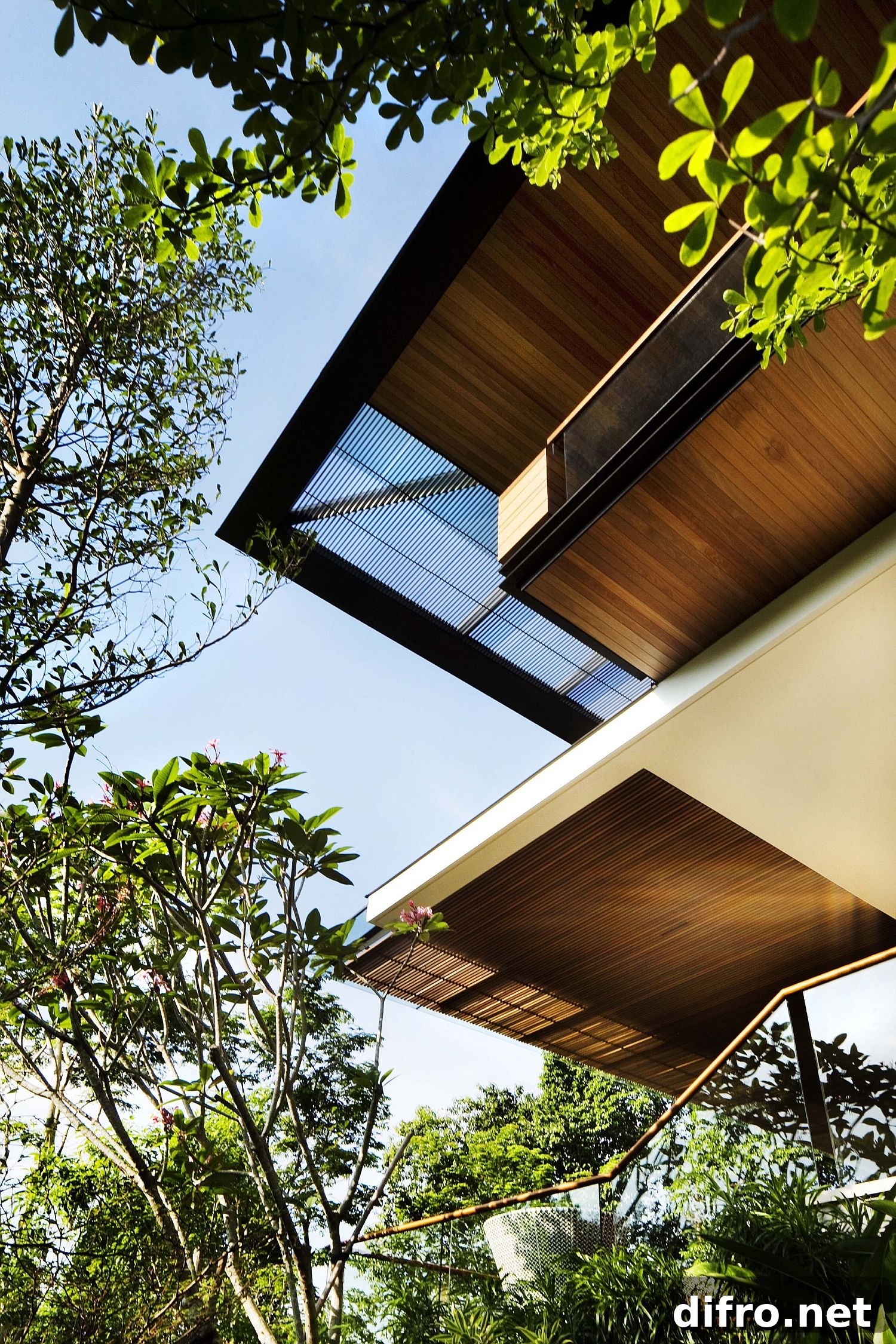
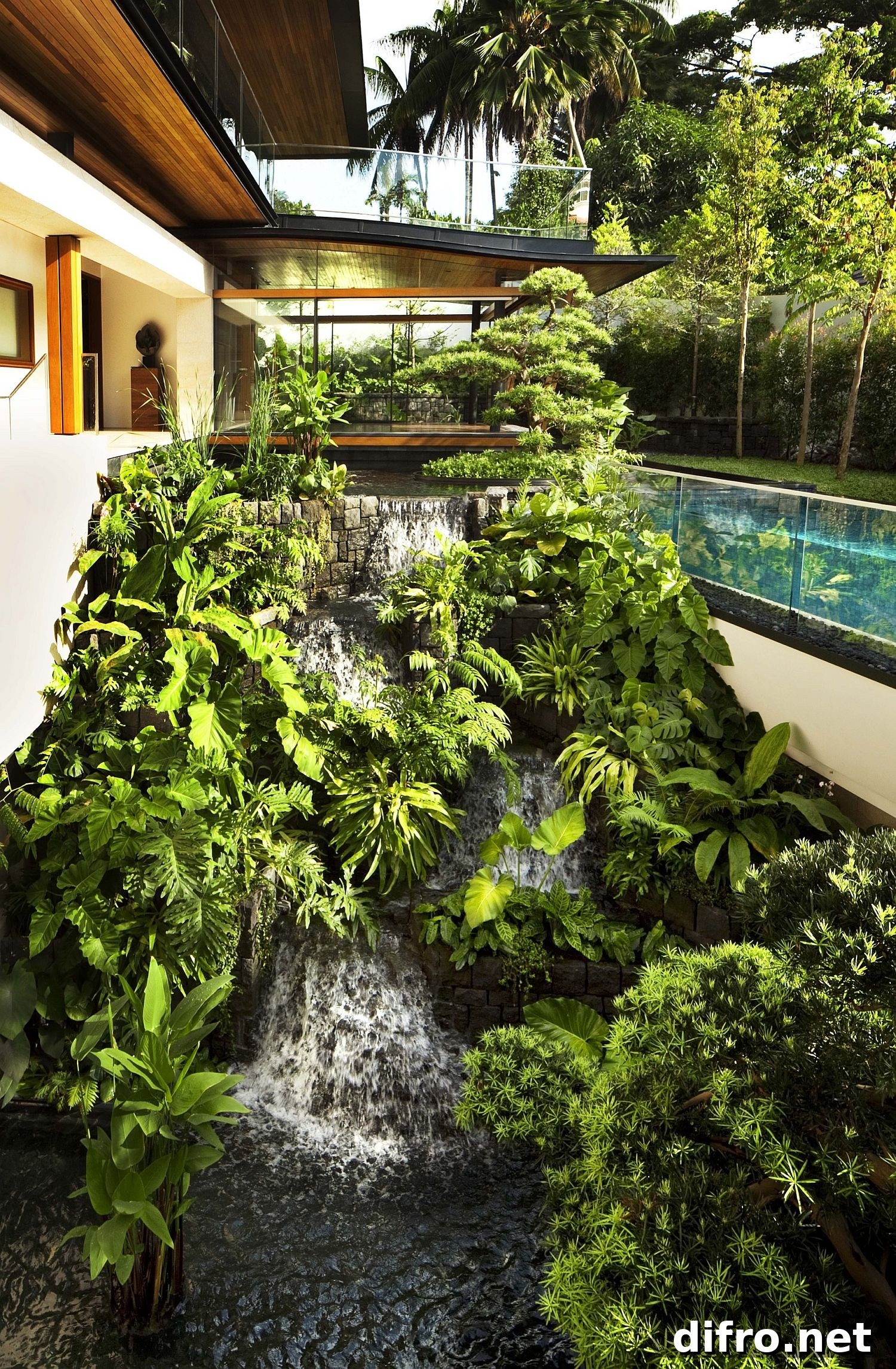
Strategic openings and voids bring abundant natural light deep into the plan while also framing views of planted courtyards and the garden beyond. The spiral stair becomes a central sculptural element—both a circulation core and a place from which to experience the house’s layered landscapes. Timber decks sweep outward from the interior, providing generous outdoor rooms for dining, lounging and poolside living. At night, carefully designed artificial lighting complements the natural features and highlights the house’s lines and textures without overpowering the landscape.
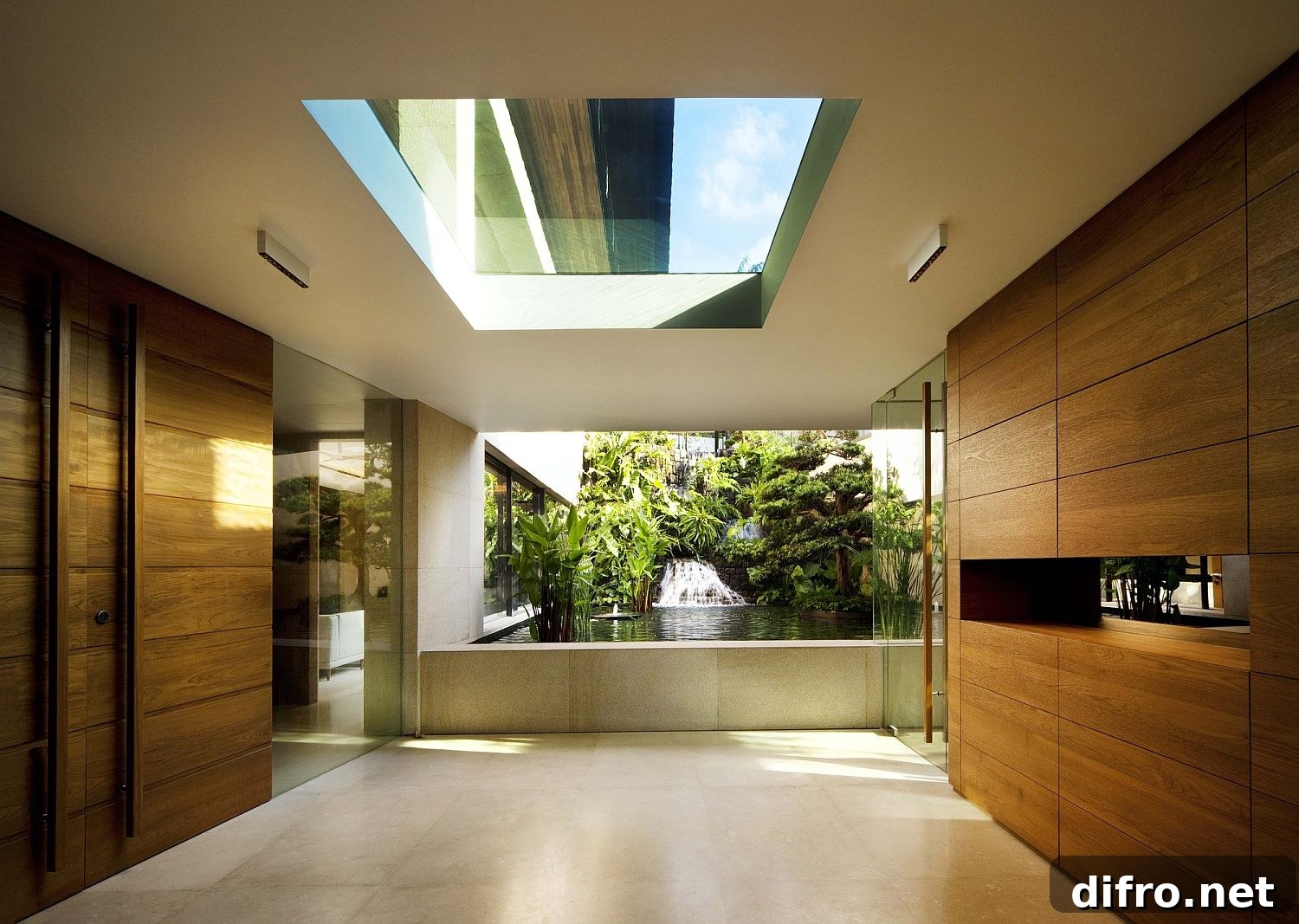
To minimize the discrepancy between the 1/F platform level and the road level it was decided to enter at basement level and to create a light airy basement entry a courtyard was sunk down with a landscaped pond and waterfall to introduce the connection with nature. Even adopting this strategy meant the driveway had to be sinuous and steep.
The house blends robust architectural form with delicate landscape gestures. Plants are used not only as ornament but as functional elements that provide shade, privacy and seasonal variation. Water features moderate temperatures and add a calming presence; decks and terraces offer flexible extension spaces; and the arrangement of rooms responds to both the site’s microclimate and the sweeping views of the botanical landscape.
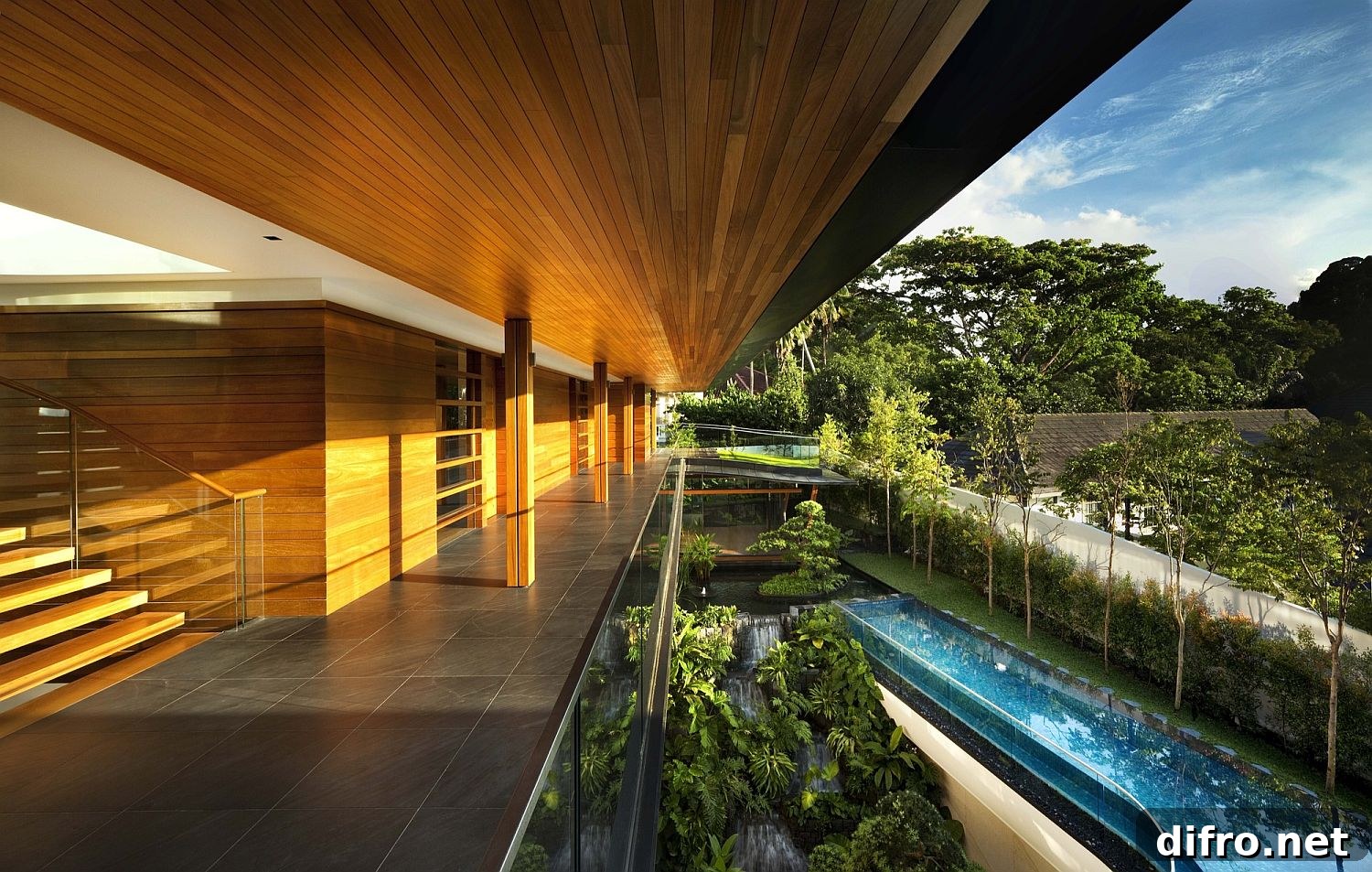
Botanica House demonstrates how contemporary architecture can be intimately informed by landscape, climate and cultural principles such as Feng Shui, while delivering comfortable, contemporary living. Its layered approach—integrating water, planting, light and material—to create both dramatic and calming effects on the site makes it a noteworthy example of eco-conscious residential design in an urban setting.
Key design elements
- Integration with the sloped site to create multi-level terraces and water features
- Central spiral staircase surrounded by pools as a defining spatial element
- Extensive use of timber decks to connect interior and exterior living spaces
- Sunken courtyard entry with a landscaped pond and waterfall to enhance the arrival experience
- Design informed by Feng Shui principles to balance natural elements
- Careful use of natural and artificial light to highlight materials and landscape
Botanica House is an example of how thoughtful architectural planning and landscape design can work together to create a home that is both visually compelling and intimately connected to nature. The project reinforces the value of site-responsive design, sustainable strategies and an integrated approach that celebrates water, greenery and light.