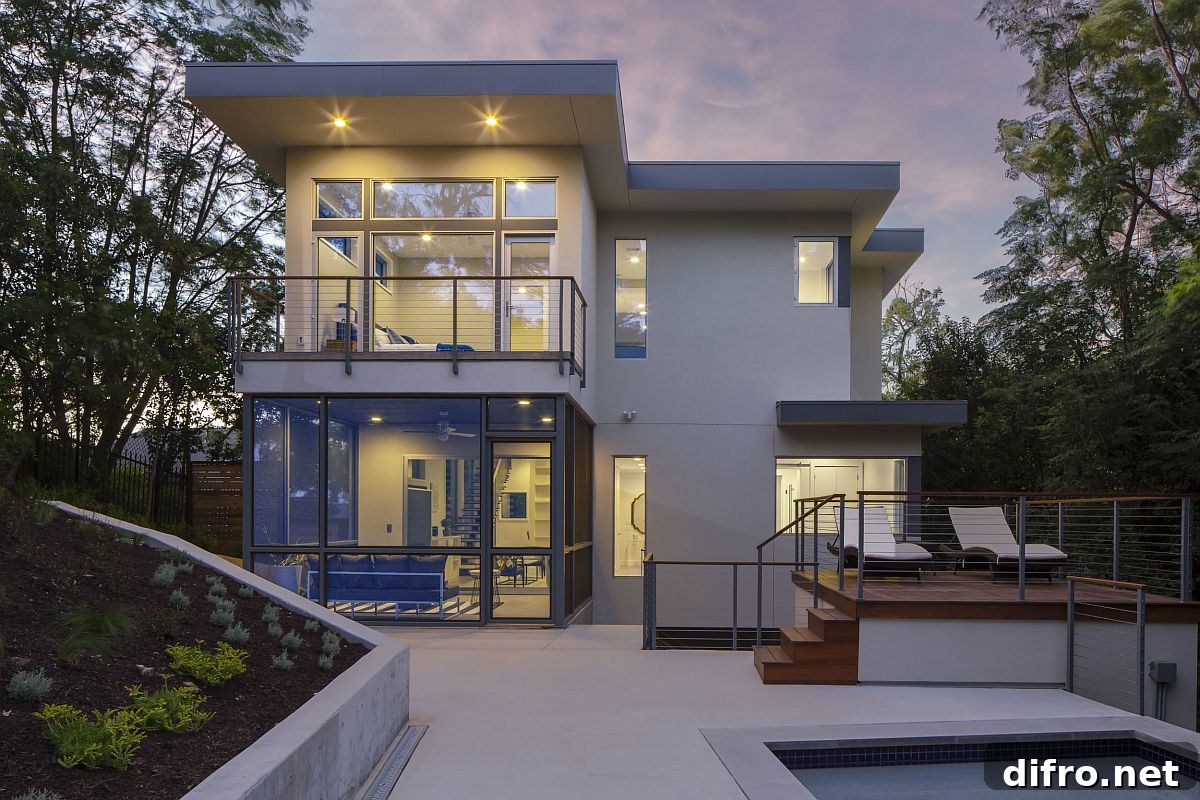
Rutherford Residence: A Multi-Level Modern Home on a Steep Hillside in Travis Heights, Austin
Perched on a steep, uneven lot in Travis Heights, Austin, the Rutherford Residence demonstrates how thoughtful design can turn a challenging hillside into an advantage. Designed by Merzbau Design Collective, the house takes full advantage of its sloped site to deliver layered living, abundant natural light and framed views of the city skyline and surrounding greenery. Instead of fighting the topography, the design embraces it: the lowest level is dedicated to parking, the primary living spaces occupy the mid level, and private bedrooms and additional living areas sit above—each level responding to the terrain and the site’s orientation.
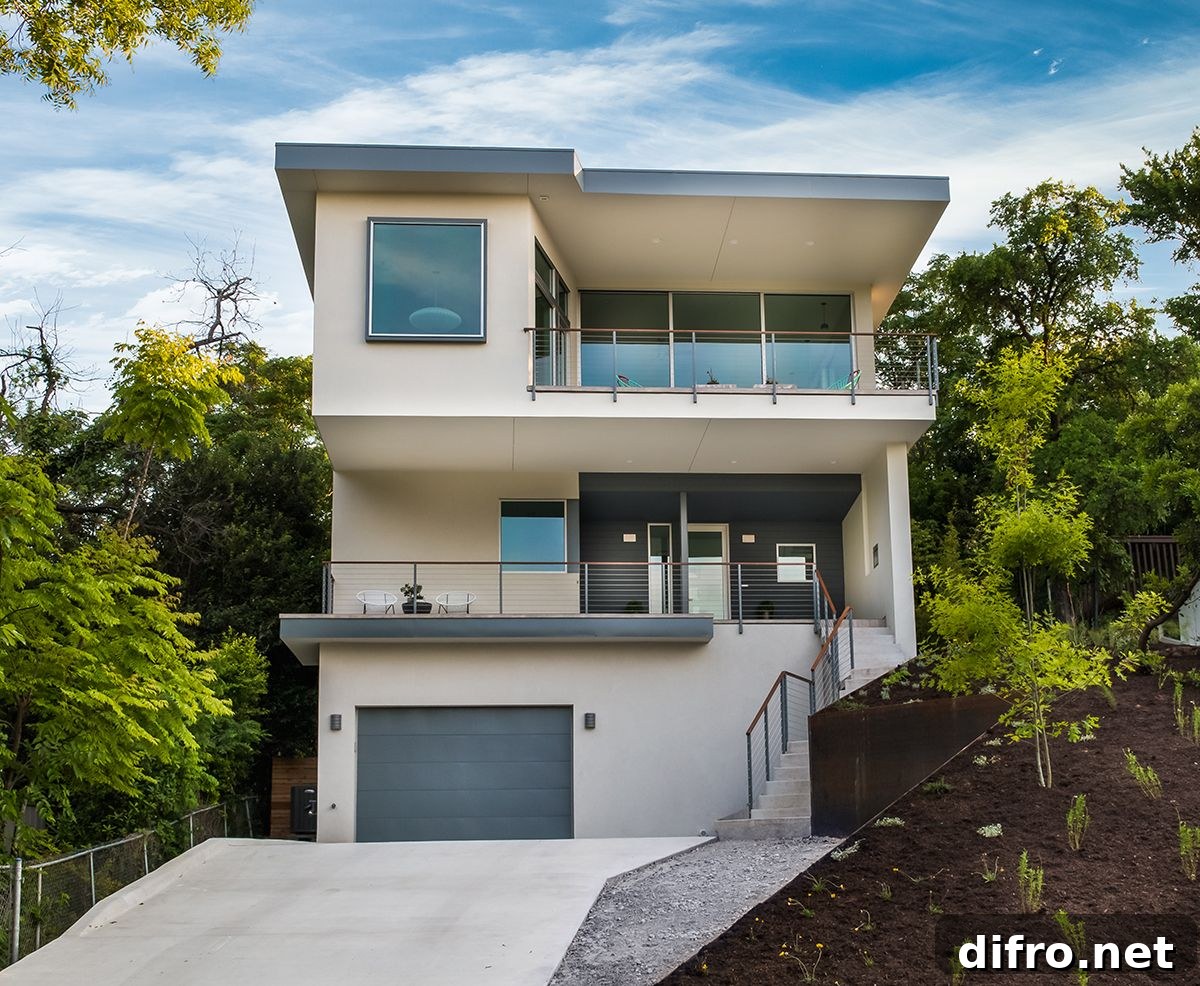
The main entry is reached by an exterior staircase that runs alongside a zig-zagging metal retaining wall and a curated landscape. That stair sequence establishes a direct connection from the street to the porch and living level, creating an inviting arrival experience. Sliding glass doors and generous glazing on both the front and rear facades reinforce the home’s connection to its landscape, while carefully placed outdoor rooms—porches, balconies and a covered patio—extend the interiors and become primary social zones.
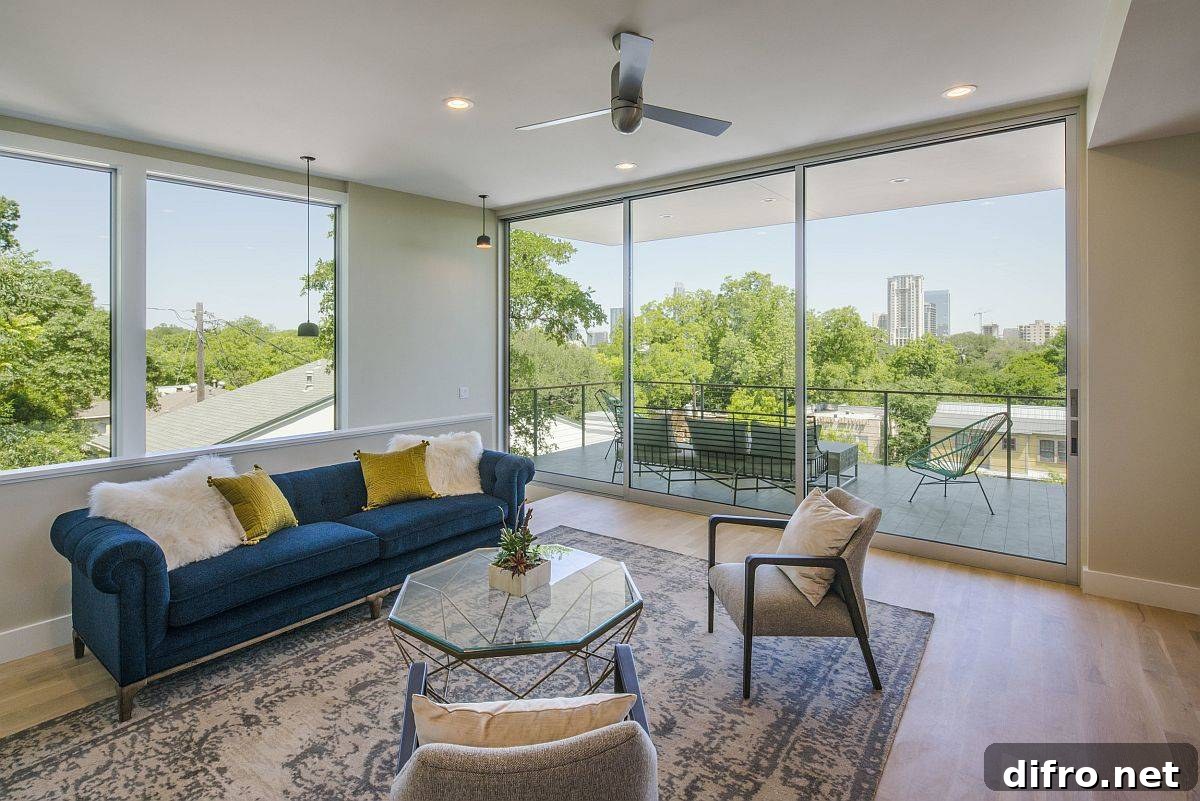
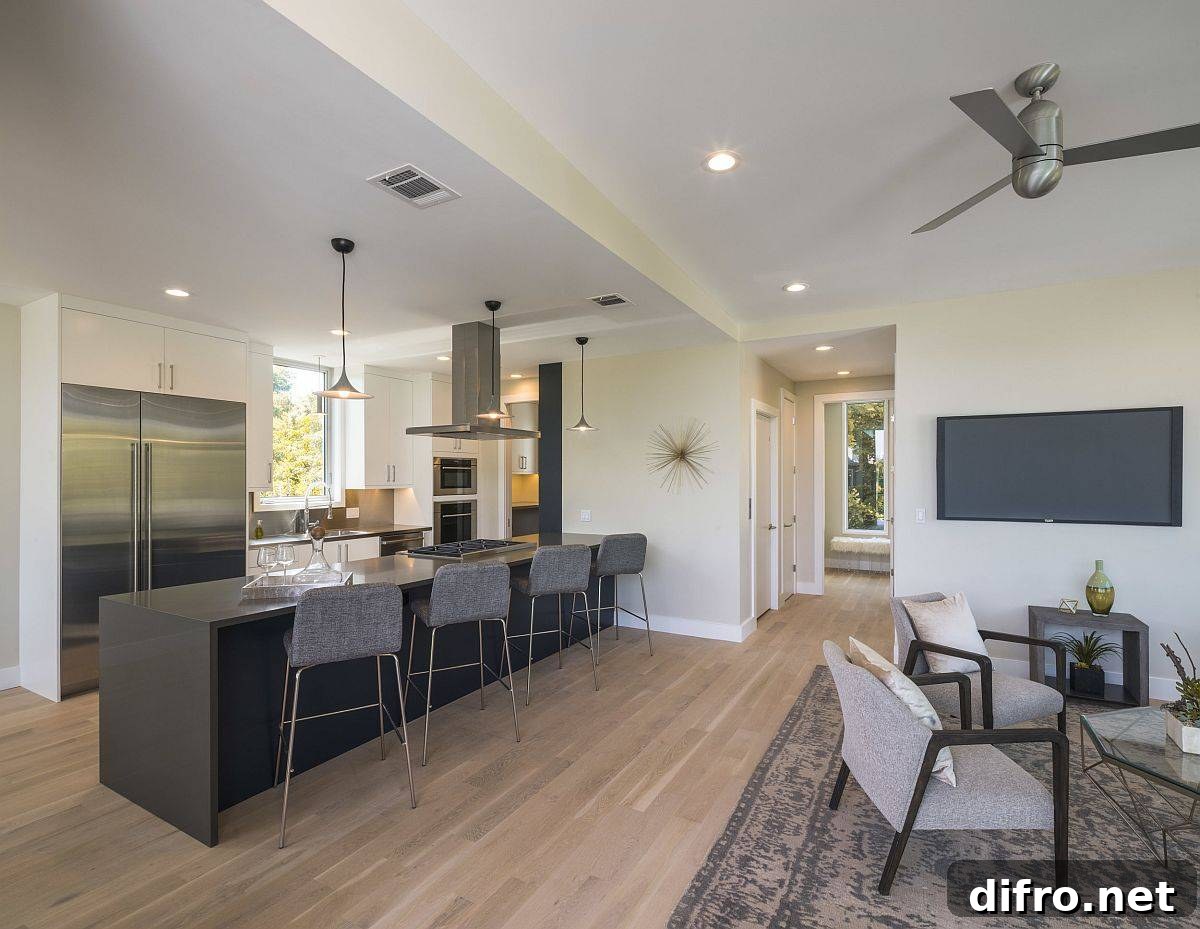
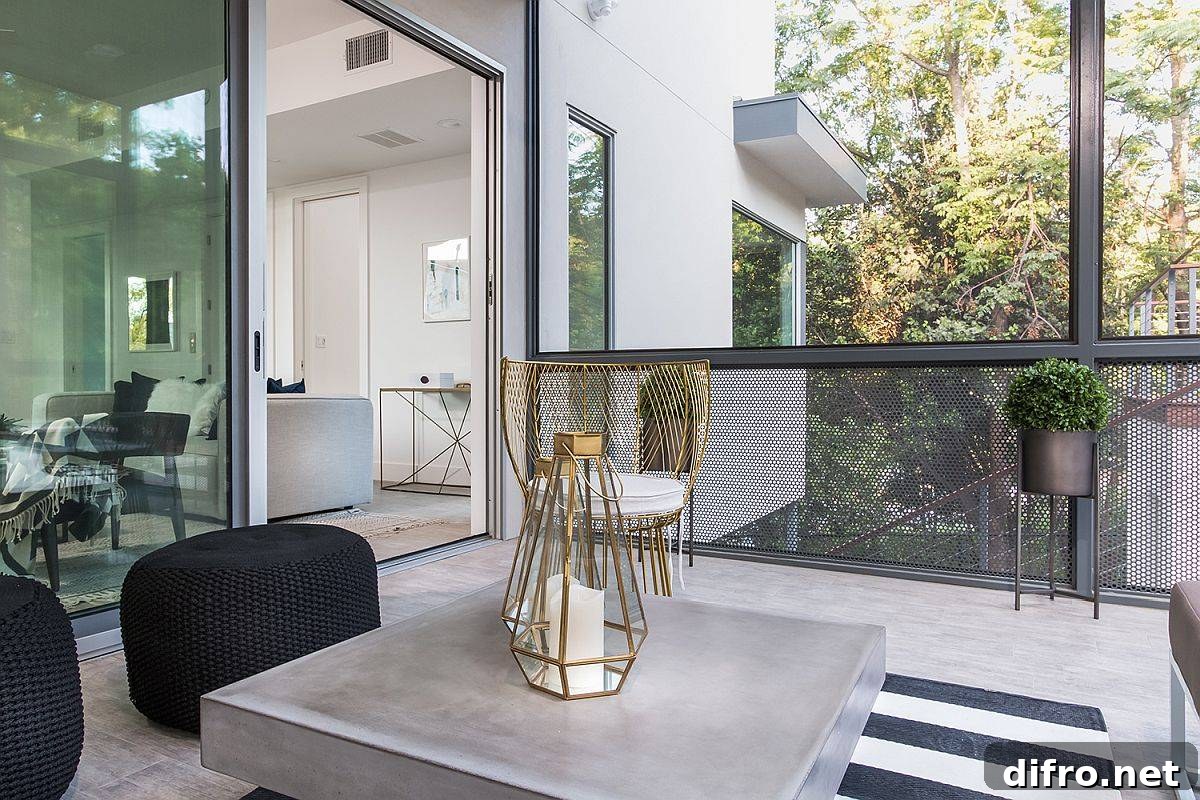
On the mid level, an open-plan layout brings the living room, dining area and kitchen together in a continuous, light-filled space. Large glass walls and sliding doors blur the boundary between inside and out so that one of the living rooms can effortlessly expand onto the porch—perfect for entertaining or relaxed everyday living. The neutral palette and contemporary finishes allow views and materials to take center stage, creating a calm backdrop for modern furnishings.
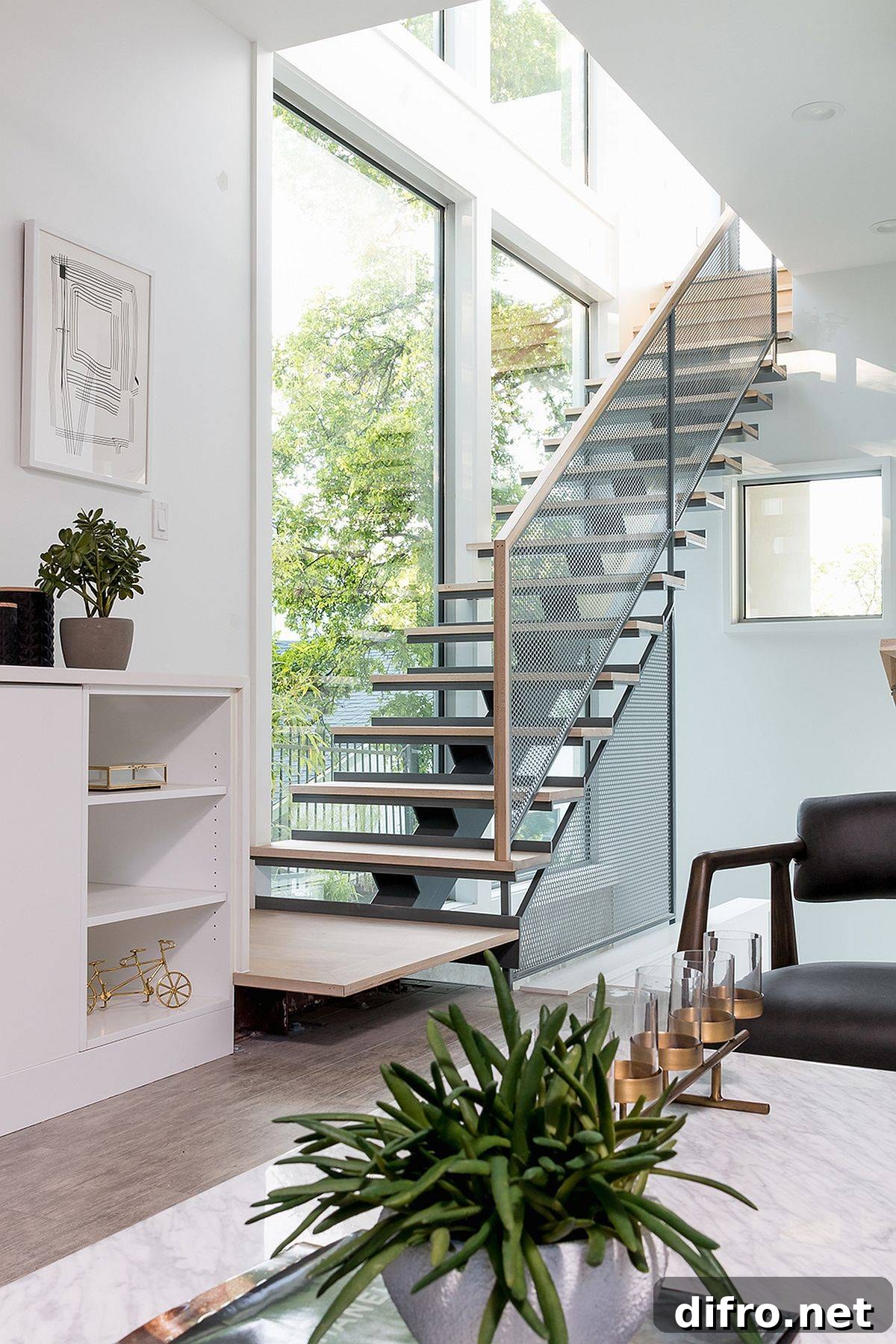
Vertical circulation is treated with attention to detail. A slim, elegant stairway with wooden treads and a metallic mesh railing contributes to the home’s contemporary aesthetic while maintaining visual lightness between floors. The stair becomes a sculptural element in the interior, framing glimpses through the floors and connecting the stacked living zones in a single cohesive composition.
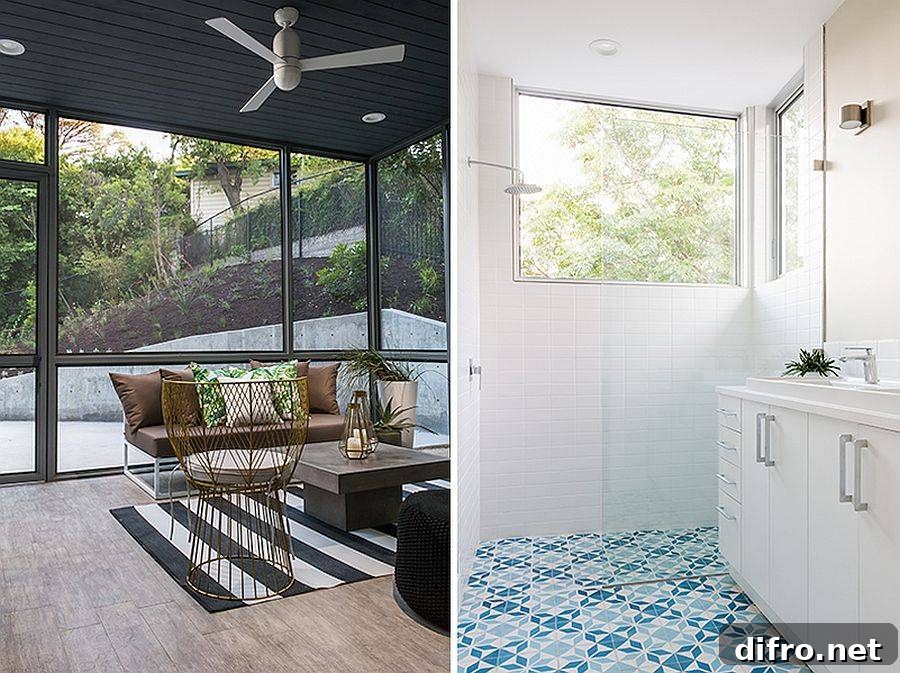
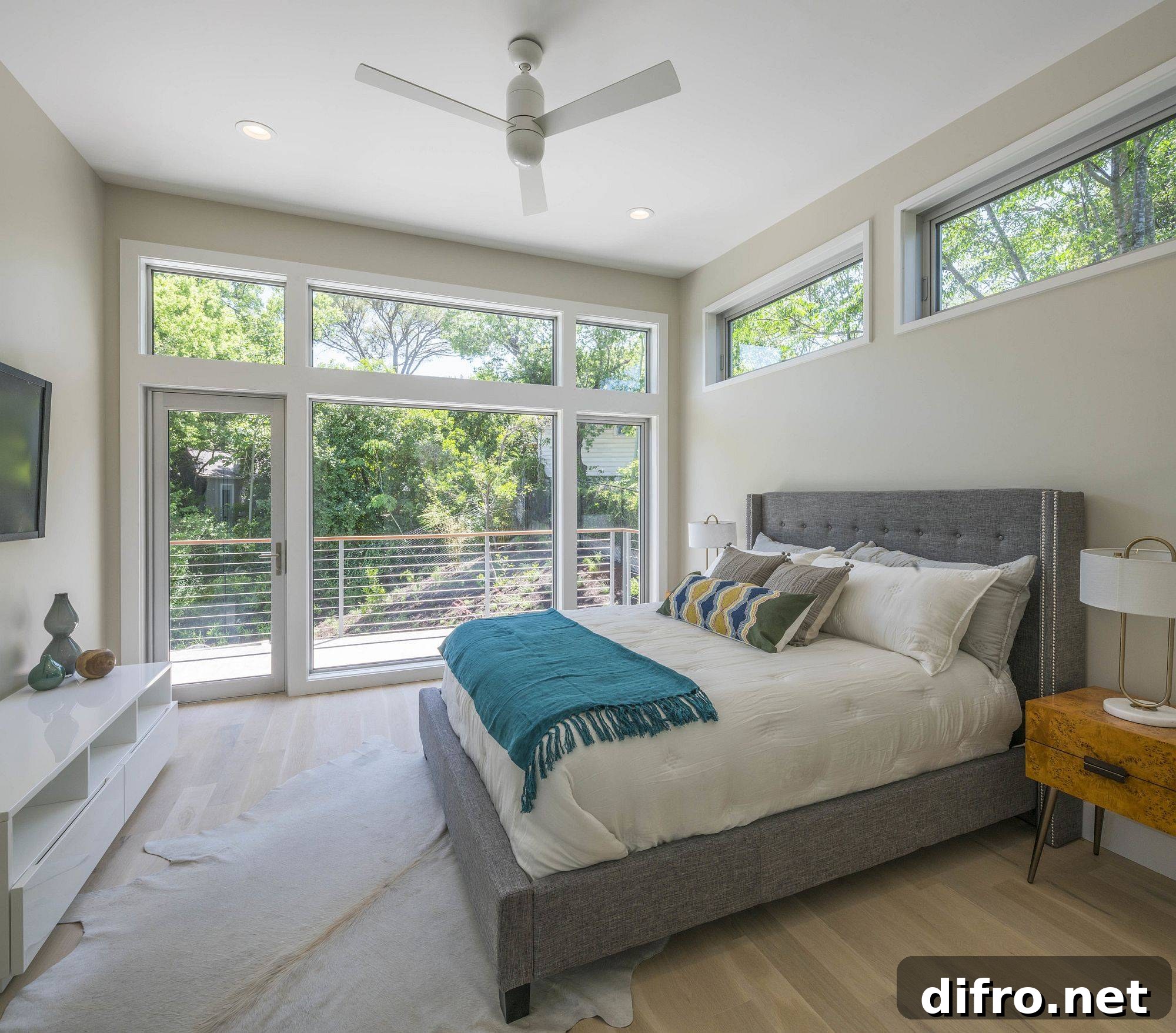
The main porch provides a relaxed spot to enjoy views of Austin’s skyline, while upper-level balconies attached to bedroom suites and a second living area bring daylight and fresh air into private spaces. These exterior elements make use of the hillside’s elevation to capture breezes and vistas, enhancing the home’s indoor-outdoor lifestyle.
Inside, the material palette remains warm and restrained. Cedar floors and white walls reinforce a cheerful, contemporary feel throughout the home. Natural wood tones paired with crisp white surfaces keep interiors bright and flexible for a variety of furnishings and decor choices. Large windows and abundant glazing maximize daylight and reinforce sightlines to the surrounding landscape.
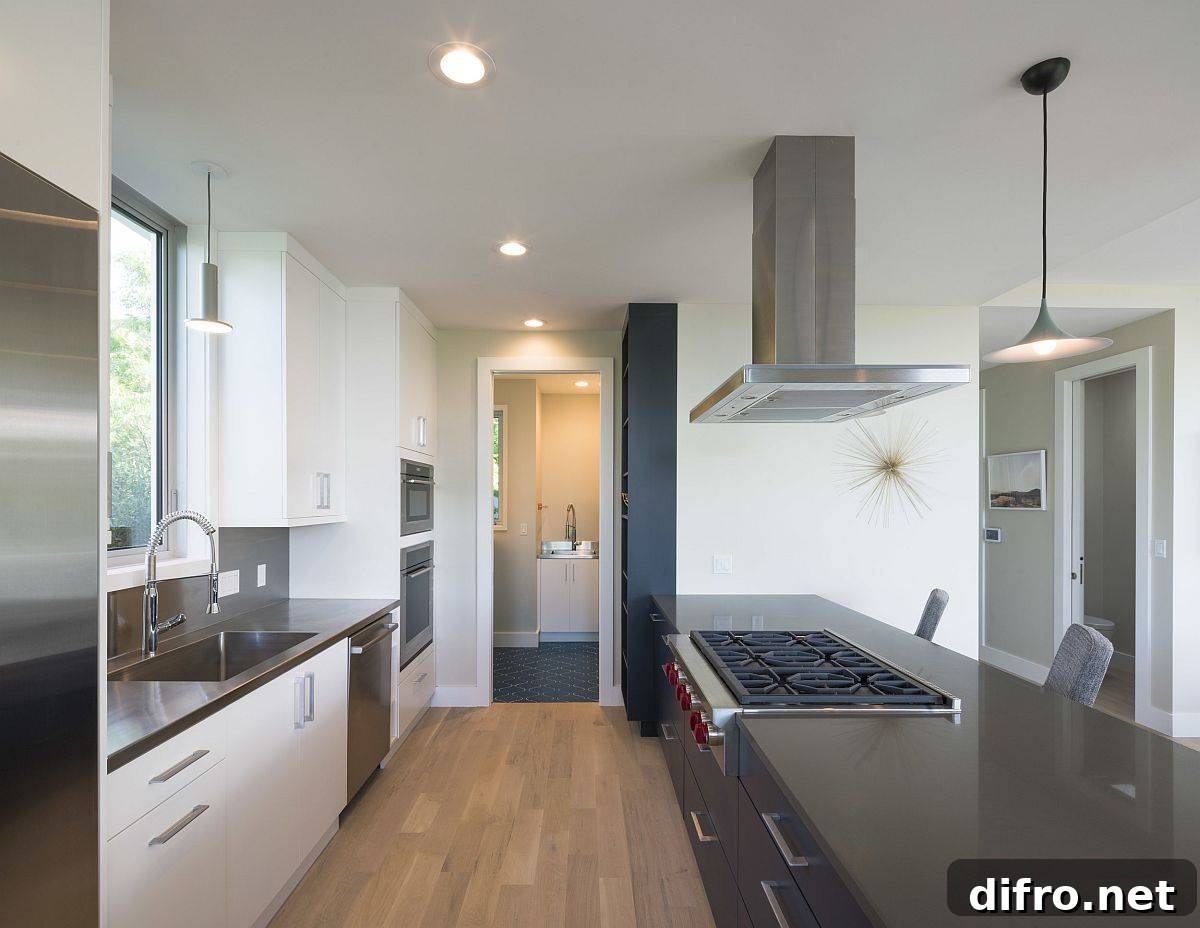
The kitchen anchors the open plan with a large central island and a breakfast zone that encourages informal gatherings. The island provides workspace and seating, while clean lines and minimal detailing keep the kitchen visually light and integrated with the living and dining areas. Thoughtful placement of openings and glazing ensures the kitchen benefits from both natural light and views of the yard.
At the rear of the house, a contemporary deck and pool create a private, sun-filled backyard that feels open and inviting despite the steep site. This outdoor area functions as a secondary living room—an ideal place for relaxation and socializing that capitalizes on the property’s topography and landscape.
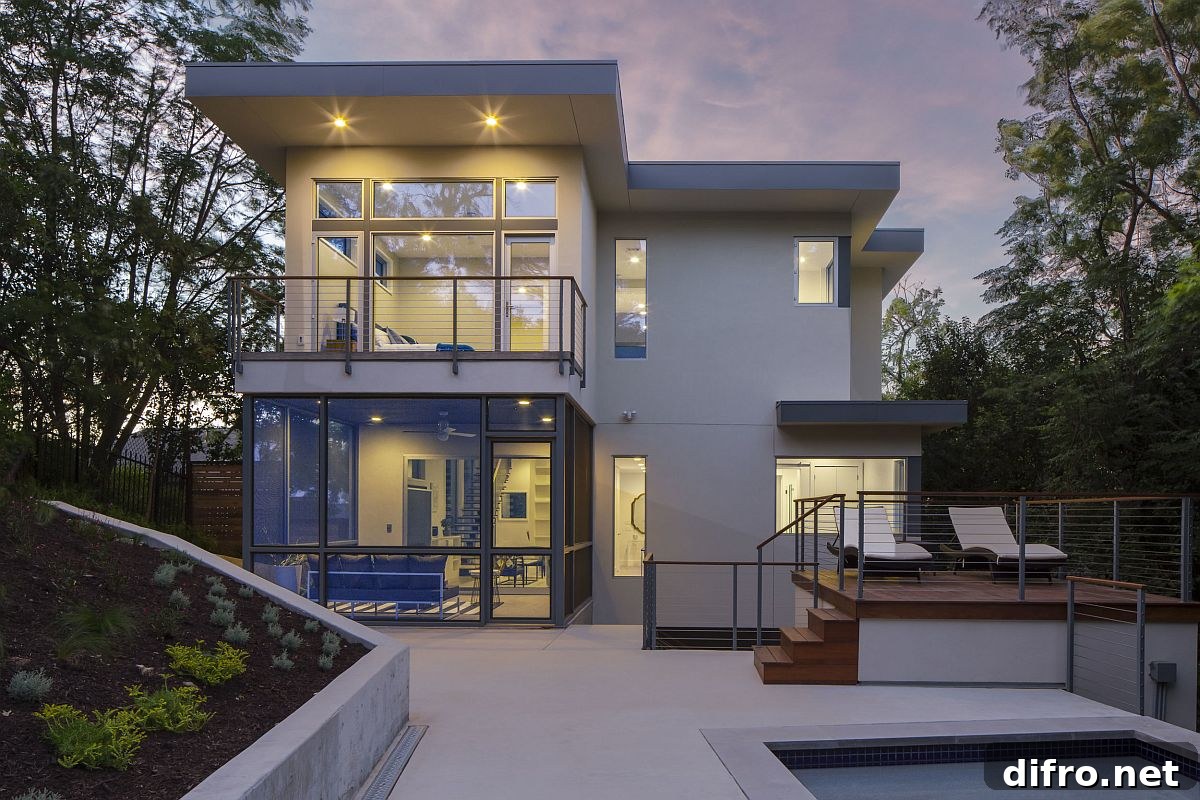
Bedrooms on the upper levels open to balconies and porches that offer pleasant green views, bringing nature into the everyday experience of the home. This connection reinforces the project’s overall strategy: integrate architecture with landscape, maximize light and views, and create flexible indoor-outdoor living that responds to the hillside site.
Photography: Brian Mhealsick / Brian Cole (photo credit).
Overall, the Rutherford Residence is a strong example of how contemporary design strategies—careful site planning, indoor-outdoor connections, a restrained material palette and smart stacking of program—can transform a steep hillside into a series of livable, light-filled spaces that celebrate both city and landscape views in Austin’s Travis Heights neighborhood.