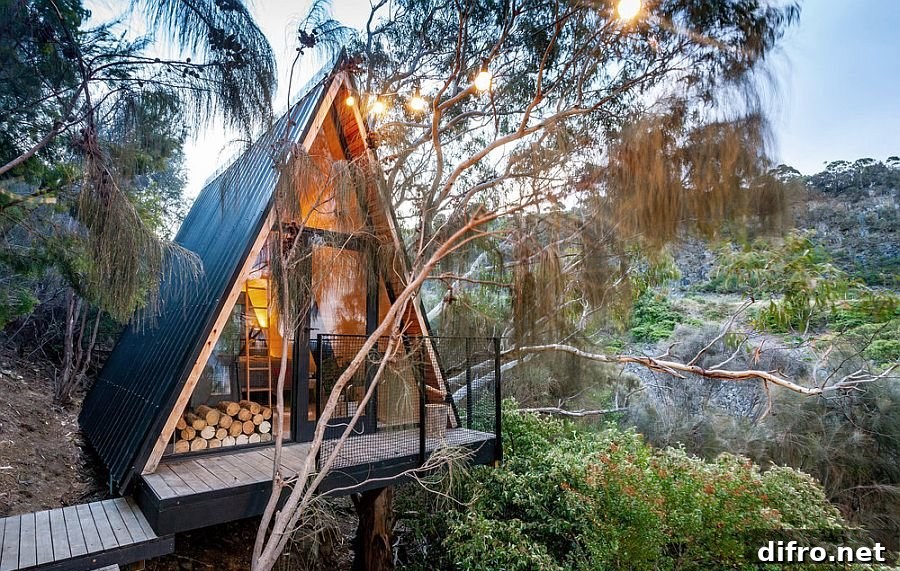
Crump Treehouse: An Eco-Friendly A-Frame Hideaway in the Australian Bushland
An A-frame house can feel like a nostalgic relic amid today’s boxy modern homes, yet that very vintage charm makes it an ideal secluded retreat in a garden or bushland setting. Designed as a private hangout for two boys, the Crump Treehouse by Crump Architects blends old-world form with careful contemporary detailing. Nestled between an aging gum tree and a sloping hill, this compact A-frame cabin leverages its surroundings to create a magical, sheltered play space that doubles as a small, sustainable retreat.
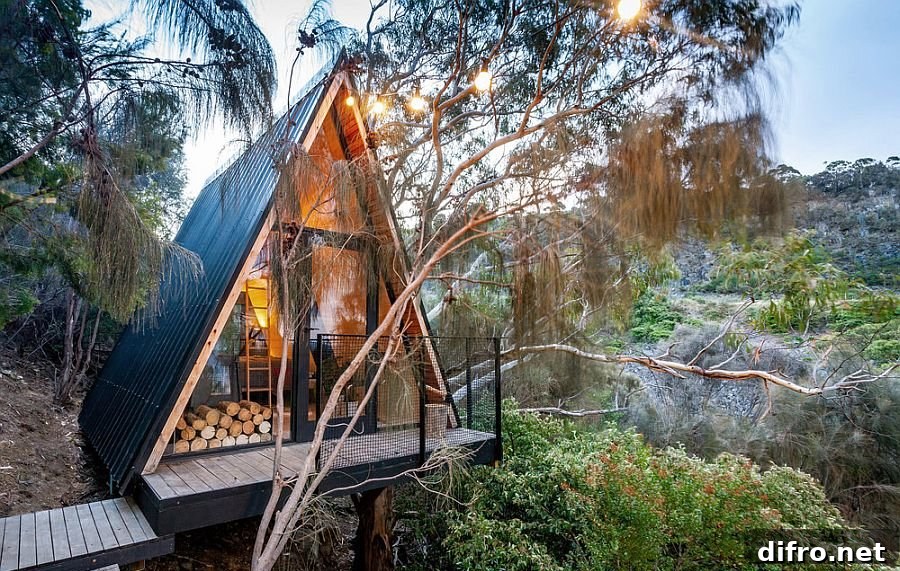
The architects prioritized reuse and low-impact building techniques. Most materials were salvaged from nearby sources, including pieces reclaimed from a demolished carport and other weathered structures destined for dismantling. Using reclaimed timber and secondary timber products not only reduced waste but also gave the interior a warm, textured character that feels both lived-in and carefully considered. A short run of duck-boards guides visitors across the uneven site to a small entry deck, and subtle, well-placed lighting highlights the treehouse’s silhouette at dusk.
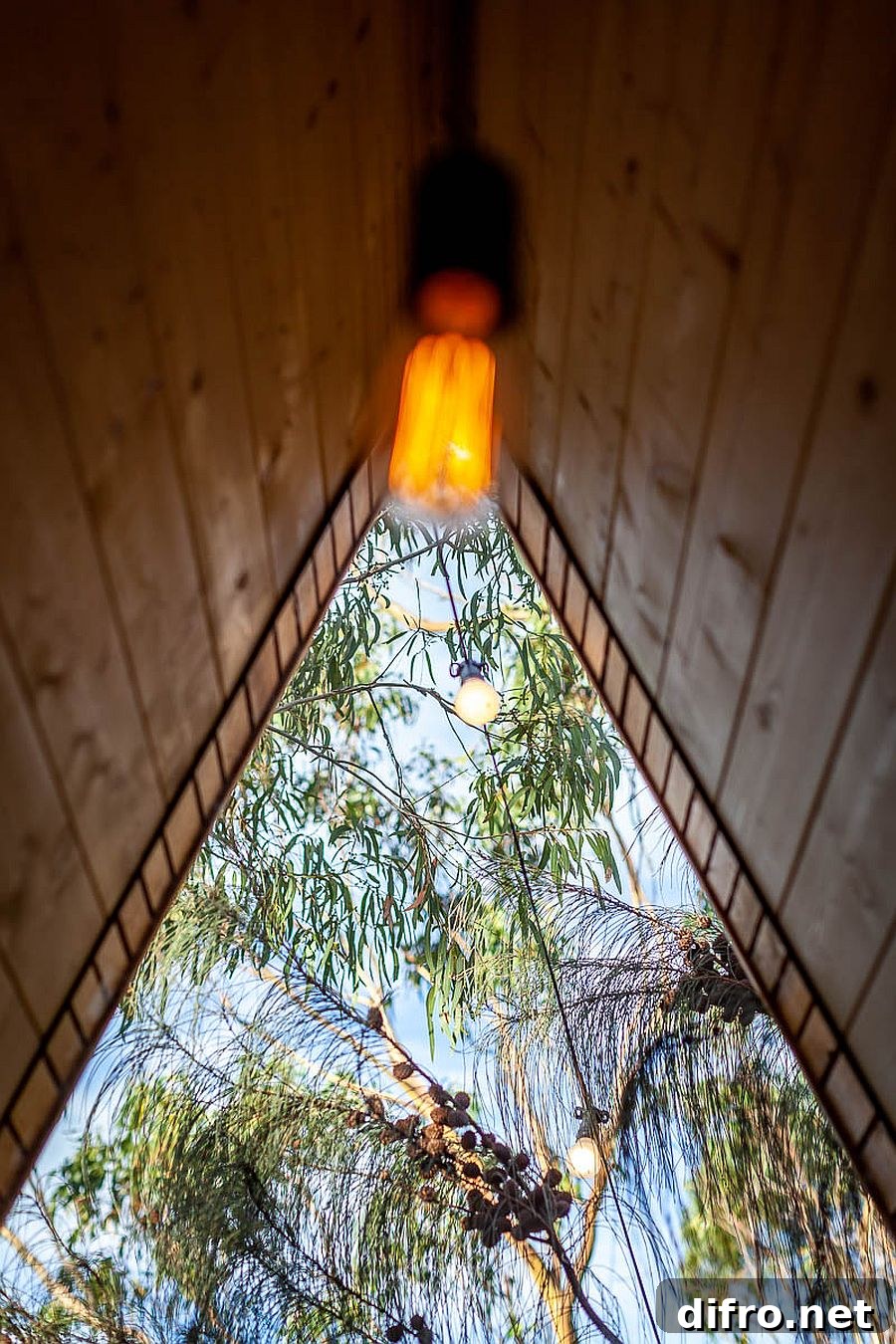
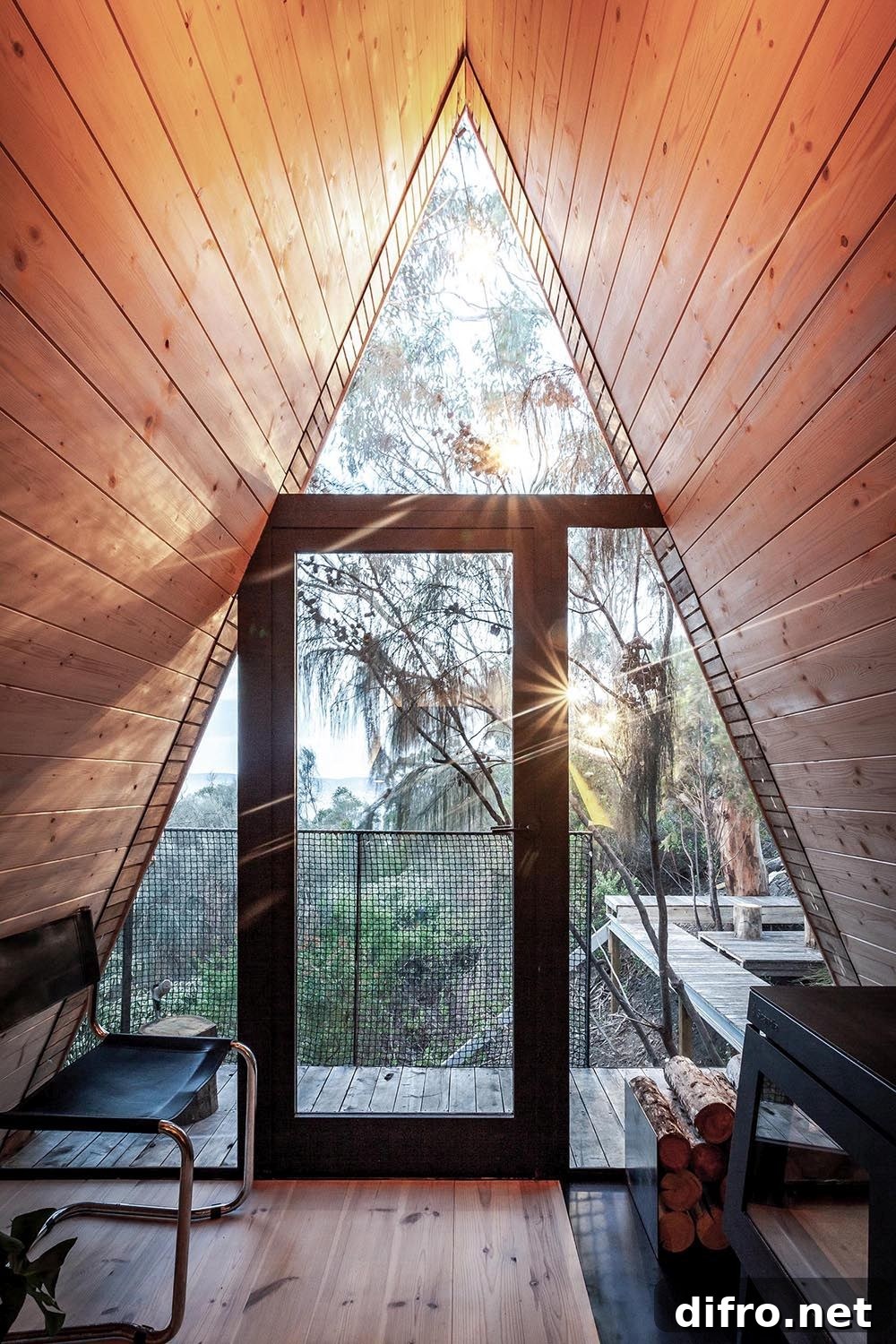
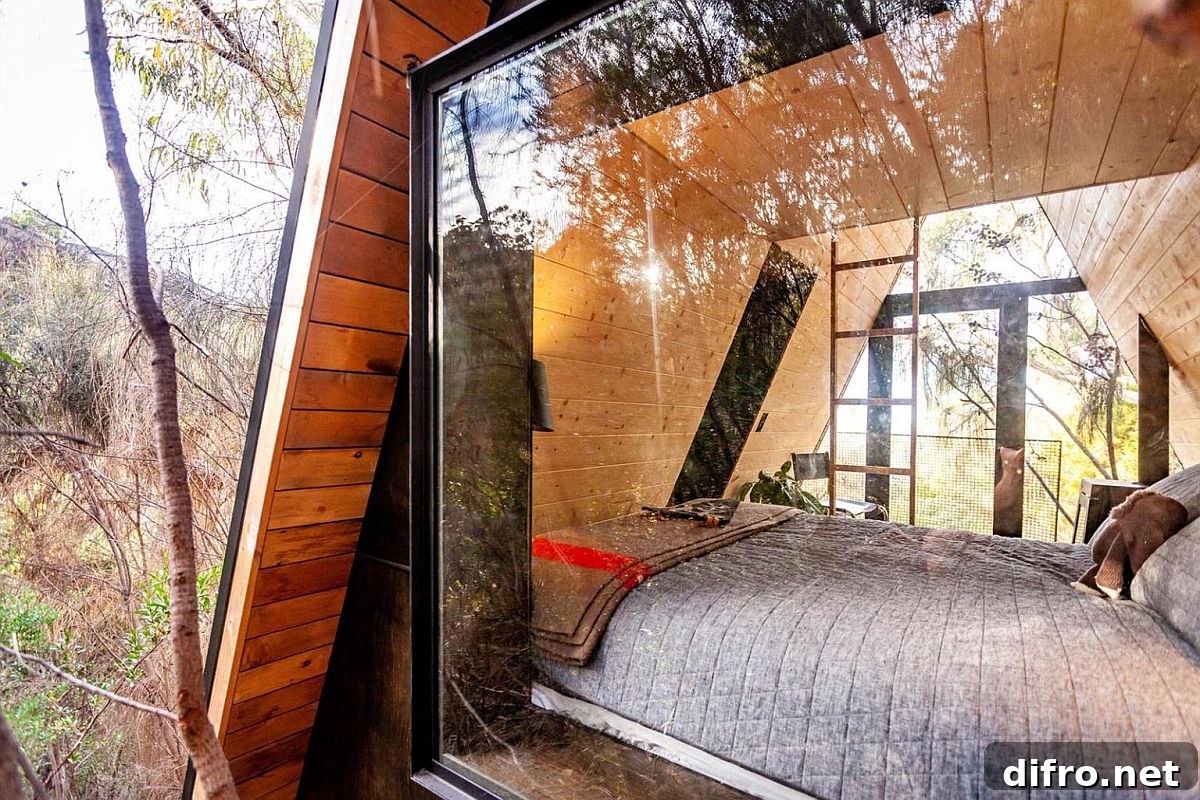
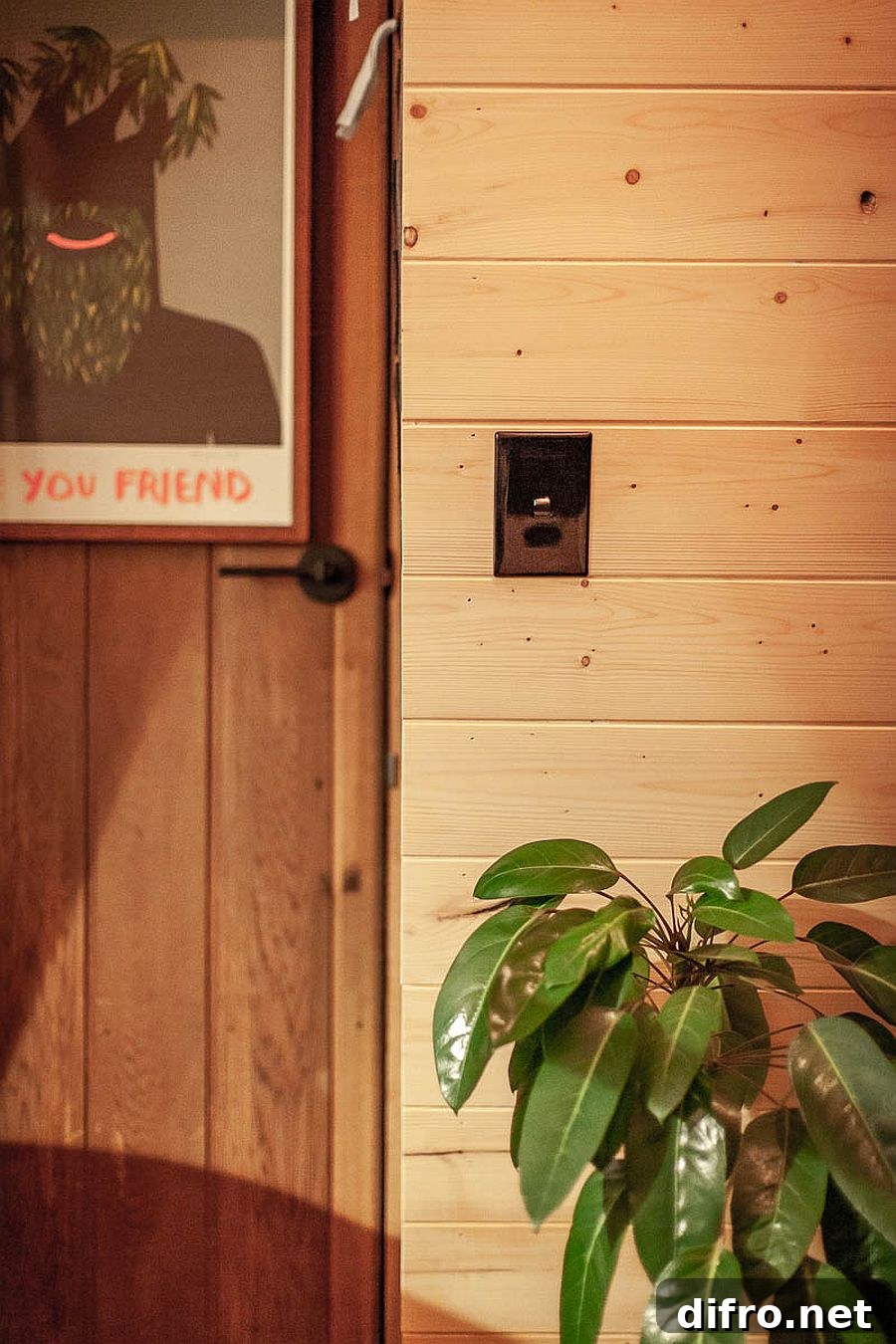
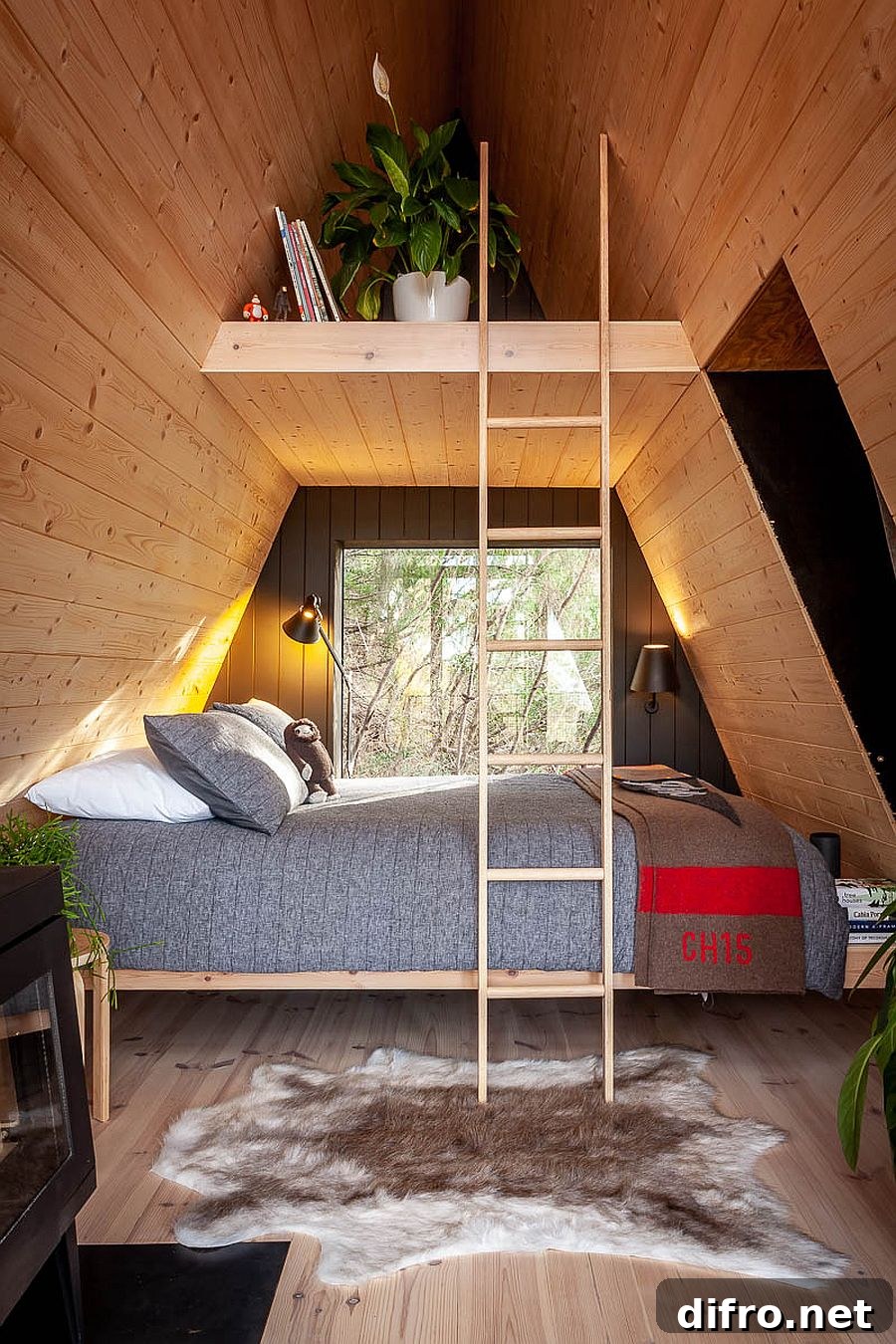
Inside, layers of Baltic Pine line the walls and ceiling, creating a unified, warm interior that emphasizes the A-frame’s geometry. The narrow apex of the roof helps draw the eye upward and funnels natural light from the large glazed openings. Glass walls and carefully positioned windows frame views of the surrounding canopy, bringing the outdoors visually into the small footprint while preserving privacy. A simple timber door opens to admit a fresh breeze, reinforcing the cabin’s connection to the landscape.
Thoughtful interior planning makes the most of limited space. A floating bed provides a ergonomic sleeping area while maintaining floor space for play. Built-in bunk beds comfortably accommodate two children, and a range of cozy nooks and hangout spots encourage reading, imagination, and quiet downtime. A modest fireplace creates a focal point and adds warmth on cool evenings, making the treehouse usable across seasons. These layered elements—sleeping platforms, storage, and tucked-away seating—showcase how efficient design can transform a modest A-frame into a versatile, child-friendly shelter.
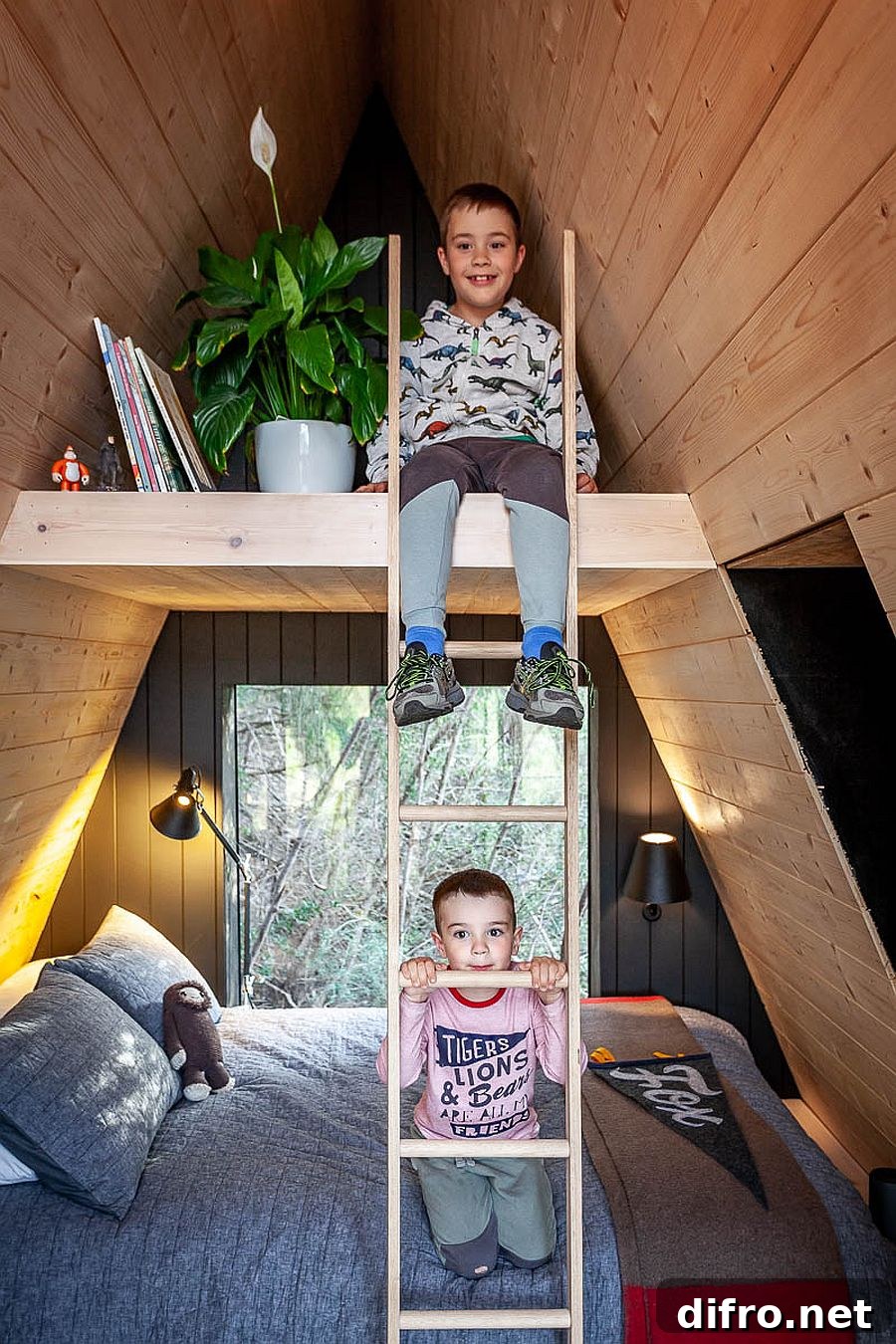
From a sustainability perspective, the project demonstrates how small-scale architecture can minimize environmental impact through material reuse, careful siting, and passive design strategies. The glazed façade and clerestory-style openings invite daylight deep into the interior, reducing the need for artificial light during the day. Natural ventilation is encouraged by operable doors and windows, helping regulate indoor temperatures without mechanical systems. The result is an intimate, low-energy cabin that respects both its occupants and its bushland setting.
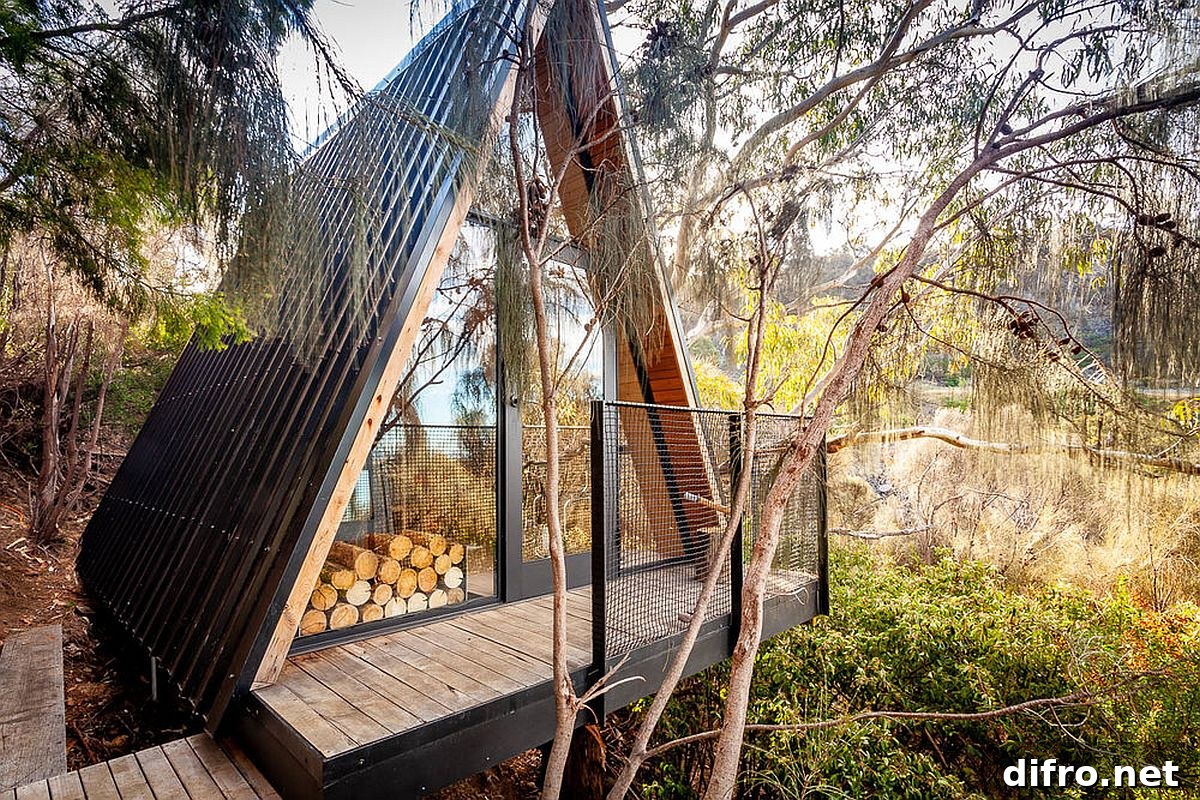
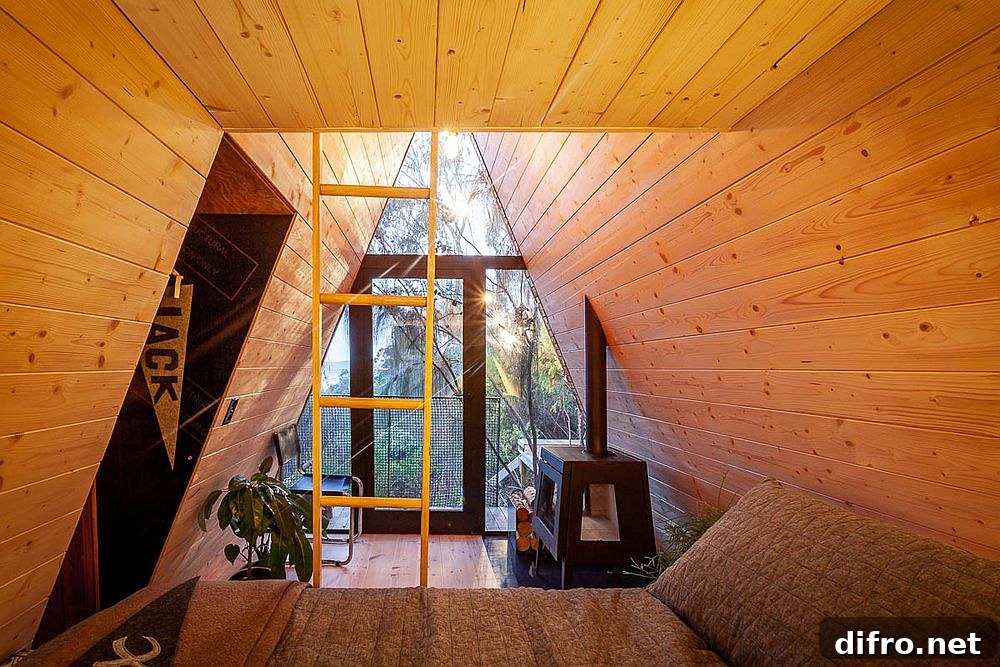
Designed to be inviting, private, and safe for children, the Crump Treehouse balances playfulness with practical design. Its A-frame silhouette is not only a nod to a timeless architectural form but also an efficient solution for a compact structure, shedding water and concentrating usable volume where it matters most. The project shows how thoughtful reuse and clear design intent can produce a memorable, low-impact building that fits gently into its landscape while delivering delight for its young users.
Photography: Andrew Knott