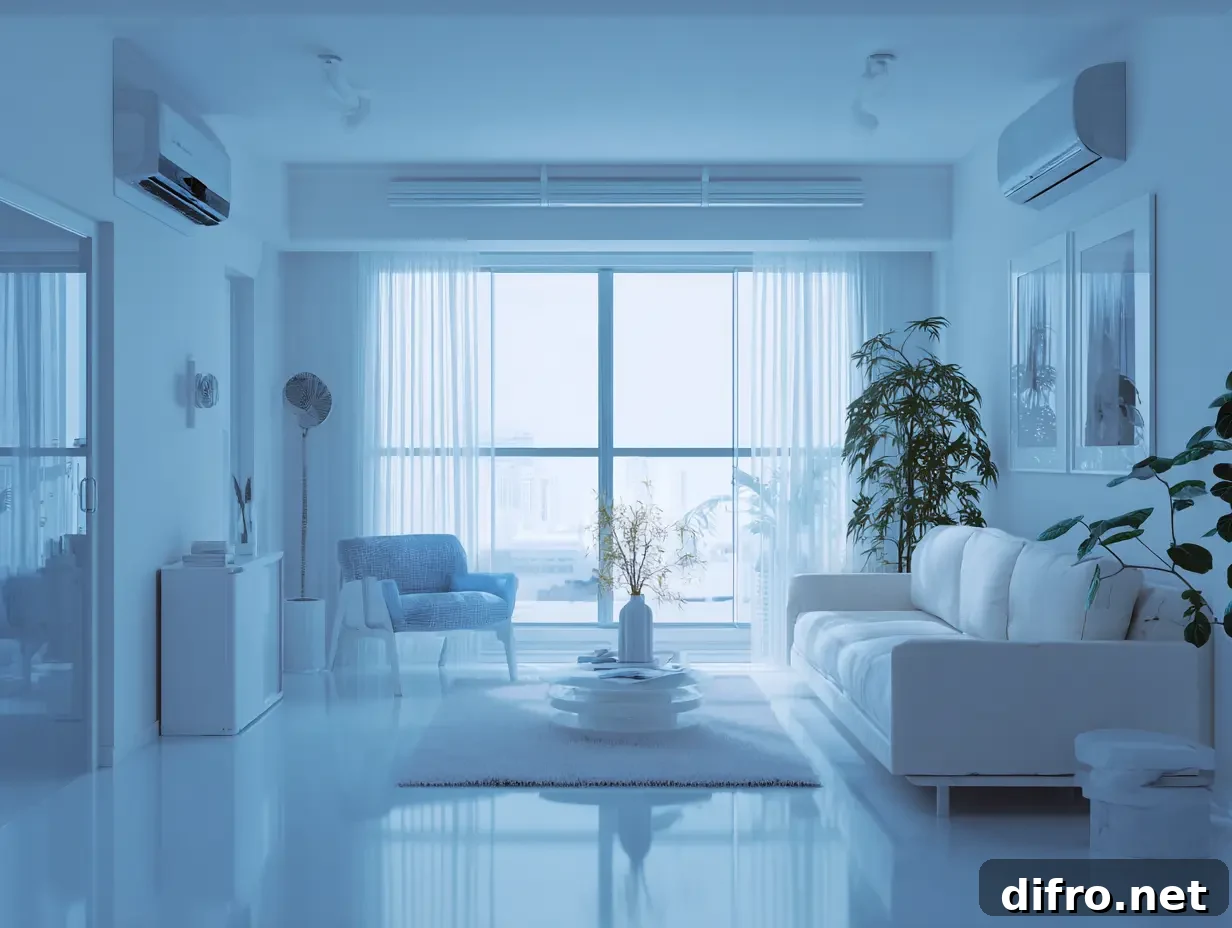
All-white interiors are often pronounced “over” by trends-watchers, yet they persist as one of the most enduring choices in modern and historic homes alike. Rather than a fleeting fad, white functions as a flexible design foundation. From Scandinavian minimalism to Mediterranean villas, white remains a preferred canvas because it is adaptable, breathable, and endlessly reinterpreted.
In 2026, the appeal of white feels especially relevant. As people prioritize calmer, restorative home environments, white supports that shift by simplifying a room’s visual language and allowing textures, materials, and architecture to take center stage.
Why White Never Really Goes Out of Style
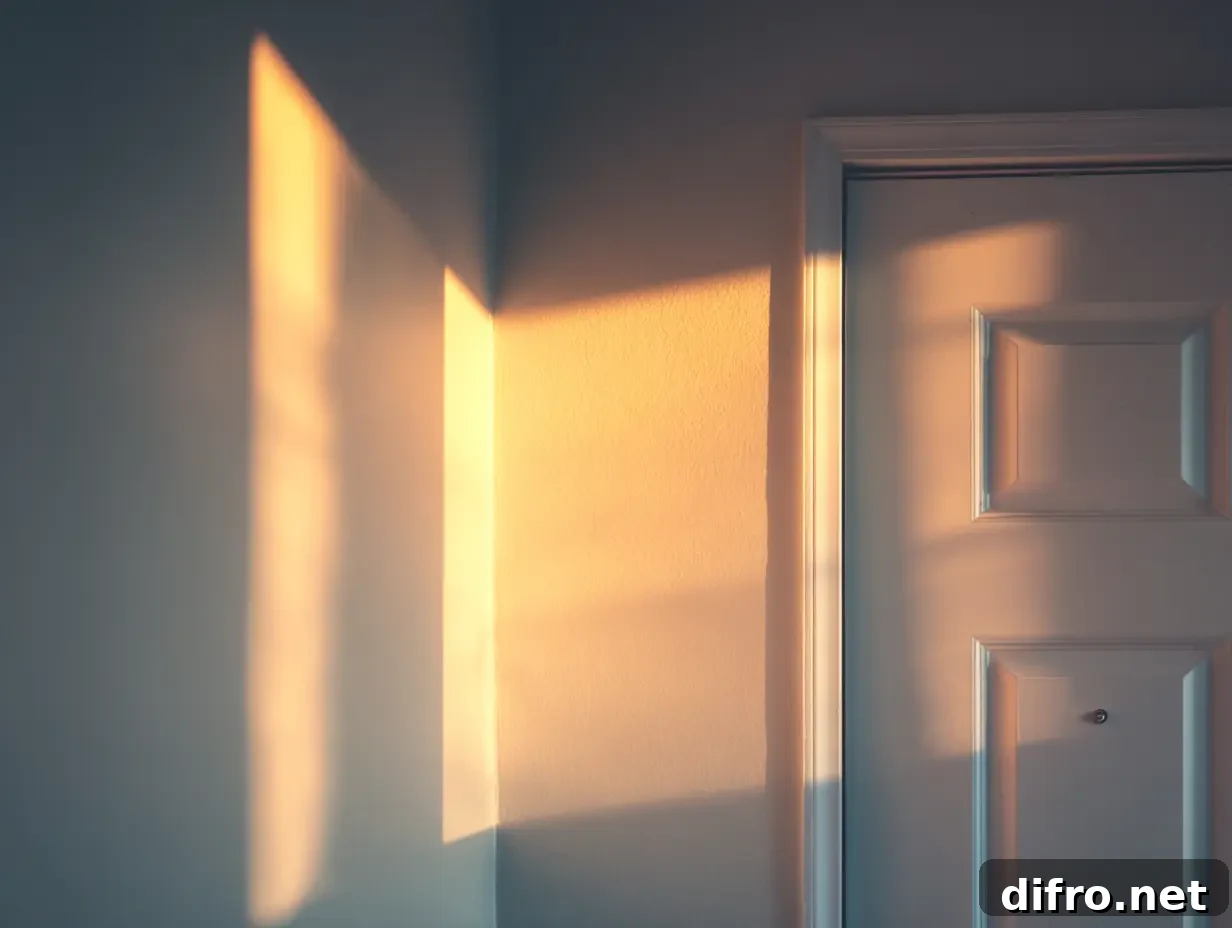
White works because it reflects light — a simple physical fact that produces a clear visual effect. Lighter surfaces bounce natural light deeper into a room, making spaces feel larger, brighter, and more open. That practical advantage explains why white is often chosen for small urban apartments and older homes with limited window exposure.
Beyond light reflection, white acts as a neutral backdrop similar to a gallery wall. It lets furniture, artwork, and architectural details stand out rather than compete. Many designers treat white as a timeless base: not an absence of color, but a way to see other elements more clearly. This is why established designers often return to textured, white-driven interiors that emphasize materiality over color.
The Secret Isn’t Color — It’s Texture
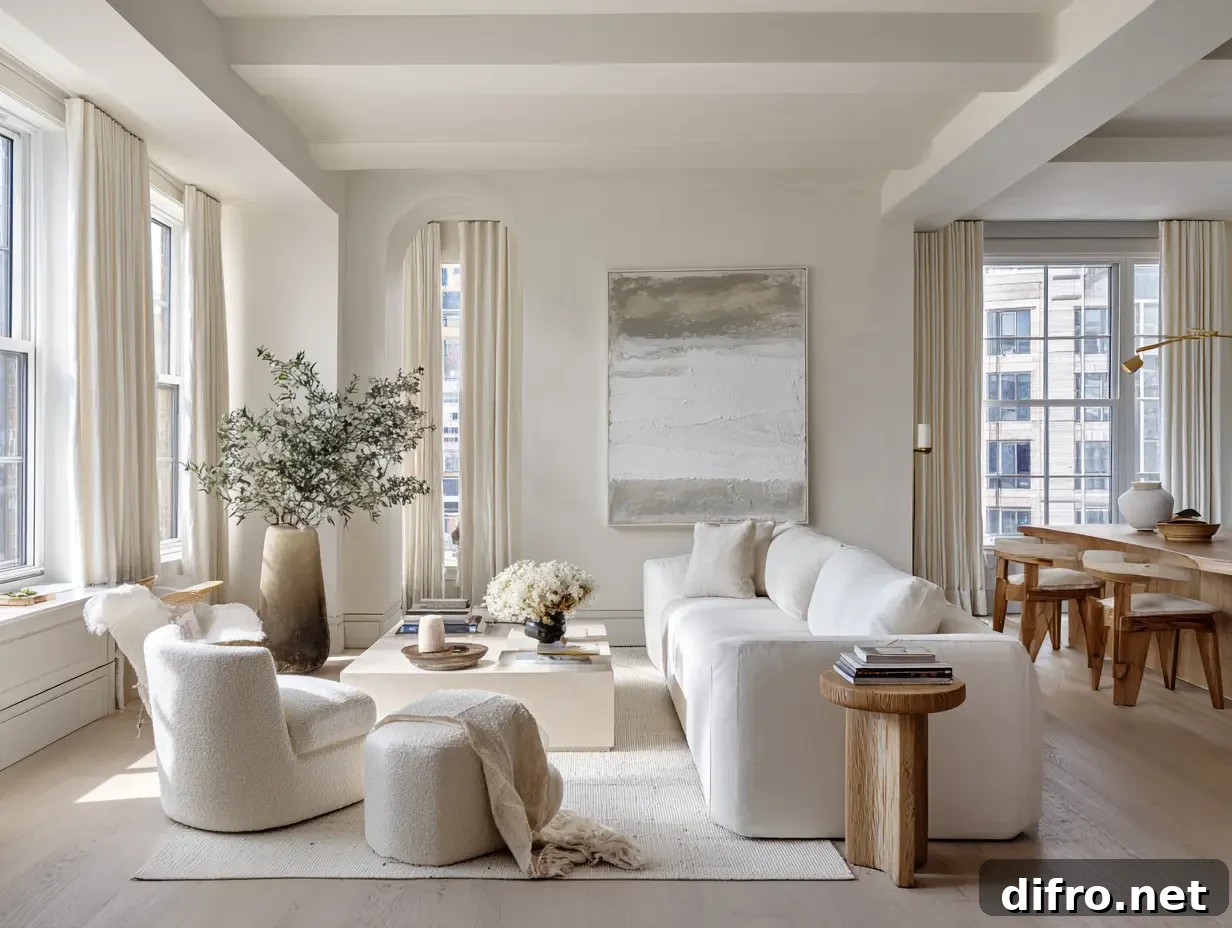
A common misconception is that all-white rooms are stark or sterile. In reality, the most successful white interiors emphasize texture. Materials such as plastered walls, linen upholstery, brushed wood, natural stone, ceramic, and layered textiles introduce depth and tactile variation without adding color noise. When surfaces are white or off-white, subtle differences in finish and grain become highly visible and intentional, preventing monotony and giving the room a layered, considered feel.
Texture is what turns white from flat to rich: a plaster finish softens light, woven rugs add warmth underfoot, and a matte or eggshell paint finish changes how walls interact with daylight. By combining several tactile elements, designers create white interiors that feel lived-in, inviting, and refined rather than clinical.
Choosing the Right White Matters
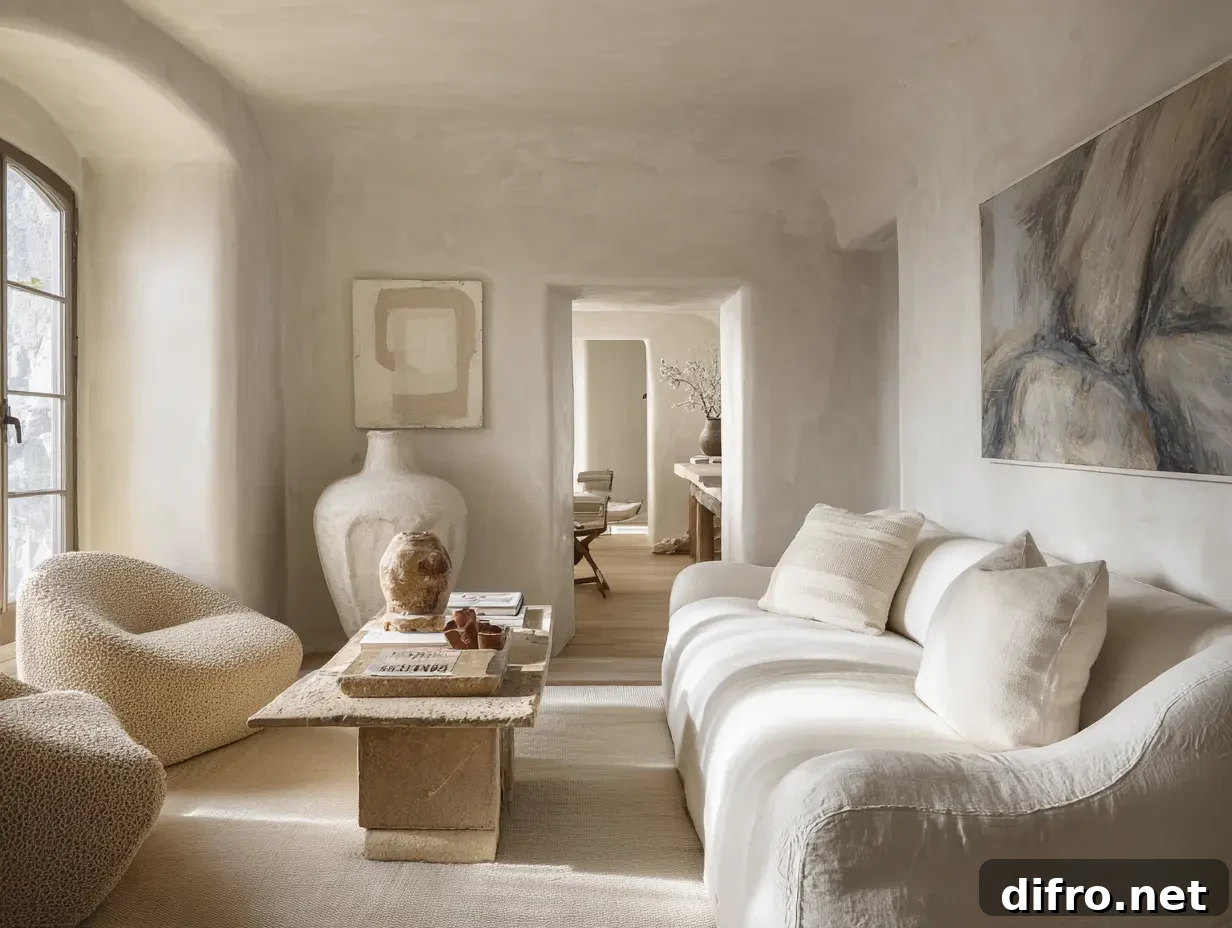
There is no single universal white. Whites vary by undertone and finish: some read as cool and crisp, others as warm and creamy. Lighting conditions dramatically affect how a white appears in a room, so selecting paint involves testing at scale. North-facing rooms usually benefit from warmer whites that offset cooler daylight, while south-facing rooms can handle cleaner, brighter tones.
Designers recommend trying paint samples on large sections of wall and observing them at different times of day. Undertones that seem subtle on a chip can become quite pronounced at room scale. Choosing the right white includes considering finish (matte, eggshell, satin) and how it pairs with neighboring materials like wood floors, textiles, and metal accents.
Why White Feels Calmer in 2026
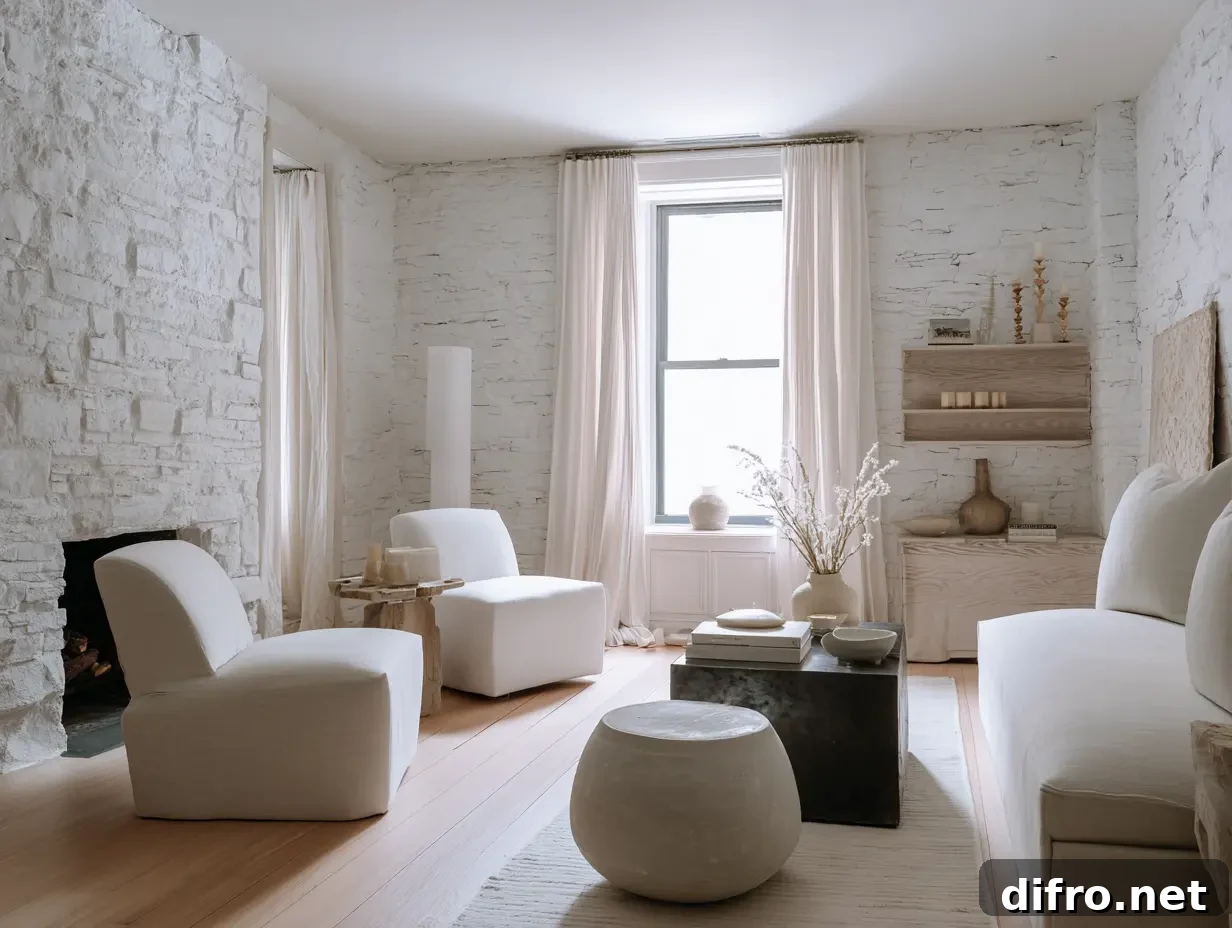
Homes today are shifting toward calmer, more restorative environments, and white supports that move by reducing visual clutter and simplifying the backdrop. The aim is not sterility, but clarity: a white palette highlights furniture silhouettes, architectural lines, and curated objects. To add warmth and prevent a clinical feel, designers layer natural materials and vintage elements.
- Natural wood tones for warmth and contrast
- Vintage or secondhand pieces for personality and history
- Woven textiles and rugs to add softness
- Indoor plants to introduce life and color accents
- Layered lighting on dimmers for flexible mood setting
These touches give white interiors a lived-in quality and keep them feeling welcoming and balanced.
The Enduring Appeal
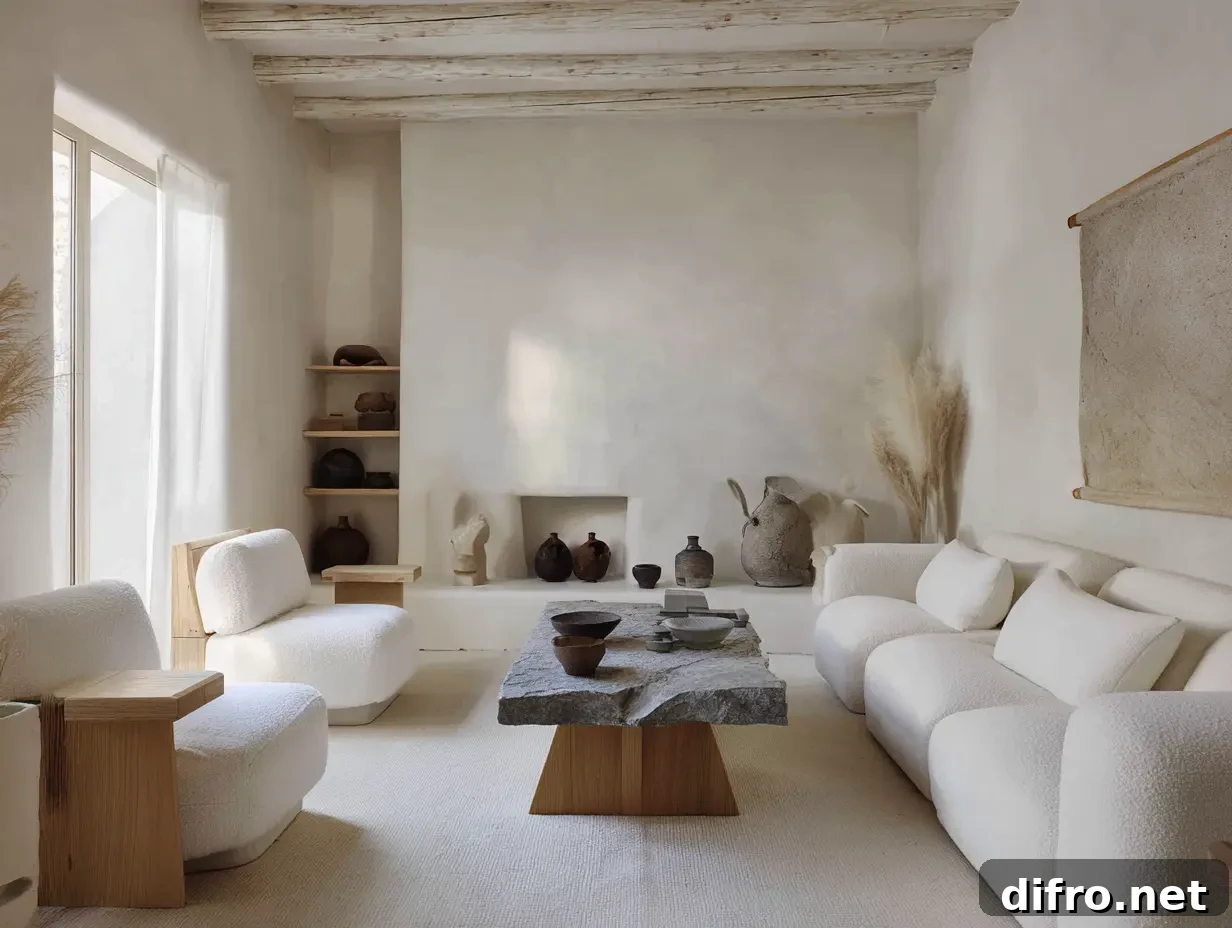
The lasting strength of all-white interiors comes down to restraint, balance, and careful material choices. When executed thoughtfully, white does not dominate; it elevates. Trends will continue to shift between earthy palettes, saturated hues, and bold patterns, but white remains a quiet constant in interior design. It endures because it allows other elements to shine: texture, form, and the objects that give a home its character.