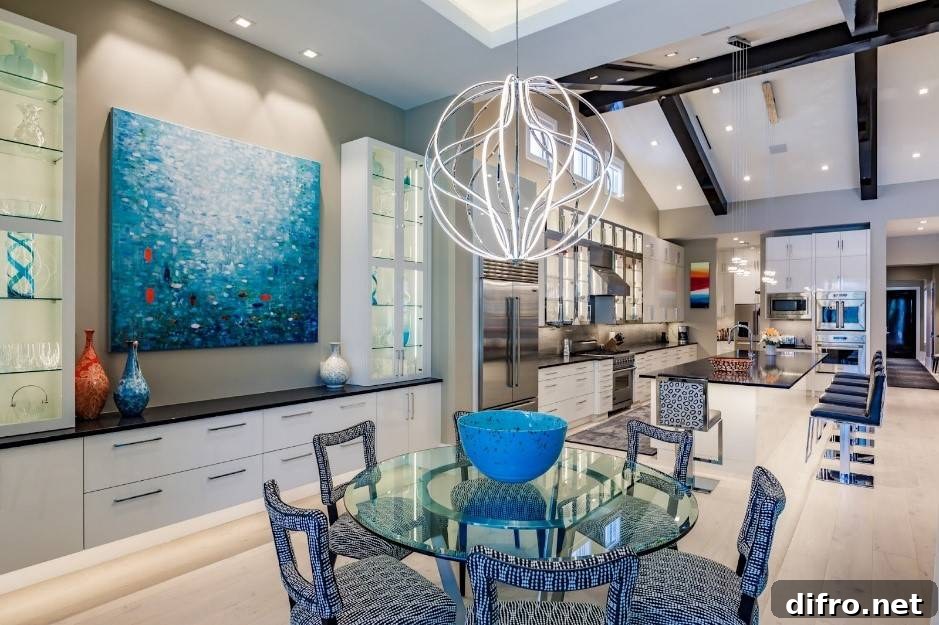
Blue is an unexpected but beautiful choice for a dining room. Versatile and calming, blue can create a range of moods—from serene coastal to dramatic and sophisticated—depending on the shade and how you use it. Whether you prefer navy, sky blue, turquoise, or a deep midnight tone, blue provides many stylish options for reinventing your dining space.
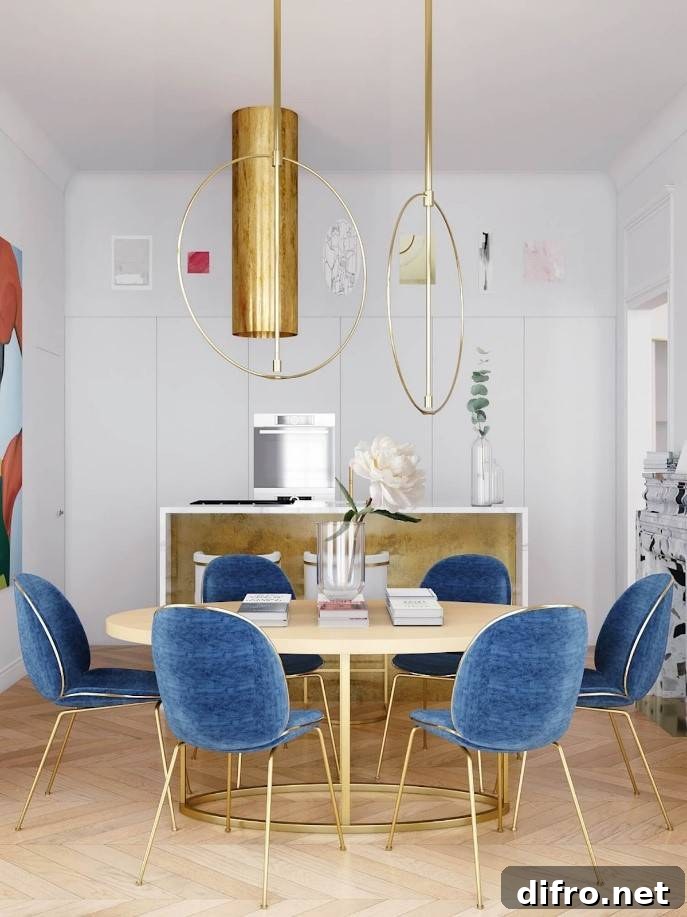
There are countless shades of blue to choose from. Lighter blues—like powder or sky—brighten a room and feel airy, while deeper blues—such as navy or midnight—add drama and sophistication. Jewel tones like turquoise and teal bring energy and personality, making them perfect for accent pieces or statement furniture.
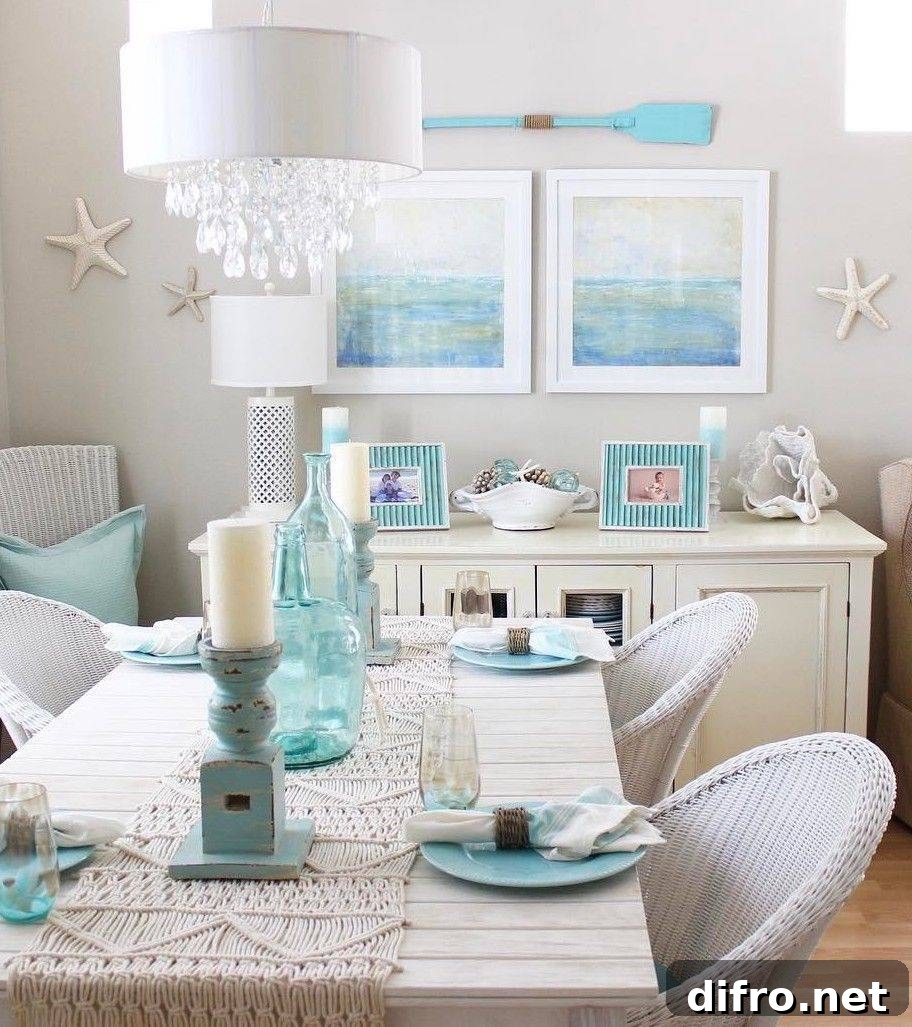
Below are practical, stylish ways to incorporate blue into your dining room design, along with tips on pairing colors, textures, and lighting for the best effect.
Blue chandeliers
Lighting is an excellent place to introduce blue—especially if you want a focal point. A chandelier with blue glass, ceramic, or painted metal creates instant drama and draws the eye upward, adding height and presence to the room.
Choose a chandelier with subtle blue accents for a gentle pop, or go bold with a fully blue fixture to anchor a neutral palette. Consider the finish too: brass or warm metals pair beautifully with deep blues, while chrome or nickel complements brighter, cooler blues.
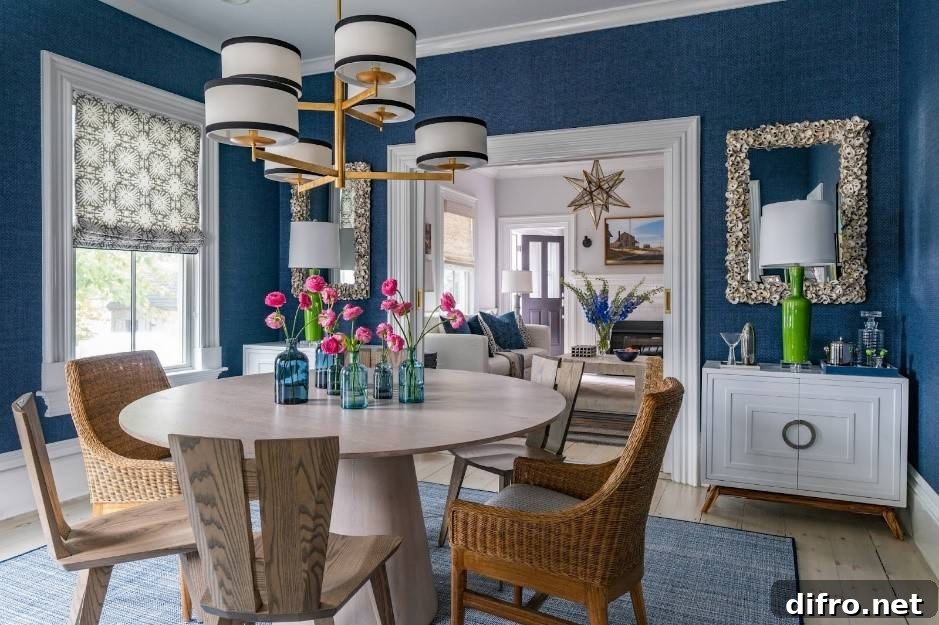
When installing a statement light, balance its visual weight with furniture and wall treatments so the chandelier complements rather than overwhelms the room.
Blue everywhere
Using blue throughout the dining room creates a cohesive, immersive look. Paint the walls, choose blue chairs, and add blue textiles—rugs, curtains, and seat cushions—to build a unified theme. For a sophisticated effect, vary the shades: combine a deep blue wall with lighter blue fabrics or patterned upholstery to add depth.
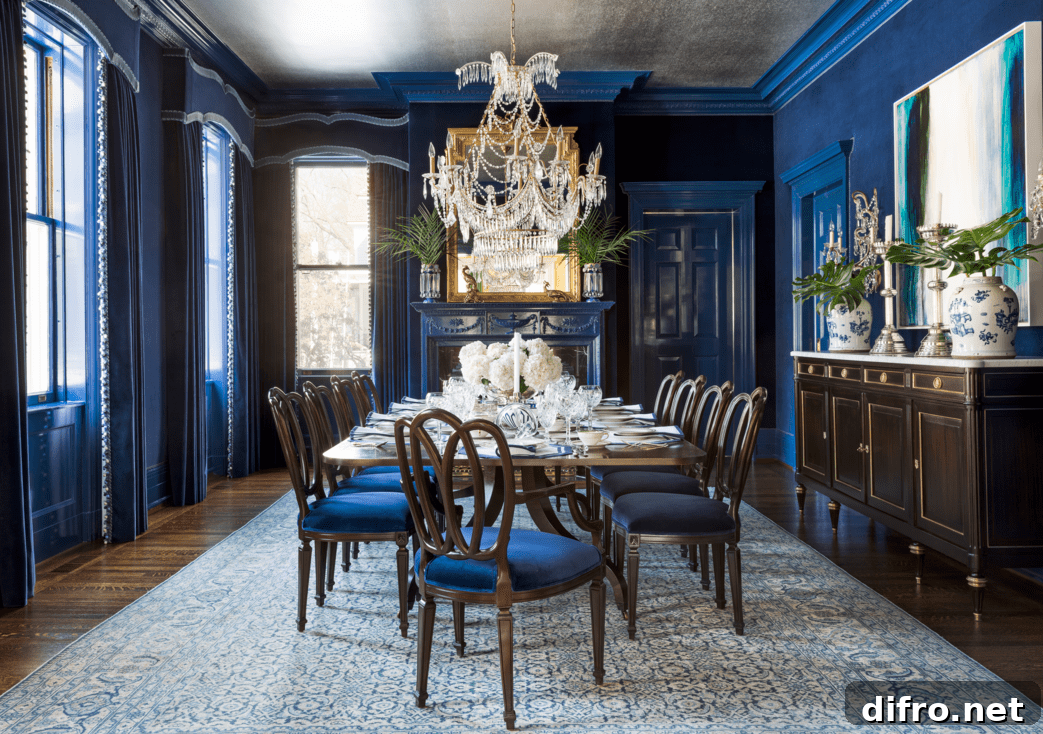
To prevent a monochrome space from feeling flat, introduce texture—linen napkins, a woven rug, matte and glossy finishes—and small accent colors like gold, coral, or soft green to enliven the palette.
Blue artwork
Artwork is a low-commitment way to add blue. Large framed prints, a gallery wall with blue accents, or a single statement painting can instantly lift neutral interiors. Blue art works particularly well against white, cream, or pale gray walls, where the blue becomes the room’s primary visual anchor.
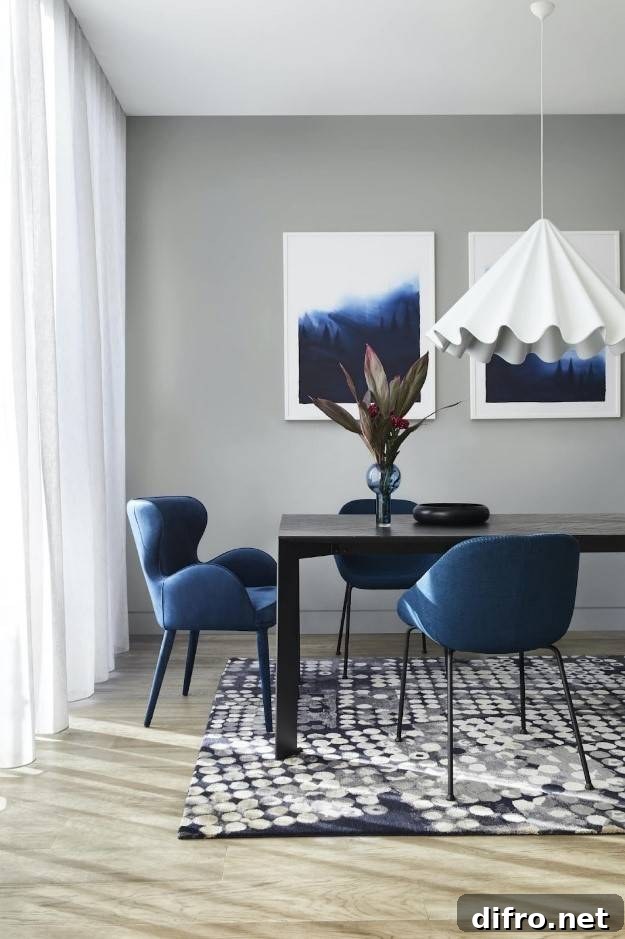
Consider framing options and matting that enhance the blue tones. Light wood frames add warmth, while black or white frames create a modern, crisp look.
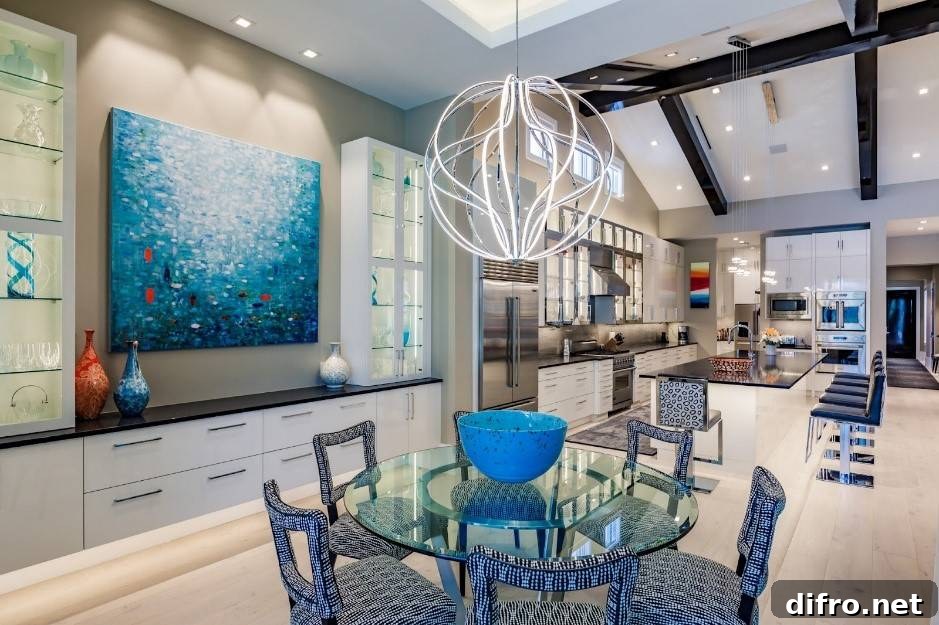
Walls and chairs twinning with blue
Pairing blue walls with blue chairs creates a coordinated and intentional feel. To maintain contrast, use a dining table in a complementary finish—light wood, dark walnut, or even a painted table in a neutral tone. This helps the blue seats and walls stand out while keeping the overall look balanced.
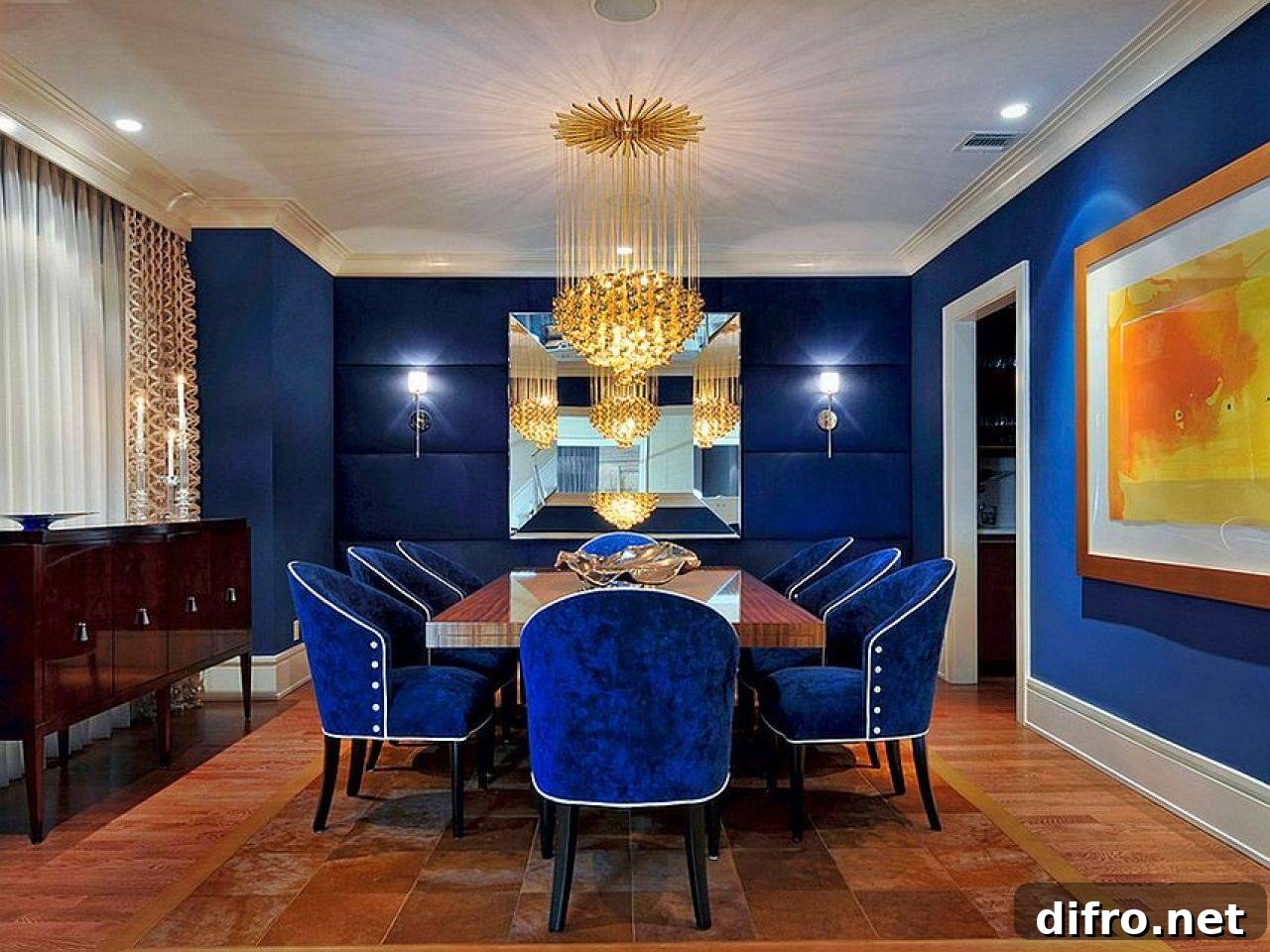
Mix patterns and solids to keep the space lively: striped cushions, subtle geometric prints, or textured upholstery will all complement solid blue walls without competing for attention.
Just the walls
If you prefer a simpler approach, painting only the walls in a rich blue can transform the room without an overhaul. A single deep-blue accent wall behind a buffet or dining table creates depth and focus, while painting all walls in a bold blue gives the room an enveloping, luxurious feel.
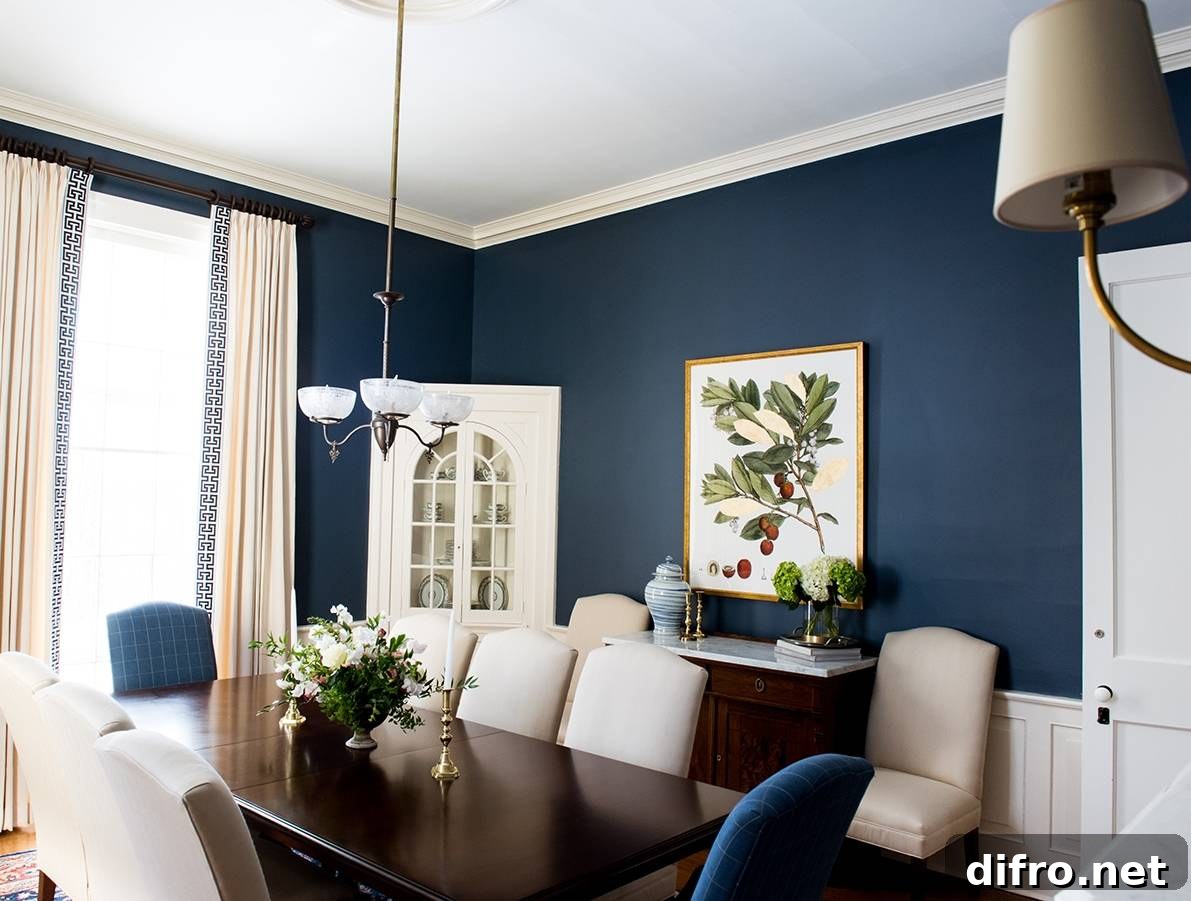
Keep lighting warm and add reflective surfaces—mirrors, polished metal finishes, or glassware—to prevent dark blues from absorbing too much light. Soft white trim and accessories will maintain brightness while allowing the blue walls to remain the focal point.
Whether you want a subtle accent or a full-blue transformation, this versatile color offers many routes to a distinctive, stylish dining room. Experiment with shades, textures, and finishes to create a blue dining space that suits your personality and the mood you want to set for meals and gatherings.