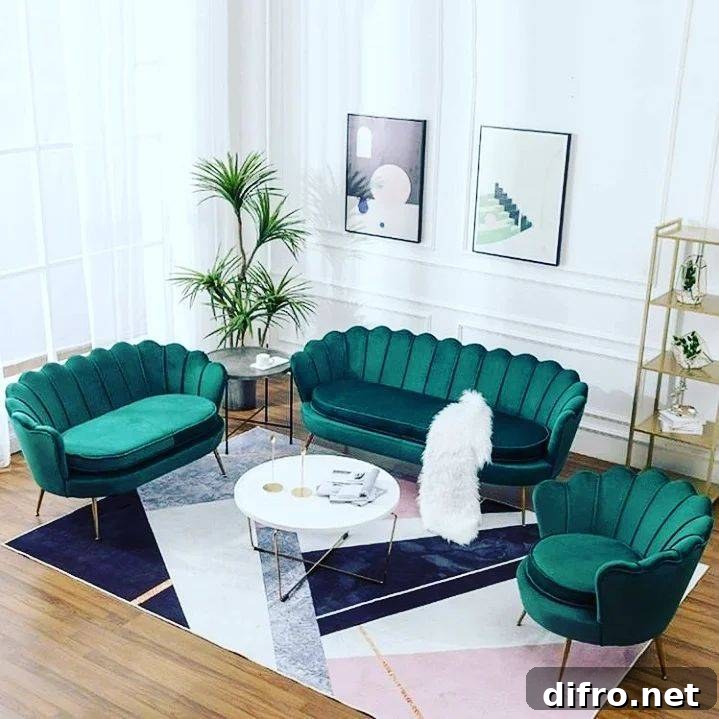
A living room rug anchors the space, adds warmth underfoot, and ties furniture groupings together. Choosing the right rug is about more than filling floor area — it’s about scale, proportion and how the rug relates to the furniture arrangement.
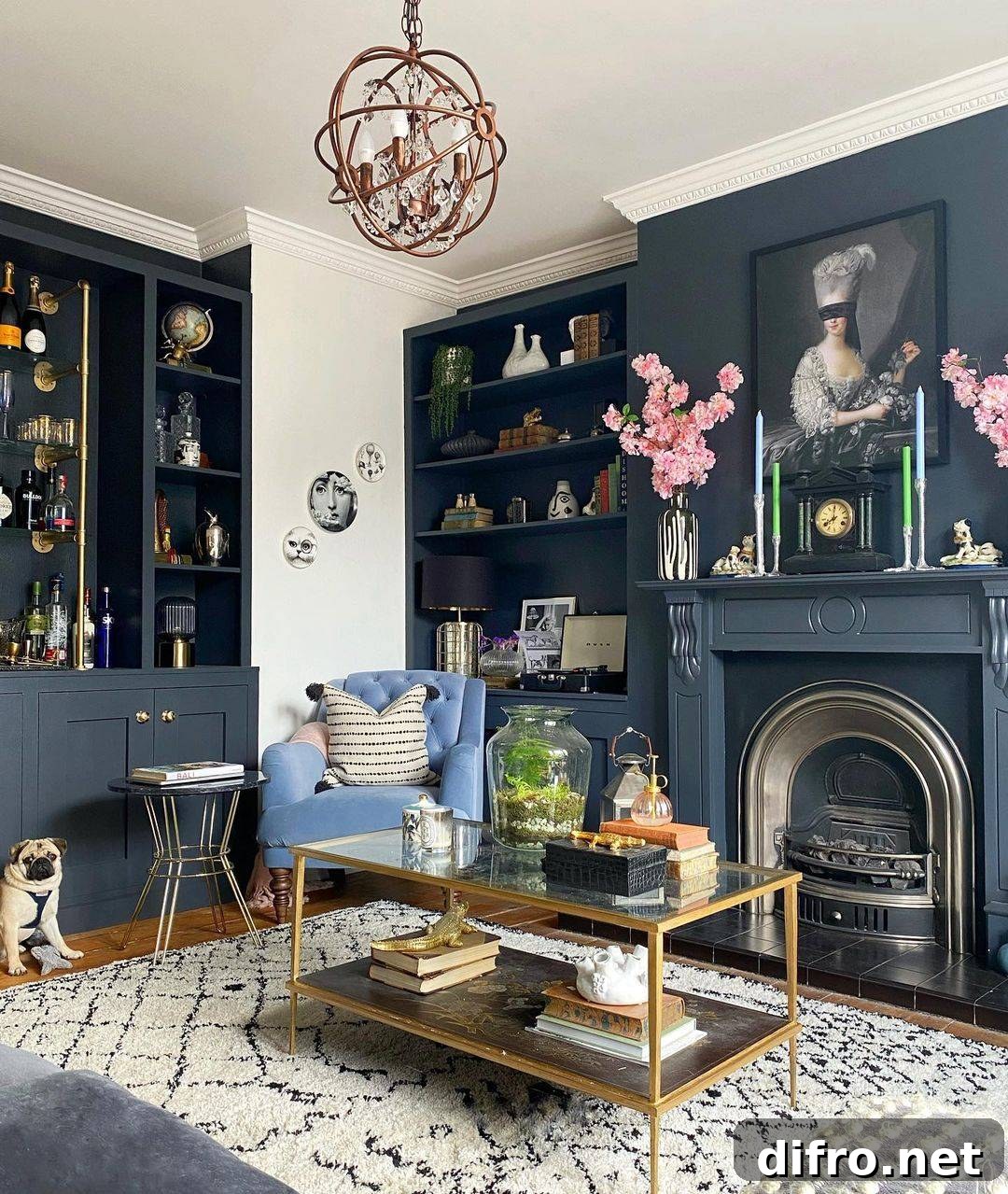
Start your rug selection by looking at your furniture, not simply the dimensions of the room. A rug should harmonize with sofas, chairs and coffee tables so the area reads as a cohesive zone within the living room.
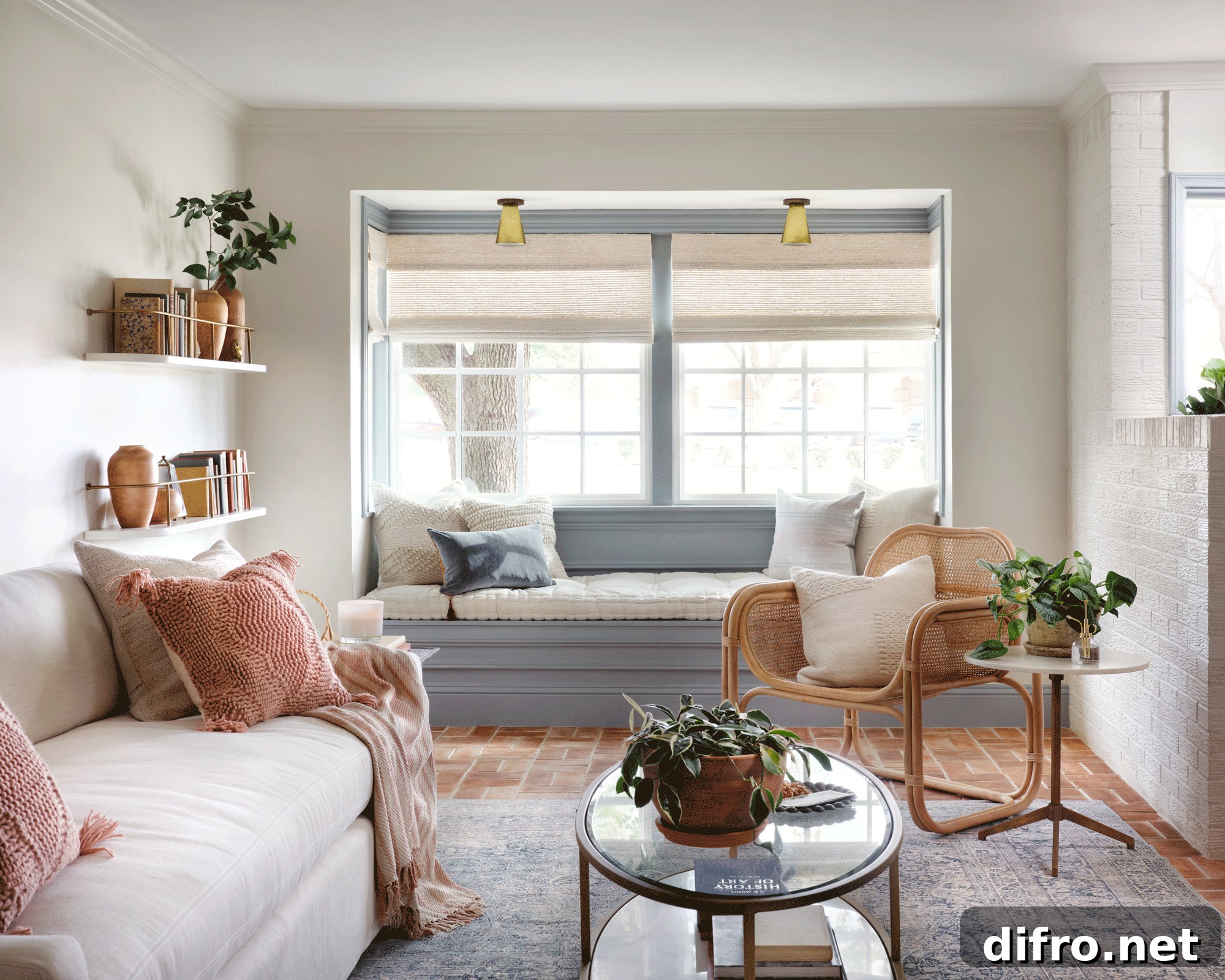
The right rug size brings balance and comfort, protects floors, and visually anchors seating areas. When proportioned correctly, a rug makes a room feel intentional and inviting.
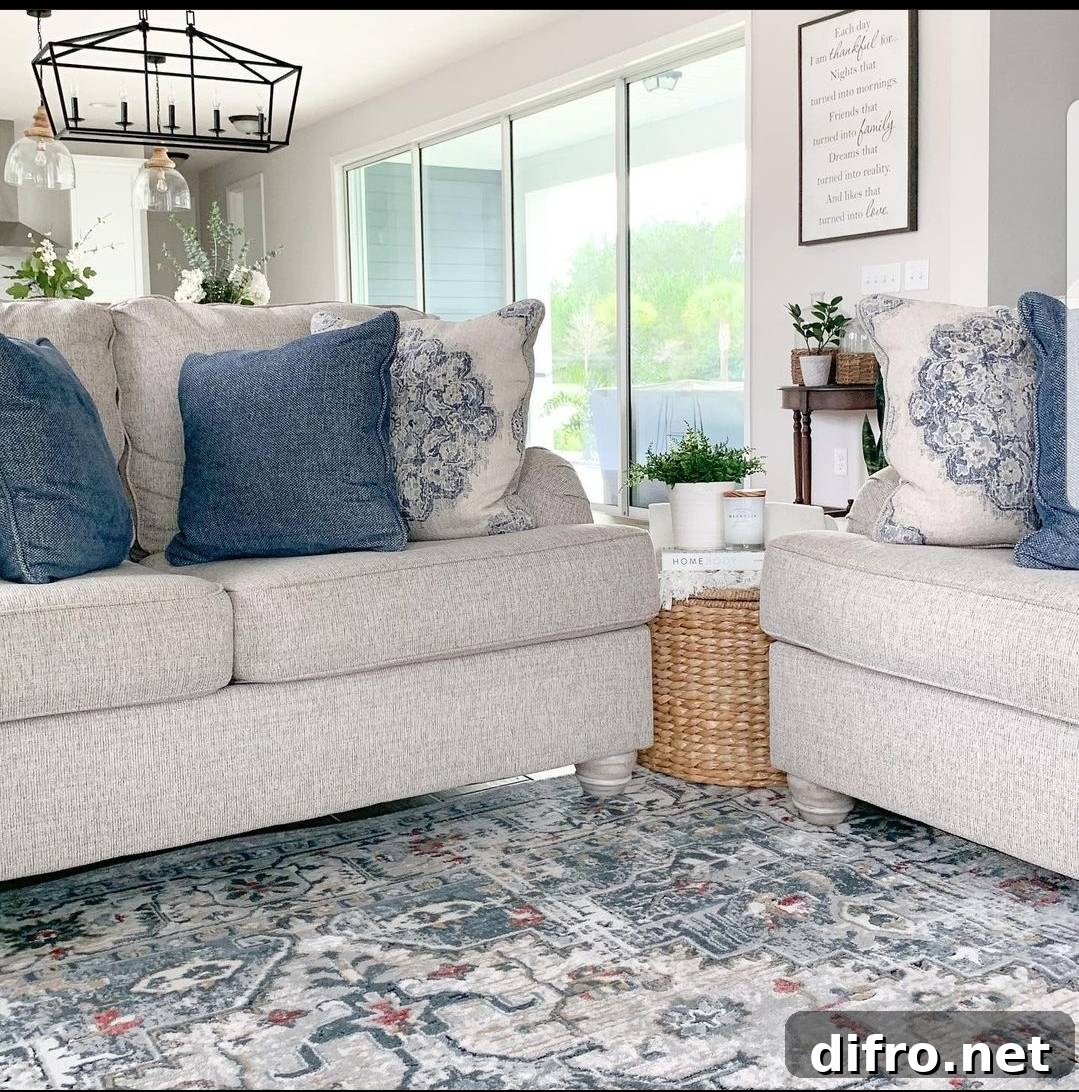
Make sure a rug is in proper proportion to the space: larger rooms generally need larger rugs to avoid leaving an awkward border of bare floor, while smaller rooms benefit from more modest sizes so the rug doesn’t overwhelm the layout.
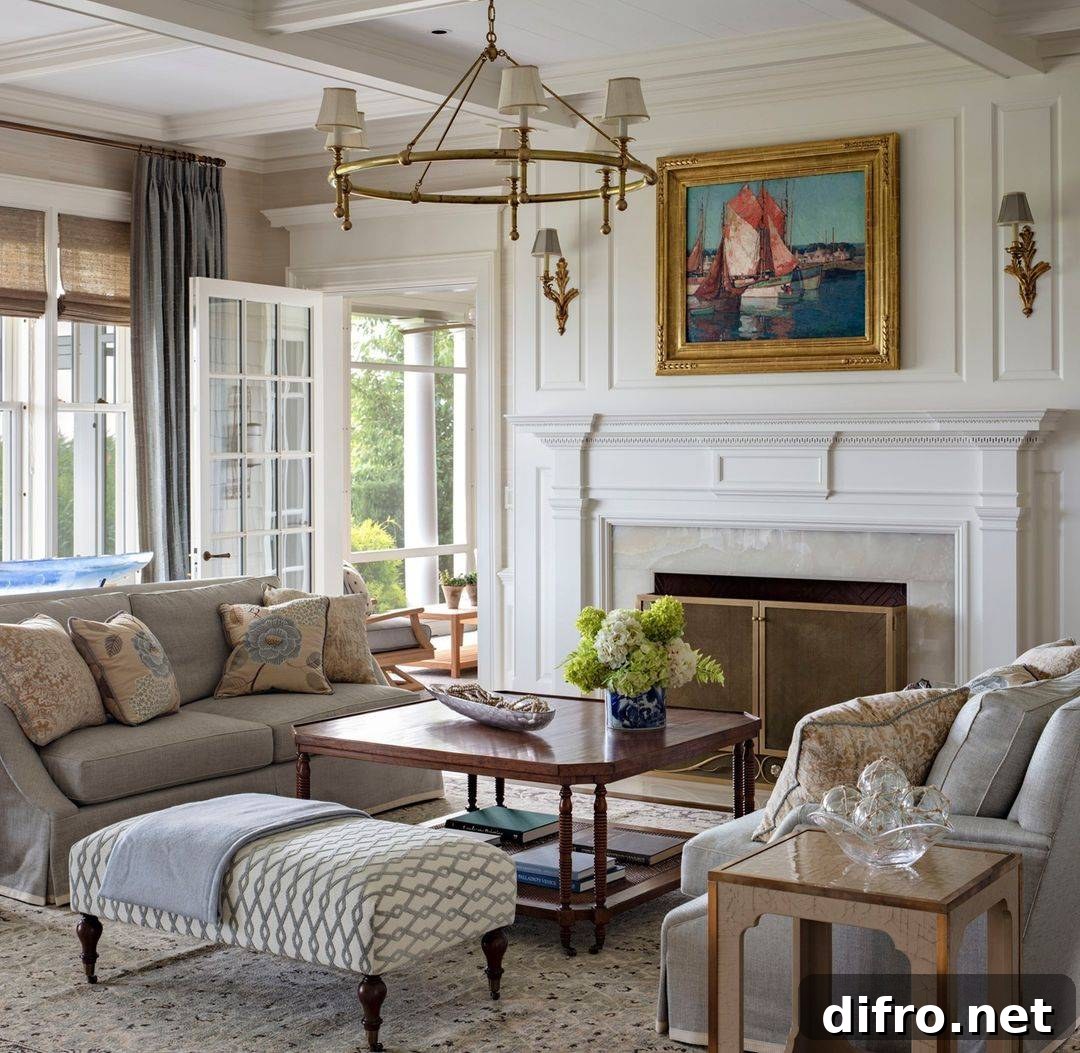
Below are practical rug layout options and sizing guidelines you can adapt to your living room arrangement.
All furniture on the rug
When your rug is large enough for every piece of furniture to sit fully on it, the effect is unified and luxurious. This approach creates an intentional seating area and works especially well in open-plan rooms or larger living rooms.
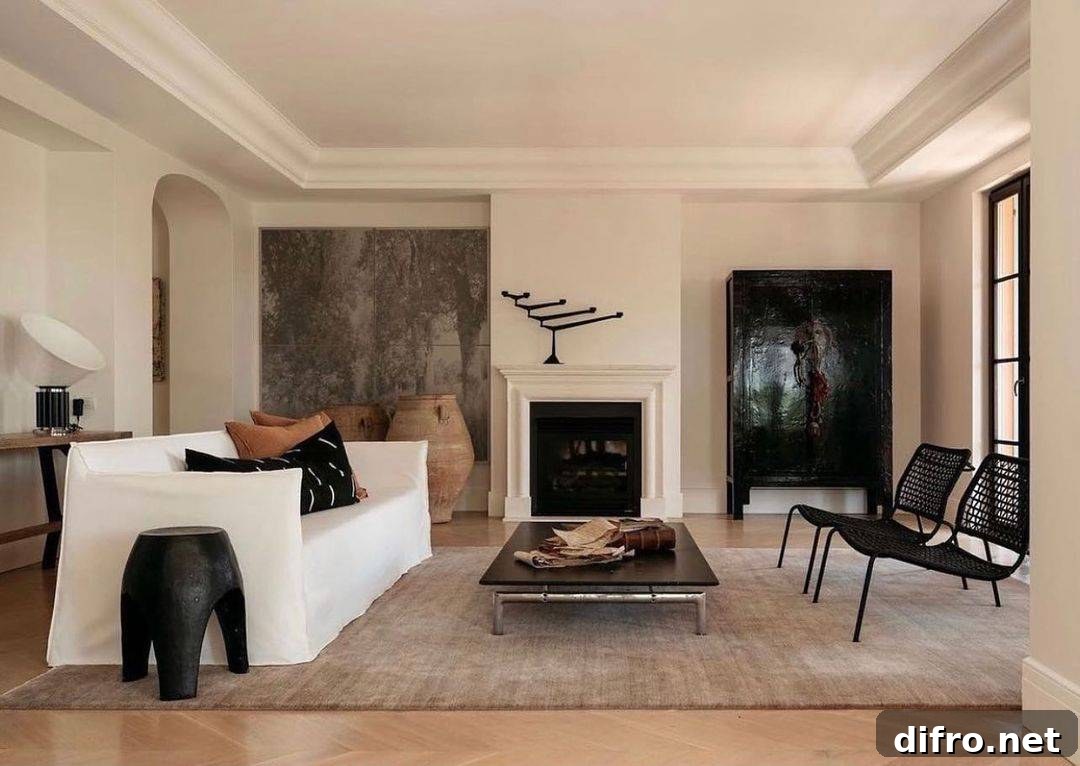
Typical area rugs for this layout are 8′ by 10′ or larger, depending on the size of your furniture grouping. Ensure the rug extends beyond the outer edges of sofas and chairs so the pieces sit comfortably on the surface.
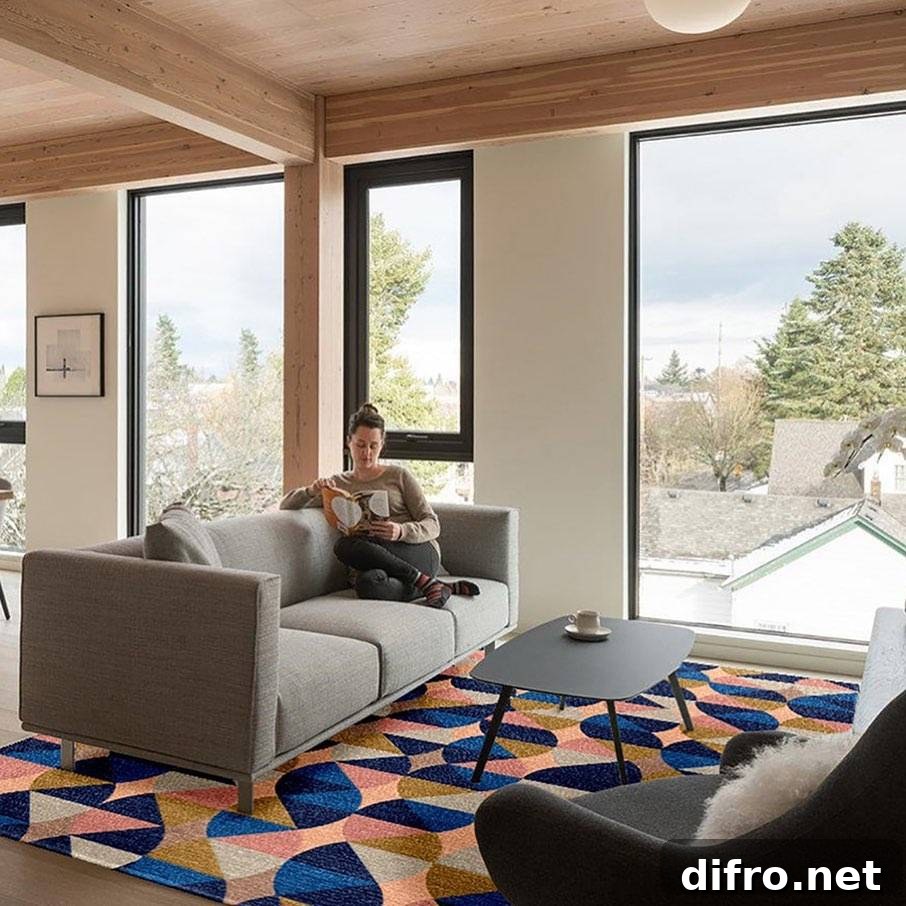
Front legs on the rug
Placing only the front legs of sofas and chairs on the rug is a flexible and popular option. It visually connects the seating without requiring a very large rug, making it a practical choice for smaller rooms or when you’re working with budget constraints.
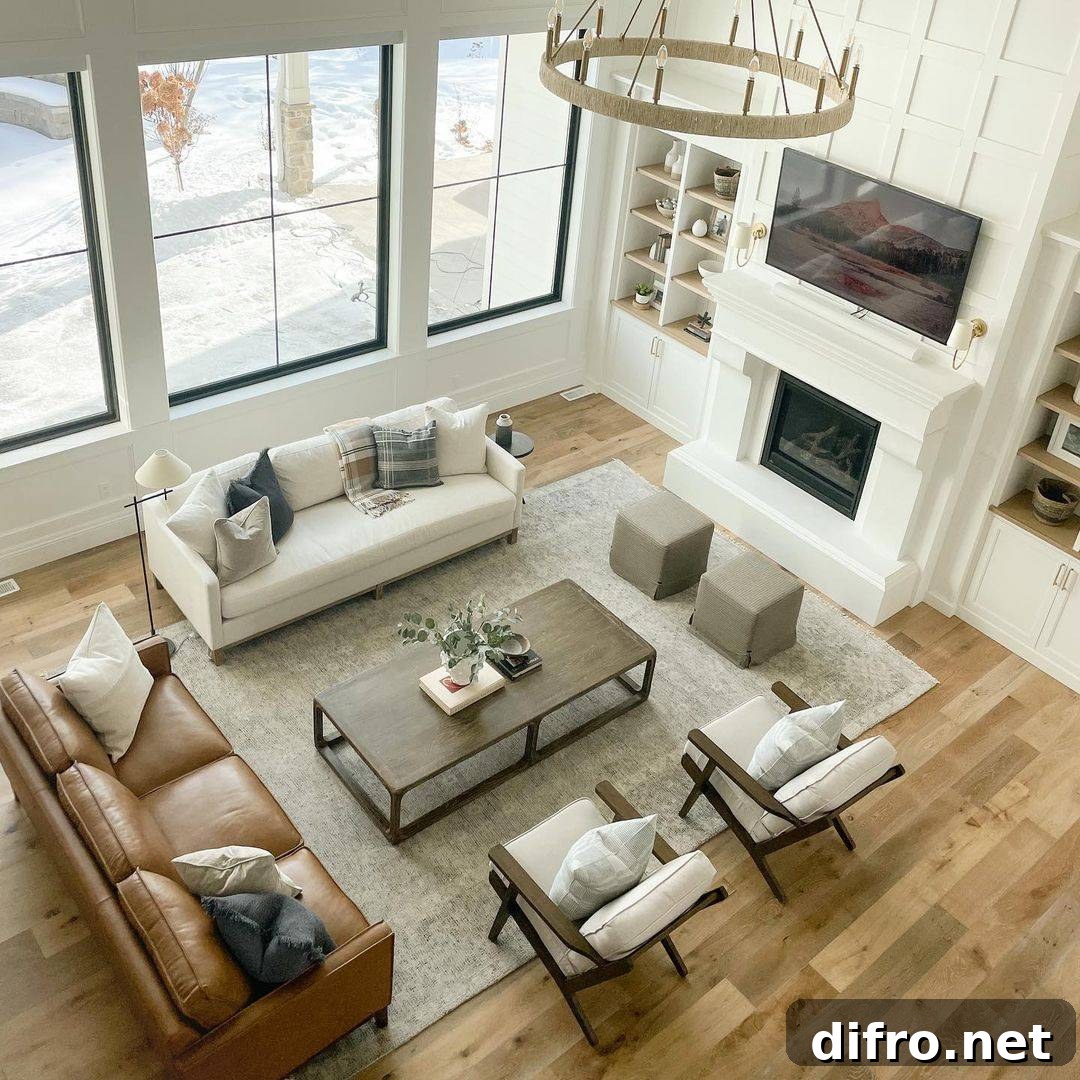
A mid-size rug — often around 5′ by 7′ — can suit this arrangement, but always measure the layout to make sure the rug aligns with the seating and coffee table positions.
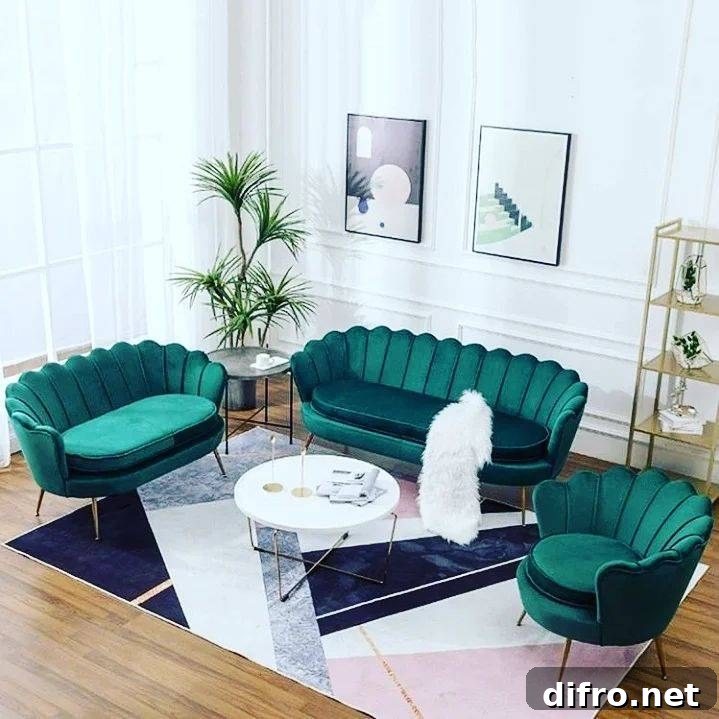
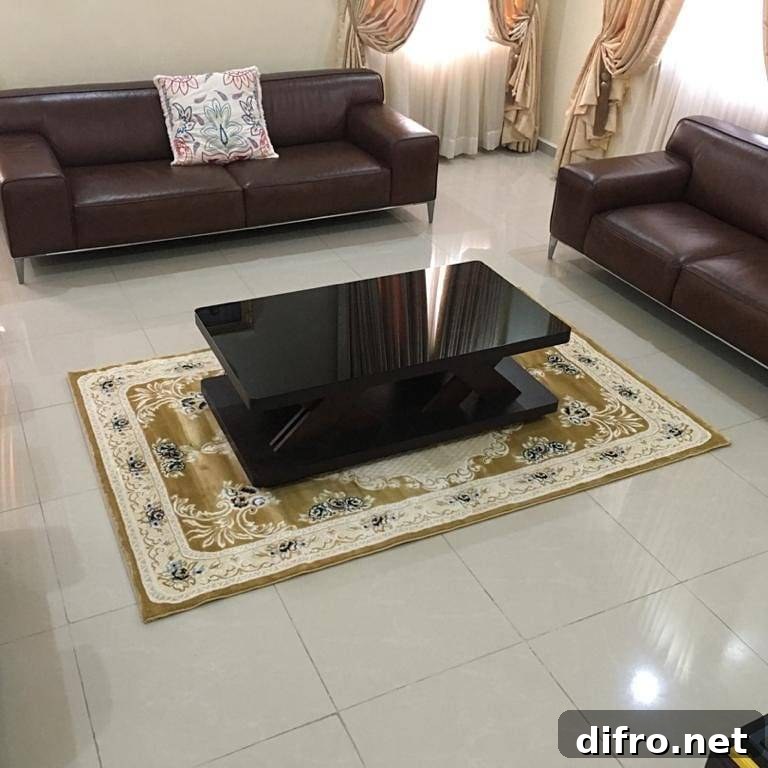
The floating rug
In the floating layout, the rug sits beneath the coffee table while the seating remains off the rug. This design fills negative space and highlights the table as a centerpiece. It’s a good choice when you want a decorative accent without changing the feel of the seating.
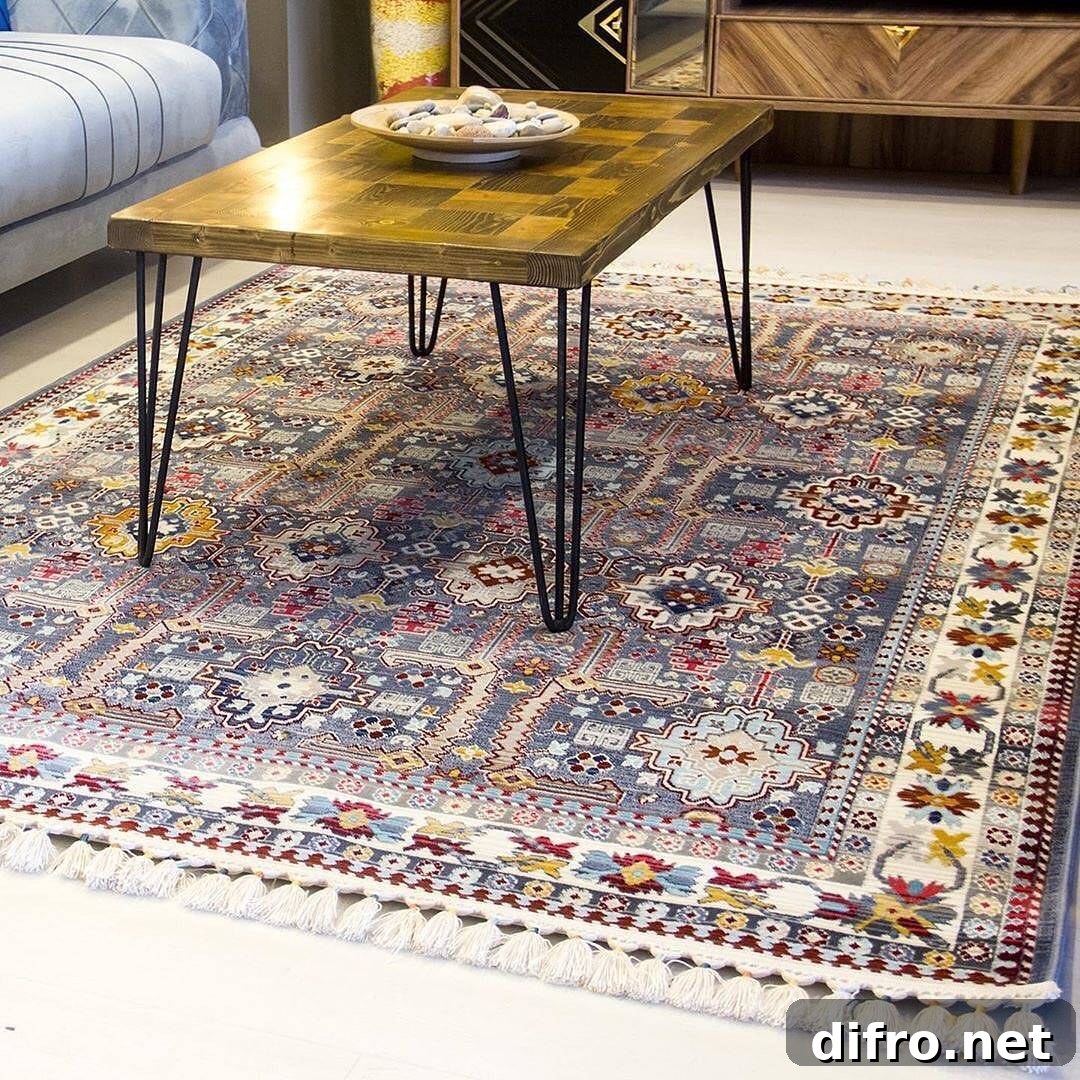
A common size for this look is around 5′ by 7′, but choose a dimension that balances the table and the surrounding walkways so the rug complements rather than crowds the layout.
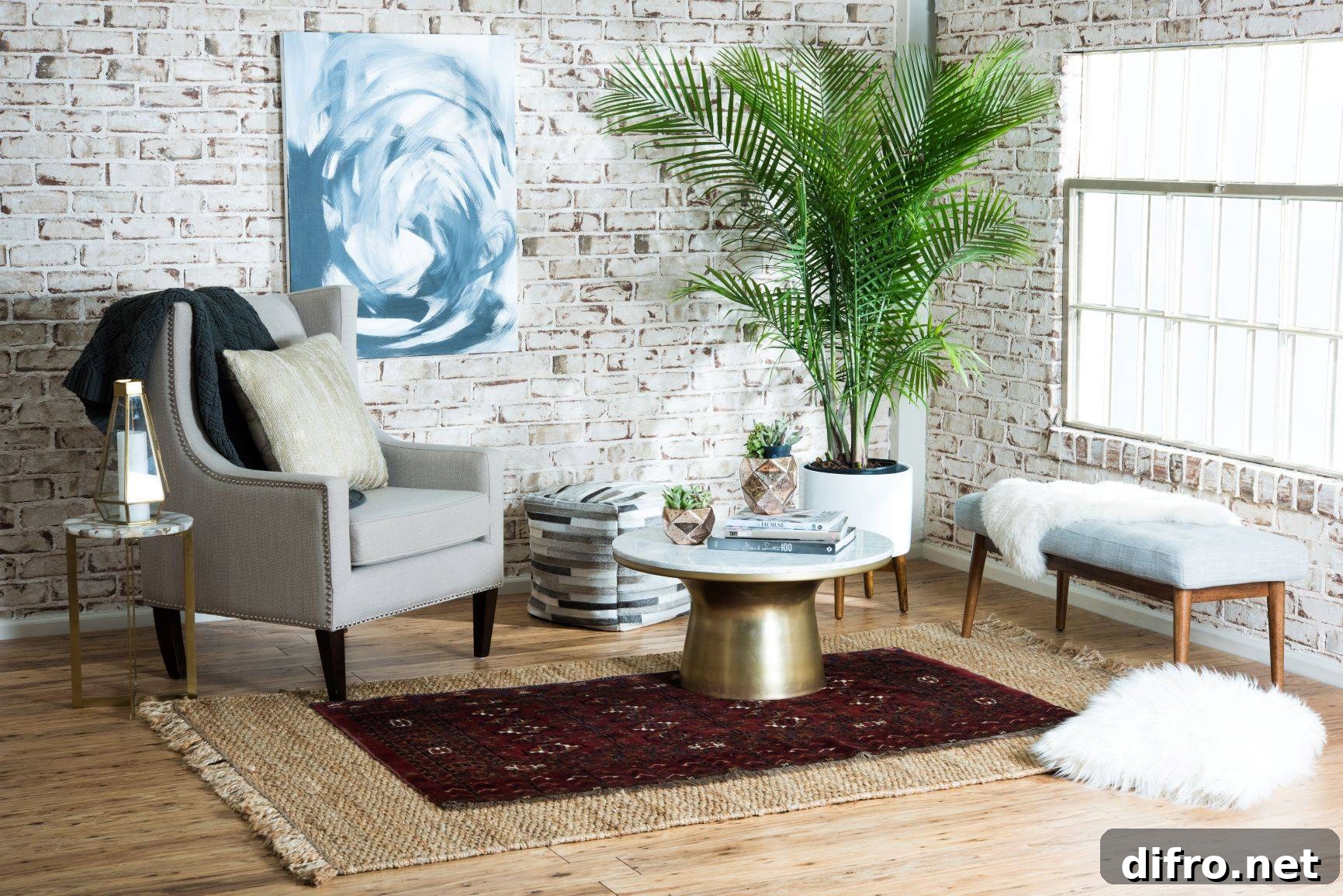
Layering rugs
Layering a smaller rug on top of a larger one can add texture, pattern and depth. This technique allows you to combine materials, frame a seating area, or introduce color without committing to a single bold rug. When pairing rugs, consider contrast in scale and texture so the combination feels intentional.
Round rugs
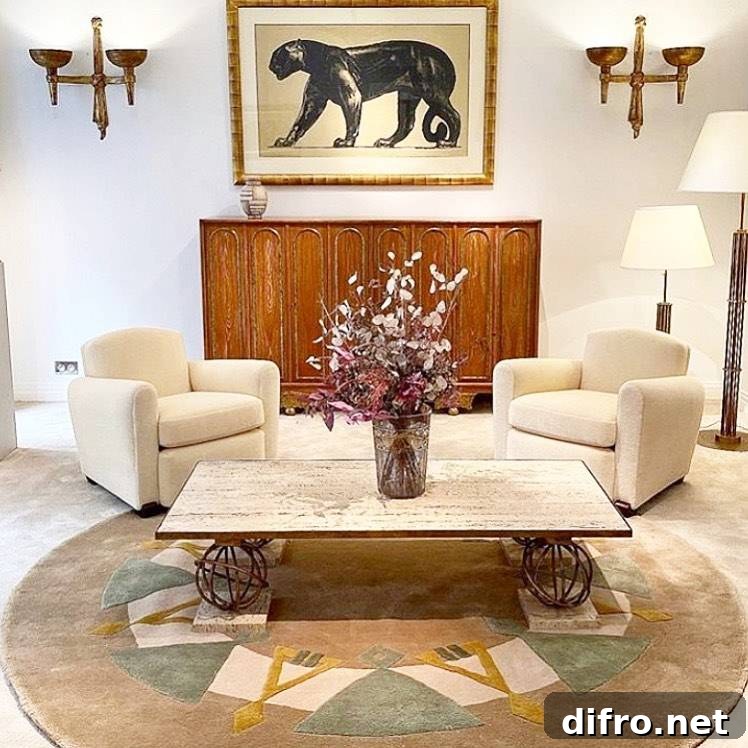
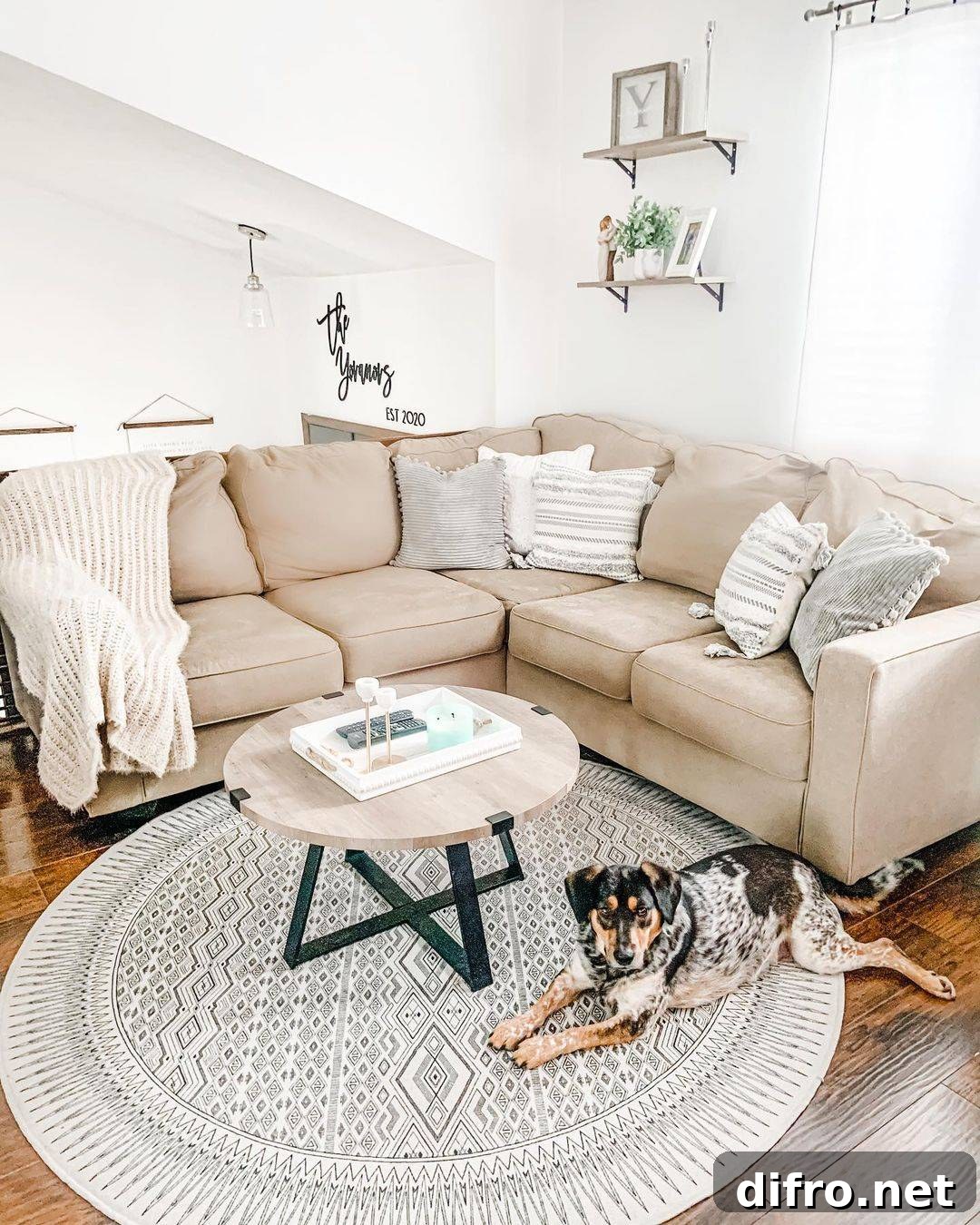
Round rugs bring softness to a room and work especially well under round tables or in conversational nooks. An 8′ round rug is a versatile choice for many living rooms, offering enough coverage to define the seating while maintaining a pleasing visual flow. Make sure the rug meets or slightly overlaps the front legs of surrounding furniture to keep the grouping cohesive.
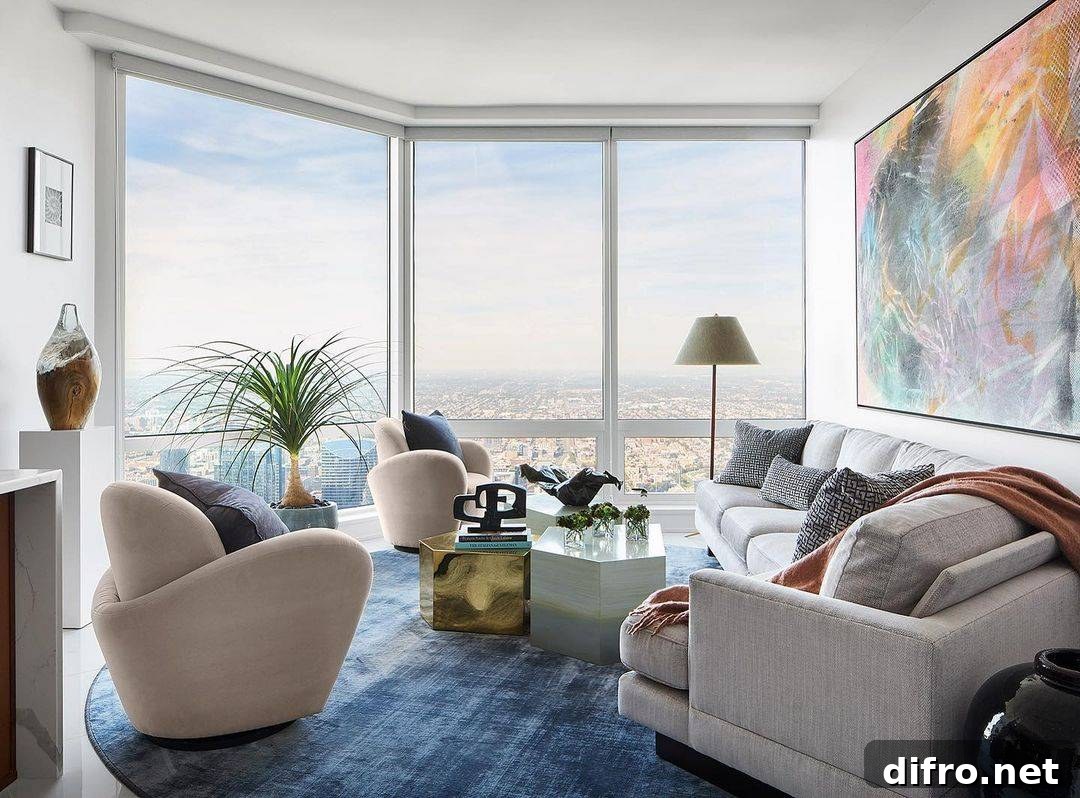
Whether you choose a rectangular or round rug, the key is to measure against your furniture and arrange a rug that defines the seating area, enhances comfort and complements your overall décor. Thoughtful rug placement elevates a living room from functional to finished.