Renovating a small apartment is a complex balancing act—especially when the goal is to blend historic character with contemporary functionality. The Pujades 141 Apartment in Barcelona is a compact example of this challenge. Reimagined by Aramé Studio, the home was opened up into a flowing plan and given distinct visual drama through the inventive use of circular windows that punctuate interior partitions. What began as a dark, compartmentalized flat was transformed by removing the long corridor, opening rooms to one another and prioritizing daylight and sightlines so light moves effortlessly from one area to the next.
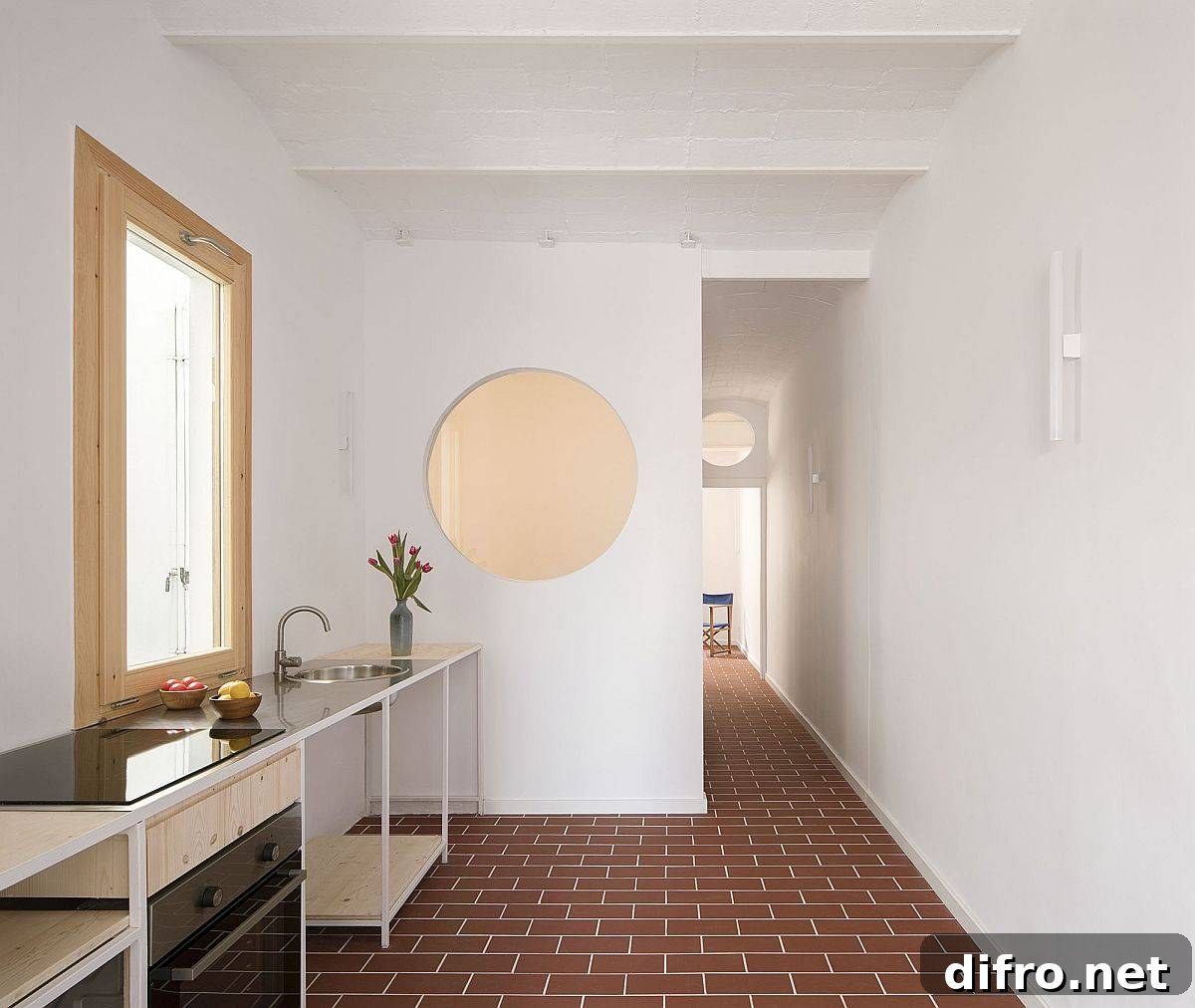
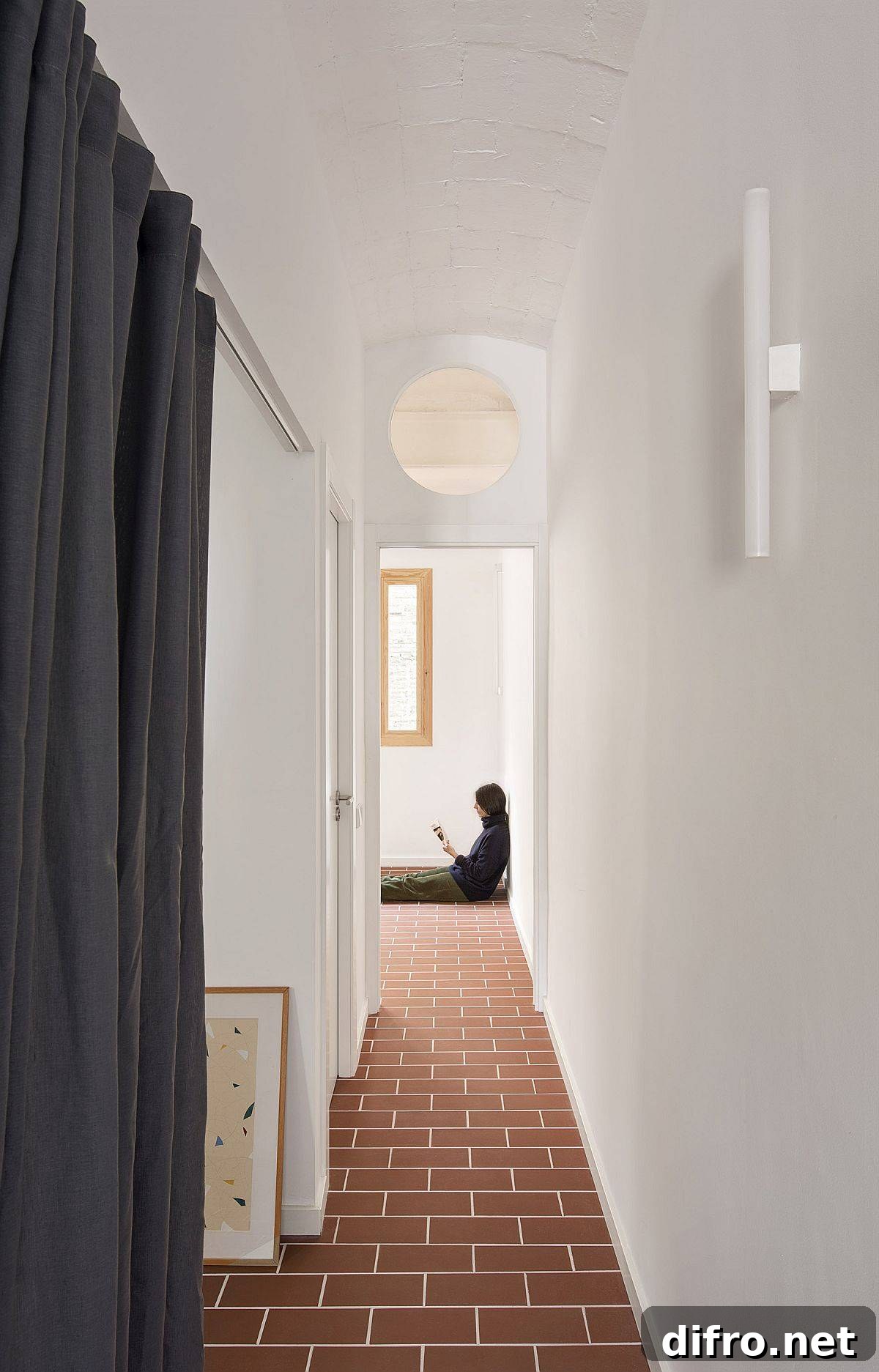
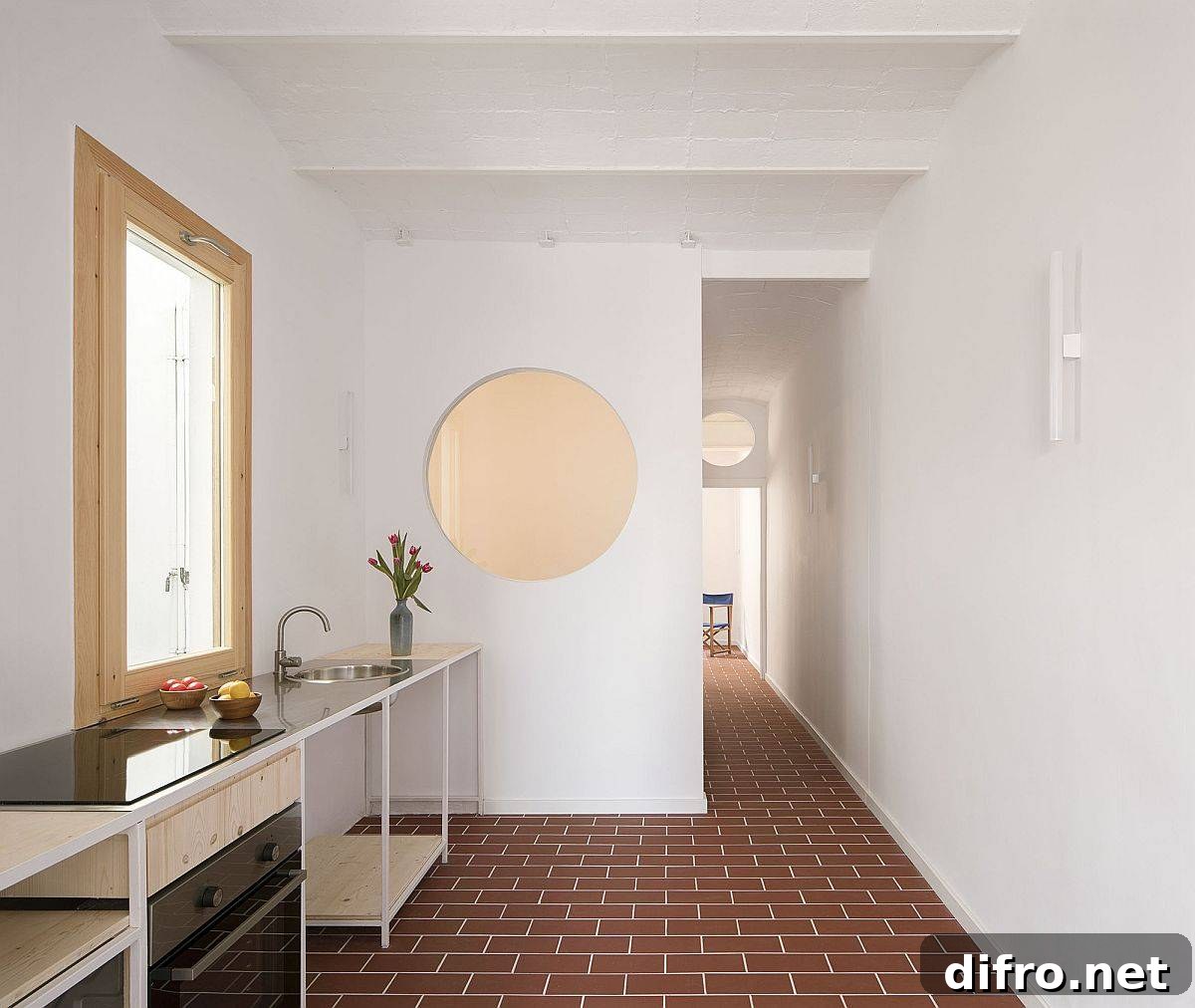
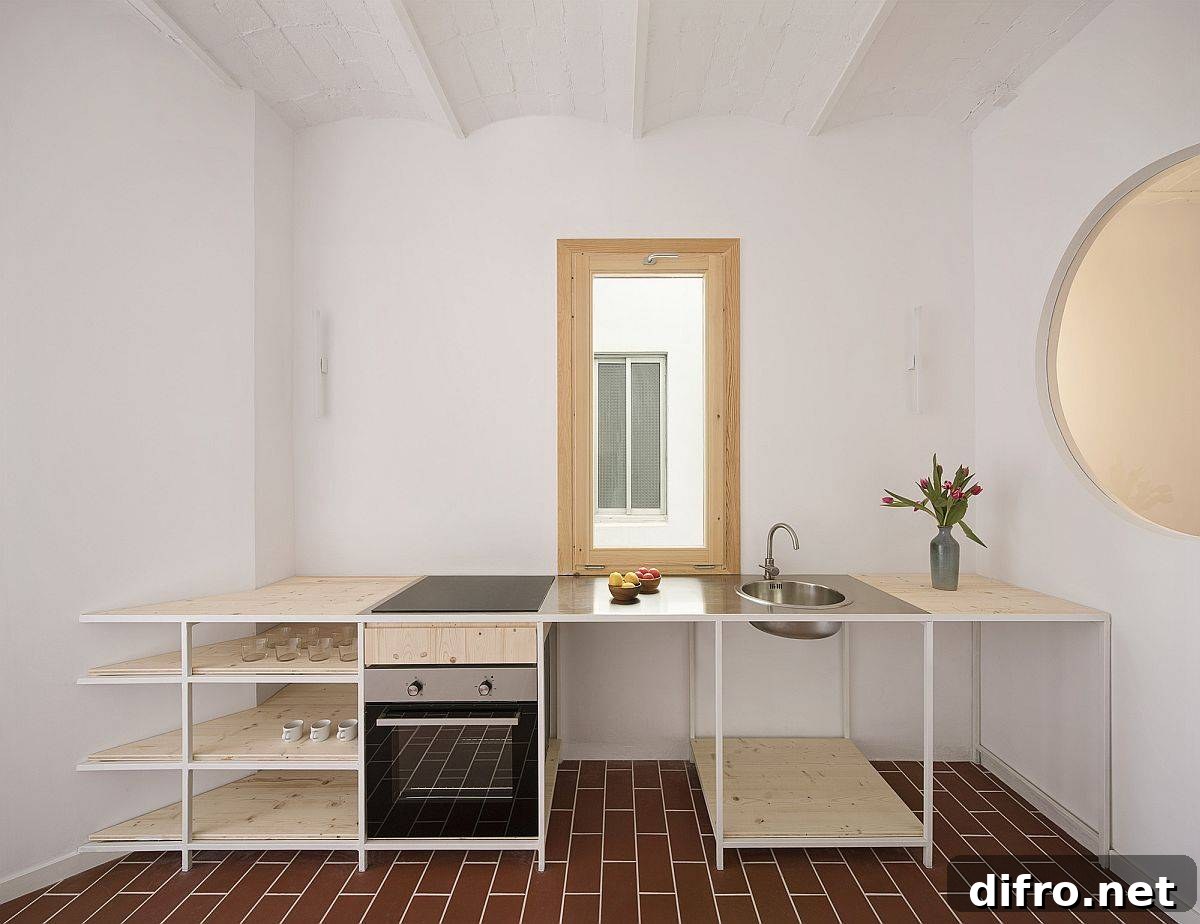
Throughout the apartment, original elements were carefully preserved where they support the new design. The gently curved ceiling and the warm terracotta floor tiles remain as tactile reminders of the building’s traditional identity, and they provide a textured backdrop that contrasts with the apartment’s newly minimalist insertions. The main living area and entry flow into a bespoke kitchen crafted from wood and metal—an efficient, compact island that reads as a transitional piece between public and private zones.
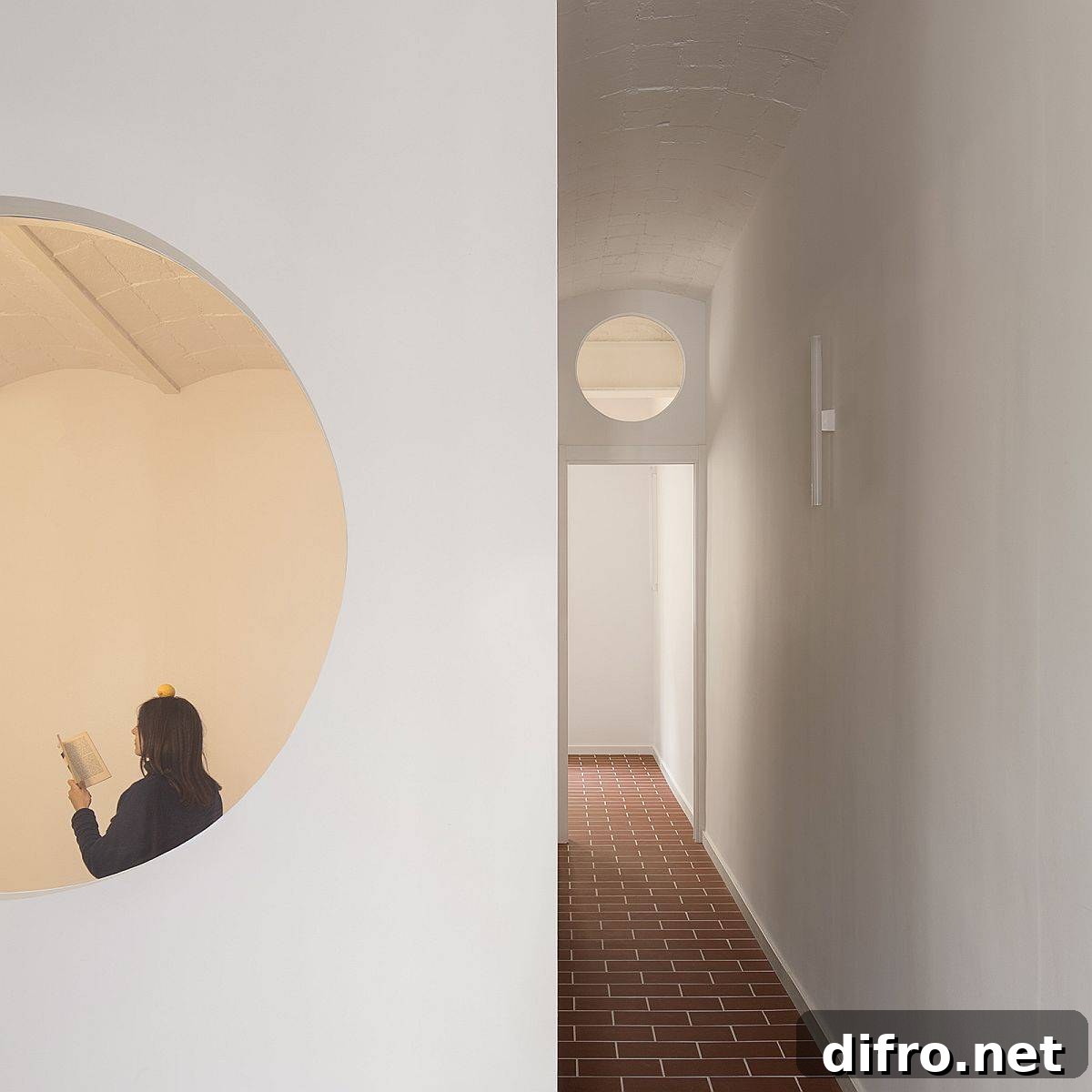
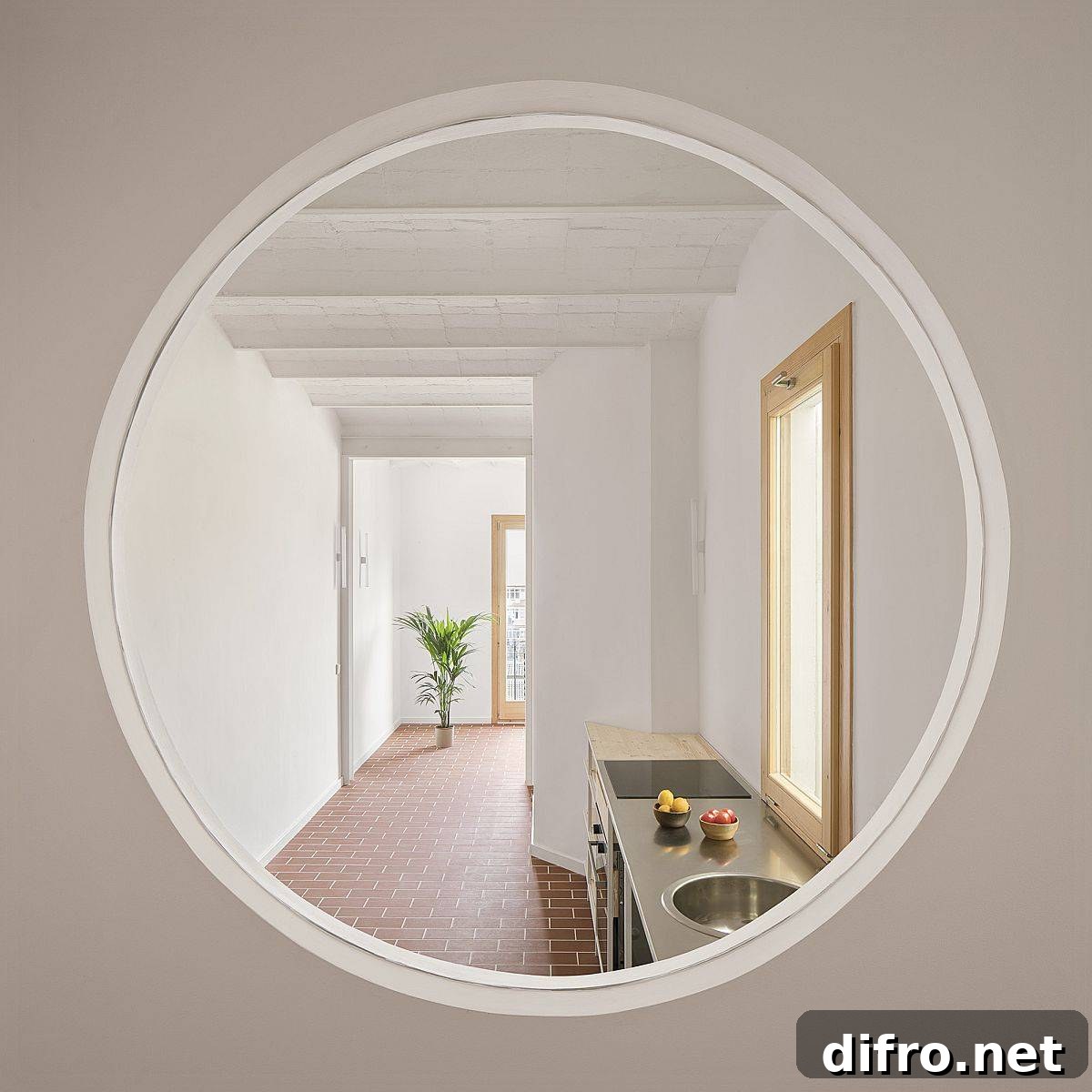
One of the most striking moves in the redesign is the introduction of circular openings between rooms. Rather than relying solely on glazed partitions or open-plan demolition, Aramé Studio carved rounded windows into interior partitions to create visual continuity while still defining separate uses. A secondary room—designed to be flexible as a dining area, guest bedroom or quiet reading nook—features a round window that frames a view into the living space. This device maintains privacy while strengthening the sense of connection and allowing daylight to cross thresholds.
The preserved tile floors and classic ceilings add warmth and a sense of history, while a restrained palette of wood and white keeps the interior feeling airy and contemporary. Throughout the apartment, carefully positioned windows and the new internal openings maximize daylight penetration, reducing the need for artificial light and enhancing perceived spaciousness. The renovation aims for economical, high-impact interventions—small in scale but substantial in their effect on light, movement and spatial quality.
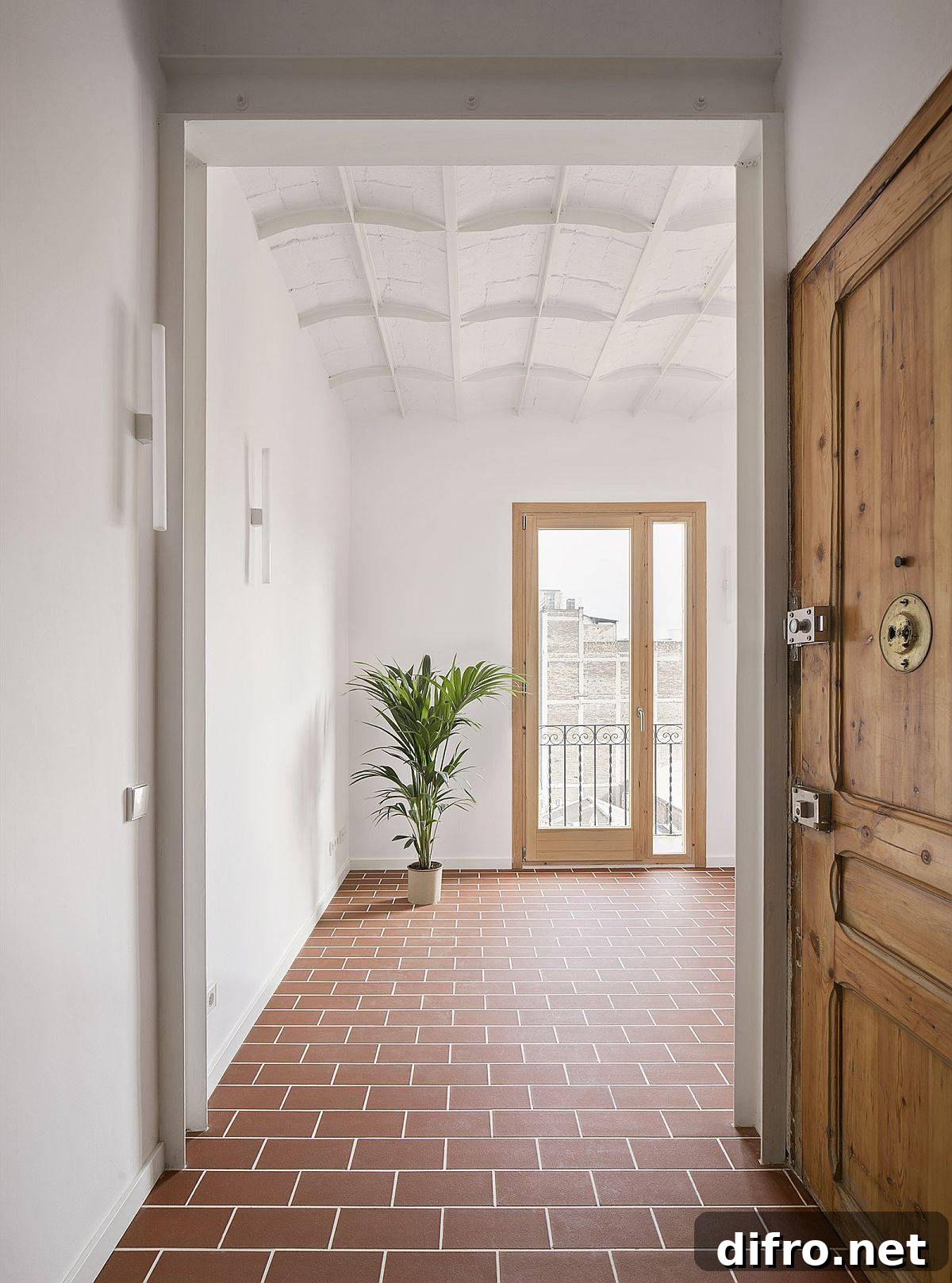
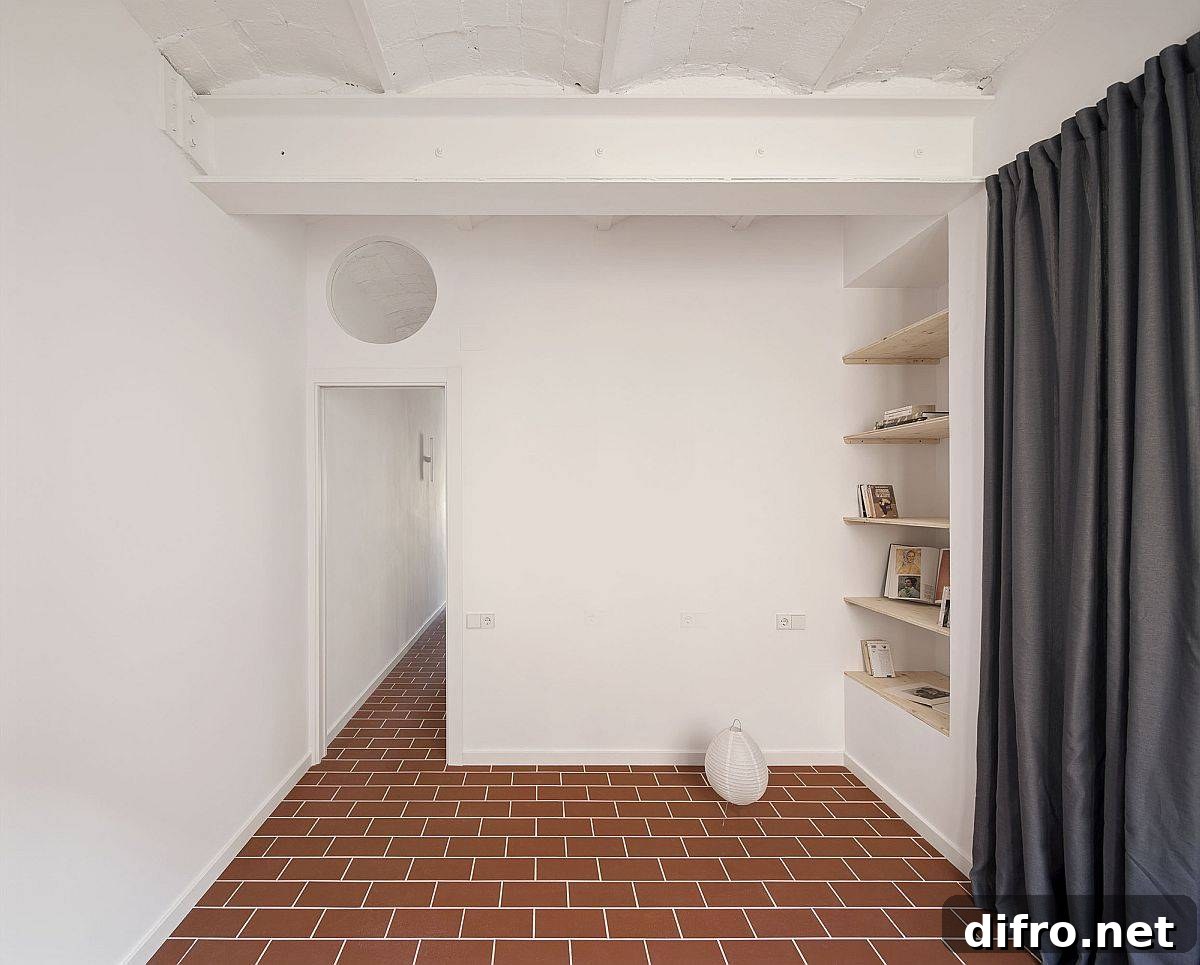
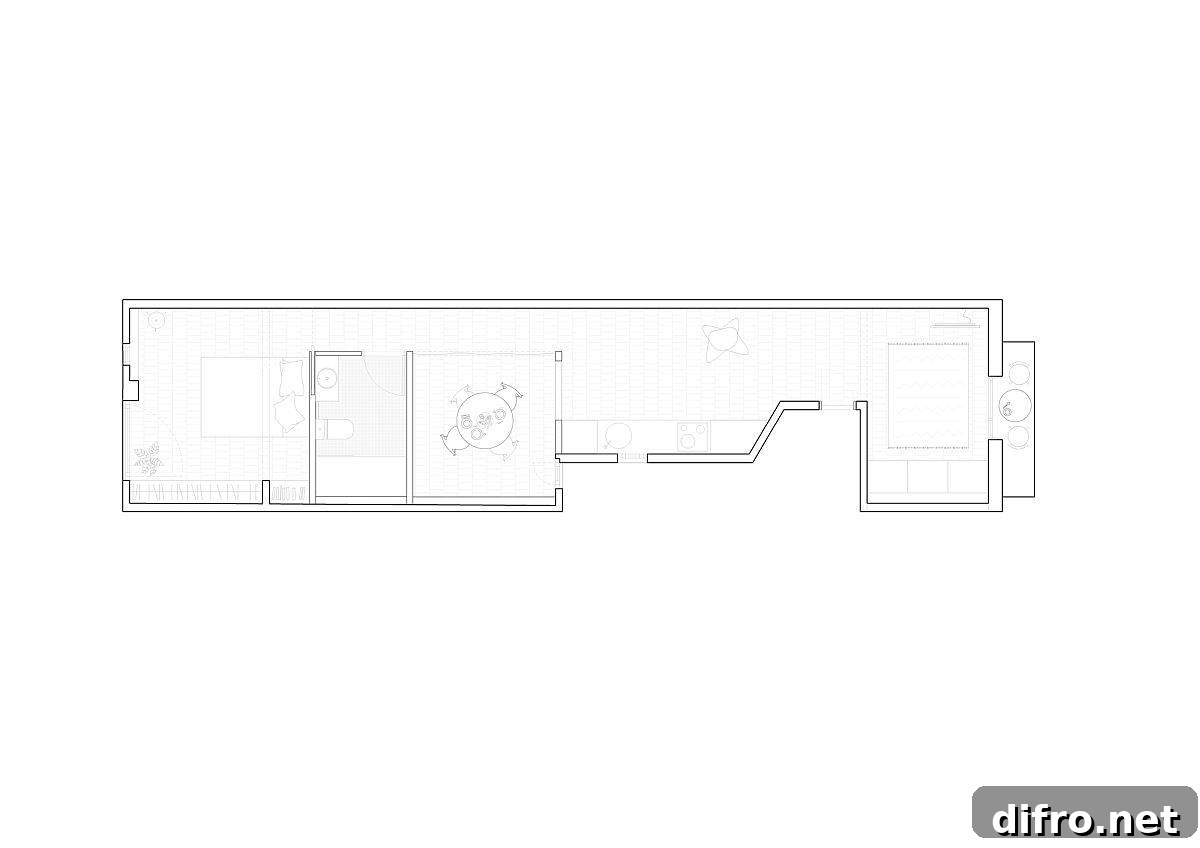
The proposal introduces a new plan distribution, erasing the old corridor and transforming the whole apartment into a sequence of open spaces. The project proposes longer views and a perception of a bigger space through enfilades of spaces that go from the most public areas to the more private ones.
Removing the corridor was a pivotal decision. Instead of a narrow, enclosed passageway, the renovation yields a succession of interconnected spaces that read as a continuous sequence. This enfilade strategy lengthens sightlines and amplifies the feeling of scale without increasing floor area. Each space is defined not by rigid walls but by carefully considered transitions: the kitchen island, the rounded window, the partial partitions—all contribute to a flexible layout that adapts to daily life.
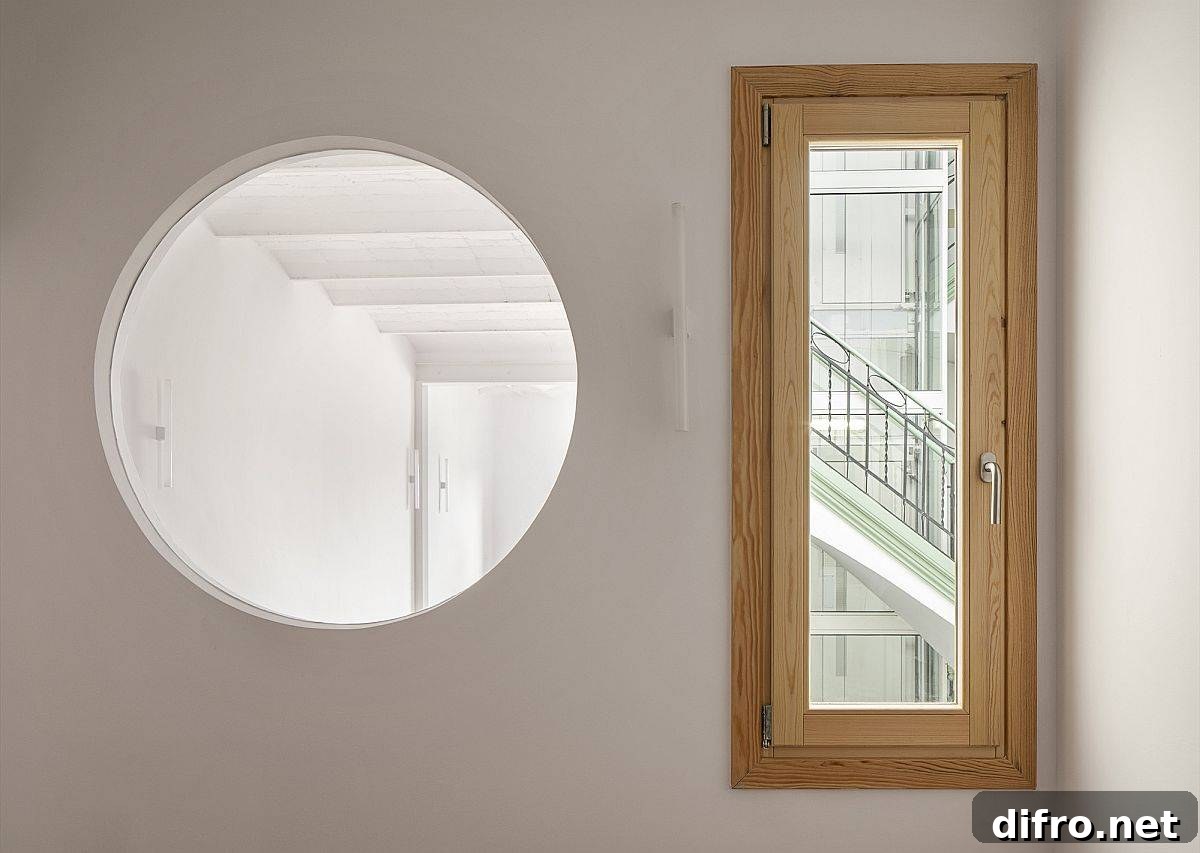
Ultimately, the Pujades 141 Apartment demonstrates how modest, deliberate interventions can rejuvenate a small home. By respecting original architectural qualities while rethinking circulation and daylight, the design restores comfort and clarity to the plan. The result is a compact Barcelona flat that feels brighter, more open and more adaptable—where classic textures meet contemporary simplicity and where cleverly placed openings make the entire home feel larger than its footprint suggests. Photography: Del Rio Bani.