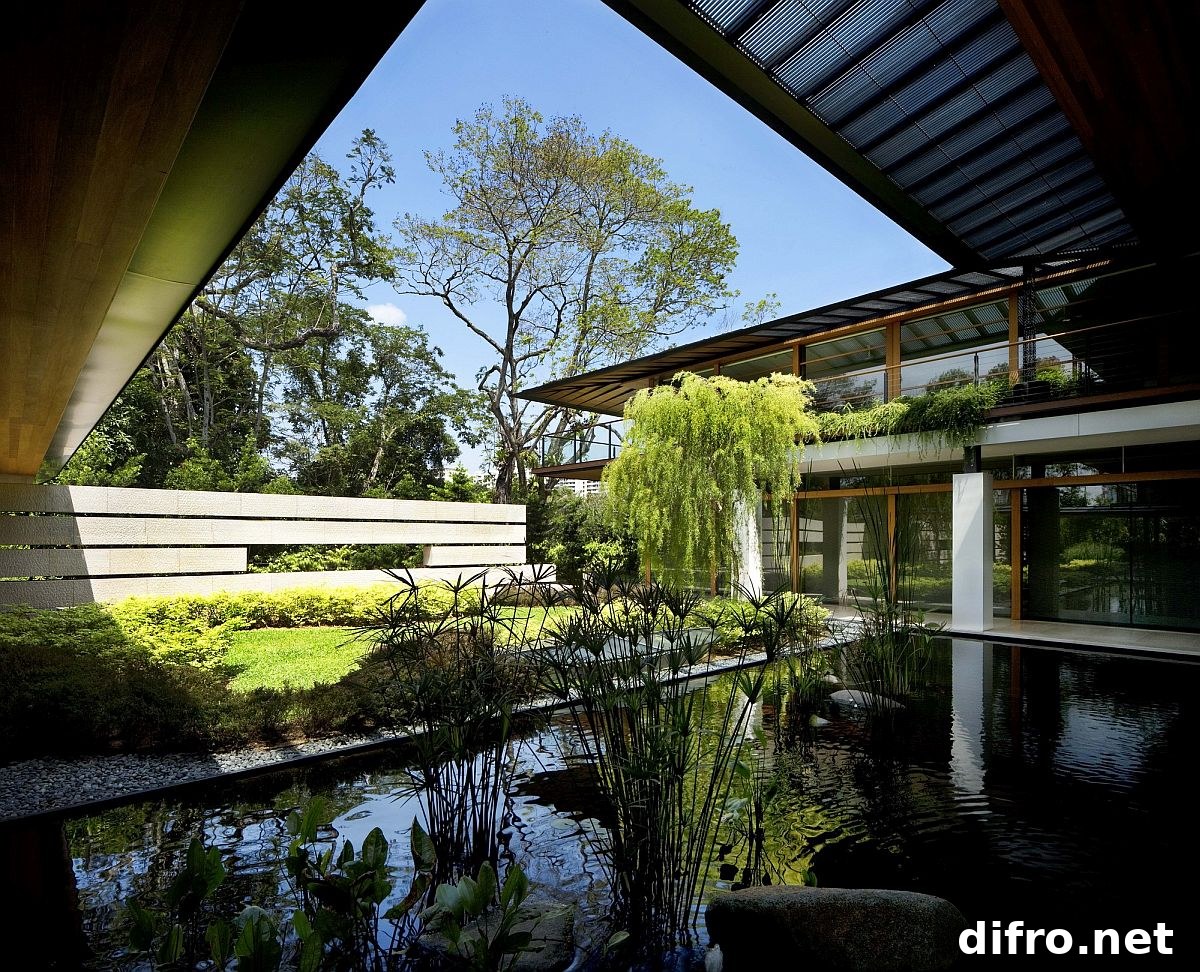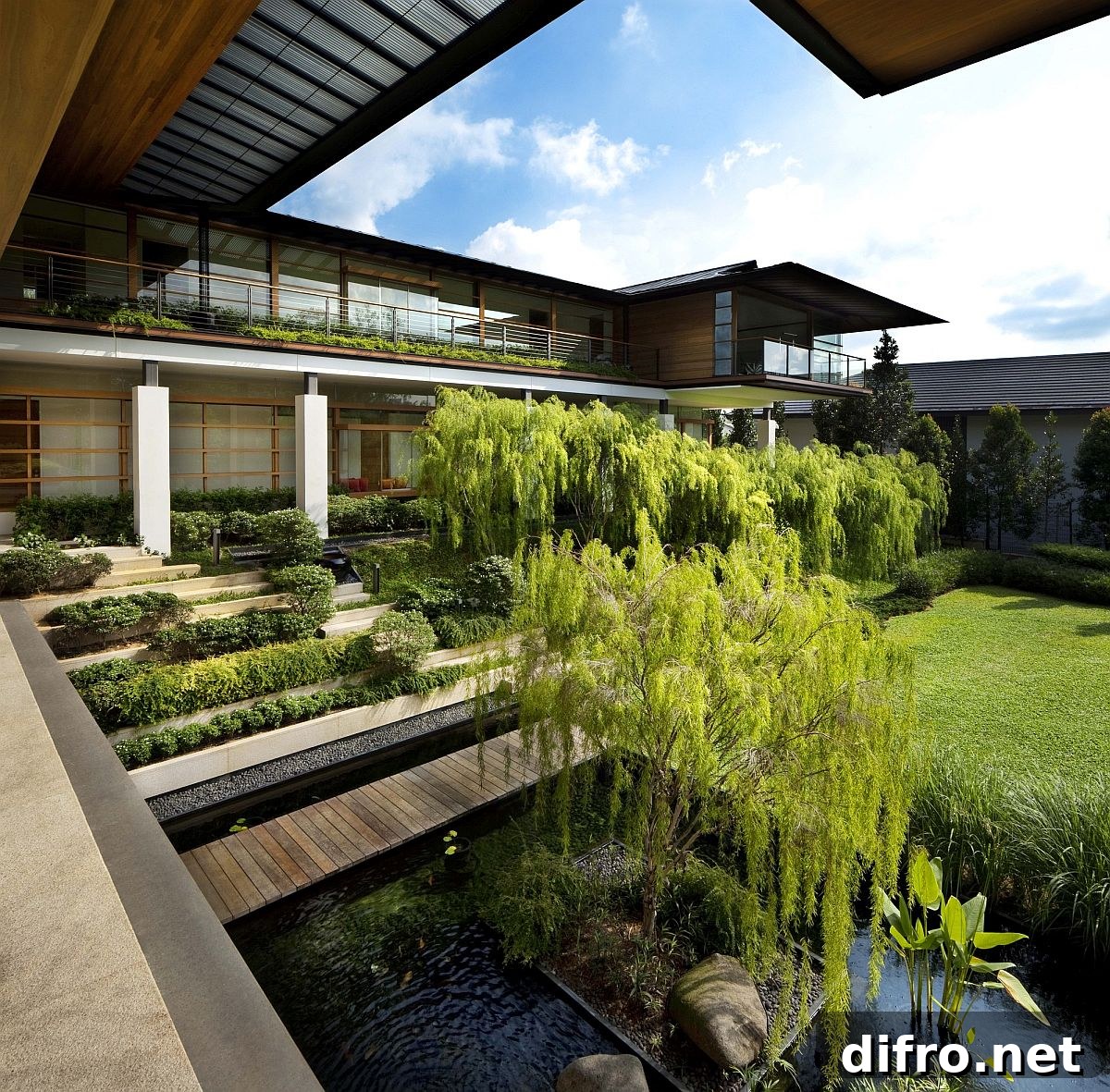
Finding a green oasis within an urban setting can be difficult, and it becomes especially rare in a compact, constantly active city like Singapore. That scarcity is precisely what makes the Tembusu House, designed by Guz Architects, remarkable: it sits within a property that feels surrounded by lush vegetation, where carefully composed gardens and water features take precedence. The family home itself remains understated, allowing the landscaped grounds — sweeping courtyards, rooftop gardens and gently sloping terraces — to capture the eye and define the experience. The abundant greenery frames every approach to the house and becomes a defining element inside as well as out.
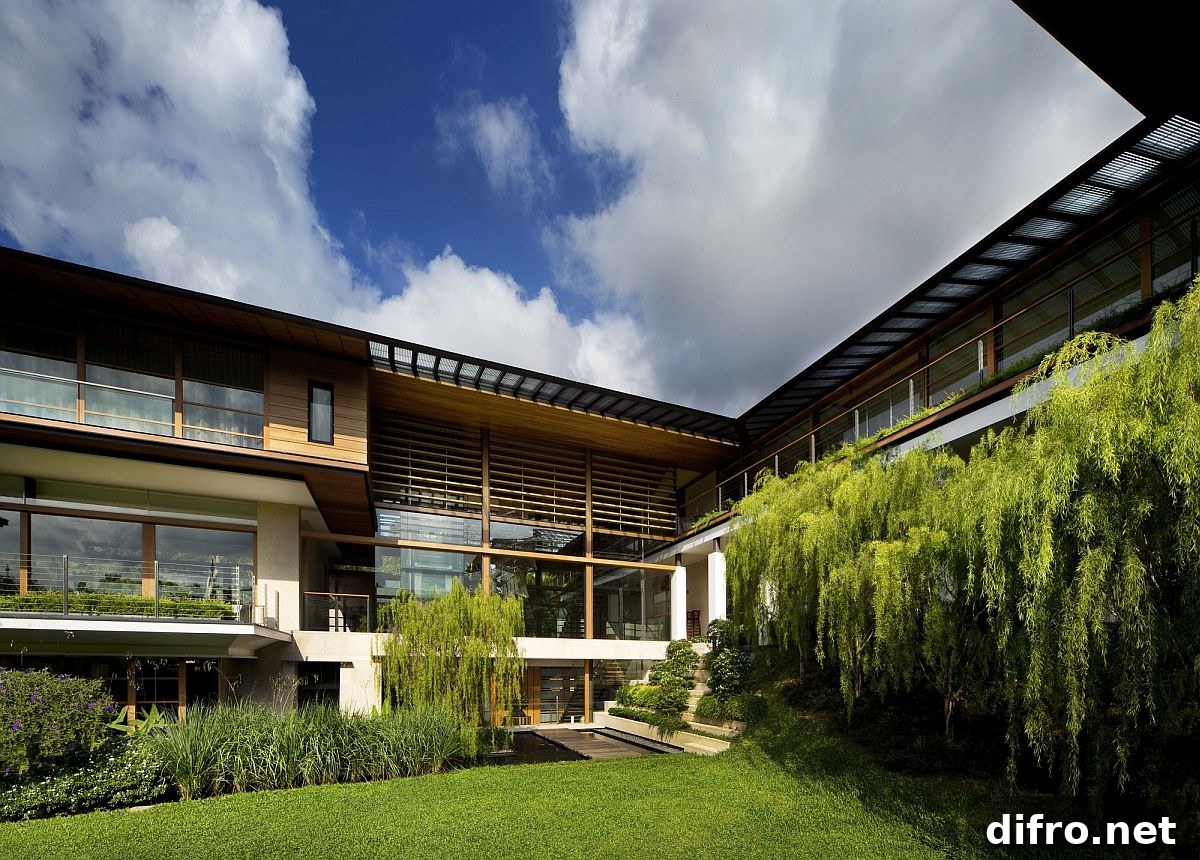
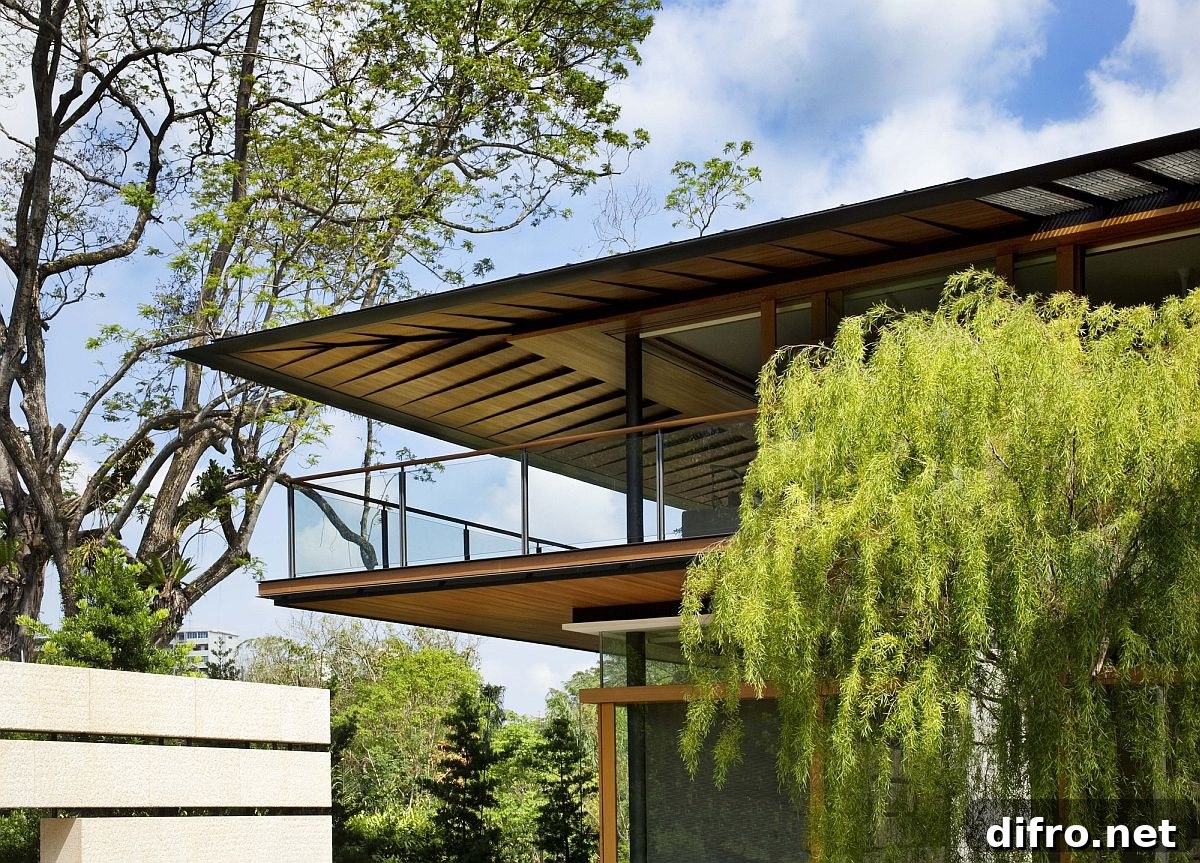
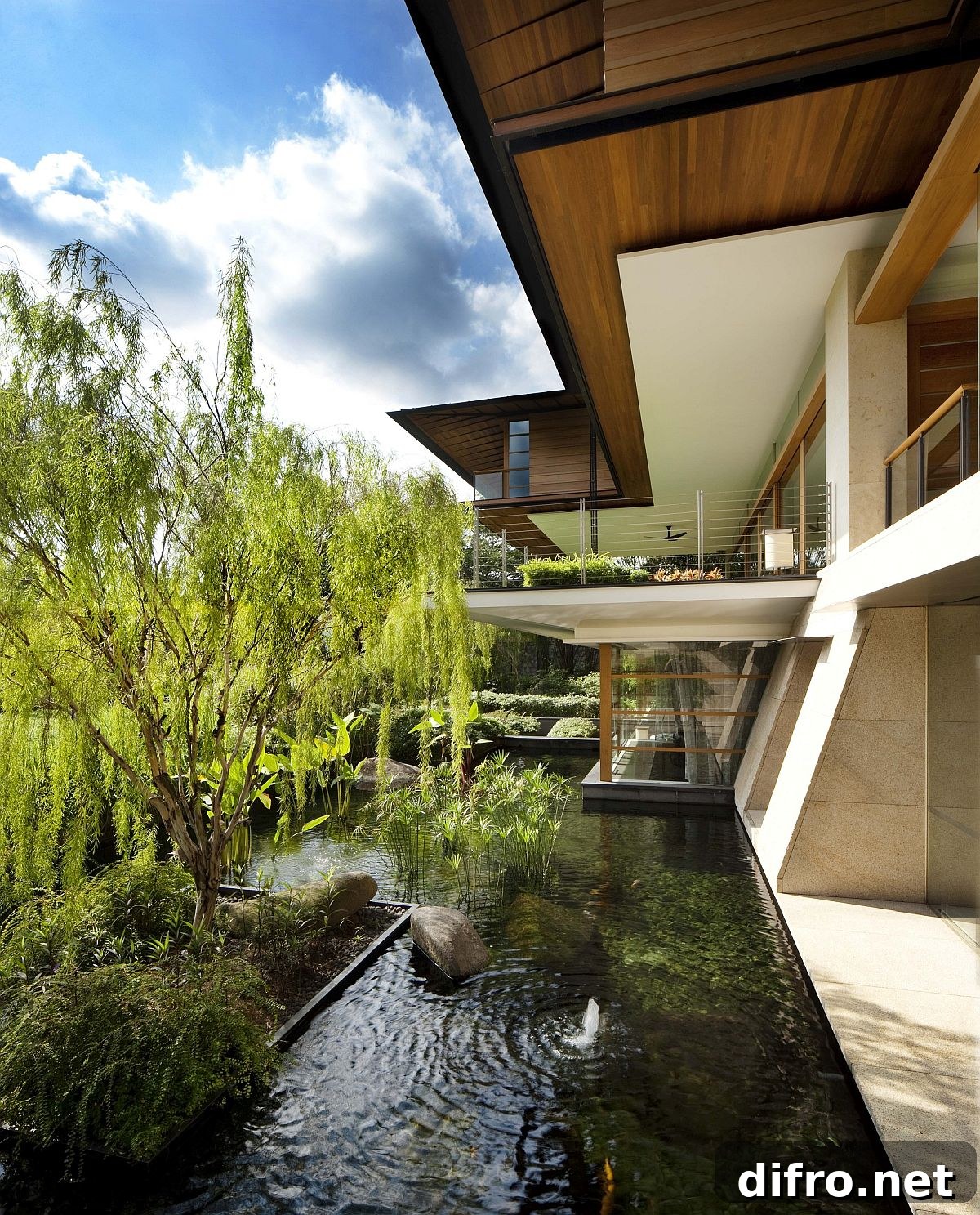
The project reinterprets classic Asian architectural traditions within a contemporary framework. Long, low pavilions and extended rooflines echo familiar regional forms, while large openings and transitional spaces blur the boundary between indoors and outdoors. Water becomes an organizing element: ponds and reflective pools create visual connections across the property, bringing movement and light into intimate courtyards and circulation paths. These landscape elements are not merely decorative; they are instrumental in shaping privacy, daylighting and airflow throughout the house.
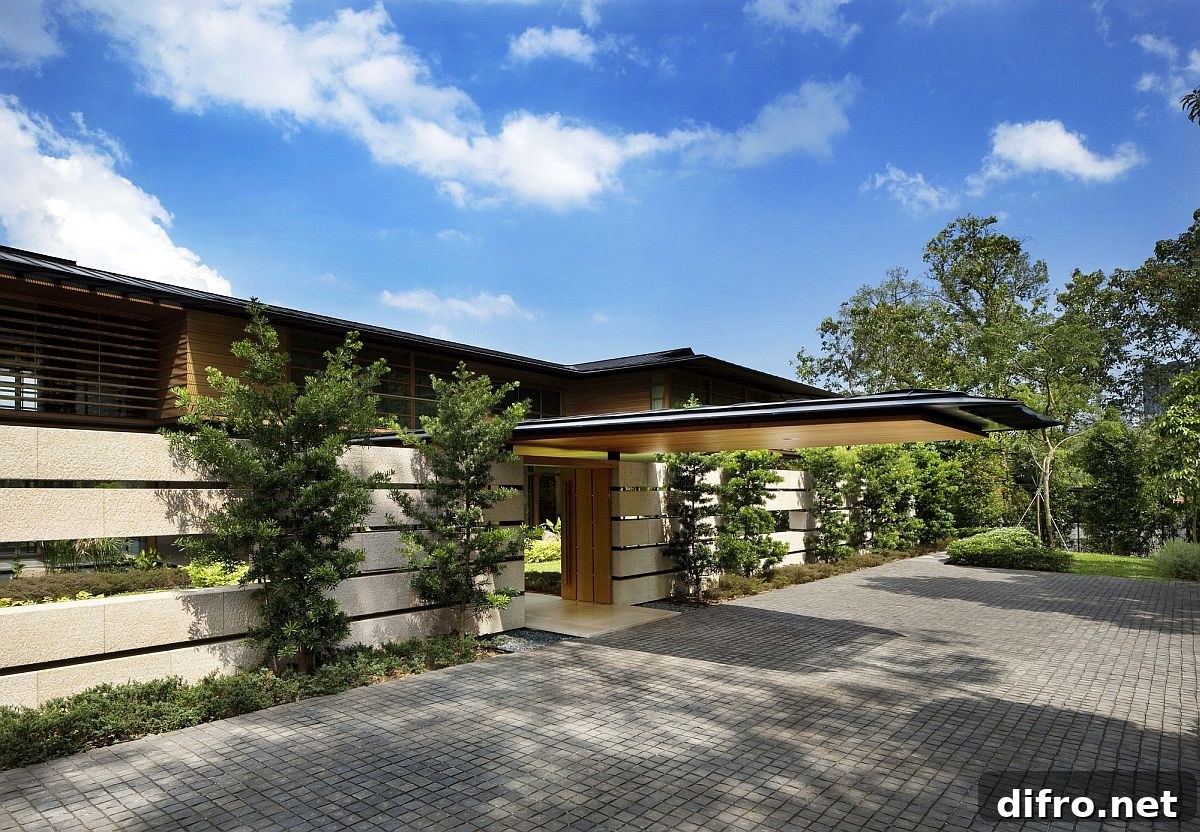
The roof forms are deliberate in both function and expression. Broad overhangs and layered profiles protect the interiors from direct sun during the hottest parts of the day and create shaded outdoor rooms that encourage family life to spill outside. Sloping terraces and planted roofs further integrate the building with its setting, providing additional greenery while reducing heat gain. The sequence of covered walkways and open courtyards encourages a measured pace through the house so that movement becomes a series of framed garden views rather than a purely functional transit.
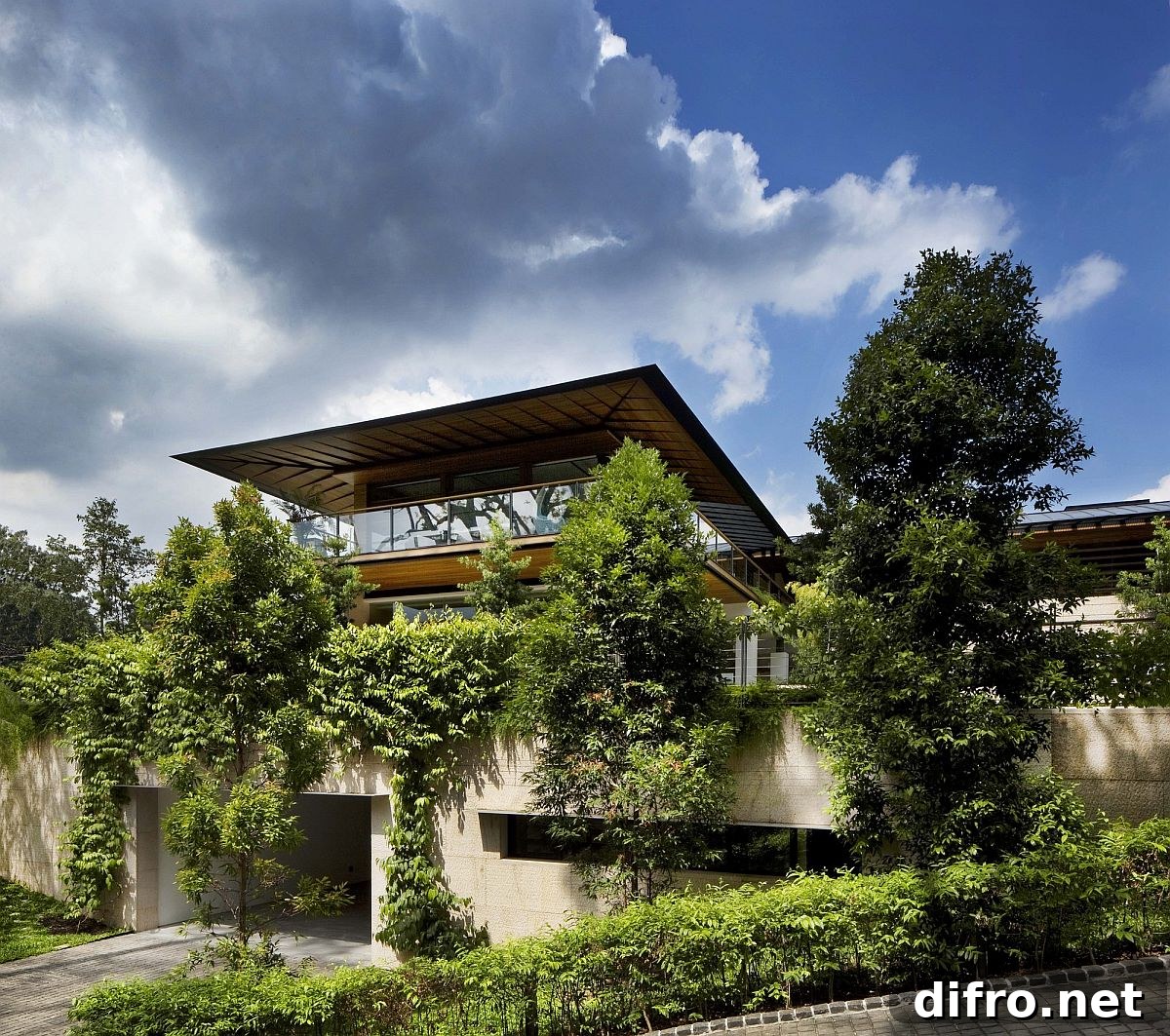
Landscaping at Tembusu House is thoughtfully composed to achieve multiple aims: to extend visual lines into the surrounding vegetation, to provide separate outdoor rooms, and to maintain privacy between different wings of the home. Ponds and planted courtyards act as focal points that draw light and reflections into interior spaces, while also serving as buffers between bedrooms, living areas and service zones. The result is a layered composition in which architecture and landscape reinforce each other, producing a coherent, tranquil environment in the middle of a busy city.
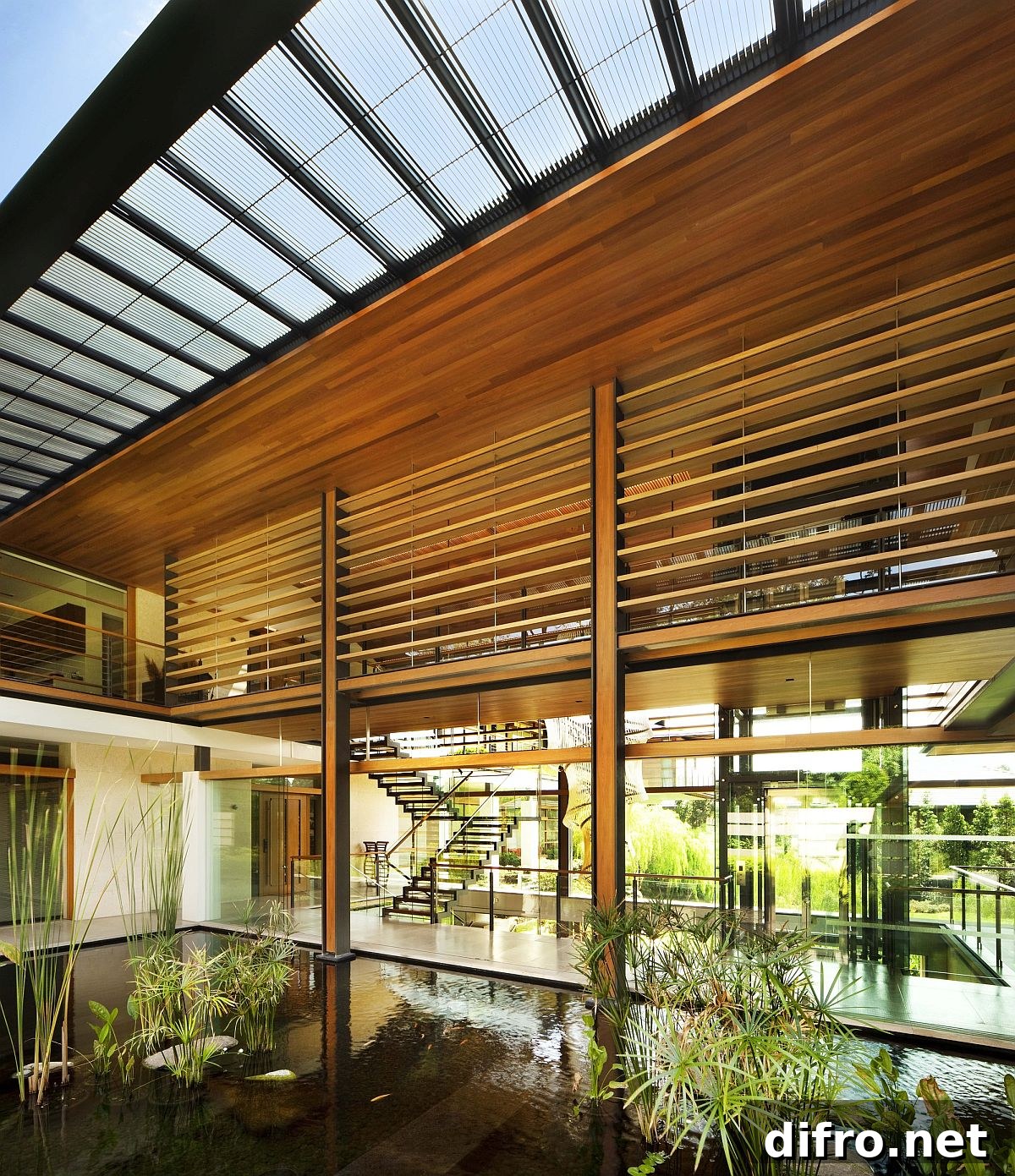
To make the most of the surrounding greenery, landscaped ponds and courtyards were created as focal loci, both to extend visual links to this borrowed landscape, and to separate the various wings of the house for the purpose of maintaining privacy.
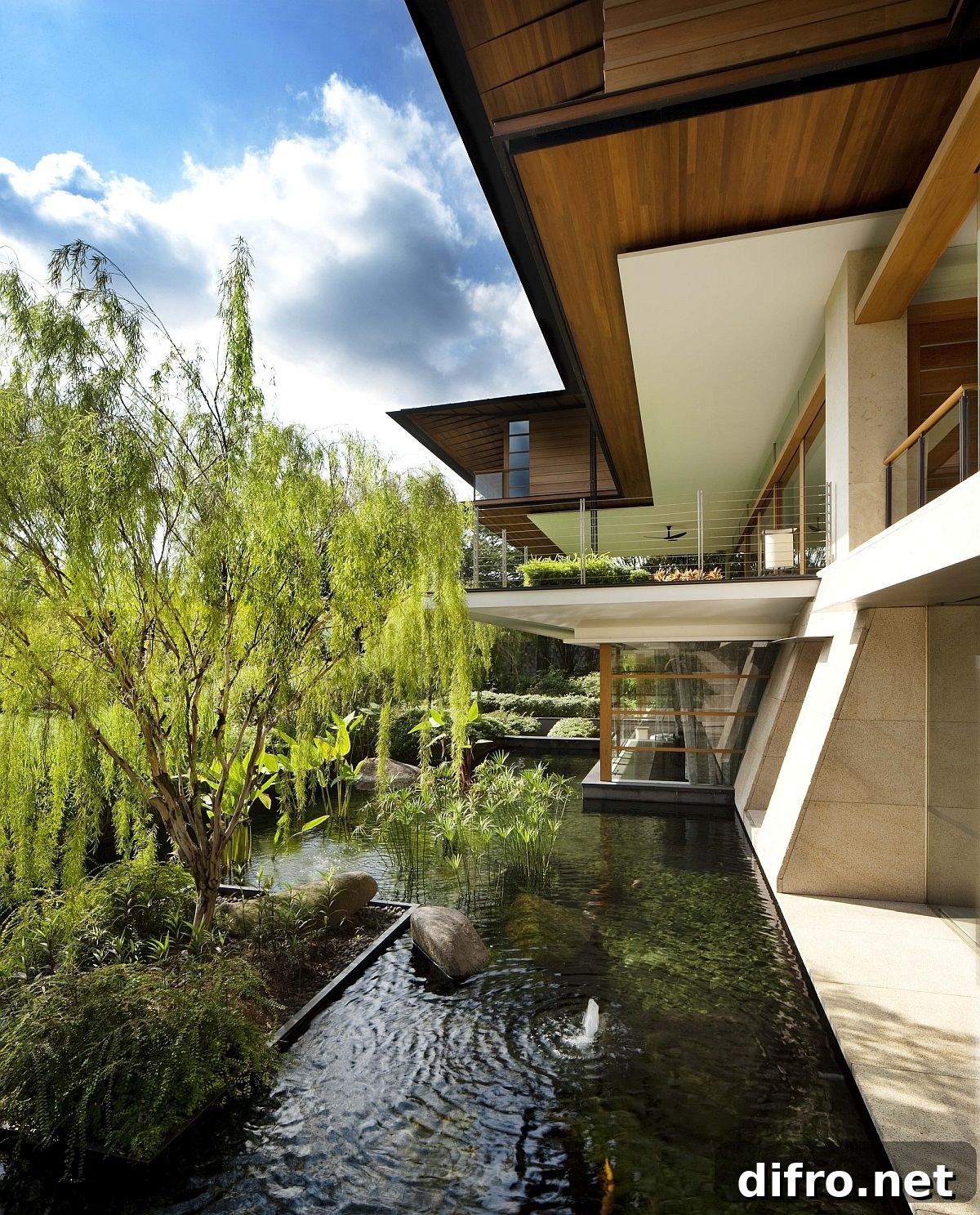
Internally, materials and finishes have been chosen to complement the landscape: warm timber, neutral stone and generous glazing create a calm backdrop for framed garden views. The interiors prioritize comfort and a connection to nature rather than ornament. Living spaces open to courtyards while quieter rooms are set back behind planted buffers, creating a home that balances sociability with retreat. Natural ventilation strategies and shaded overhangs respond to Singapore’s tropical climate, ensuring comfort while reducing reliance on mechanical cooling where possible.
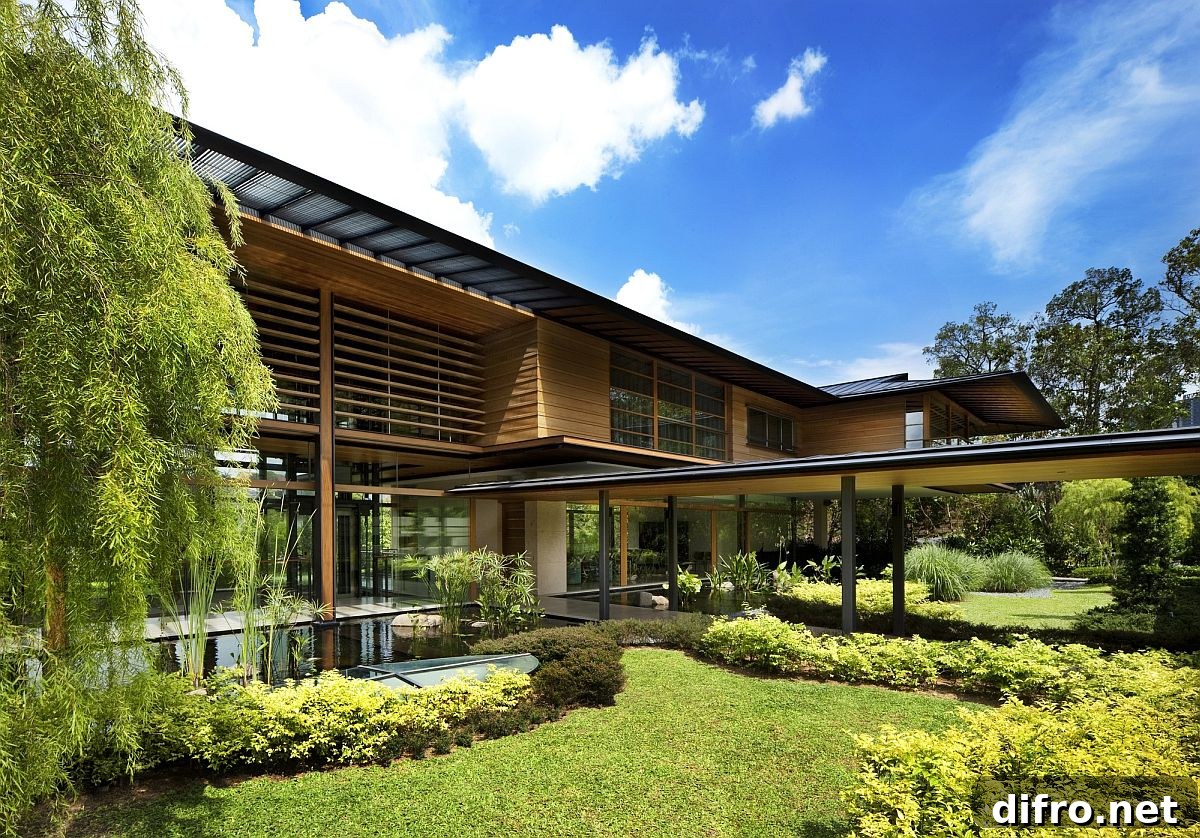
Overall, Tembusu House offers a compelling example of how contemporary architecture can embrace traditional principles—pavilion planning, courtyards, and water—while addressing modern needs for comfort, privacy and environmental responsiveness. The home is defined as much by the gardens and ponds that surround it as by its built form, creating a tranquil private retreat that reads like a small landscape in the heart of the city. Photography by Patrick Bingham-Hall captures these relationships between light, water and greenery, underscoring how strongly the house is shaped by its landscape.