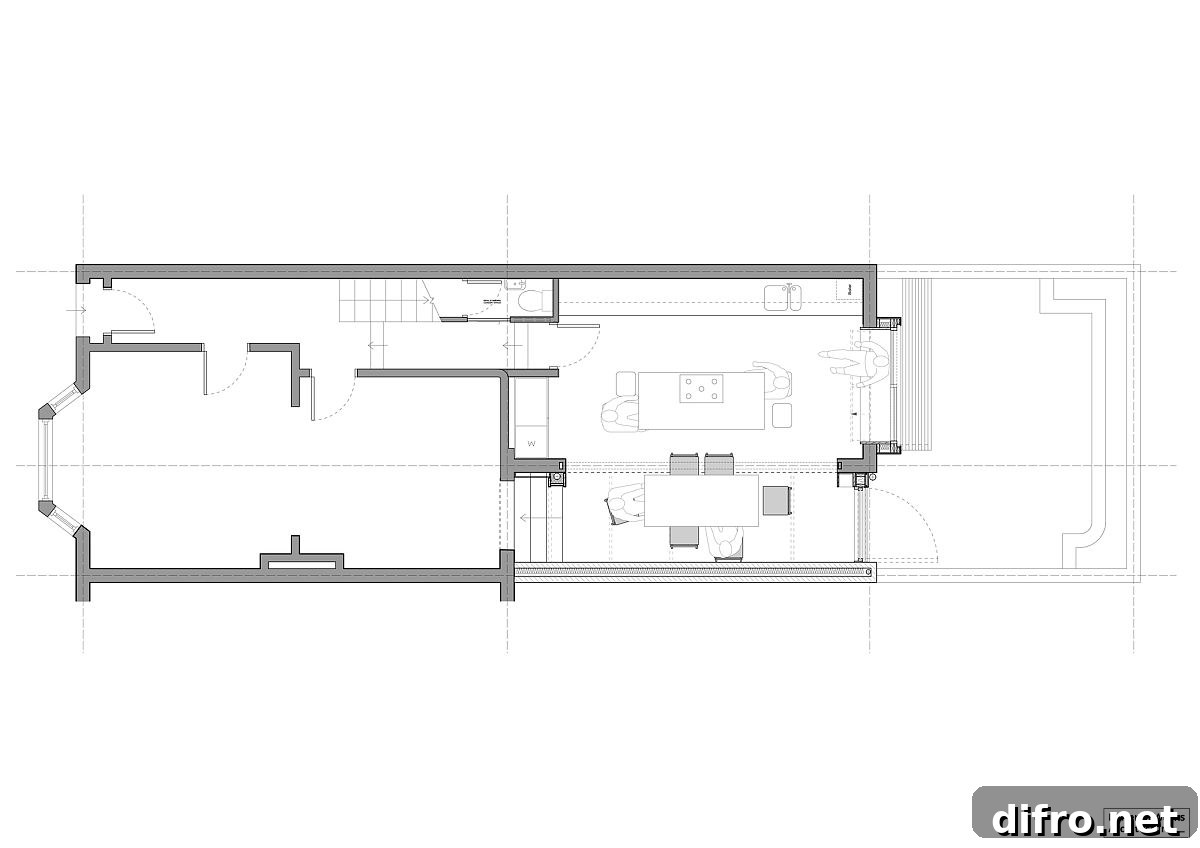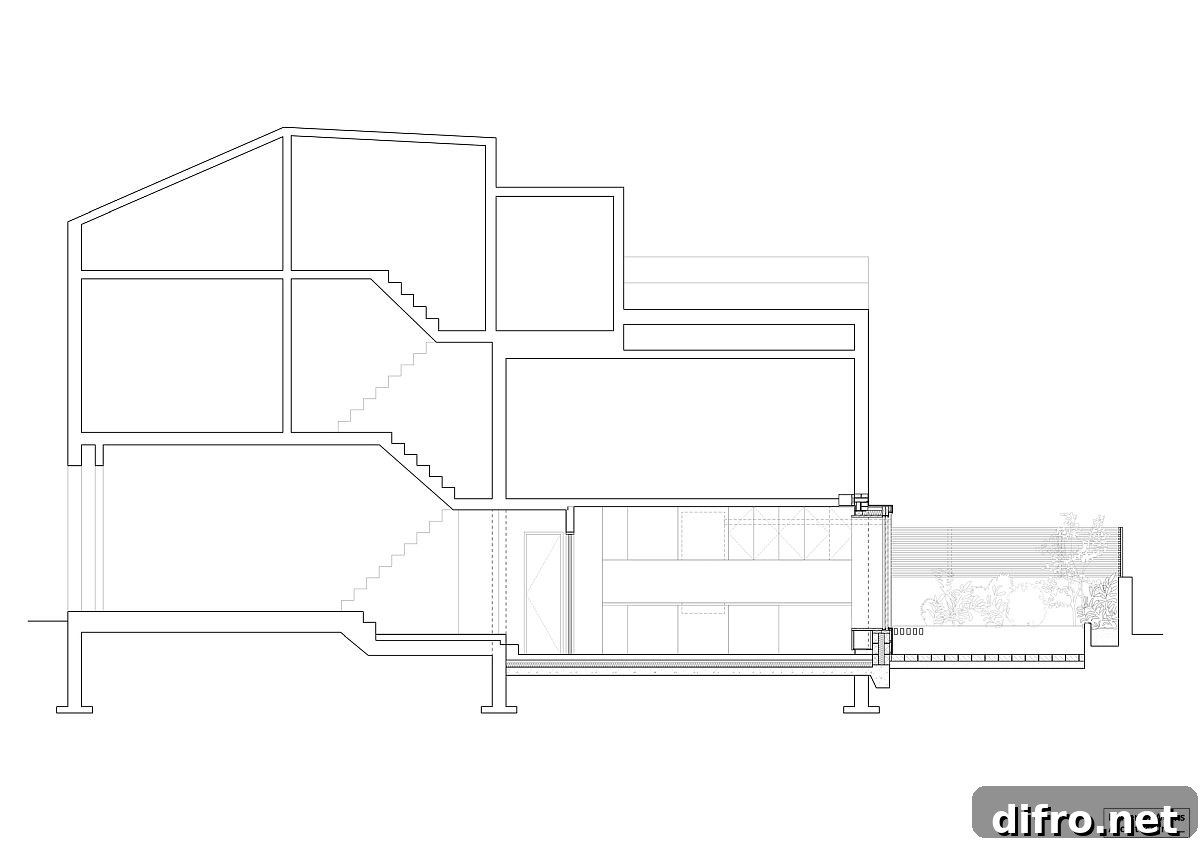
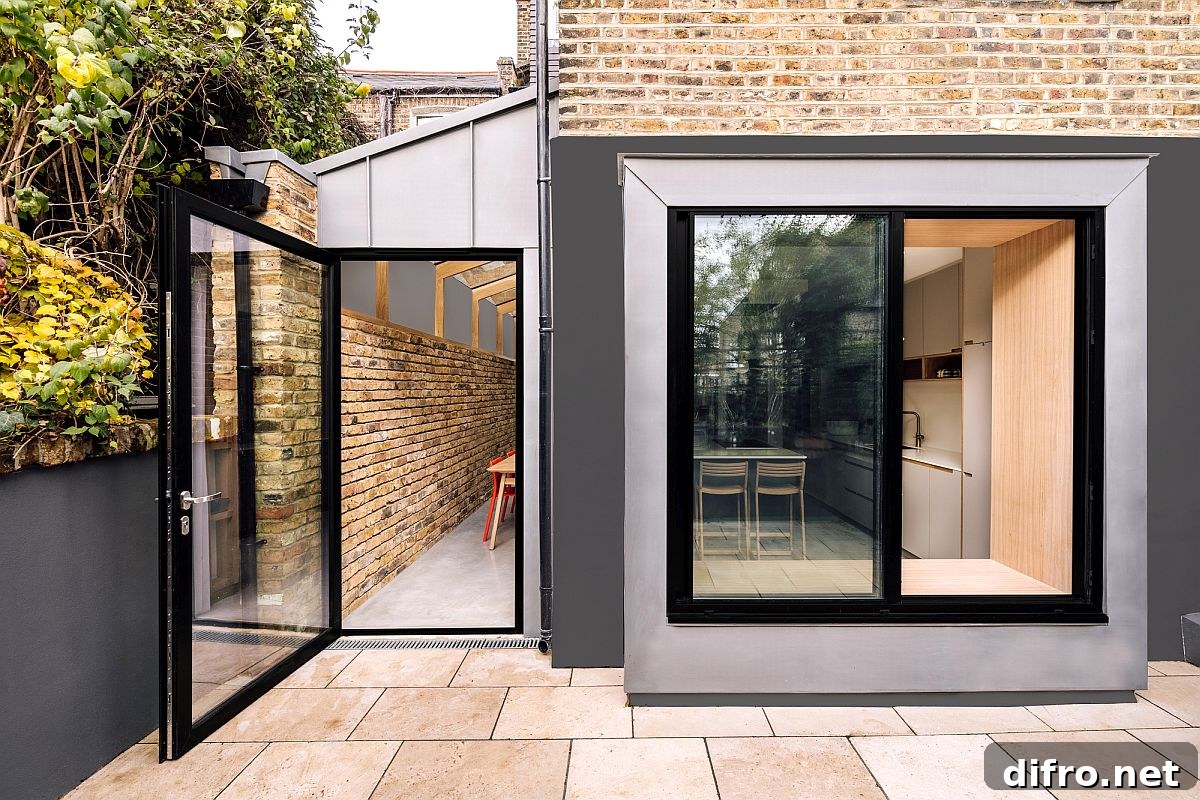
Stoke Newington, in North London, is a vibrant neighborhood where contemporary living and lively nightlife sit comfortably alongside well-preserved Victorian architecture and an evocative sense of history. Nestled in this evocative setting is a carefully considered addition to an older Victorian residence, known as Stoke Newington House. Created by Material Works Architecture, the rear extension expertly balances old and new: exposed brick and warm oak combine with polished concrete, glass and clean-lined modern finishes to create a cohesive, lived-in space that still feels fresh and contemporary.
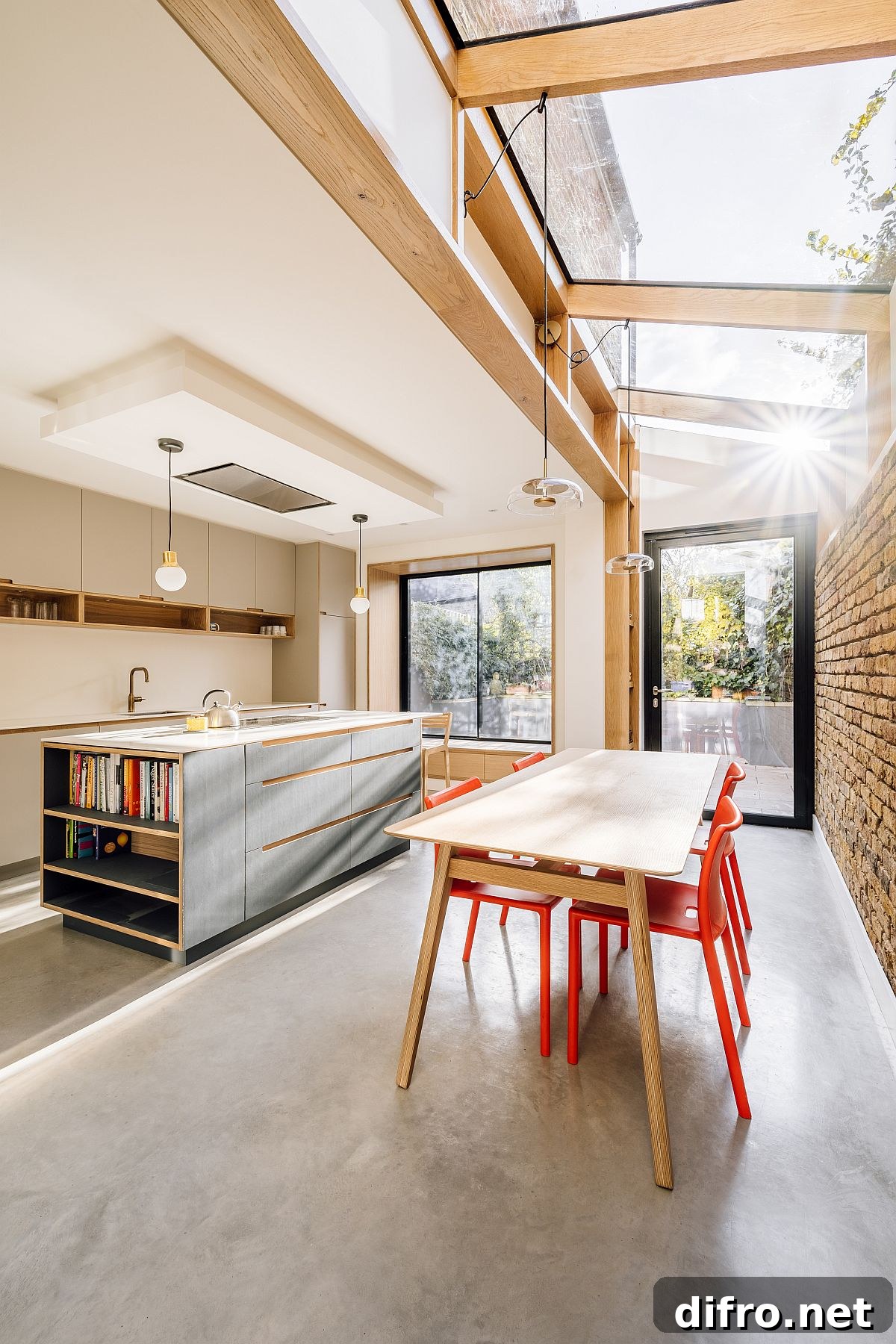
The main aim of the rear extension was to transform a dark, cramped kitchen into a bright, sociable heart of the house, while improving both the room’s appearance and its day-to-day functionality. A large roof light is the defining element of the new volume: it floods the space with daylight and dramatically lifts the interior atmosphere so that what was once gloomy becomes warm, airy and welcoming. Oak beams frame the roof light, giving a subtle architectural rhythm and a tactile contrast to the contemporary glazing.
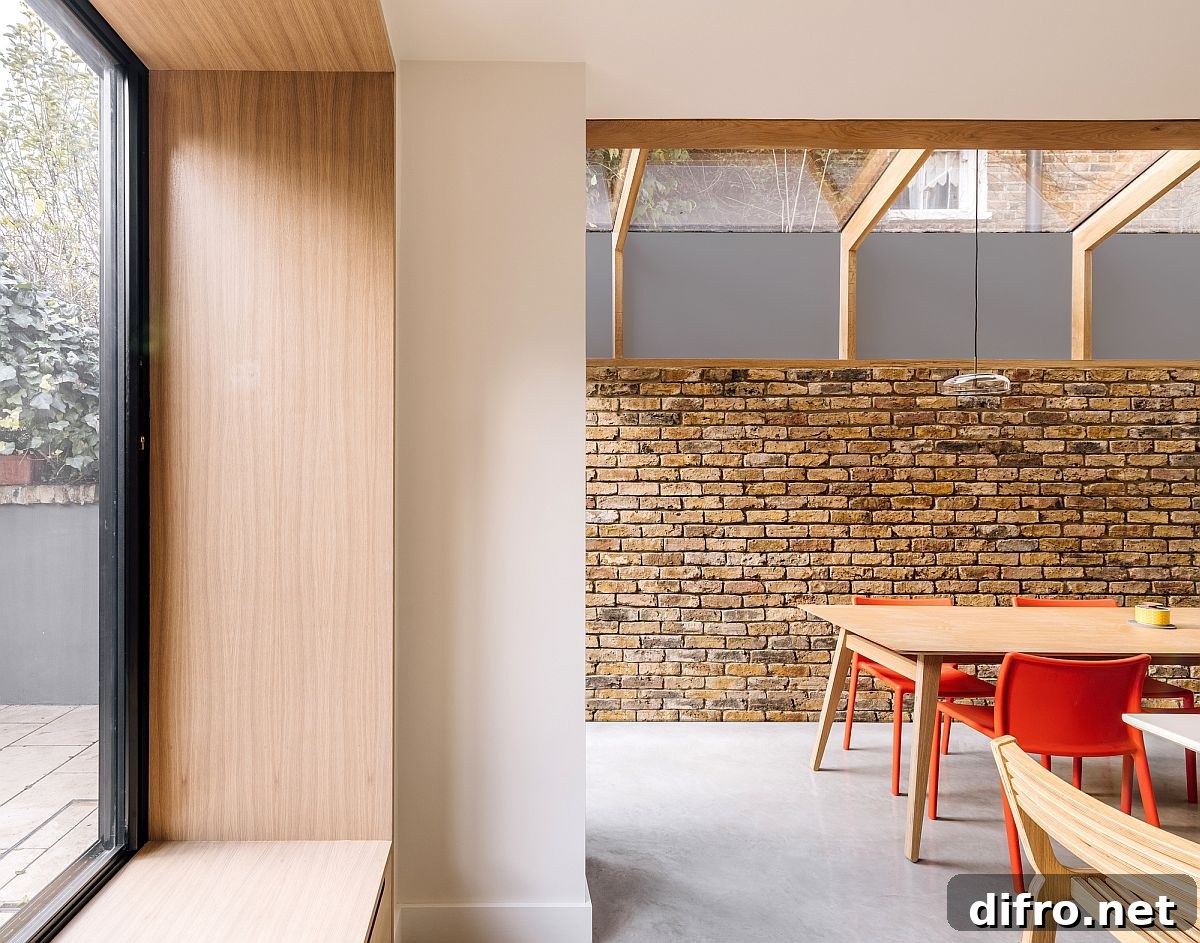
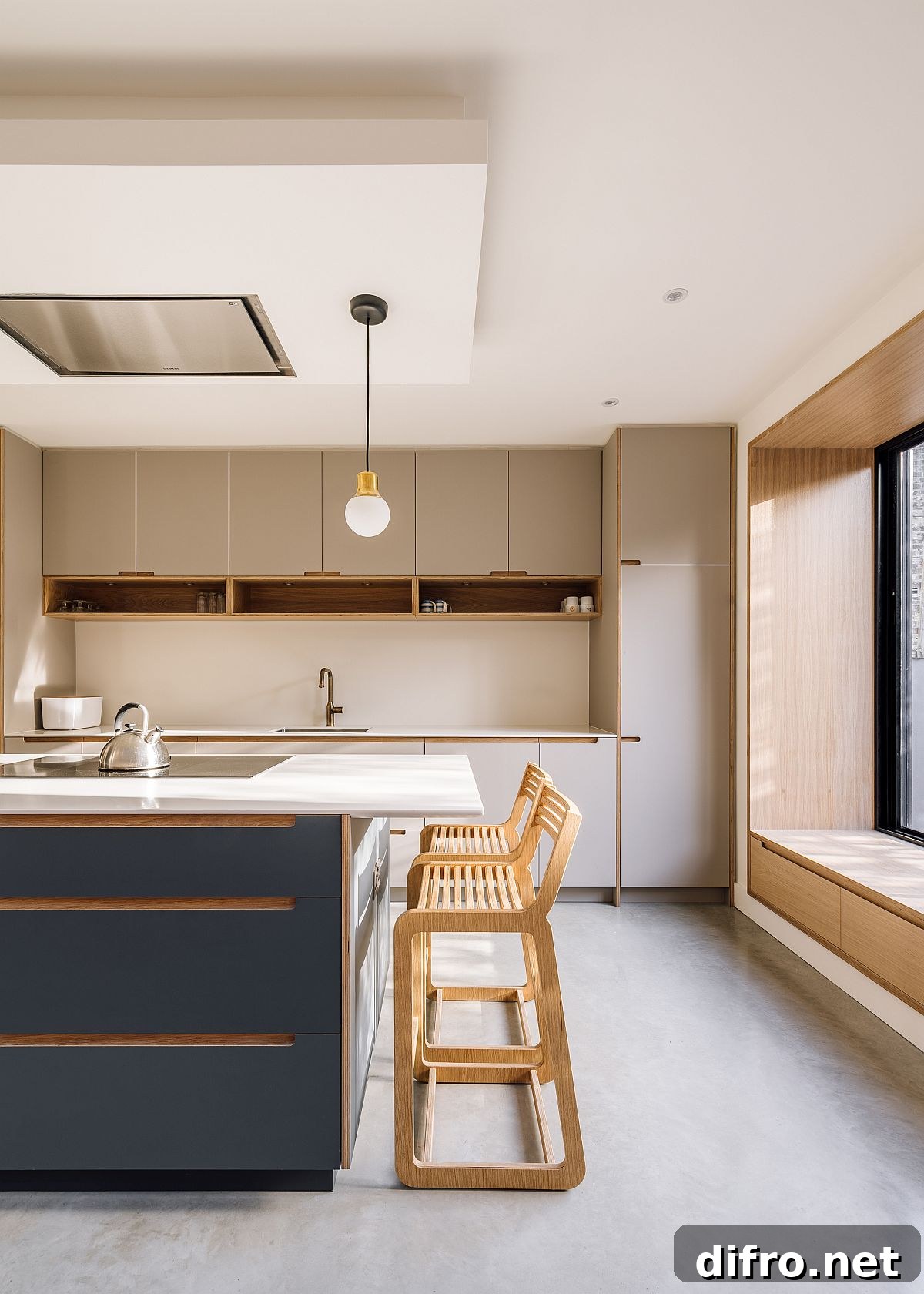
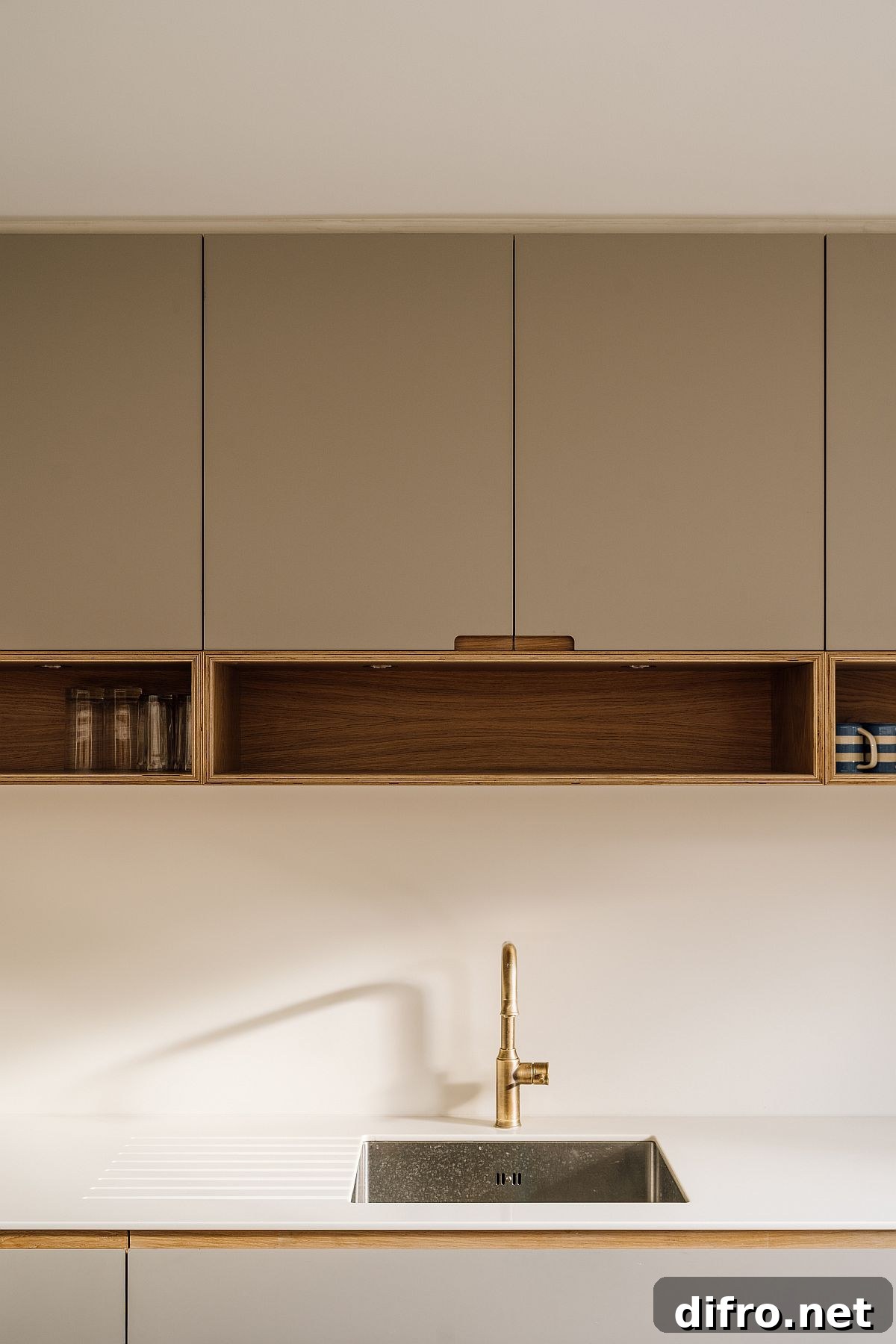
Custom laminated plywood cabinets, softened by oak veneer accents, form a restrained, tactile backdrop for the kitchen. A generously scaled central island, finished in a bluish-gray tone, increases preparation and storage capacity while anchoring the room visually. The island and cabinets are paired with carefully considered lighting and fittings to keep the aesthetic clean and contemporary without feeling cold. A bespoke oak window seat offers a comfortable nook for relaxing and provides a framed view of the garden, connecting interior life with the outdoors.
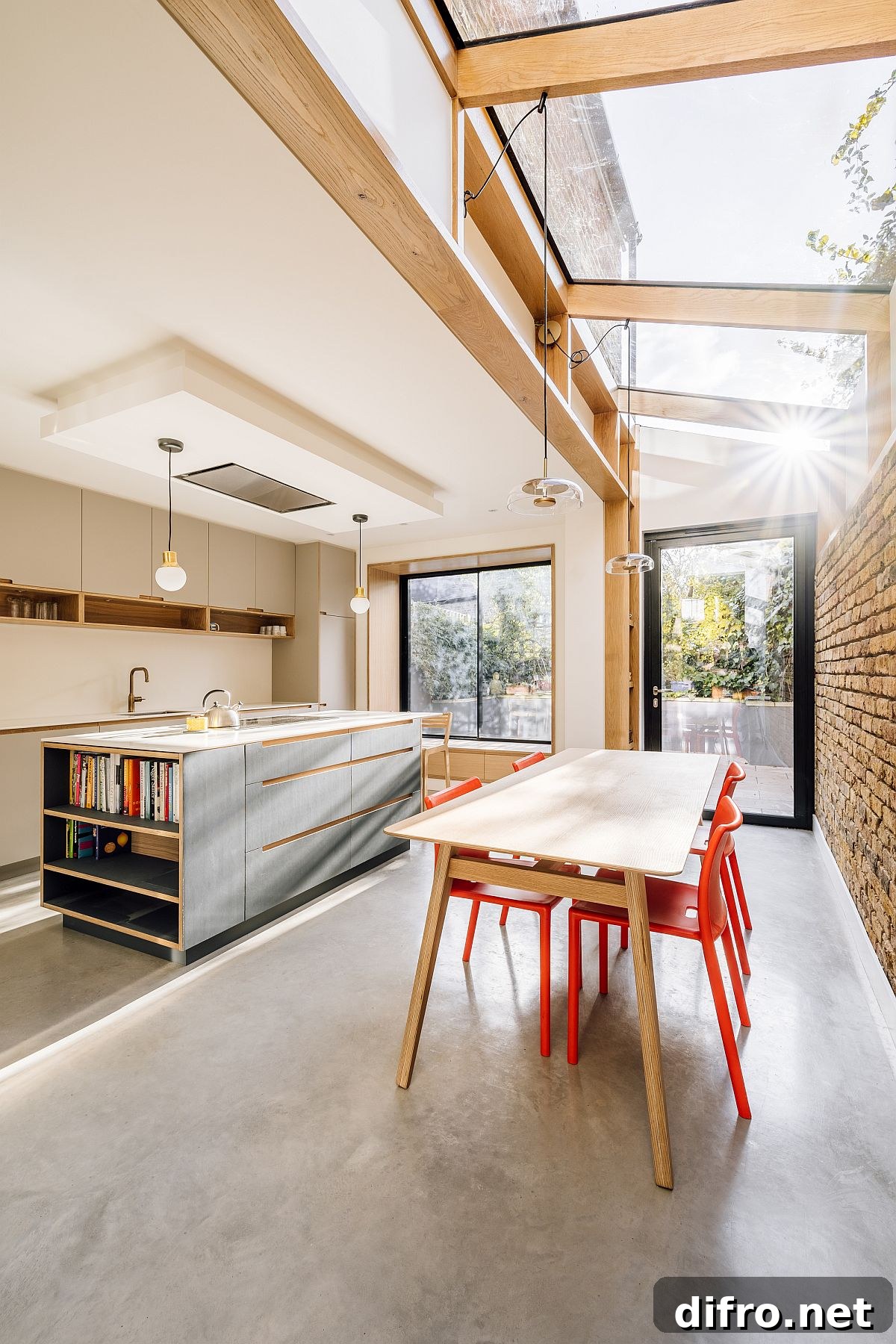
The dining area sits directly beneath the roof light, creating a sense of dining outdoors even when the weather keeps you inside. This arrangement makes mealtimes feel more open and sociable: natural light and views of the garden help blur the boundary between inside and out. The materials palette—reclaimed brickwork, warm oak, neutral plywood laminates and a polished concrete floor—was chosen to create balance and continuity between the extension and the original Victorian fabric.
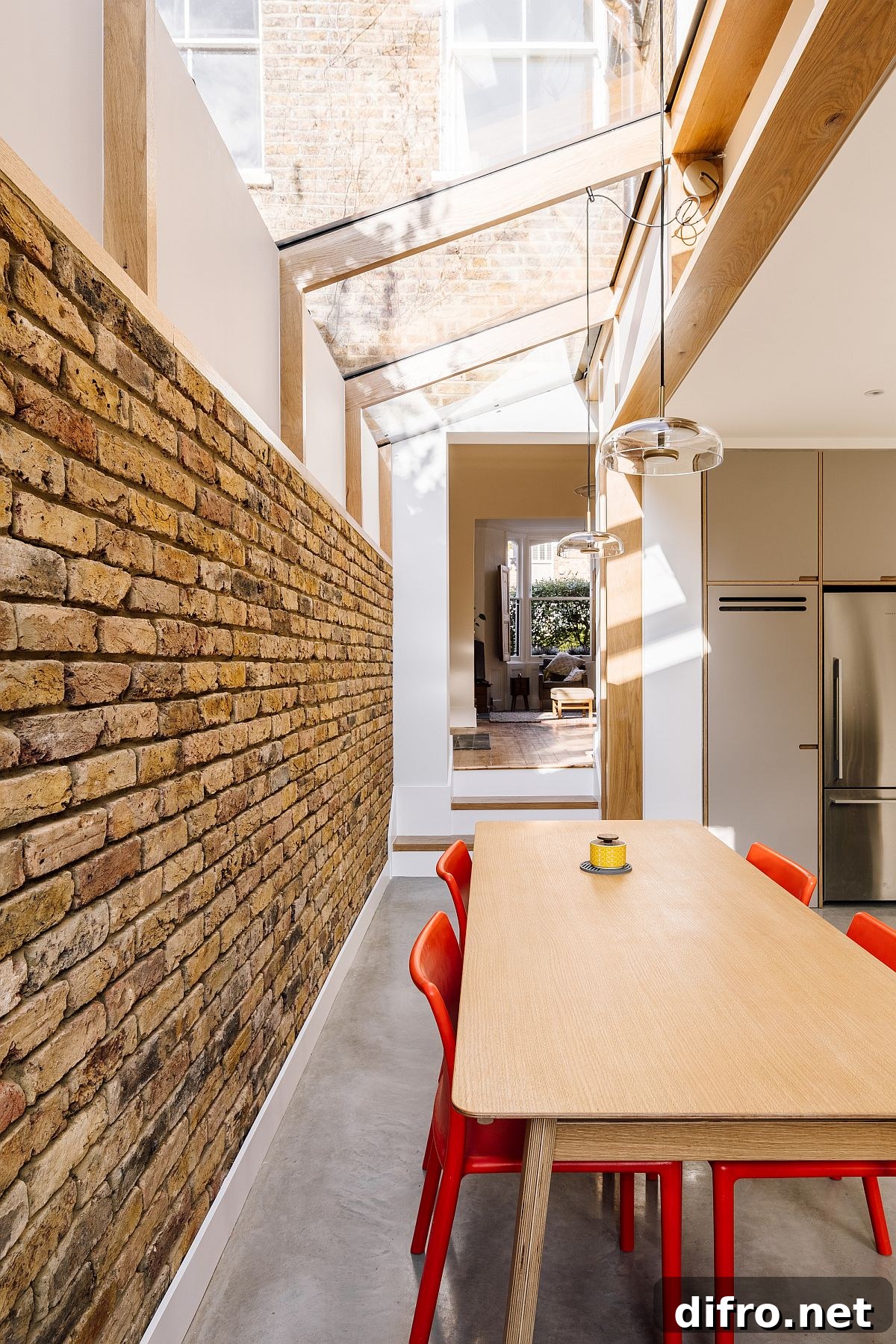
Reclaimed bricks sourced from local projects were used in the extension to visually link the new build with the original Victorian house. This tactful reuse helps the addition feel authentic, rooted in its context and appropriate in scale and texture. The polished concrete floor provides a durable, low-maintenance surface that contrasts with the timber elements while unifying the layout with a smooth, contemporary finish. Discreet, well-planned lighting and modest decorative details complete the composition, creating a comfortable, modern living space that still acknowledges and respects the home’s heritage.
The result is an elegant, considered extension that brings daylight, practicality and a contemporary aesthetic to an ageing Victorian home without erasing the original character. Thoughtful material choices—oak, reclaimed brick, plywood laminates and polished concrete—along with the generous roof light and refined joinery, create a kitchen and rear addition that are both modern and warmly familiar.
Photography: Gautier Houba