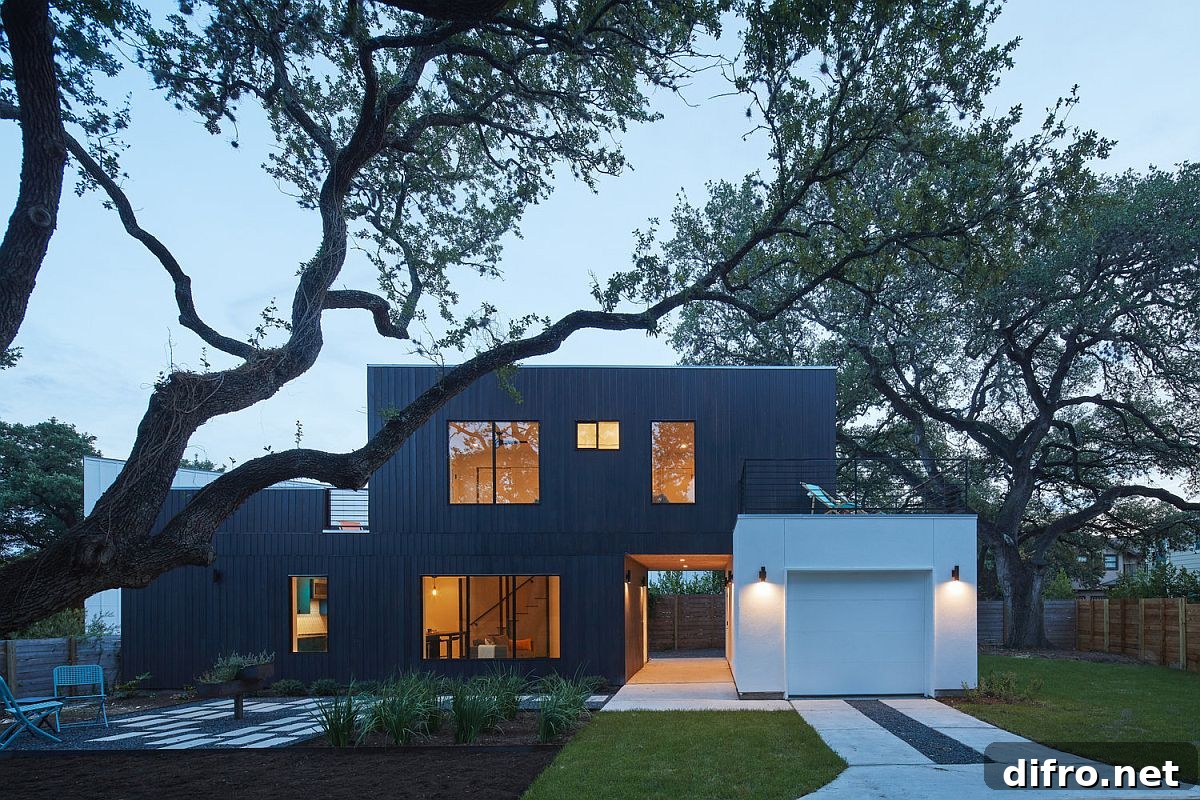
Modern Chelsea ADU in Travis Heights, Austin
A second home in your backyard can be one of the most versatile and valuable additions to a property. Serving a range of needs—from independent living for multi-generational families to a private guest suite or a quiet backyard retreat—an Additional Dwelling Unit (ADU) can function as a fully realized residence while remaining compact and efficient. Located in the historic Travis Heights neighborhood of Austin, Texas, this Chelsea ADU designed by Davey Mceathron Architecture demonstrates how thoughtful design and material choices create a modern, livable space with a strong sense of identity.
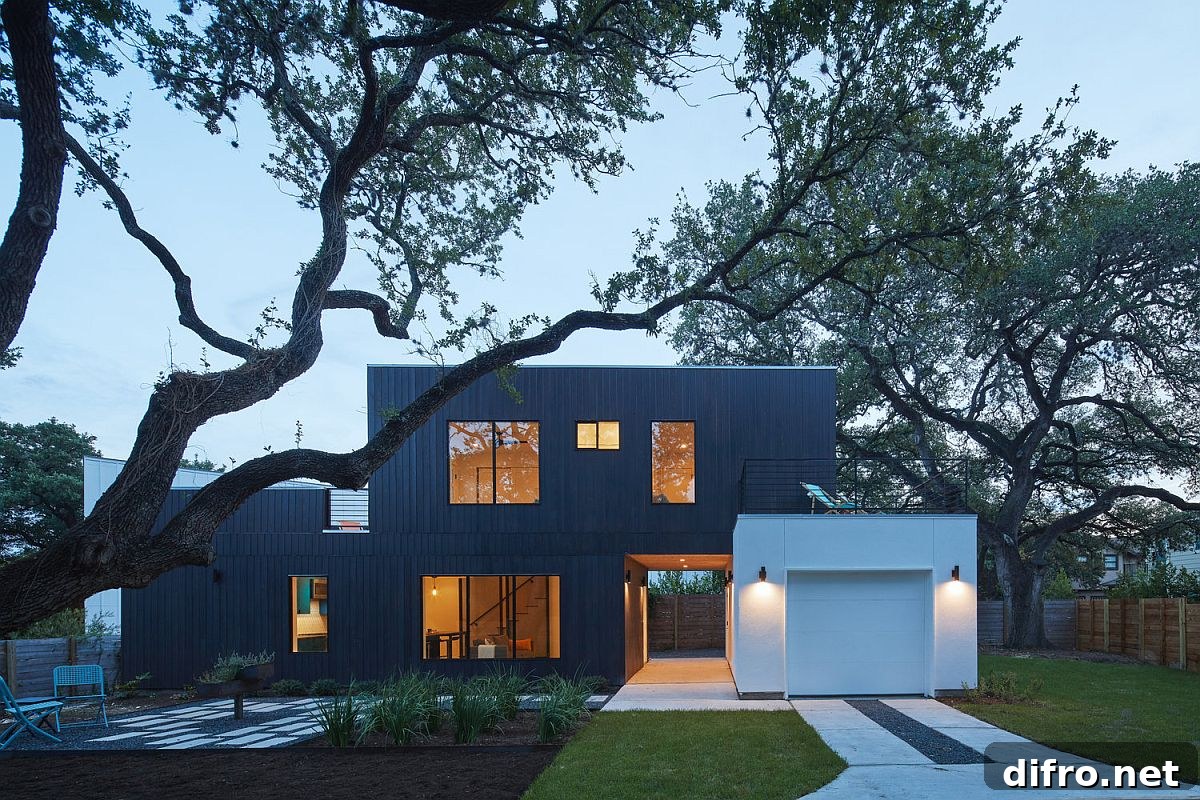
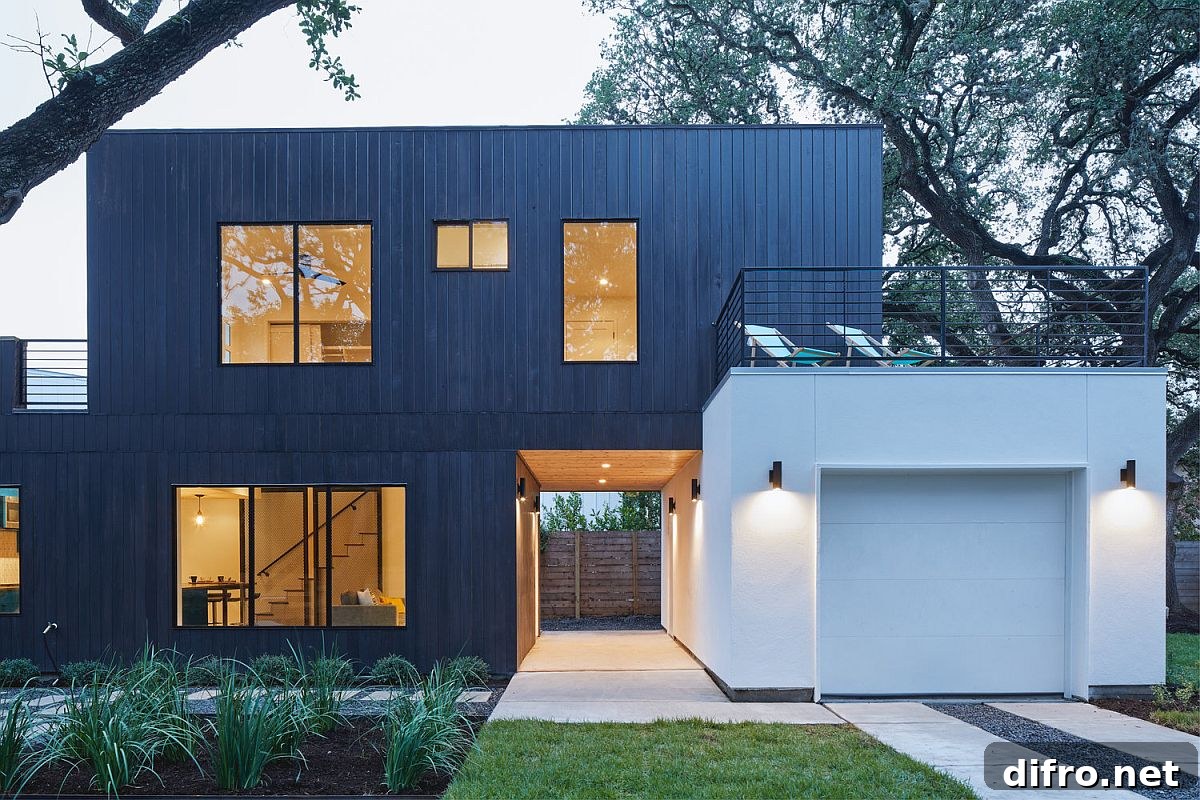
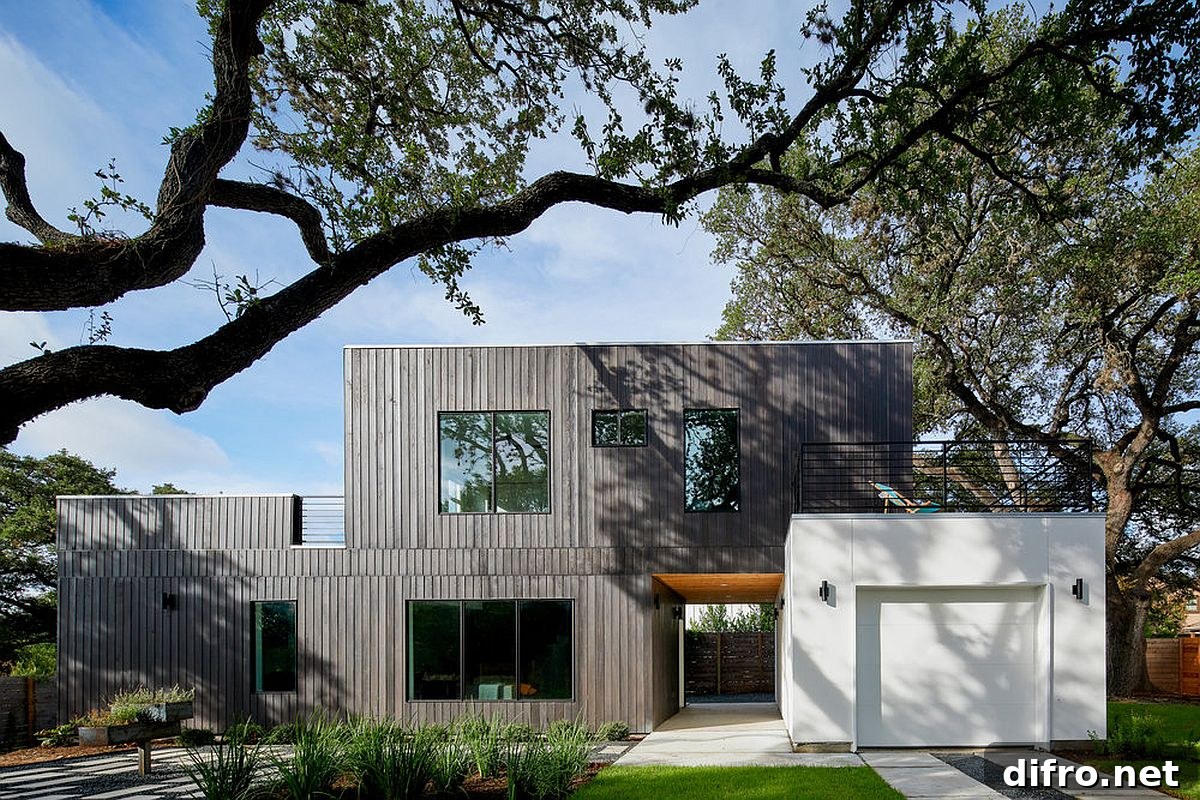
The exterior clads the structure in a dark gray wood that gives the ADU a distinct, contemporary profile. A neighboring white garage creates a crisp contrast and includes a usable open deck above, extending the home’s outdoor living potential. On the interior, the palette shifts to bright, minimal whites to amplify daylight and make the compact plan feel open and calm. The living area and bedroom are treated with simple, elegant finishes while strategic pops of color provide visual warmth and character.
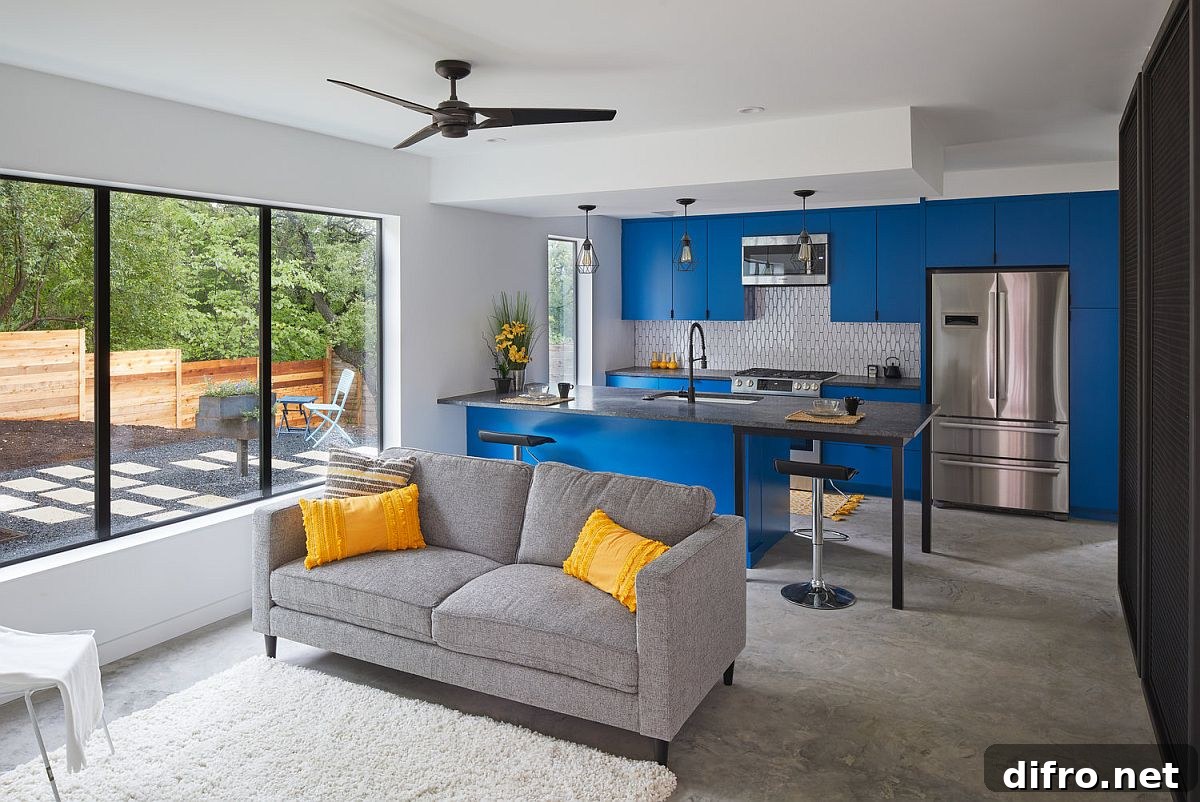
The kitchen forms the centerpiece of the open-plan living space. A series of blue cabinets and a bold blue island anchor the area while a yellow kitchen rug and coordinating cushions introduce a lively secondary hue. These color choices enliven the otherwise restrained interior without overwhelming it. A gray sofa defines the sitting area and offers comfortable, understated seating that complements the brighter accents.
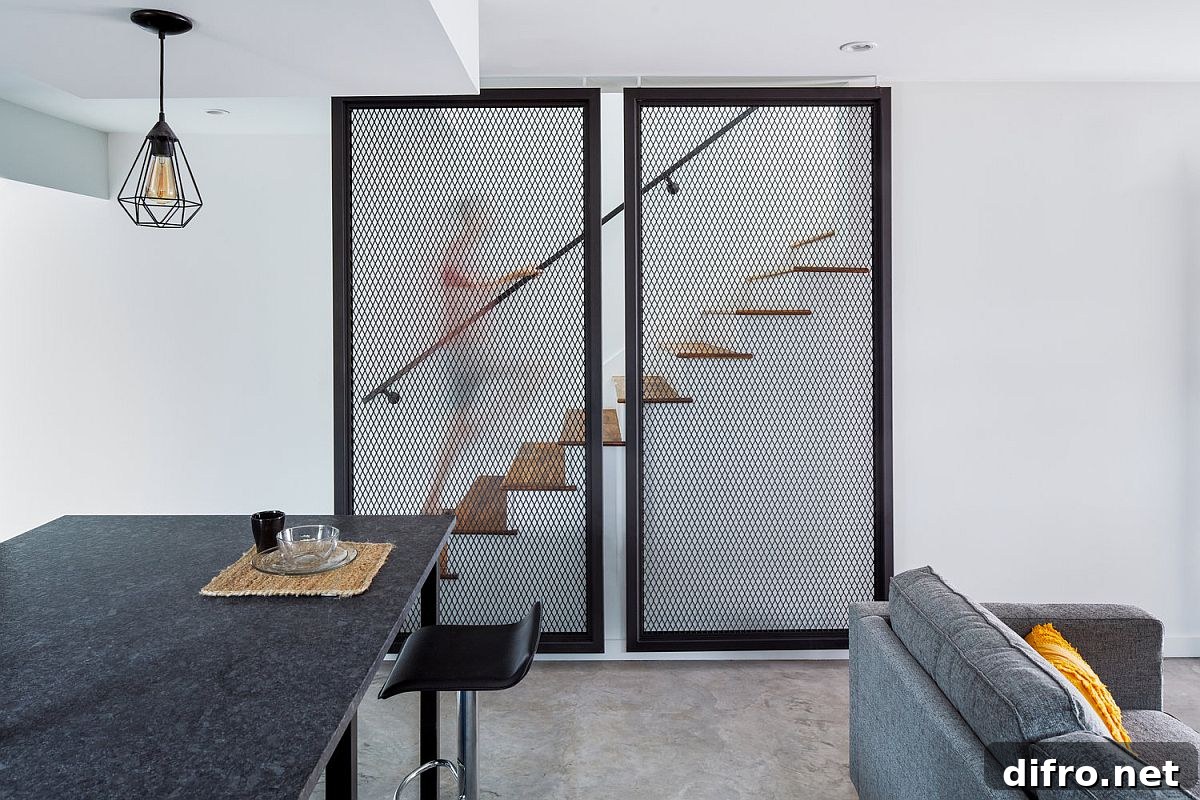
Architectural details support both form and function. A custom metallic mesh screen subtly conceals the contemporary staircase to the upper level, providing a textured, industrial contrast to the softer interiors. The layout uses a dogtrot—a sheltered open passage—to connect indoor and outdoor spaces. This feature enhances cross-ventilation and creates cool, shaded circulation that reduces reliance on mechanical cooling during temperate months.
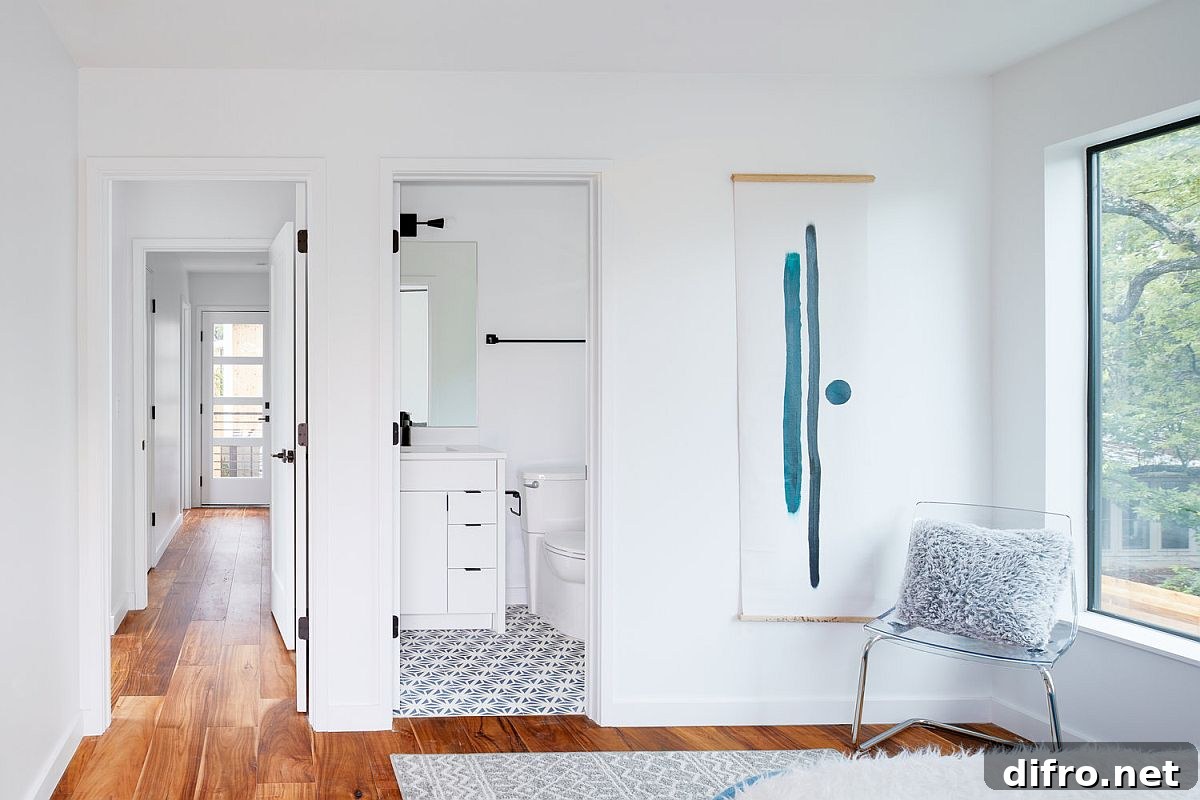
Material transitions are used thoughtfully to define zones: warm wood flooring delineates the bedroom while patterned tiles highlight wet areas like the adjacent bathroom. The bedroom remains clean and minimal, accented with subtle blue touches that echo the kitchen palette, creating a cohesive interior language across the compact plan.
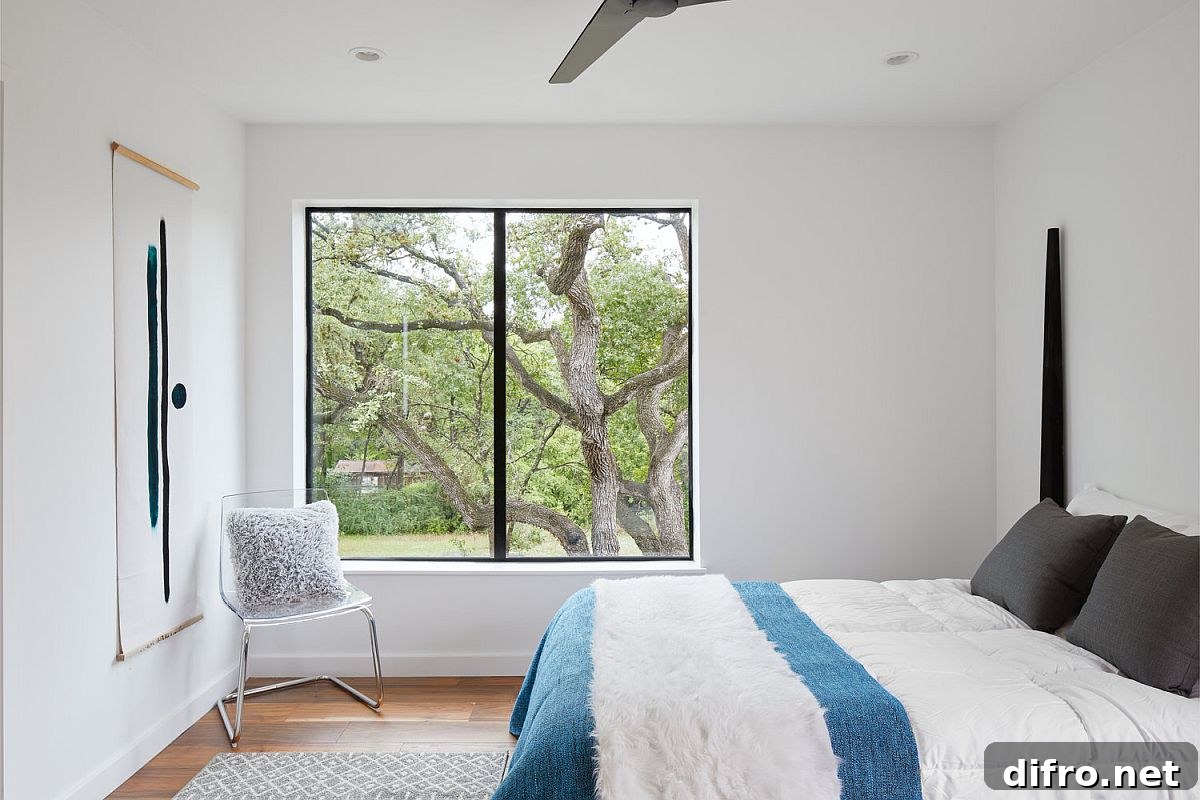
Daylighting and orientation play a central role in the ADU’s environmental strategy. Large windows are concentrated on the north side to maximize even natural light while minimizing solar heat gain during hot summers. This orientation supports passive temperature control and enhances interior comfort. The design also blocks direct sun from the western exposure with architectural elements, protecting living spaces from late-afternoon heat.
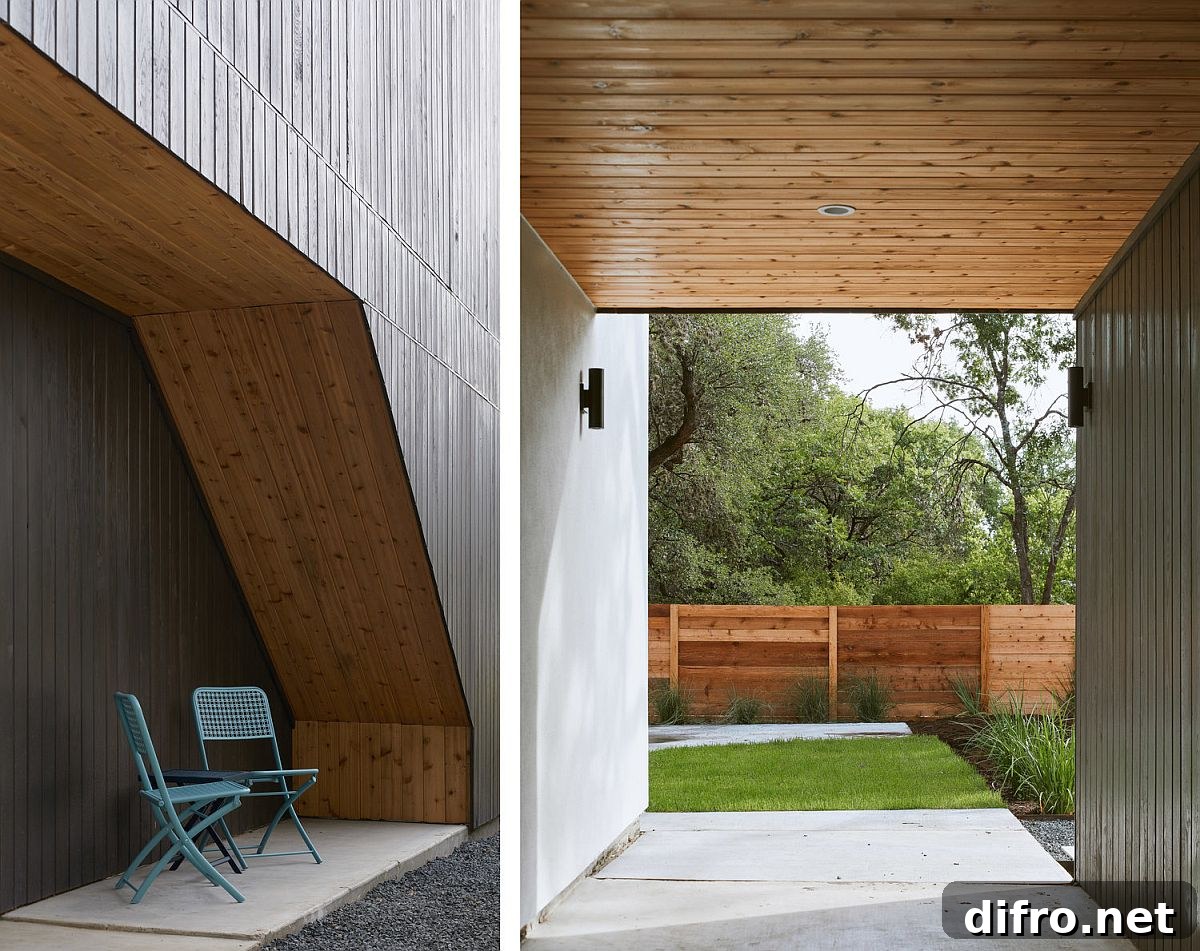
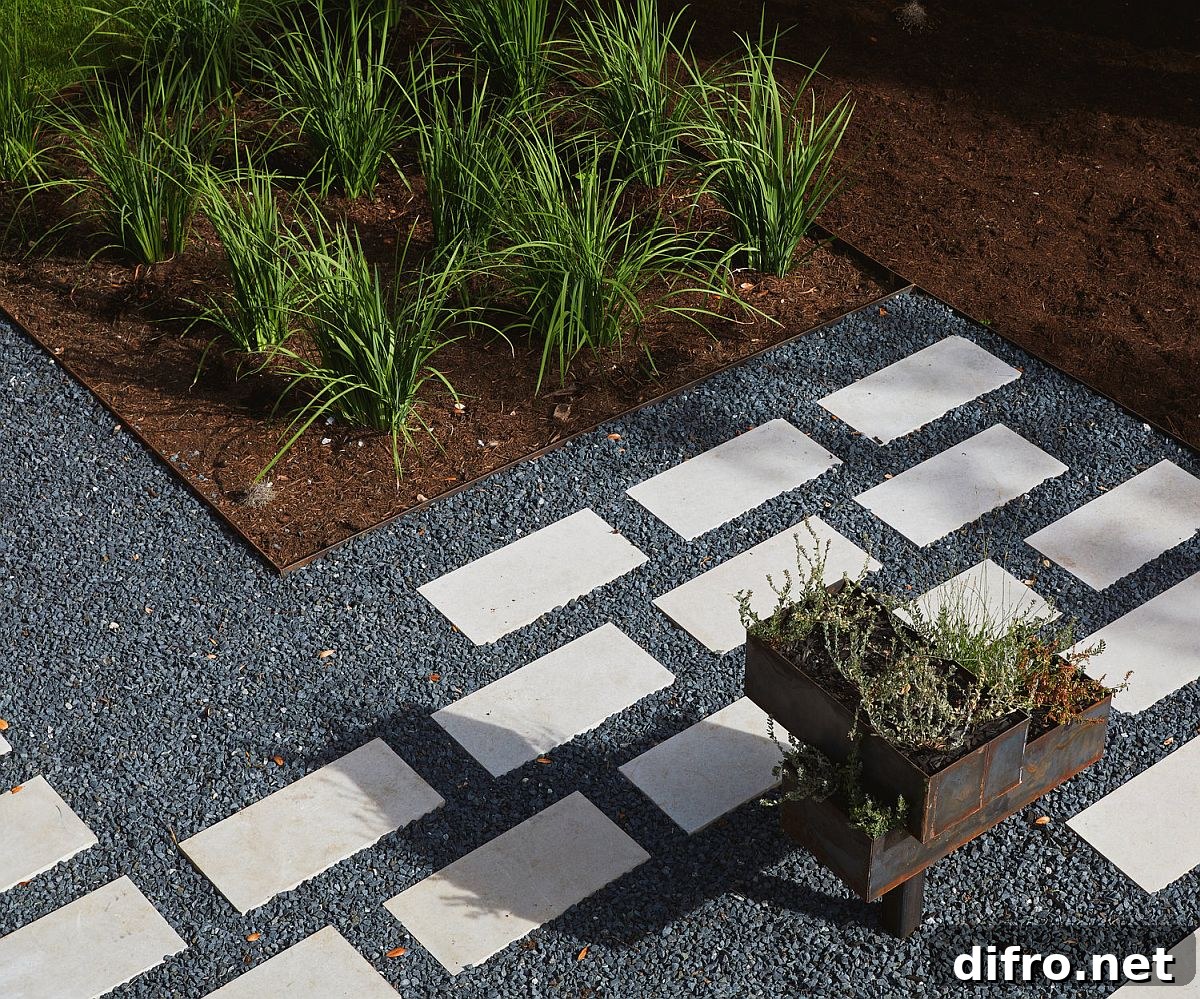
Outside, curated landscaping and preserved heritage trees nestle the ADU into its lot. The designers left mature trees undisturbed, integrating the new building into the site rather than imposing upon it. This respectful approach not only maintains the neighborhood character but also provides natural shade, improves privacy, and enhances the overall street presence.
Large windows are concentrated to the north side of the ADU for plenty of natural lighting while reducing the solar heat gain in the summer and encouraging passive cross-ventilation. A garage blocks a dogtrot and the living area of the house from the west-setting sun…
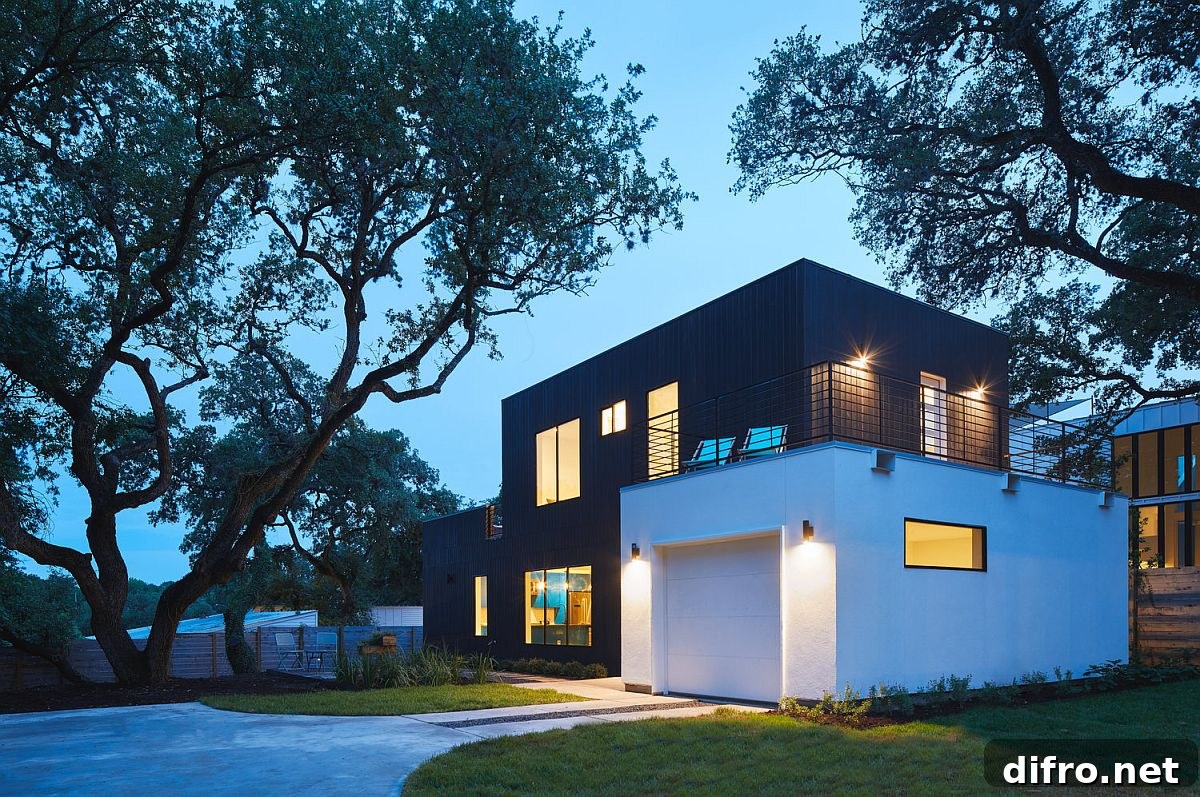
At twilight, the ADU reads as a warm, contained volume within the landscape: the dark exterior tones recede as interior light reveals the careful detailing and material contrasts. The result is a compact yet complete backyard residence that feels both modern and contextually grounded.
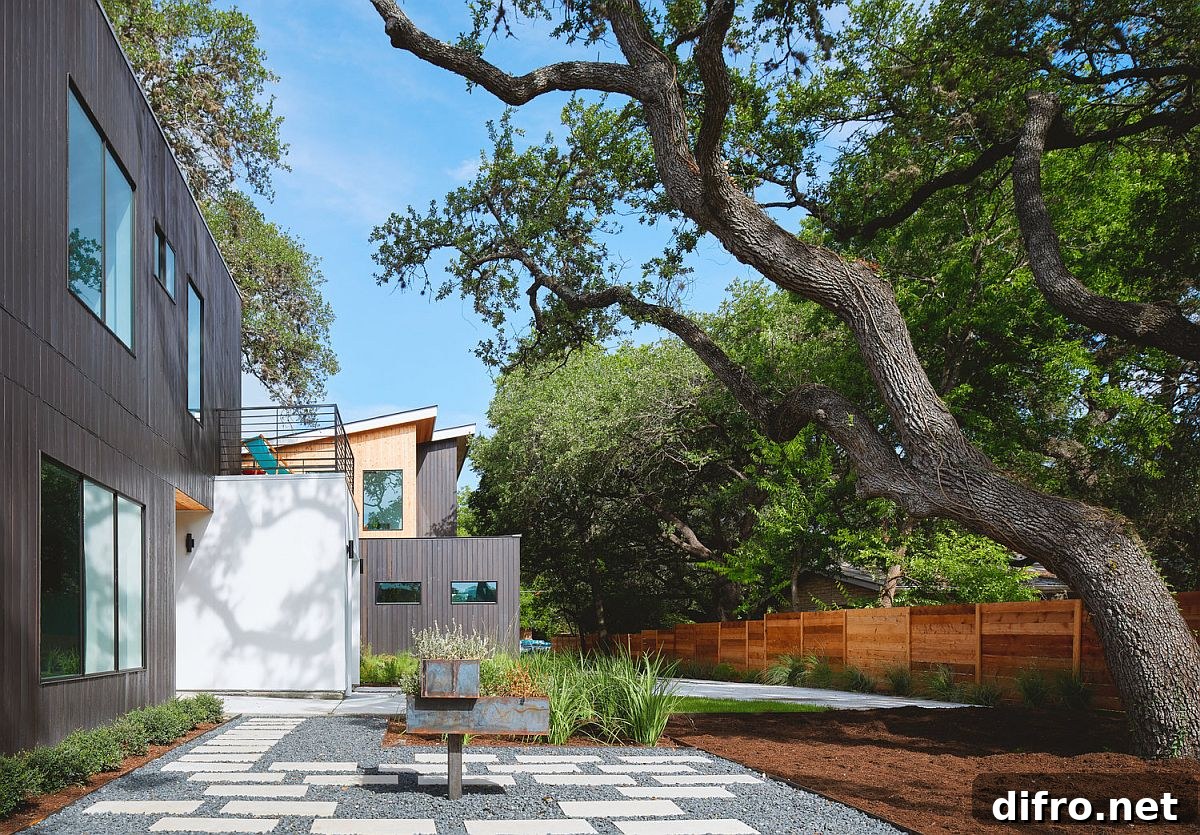
Overall, the Chelsea ADU in Travis Heights is an example of how a small footprint can deliver big design impact—combining smart orientation, material contrast, carefully chosen color accents, and site-sensitive landscaping to create a practical, attractive, and comfortable backyard home in Austin.