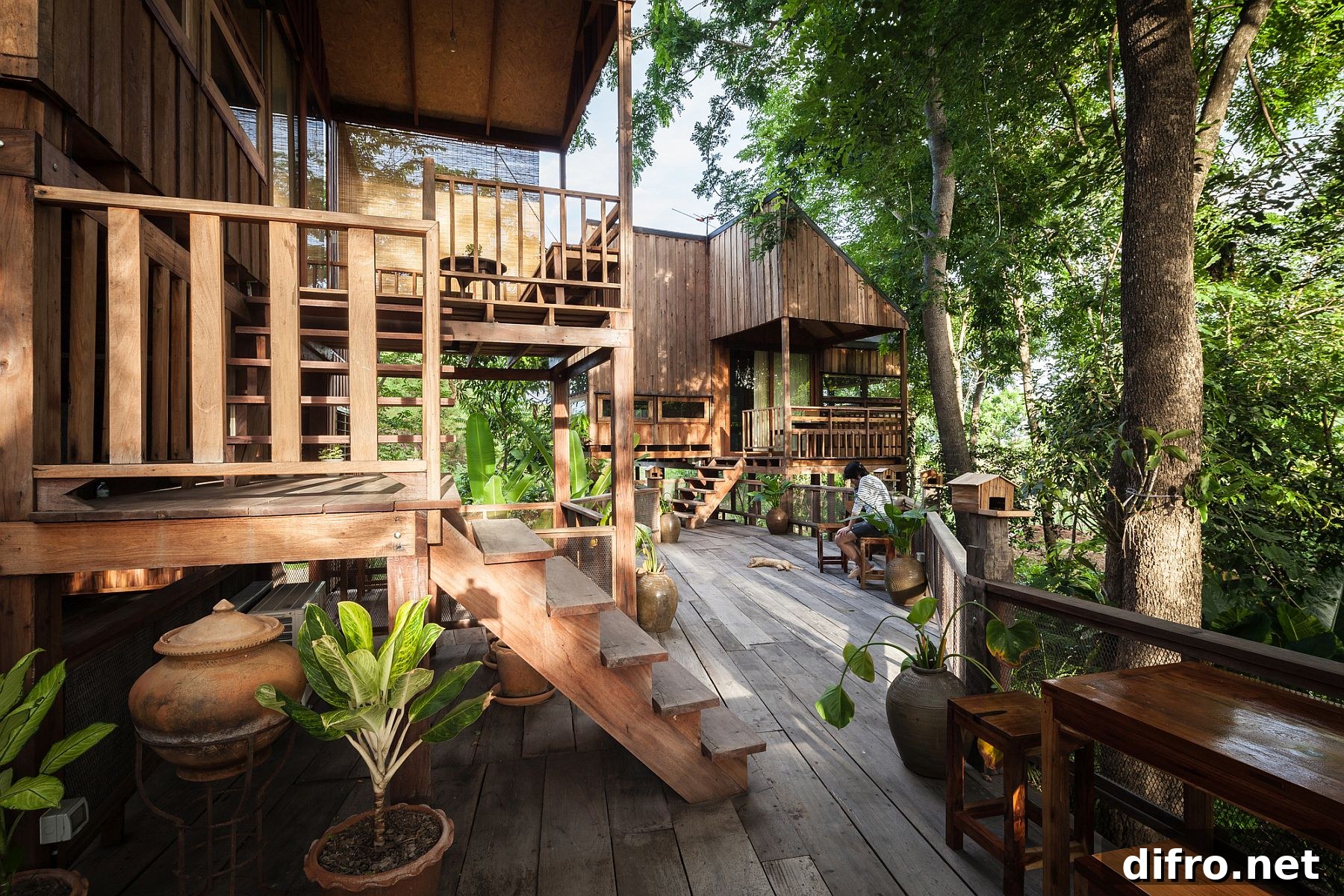
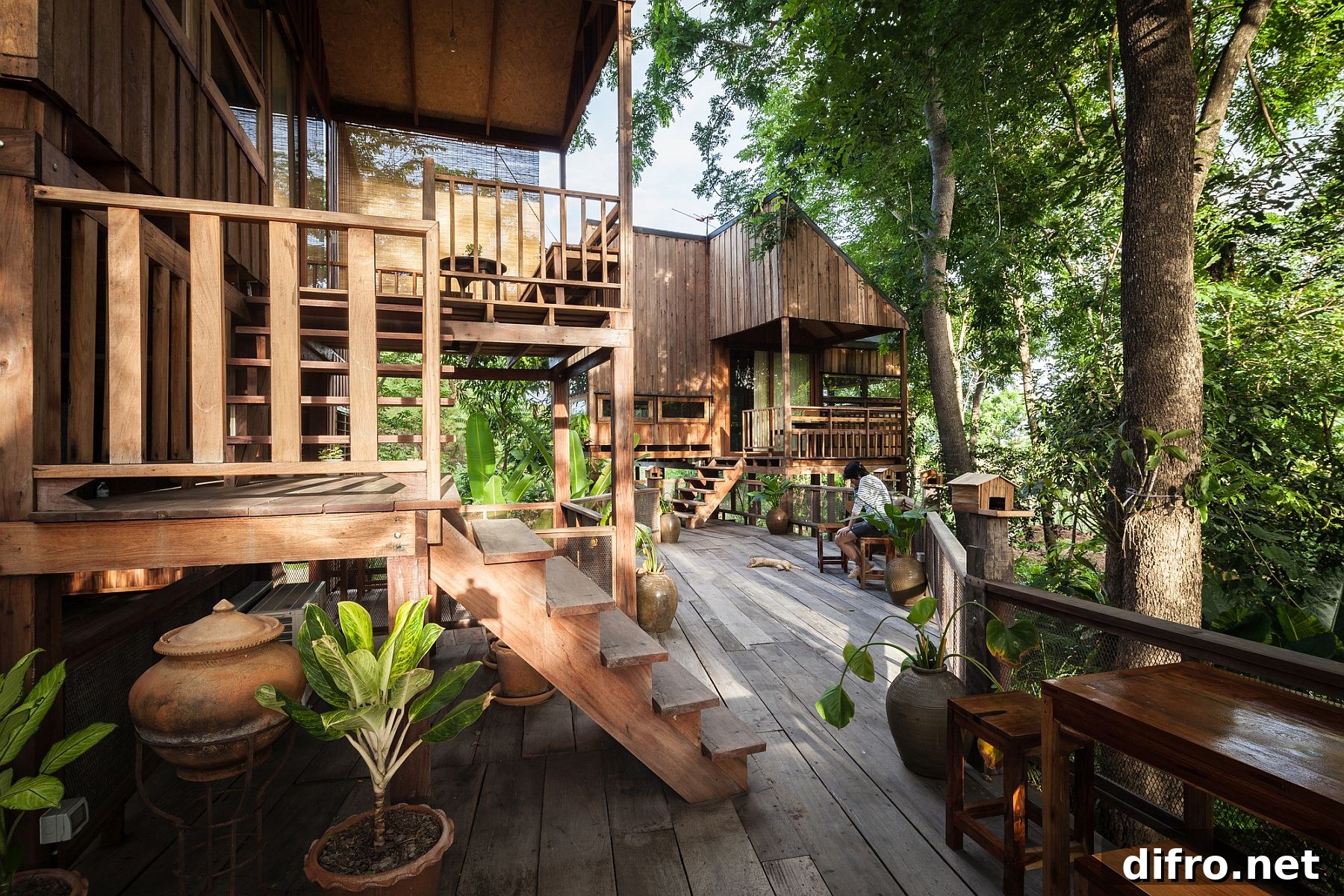
There is a difference between visiting a secluded tropical retreat and bringing that same lush atmosphere home. Designed by Studio Miti for those who want to live immersed in nature, the Forest House in Uthai Thani, Thailand transforms a private lot into a compact tropical woodland, surrounding a cluster of timber treehouses with dense, verdant canopy. The result is a serene, eco-friendly residence that blurs the boundary between indoor comfort and the jungle outside, offering a peaceful living experience among the treetops.
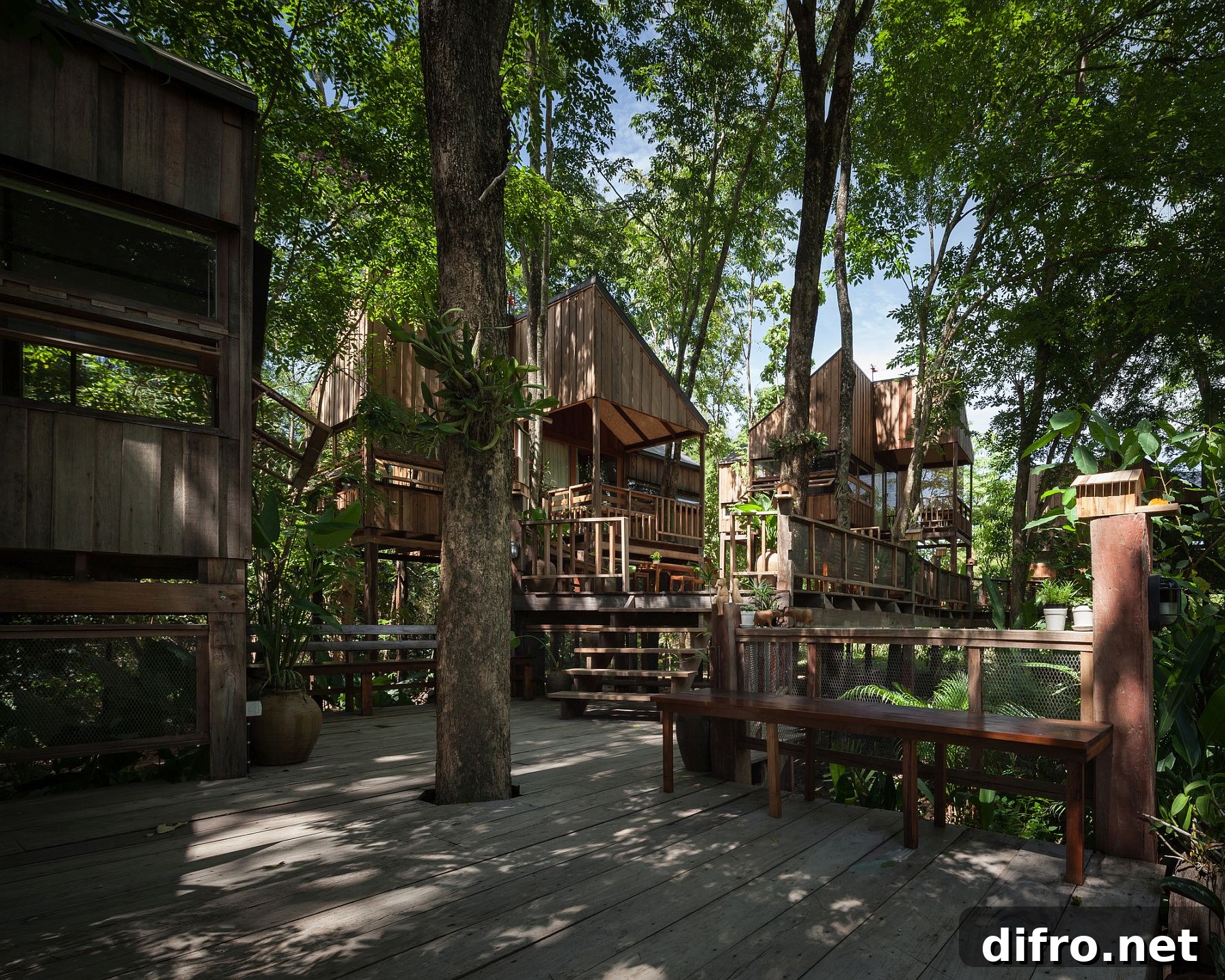
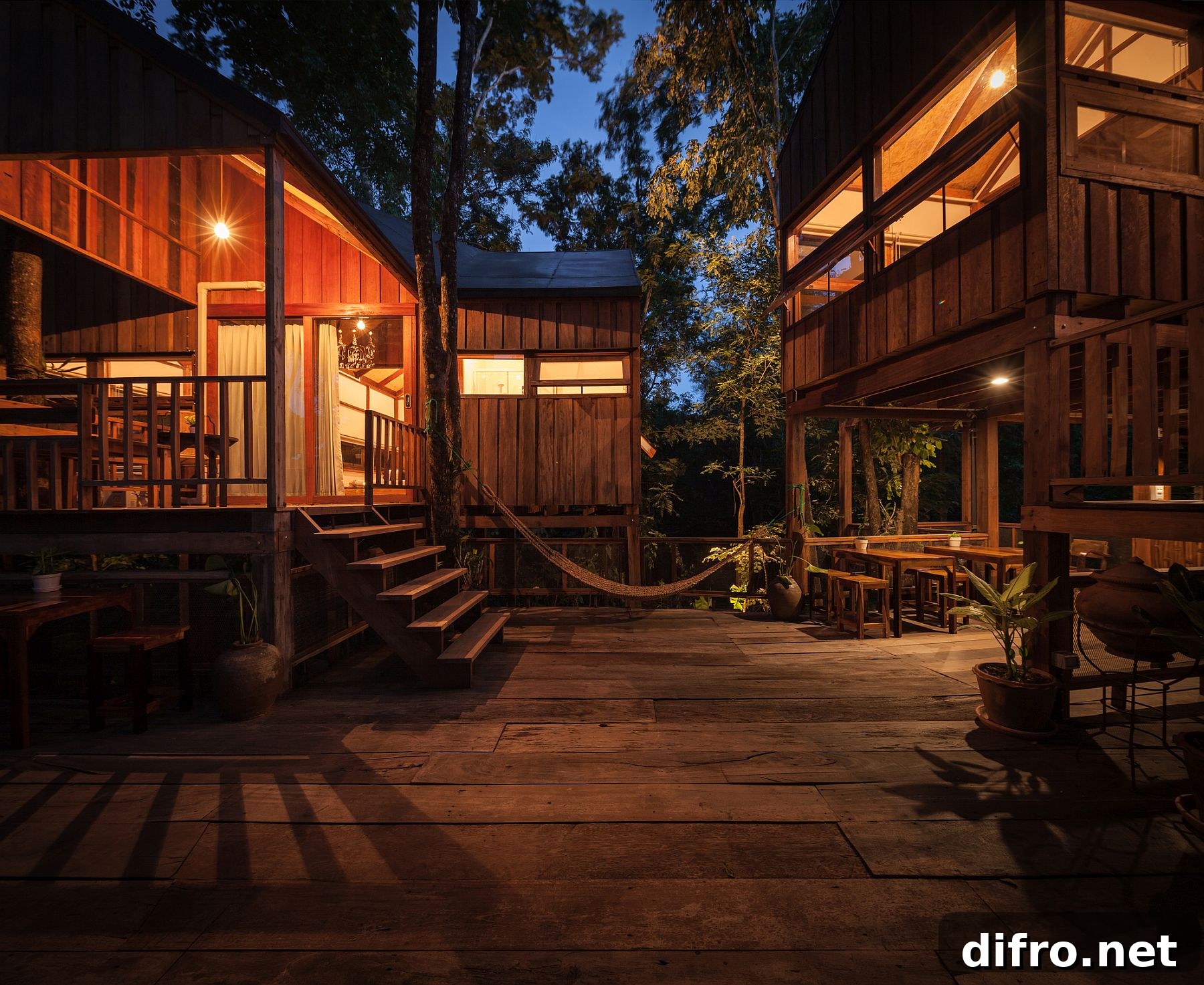
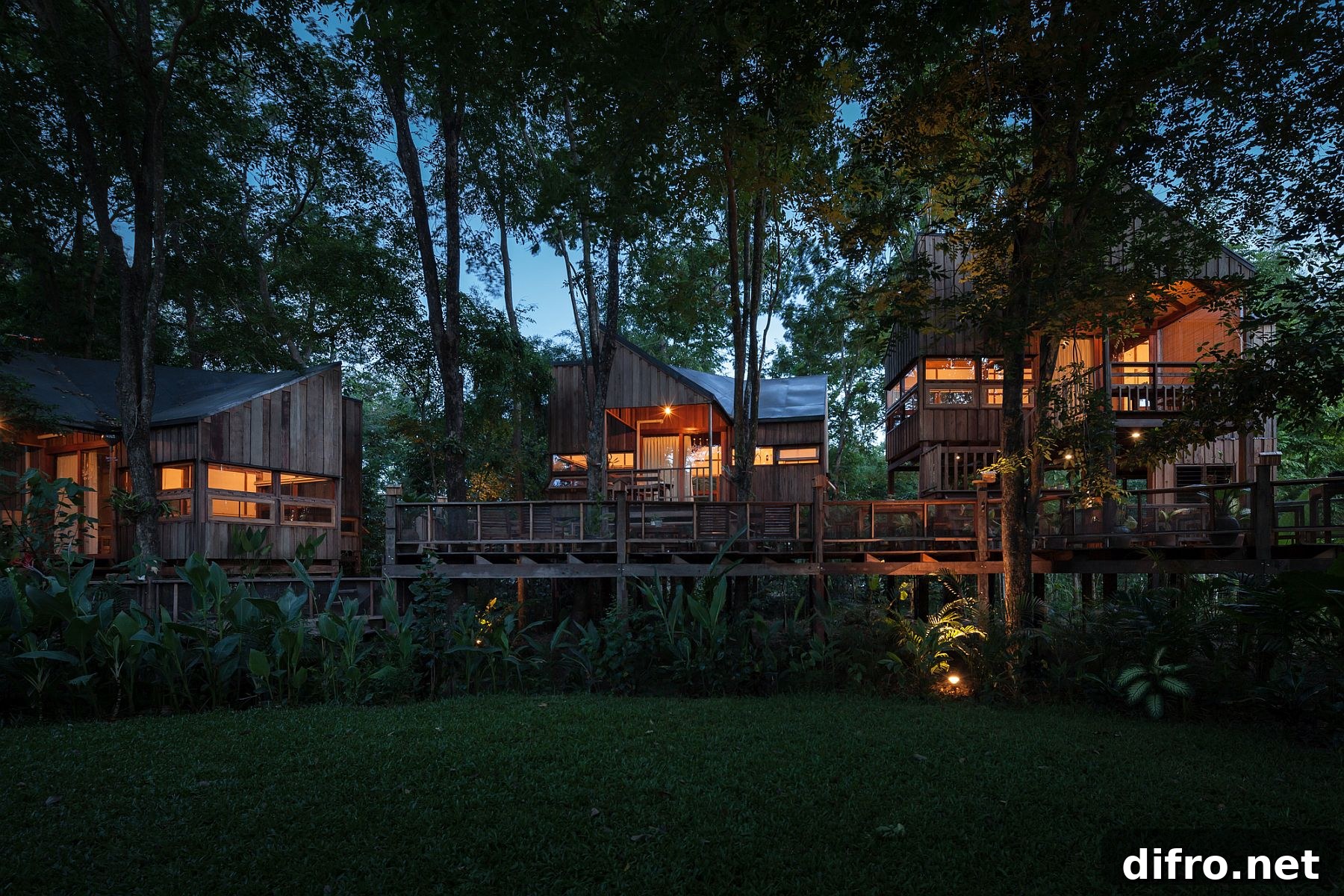
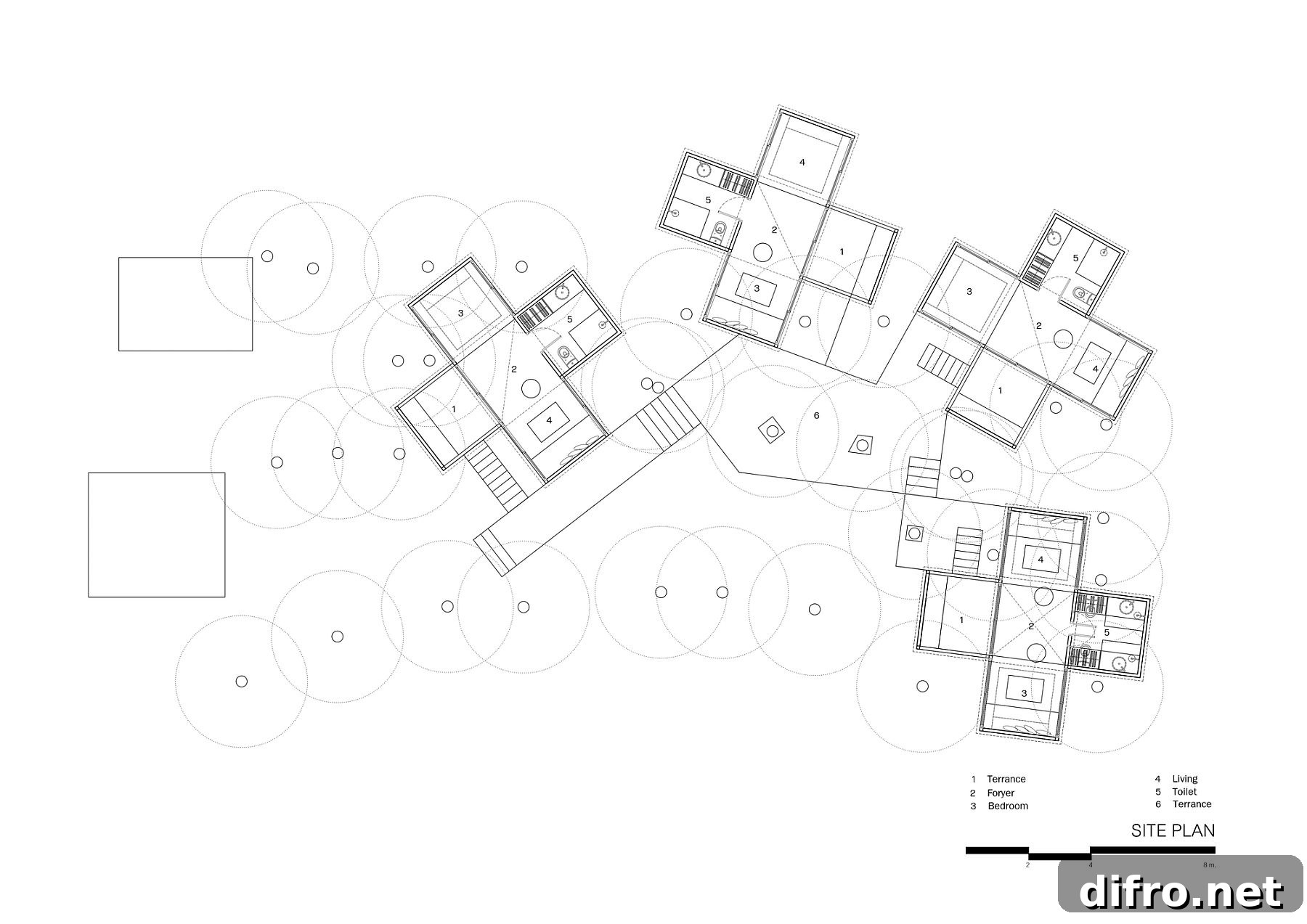
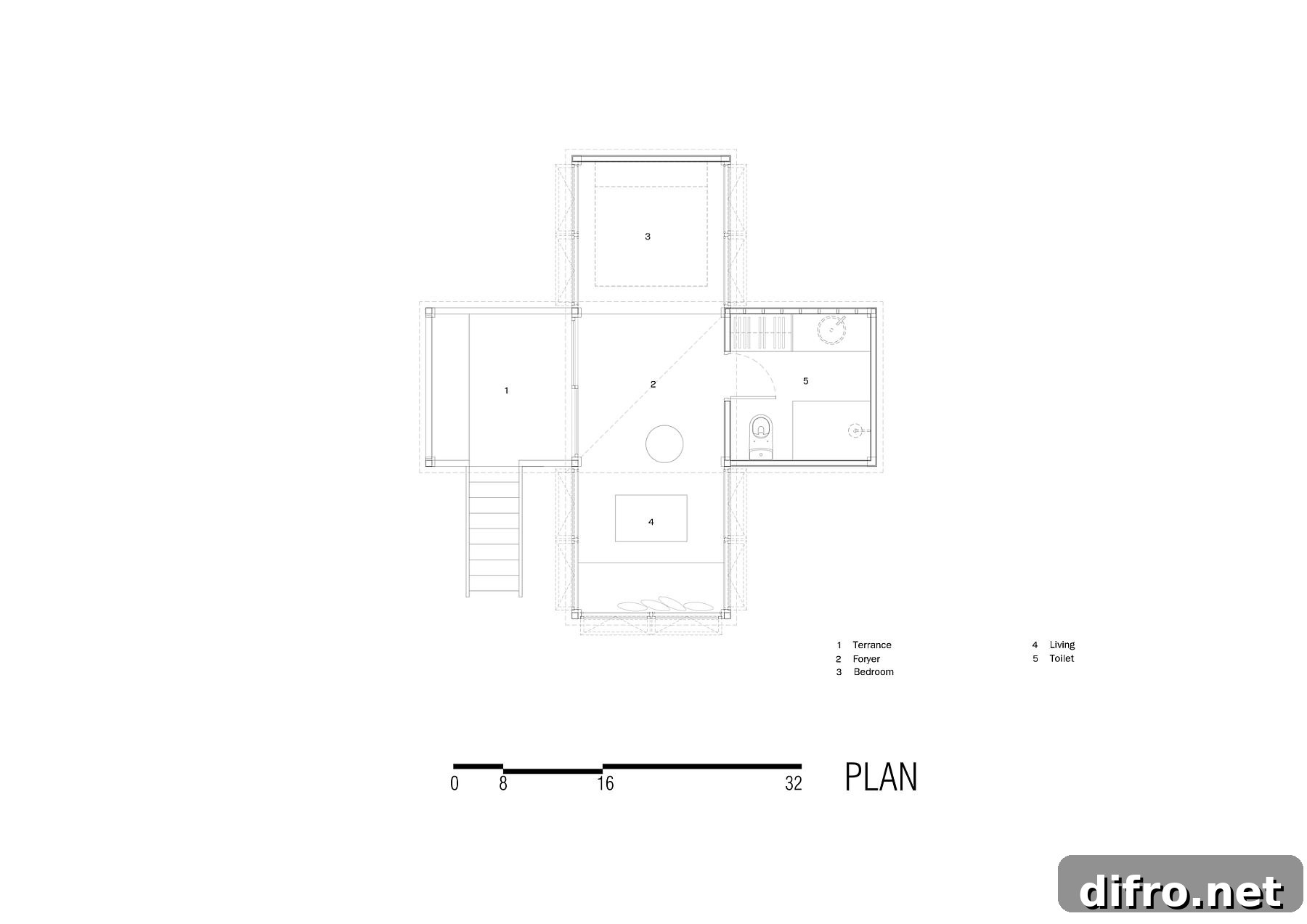
The development consists of four individual structures arranged around a shared terrace. This communal deck links each unit with elevated walkways that weave through the foliage, providing sweeping views while maintaining privacy. Each dwelling has a cross-shaped floor plan: the living area, bedroom, entrance and bathroom extend from a central core, so every space opens toward the green surroundings. This layout encourages natural ventilation, generous daylight and a constant visual connection to the trees and sky.
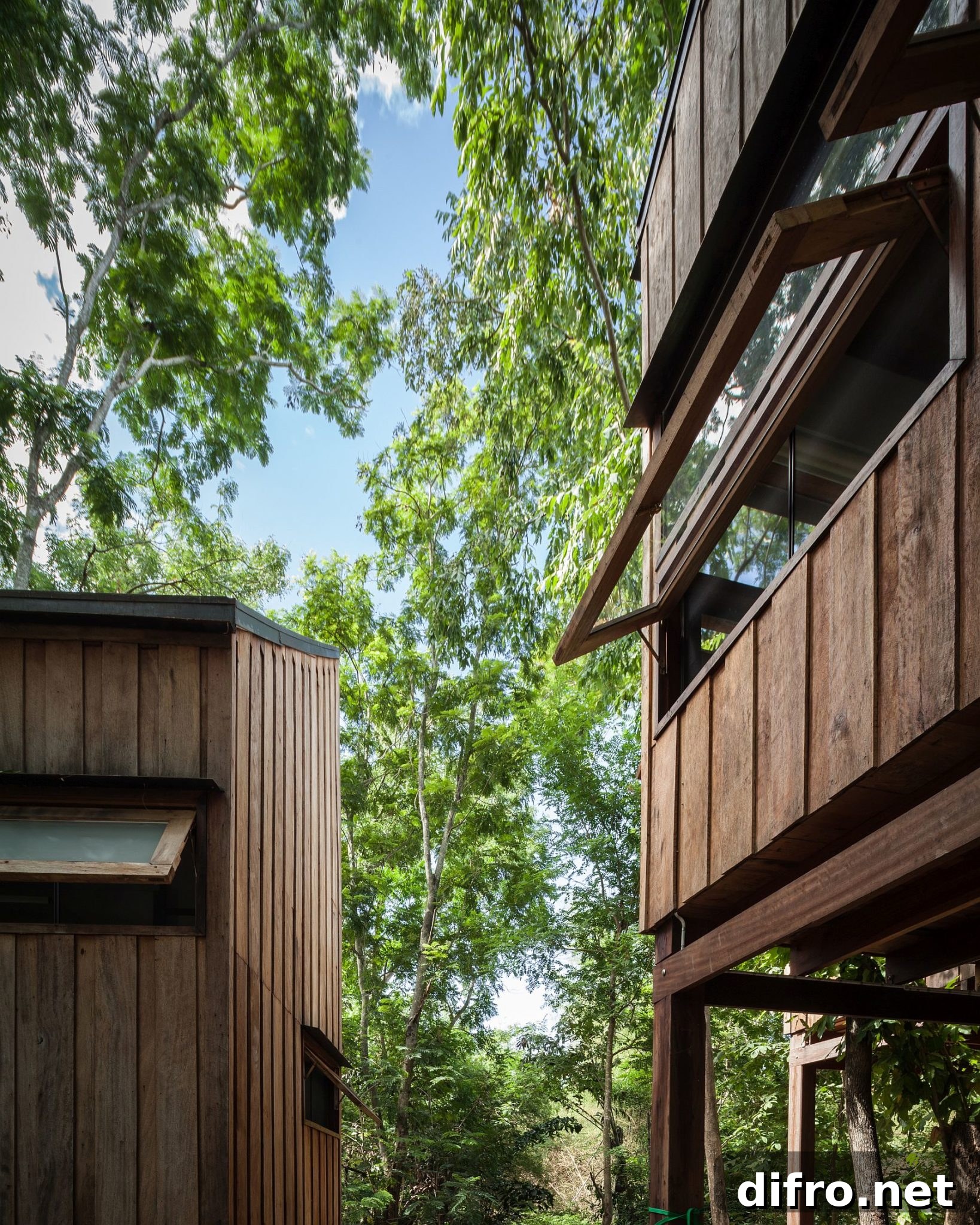
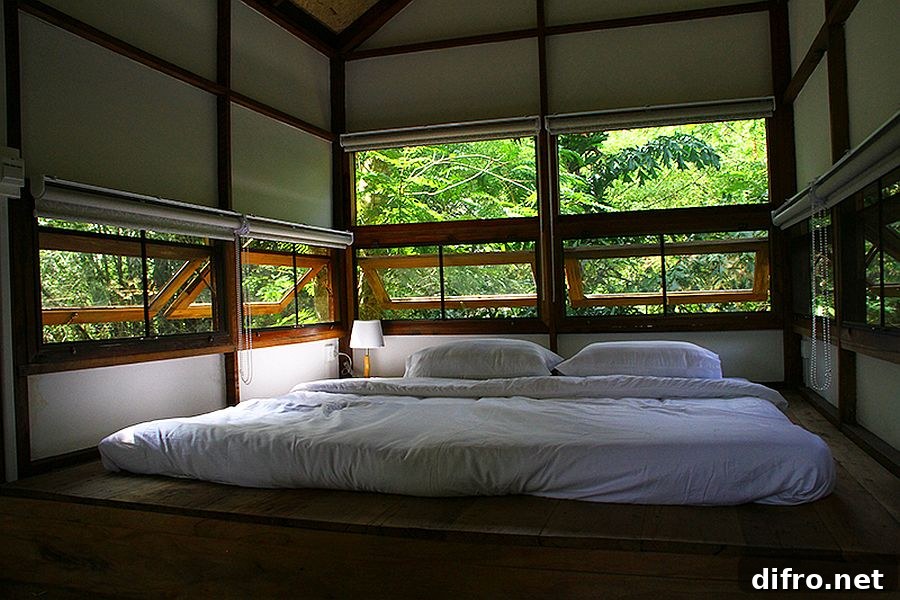
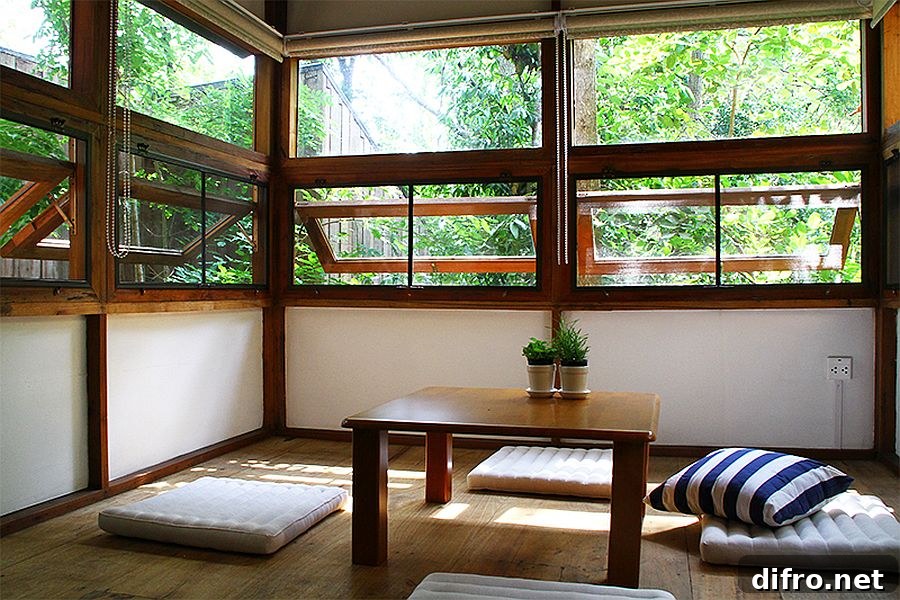
Interiors are intentionally simple and restrained, favoring natural materials and straightforward finishes to reduce visual clutter and minimize environmental impact. The design approach relies on local building techniques and craftsmen, limiting on-site disruption while reinforcing a sense of place. Keeping decoration minimal ensures that the forest remains the primary visual focus, with every room arranged to frame the canopy, the dappled light and the sounds of the jungle.
Preservation of existing vegetation was a priority during construction. Mature trees—including specimens noted to be over 30 years old—were carefully protected to maintain the lot’s established ecosystem and immediate privacy. Integrating these mature trees into the master plan not only shapes the project’s character but also demonstrates a commitment to sensitive, site-driven design. Elevated walkways and terraces minimize root disturbance while allowing inhabitants to move through the landscape without breaking the forest floor.
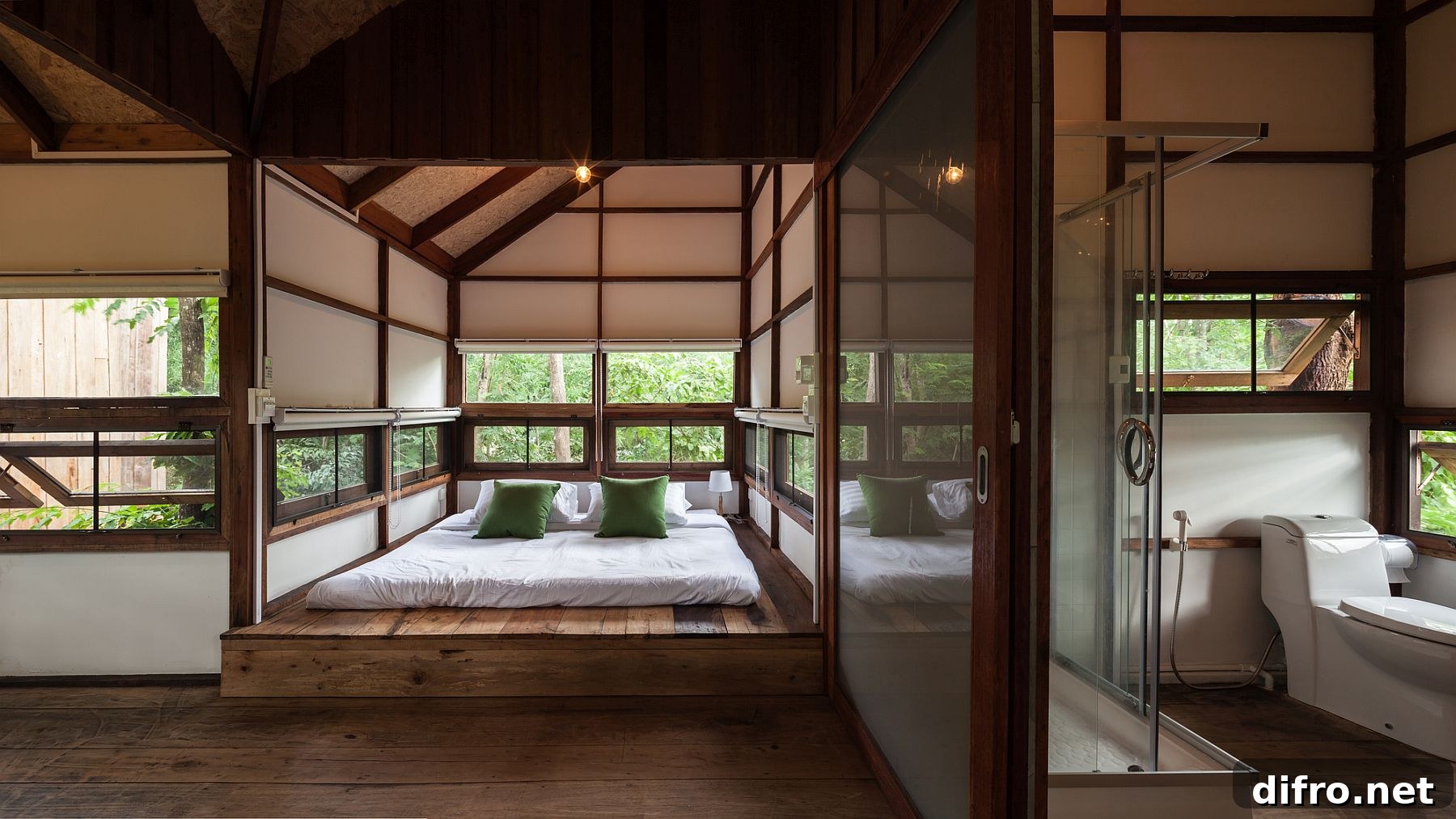
Outdoor living is emphasized with open decks, shaded sitting areas and features such as a hammock that promote relaxation beneath the canopy. These spaces function as extensions of the compact interiors and are ideal for informal gatherings, quiet reading or simply listening to the sounds of the surrounding nature. Retractable blinds and thoughtfully placed screens allow residents to balance privacy with views, offering flexible control over light and sightlines.
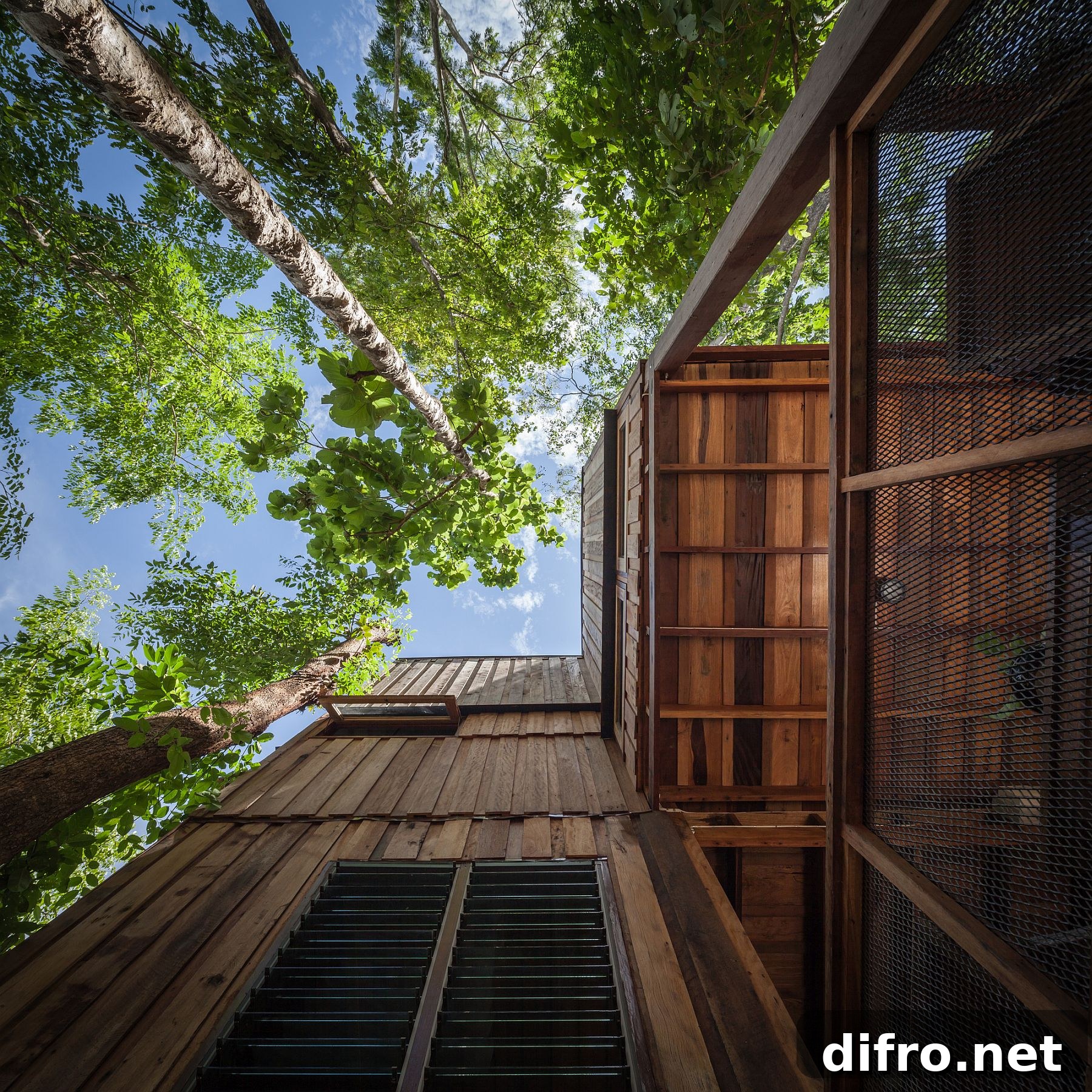
Functional details support the project’s sustainable ethos. Local construction methods reduced the need for heavy machinery and extensive site grading, and material choices emphasize timber and other regionally appropriate finishes. The compact plan minimizes the building footprint and concentrates shared amenities on the central terrace, which enhances both community and connection to the landscape while reducing resource use per unit.
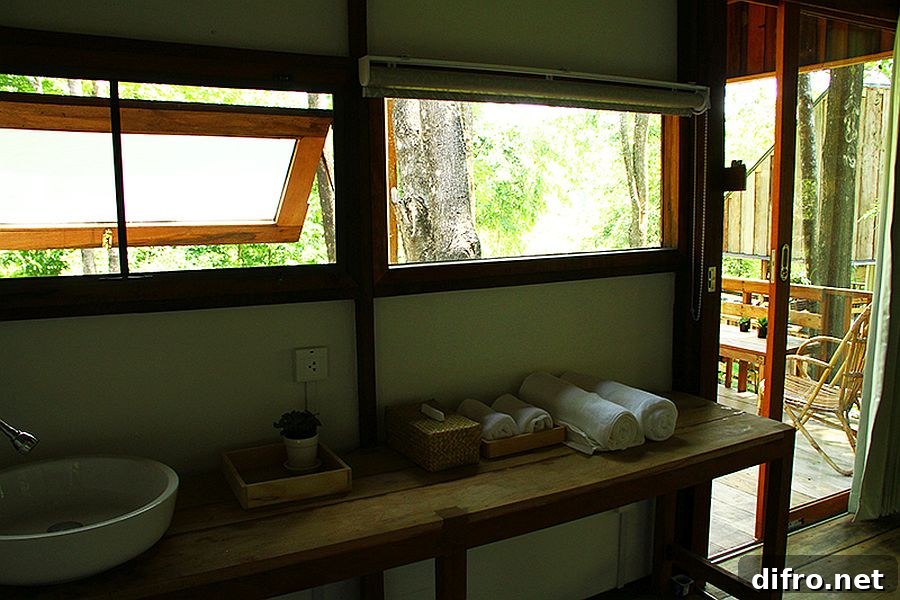
Inside, informal sitting nooks and a tea room furnished with floor cushions reflect a relaxed lifestyle tailored to its tropical setting. Bathroom and service spaces are compact and efficiently arranged within the cross-shaped plan, maximizing usable living area and preserving sightlines to the outdoor canopy. The attached floor plans and site plan illustrate how the individual units relate to one another and to the preserved trees, showing a thoughtful balance of private and communal zones.
The Forest House in Uthai Thani stands as an example of sustainable, site-sensitive design: modest in scale, generous in connection to nature, and crafted to preserve the existing landscape while offering comfortable modern living. By combining local construction methods, a compact footprint and thoughtful spatial planning, the project balances environmental responsibility with a relaxed tropical lifestyle. Photography credit: art4d magazine / Ketsiree Wongwan.