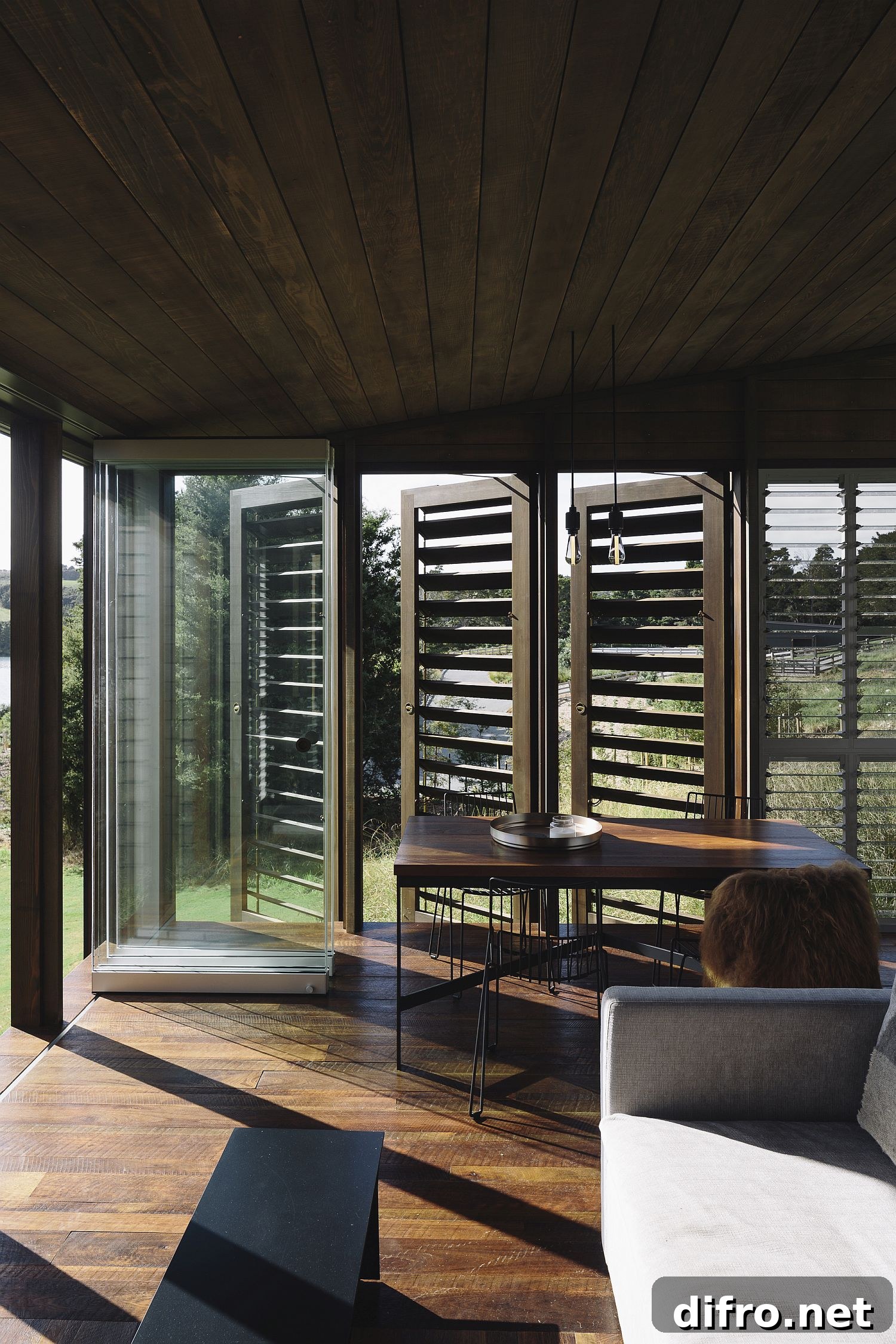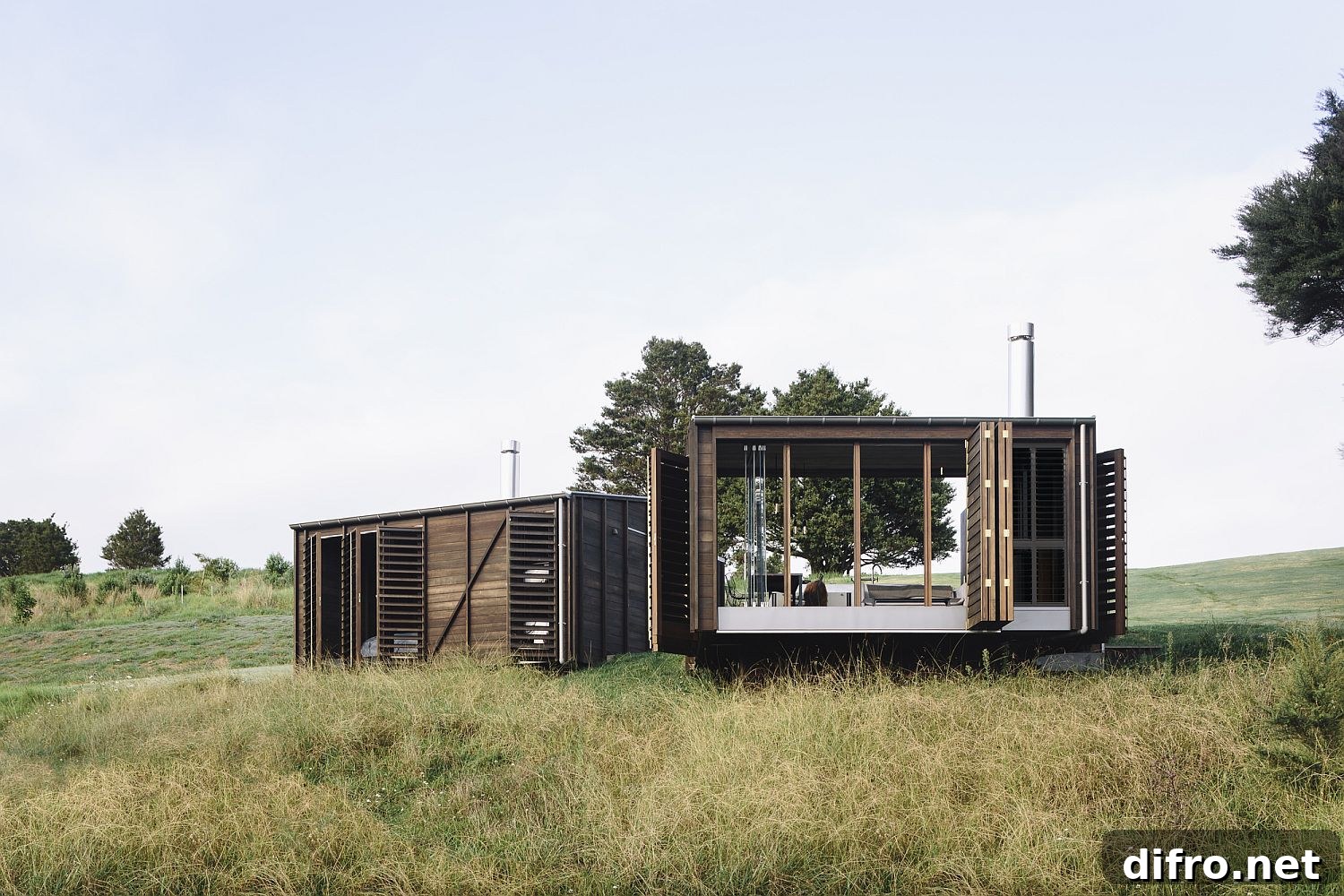
The Camp is a modest name for a getaway that quietly delivers an exceptional connection to the landscape of the Tawharanui Peninsula. Designed by Fearon Hay Architects, this compact wooden cabin uses timber shutters and a restrained material palette to create an elegant, adaptable retreat. Situated on a sloping site beside the water, the project is composed of two primary volumes: one accommodates living and communal areas, while the other contains private sleeping spaces. The arrangement is straightforward, and movement through the cabins feels organic and unforced.
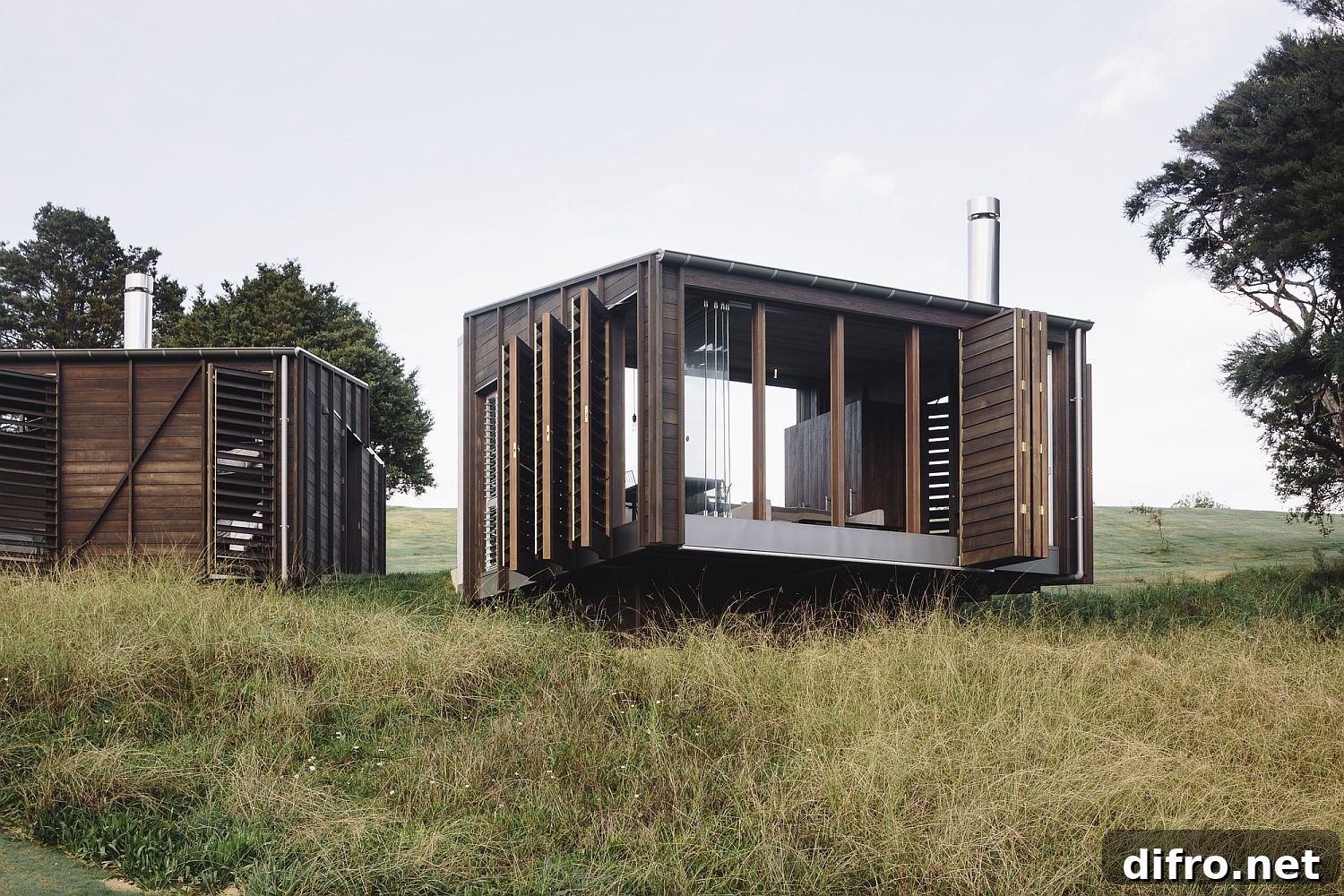
Minimalism and simplicity define the cabin’s character. Interiors are deliberately pared back so the surrounding bush, shoreline and sky become the dominant features. The threshold between inside and outside is intentionally blurred: generous openings and carefully placed timber shutters allow views and breezes in, while giving occupants control over light, privacy and ventilation. The shutters, alongside timber surfaces finished in natural oil, respond to seasonal changes—filtering sun in summer, admitting warmth in cooler months and offering a tactile, low-maintenance finish that feels at home in the bush setting.
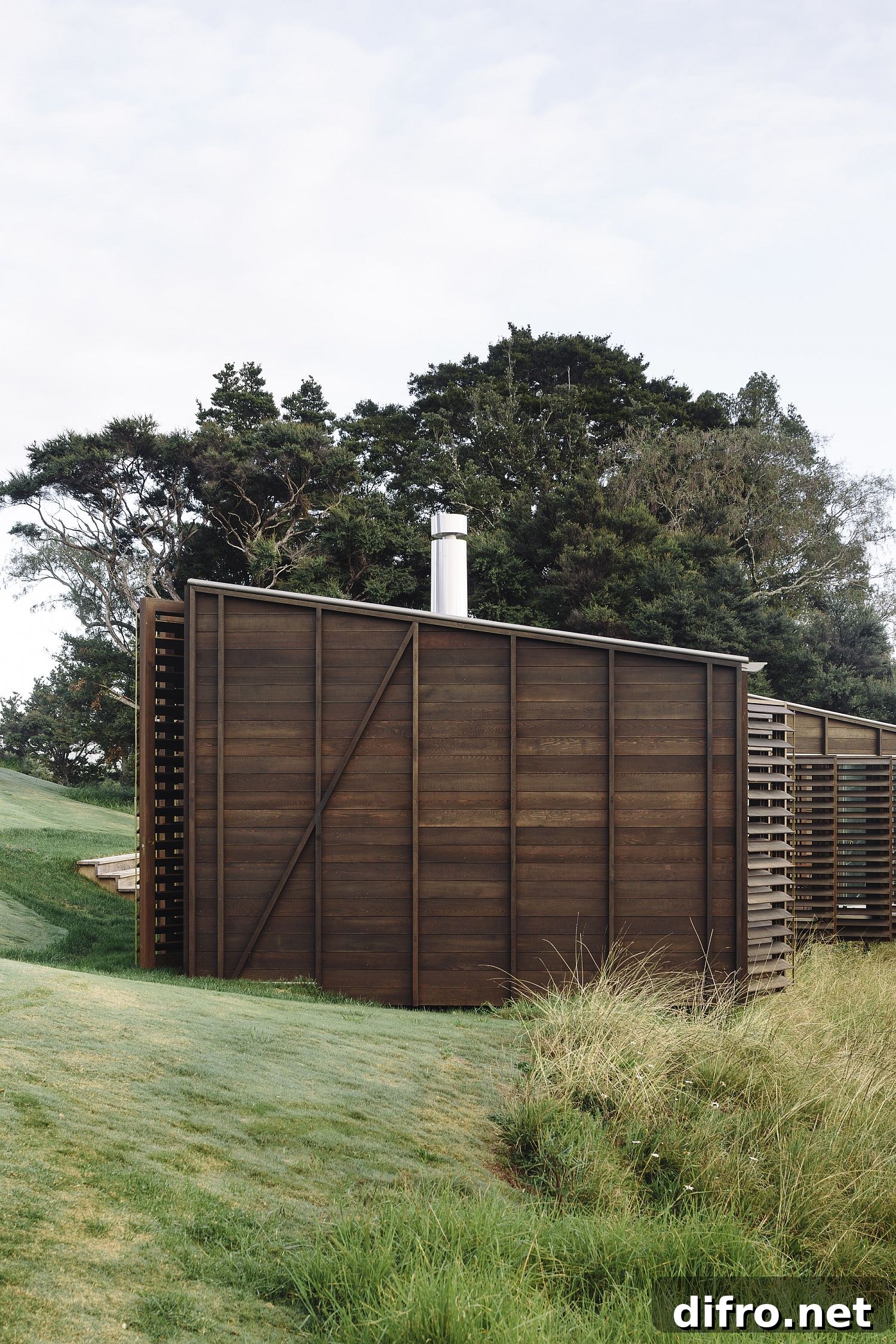
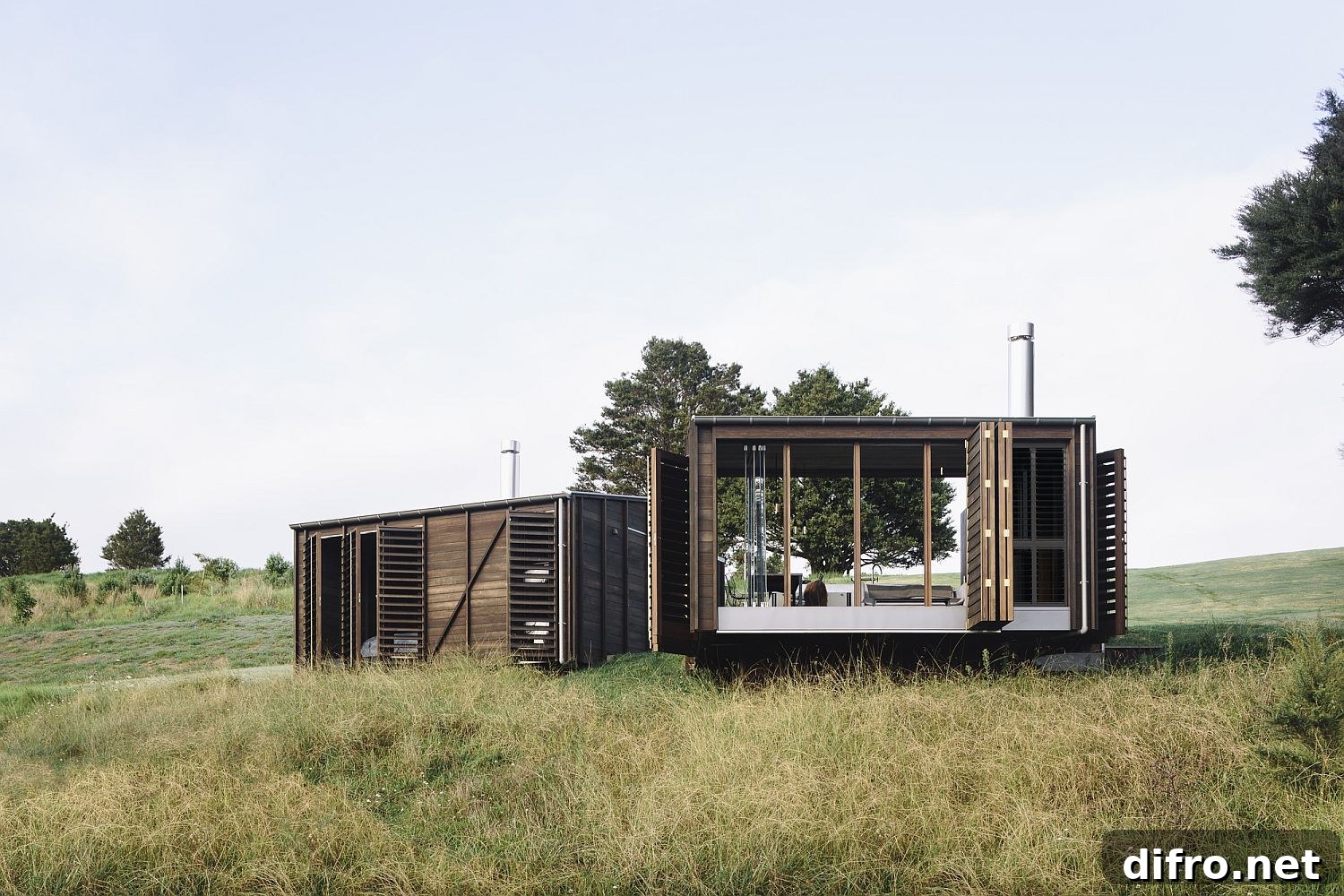
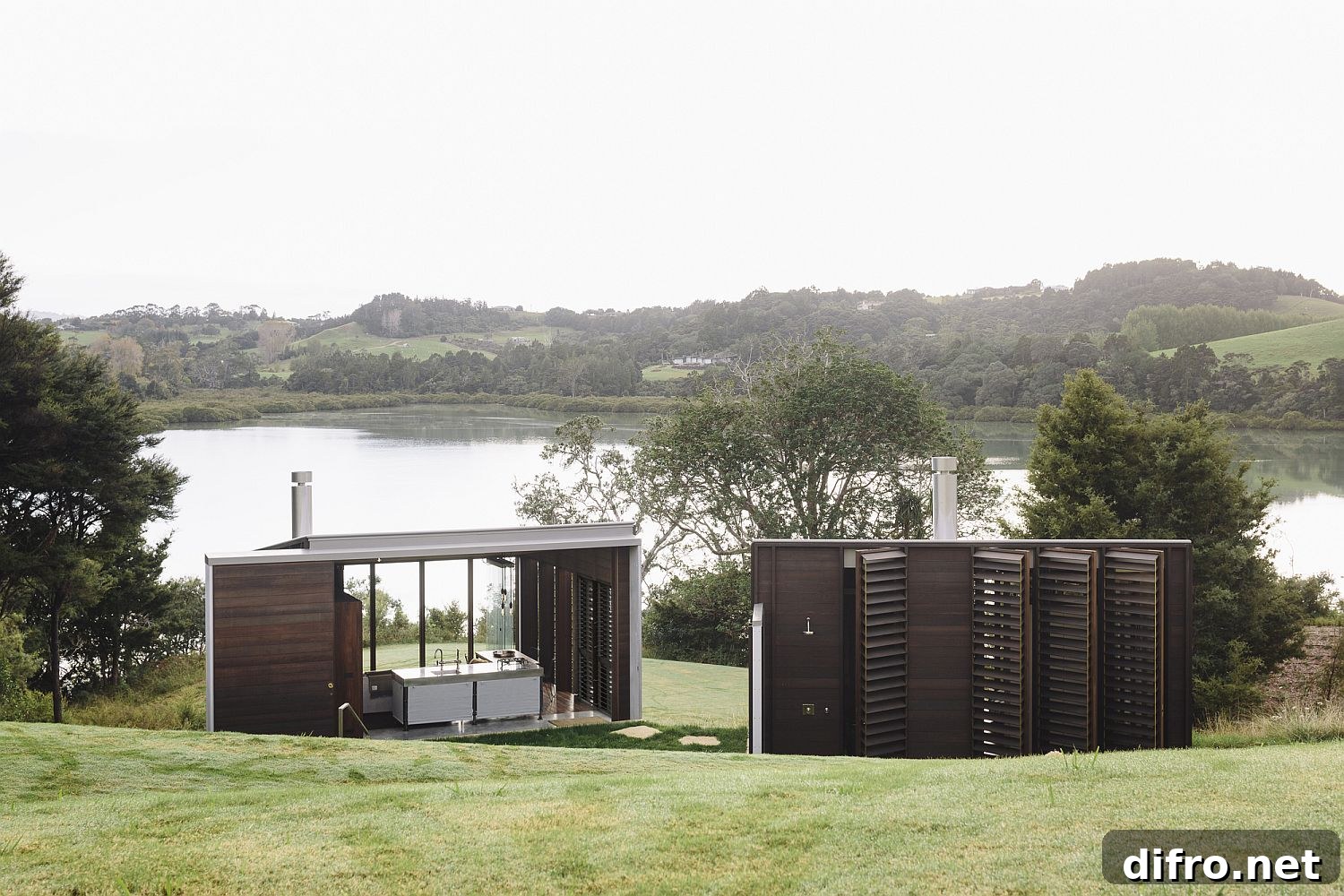
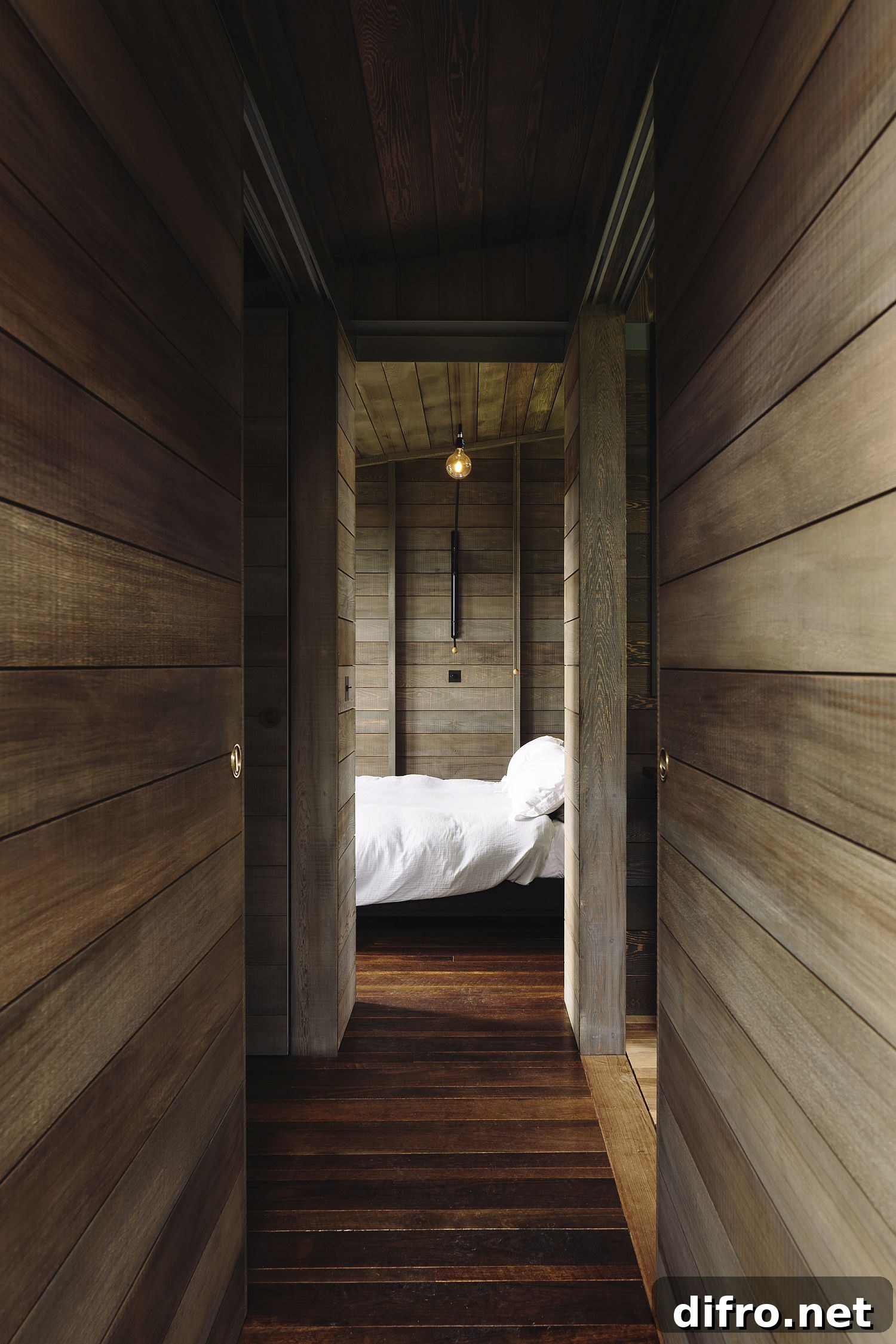
The interior spatial sequence reinforces a sense of retreat without complication. Living spaces open toward the view and fold back to form sheltered corners, while the sleeping cabin feels intentionally private yet visually linked through framed sightlines and walkways. Timber detailing, from the framework to joinery, is finished with natural oil that both highlights grain and offers resilience against coastal conditions. These choices create a cohesive aesthetic that respects the site and ages gracefully.
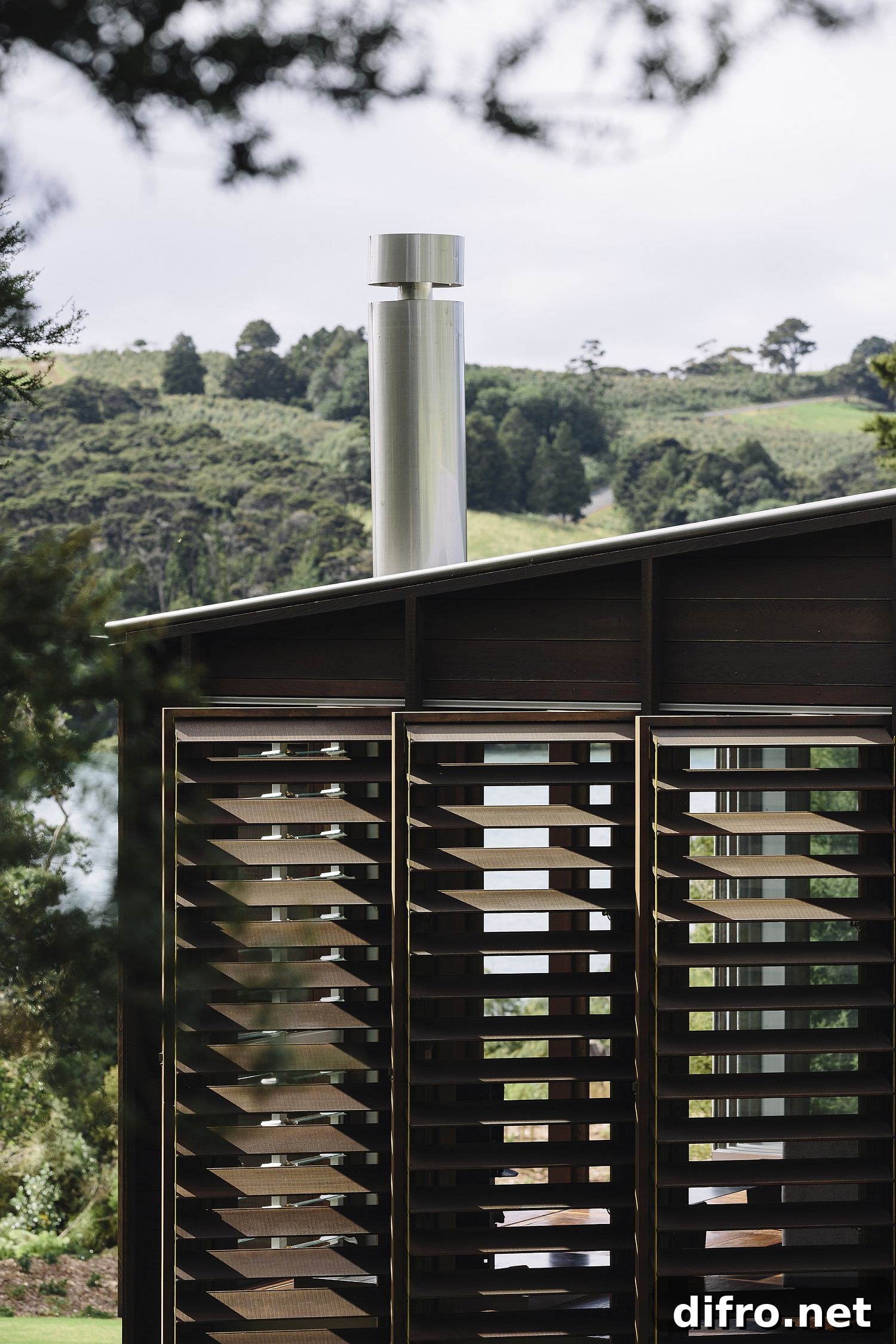
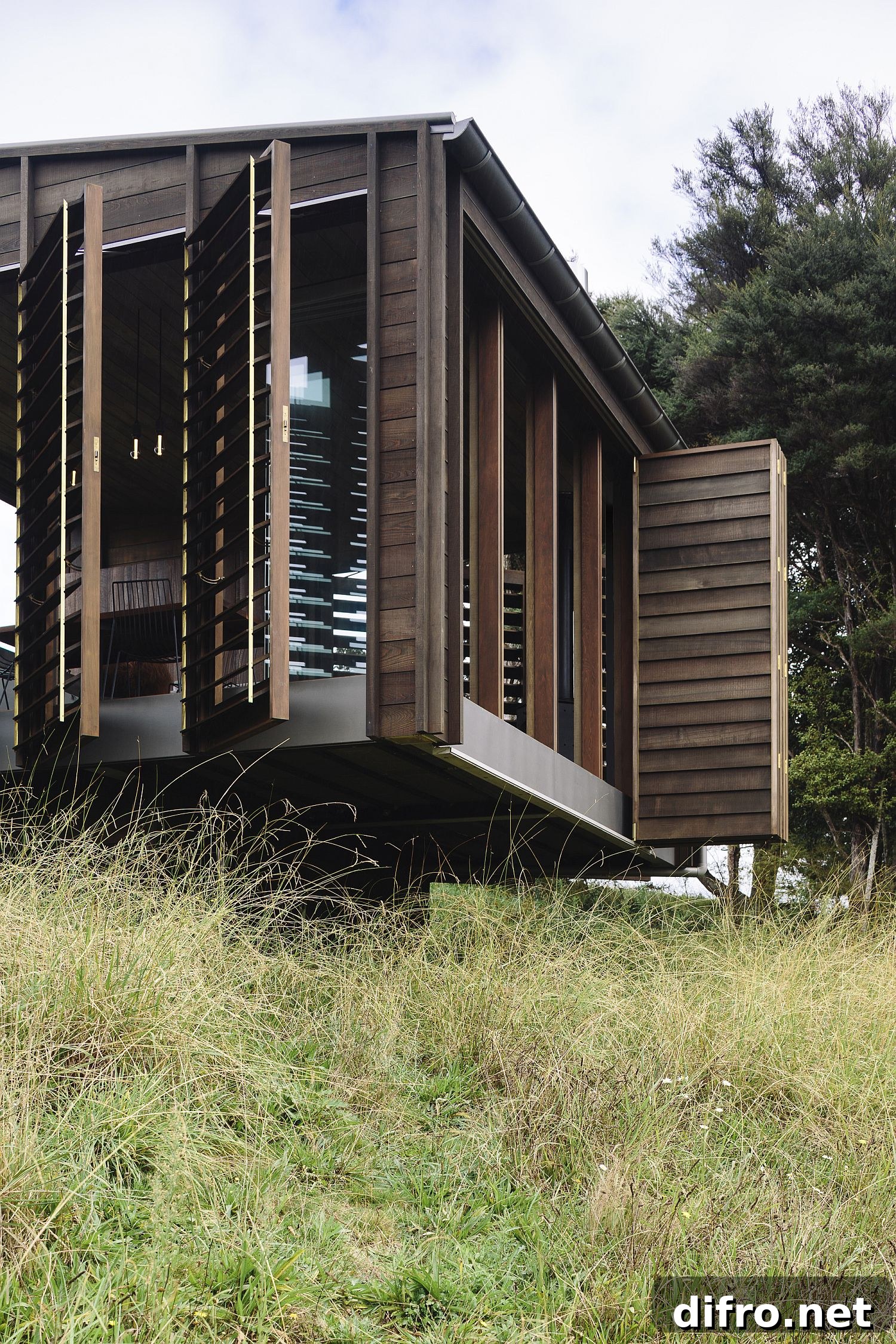
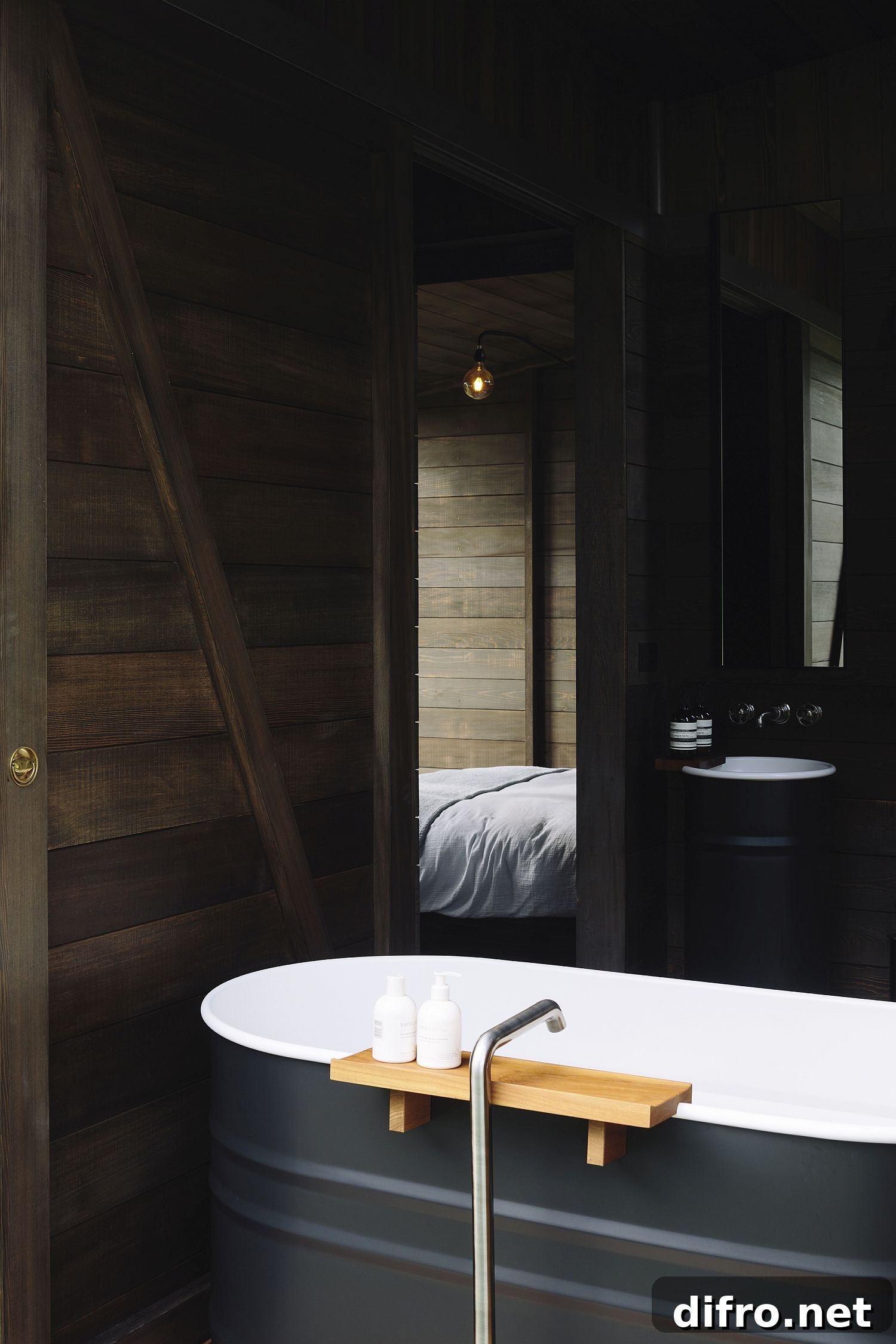
Comfort is understated: the bedroom, positioned to take advantage of the best views, includes a bathtub located just a few steps away so occupants can relax while remaining connected to the landscape. Movable walls enable flexible spatial arrangements and varying degrees of openness, while thoughtful lighting schemes—referred to here as smart lighting—provide subtle ambiance after dusk. Together these elements complete a small but carefully considered retreat designed to be both durable and timeless. [Photography: Simon Wilson]
RELATED: Red, Wood, Glass and Gorgeous View: Exquisite Cabin Sandefjord
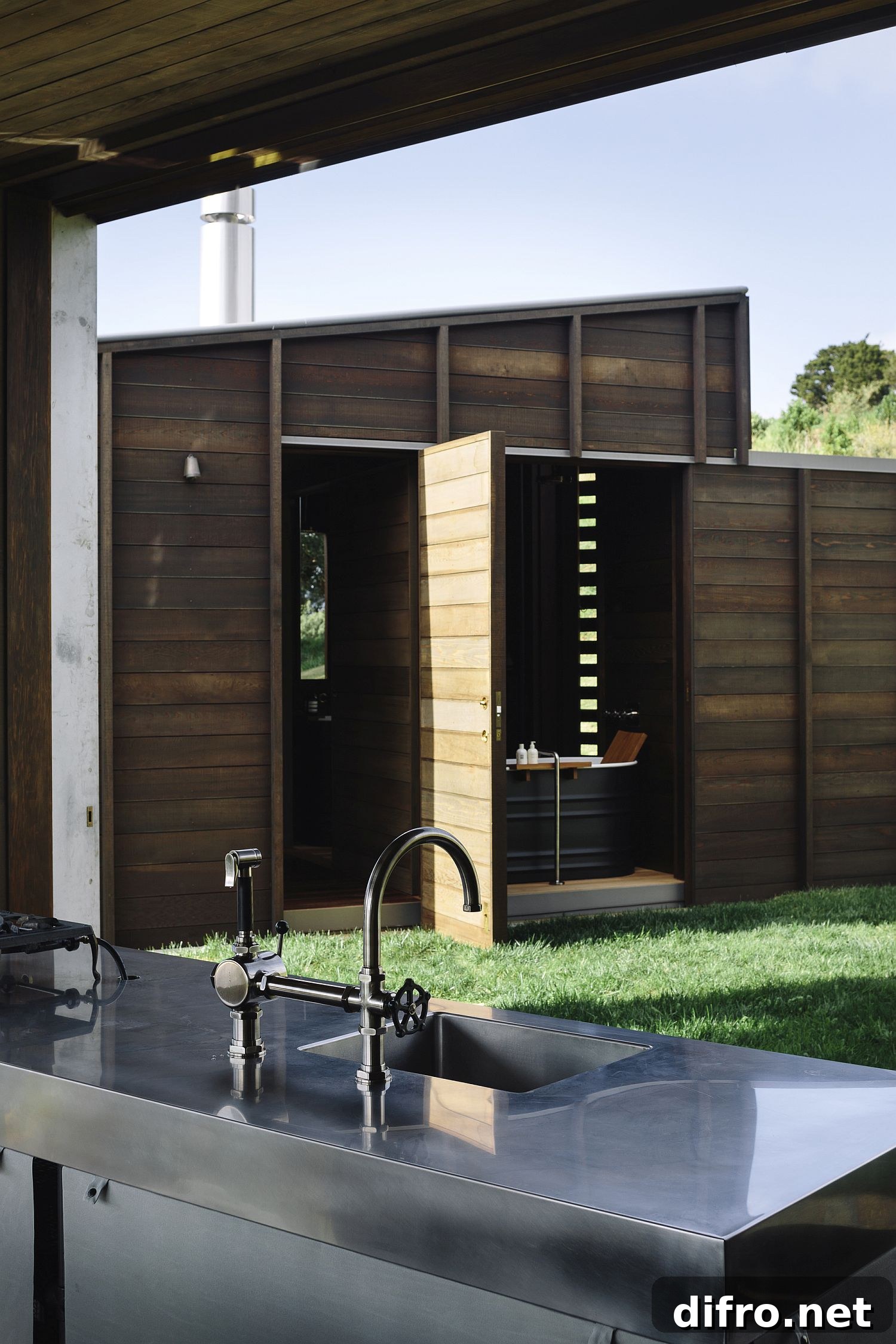
The Camp is an exercise in subtlety: modest in scale but generous in its relationship to place. Thoughtful detailing, material honesty and adaptable elements such as shutters and movable walls allow the cabin to respond to changing weather and occupant needs, while retaining a quiet, refined presence within the peninsula’s natural setting.