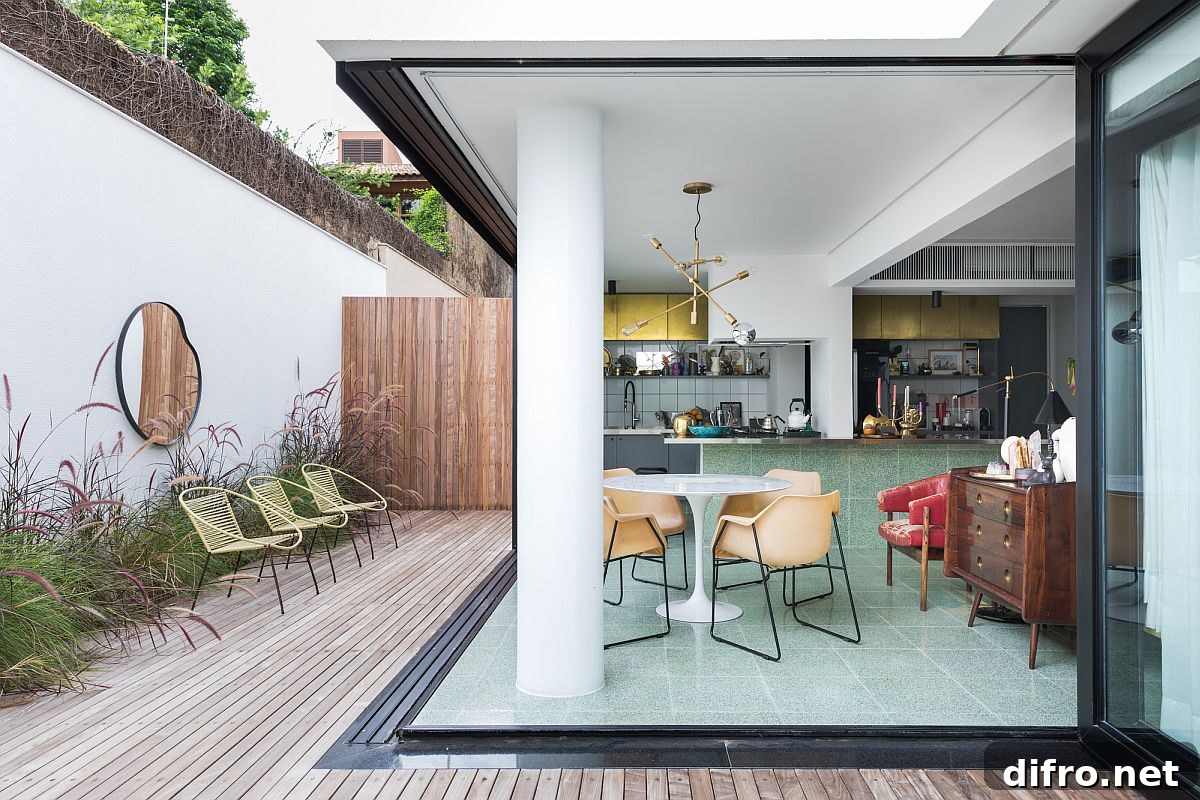
The Londrina House, designed by Todos Arquitetura, is a standout example of how thoughtful architecture and a carefully curated collection of vintage décor can transform a residence into a singular design statement. What sets this Brazilian home apart is not a dramatic exterior but the interior composition: an exceptional, personal collection of iconic furniture and decorative objects that span several decades, especially pieces from the 1950s through the 1980s. Against a restrained, modern-minimal backdrop, each object gains prominence, allowing historic forms and colors to define the atmosphere. The house reflects the tastes and creations of its owner, Valdomiro Favoreto, whose collection is the central attraction.
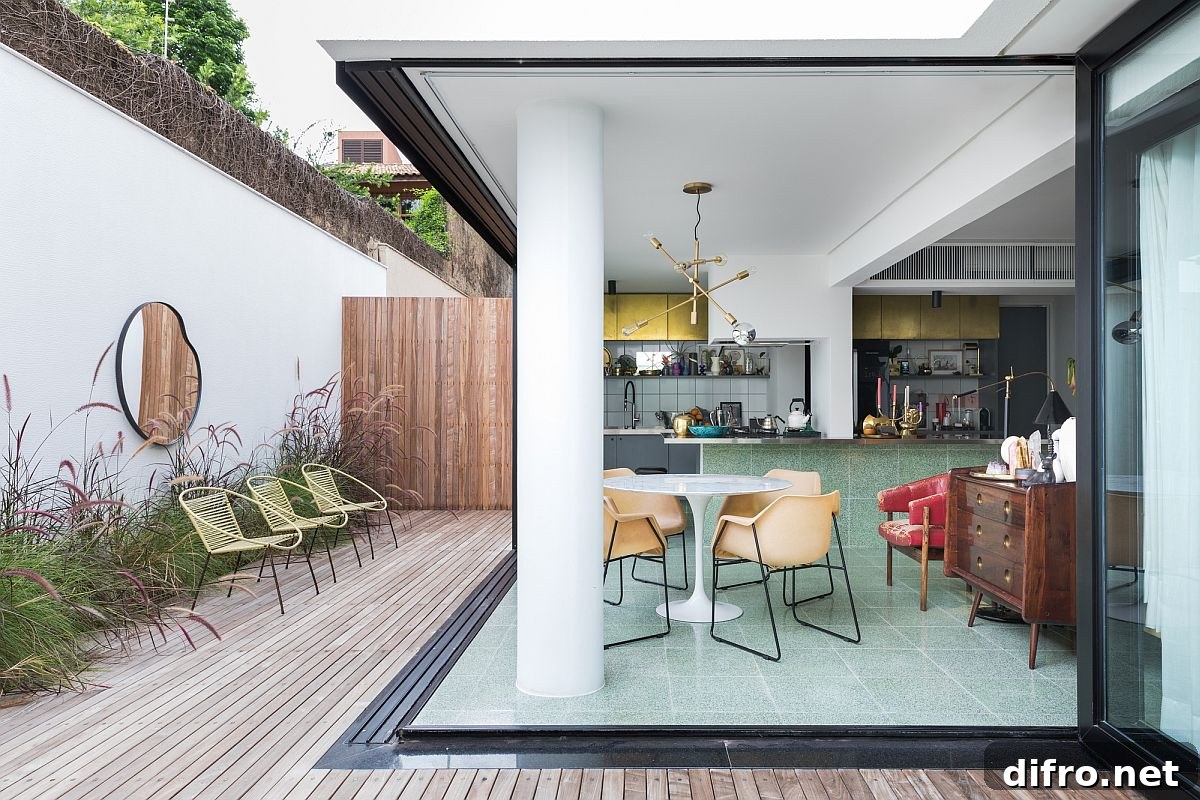
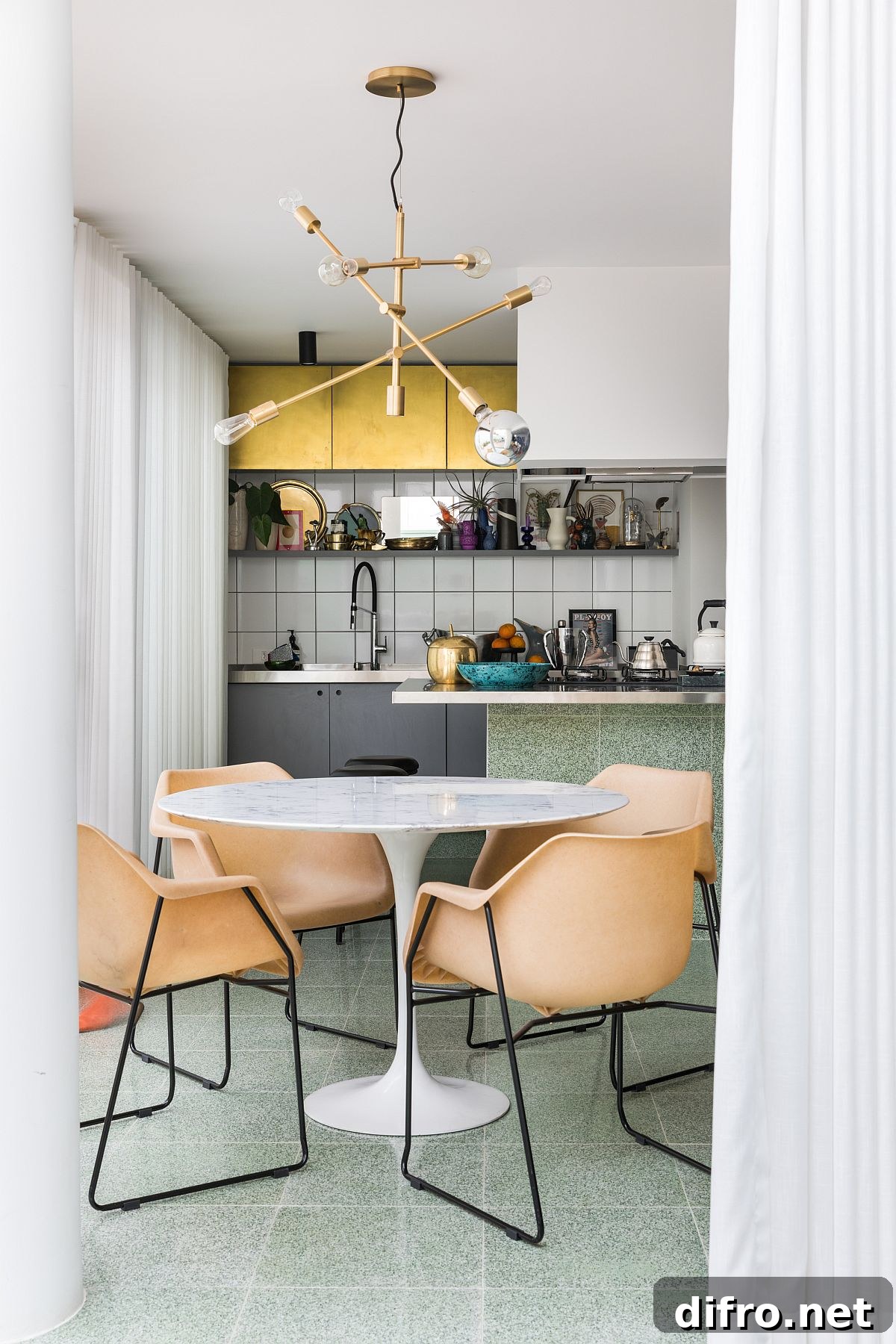
Floor-to-ceiling glass and wide sliding doors enable a fluid connection between interior and exterior: a generous ipe wood deck extends the living space outdoors, inviting relaxation and socializing. The kitchen provides a playful contrast to the neutral shell, where ceramic vases from the 1960s and 1970s bring color and texture while a metallic pendant adds a contemporary shine above the dining area. A classic Saarinen Tulip table anchors the dining setting, pairing timeless silhouette with mid-century sensibility. Throughout the home, carefully selected vintage and designer furniture—each with distinct provenance and character—gives the rooms a polished, lived-in elegance.
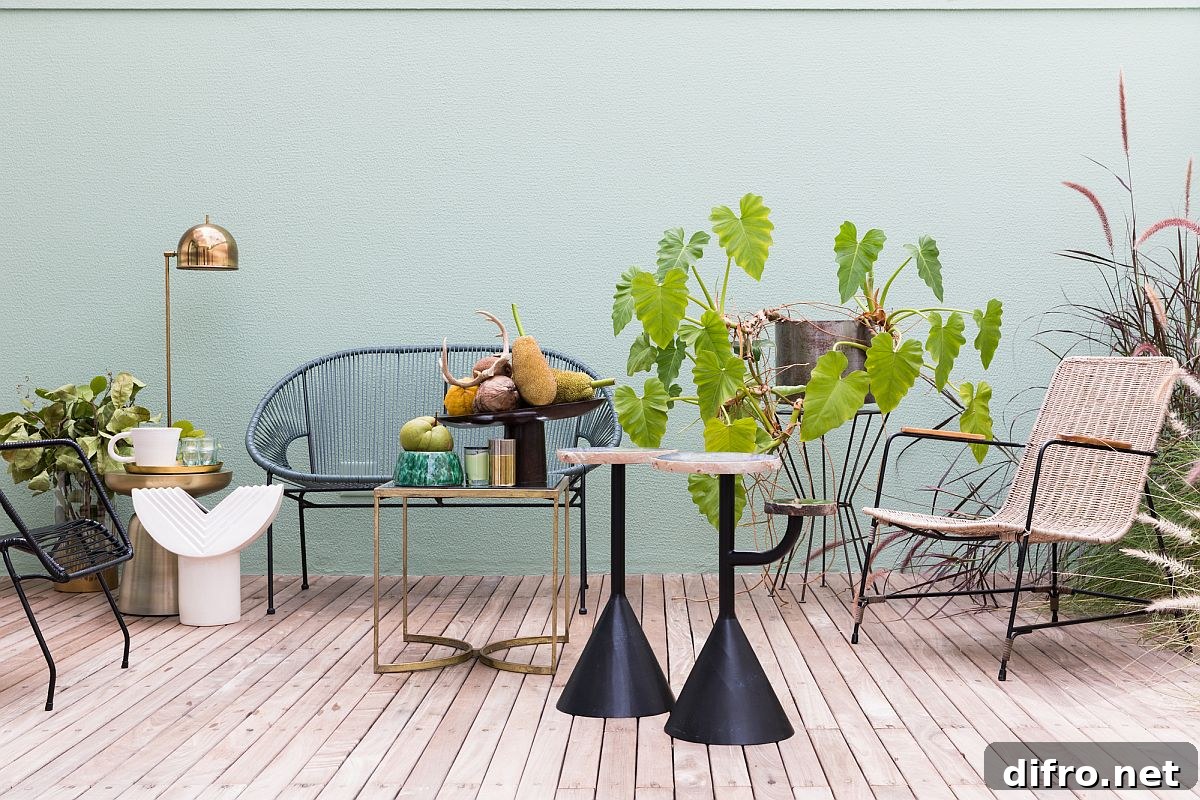
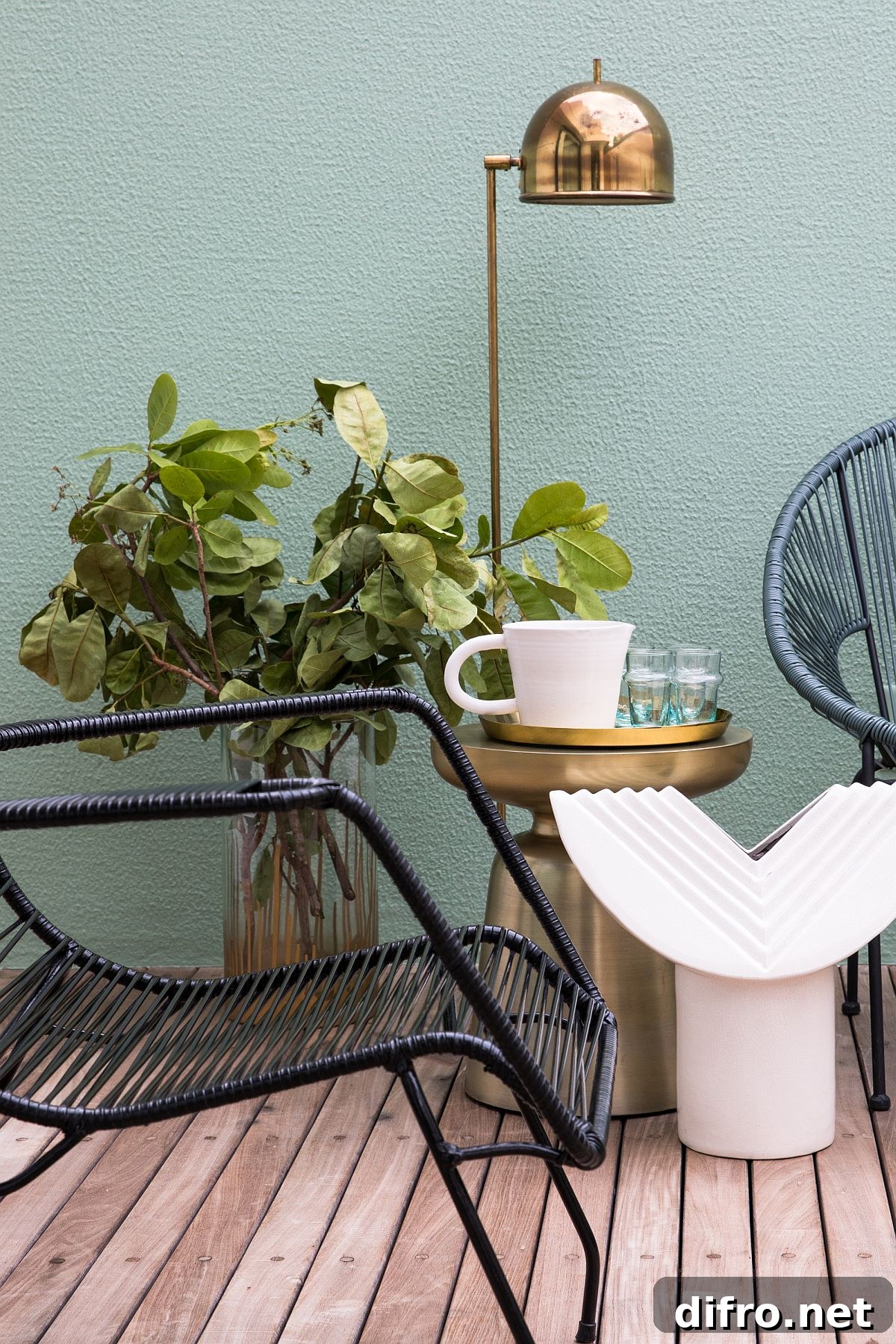
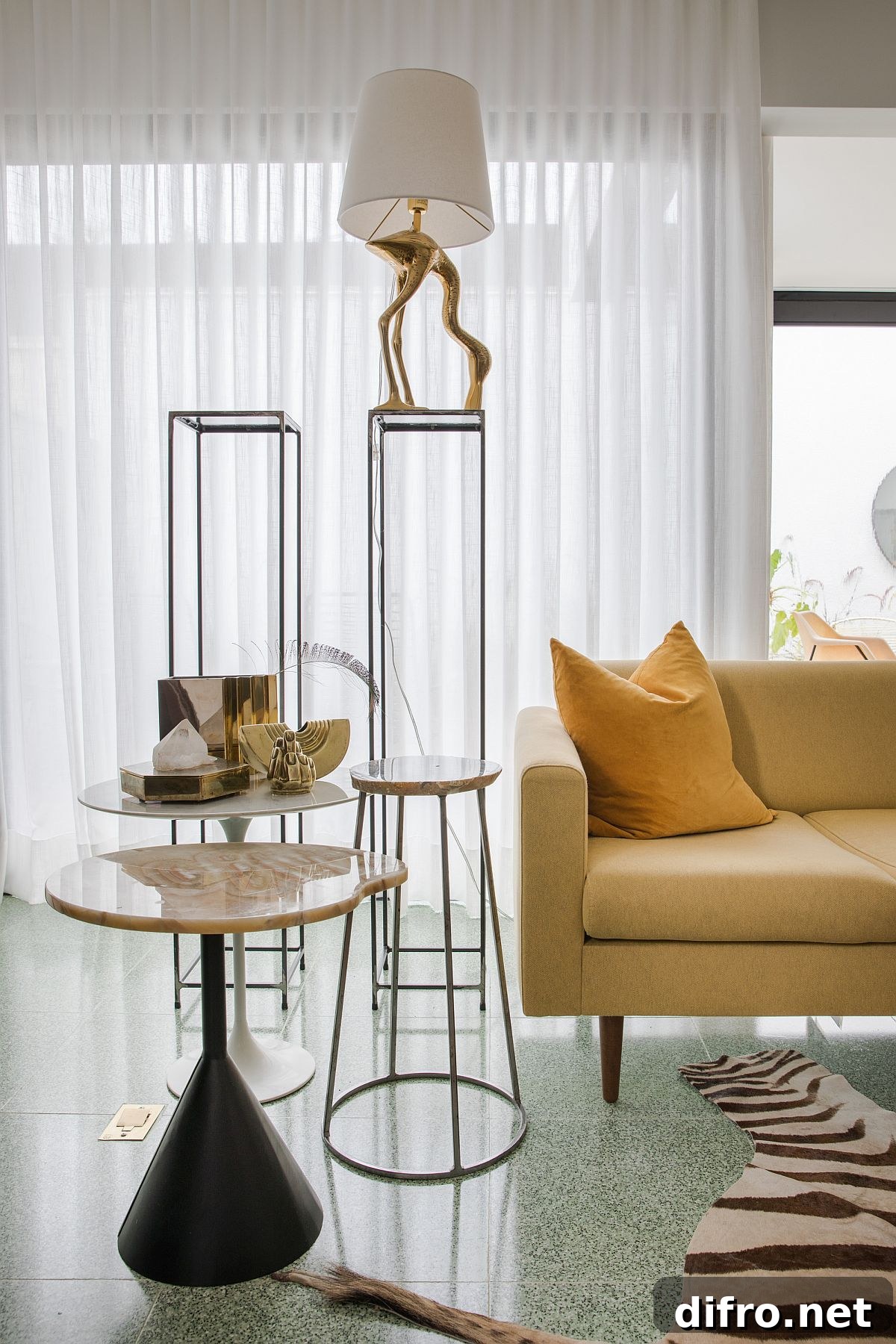
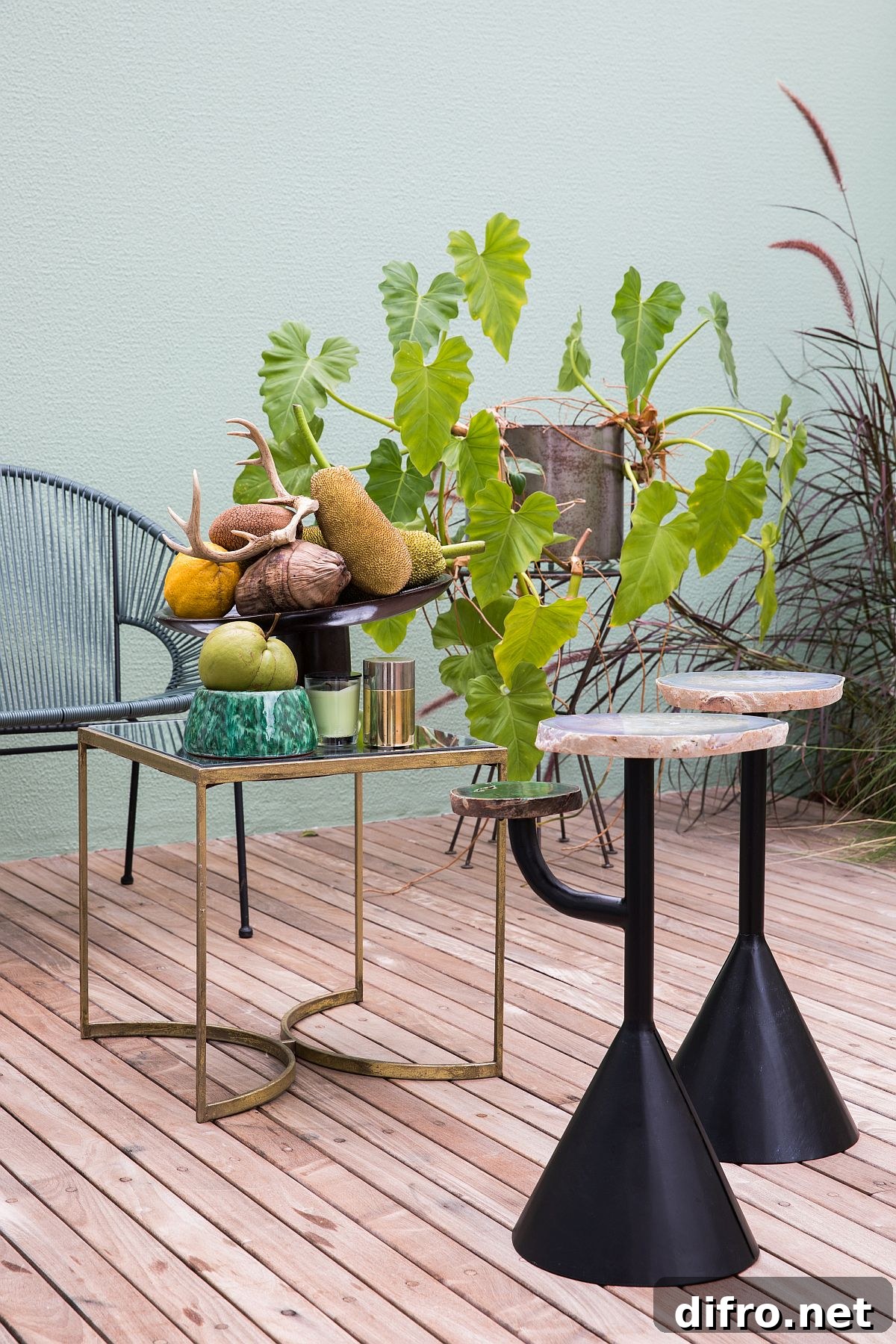
Outdoor furniture choices continue the narrative of mid-century and late-century modern design. Comfortable sofas and a Tok & Stok armchair sit alongside a metallic floor lamp to create an inviting deck lounge that reads both contemporary and nostalgic at once. Textural contrasts—natural wood, soft upholstery, metallic accents—help individual pieces stand out while contributing to a coherent overall aesthetic.
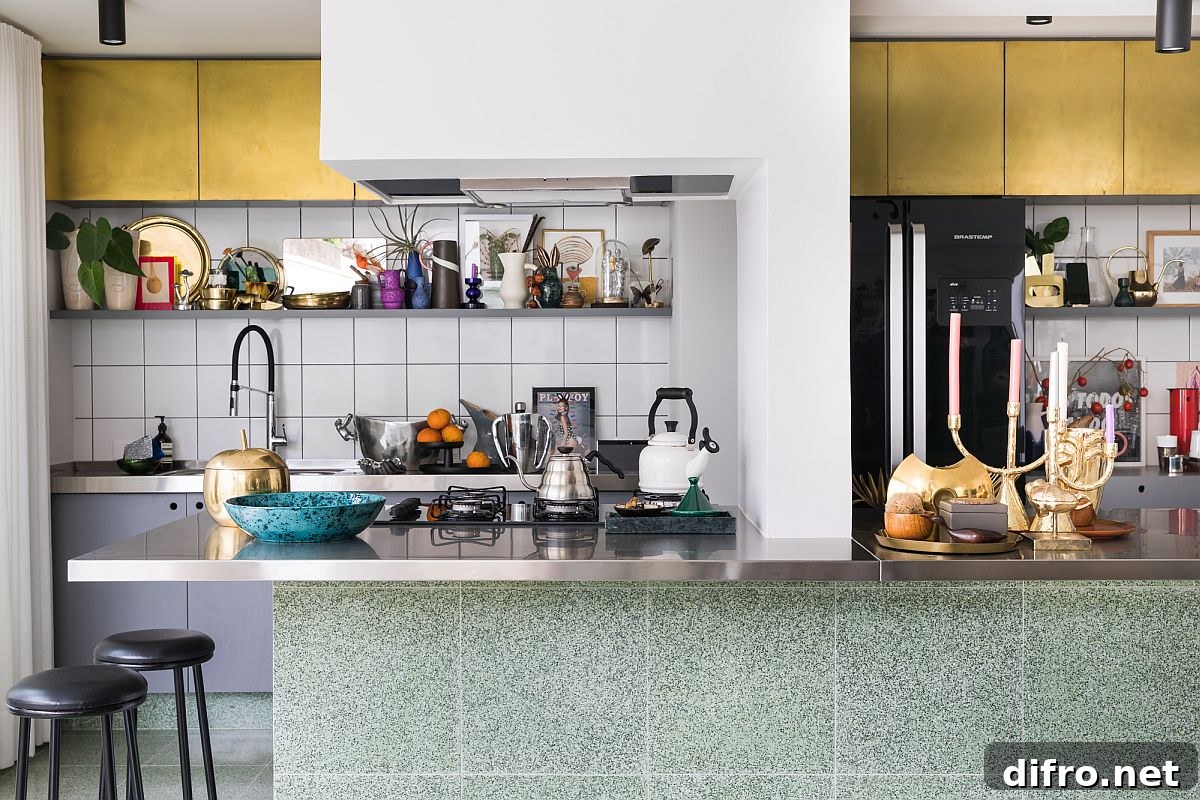
In the kitchen, a thoughtful mix of metallic accents and vintage ceramic pots from the 1960s and 1970s introduces warmth and personality. A restrained palette keeps the space fresh, while carefully placed pops of yellow and other saturated tones enliven work surfaces and shelving. The result is a kitchen that feels both functional and museum-like—where everyday objects are also design highlights.
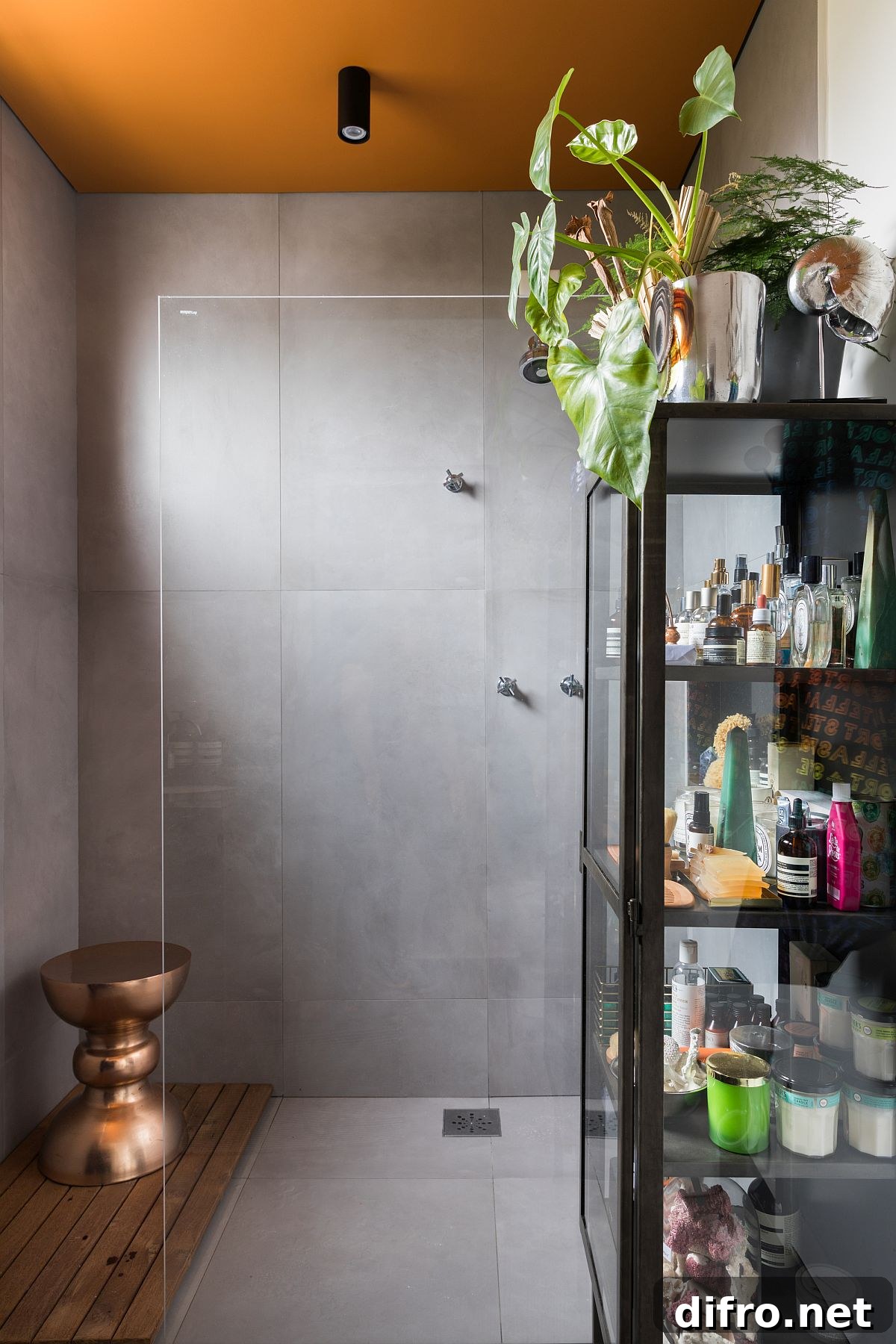
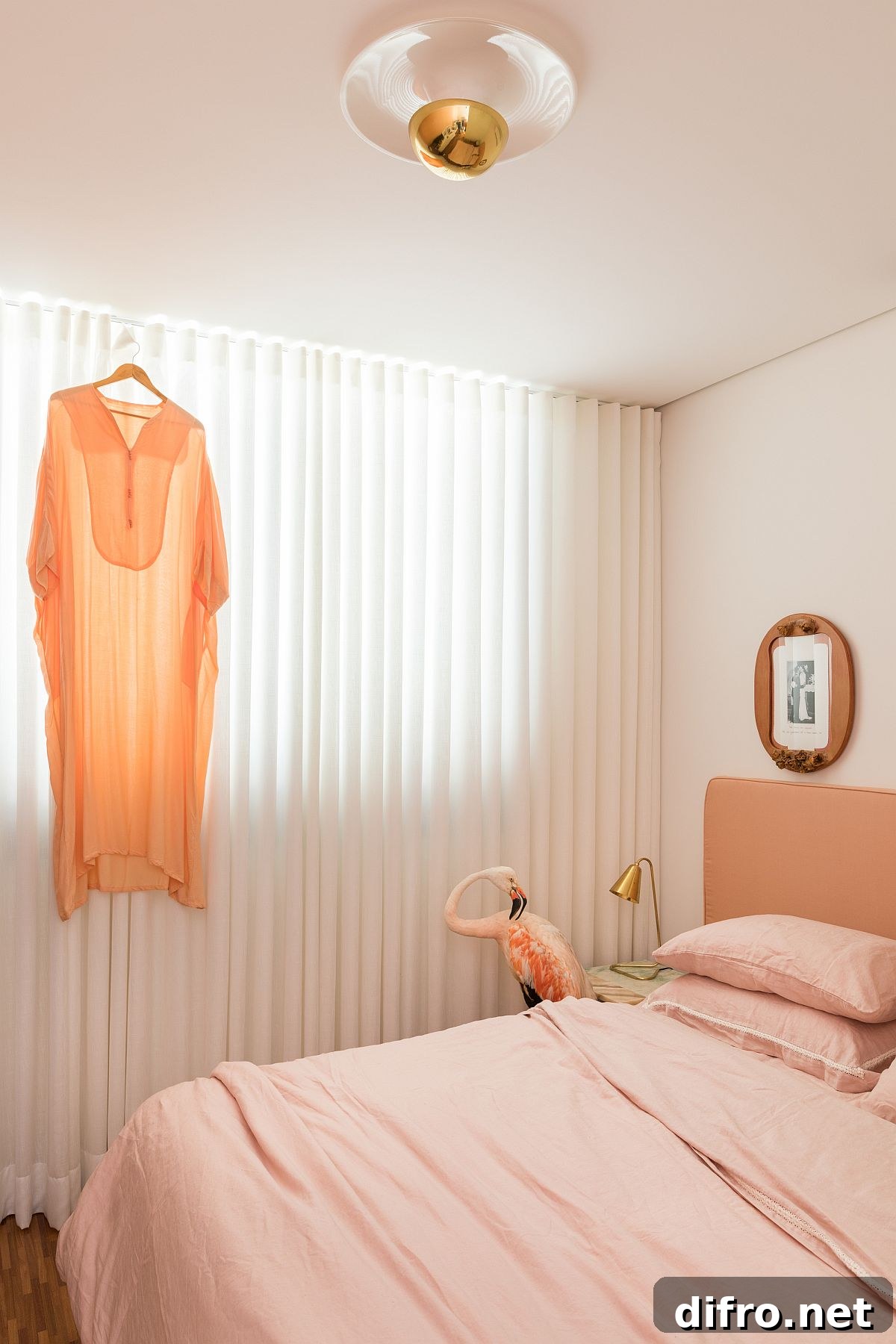
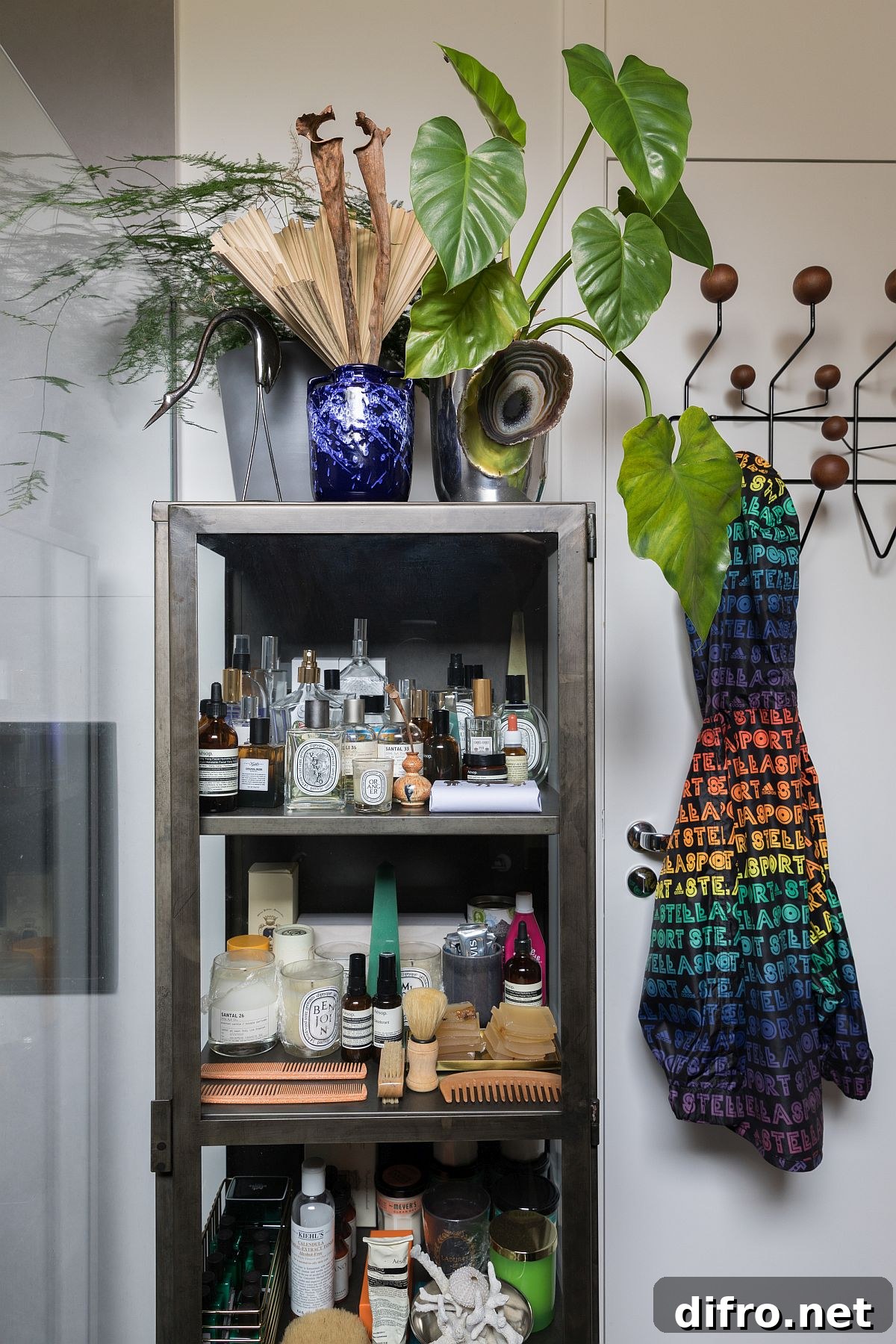
Bathrooms and bedrooms are treated as intimate counterpoints to the public entertaining areas. A bathroom with exposed concrete walls and an unexpected orange ceiling introduces a bold, modern touch, while the bedrooms favor softer tones—pastel pink and crisp white combine to create delicate, chic sleeping spaces. These distinct color and material choices throughout the house show a refined sense of balance: bold where appropriate, subtle where rest is required.
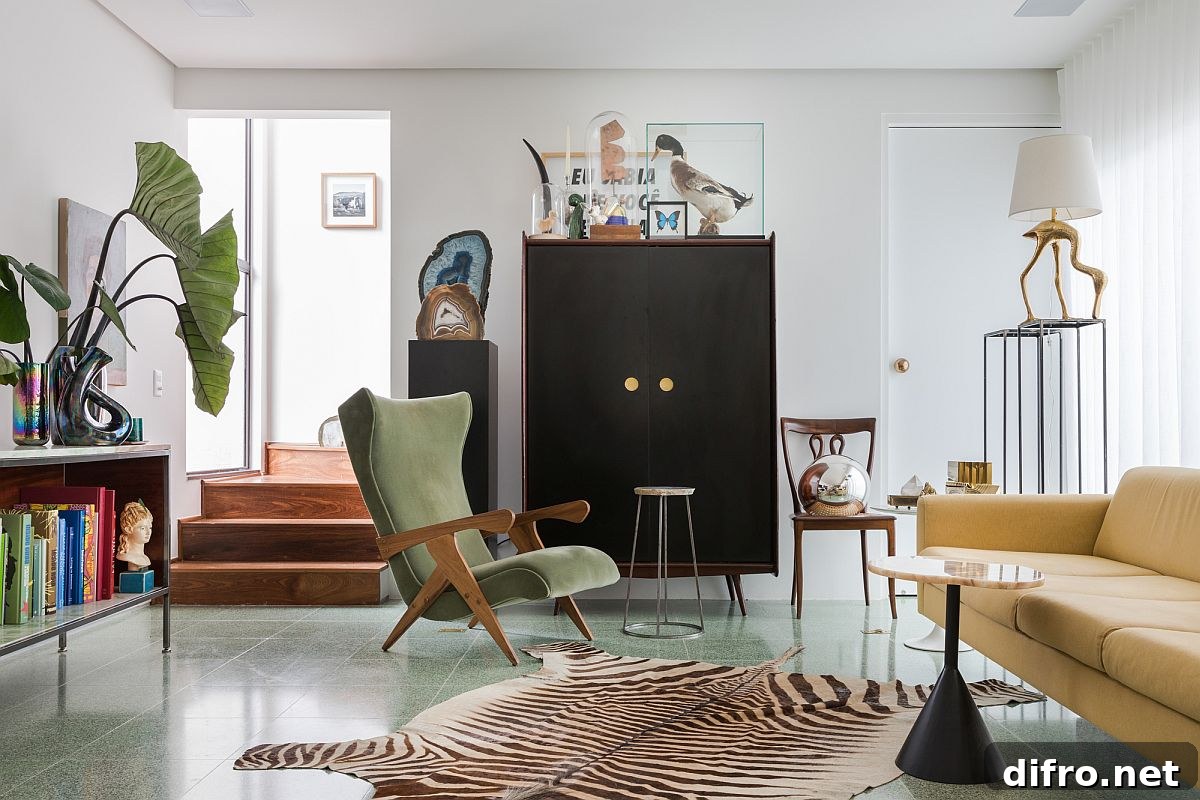
Inside, the living room features neutral-toned walls and granulite flooring—a common 20th-century material—that continues across the kitchen countertops. The furniture includes Brazilian vintage pieces, such as an armchair signed by José Zanine Caldas, a pair of Danish armchairs by Jorge Zalszupin, and a 1950s cabinet from the former Móveis Cimo factory.
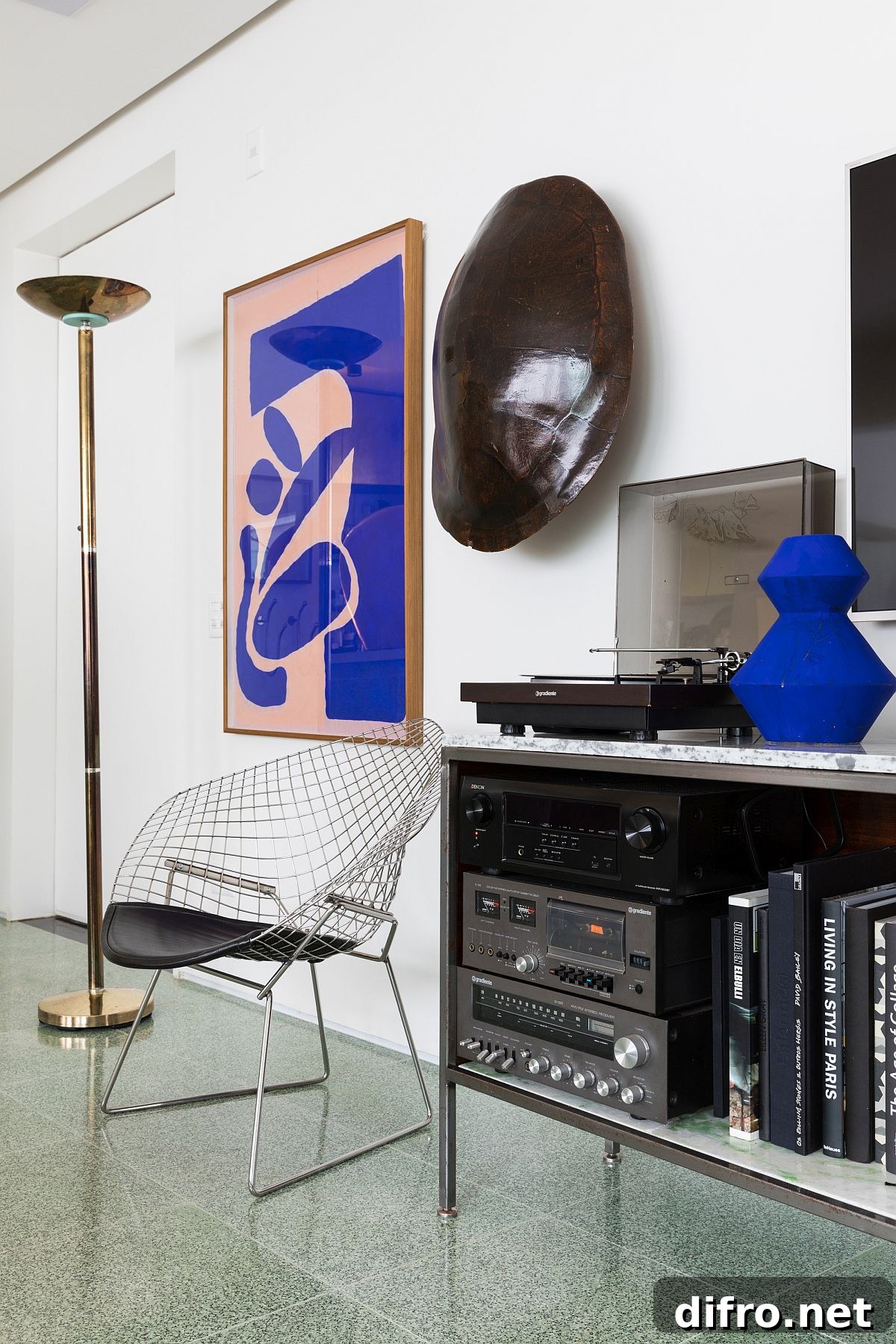
These named pieces and the search for authentic mid-century character reinforce the house’s connection to Brazilian design history. The mix of custom-made decor and rare vintage furniture gives each room a layered, narrative quality: objects sit next to one another not by accident but by careful curation. Artworks and decorative accents punctuate the rooms, creating focal points without overwhelming the architecture.
Function and display coexist effortlessly. Built-in storage solutions and clever organizational ideas keep everyday items accessible while maintaining a gallery-like calm. Small touches—lighting that highlights sculptural chairs, open shelving that frames ceramics, and carefully chosen rugs that ground seating areas—make the home feel deliberate and hospitable.
In short, the Londrina House demonstrates how a modern-minimal architectural setting can be the perfect stage for a rich, personal collection of mid-century and vintage furniture. The design balances preservation and reinvention: materials like granulite and ipe wood recall local building traditions, while curated objects—signed pieces by notable designers and carefully sourced finds—impart cultural and aesthetic depth. Photographs of the home were made by Lufe Gomes, capturing the thoughtful interplay of light, material and form that defines this unique Brazilian residence.