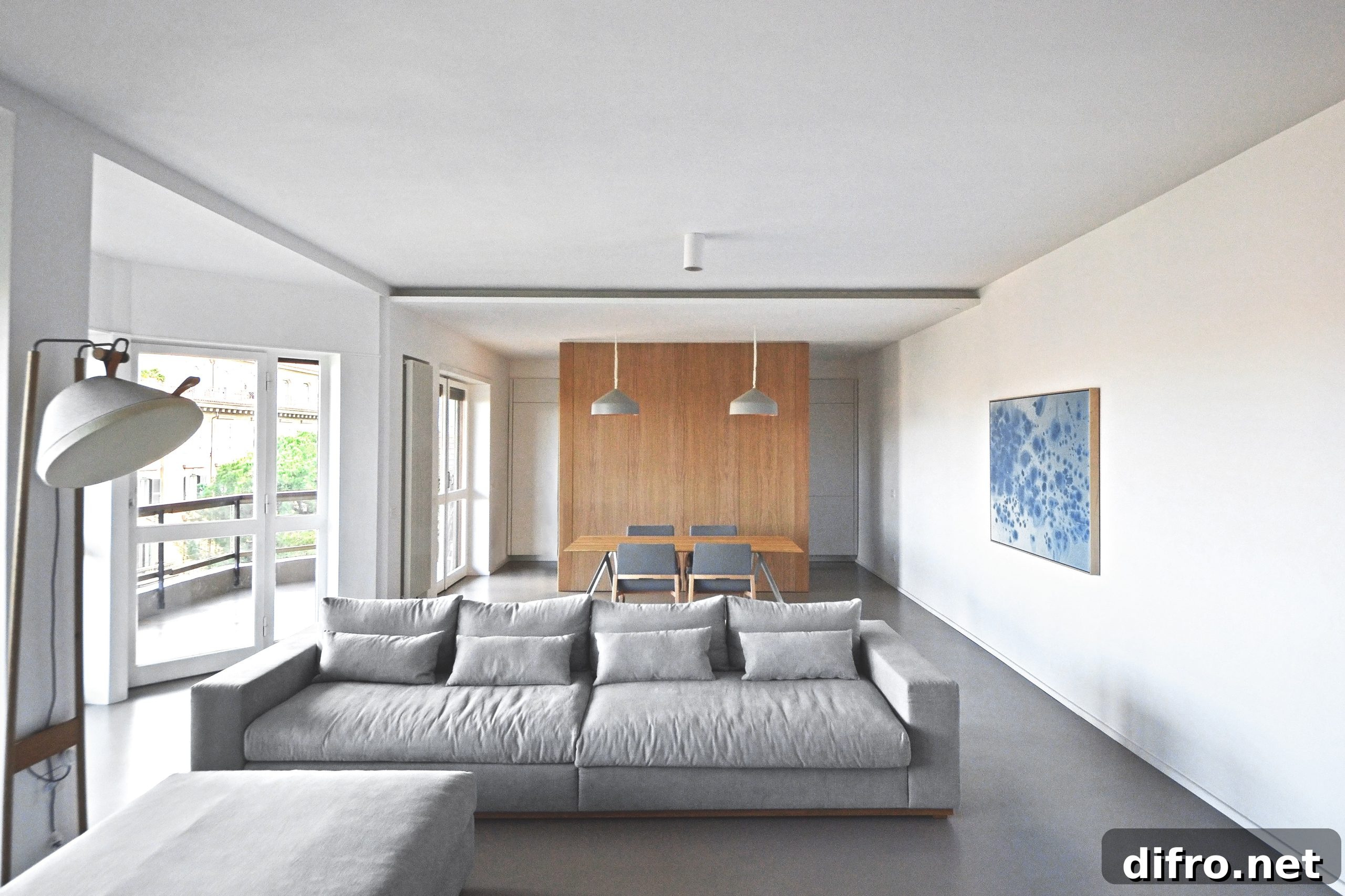
Bow Window House — Open-Plan Apartment in Central Rome by LAD
Located in the heart of Rome, the Bow Window House occupies the fifth floor of a residential block built in the 1970s with reinforced concrete. The apartment’s interior was recently reimagined by the team at Laboratorio di Architettura e Design (LAD), which focused on reorganizing the plan to enhance natural light, sightlines and convivial living.
Open-plan living and architectural strategy
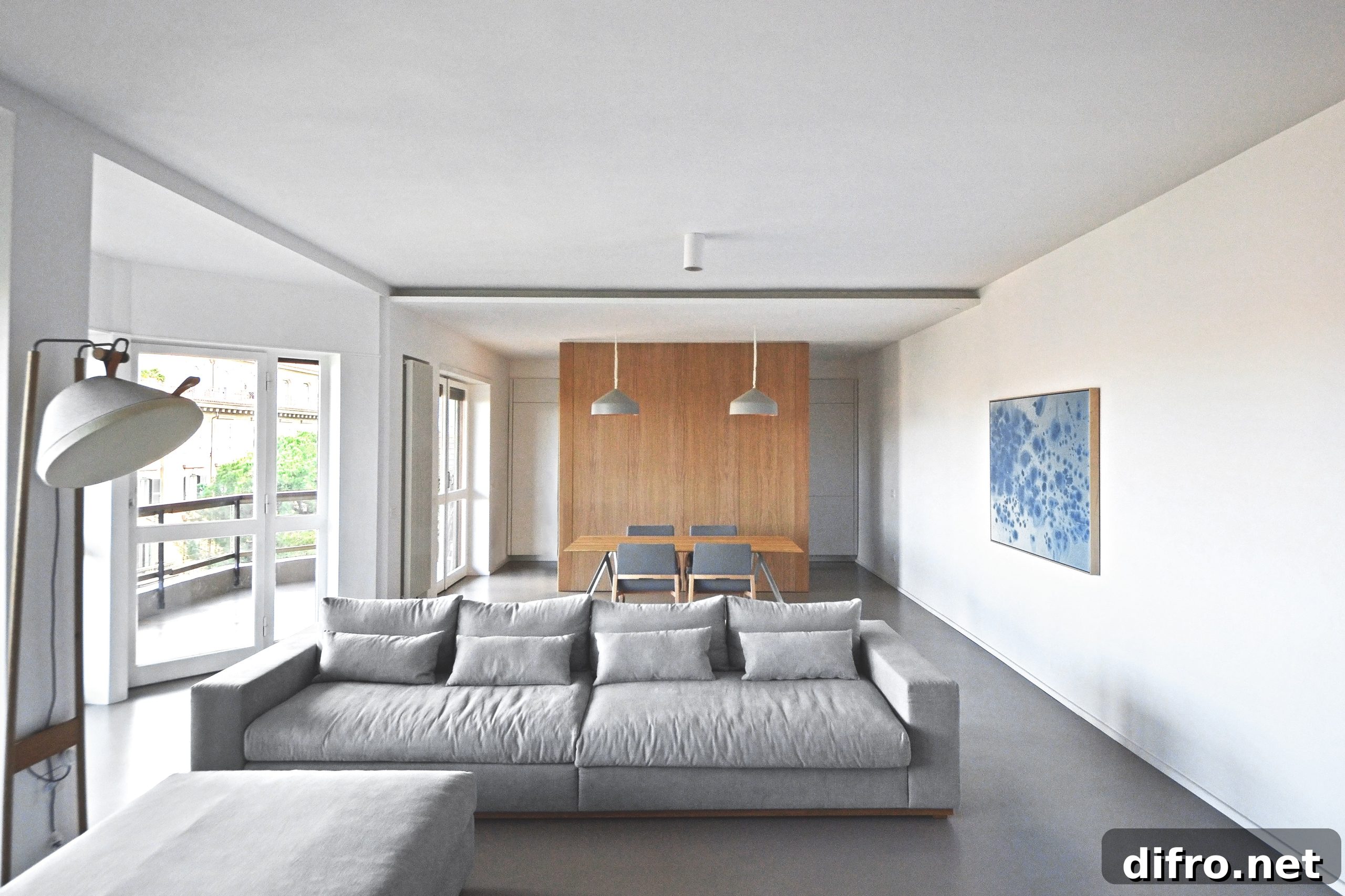
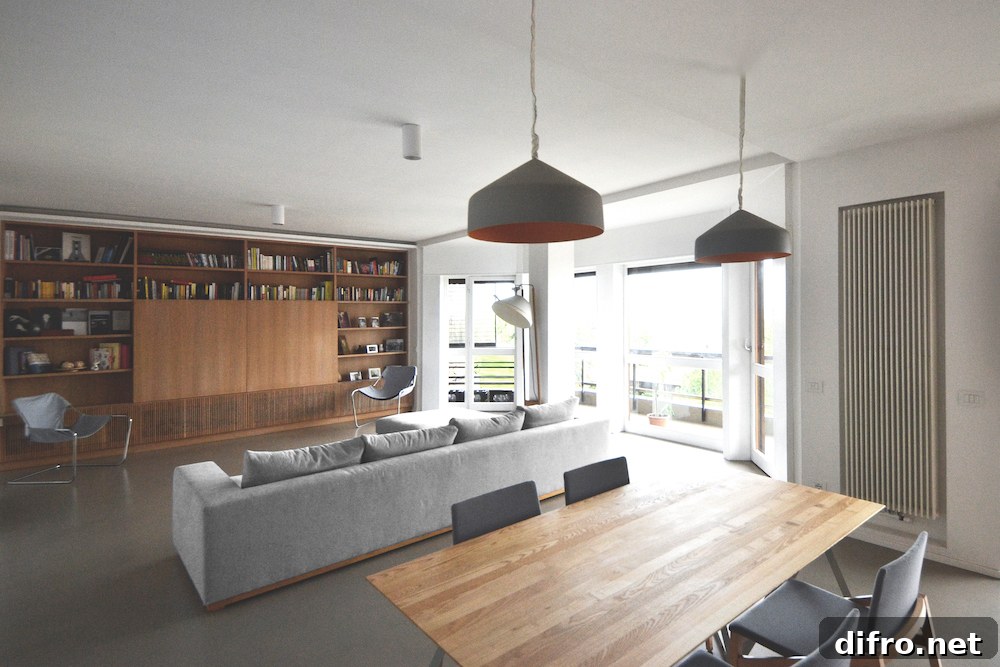
The defining feature of the main living area is its high ceilings and the large bow window, which frames views across the city while admitting abundant daylight. LAD’s intervention centered on altering the flat’s original layout to combine formerly compartmentalized rooms into a single, flexible living space. The result prioritizes openness and sociability without abandoning moments of privacy and calm.
Kitchen design: concealed yet connected
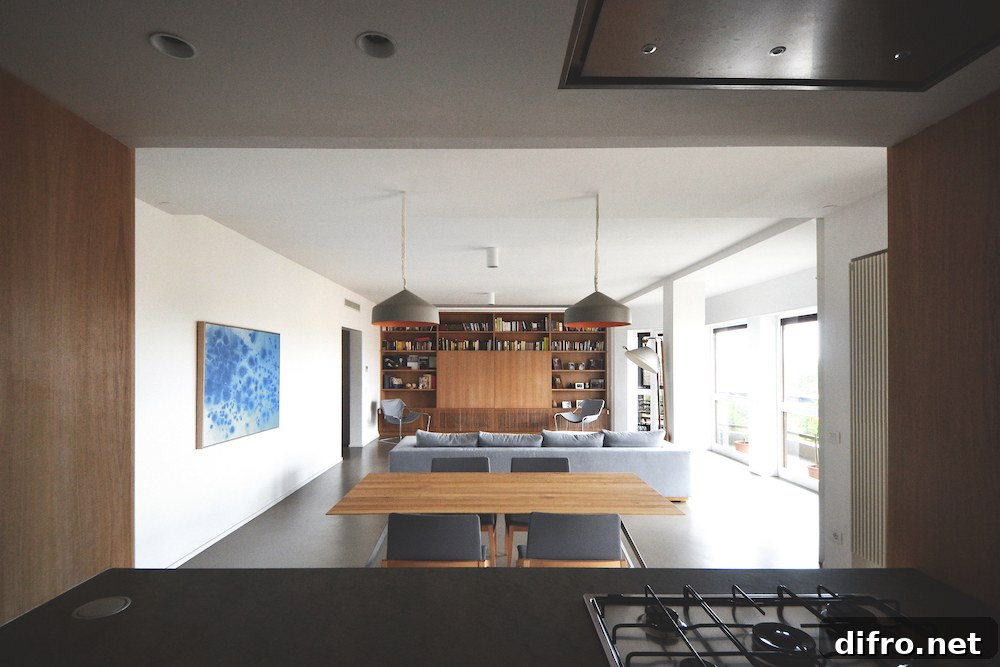
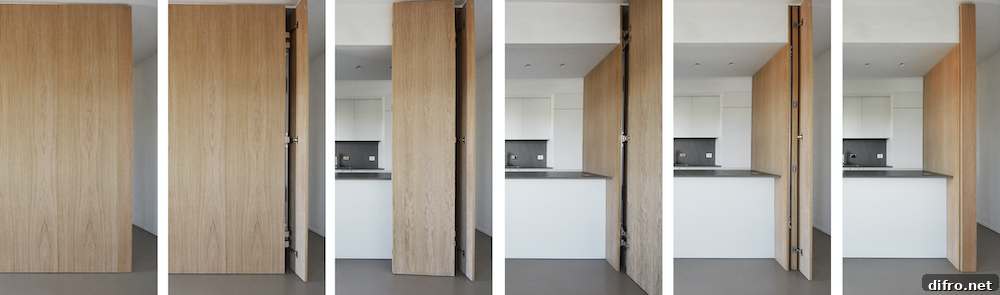
The kitchen was designed to encourage interaction between the host and guests while remaining visually restrained when desired. A monolithic wooden element separates the cooking area from the living room: it conceals the gas stove and other work areas but can be opened to create a direct relationship between zones. This solution preserves the open-plan ethos while providing the practical benefits of a discreet, well-organized kitchen.
Inside, the kitchen offers ample storage without encroaching on the hosting area. The choice of black countertops, backsplash and appliances introduces a bold contrast to the otherwise warm, timber-focused interiors, creating a refined and contemporary aesthetic while keeping the service functions compact and efficient.
Library and media storage
The apartment’s library continues the theme of hidden functionality. A wooden centerpiece conceals media equipment and, when opened, reveals a television that becomes the room’s focal point. This approach maintains clean sightlines and understated surfaces while allowing technology to be present only when required.
Bathrooms and spatial planning
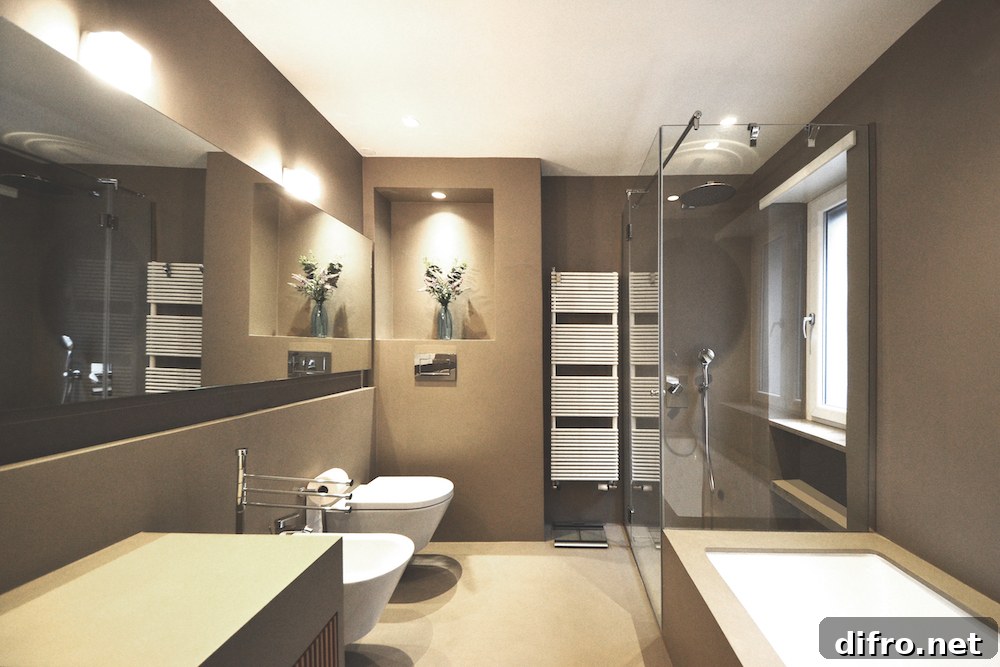
Bathrooms are placed centrally within the plan, making them easily accessible during social occasions and helping to separate the private sleeping areas from the main living quarters. The central location ensures convenience for guests while reinforcing a clear division between public and private zones in the flat.
Materials, bespoke joinery and furnishings
All joinery was custom made for this project, reinforcing the apartment’s cohesive, crafted character. Floors and bathroom walls are finished with Cementoresina by Kerakoll, a material choice that provides a continuous, durable surface with a refined, neutral appearance.
The interior pairs international design classics with contemporary pieces by emerging European designers. Notable furnishings include Stand Steel by Sebastian Scherer (Neo/Craft), Capita 510t by Fiorenzo Dorigo (Capdell), a Faro floor lamp by Kngb, Paulistano armchairs by Paulo Mendes da Rocha (Objekto) and Cyrcus Cemento suspension lamps by In-es.Art Design. These selections balance timeless silhouettes with modern details, supporting the apartment’s pared-back palette and tactile surfaces.
Conclusion
With the Bow Window House, LAD demonstrates how an open-plan layout can coexist with carefully considered moments of concealment and privacy. The design leverages natural light, custom joinery and a restrained material palette to create a flexible, elegant home that can transition swiftly between intimate living and effortless entertaining.