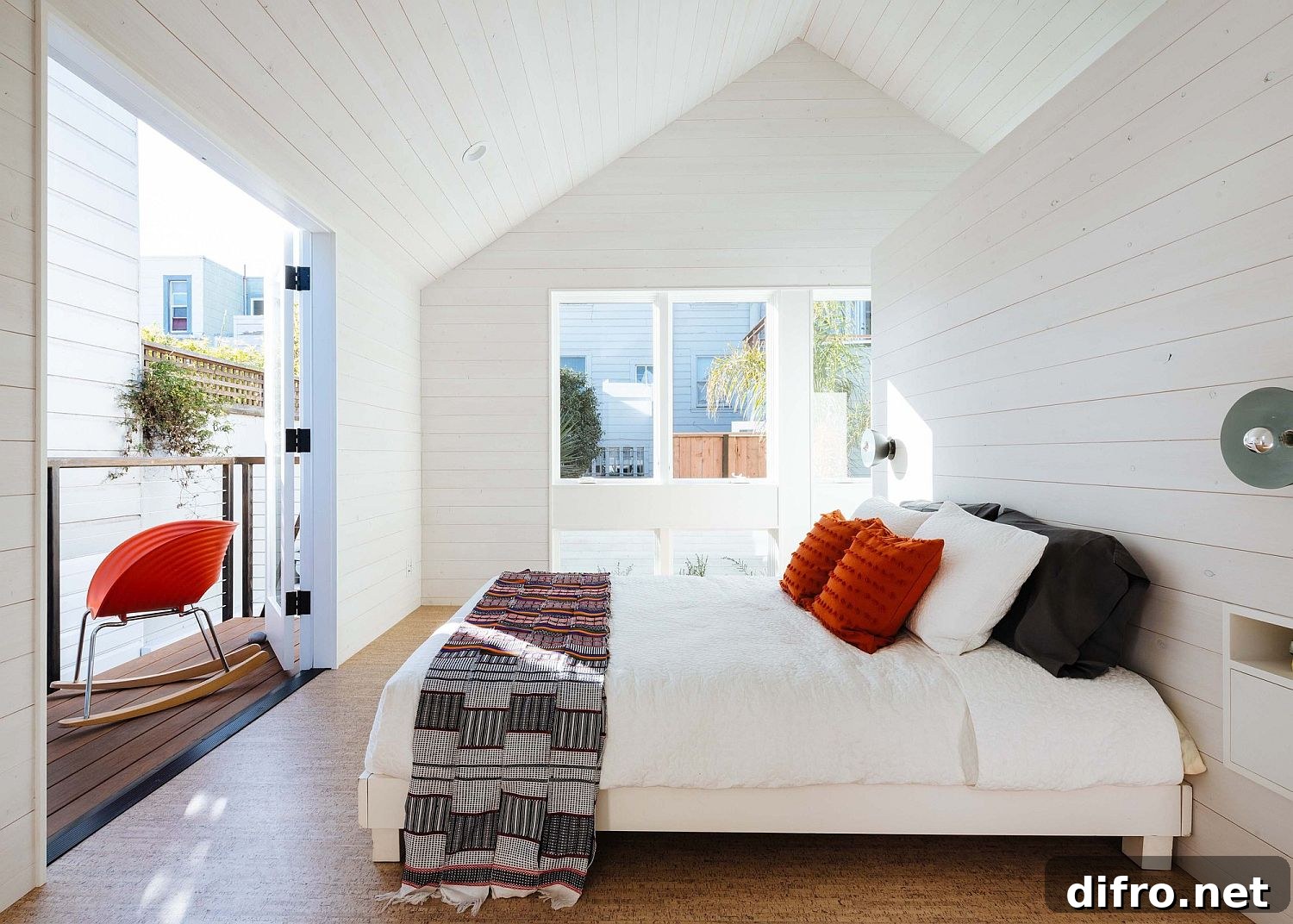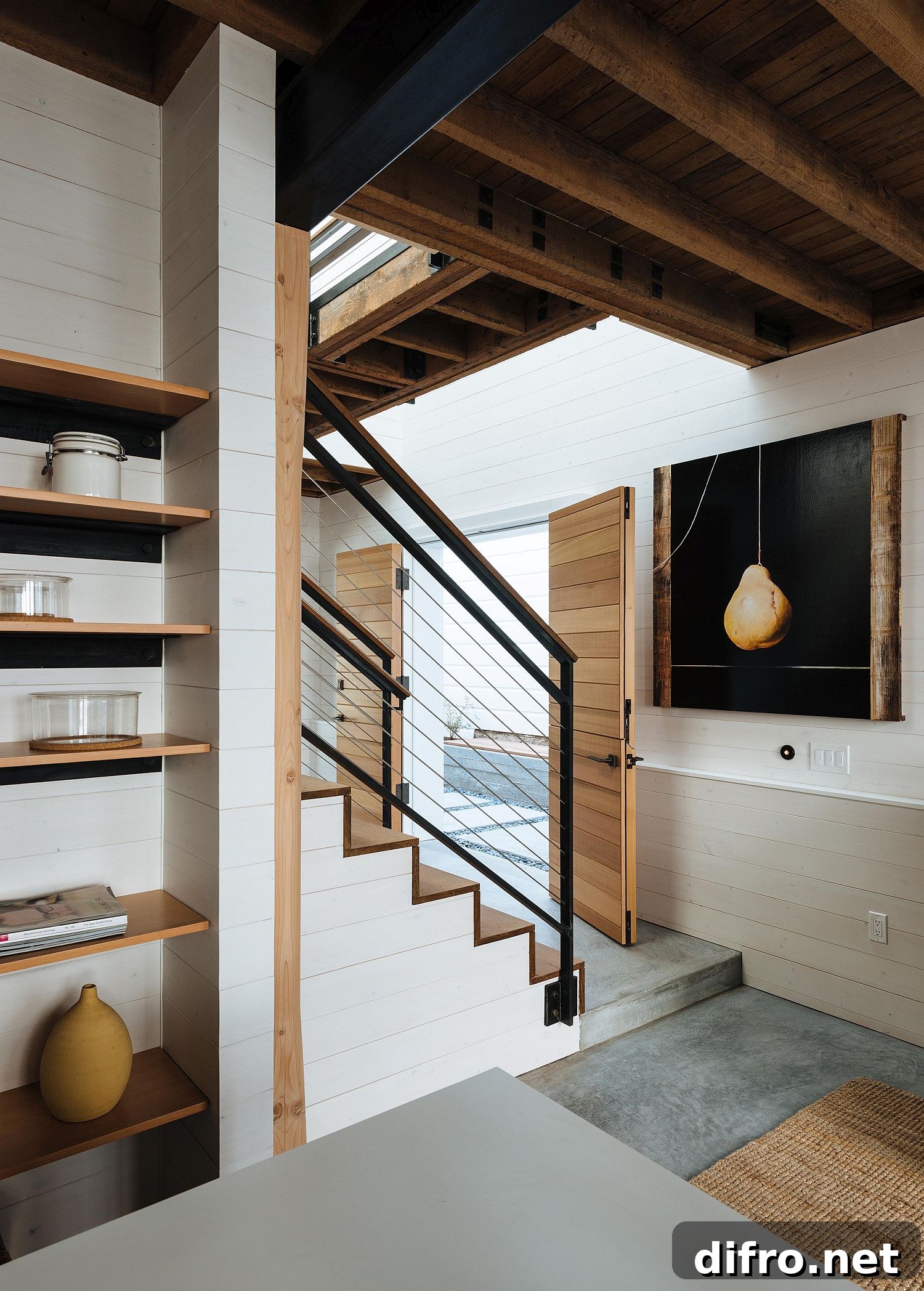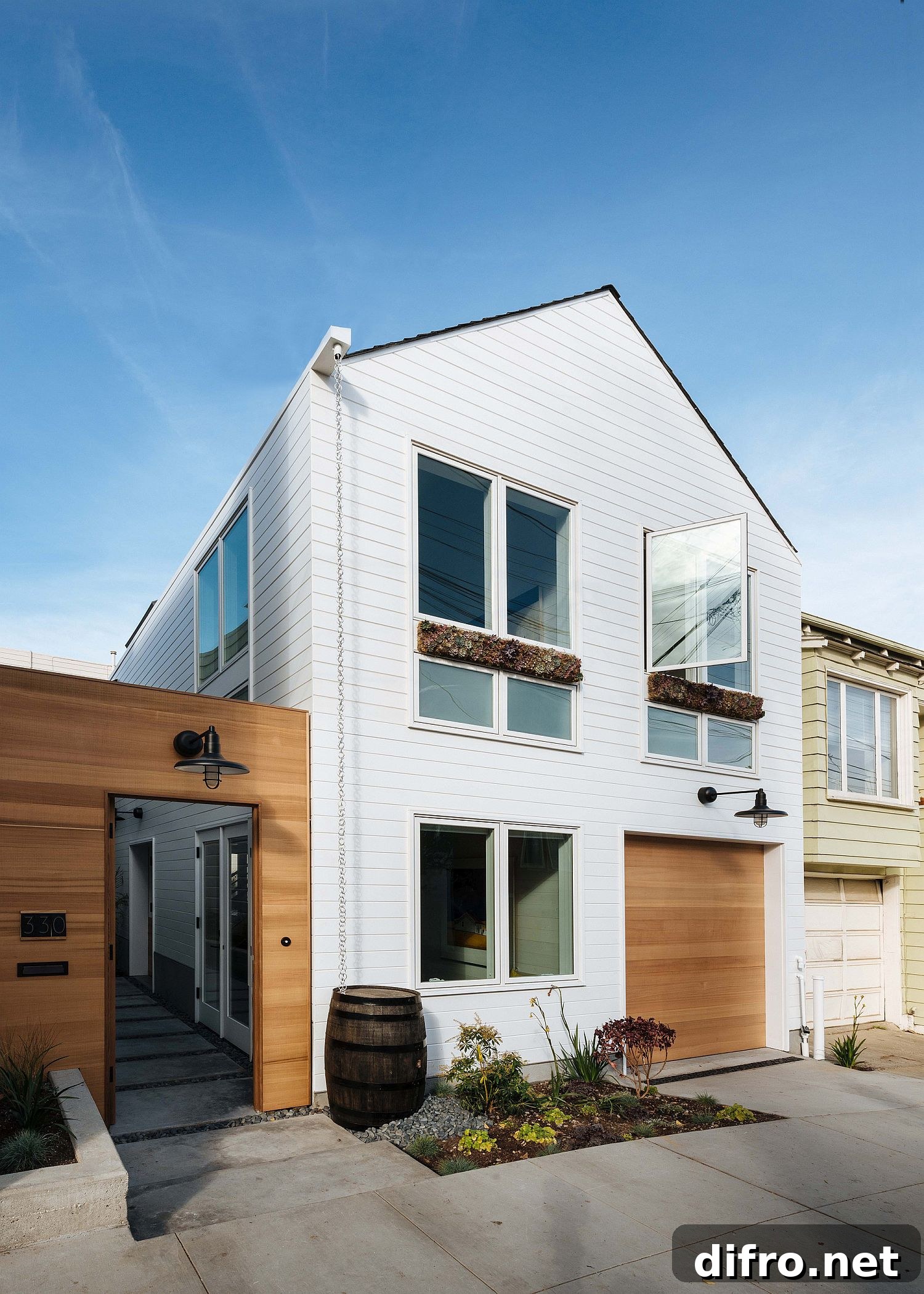
Giving an architectural classic a fresh, contemporary life often requires careful planning and clever use of space. Nestled in a busy San Francisco neighborhood, this family home—originally constructed in 1903—has undergone several small updates over the years. The most recent renovation, led by the design firm Red Dot Studio, transformed the property known as the Bank Street House into a brighter, more open, and distinctly modern family residence. The update balances a classic street presence with a warm, contemporary interior where wood, concrete and generous daylight shape the experience.
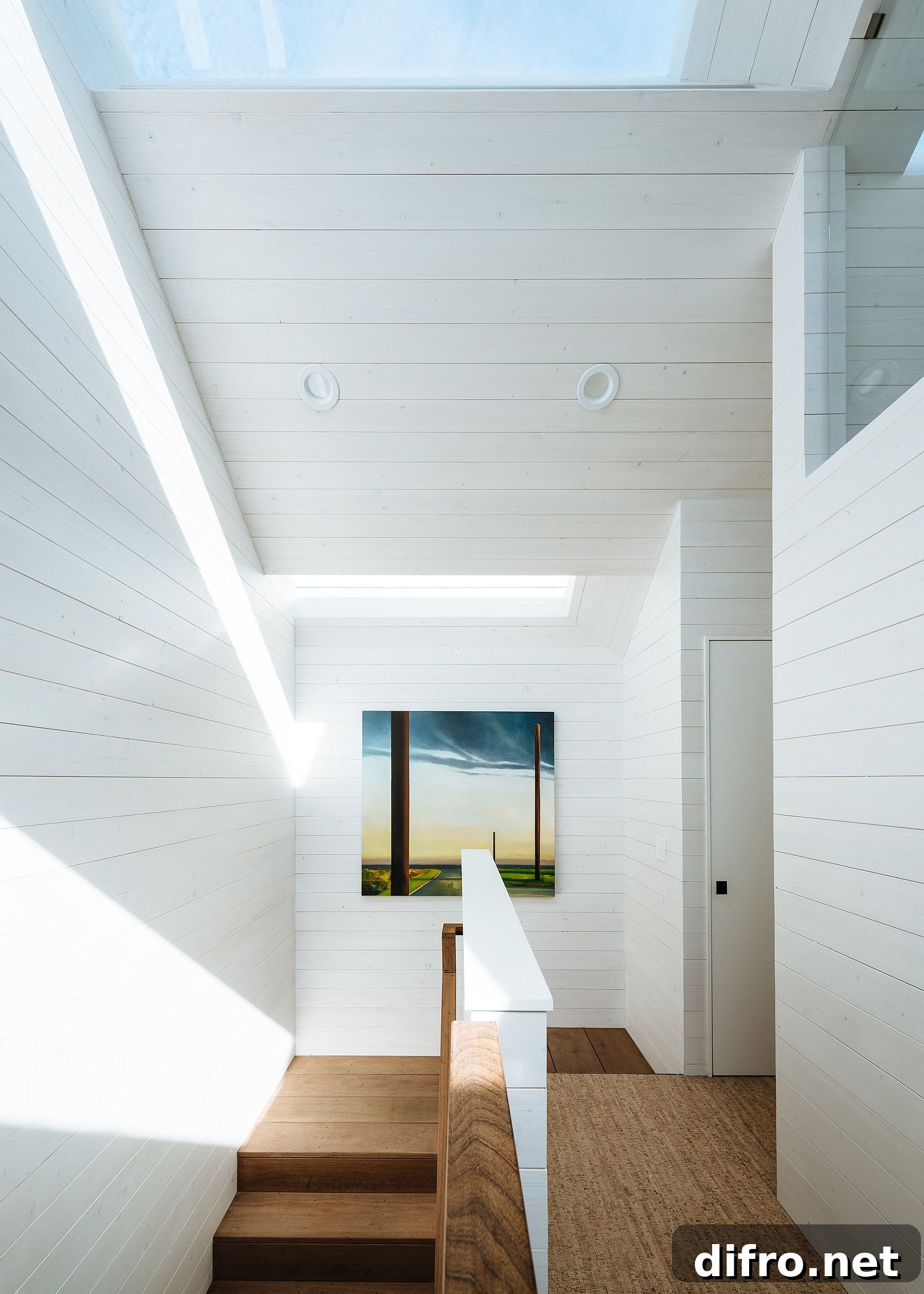
The interior palette relies primarily on white and wood, a timeless combination that visually expands the rooms while maintaining a warm, tactile quality. Occasional black accents anchor the living and dining areas, offering contrast without overwhelming the calm, neutral base. Removing interior partitions has allowed a continuous, open flow between rooms so natural light can travel freely through the plan, brightening previously dark corners and making the house feel larger and more connected.
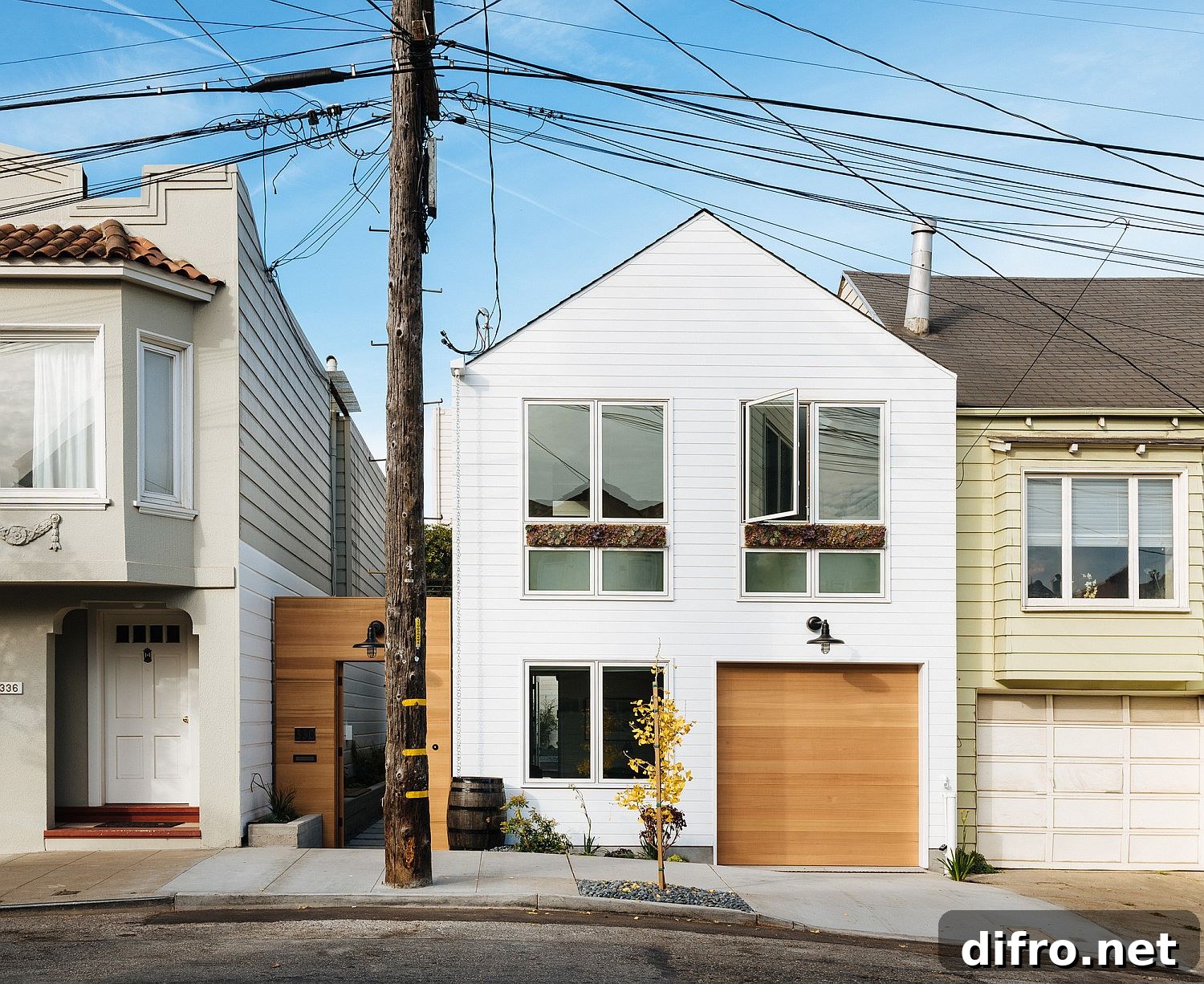
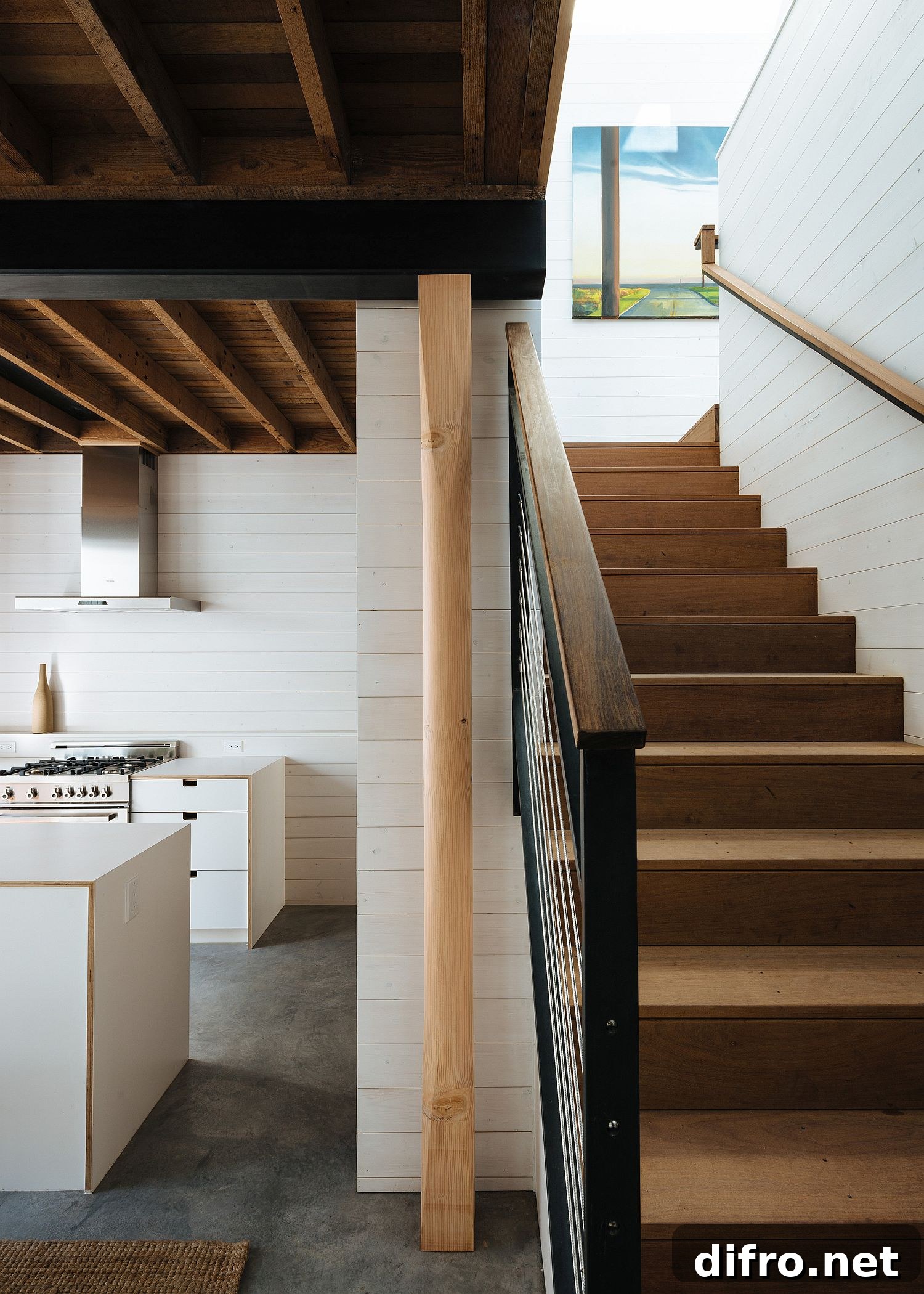
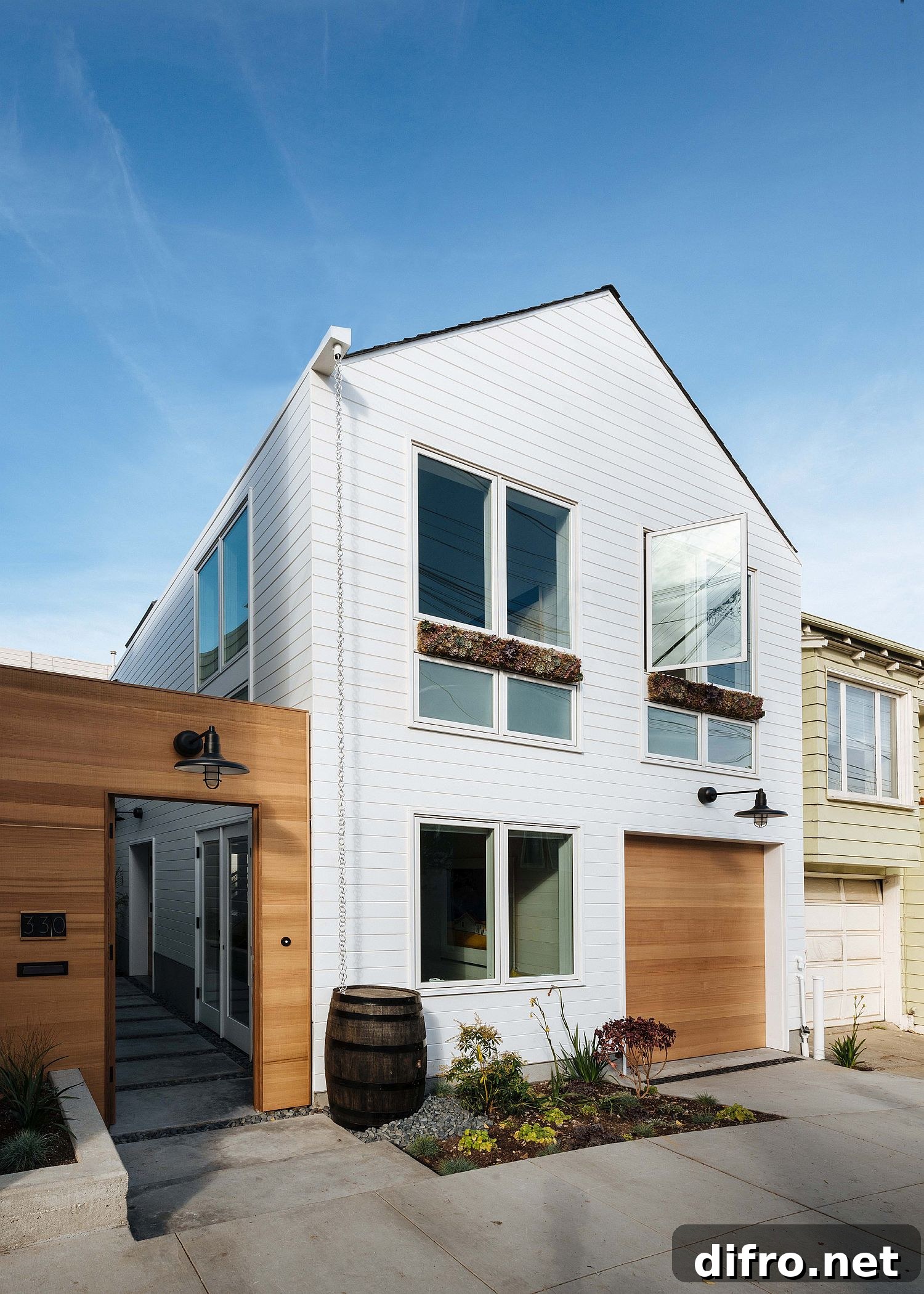
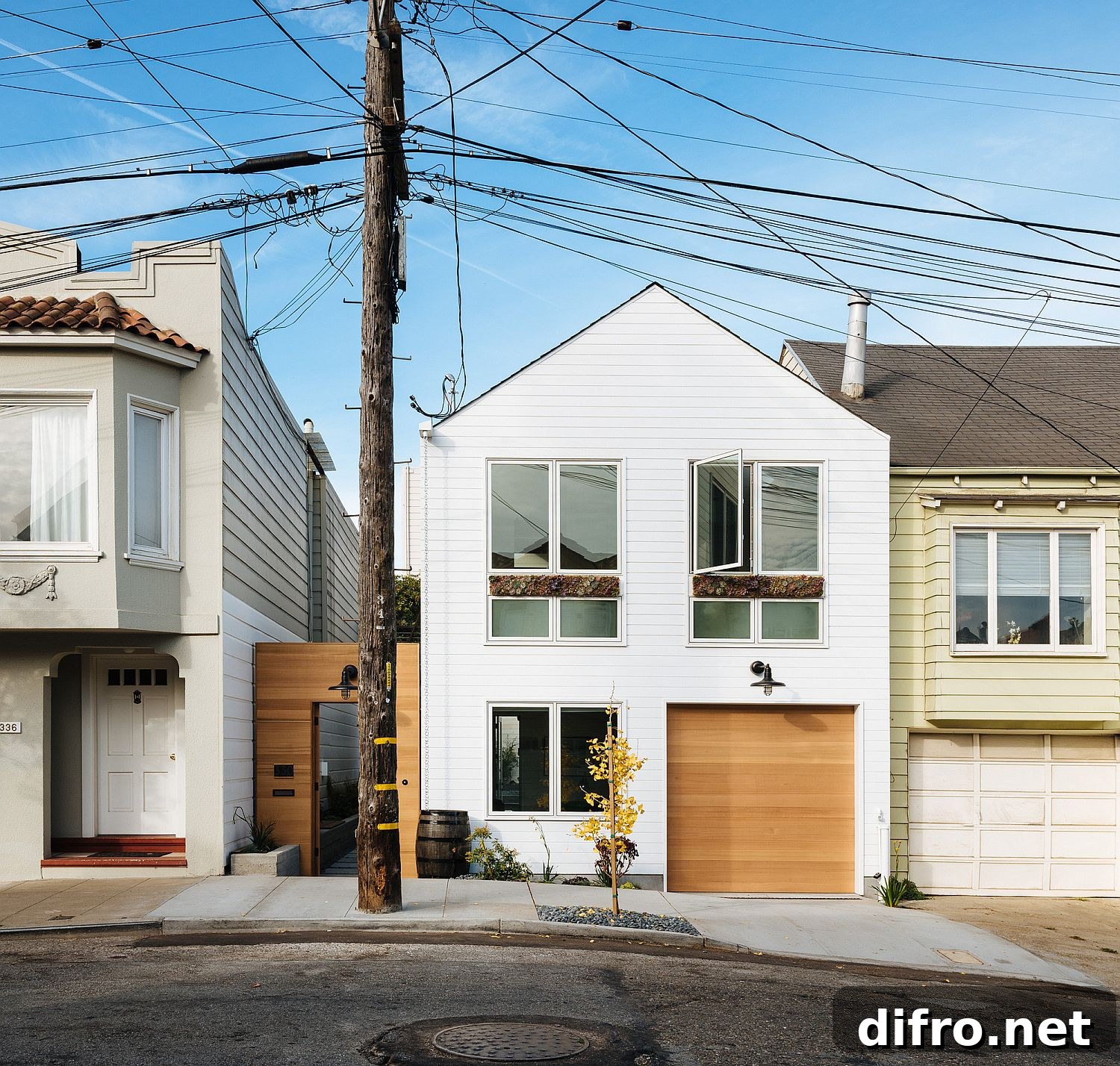
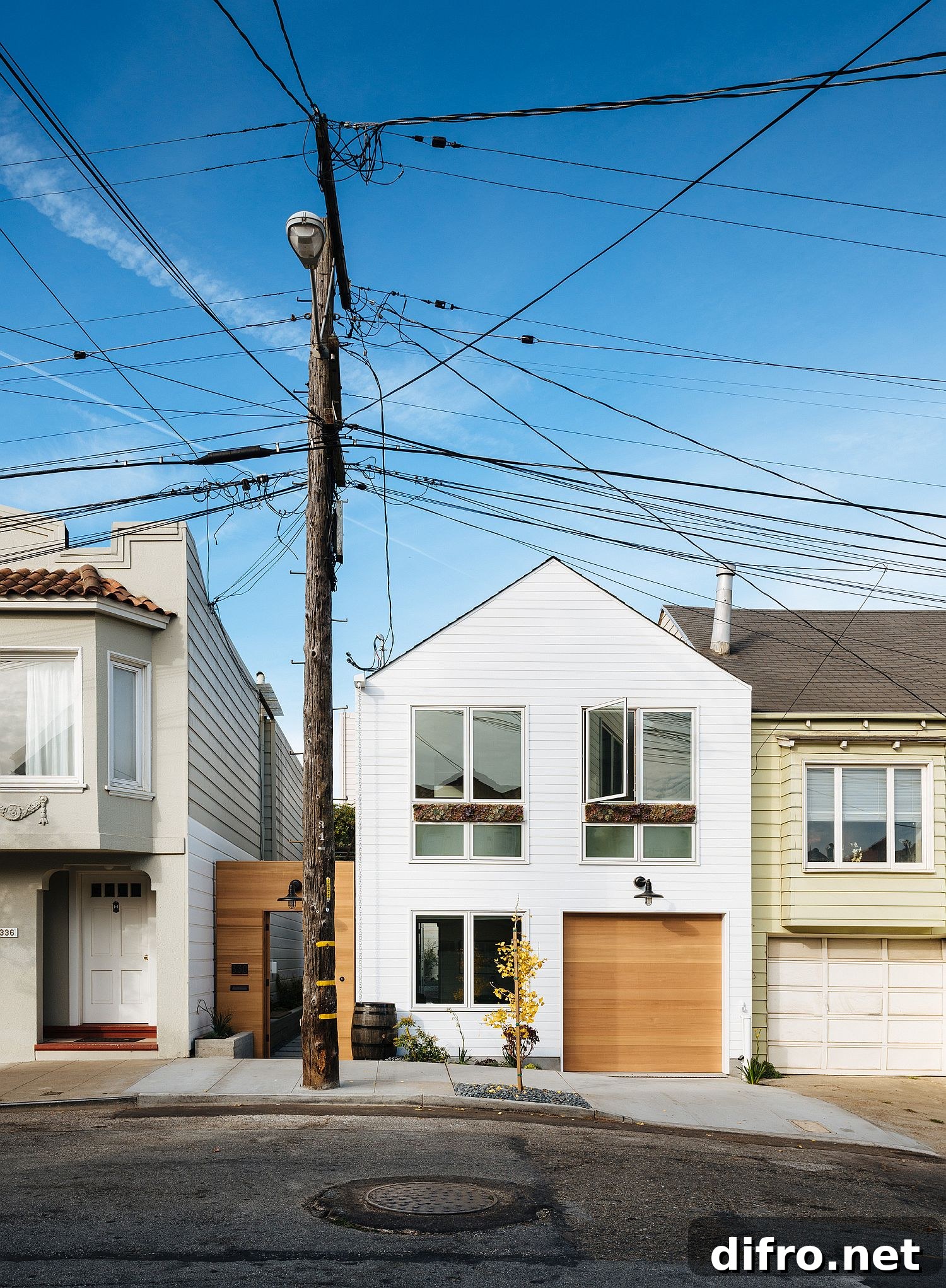
Structurally, the renovation introduces a thoughtful interplay of materials—wood and concrete—and a restrained, modern aesthetic that does not erase the building’s original character. From the street, the façade reads as familiar and composed, while the interior atmosphere feels contemporary and fresh. The upper level, clad with warm timber details, accommodates the private program: three bedrooms and ancillary spaces designed for family life.
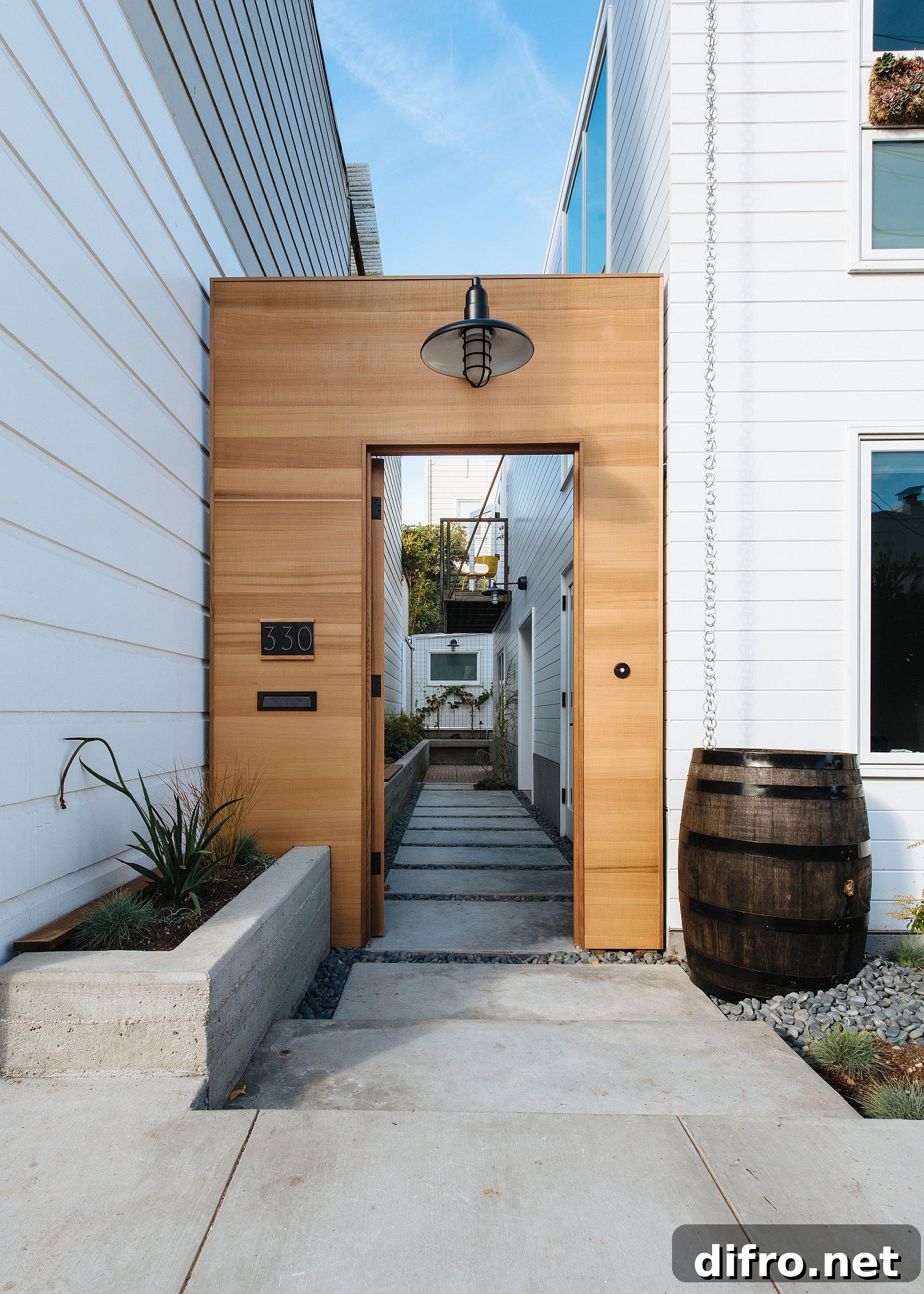
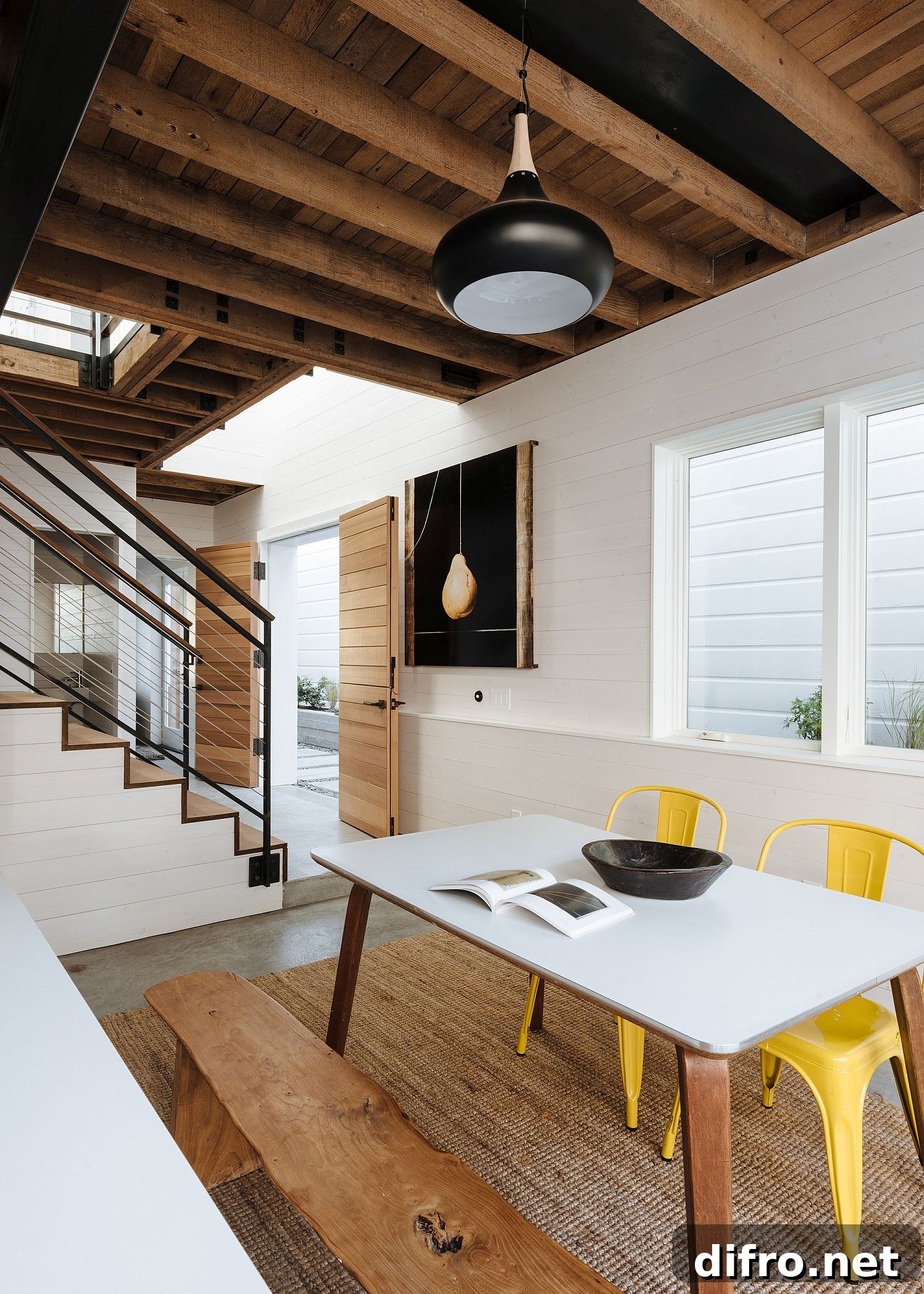
One of the design priorities was to create a quiet, sheltered transitional space between the street and the family areas. A private corridor leads from the entrance to the living room, acting as a buffer against traffic noise and urban activity. This protective element enhances privacy and comfort, making the interior feel like a calm refuge despite its dense neighborhood setting.
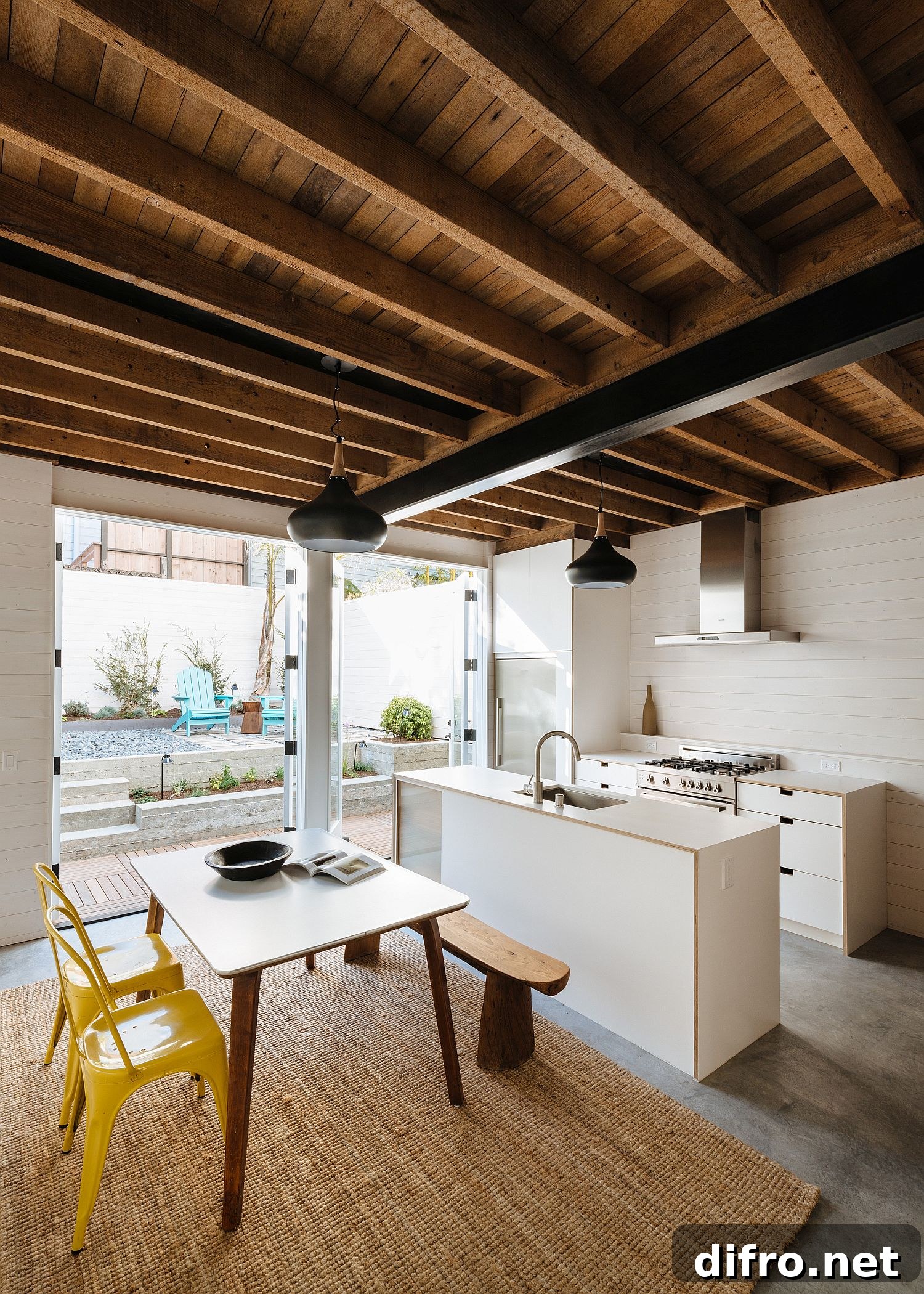
The ground floor opens to a combined kitchen and dining area that connects directly to a small rear yard. This layout supports indoor-outdoor living and brings daylight deep into the plan. In the dining area, a set of yellow chairs provides lively color accents against the restrained backdrop of wood and white surfaces—an economical yet effective way to add personality and visual interest to the otherwise neutral scheme.
Careful attention to lighting and surface finishes ensures that each room feels bright and welcoming. White walls and ceilings amplify natural light while wood elements—floors, cabinetry, and select wall cladding—add texture and warmth. The result is an interior that reads as modern and minimal yet comfortable and lived-in.
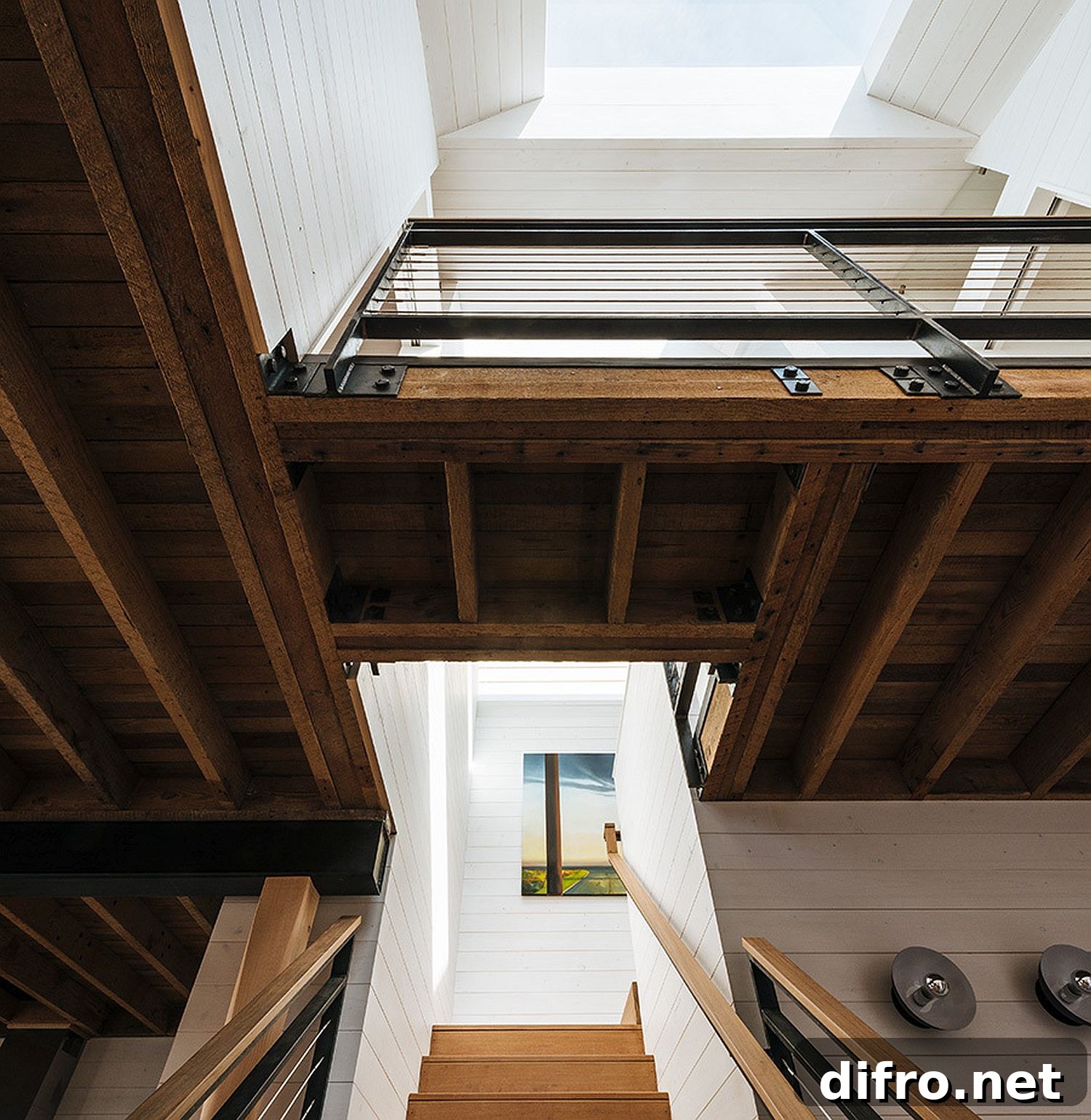
Where this home began as a one-bedroom cottage, the renovation reconfigures the footprint into a three-bedroom family home, providing more flexibility and privacy for a modern household. Bedrooms and private rooms are located on the upper level, where timber finishes create a sense of warmth and shelter. Throughout the layout, the design prioritizes practical, space-saving details that support everyday family life while maintaining a clean, contemporary aesthetic.
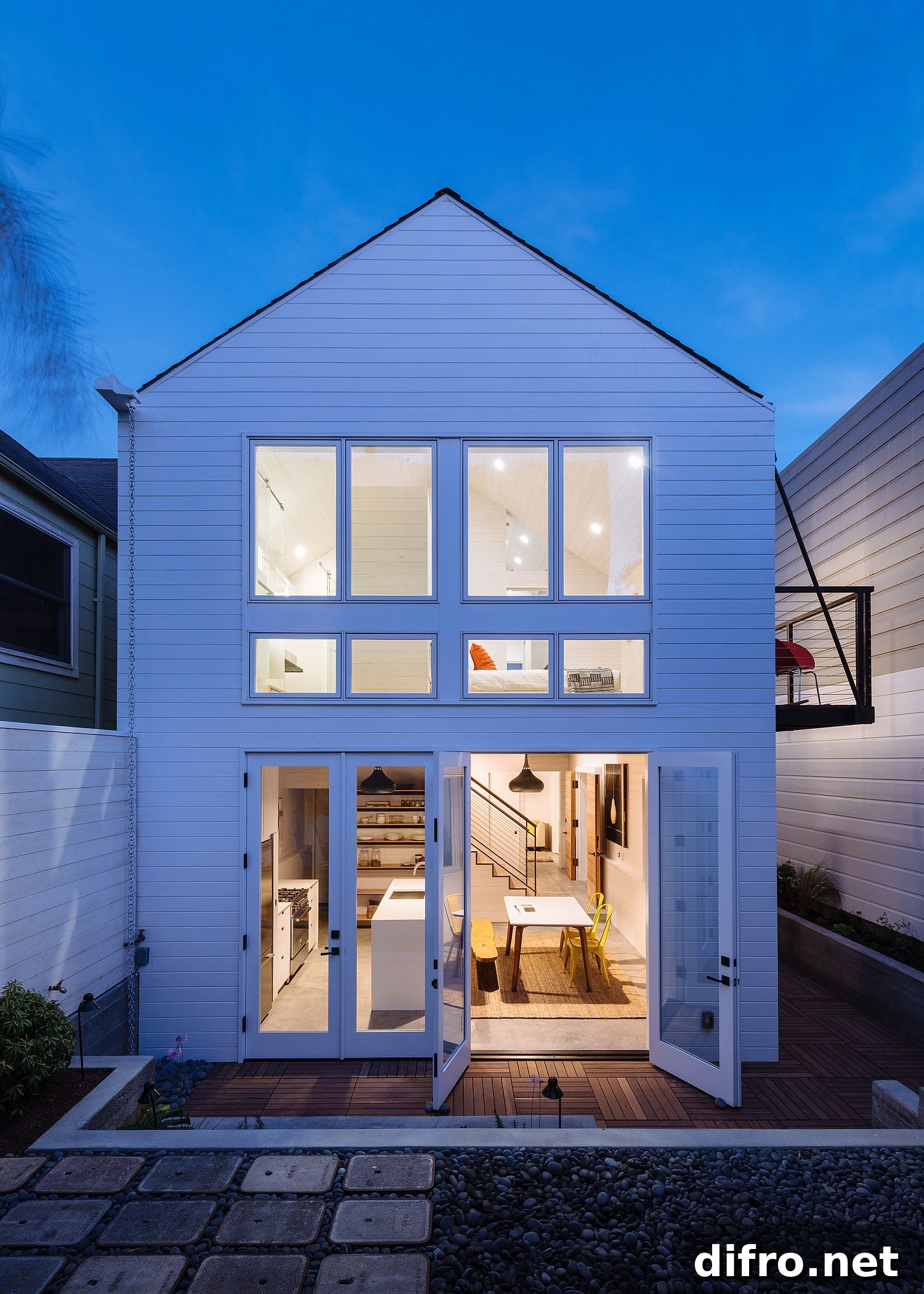
This Bank Street House renovation is an example of how a careful approach—opening spaces, emphasizing natural light, and using a restrained material palette—can transform an older dwelling into a comfortable, contemporary family home. The design preserves the building’s street presence while reimagining the interior for modern living, creating a home that feels both grounded in its history and refreshed for today’s needs. (Photography: Joe Fletcher)