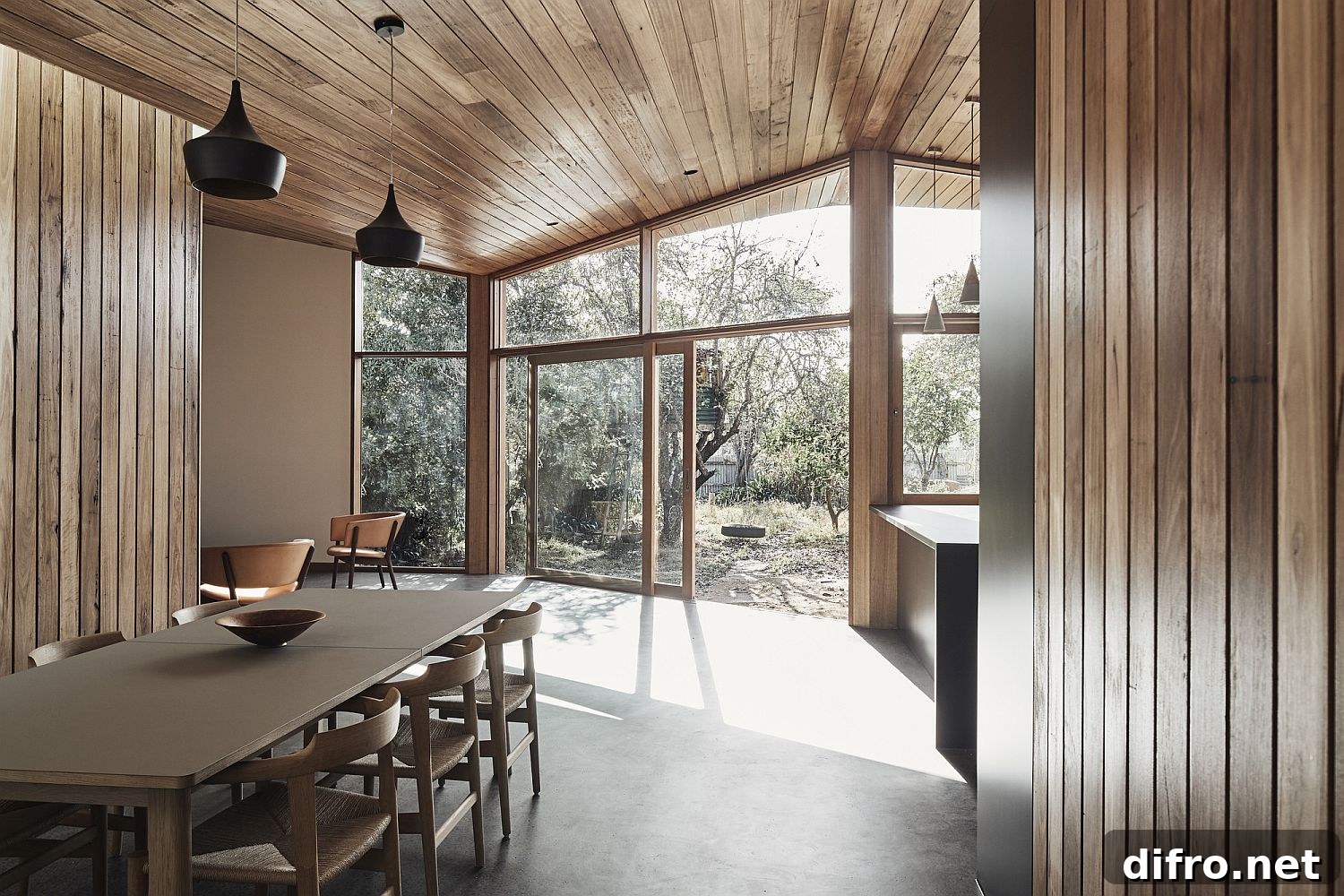
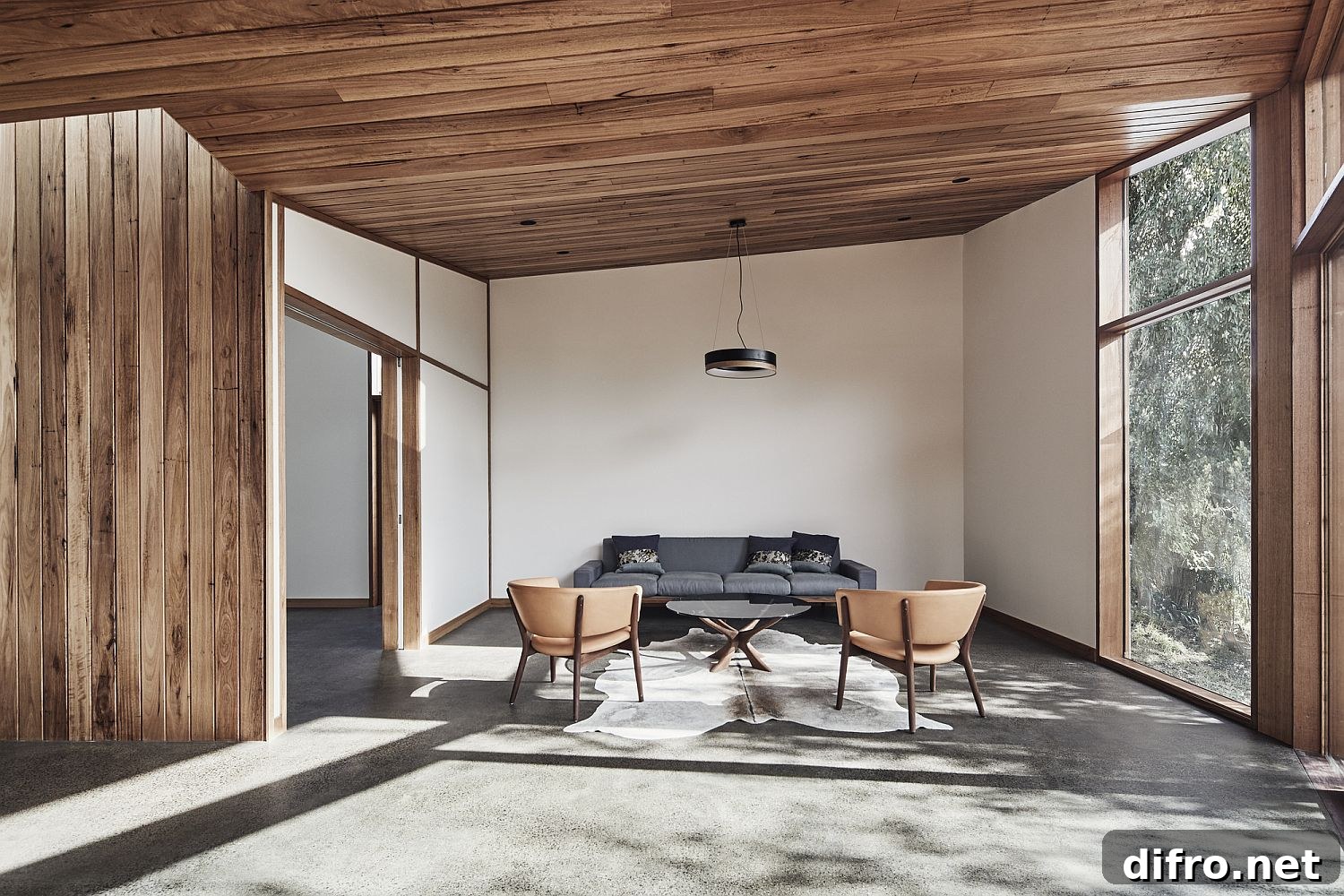
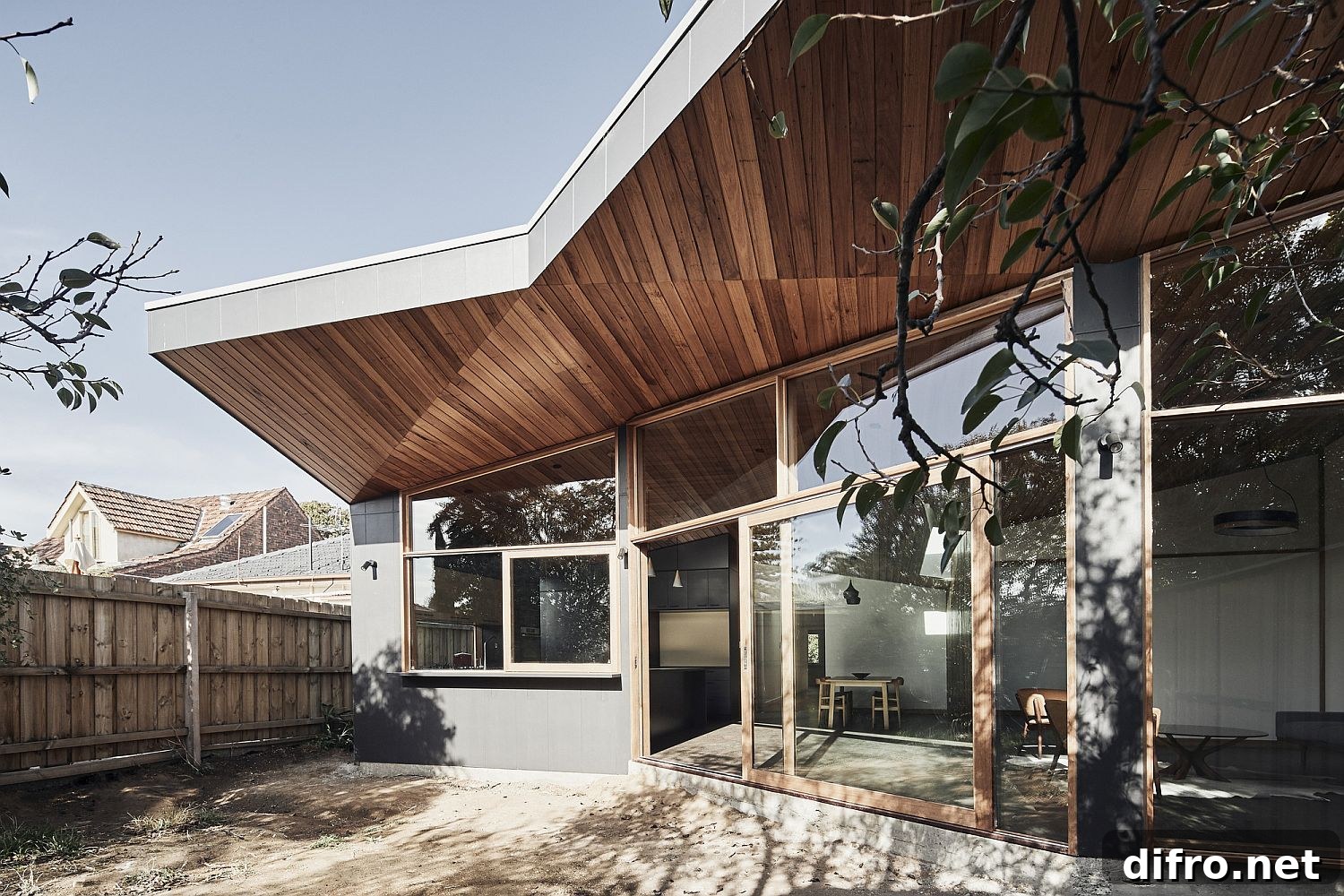
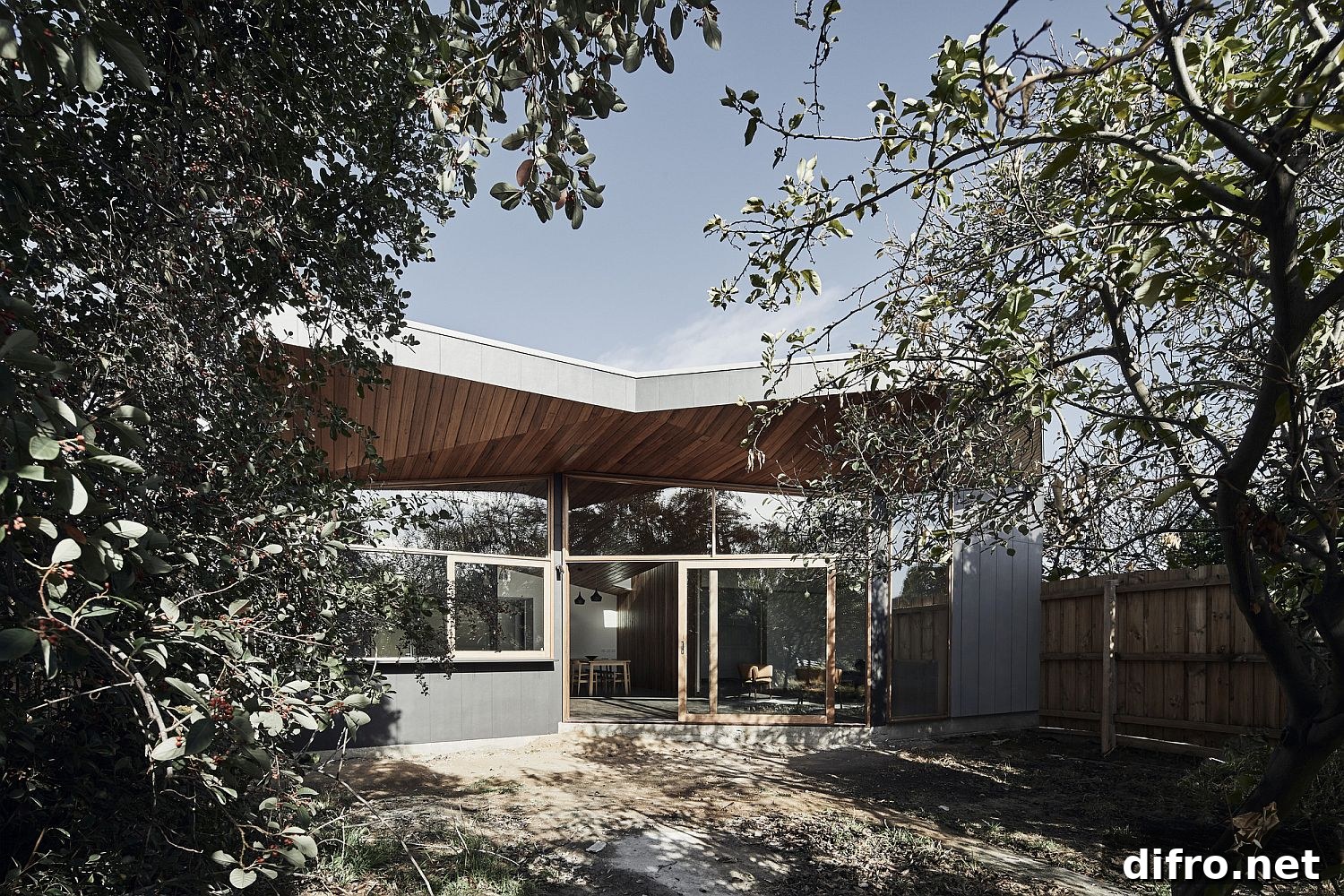
There are many directions a renovation can take when updating an older home in need of new life. This post‑war house in Australia takes a thoughtful approach, pairing the warmth of timber with a contemporary interior and sculptural design gestures that immediately draw the eye. The street façade, reimagined by Julie Firkin Architects, retains its heritage character, while the new rear extension transforms how the home connects with light, landscape and everyday living. Inside, the living area, kitchen and dining spaces open out to the backyard, and a folded wooden roof provides shading and a strong visual identity to the addition.
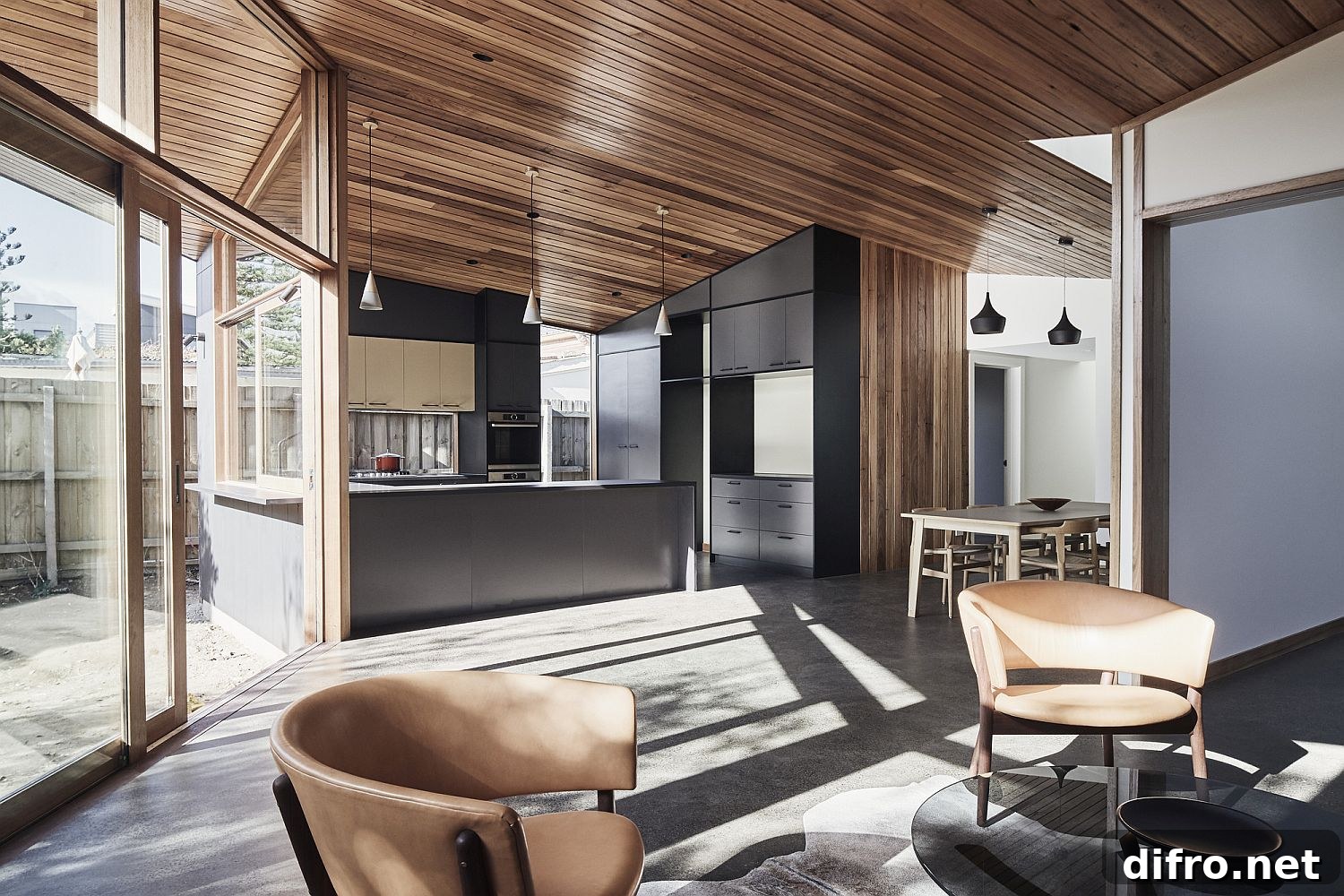
The interior plan is open and well connected while still providing distinct zones. Circulation flows naturally from room to room, and a sliding glass door separates a dedicated playroom for children from the open plan kitchen and living area, allowing the spaces to work independently or together. A restrained, neutral palette—anchored by soft grays—runs through most rooms, creating a calm backdrop that lets materiality and form take center stage.
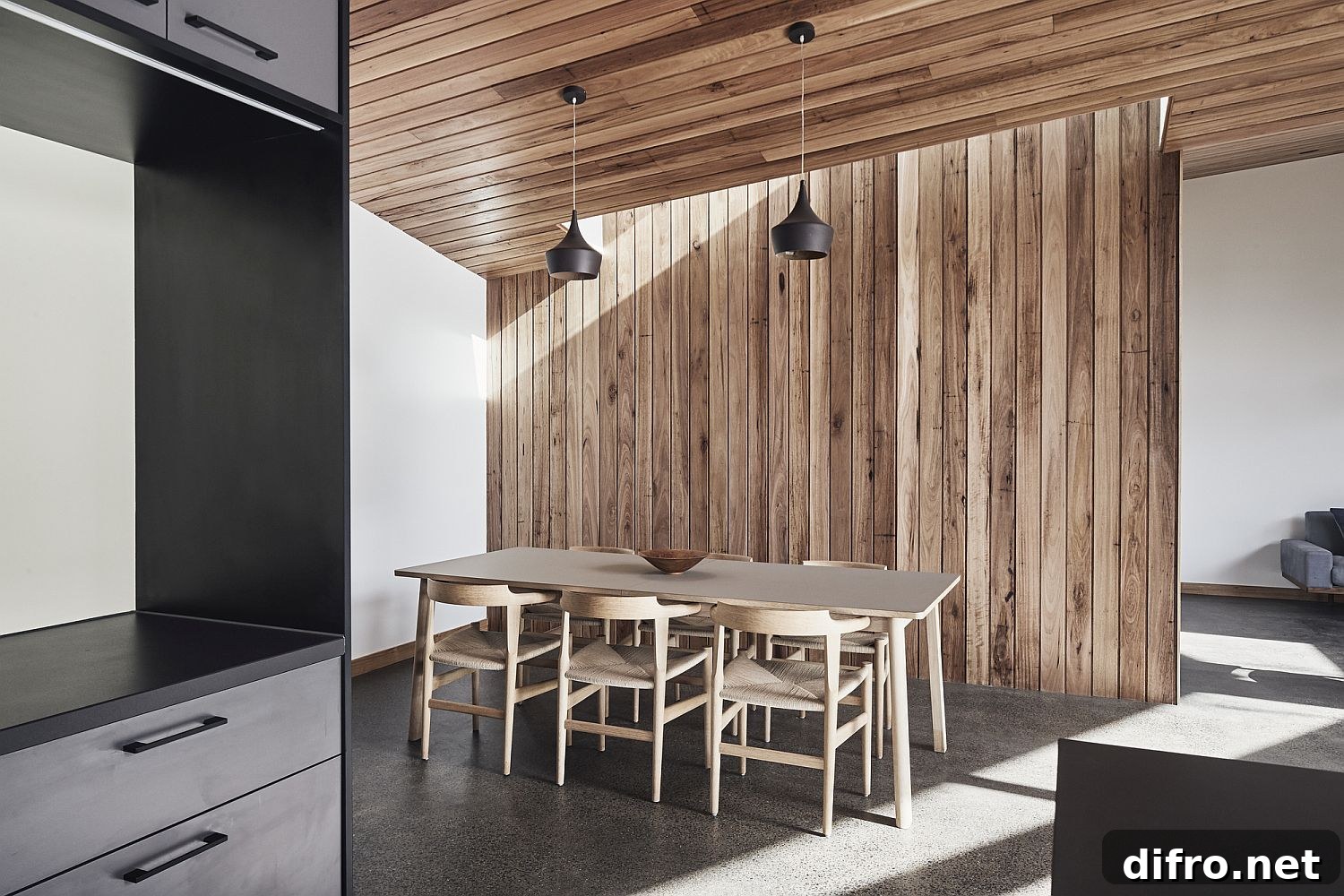
Geometric patterns and careful detailing are recurring motifs throughout the home. In the dining room, timber walling and a wood-clad ceiling create a cocooned, tactile backdrop for contemporary black pendant lights that serve as sculptural focal points. Minimalist furnishings and space‑saving solutions reinforce a clean, considered aesthetic that keeps the eye moving between textures and forms rather than clutter.
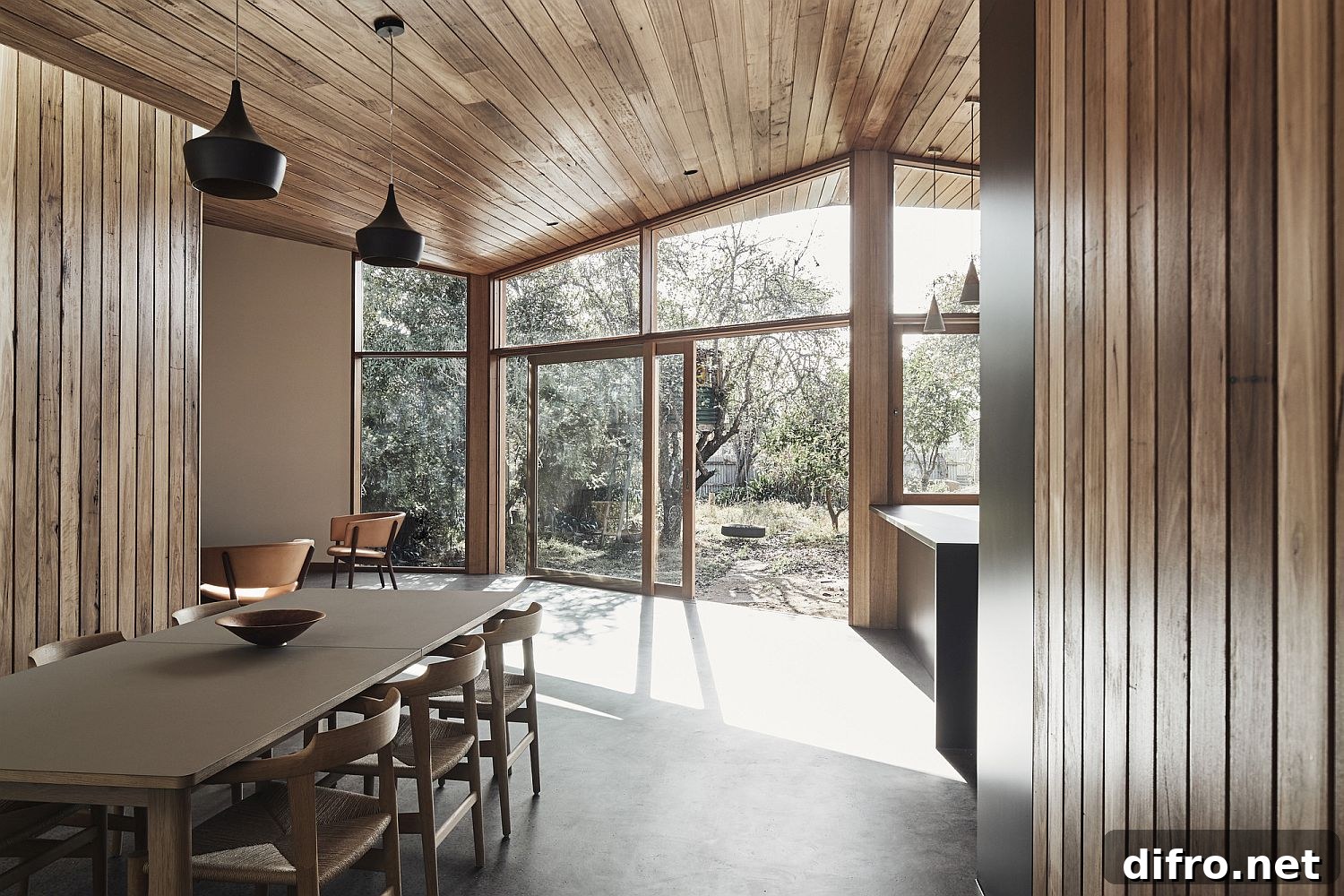
Clever contrasts—between floor and ceiling materials, between warm timber and cool gray finishes—give the rooms depth and dimension. The folded ceiling is particularly effective: it introduces rhythm into the volume, provides shading where needed and gives the rear façade a distinctive, sculptural presence. Large glazed doors and windows frame views to the garden and flood the interior with natural light, creating a seamless relationship between indoor living and the outdoors.
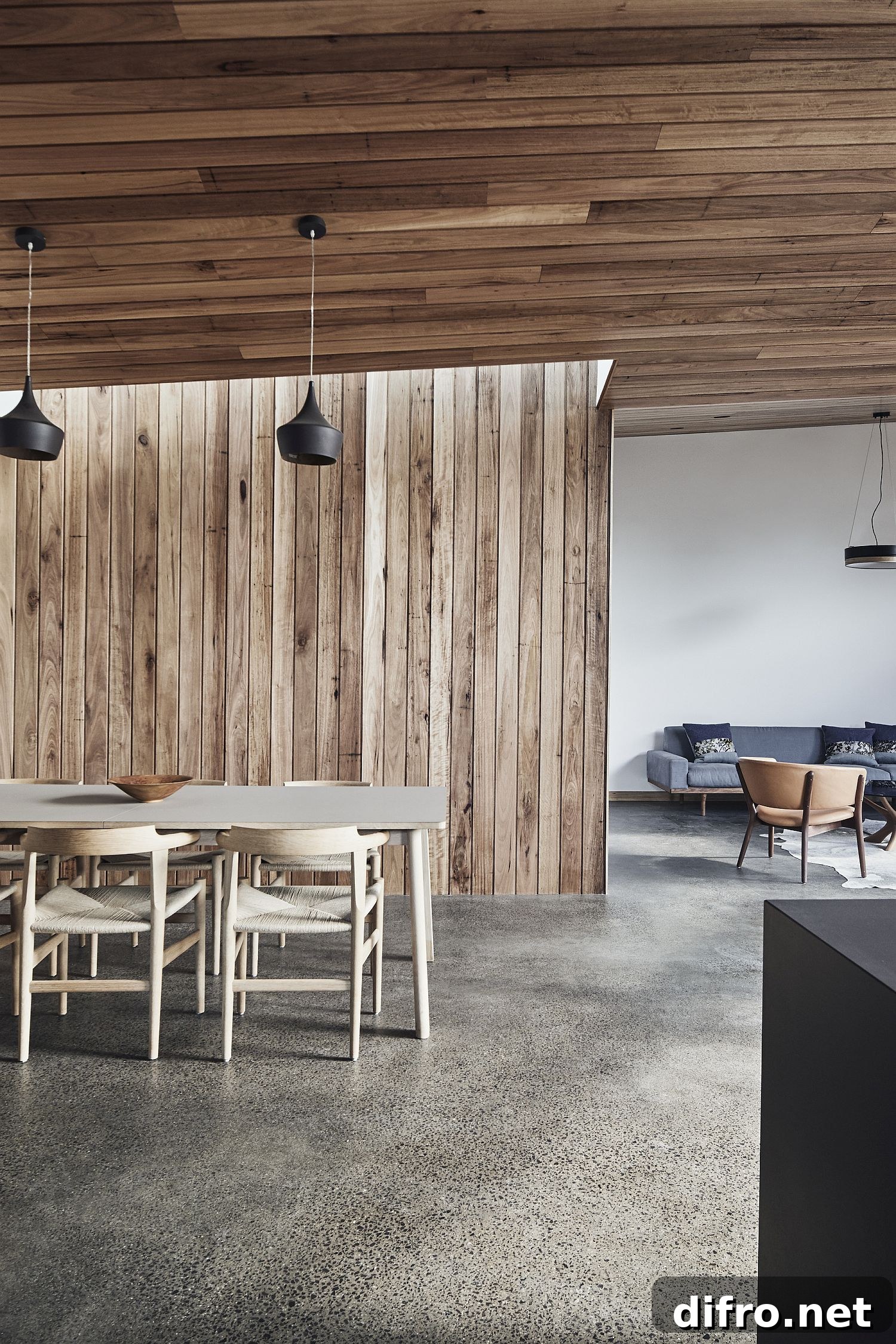
The rear extension combines glass and timber with thoughtful detailing to feel both contemporary and warm. The kitchen opens effortlessly to the outdoors, encouraging alfresco dining and an easy flow for everyday living. In the sitting area, a gray sofa paired with subtle pops of color on accent chairs keeps the living space relaxed yet stylish. Throughout the design, practical choices—like durable finishes and clever storage—ensure that the house functions well for family life while remaining visually calm and refined.
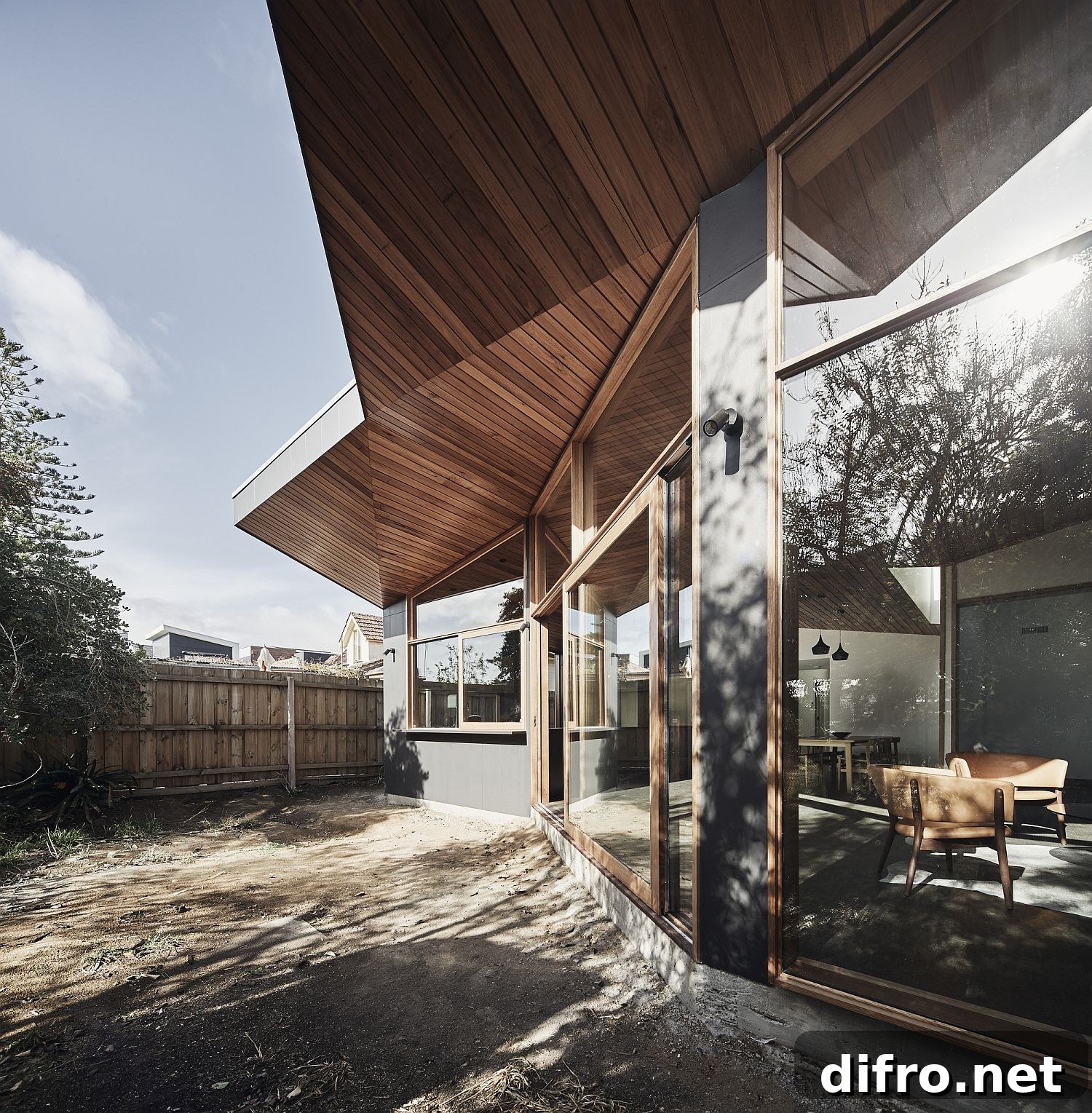
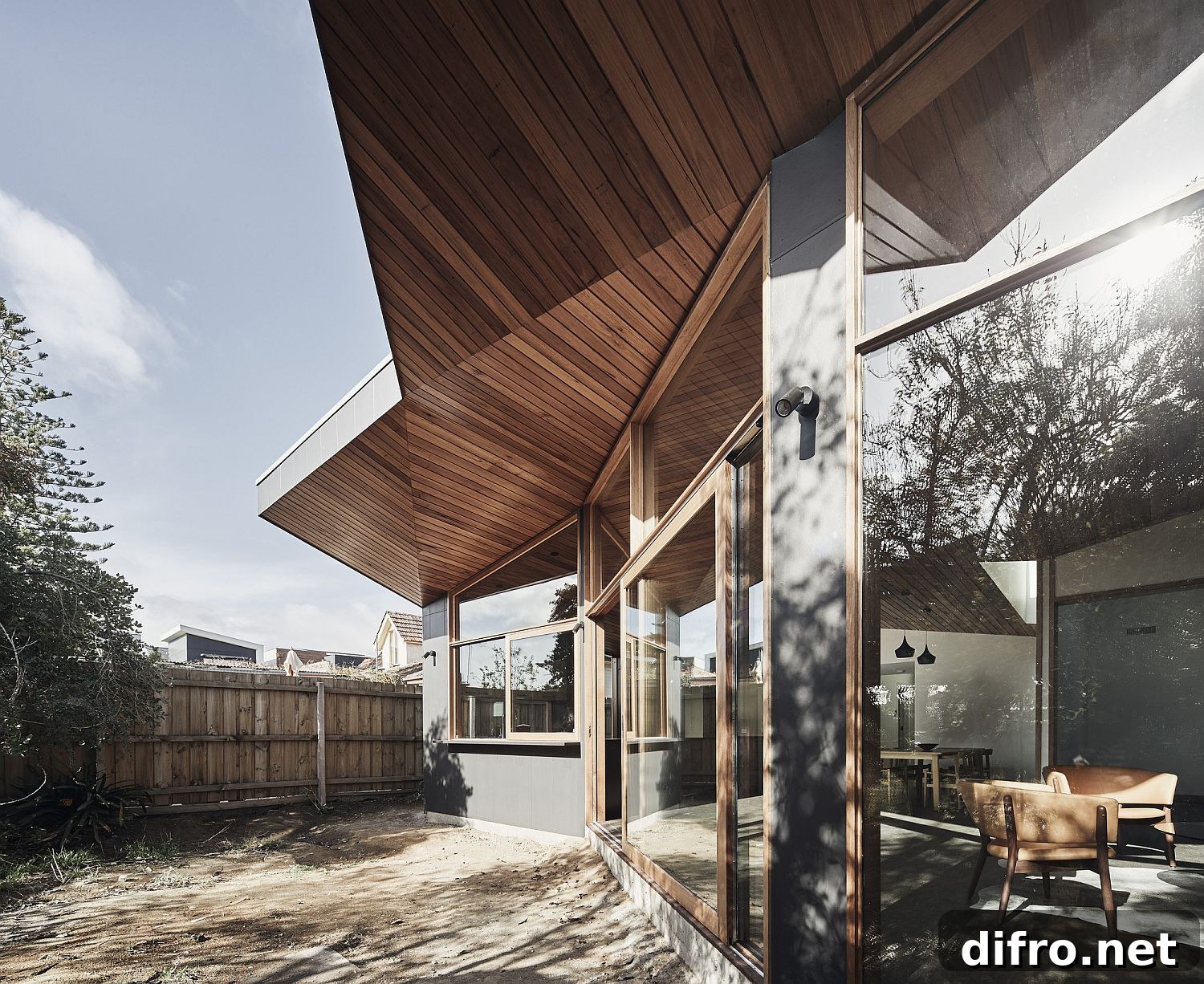
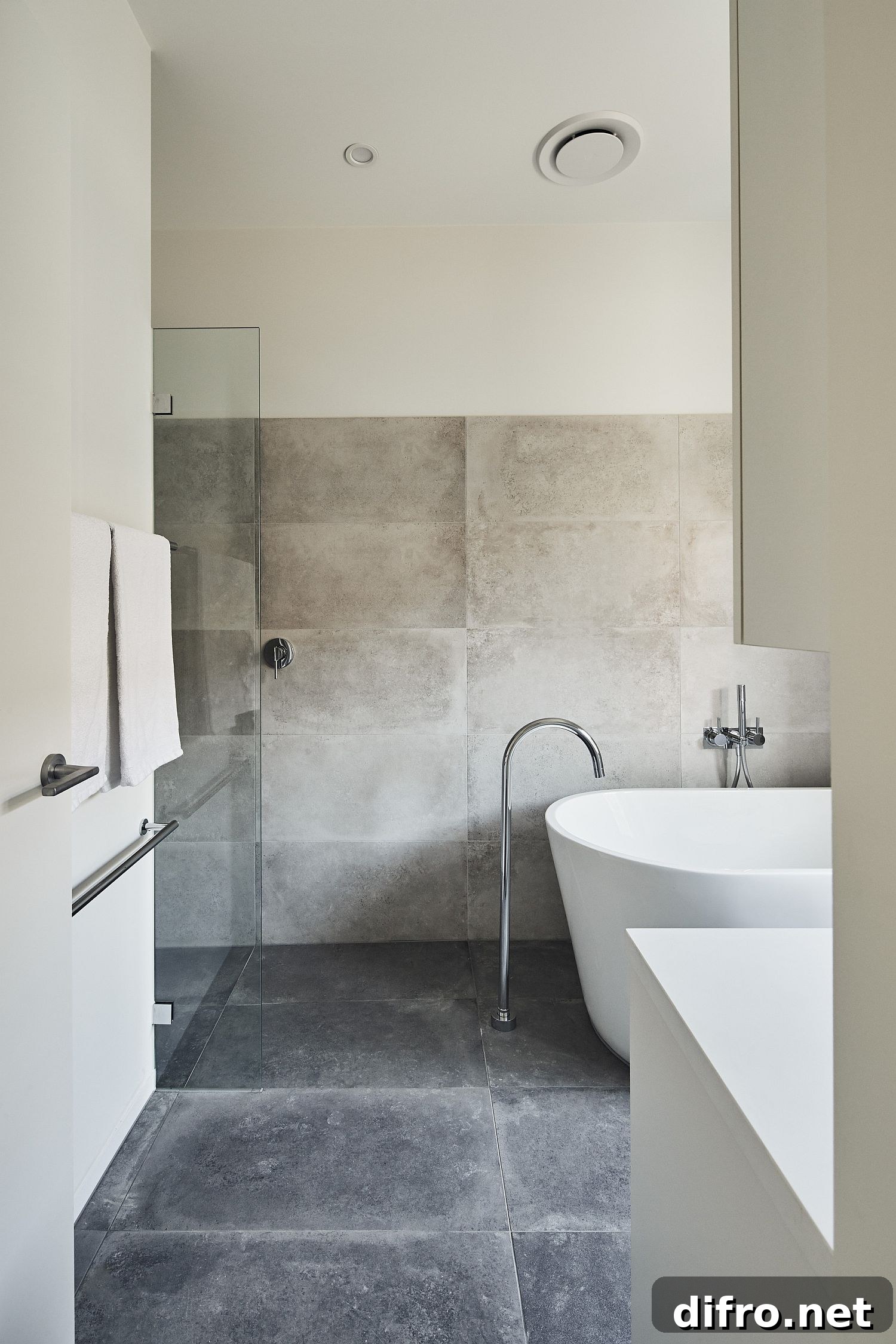
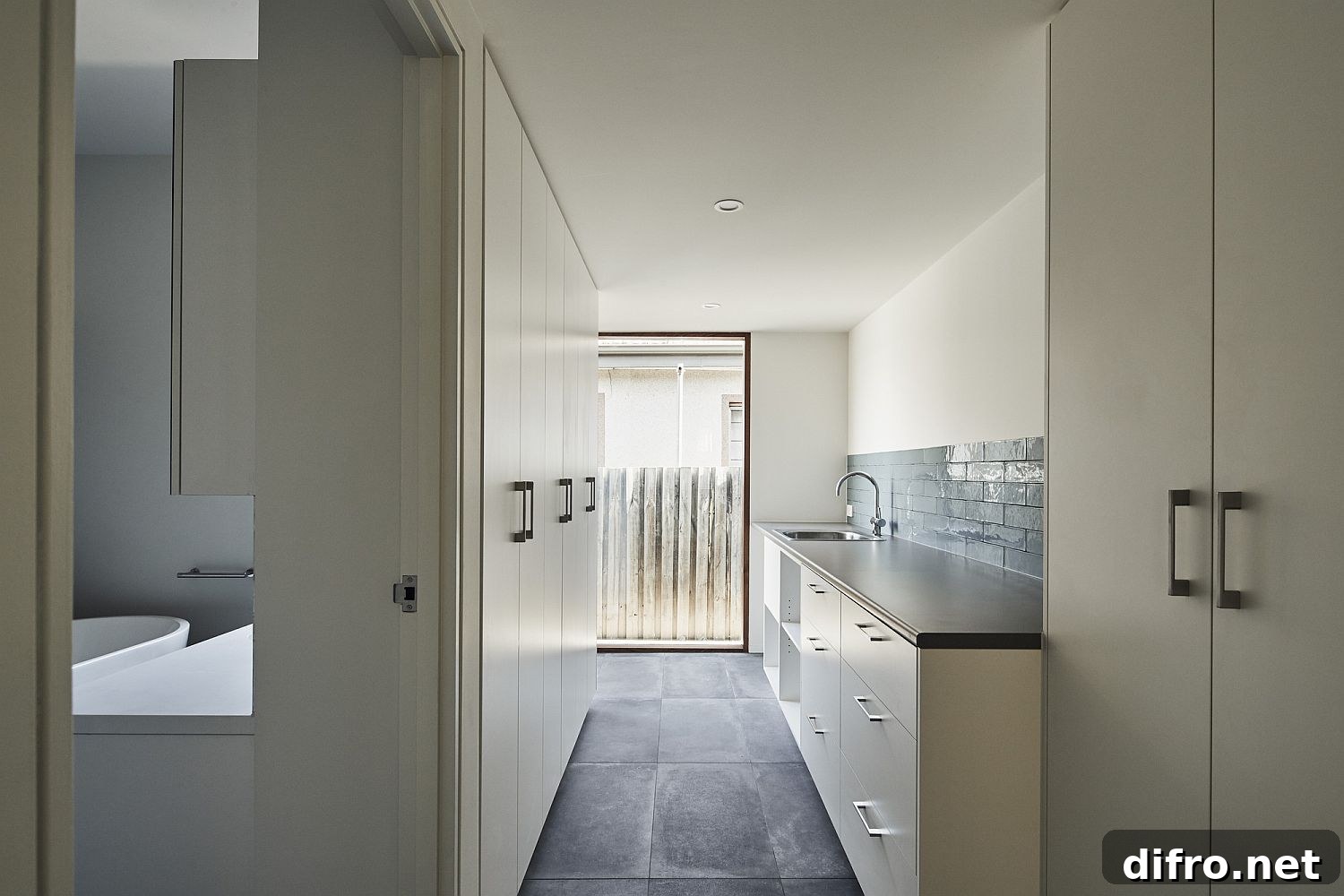
Bathrooms and utility areas continue the restrained material language. Stone and white finishes create a fresh, contemporary feel in the bathroom, while generous daylight and clean surfaces keep the spaces bright and practical. Landscaping and existing trees were retained to provide natural shade and to help the extension sit comfortably within its suburban context.
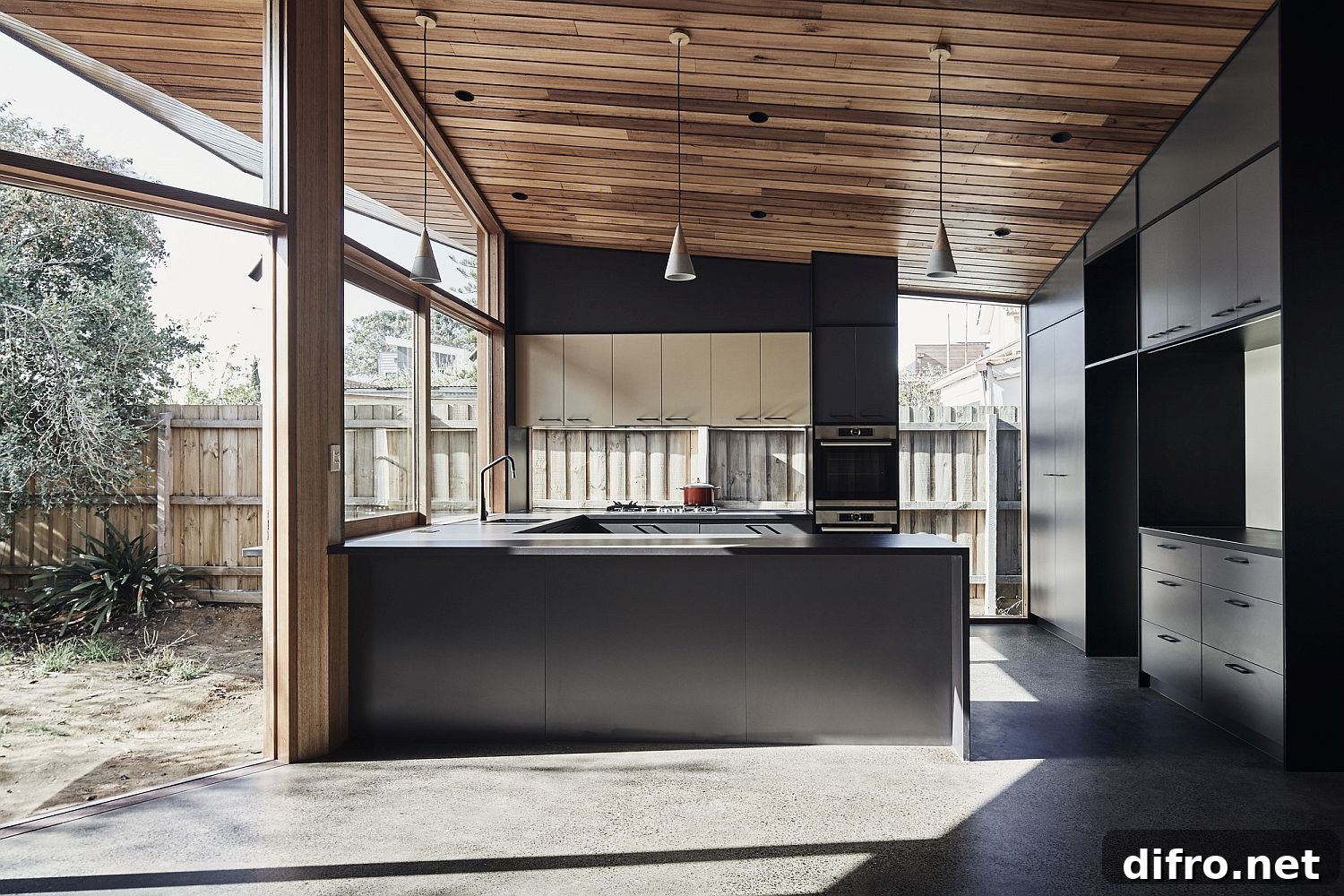
The original house is a modest brick veneer typical of post‑war Australian suburbs. To preserve the neighbourhood character, the front façade and the original corbelled brick porch remain intact. A corridor that serves bedrooms, bathrooms and utility spaces leads to the new rear addition, where the scale, light and views shift dramatically—transforming the way the home is used and experienced.
Overall, the renovation balances respect for the original home with a clear, modern addition that enhances daily living. The thoughtful use of timber, careful attention to natural light and a considered material palette produce a warm, livable interior that reads as both contemporary and sympathetic to its context. Photography by Peter Bennetts captures the subtle textures and the way light interacts with the new spaces, highlighting the clarity and cohesion of the design.