Step-down, or sunken, living spaces trace their roots to the late 1950s and are enjoying renewed popularity in contemporary interiors. This design approach—lowering a portion of the floor—offers practical benefits when increasing ceiling height isn’t possible. A lowered living area naturally defines zones in an open plan, creating intimate pockets without full-height walls. Using partitions, short walls, built-in seating, or thresholds also helps transition between different flooring or materials, something that can be challenging in completely open-concept layouts.
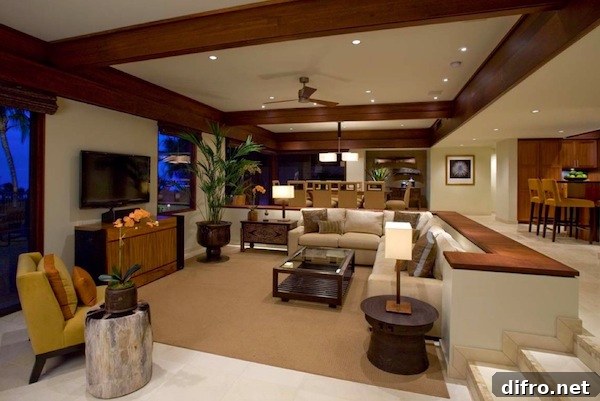
Image: Own By Design
Open plan living room ideas
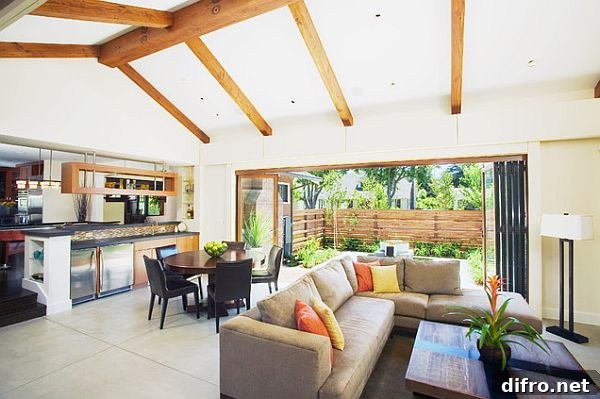
This living room by Own By Design demonstrates how a few steps down can distinguish a seating area within an open plan, adding a sense of intimacy without isolating the space. Here, the living room, kitchen, and dining area flow together, yet distinct thresholds and an L-shaped divider subtly define each zone. A sectional positioned near the divider, layered cushions, and a grouping of tables create a comfortable media corner ideal for relaxing and watching television.
by Nicole Lanteri
by Adrienne Chinn / Photos: Richard Gooding
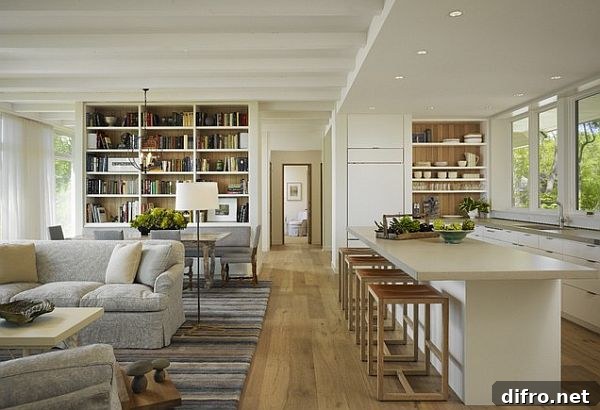
If you have an L-shaped divider or other partial partition, you can emulate this design. Box the divider in drywall and add a wood cap to create a shelf or low barrier. Alternatively, replace the divider with open shelving, a railing, or a built-in sofa to maintain sightlines while defining the living zone. Finish the room with plants, layered lighting, a ceiling fan, a sectional, and a mix of seating to balance comfort with visual interest.
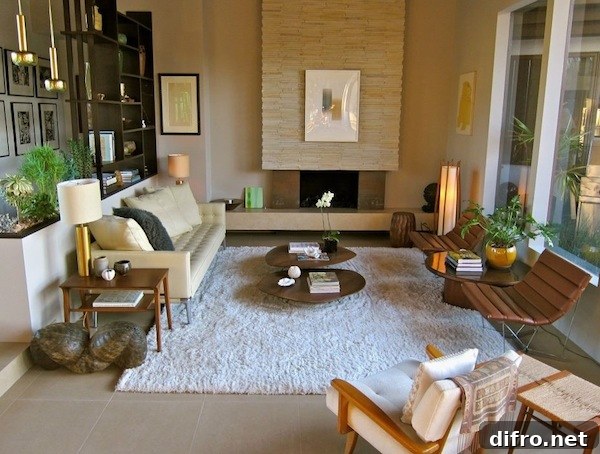
Image: Natalie Epstein Design
Natalie Epstein Design illustrates how an existing living room can be converted into a sunken area during a broader remodel. Removing partition walls to form a single open space can be complemented with subtle divisions such as glass shelving or partial cabinetry that serve as a deck or display. Use a palette of taupe, warm grays, and natural porcelains—porcelain travertine tiles pairing with a soft area rug—to add texture. Wood-slat chairs, layered side tables, and a striking lamp will complete the look. If you don’t have a fireplace with shifting planes, use artwork or a focal wall to echo the room’s warmth and depth.
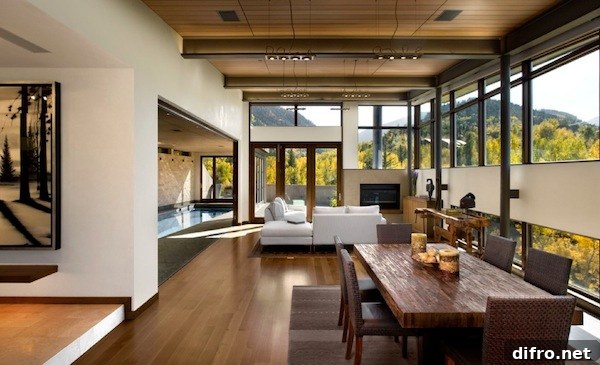
Image: 186 Lighting Design Group
by Peter A. Sellar – Architectural Photographer
by Ana Williamson Architect
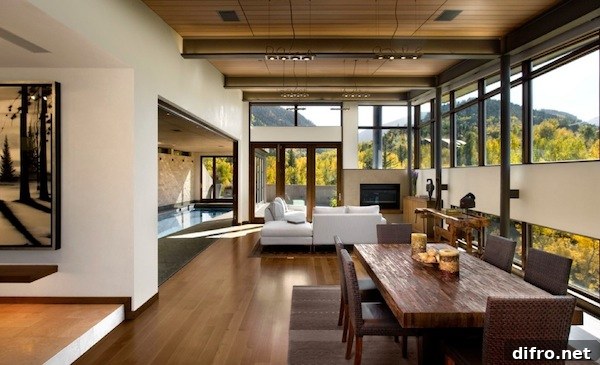
The living-dining area of the Edge House by Studio B Architects shows how wood ceilings and flooring paired with white walls produce a calm, cinematic interior. While you may not have a dramatic natural backdrop, you can replicate the interior mood with drywall, wood ceilings, and complementary baseboards. Pair bright white upholstery with warm wood furniture and introduce dark-ash rugs to ground the seating area and harmonize with dining pieces.
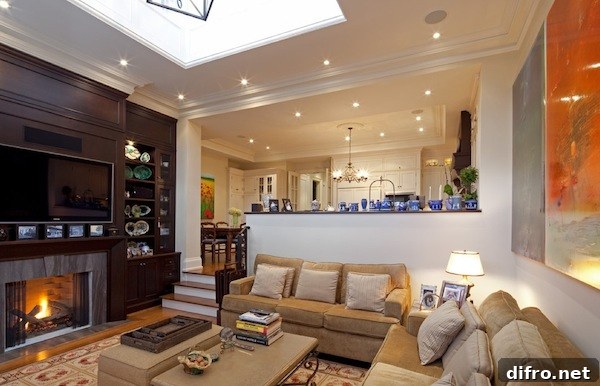
Image: Photo Klik
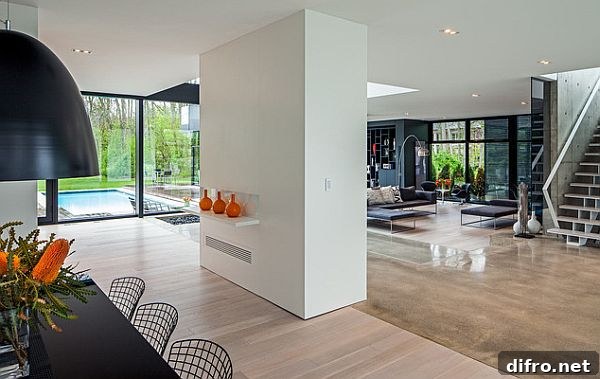
This sunken living room in downtown Toronto uses a low divider to separate the kitchen from the seating area without creating a disconnected feel. Recessed lighting running through both zones visually links them, and a curated wall behind the couch—artwork flanking a mounted TV above the fireplace—adds a cohesive, gallery-like quality.
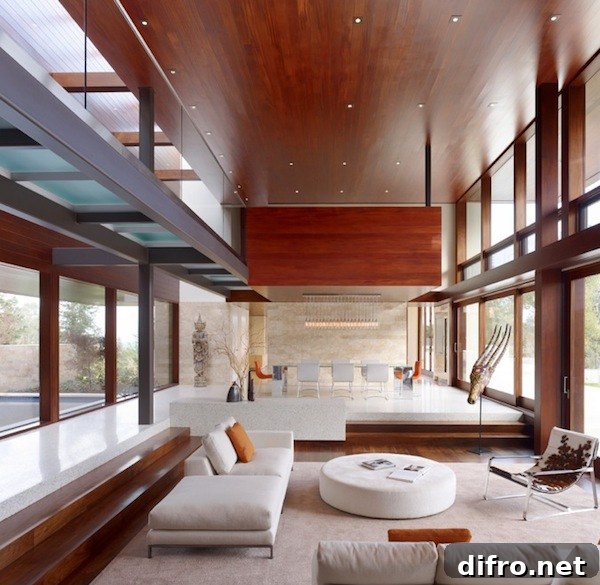
Image: Lencioni Construction
Many of these ideas translate well to everyday homes: timber floors and cladding add warmth, artwork creates focal points, and balanced color palettes keep the space inviting. Whether you choose a subtle step-down or a pronounced sunken lounge, focus on cohesion—consistent materials, layered lighting, and thoughtful furniture placement will create a comfortable, welcoming living area for family and guests.