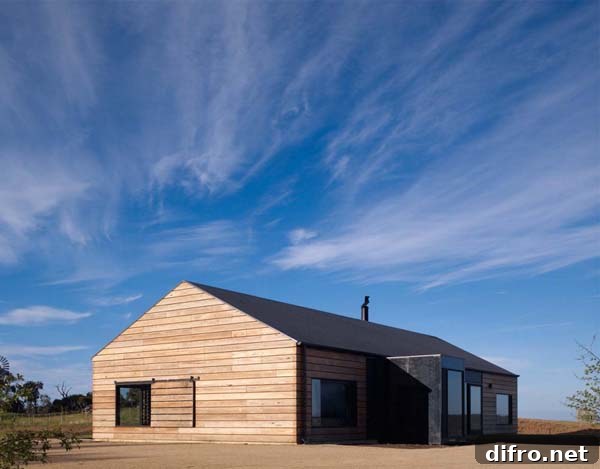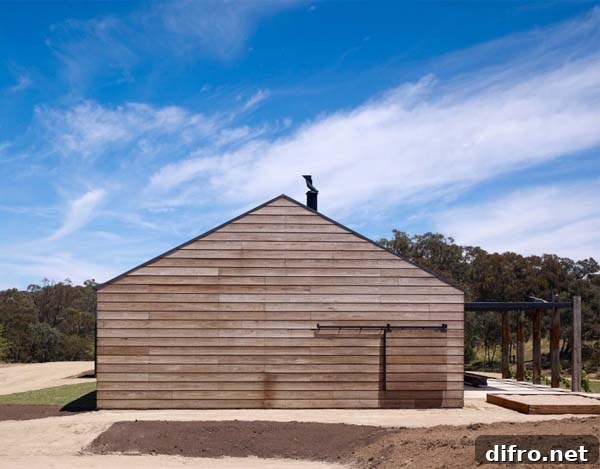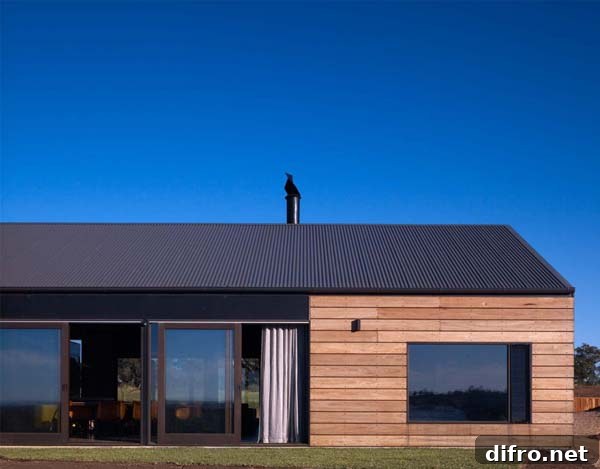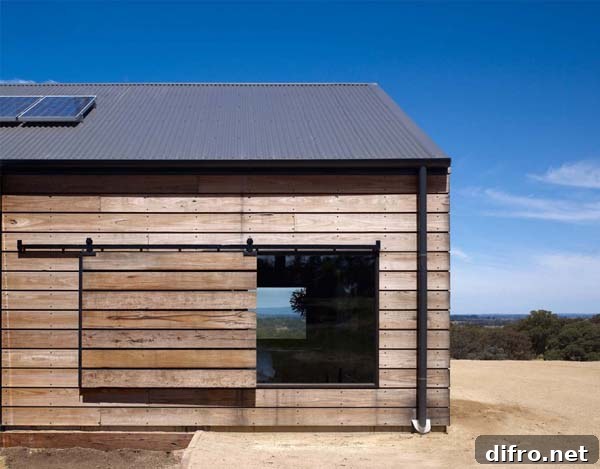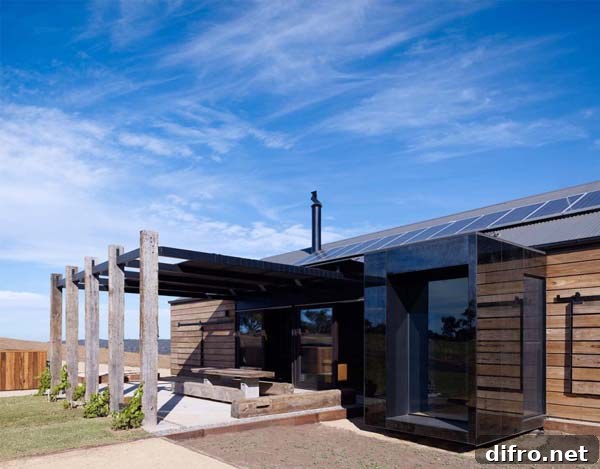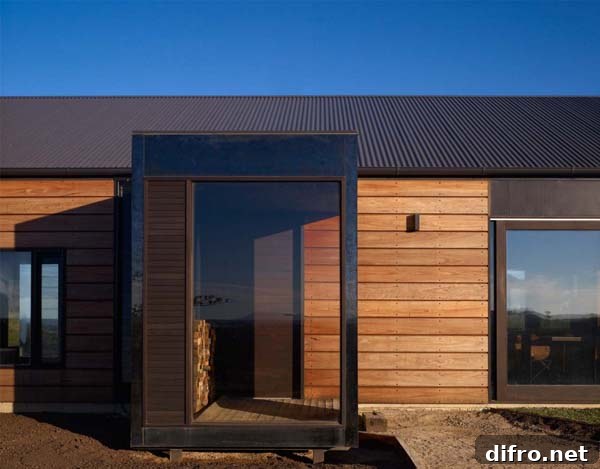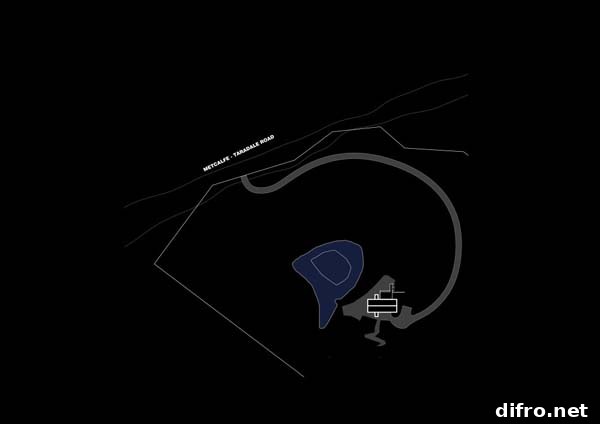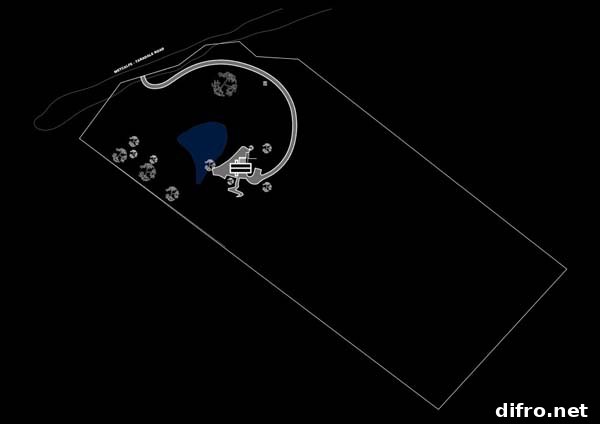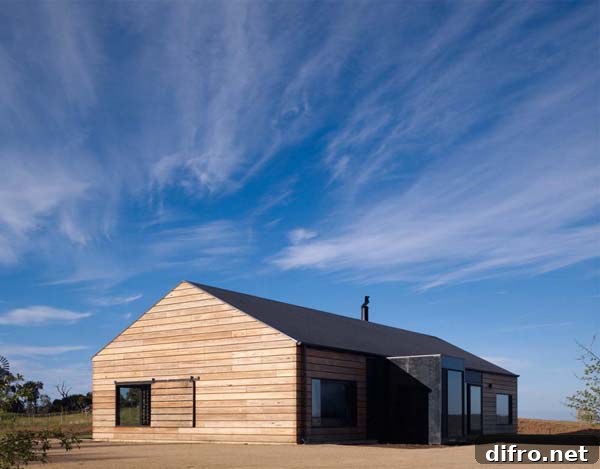
The Hill Plain House in Victoria, Australia is a study in restrained, contemporary farmhouse design that combines simple geometry with warm, tactile materials. Designed by Wolveridge Architects, the residence uses timber as the defining element of its exterior while integrating contemporary building methods and a careful, site-responsive layout. Custom blackbutt cladding wraps the house, and thoughtfully placed windows frame the surrounding landscape so occupants can enjoy quiet, restorative views and a strong connection to the natural environment.
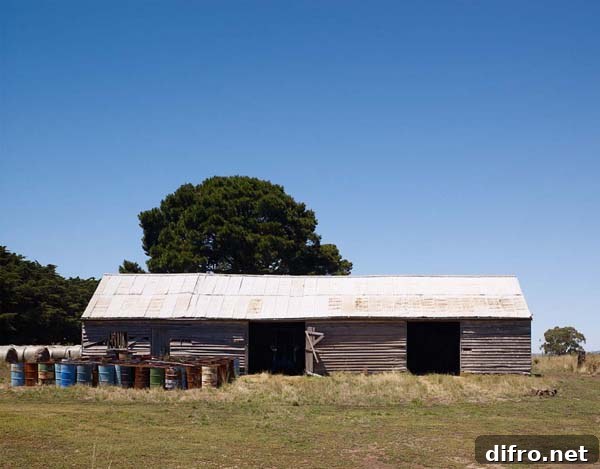
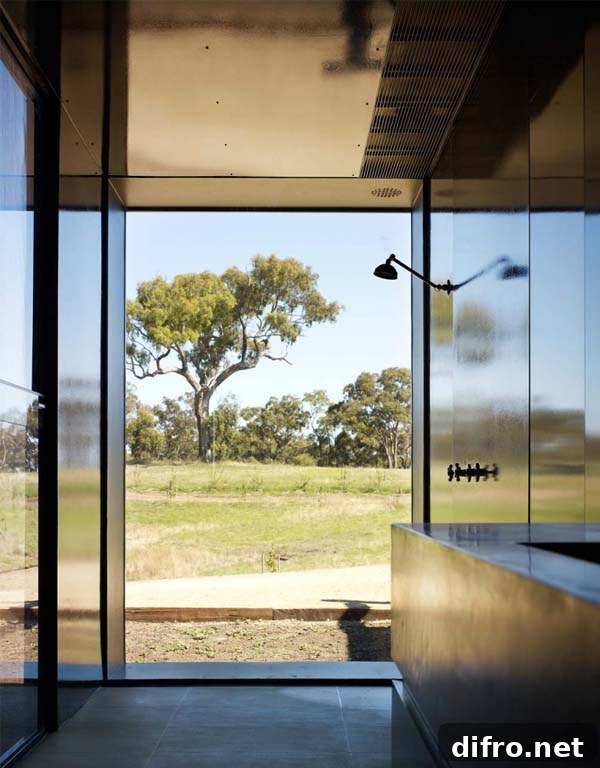
The building references the local vernacular—Victorian-era farm buildings—while translating those influences into a modern language. A prominent ridge line oriented to the north gives the house a familiar agricultural silhouette, yet the composition reads as a contemporary farmhouse. The north–south orientation is deliberate: it encourages passive solar gain in cooler months, captures wide panoramas across the property, and supports balanced daylighting throughout the interior. Large sliding doors on both the north and south façades open to views and outdoor living while helping to control prevailing winds.
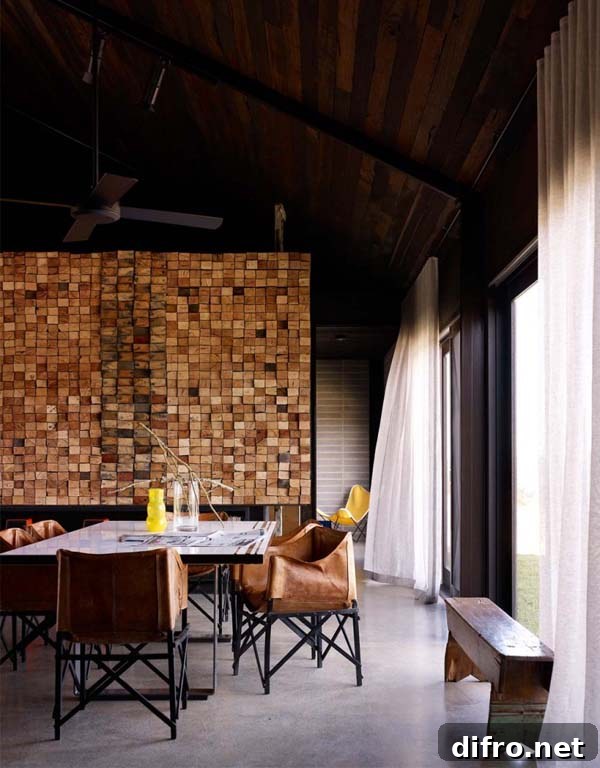
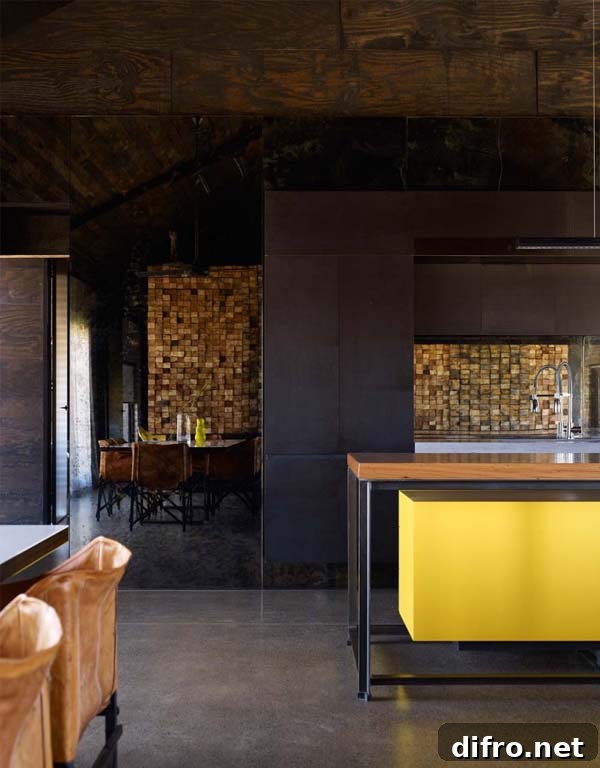
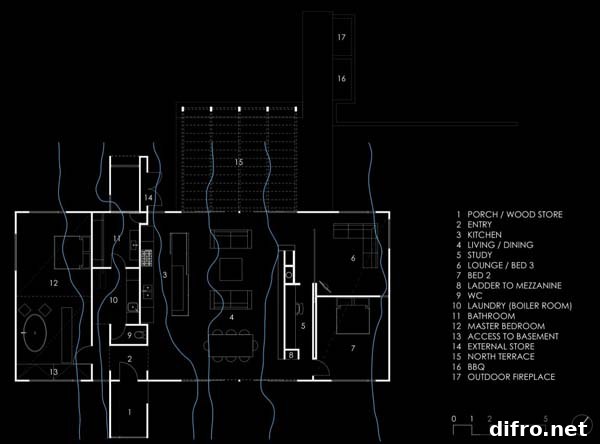
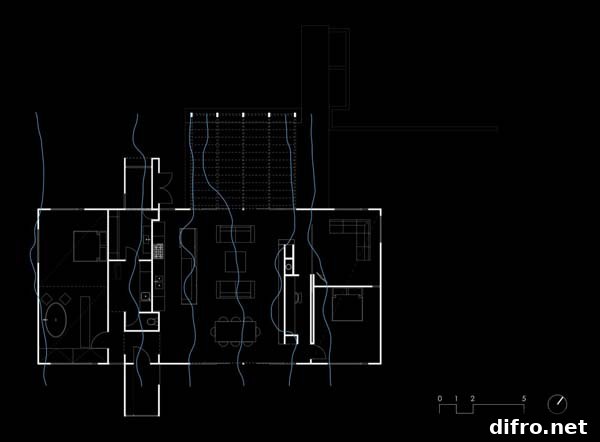
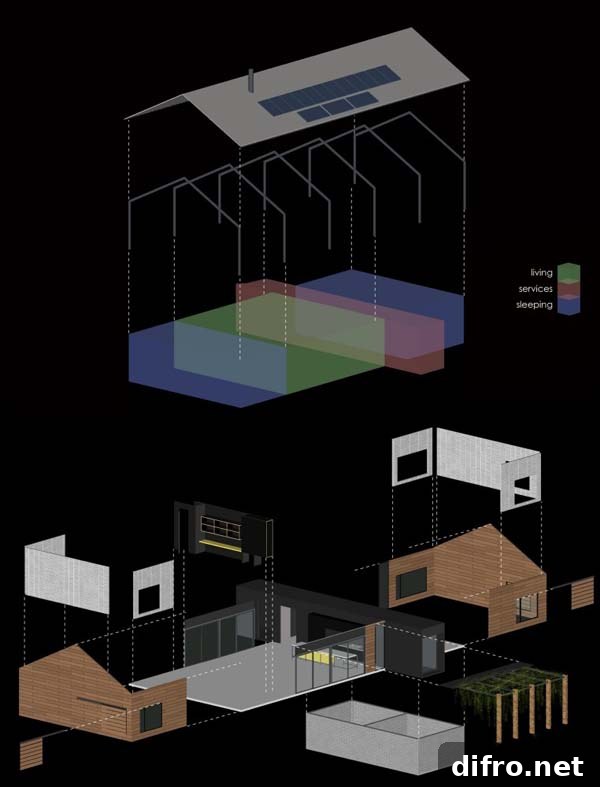
Access is arranged from the south, where an entry sequence moves inward to the home’s primary living spaces. From this entrance you flow through zones that include a compact bathroom, a practical kitchen and a dedicated laundry, arriving at a centrally situated living room. The living room serves as the home’s social heart and is anchored by large north- and south-facing sliders that visually and physically connect interior spaces with the landscape. The sliders are an important functional element, providing cross-ventilation and a sheltered threshold that reduces wind exposure to interior rooms.
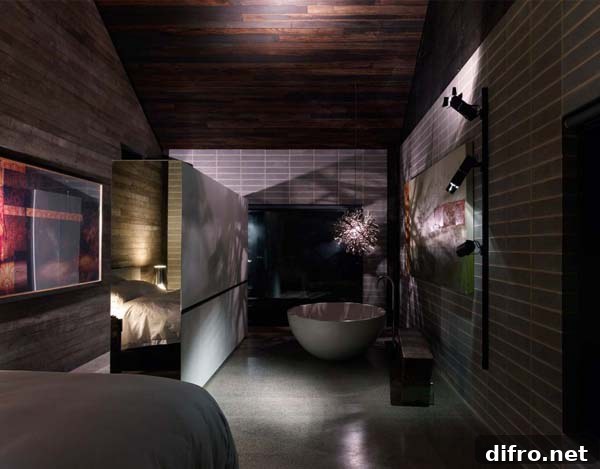
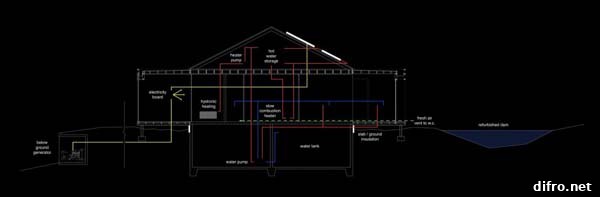
Sleeping areas are positioned at opposite ends of the plan, creating privacy and clear separation between communal and private zones. This arrangement enhances thermal zoning and acoustical separation, while also allowing each bedroom to enjoy distinct orientations and outlooks. A wood-fired boiler contributes to the house’s modest mechanical strategy, supporting a more traditional, low-tech approach to heating that complements the building’s material palette.
Material selection reinforces the design brief of combining contemporary techniques with a familiar, farmstead character. In addition to the custom blackbutt cladding, the Hill Plain House uses steel and concrete for structure and durability, while recycled timber and concrete masonry provide texture, warmth and sustainable reuse where appropriate. These choices produce a residence that feels robust and contemporary yet rooted in place: the patina of timber and the solidity of masonry work together to create a calm, enduring expression.
Beyond cataloguing materials and plan relationships, the project is notable for how it arranges light, ventilation and views to support daily life. The north-facing ridge and generous glazing allow winter sun to penetrate living areas and provide long sightlines to the landscape. Cross-ventilation through the north–south orientation and the pair of large sliders helps reduce reliance on mechanical cooling during milder seasons. The house’s compact service core—bathroom, kitchen, laundry—keeps circulation efficient and preserves more of the plan for flexible living spaces.
Overall, the Hill Plain House demonstrates an economical but carefully considered approach to modern rural living: it retains the enduring qualities of a farmhouse—simplicity, clarity of form and connection to the land—while incorporating contemporary construction methods and thoughtful sustainable strategies. The result is a residence that feels both familiar and contemporary, offering comfortable, well-lit interiors and a strong relationship to the surrounding Victorian countryside.