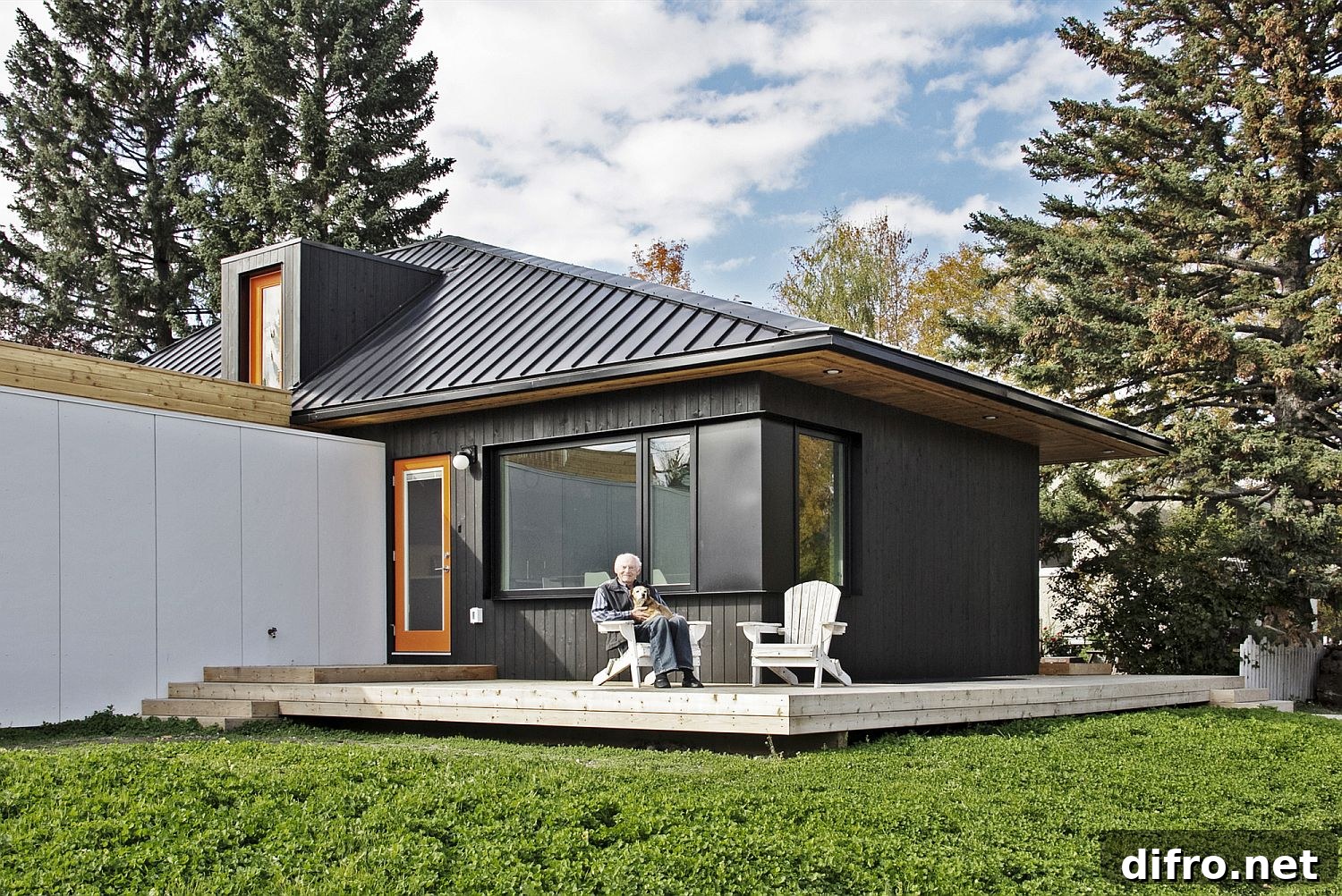
Modern life often pushes children to leave home early, and for many families that separation becomes permanent. Once common, multi-generational households have become rare in many Western cities as urbanization, fast-paced lifestyles and globalization favor smaller, nuclear family units. Yet a renewed interest in shared family living is emerging, driven by the social and economic benefits of multigenerational design. The Hillhurst Laneway House in Canada provides a clear, contemporary example of how an efficient, affordable laneway dwelling can support three generations under one practical, attractive roof.
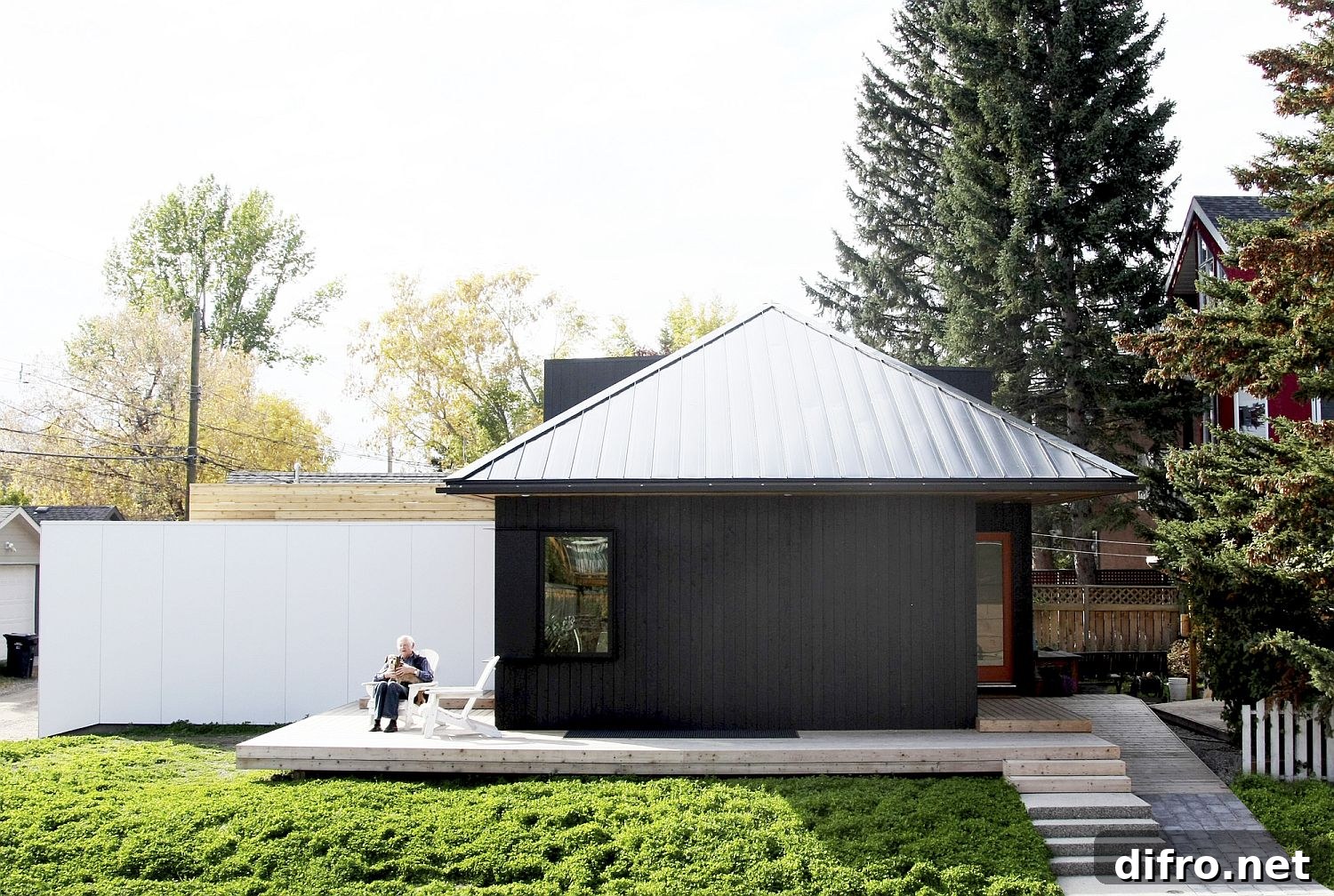
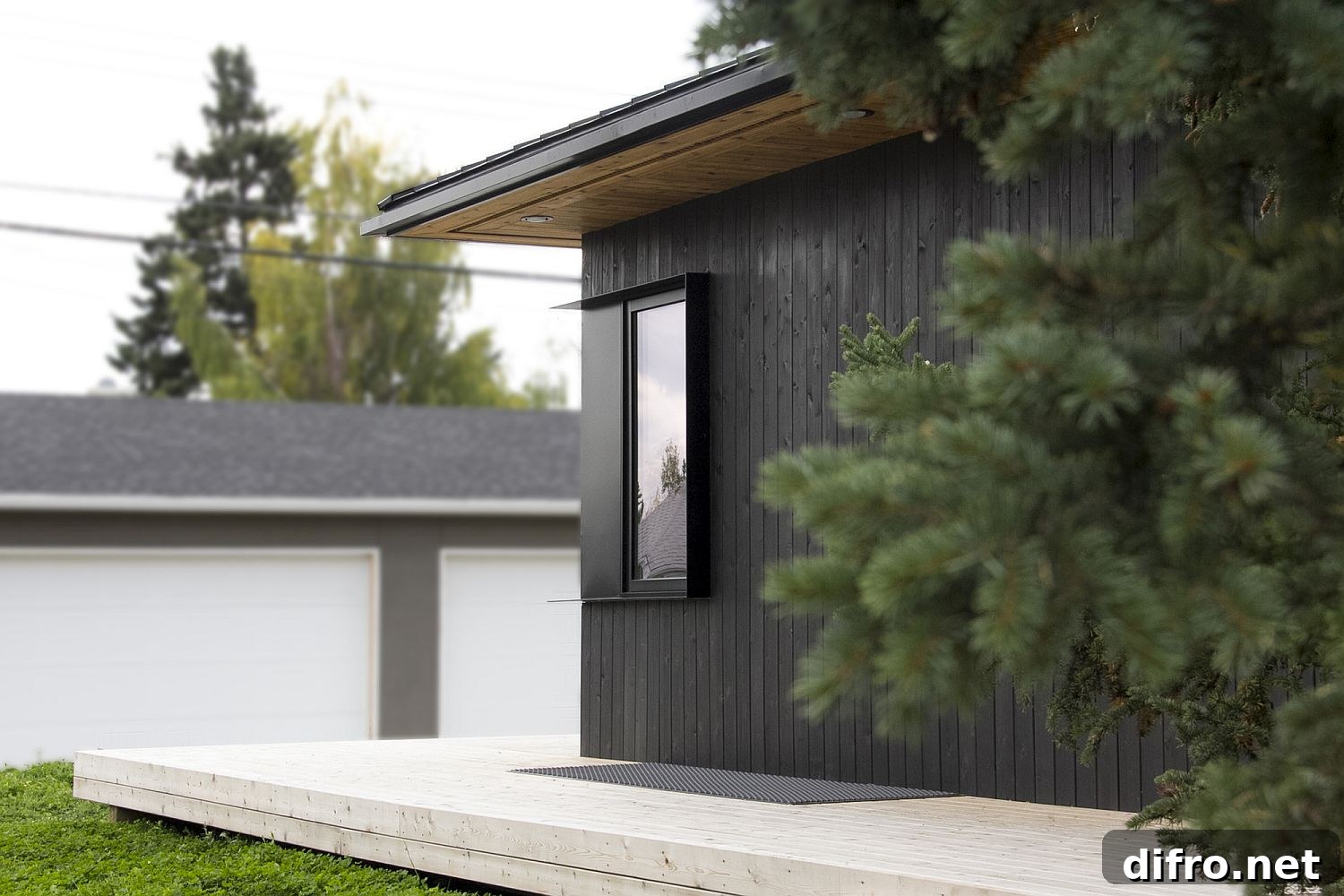
Designed by Studio North, the Hillhurst Laneway House is an economical addition to an existing family property rather than a full new build or condo purchase. The project exemplifies how laneway housing can increase living capacity, preserve outdoor green space and provide independent living areas while maintaining strong family connections. With a restrained gray-and-white exterior and a focus on ventilation, daylight and simple circulation, the house offers a practical solution to modern family needs.
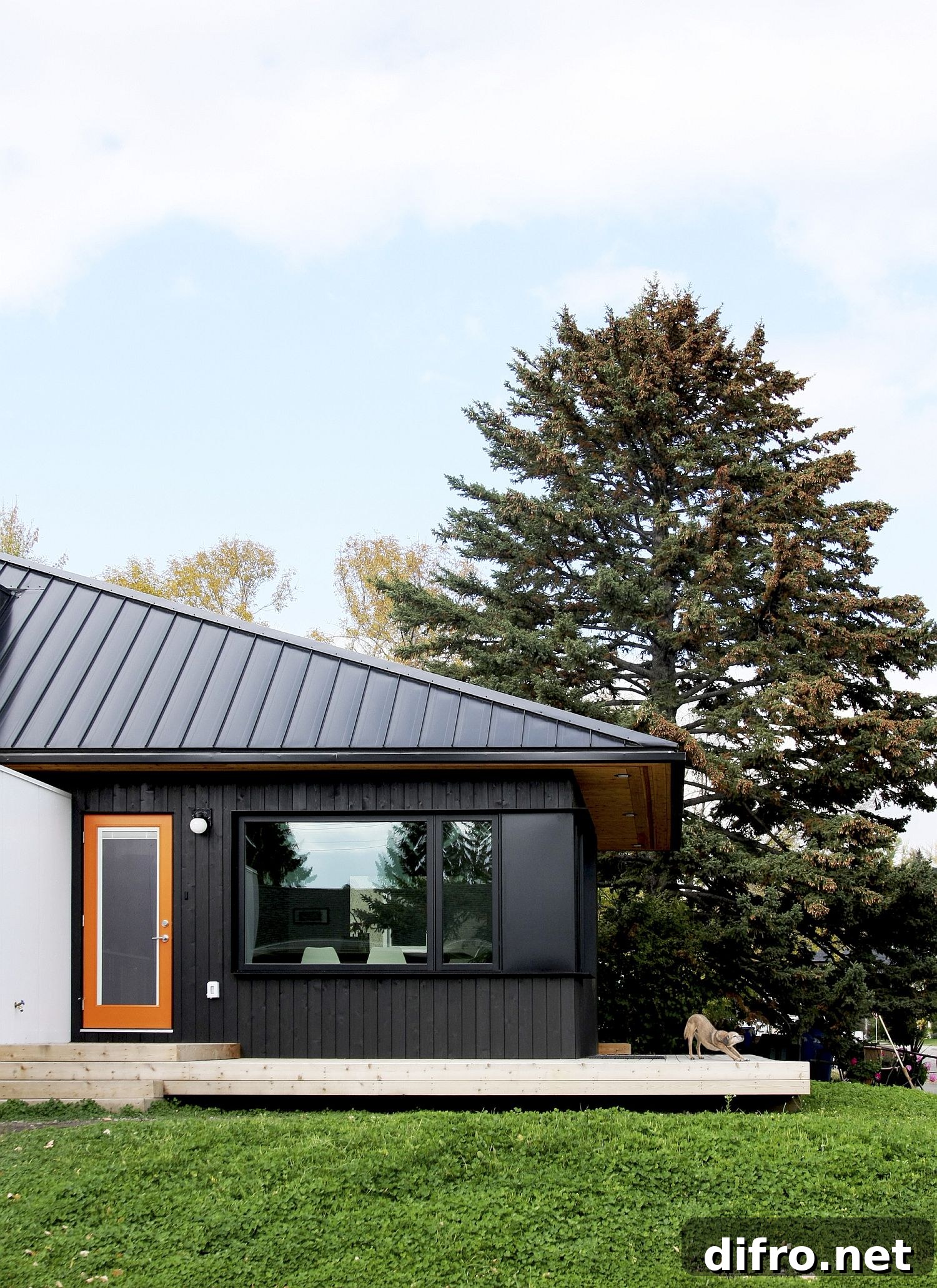
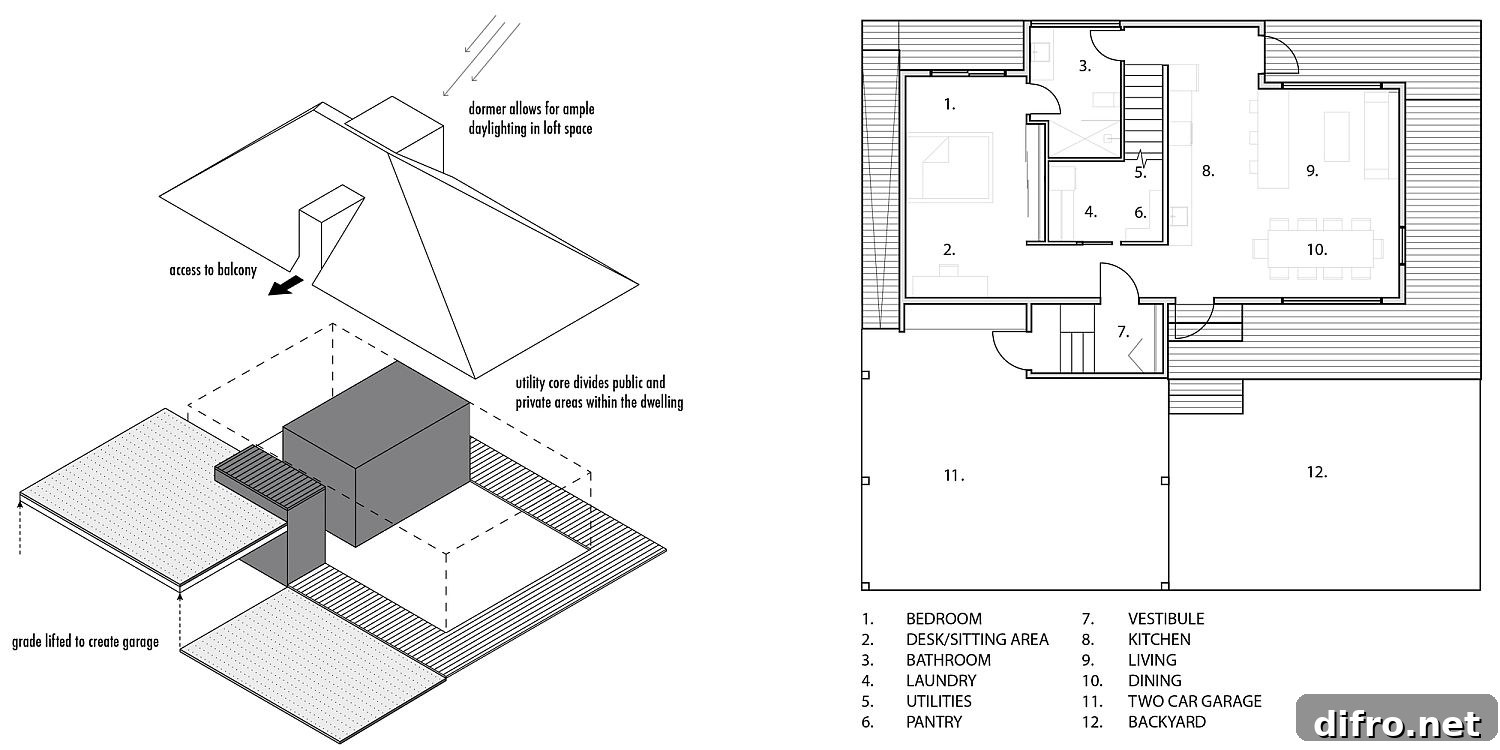
The layout is intentionally uncomplicated: private sleeping and living zones coexist with a generous common area that encourages family interaction. The main living areas and bedrooms are arranged without internal stairways, improving accessibility for older residents and anyone with limited mobility. A compact loft is reserved for service and mechanical spaces, maintaining the home’s ergonomics while keeping living areas unobstructed and easy to navigate.
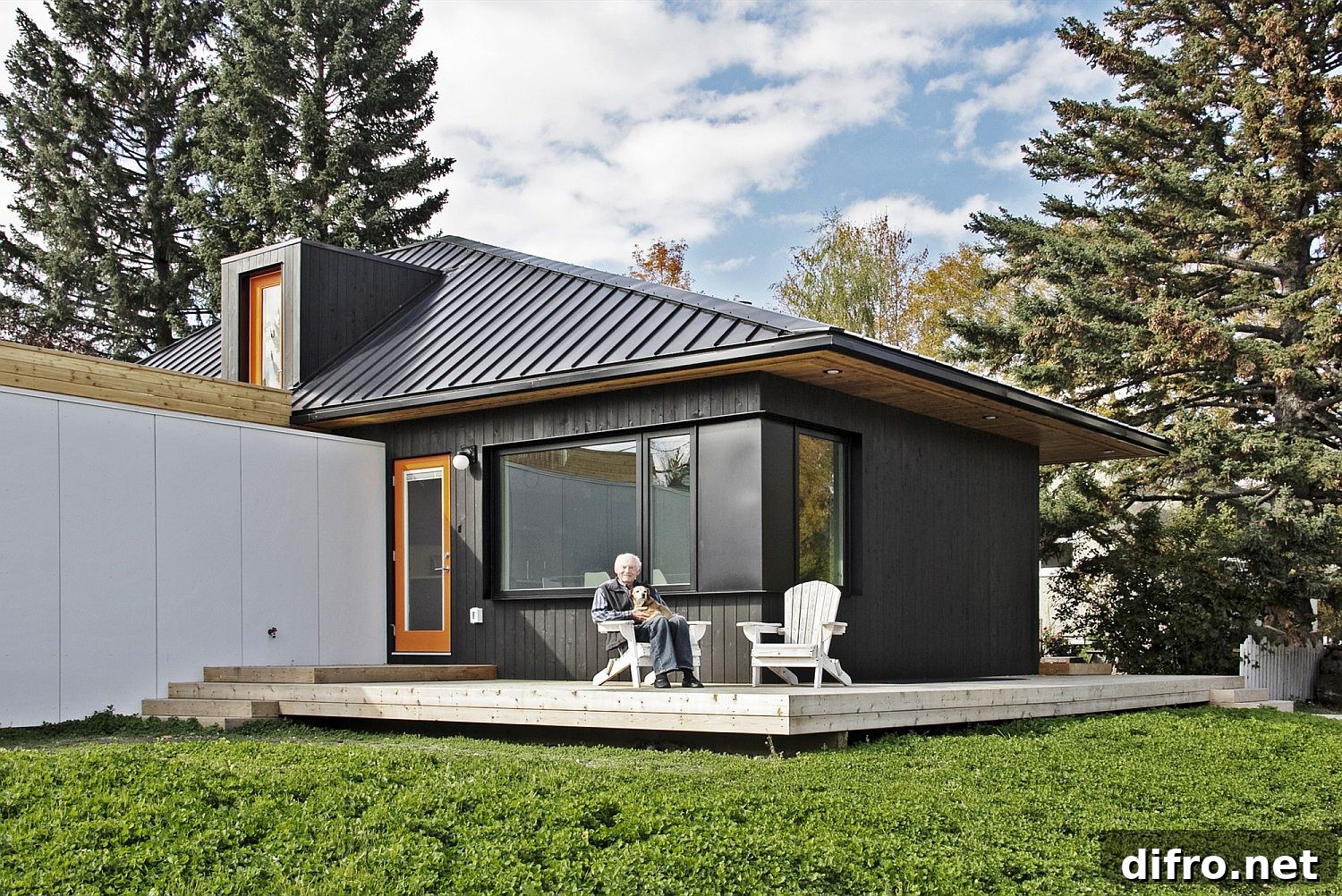
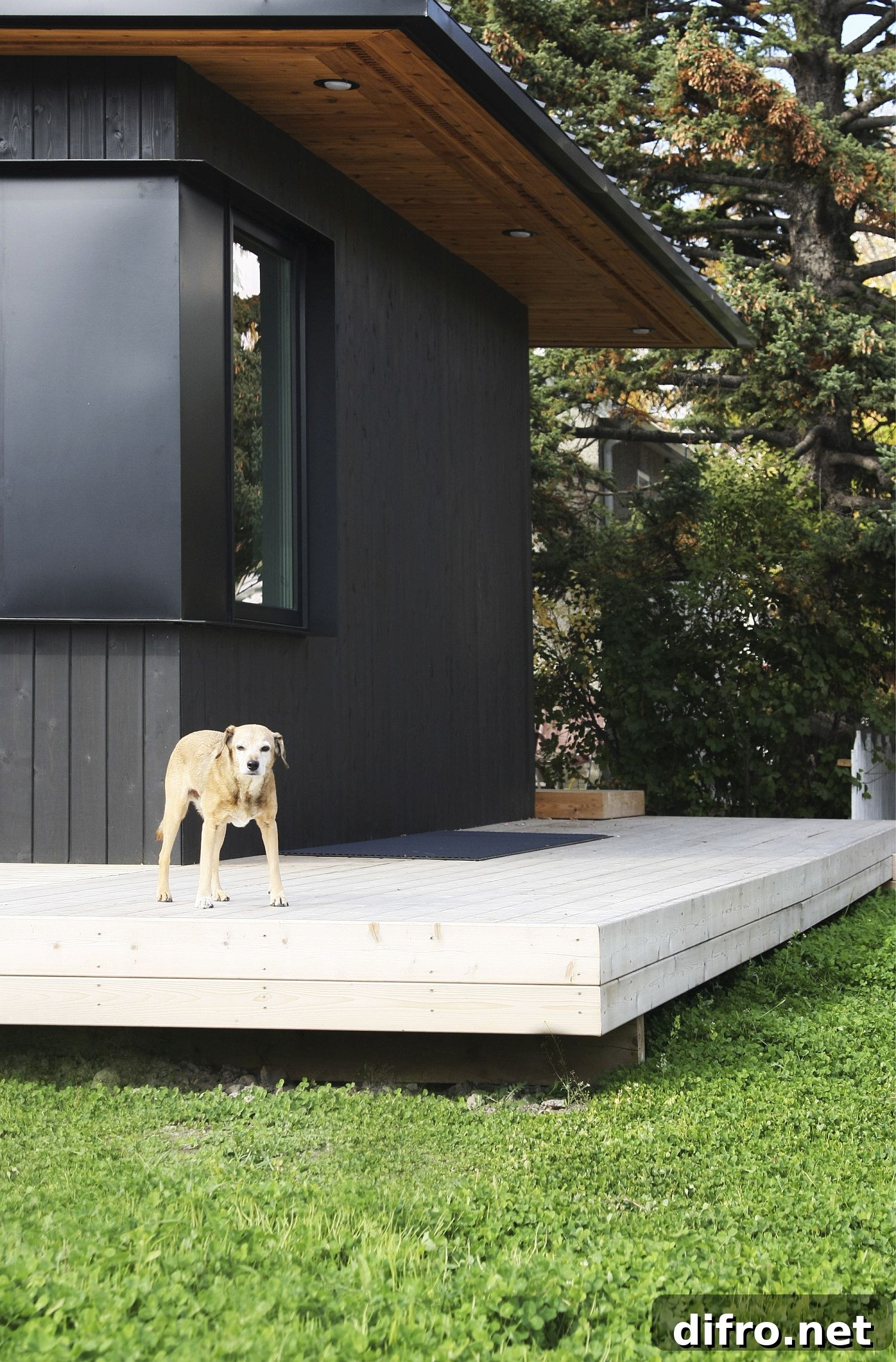
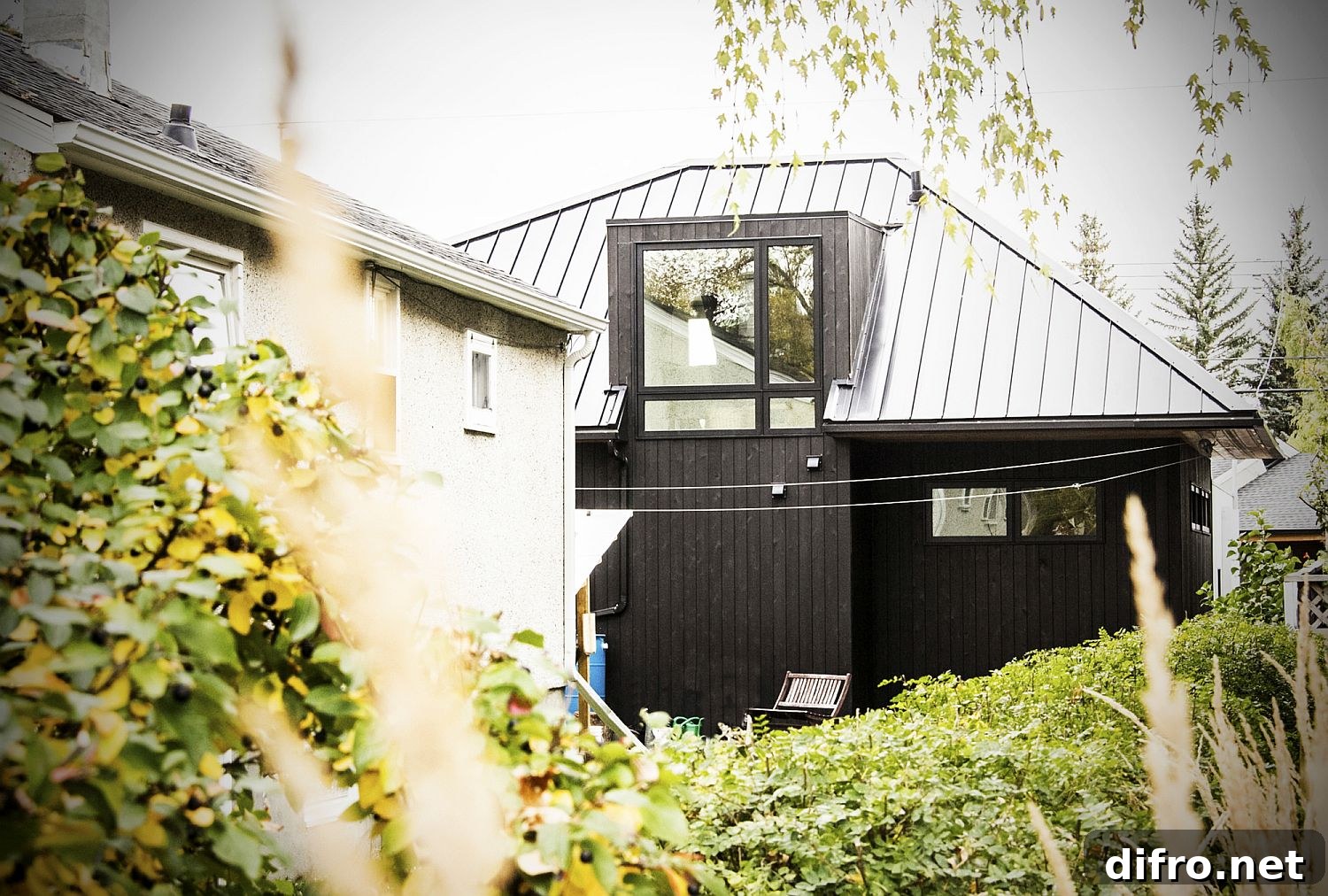
Site planning maximizes the corner lot: an east-facing porch addresses the main street and becomes a welcoming outdoor sitting spot for grandparents, while the laneway house frames an existing south-facing garden that benefits from sun and privacy. The elevated platform of the house reduces ground disturbance and contributes to a greener footprint. A separate garage includes a rooftop garden accessible from the loft, adding another layer of landscape and insulation while expanding usable outdoor space.
The laneway house is situated on a corner lot with an east-facing porch that addresses the main street. The laneway house frames an existing south-facing garden, while the garage accommodates a rooftop garden accessible from the loft. To the north of the laneway house, a shared courtyard allows room for family gatherings and activities.
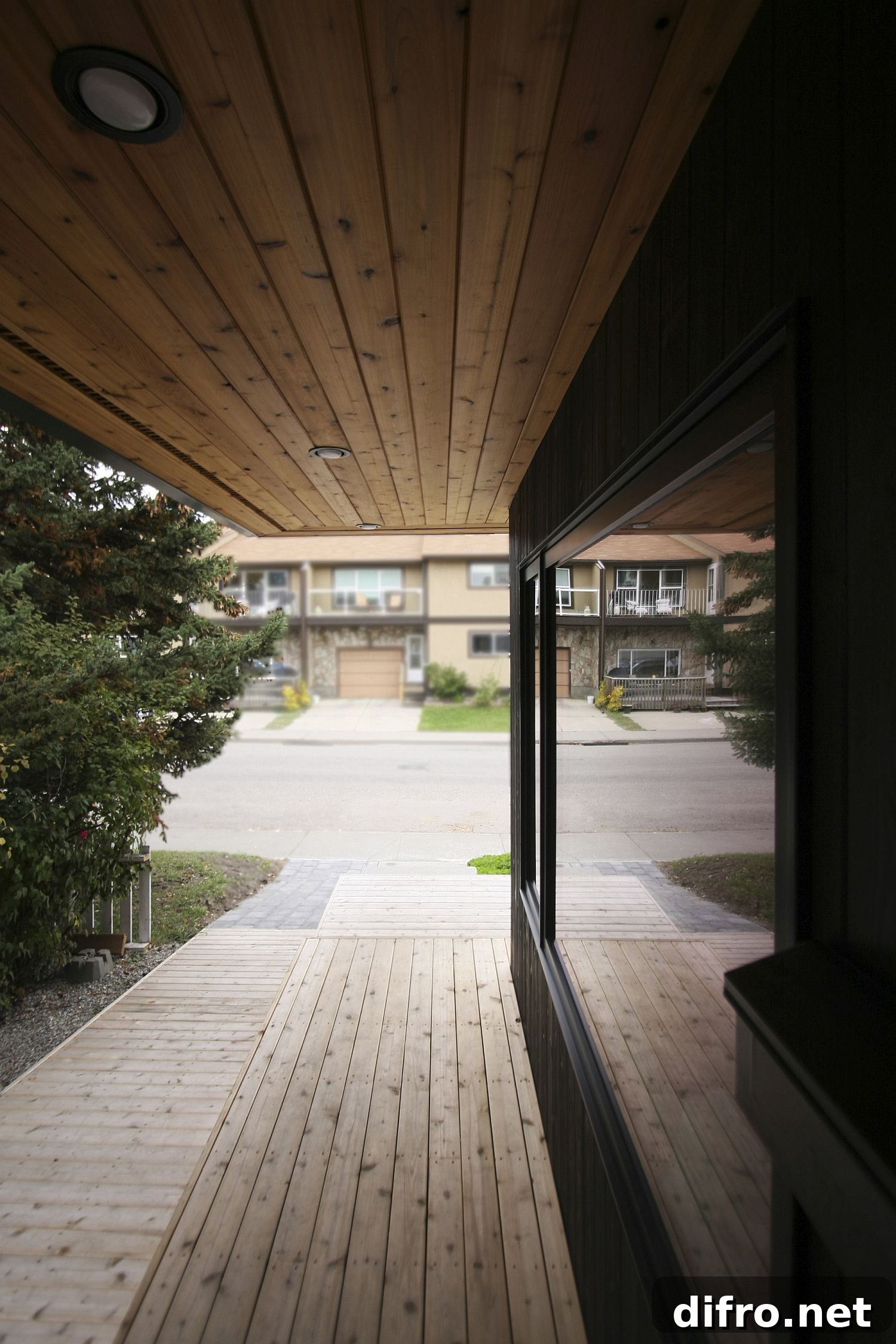
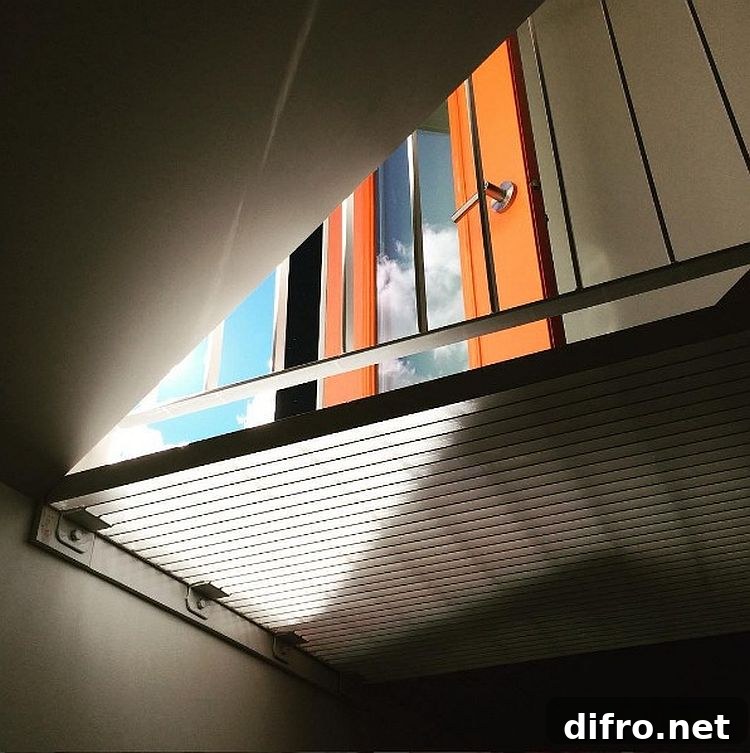
Inside, the home prioritizes daylight and cross-ventilation. The attic level introduces abundant natural light to the interior, while open-plan living on the main levels supports flexible furniture arrangements and easy family interaction. Sheltered walkways and careful material choices emphasize a comfortable, human-scaled environment, blending modern simplicity with a warm, inviting palette.
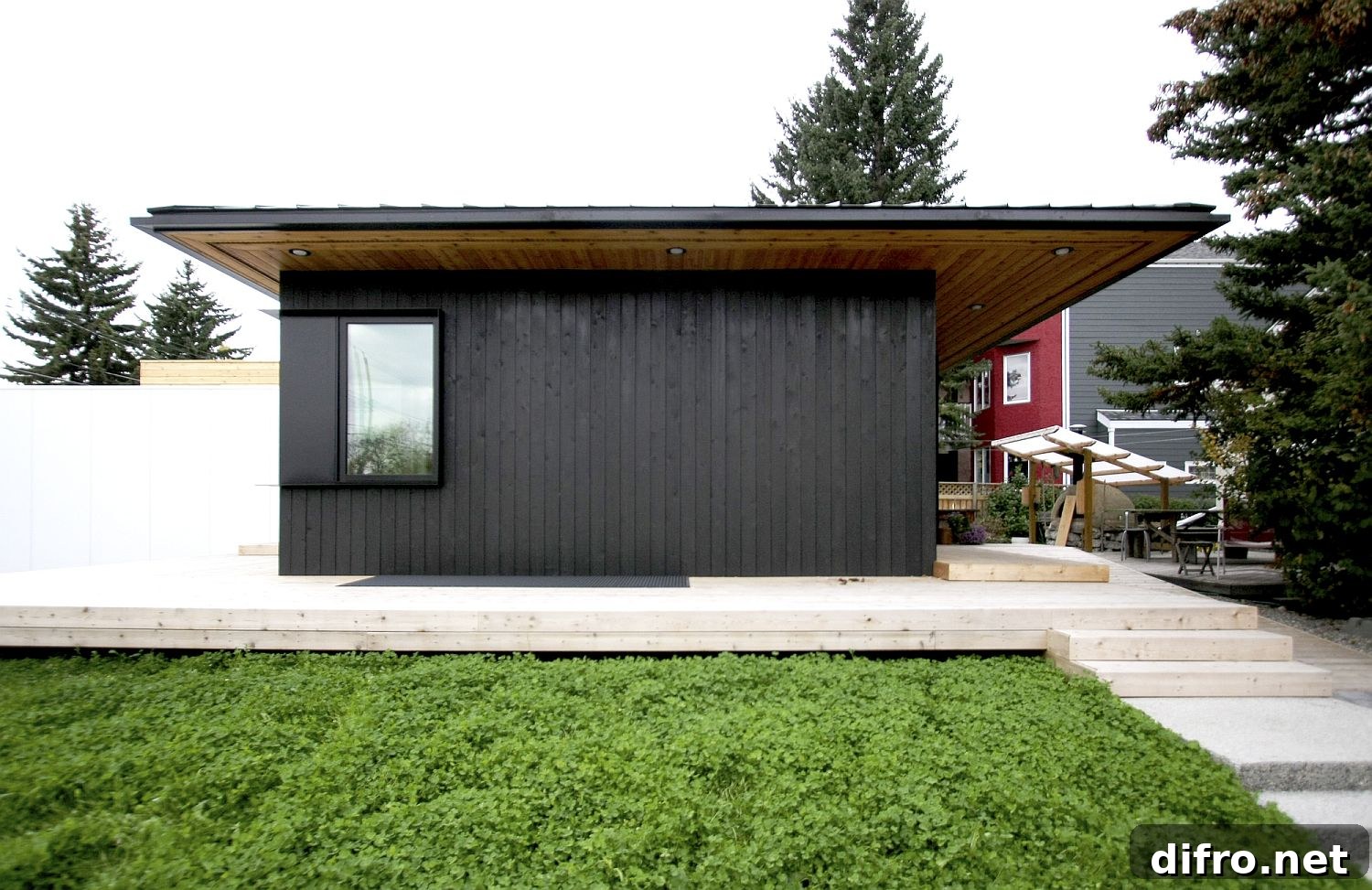
For families considering multigenerational living, this laneway house demonstrates several practical advantages: it is a cost-effective alternative to purchasing a new condo, it preserves existing garden space, and it supports independent living with shared social zones. The design balances privacy and community, accessibility and compact efficiency, making it a relevant model for contemporary urban lots.
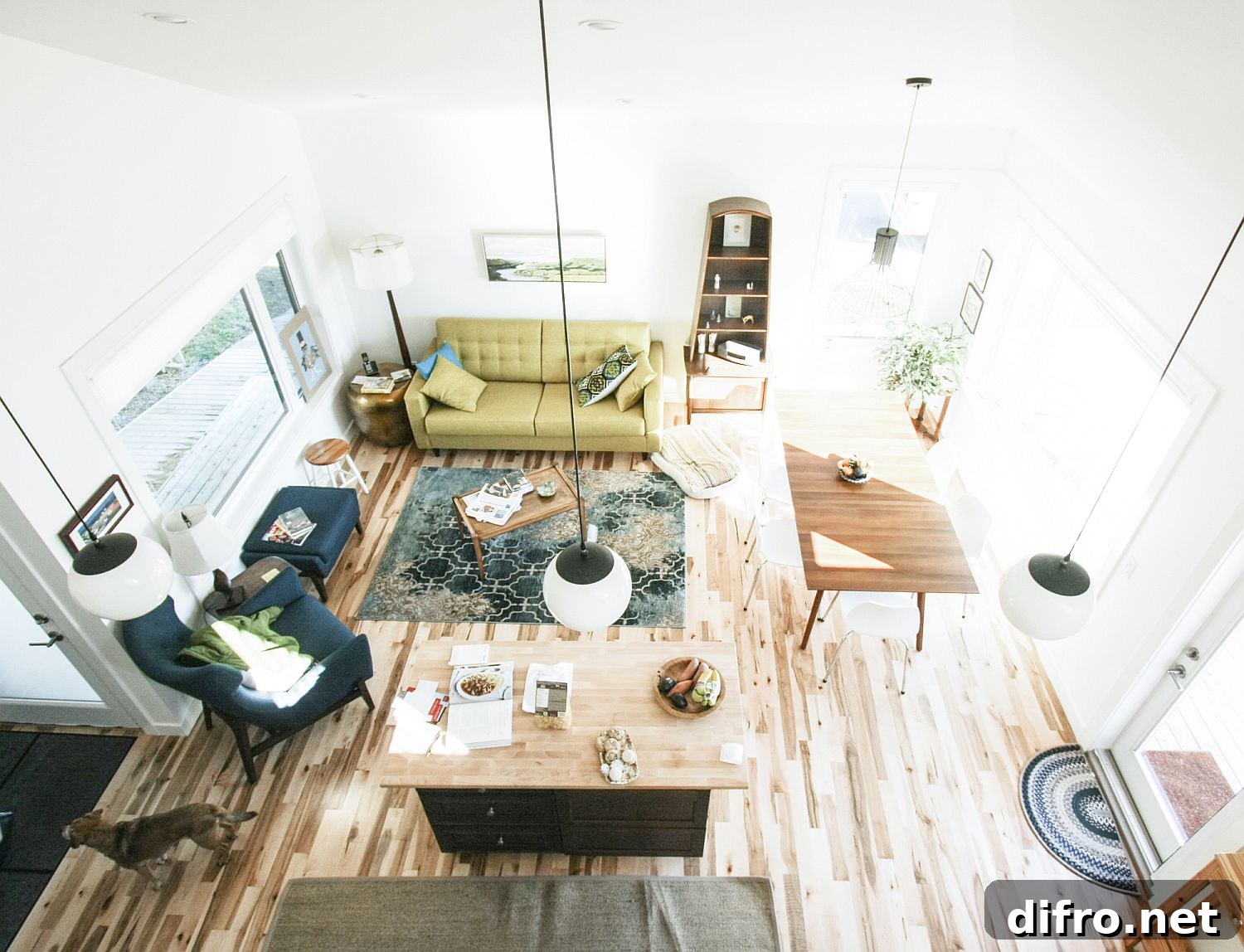
Small-scale laneway projects like Hillhurst encourage sustainable urban infill by making smart use of existing lots and infrastructure. Thoughtful circulation, generous daylighting, and layered outdoor spaces—porch, courtyard, garden and rooftop planting—combine to enhance daily life for multiple generations while keeping construction and long-term maintenance manageable.
RELATED: Gorgeous Multi-Level Family House In Sydney Charms With Its Use Of Wood
Overall, Hillhurst Laneway House is a strong example of how thoughtful design can make multigenerational living feasible, comfortable and attractive on a typical urban lot. By focusing on accessibility, daylight, green space and efficient programing, the project highlights practical strategies for families looking to live together while maintaining privacy and independence.