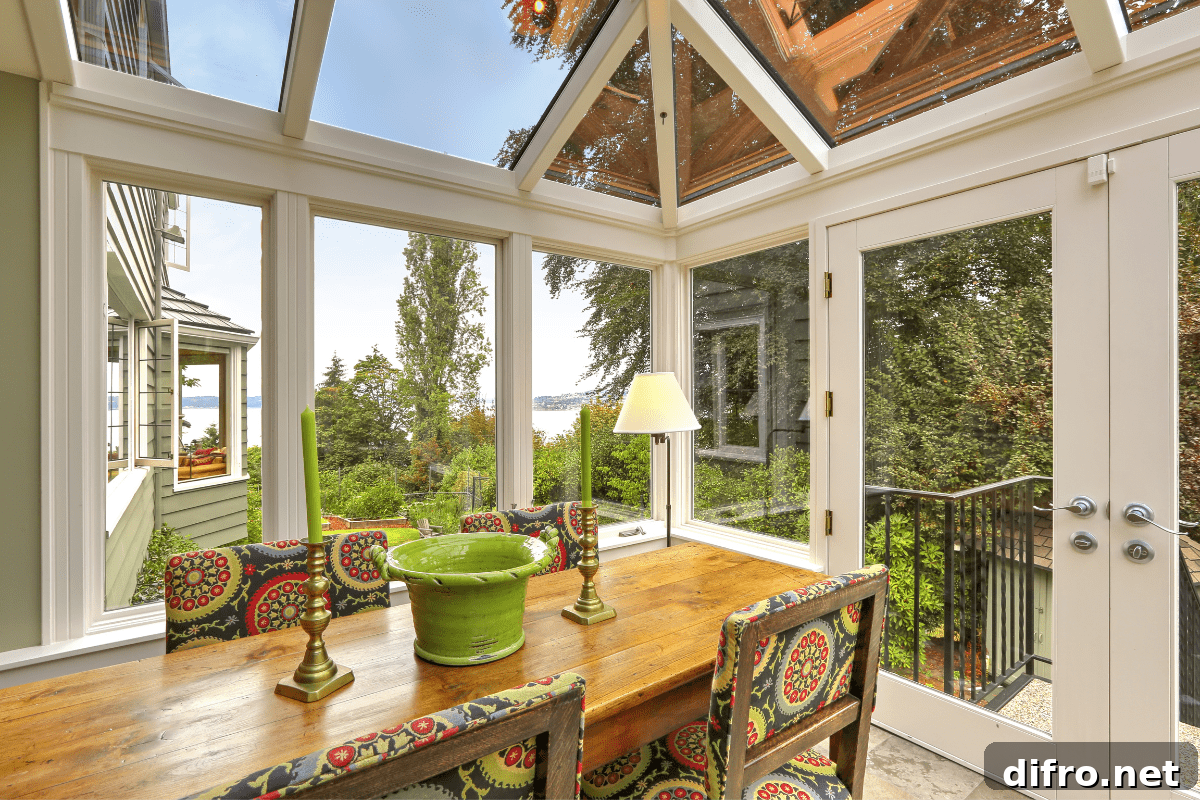
Sunrooms add light, charm, and usable living space to a home. They’re ideal for relaxing, reading, or entertaining, offering a bright, airy retreat separate from the rest of the house. However, that same abundance of sunlight that makes a sunroom appealing can also turn it into an uncomfortably hot space in summer. With a few practical strategies, you can keep your sunroom comfortable and usable through the hottest months.

Install blinds or curtains that filter sunlight
Although a sunroom is designed to capture light, blinds or light-filtering curtains are a practical way to control heat and glare without sacrificing brightness. Choose blinds or shades that diffuse direct sunlight rather than block it completely—options like cellular shades, solar shades, or sheer curtains preserve a soft, natural light while reducing solar heat gain. Close them during the hottest part of the day and open them in the morning and late afternoon to balance light and comfort. Layering sheer curtains with heavier drapes can also provide privacy when needed.
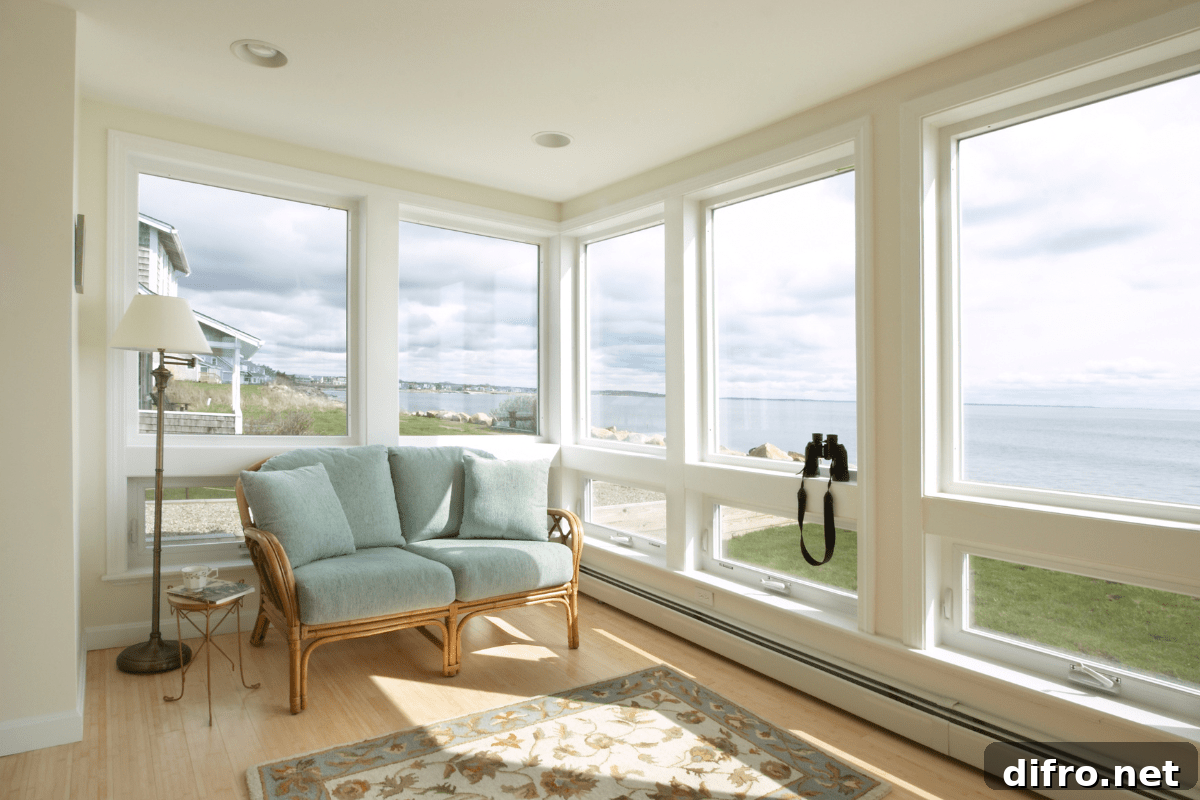
Use ceiling and portable fans to improve circulation
Good air circulation makes a space feel cooler even if the temperature doesn’t drop significantly. A ceiling fan provides steady airflow that helps evaporate perspiration and distributes cooler air throughout the room. If your sunroom doesn’t have a ceiling fan, portable or floor fans are effective alternatives—placing a fan low and angling it to push air upward encourages natural convection, moving warm air away from sitting areas. Combining fans with open windows during cooler evenings creates cross-ventilation, which can quickly refresh the space.

Tint the windows to reduce heat gain
Window tinting designed for heat reduction can make a noticeable difference by blocking infrared and ultraviolet radiation while still allowing daylight in. Tinted or low-emissivity (low-E) films reduce solar heat gain and protect furnishings from UV fading. Keep in mind that some treatments will slightly darken the room, so choose a light-transmitting film if preserving brightness is a priority. Professional installation ensures even coverage and helps avoid bubbling or peeling over time.

Install vents and an exhaust fan for ventilation
Proper ventilation prevents heat buildup and protects the structure from moisture problems. Vents placed low allow cool air in while an exhaust fan pulls hot air up and out. This arrangement reduces the tendency for hot air to collect near the ceiling, improving overall comfort. If your sunroom didn’t include ventilation when built, adding vents and a roof or ceiling-mounted exhaust fan is a practical retrofit. An exhaust fan is especially useful during still, sunny days when natural airflow is limited.

Consider a window air conditioner or ductless mini-split
For reliable cooling, a window air conditioner or a ductless mini-split system can be effective. Window units cool quickly and are easy to install but may be less efficient and can obstruct the view. Ductless mini-splits provide more efficient, quieter cooling and preserve sightlines but require professional installation. Choose the capacity that matches the sunroom’s size and insulation level to avoid under- or over-sizing the unit.
Left unchecked, a hot sunroom can become an underused area—and a poor return on the investment of building or renovating it. Combining several of these strategies—shading, ventilation, air circulation, glass treatments, and targeted cooling—will keep your sunroom comfortable throughout summer while maintaining the bright, inviting atmosphere you want. Experiment with a mix of solutions to find the balance of light, temperature, and energy use that works best for your home.