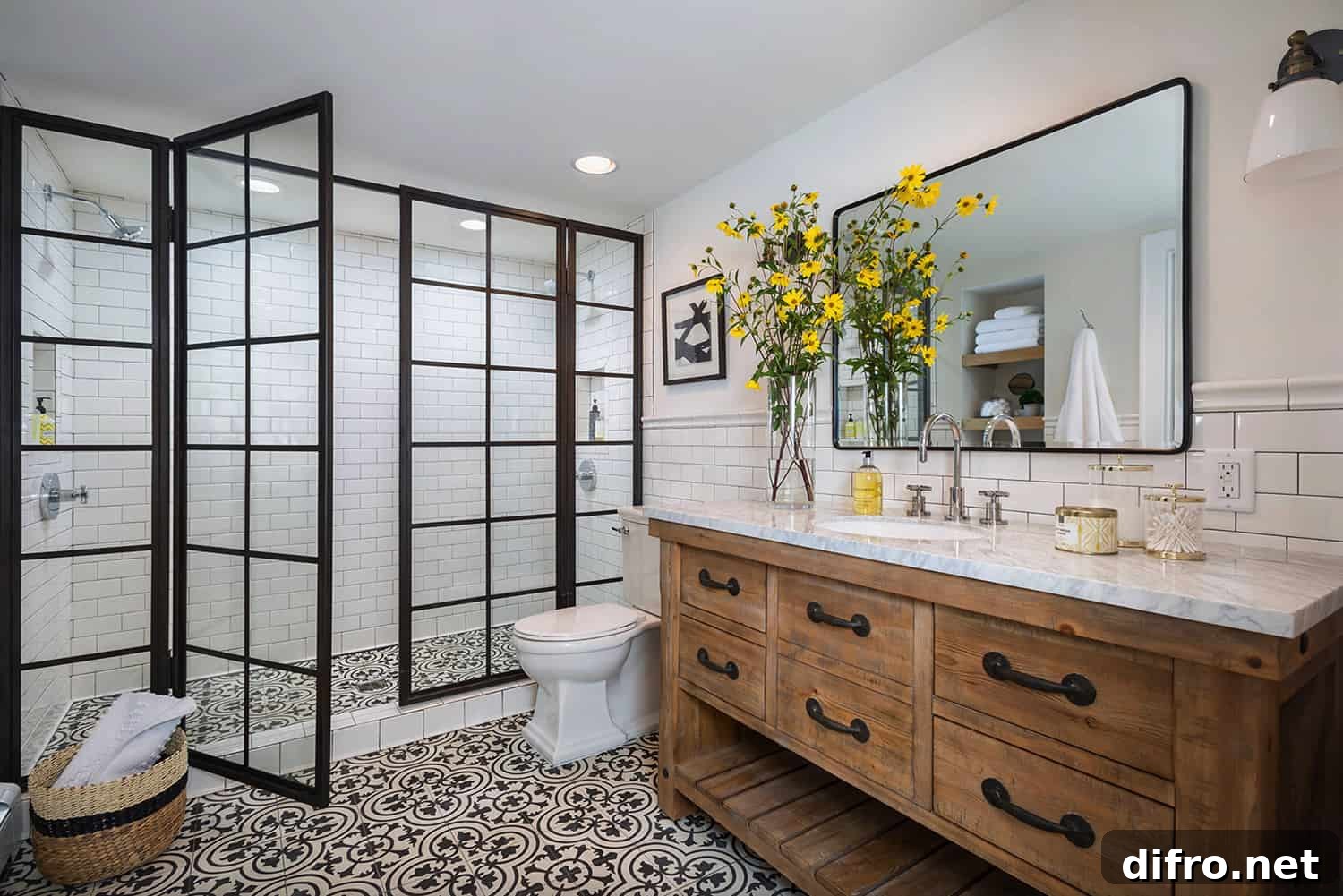
Basement bathrooms don’t have to be dark, cramped, or uninspired. With thoughtful color choices, quality materials, and layered lighting, you can create a serene, spa-like bathroom or a practical walk-in shower in your lower level. The right design turns a once-overlooked area into a comfortable, attractive part of your home.
If you’re unsure about adding a bathroom in the basement, these ideas and tips will help you plan a successful basement bathroom renovation. Adding a bathroom can be complex, but with careful planning and the right priorities—plumbing, insulation, ventilation, and finishing—you’ll end up with a space you’ll use and enjoy.
Considerations for Your Basement Bathroom
Plan Carefully
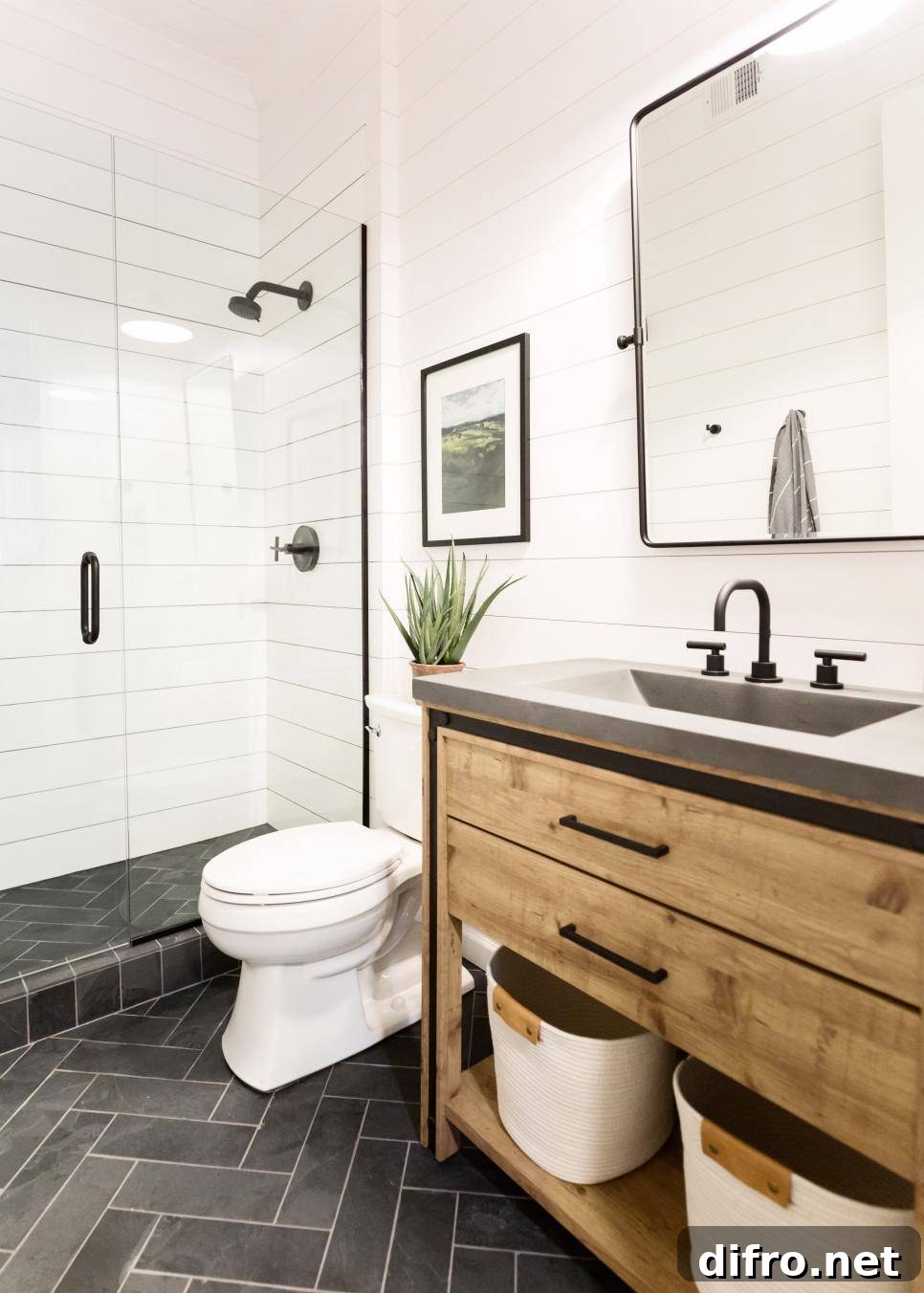
Start with a clear plan. Sketch the layout showing where the shower or bathtub, toilet, sink, and any storage will go. Confirm plumbing locations and access before you commit. Once plumbing is installed, changing the layout becomes costly, so a well-considered plan—ideally reviewed by a contractor or plumber—is essential for a successful basement bathroom renovation.
Insulation and Plumbing
Proper insulation is critical for comfort and preventing pipes from freezing during cold months. Basement bathrooms must be insulated well and heated adequately. Plumbing is often the most challenging part of the project: older houses may lack rough-ins, so adding drains, vents, and supply lines can require cutting into concrete and installing new piping. Depending on your home’s configuration, you might need a macerating or upflush toilet if your main drain is higher than the bathroom floor.
Ventilation
Ventilation is non-negotiable in a basement bathroom. An exhaust fan removes humidity, prevents mold and mildew, and improves indoor air quality. If your basement lacks a rough-in for venting, install ductwork that safely routes exhaust outside—this may require cutting through concrete and walls. Local building codes often require a ducted fan for windowless bathrooms.
Flooring
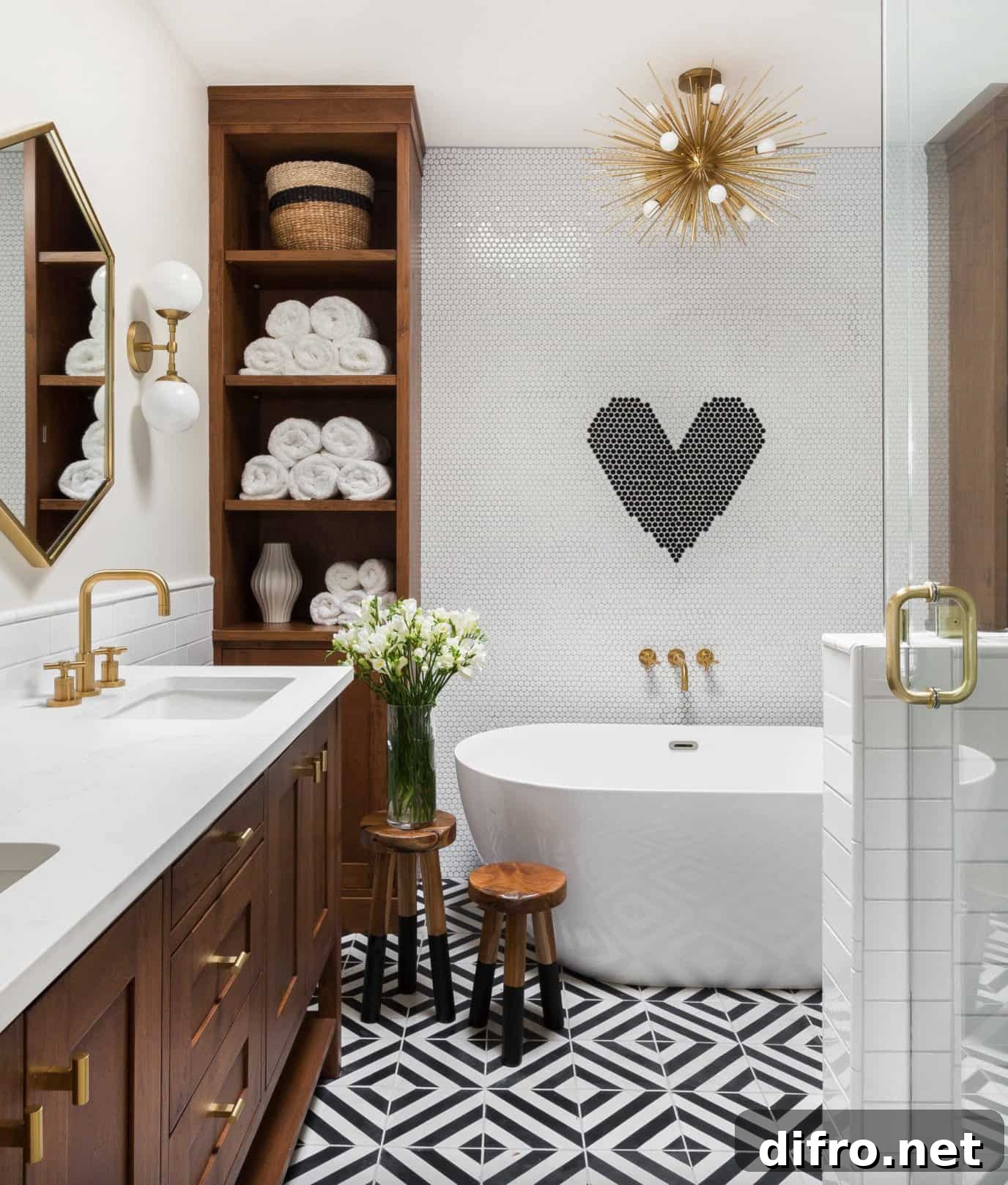
Tile is the most common and durable choice for basement bathrooms, but what goes beneath tile matters. Install an uncoupling membrane between concrete and tile to prevent cracking from substrate movement. Choose slip-resistant tile for wet areas and ensure the floor slope allows proper drainage in showers. For freestanding tubs or splash zones, use water-resistant materials and proper waterproofing beneath finishes.
Lighting
Basement ceilings are often lower, so choose fixtures that preserve headroom. Recessed or pot lights provide bright, even lighting without intruding into the space. Use wet-rated fixtures in and around showers. Layer lighting—ambient, task, and accent—so you can switch between bright lighting for cleaning and softer settings for relaxation. A few tips:
- Layer ambient, task, and accent lighting controlled by dimmers or separate switches.
- Install recessed lights for general illumination and wet-rated trims in shower zones.
- Add vertical wall sconces or LED-lit mirrors for flattering vanity lighting.
- Use under-cabinet or strip lighting to brighten dark corners and visually expand the space.
Decorate Your Basement Bathroom
Choose a color palette that brightens and enlarges the room visually—light neutrals, soft greys, or warm whites reflect more light. That said, basements are a great place to experiment with bolder accents: a dark vanity, dramatic wallpaper, or a colorful tile floor can make a strong statement without overwhelming the main living areas of your home. Use a mix of textures—wood, metal, stone, and tile—to create depth and interest.
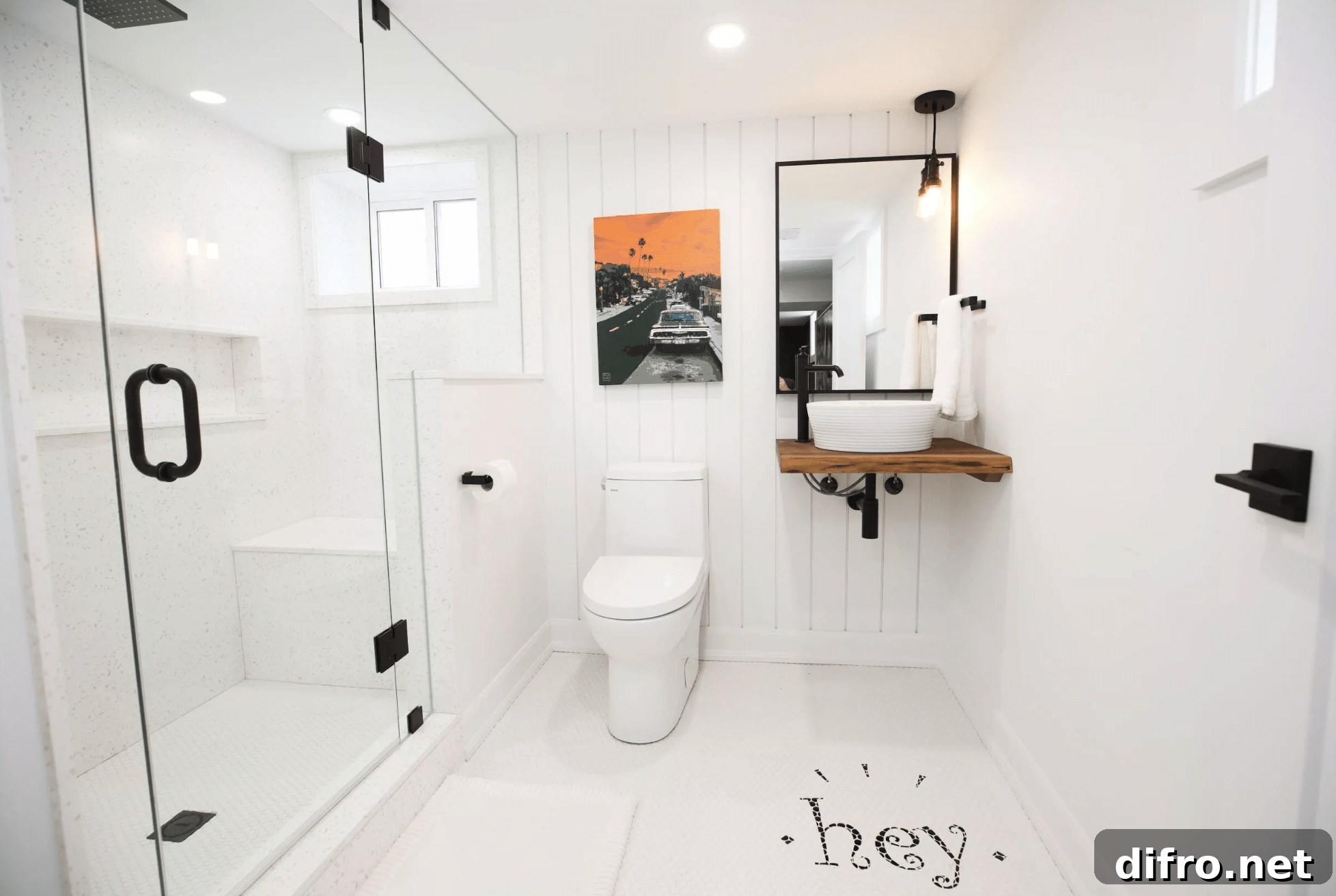
Basement bathrooms are often treated as purely functional, but thoughtful design can transform them into inviting, useful spaces. Whether you have room for a full bath or just a powder room, the same principles—good plumbing and ventilation, proper insulation and waterproofing, layered lighting, and considered finishes—will yield a comfortable, attractive result.
Design Ideas and Inspirations
Classic Subway Tile
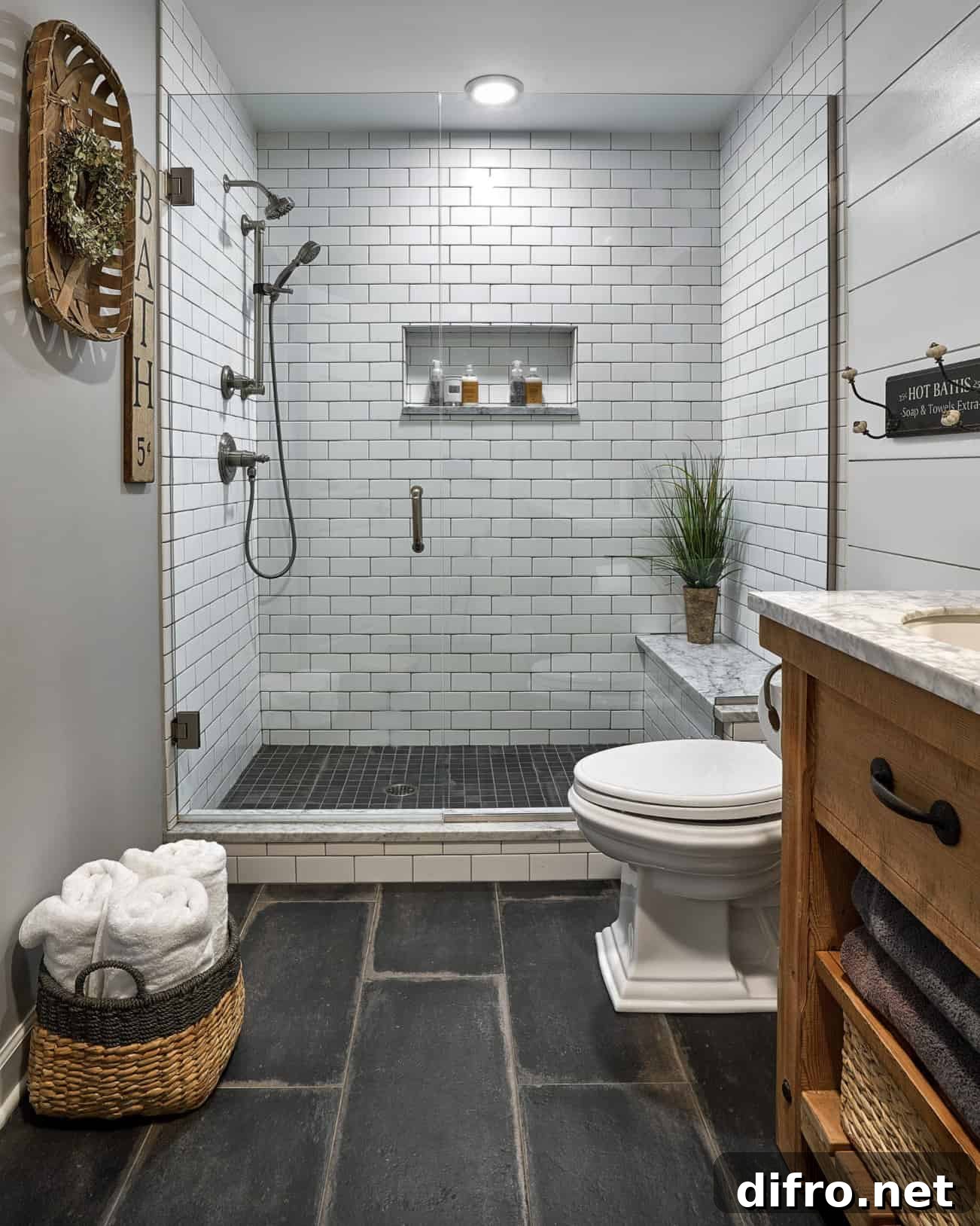
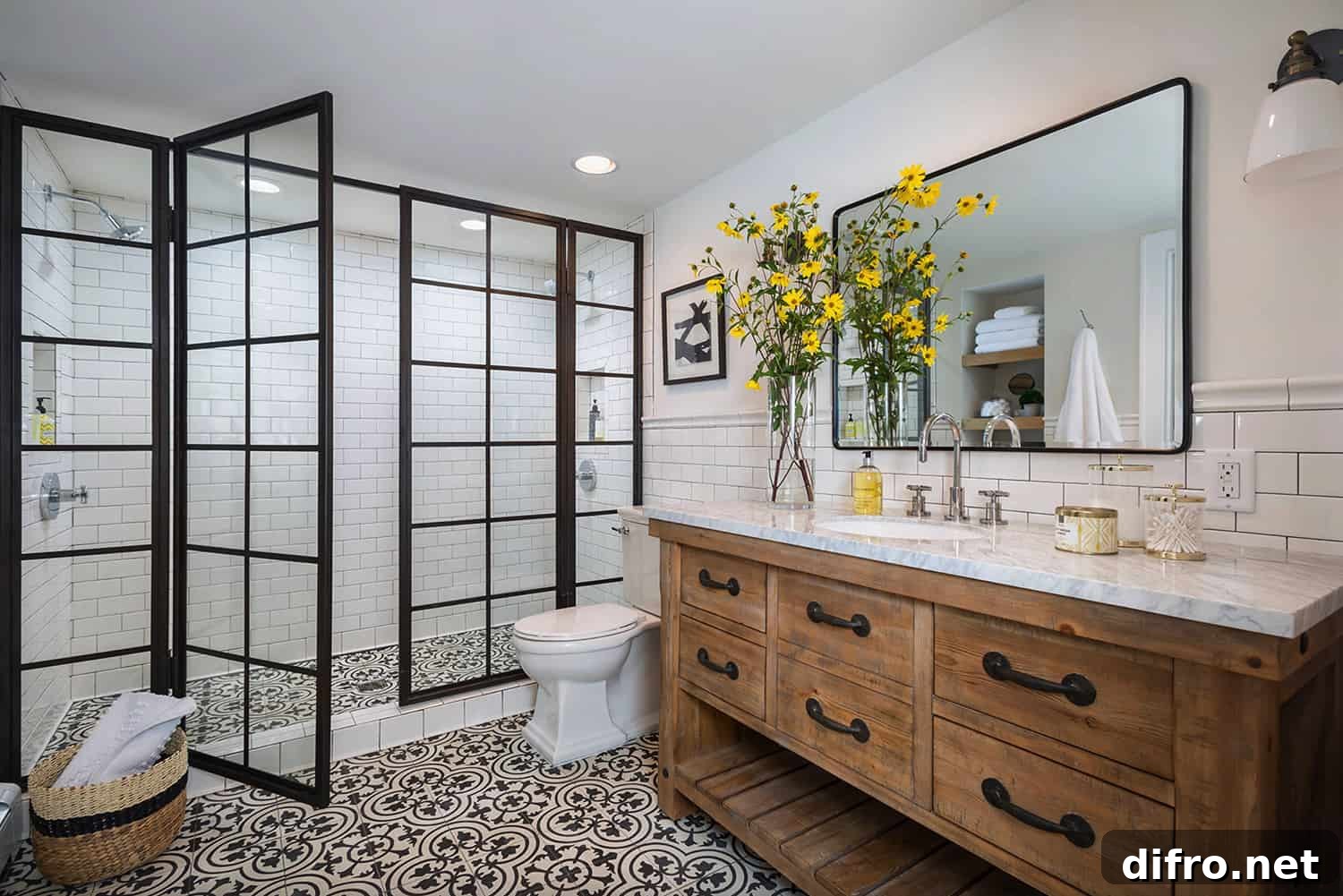
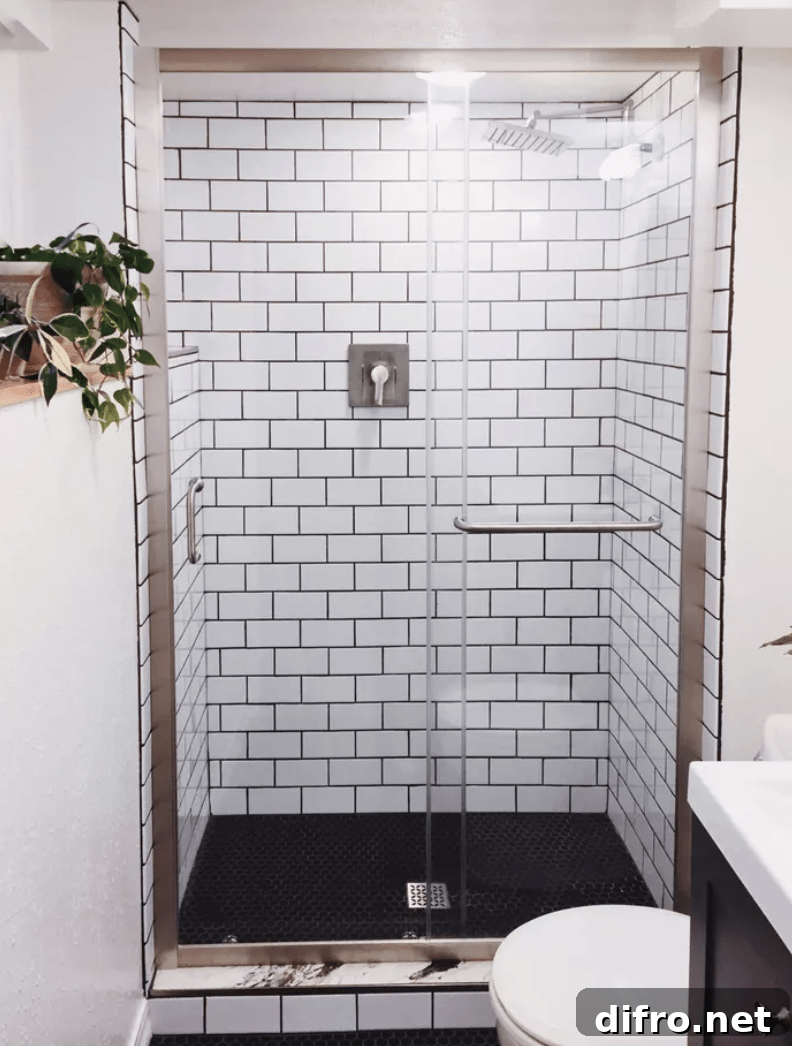
White subway tile paired with contrasting grout and a clear glass shower door keeps sightlines open and helps small basement bathrooms feel larger. Pair with black penny tile or a dark shower pan for graphic contrast.
Simple Elegance
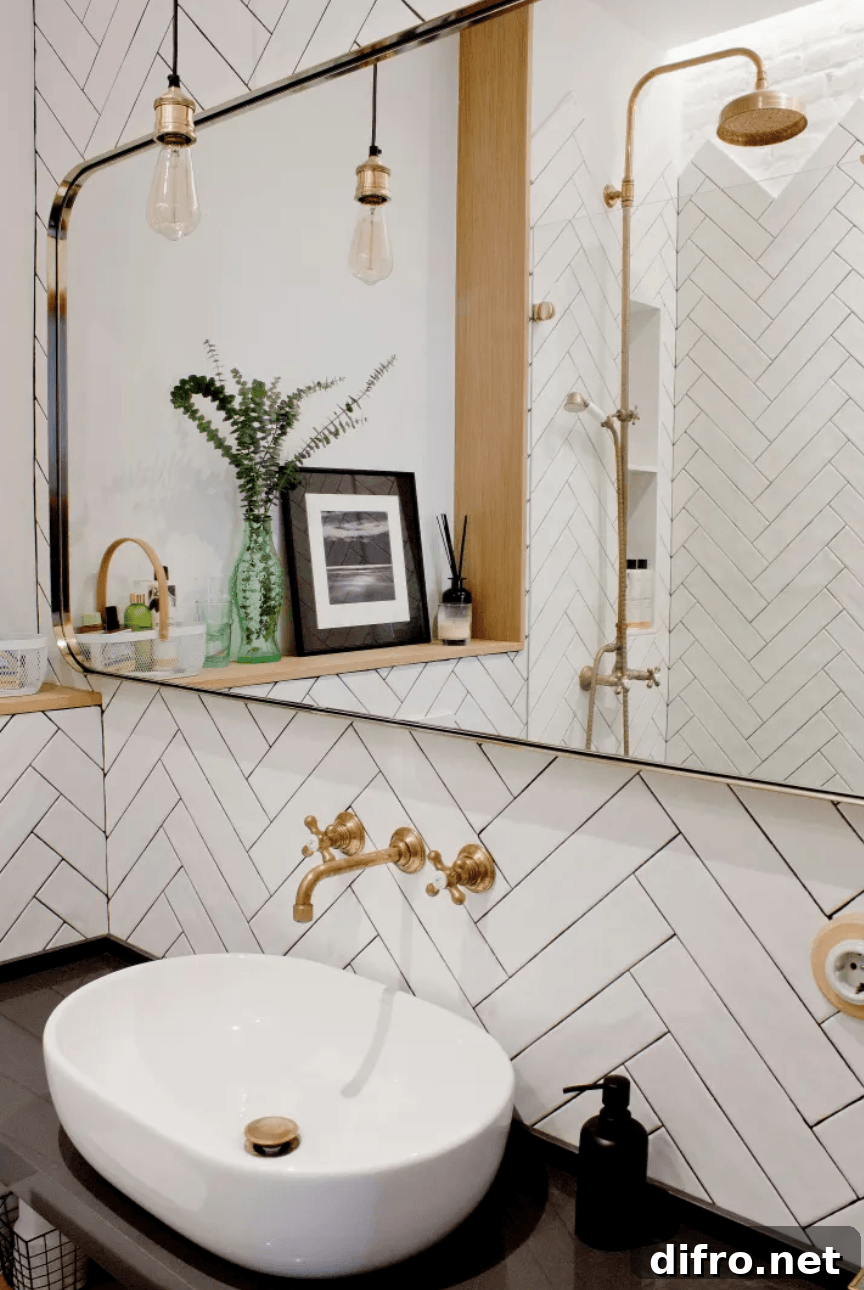
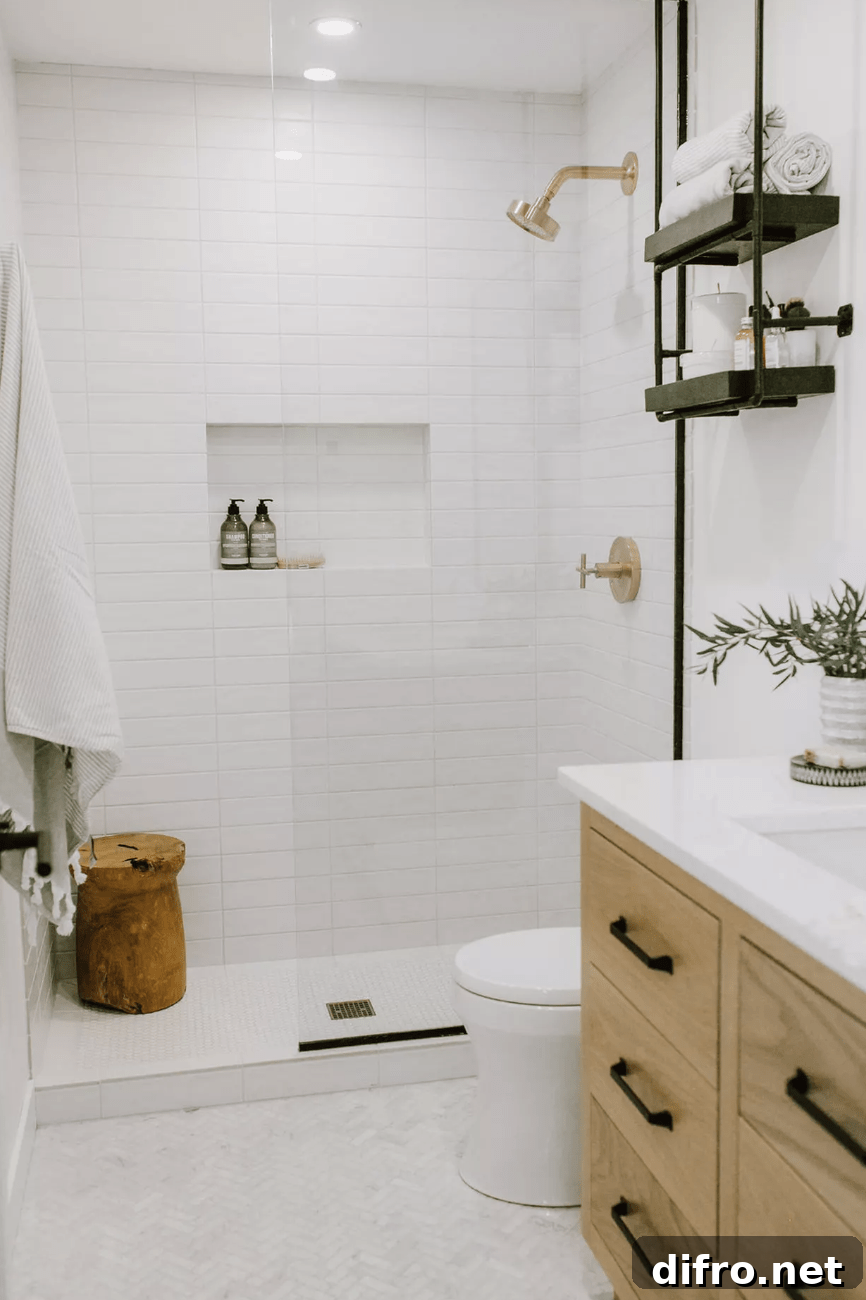
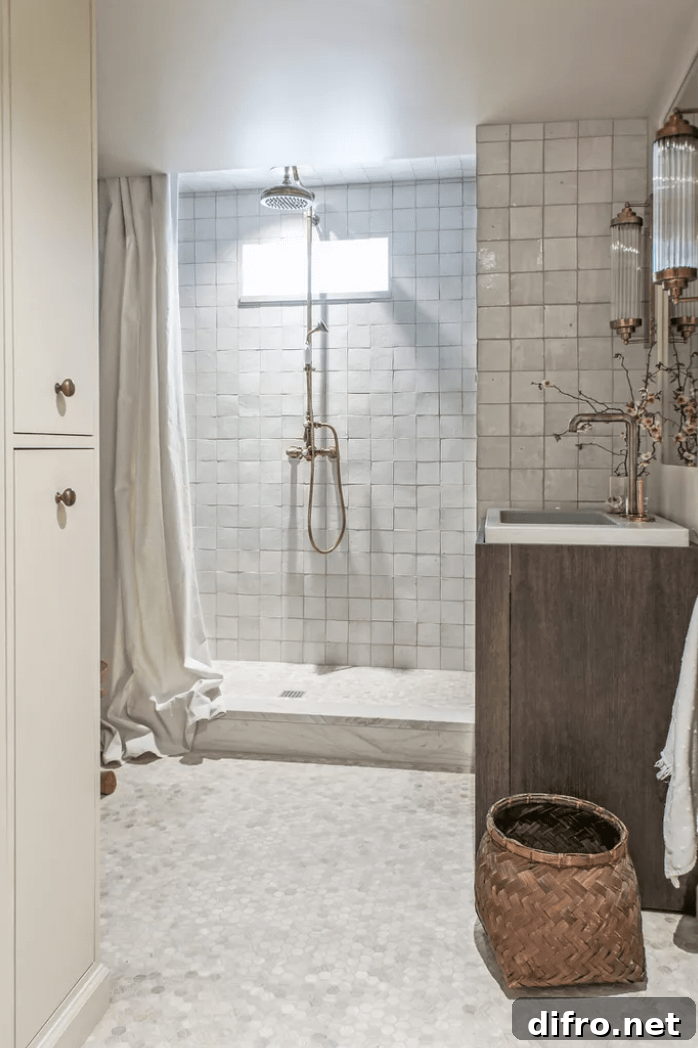
Use natural stone, warm wood vanities, vintage brass fixtures, and soft lighting to create a calm, refined basement bathroom. A ceiling-mounted shower head and light, neutral finishes can make an otherwise low space feel airy and spa-like.
Add Drama with Dark Floral Wallpaper
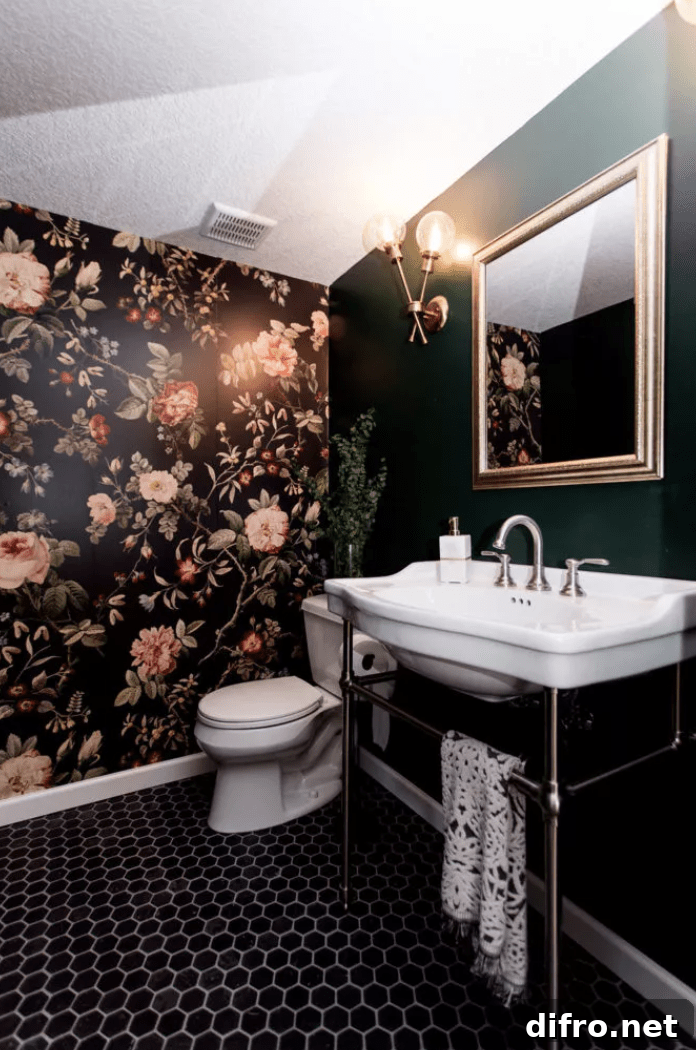
Dark floral or bold wallpaper on one accent wall can add personality and depth to a powder room or small bathroom. Pair it with simple trim and contrasting tile floors for balance.
Creative Nooks and Alcoves
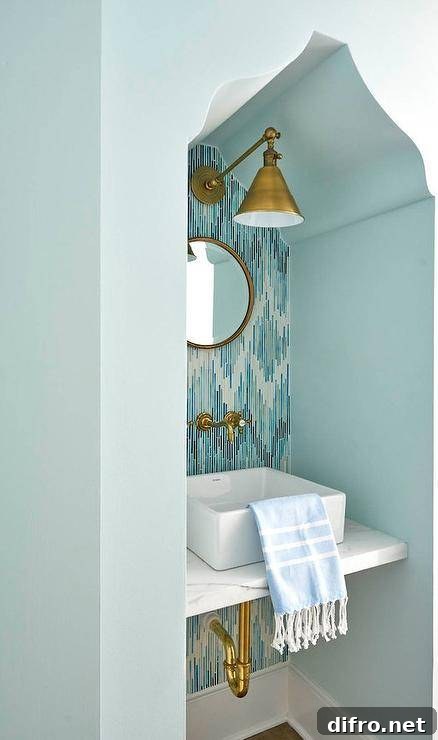
Small alcoves are perfect for a niche sink, a decorative vanity, or a tiled inset with an eye-catching sconce. Moroccan arches, shiplap, or textured tile make compact spaces feel intentional and styled.
Bold Accents and Mirrors
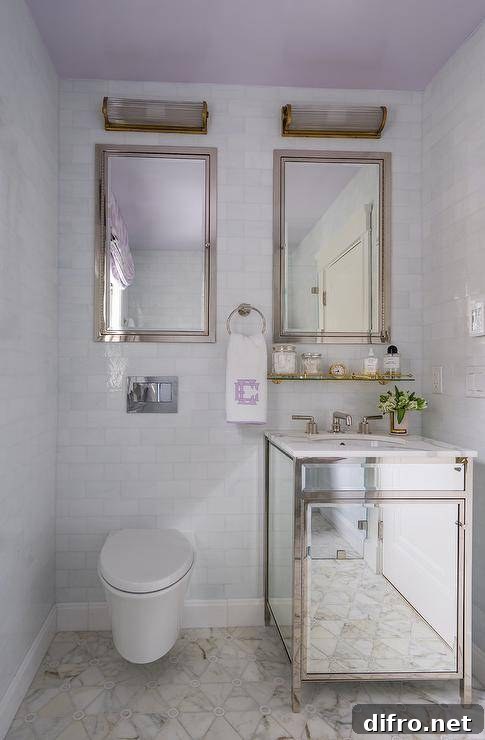
Introduce contrast with a dark vanity against light walls, or add a bright accent color—red, navy, or jewel tones—to enliven a compact space. Mirrors amplify light and visually expand a small basement bathroom, so consider mirrored vanities or large framed mirrors to bounce light around.
Freestanding Tubs and Luxury Touches
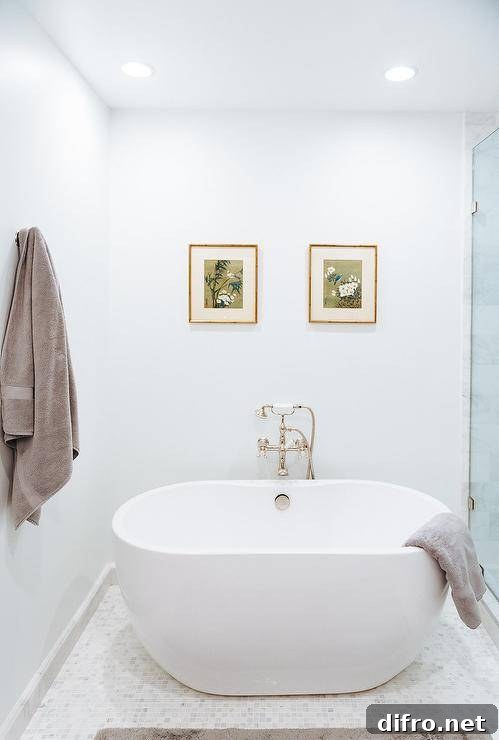
A freestanding tub becomes a focal point and elevates the feel of a basement bathroom. When choosing this feature, select durable, water-resistant flooring and consider LED accent lighting or wall panels to add ambiance.
Small Powder Rooms
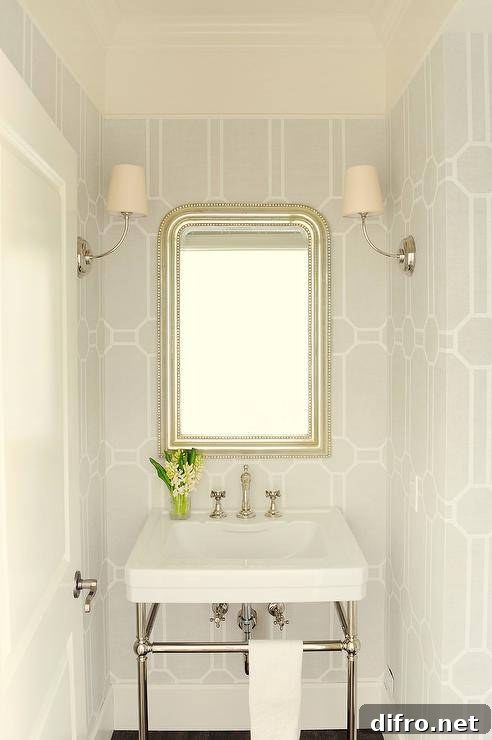
Even a small basement powder room can be stylish. Use bold wallpaper, statement mirrors, or a standout vanity to make a compact space feel curated and memorable.
Creative and Practical Elements
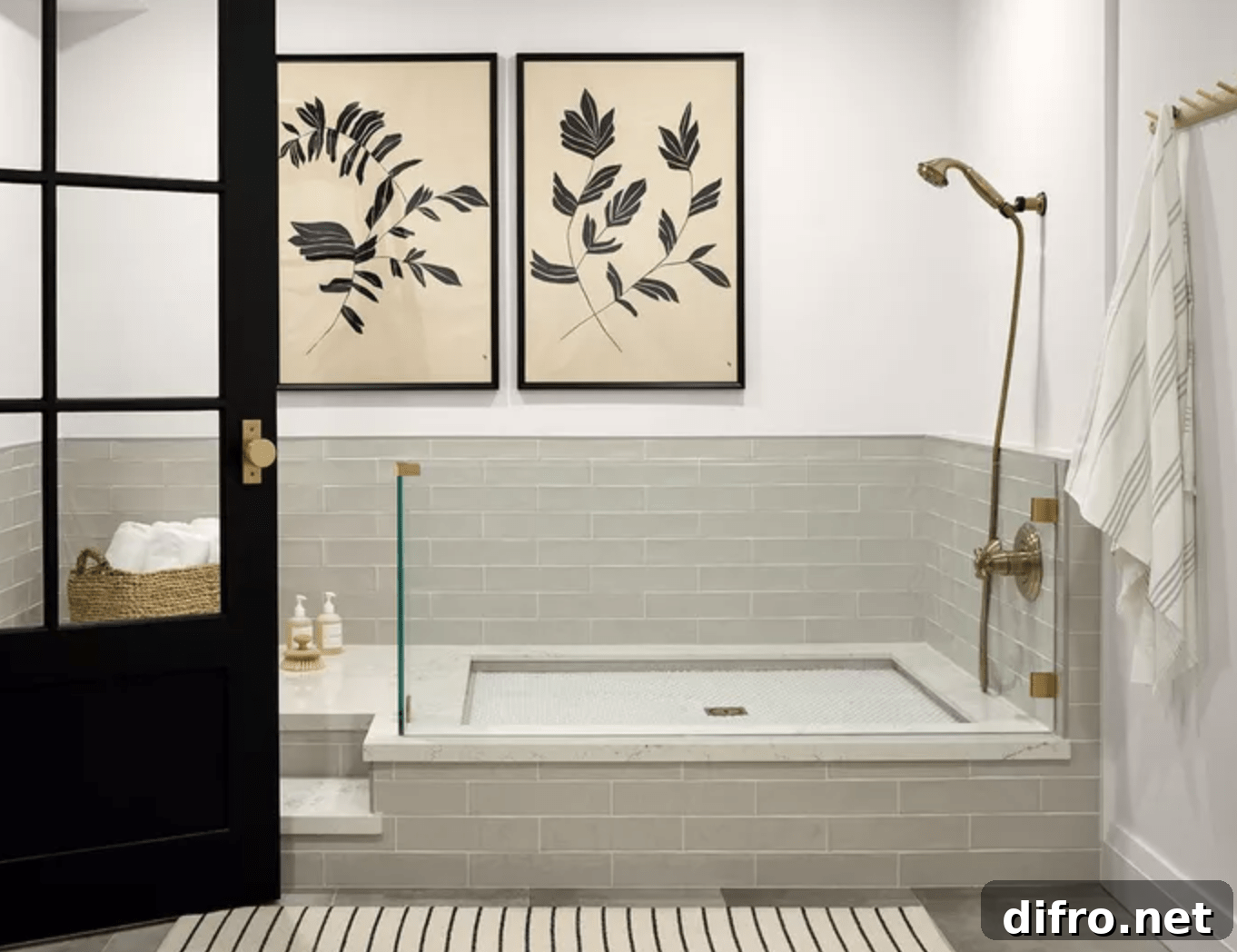
Think about how the space will be used. Some homeowners add practical features like built-in dog showers, laundry hookups, or extra storage niches. Tailor the design to your household’s needs so the basement bathroom is both beautiful and functional.
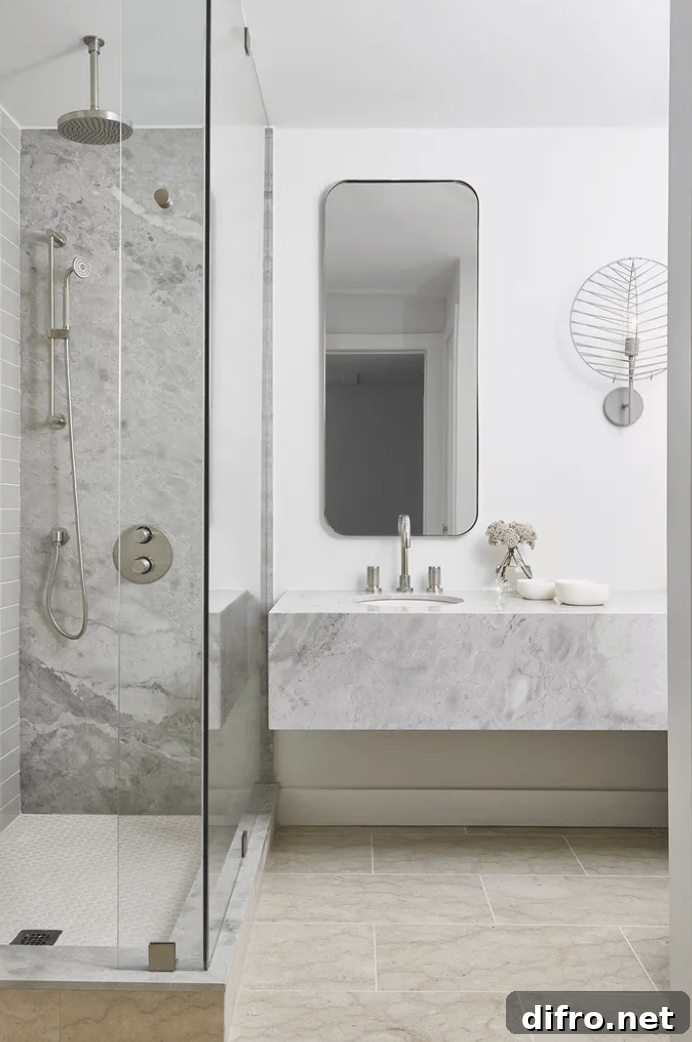
Elegant Marble
Use marble strategically—on a shower wall or a custom vanity—to add a sophisticated accent without overwhelming the basement. Combine marble with matte metals and glass for a modern, elevated look.
Further Inspiration
Looking for more ideas? Consider researching bathroom lighting, spa-inspired master bathrooms, half-bath decor, and small farmhouse bathroom solutions to gather style options, lighting strategies, and layout tips that can guide your basement bathroom renovation.