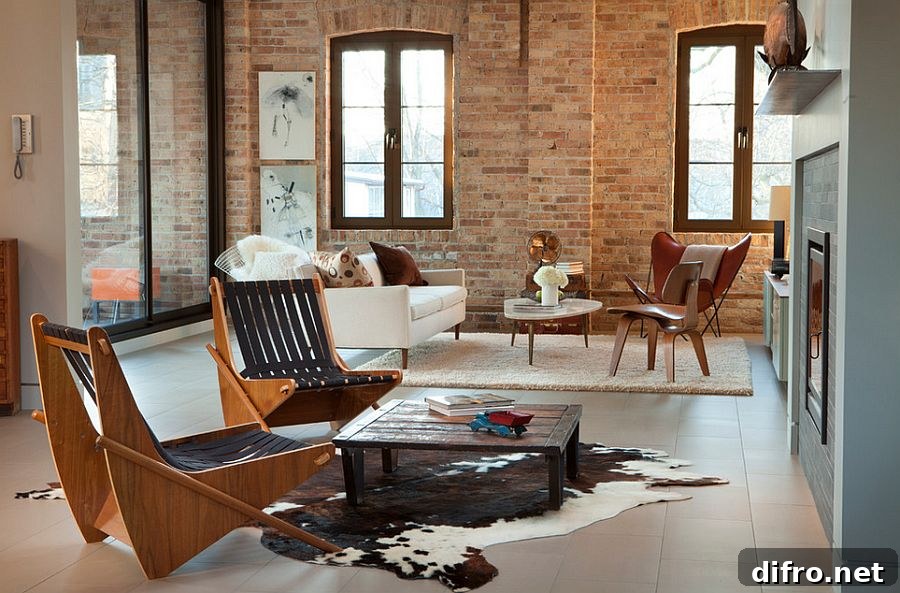
Photos are a rich source of design inspiration. This article may contain affiliate links to products; clicking a link could result in a small commission being paid to www.decoist.com.
Brick walls and contemporary interiors might seem like an unlikely pairing, yet the exposed brick accent has become a favorite of architects and homeowners alike. Whether it reveals a building’s historic past or adds texture and character to a sleek, modern space, an exposed brick wall in the living room brings warmth and a timeless charm. For many, a brick wall is the defining feature that bridges past and present, turning an otherwise neutral room into a memorable, tactile environment.
If you don’t have original brick in your home, faux options make achieving the look straightforward. High-quality faux-brick wallpapers and panels now offer realistic depth and texture, including 3D-effect papers and modern neutral tones in white, gray, or brown that complement contemporary decor.
![Inventive use of mirrors in the living room [Design: Interior Marketing Group]](https://difro.net/wp-content/uploads/2026/06/img_238599_1.jpg "100 Living Room Ideas with Stunning Exposed Brick Walls 2")
Exposed brick comes in an array of finishes and tones—red, whitewashed, gray or black—and adapts easily to styles from industrial and shabby chic to Scandinavian and transitional. Below is a curated guide to inspiring living rooms that use brick walls with creativity and restraint.
1. Modern Living Spaces with Brick Walls
Brick accent walls remain a strong trend in modern living rooms. In many renovated apartments and lofts, revealing and embracing the original brickwork introduces texture and visual interest. Painting brick white or light gray is a smart choice for contemporary spaces: it keeps the palette neutral while preserving the surface’s tactile appeal. For homeowners seeking drama, deeper neutrals such as charcoal or even black can provide a bold backdrop that lets furniture and artwork pop.
![Modern living room mixes brick wall with contemporary shelves in white [Design: Downie North Architects]](https://difro.net/wp-content/uploads/2026/06/img_238599_2.jpg "100 Living Room Ideas with Stunning Exposed Brick Walls 3")
![Painted brick wall in gray for the contemporary home [Design: Stuart Sampley Architect]](https://difro.net/wp-content/uploads/2026/06/img_238599_3.jpg "100 Living Room Ideas with Stunning Exposed Brick Walls 4")
Red brick remains classic and complements uncluttered, neutral interiors—letting the wall serve as the room’s focal point. Whether left raw or painted, brick provides a structured backdrop that highlights clean-lined furniture and modern accessories.
2. Decorating with Panache
An exposed brick wall creates an energetic, gallery-like backdrop for art, family photos, and curated decor. Its texture brings depth to a room and helps neutral furniture stand out. To decorate effectively, plan thoughtfully: brick is a strong visual element, so maintain cohesion in furniture finishes, color accents, and lighting to avoid busy or cluttered results.
![Colorful couch in blue, rug and plush chairs make a vivacious living room [Design: S&K Interiors]](https://difro.net/wp-content/uploads/2026/06/img_238599_7.jpg "100 Living Room Ideas with Stunning Exposed Brick Walls 5")
Accent lighting—wall sconces, picture lights, or strategically placed table lamps—can emphasize texture and add warmth. Choose a restrained palette for large pieces and layer color through textiles and smaller accessories to create a balanced, vibrant space.
3. Industrial and Beyond
Exposed brick is synonymous with industrial style: paired with exposed ductwork, metal window frames, and utilitarian lighting, it creates an authentic loft aesthetic. Painted brick—especially whitewashed surfaces—also works beautifully with rustic, Mediterranean or farmhouse interiors, where wooden beams and natural materials introduce warmth. White or light brick brightens a room, amplifying natural light and lending an airy, coastal-friendly feel.
![White, painted brick walls add to the drama of the large industrial Chelsea loft [Design: Studio D+FORM]](https://difro.net/wp-content/uploads/2026/06/img_238599_16.jpg "100 Living Room Ideas with Stunning Exposed Brick Walls 6")
4. Brick Walls for Small Living Rooms
In compact living spaces, brick introduces warmth and personality without overwhelming the room. Two effective strategies work well: embrace an eclectic, layered look with carefully edited vintage pieces and bold accents; or adopt a Scandinavian-inspired approach, using clean lines, minimal furnishings, and light colors to let the brick wall make a focused visual statement. In small rooms, pick one clear decorating direction to keep the space cohesive.
![A hint of black anchors the eclectic room [Design: Tiffany Hanken Design]](https://difro.net/wp-content/uploads/2026/06/img_238599_19.jpg "100 Living Room Ideas with Stunning Exposed Brick Walls 7")
5. Throw in a Curve Ball
To make a brick wall truly memorable, highlight an unusual architectural feature—such as a curved wall—or add artistic touches like murals or graffiti for an urban, edgy vibe. Combine contrasting textures (for example, sheer curtains against rough brick) or mix finishes like whitewashed and red brick to create a distinctive layered interior. Small additions—textiles, plants, or sculptural lighting—can soften and balance the rawness of brick.
![Creative way to highlight the curved brick wall in the living room [Design: Manuel Sequeira Architecte]](https://difro.net/wp-content/uploads/2026/06/img_238599_24.jpg "100 Living Room Ideas with Stunning Exposed Brick Walls 8")
Frequently Asked Questions (FAQs)
How do I mount a TV on a brick wall in my living room?
Use a masonry drill bit to bore into the brick, then secure a TV mounting bracket with appropriate wall anchors and screws. Double-check alignment with a level before fastening the TV.
Can I paint the brick walls in my living room?
Yes. Use a masonry primer and finish with paint designed for brick or masonry. Thorough cleaning and proper surface preparation are essential for long-lasting results.
How do I hang pictures on a brick wall?
Options include brick clips, hammer-in masonry anchors, or heavy-duty adhesive hooks designed for rough surfaces. Choose methods rated for the weight of your artwork.
Will a rug help with sound absorption in a living room with brick walls?
Absolutely. Rugs, curtains, upholstered furniture and wall hangings all help reduce echo and improve acoustics in rooms with hard, reflective surfaces like brick.
Can I install a fireplace in a living room with brick walls?
Yes—brick walls can work well with a fireplace installation, but structural support and proper venting should be confirmed with a professional installer.
How do I clean brick walls?
Clean brick with warm water and mild detergent or a gentle masonry cleaner. Avoid harsh chemicals and abrasive scrubbing that can damage mortar and brick surfaces.
What lighting works best with brick walls?
Warm, layered lighting—table lamps, floor lamps, wall sconces and directional picture lights—brings out brick’s texture and creates a cozy atmosphere.
How do I keep a living room with brick walls from feeling too heavy?
Balance the texture with light-colored furniture, reflective surfaces, greenery and soft textiles. Keeping one dominant decorating style helps the room feel intentional and airy.