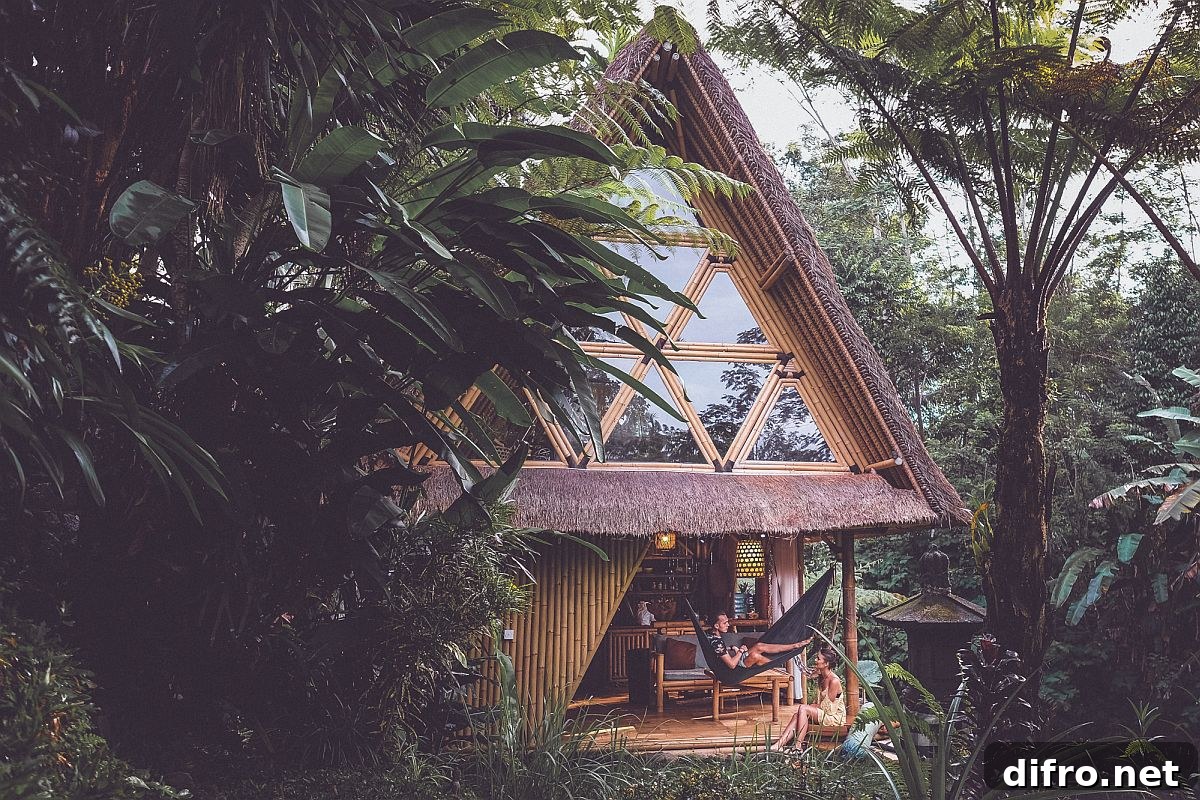
Few places inspire an immediate urge to pack a bag and catch the next flight like the Bamboo House in Bali. This elegant, eco-conscious retreat—known as the Hideout—combines sustainable construction with breathtaking views of the river and jungle that surround it. Built almost entirely of bamboo, the residence showcases how traditional materials and thoughtful design can create a comfortable, low-impact escape that feels immersed in nature.
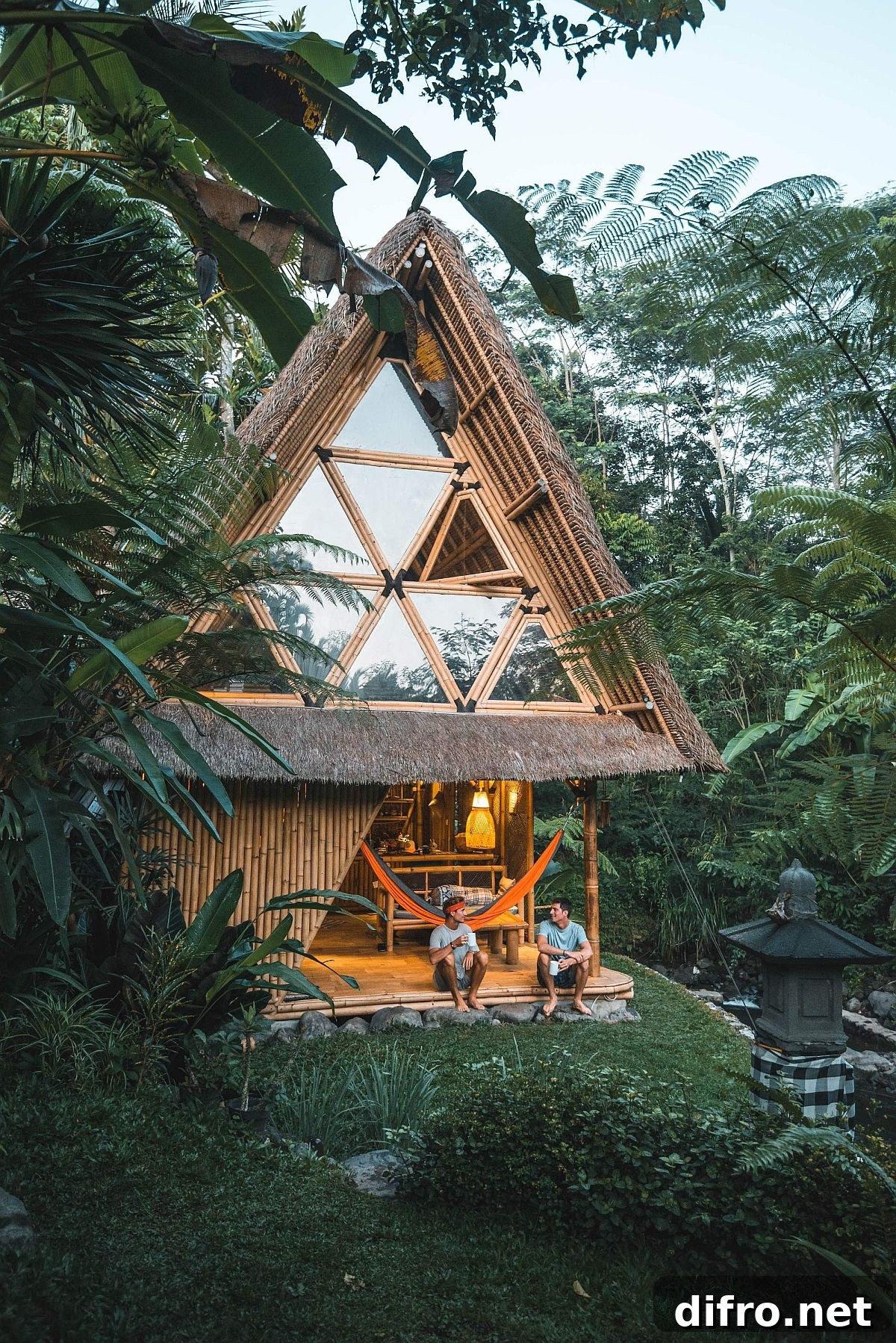
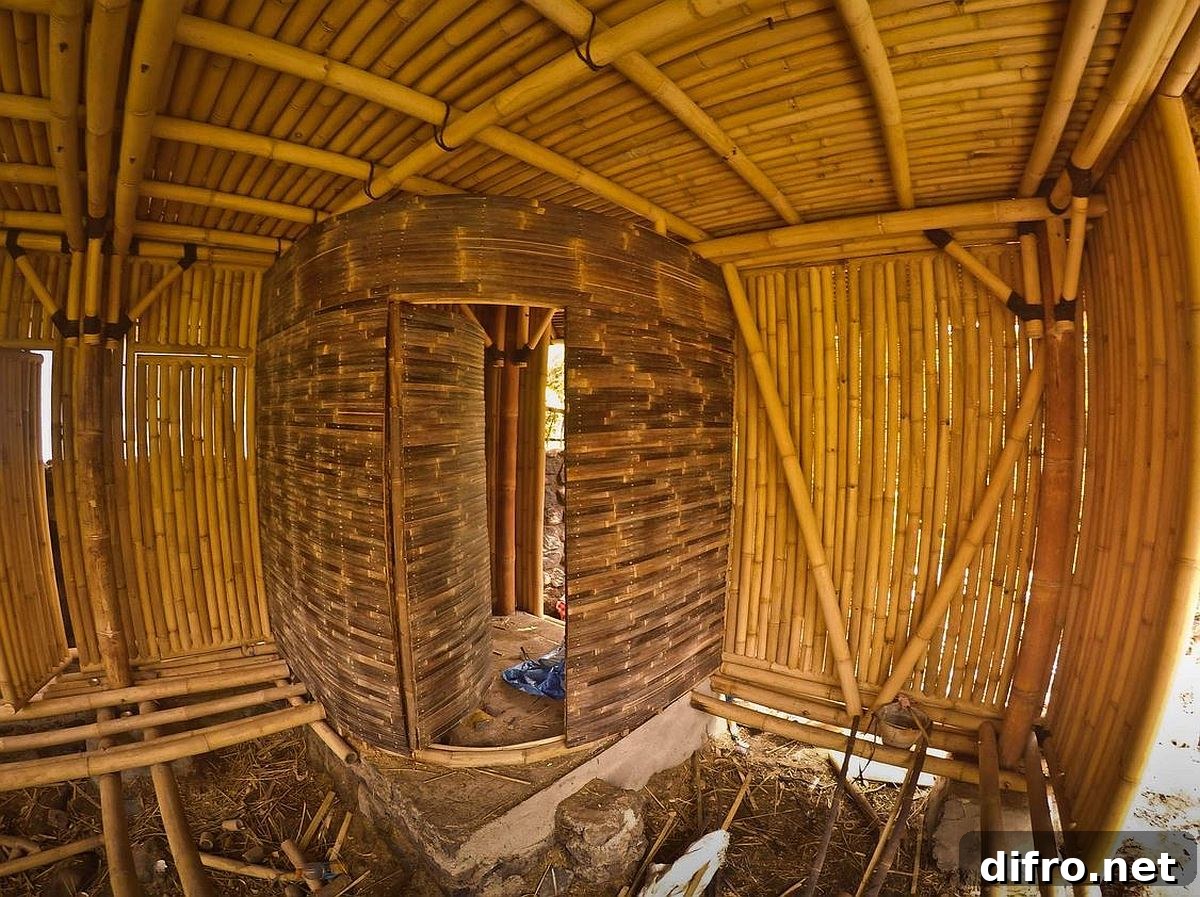
The Hideout was designed by Jarmil Lhoták and Alena Fibichová and deliberately avoids low-quality, mass-produced materials. Instead, the project uses high-grade bamboo sourced locally from the mountains of Karangasem. That bamboo is prized for its strength and lower sugar content, qualities that make it well suited for long-lasting, sustainable construction. Carefully selected and skillfully joined, the bamboo forms both the structural frame and the interior finishes, giving the whole house a coherent, organic aesthetic.
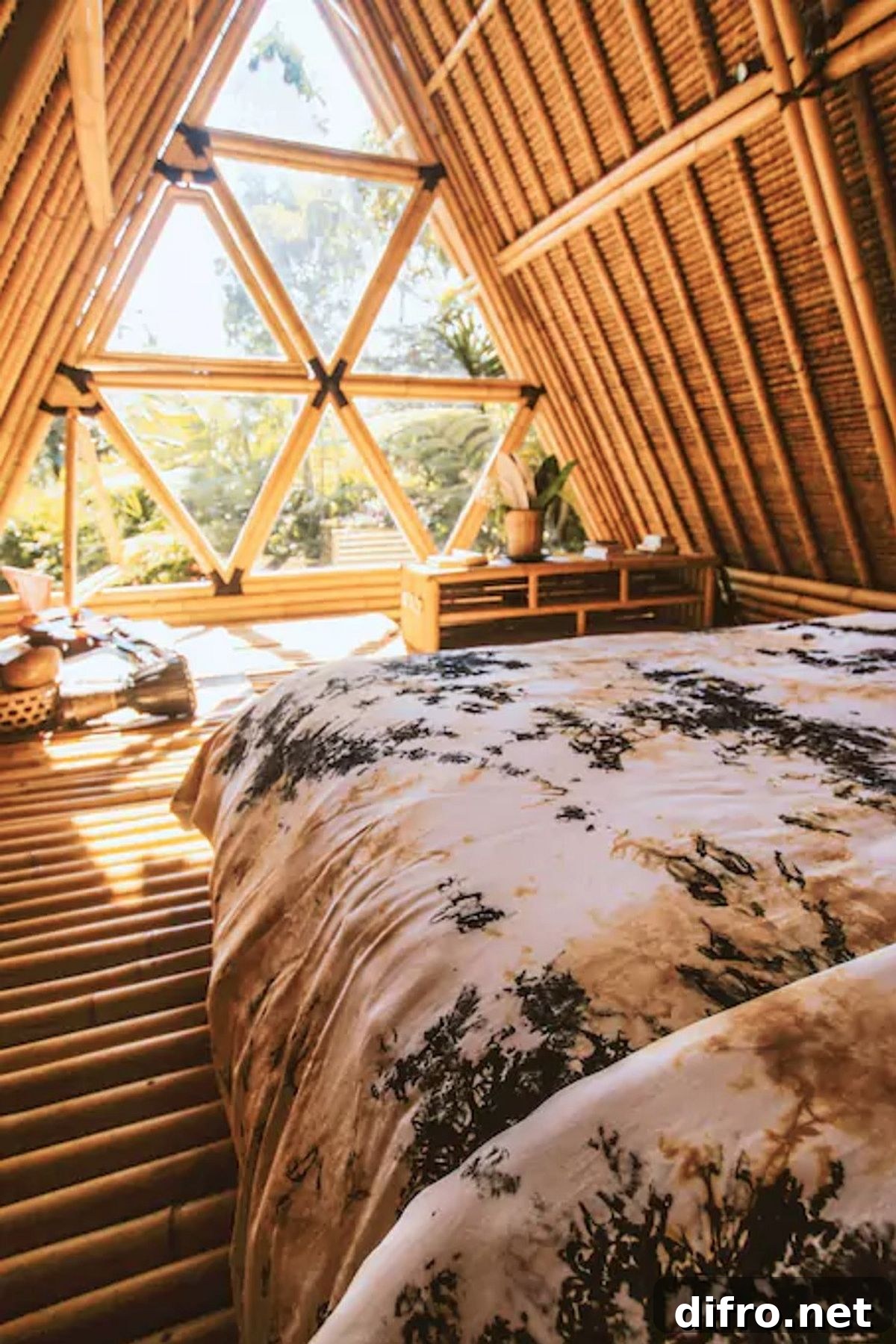
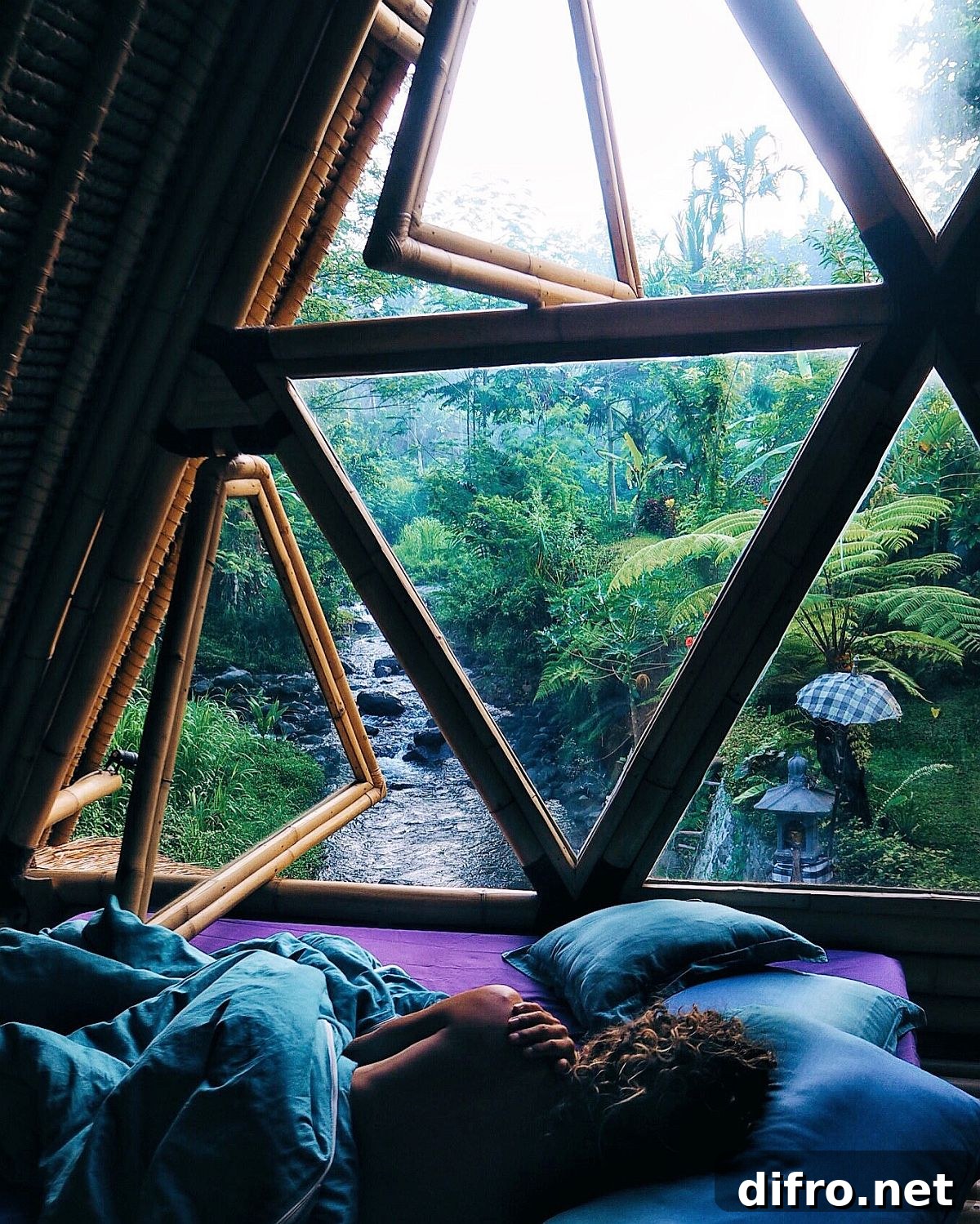
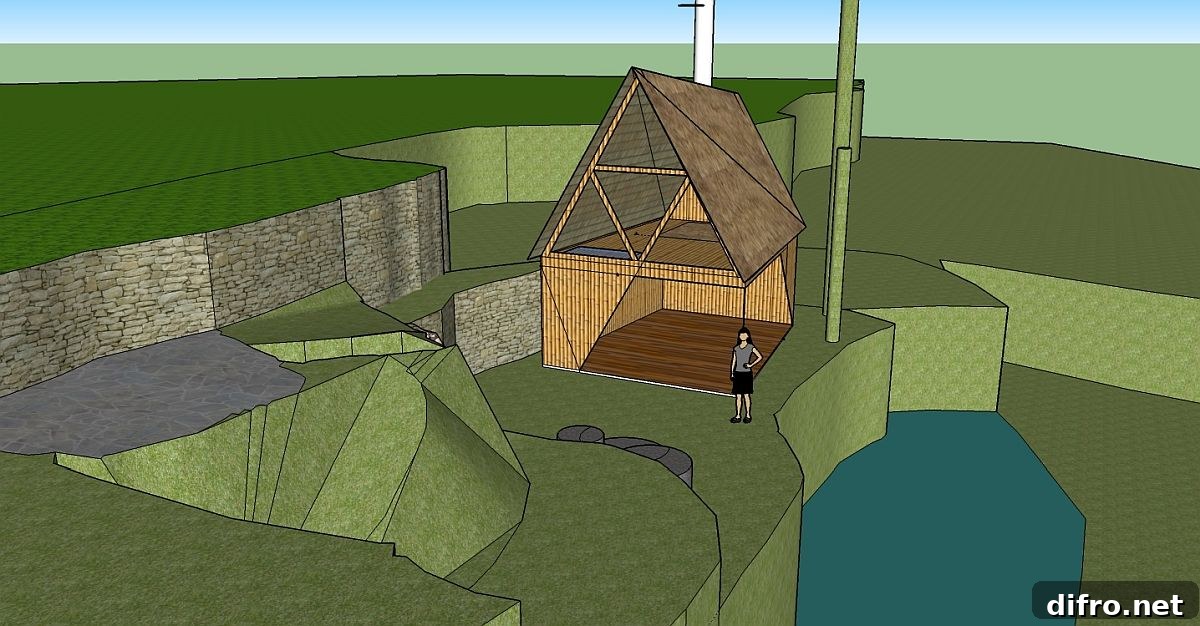
Architecturally, the Hideout rises above the jungle floor like a lookout or perch, offering wide, uninterrupted views across the treetops and down to the river valley. The design employs a vernacular A-shaped, or A-frame, roof that helps define the interior volumes while allowing for a top-level bedroom with tall triangular windows. These striking window openings welcome daylight deep into the interior and frame cinematic views of the surrounding canopy and distant hills.
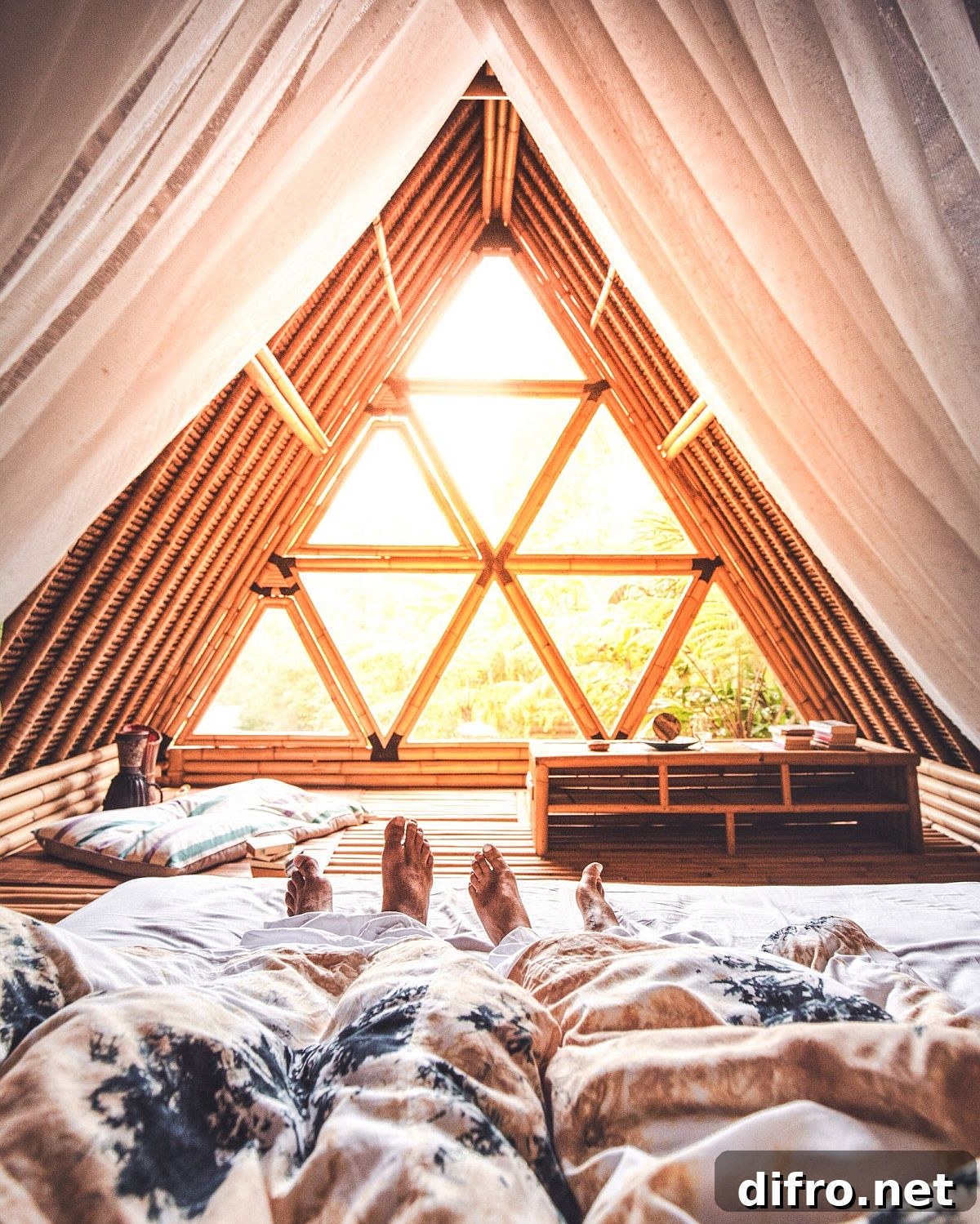
Inside, the atmosphere is warm and tactile: every surface highlights bamboo’s natural grain and color, yet the spaces remain spare and focused on comfort. The interior layout emphasizes openness and connection to the outdoors; large openings and minimal barriers dissolve the boundary between inside and out. Natural light and ventilation are maximized, reducing the need for mechanical systems and reinforcing the home’s sustainable credentials.
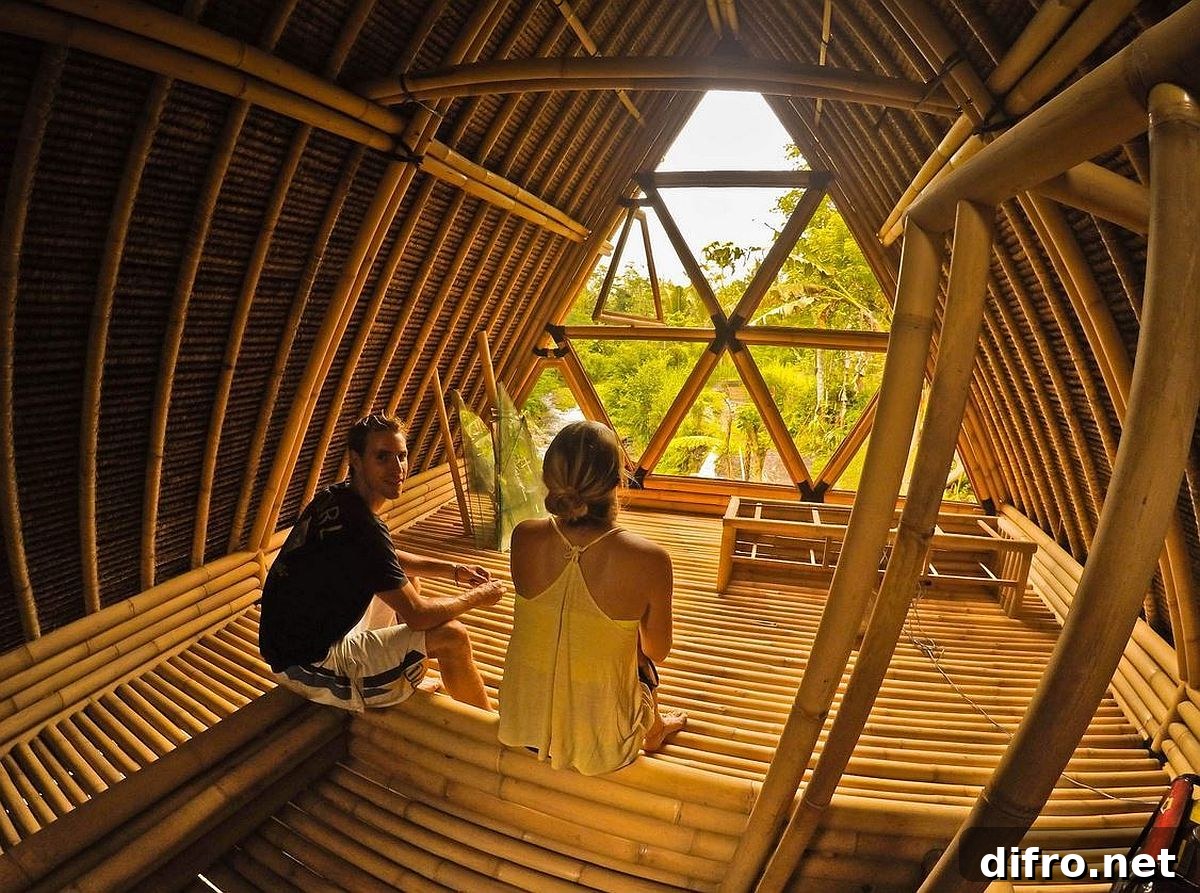
Practical features enhance the stay without detracting from the raw, natural feel: an outdoor shower set within the garden invites a close-to-nature bathing experience, while elevated sleeping quarters provide privacy and panoramic jungle views. From the bedroom windows, the color and texture of the landscape change throughout the day, shifting from the soft greens of morning mist to golden light at dusk.
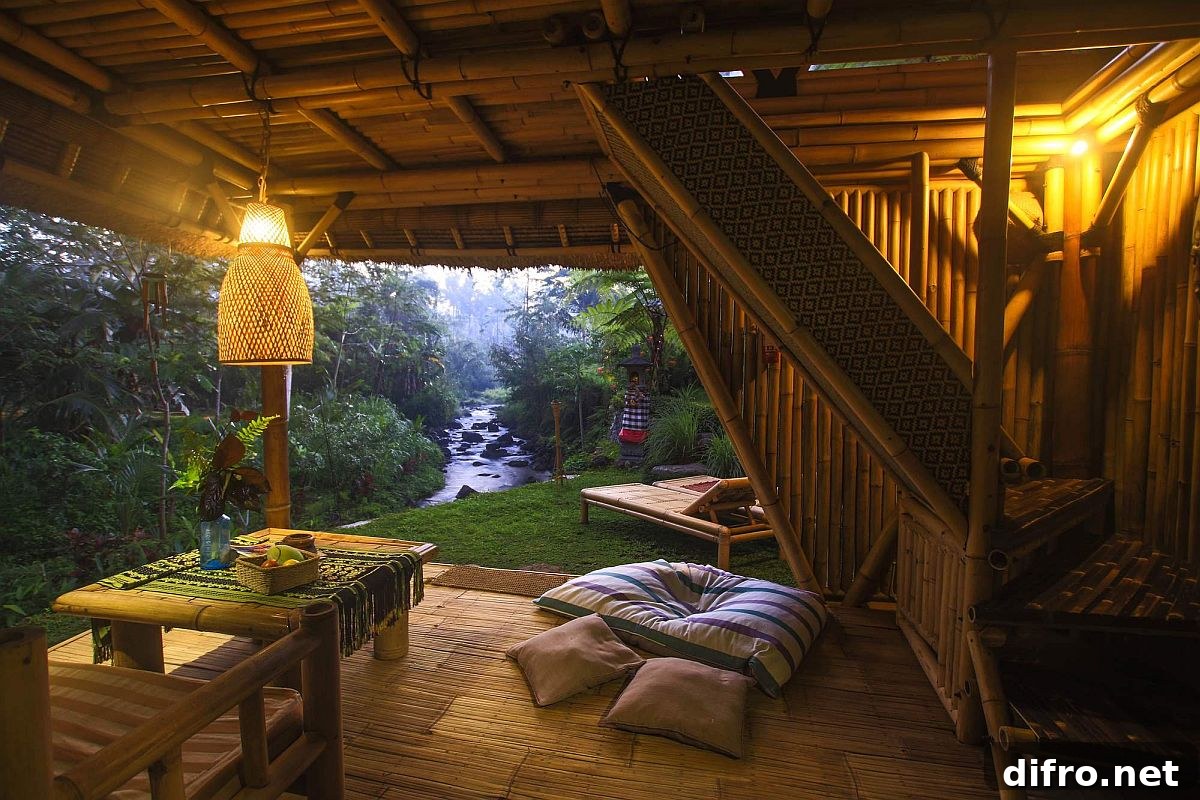
Bali is already home to many exceptional retreats, yet the Hideout stands out for its singular focus on sustainability, craftsmanship and sensory experience. The project illustrates how responsibly sourced local materials can be elevated to create architecture that is both beautiful and environmentally minded. Carefully executed joinery and construction techniques protect the bamboo and ensure longevity, while the simple, elegant form keeps the emphasis on landscape and light rather than ornament.
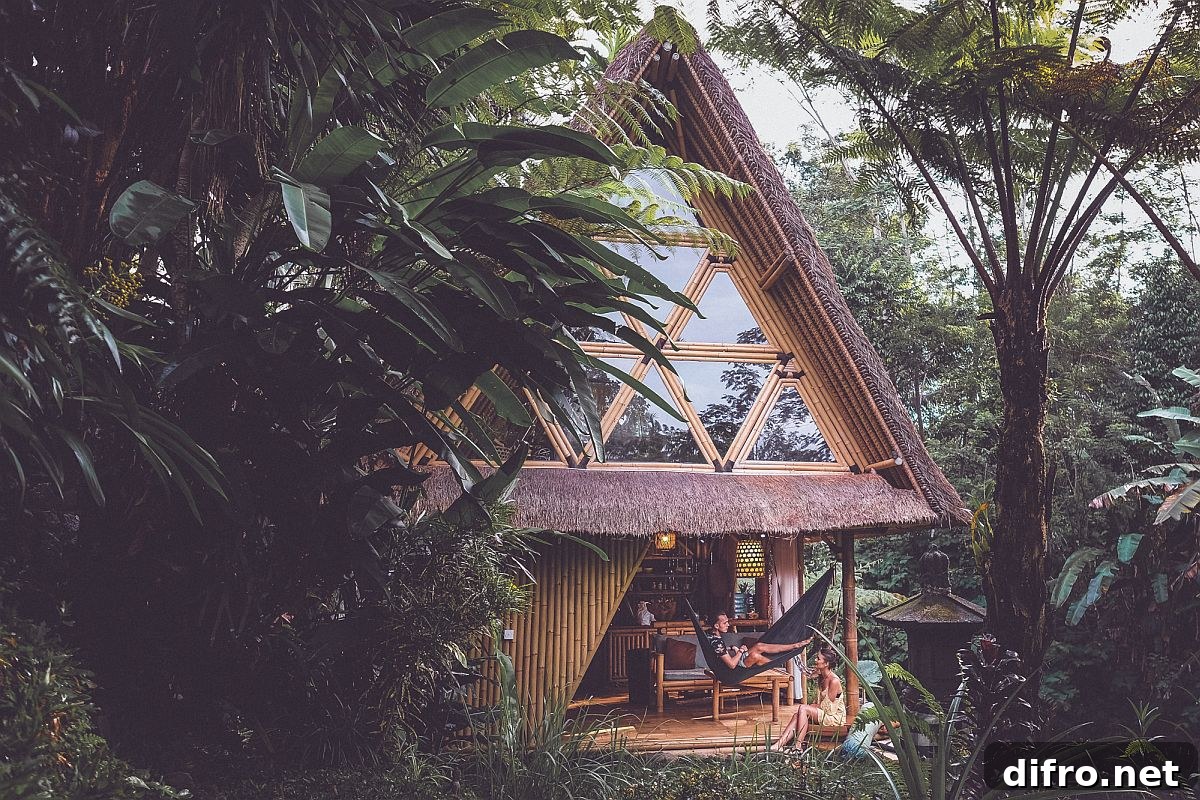
Visitors and design enthusiasts are often drawn to the Hideout for its ability to combine a primitive material with refined spatial ideas. The sketches and construction images reveal the meticulous process behind the project—how individual bamboo poles are arranged, tied and joined to form sweeping curves and sharp angles that respond to site-specific conditions. These images show the house both as a crafted object and as a lived place where the rhythms of nature shape everyday life.
Photography credits: Sasha Juliard, Valentino Luis, Jordan Hammond, Emily Hutchinson and Reis Junk. The Hideout is a thoughtful example of how sustainable materials, careful site response and simple forms can create a memorable, low-impact retreat that celebrates its natural setting.