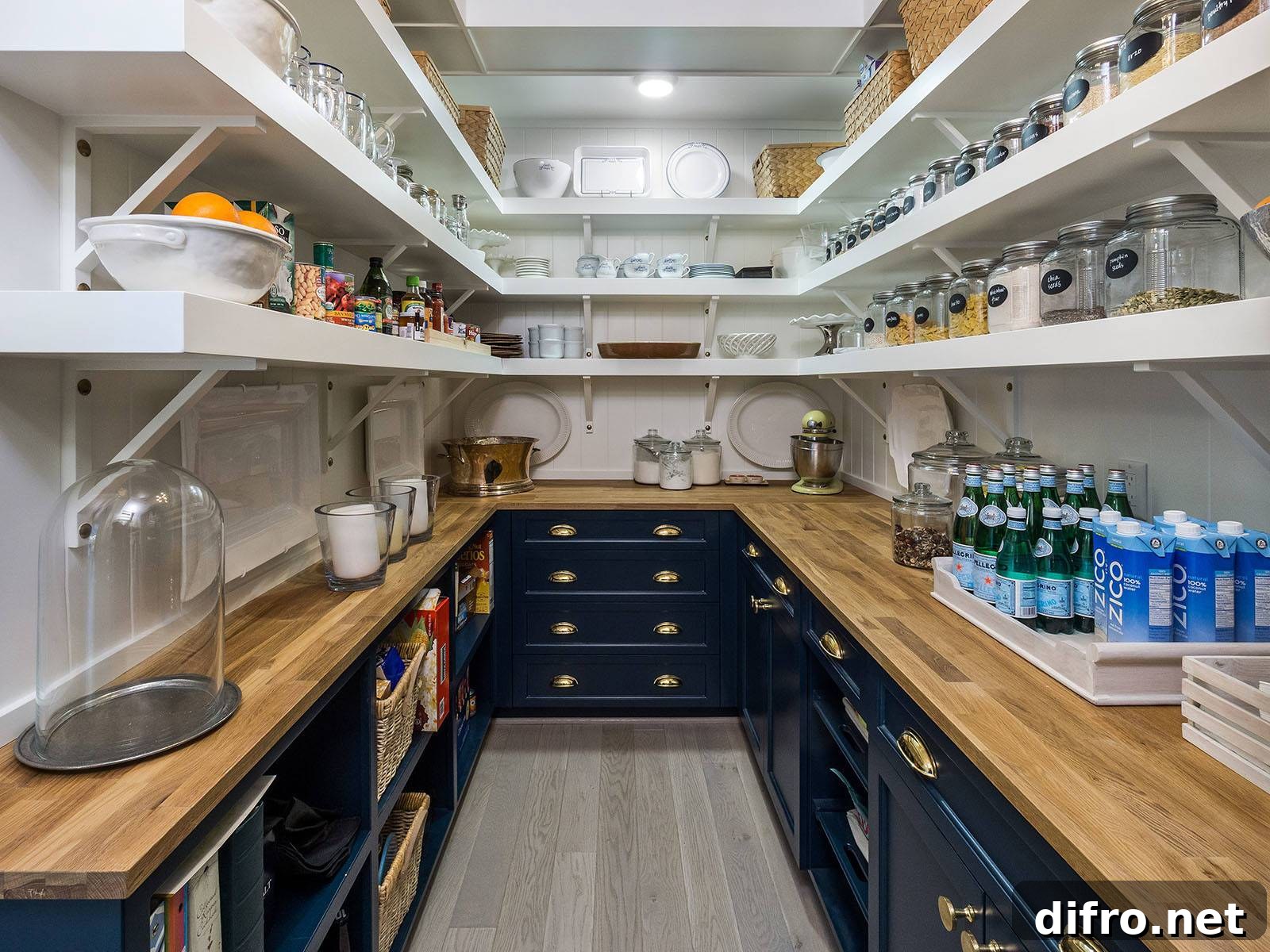
As more people spend time at home, cooking and eating in has become the norm, and that leads to a greater need for smart food storage. The pantry plays a central role in how a kitchen functions, so it deserves the same careful attention you give other parts of the home. Modern pantries are no longer merely hidden storage closets; interior designers and home shows have helped people see that a pantry can be a beautiful, functional extension of the kitchen.
Walk-in pantries offer generous storage for canned goods, bulk items, snacks and small appliances. They create better organization, provide discreet space for larger kitchen tools, and make it easier to keep the kitchen clear when you’re entertaining. If you host frequently, a walk-in pantry lets you tuck away prep clutter and serveware during gatherings—out of sight while you welcome guests, and easy to access afterward.
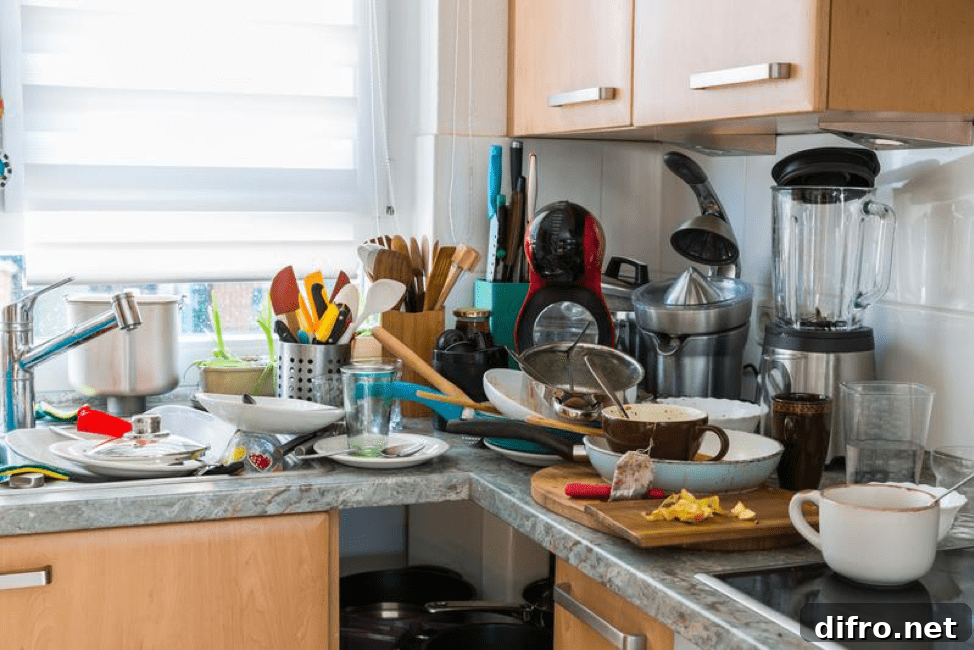
The difference between a functional pantry and one that feels luxurious is less about budget and more about design. A thoughtfully planned walk-in pantry—organized by function, with the right shelving, lighting and surfaces—can elevate the kitchen and streamline daily routines. Below are practical design strategies and inspiring ideas you can adapt to your own space.
Make the Pantry a Natural Extension of the Kitchen
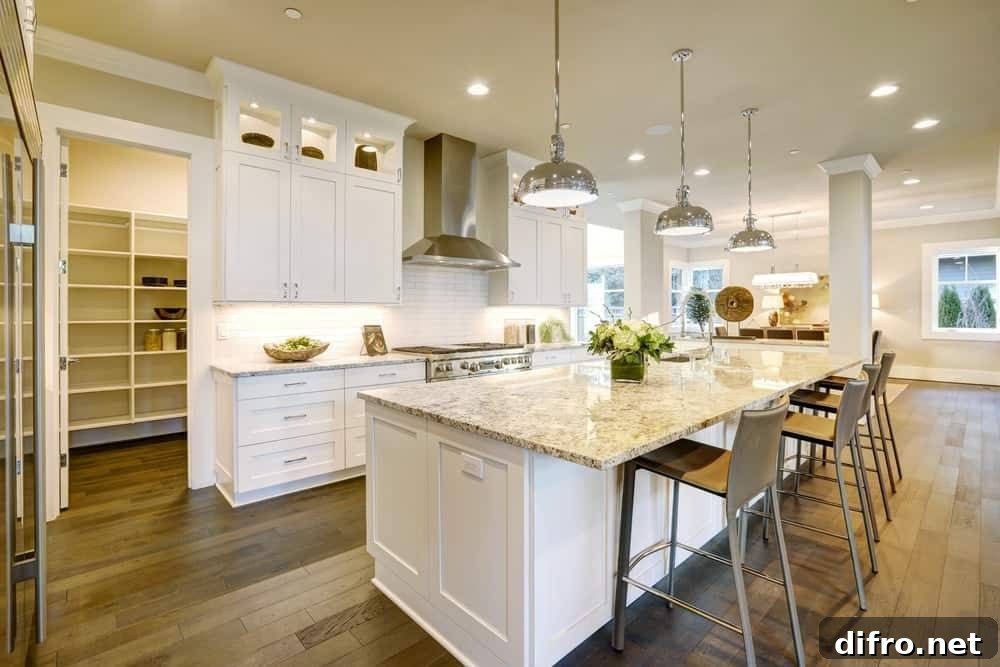
Locate the walk-in pantry adjacent to the kitchen so it feels like an extension of your primary work area. When your pantry is within easy reach, getting ingredients, tools and appliances during meal prep is faster and more efficient. Avoid placing essential food storage far from the cooktop or prep surfaces; close proximity reduces trips back and forth and keeps meal preparation fluid.
Design for Quick Access and Visibility
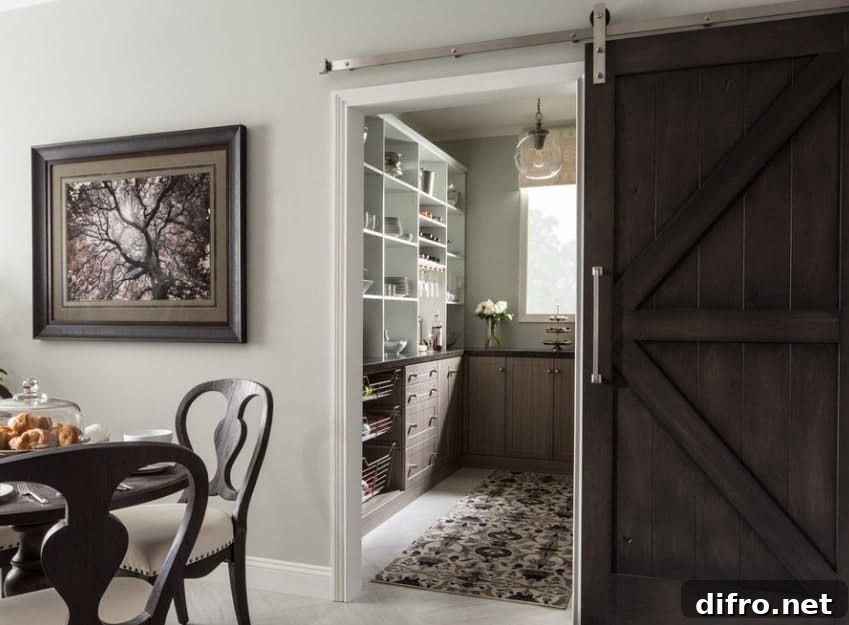
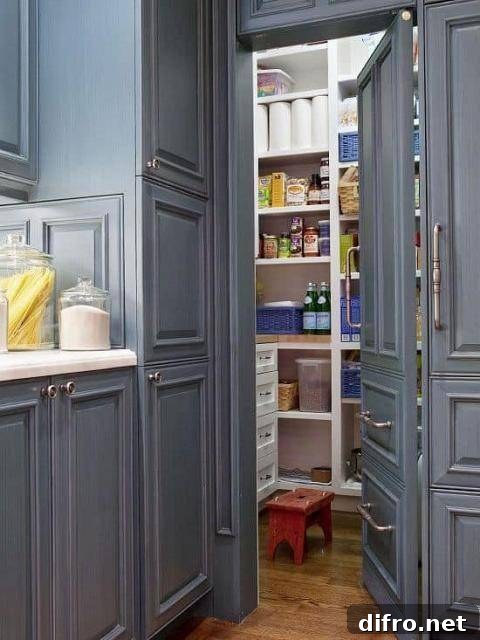
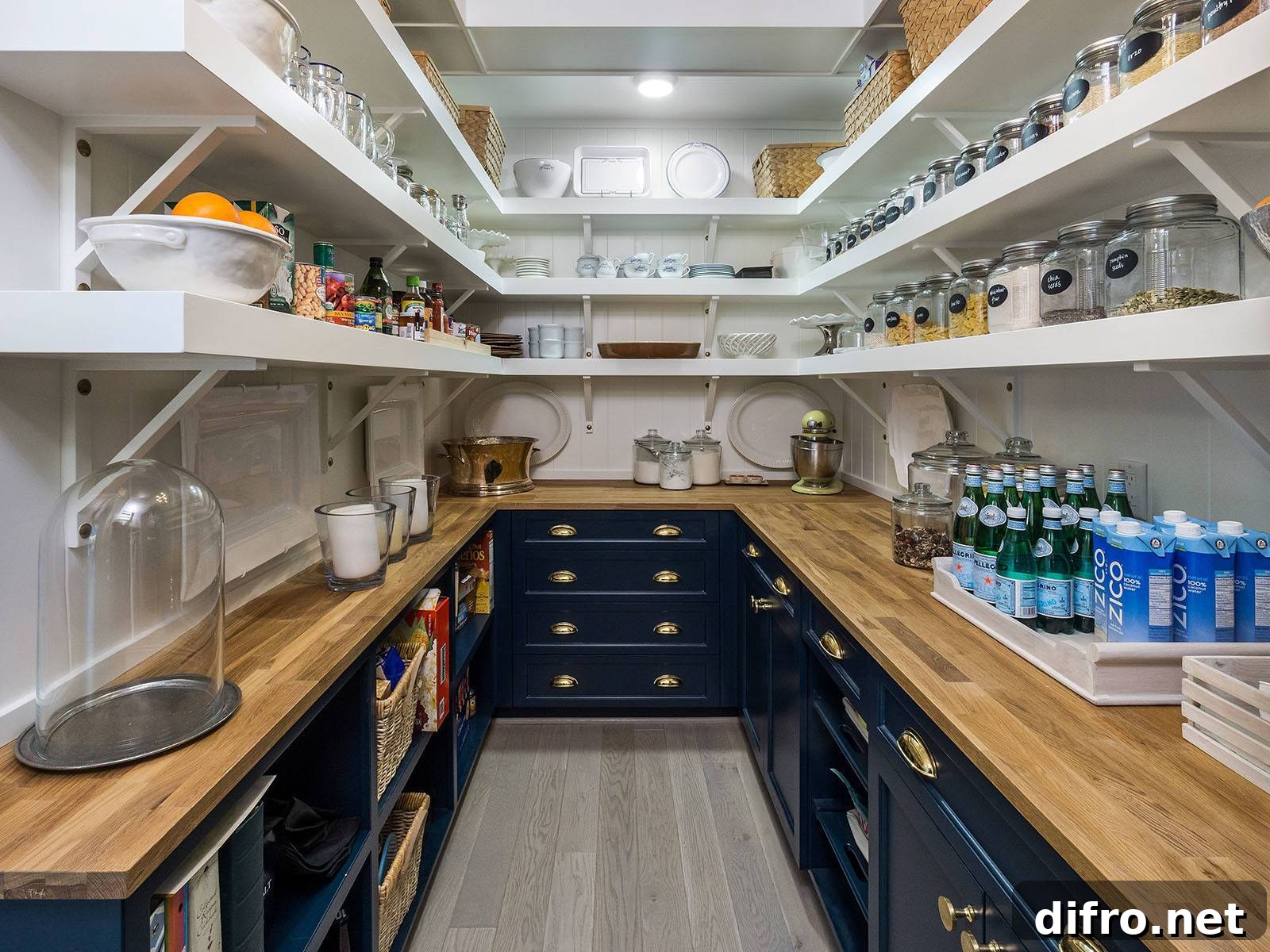
One of the biggest advantages of a walk-in pantry is the ability to see and reach items quickly. Prioritize open shelving and well-sized drawers so you can arrange goods by category, rotate stock easily, and inventory at a glance. Floor-to-ceiling shelving maximizes vertical storage; reserve the highest shelves for rarely used items and keep daily essentials at eye level or in lower, pull-out drawers.
Include a small step stool or a pull-down ladder if you plan to use higher shelves. Wide, shallow shelves are often more practical than deep ones because they allow you to see items at the back without moving everything forward. Clear canisters, labeled bins and consistent containers further improve visibility and help maintain order over time.
Maximize Counter and Appliance Space
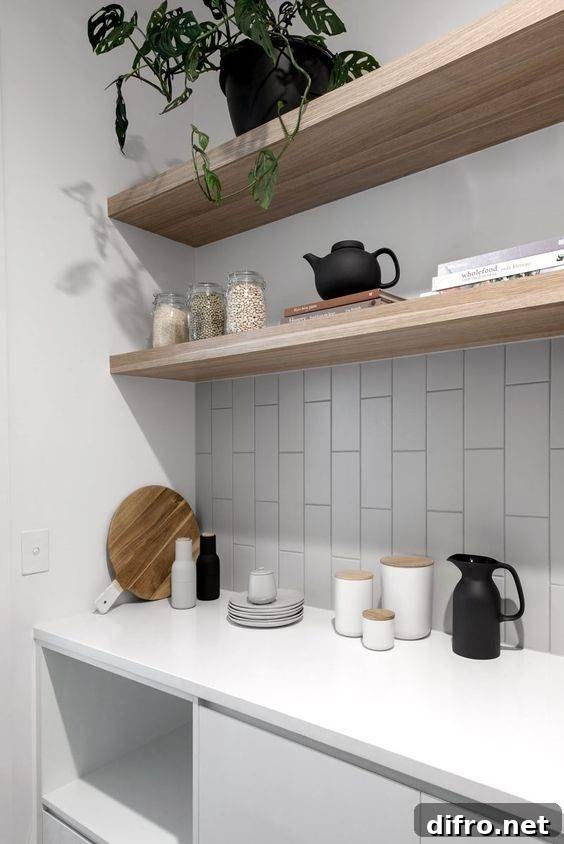
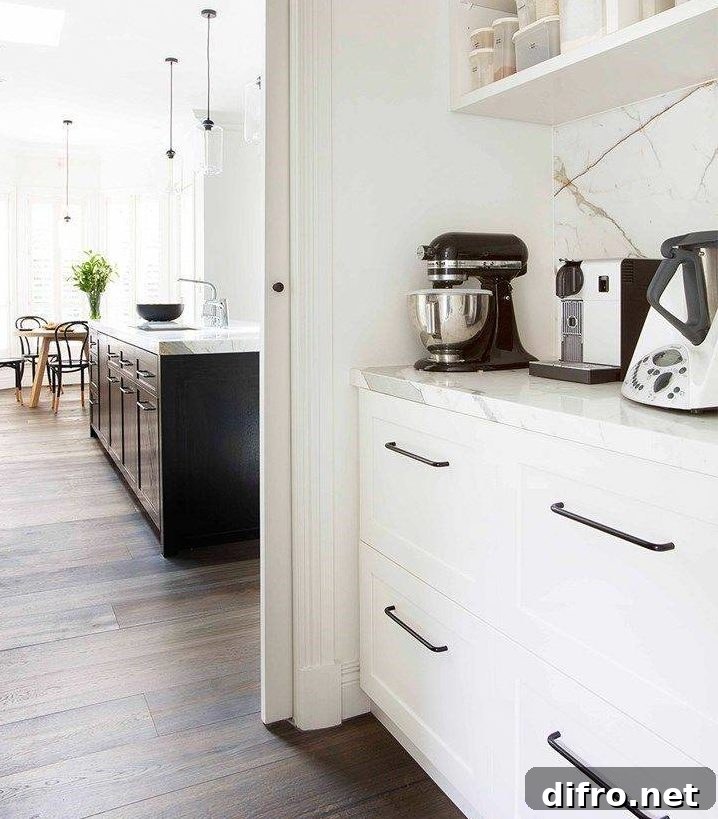
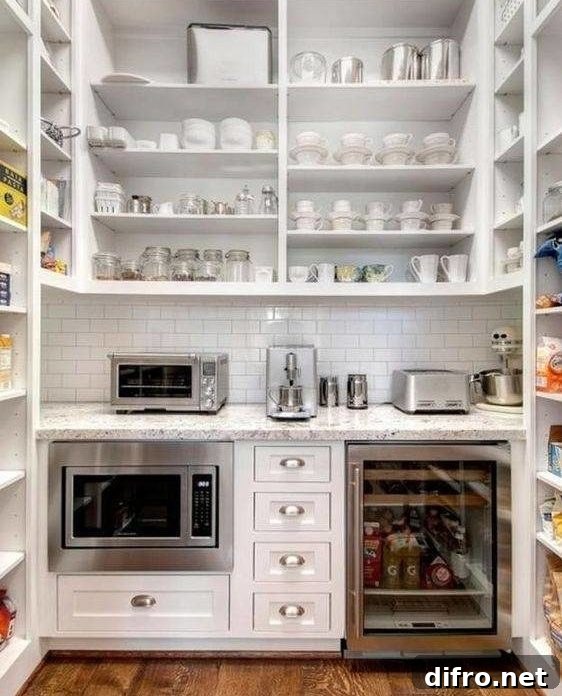
Clear your kitchen counters by moving small appliances—coffee makers, toasters, blenders—into the pantry. A dedicated counter inside the pantry keeps these tools accessible but out of your main cooking zone. Plan for electrical outlets so appliances can remain plugged in and ready to use without being hauled into the kitchen each time.
A pantry counter also creates a useful staging area for meal prep, baking or beverage service. Consider including drawers or cabinets under the counter for trays, mixing bowls and specialty items. Good task lighting above the counter will make this area more functional and inviting.
Plan Space Specifically for Your Needs
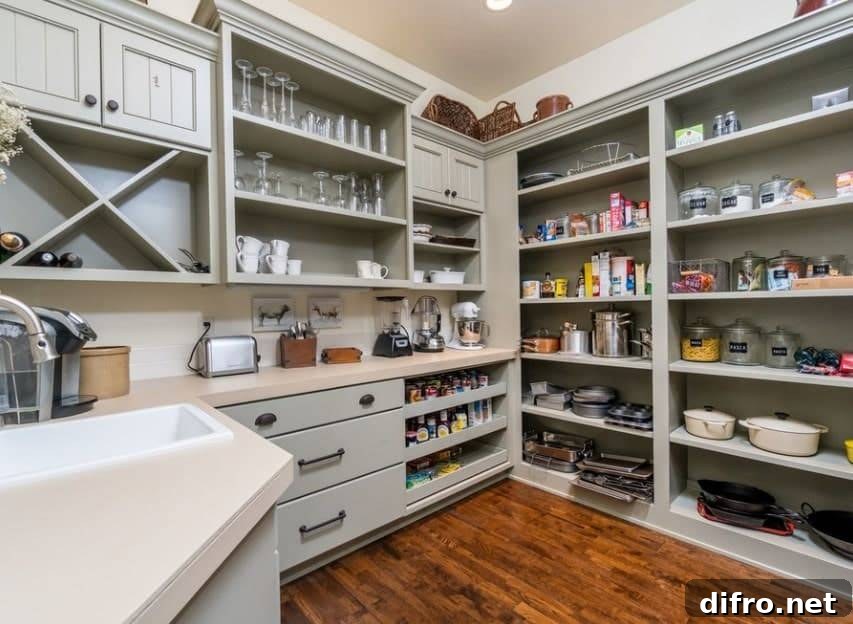
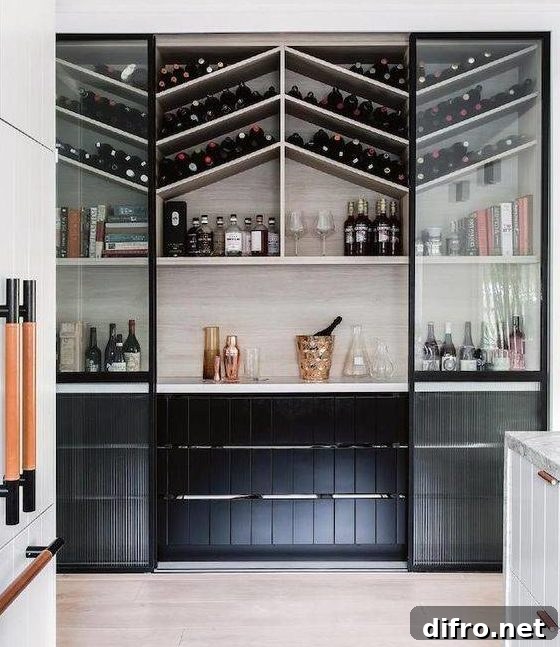
To make a pantry truly outstanding, design it around the items and activities it will serve. Start by listing everything you want to store—bulk staples, canned goods, snacks, small appliances, serving ware, wine or specialty items—and then estimate the shelf space each category requires. Specific planning helps avoid wasted space and ensures each item has a logical home.
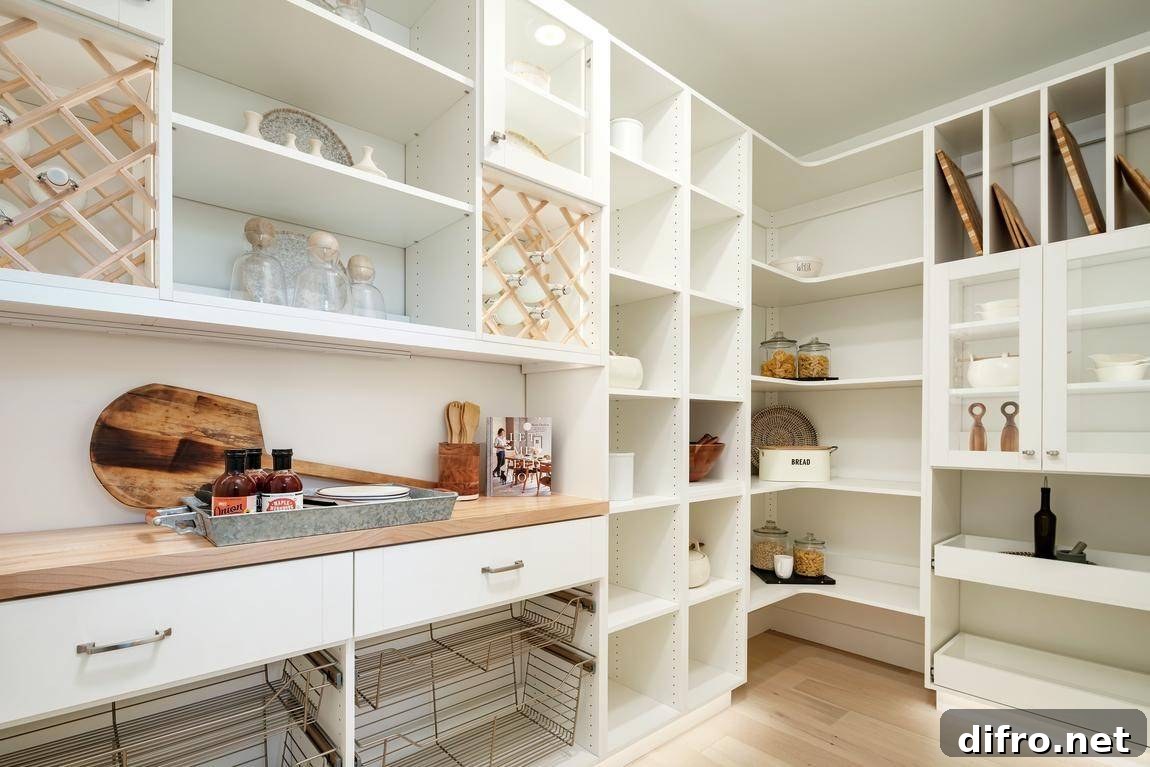
Consider dedicated zones: a baking station with mixing tools and ingredients, a beverage station with coffee and tea supplies, a can and jar zone with uniform labels, and a utility area for less-used appliances or seasonal items. Custom shelving, pull-out drawers, adjustable shelving brackets and wire baskets all increase flexibility so the pantry can adapt as your needs change.
With thoughtful layout, purposeful shelving, and clear organization, a walk-in pantry becomes more than storage—it becomes a streamlined, beautiful part of your kitchen that supports daily life and entertaining. Invest time in planning and you’ll create a pantry that looks great and makes everyday tasks easier.