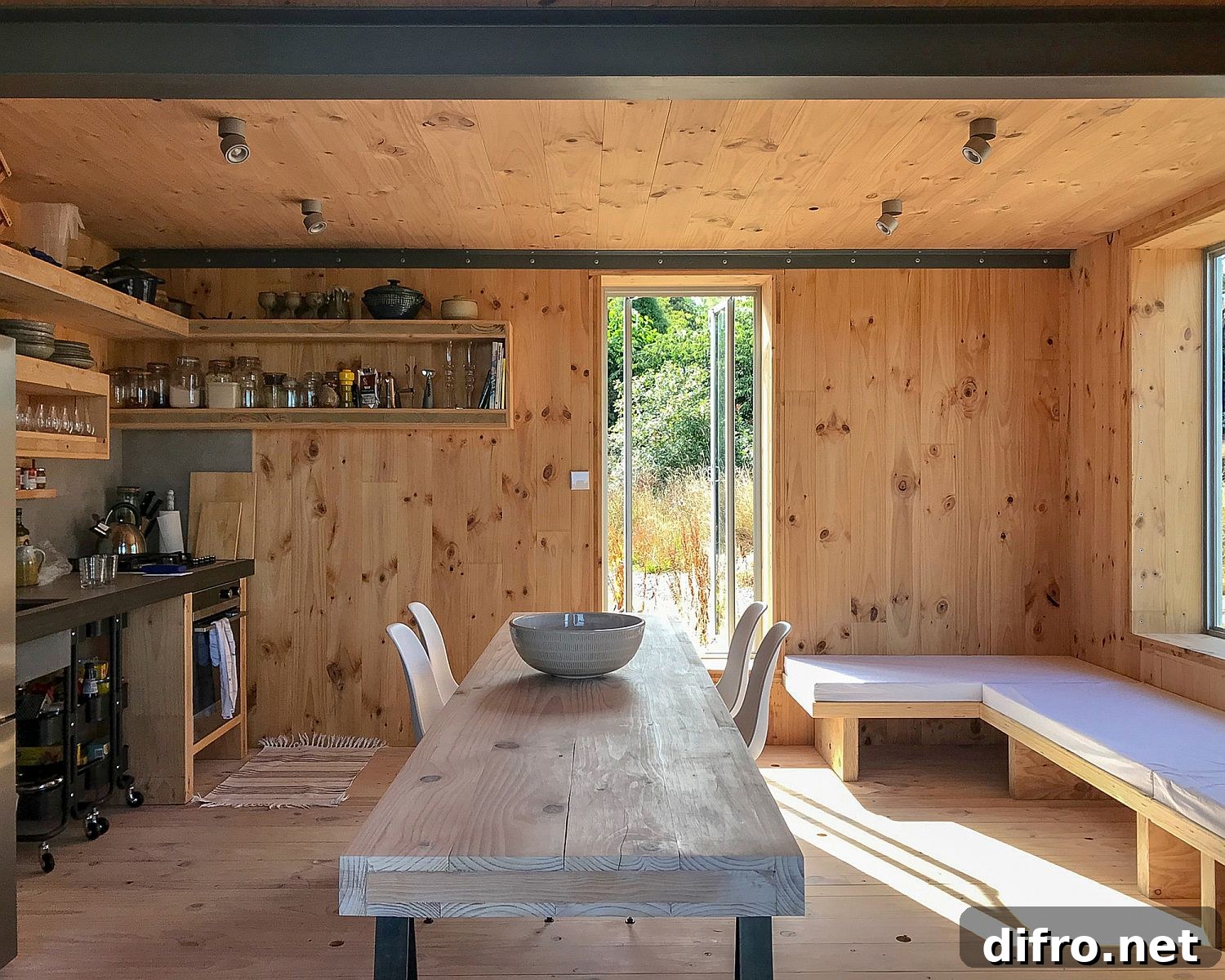
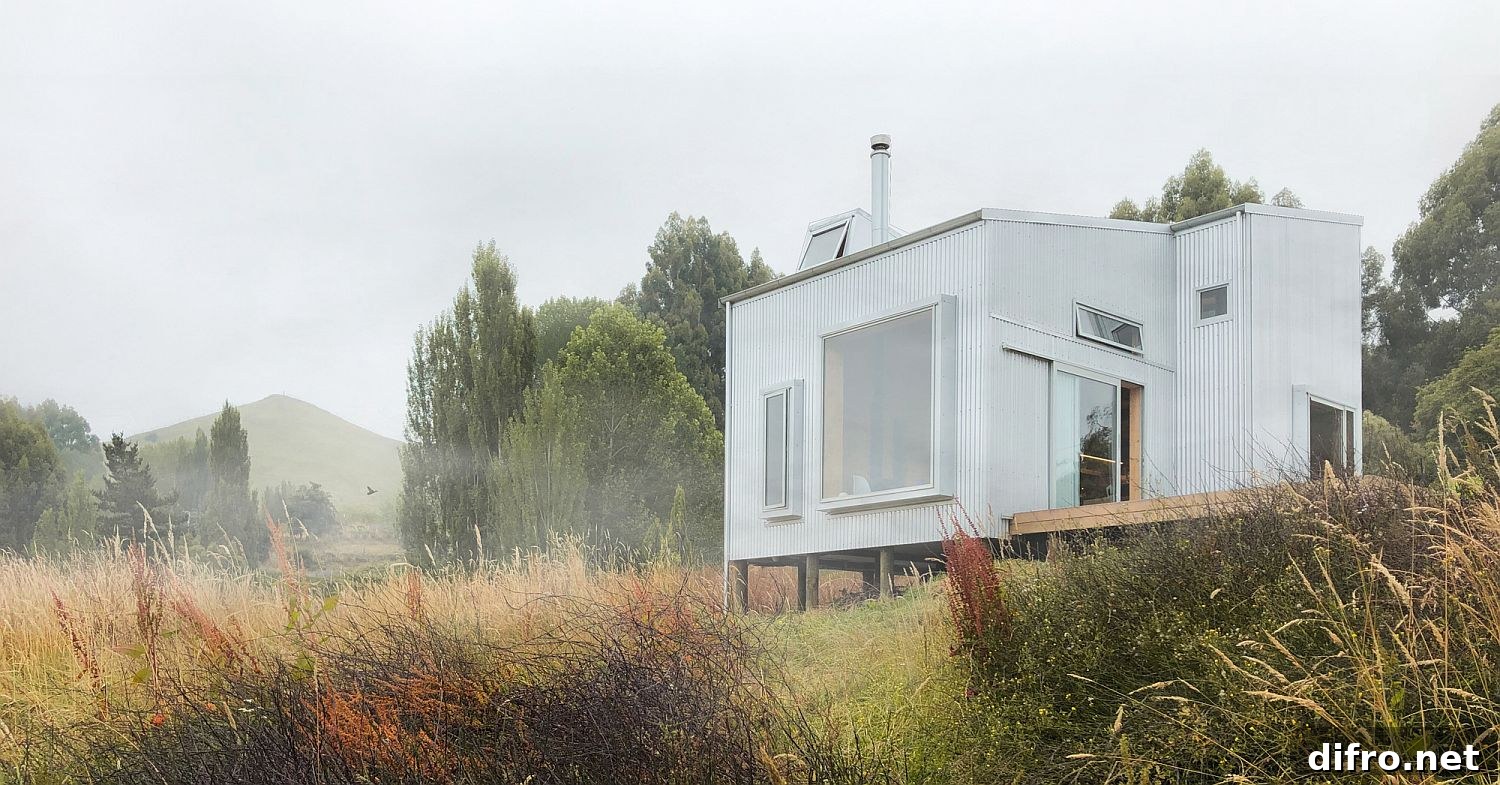
A small, sustainably built cabin tucked into the hills, the AB Studio Cabin by Copeland Associates Architects is a model of low-impact design and thoughtful prefabrication. Built to minimize disturbance to its site, the cabin combines modern, eco-conscious construction with a warm, compact interior. Cross-laminated timber defines the cabin’s cozy internal atmosphere, while corrugated metal cladding on the exterior frames sweeping views of the Ruahine Ranges and the Taihape landscape. The result is a tiny woodland retreat that feels gentle on both the eye and the environment.
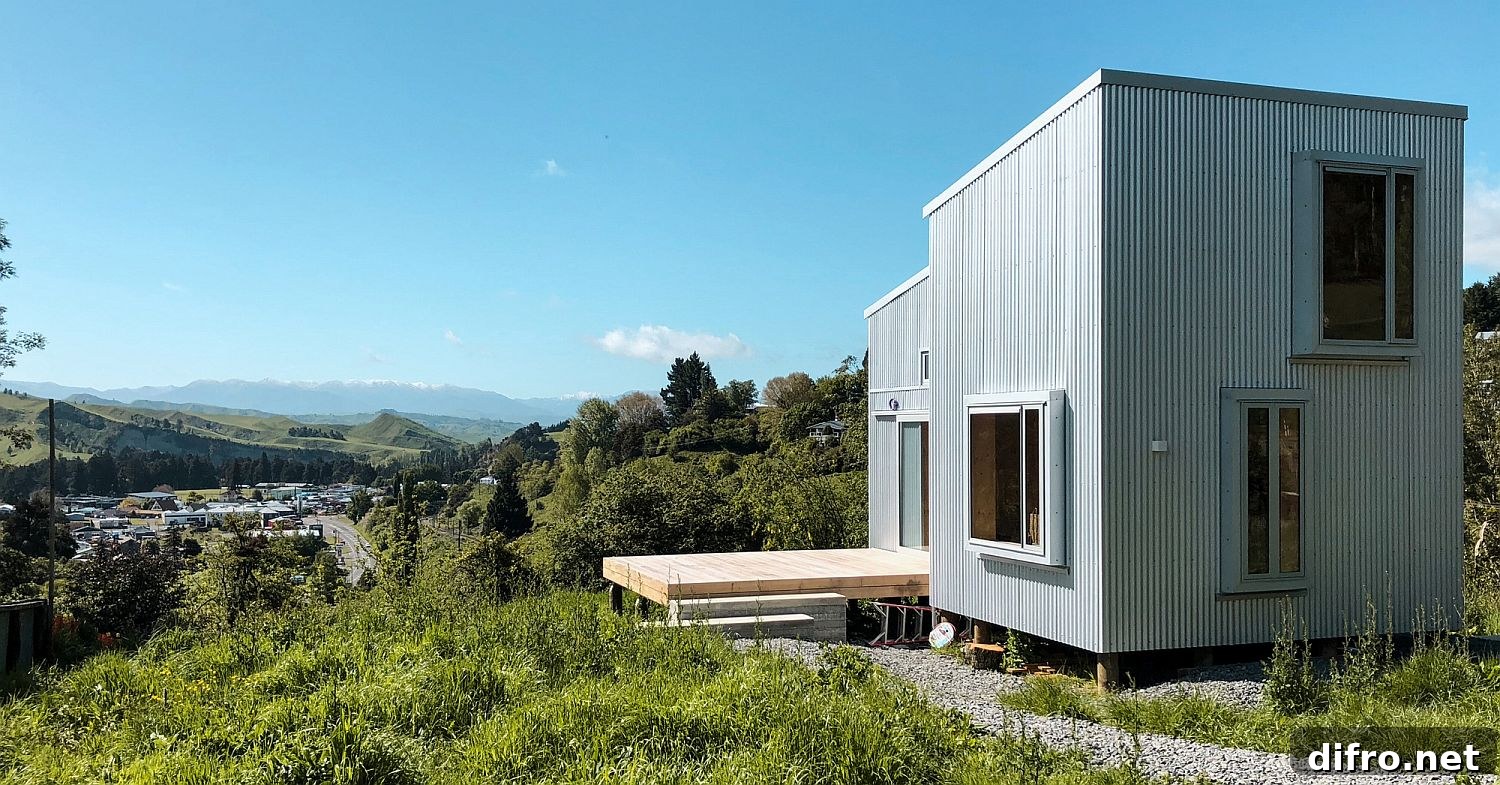
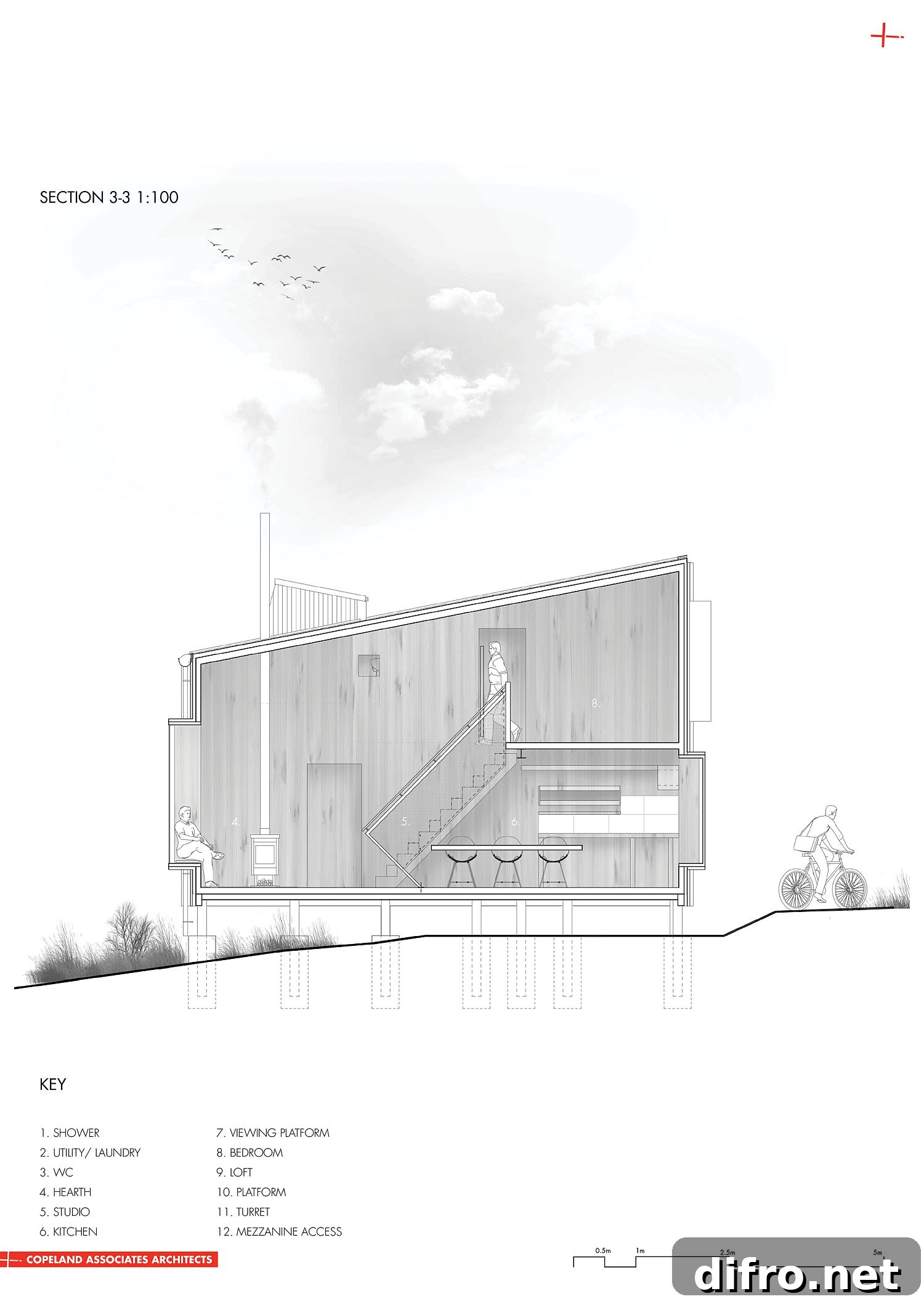
Because much of the cabin was prefabricated off-site and then assembled on location, the sloping terrain and surrounding vegetation required minimal alteration. At 69 square meters, the layout includes a compact but functional kitchen, a mezzanine-level bedroom, a small living and dining area, and extra sleeping space for guests. Thoughtfully arranged openings and windows draw abundant natural light into the interior, while the mezzanine and an outdoor deck take full advantage of the stunning forest and hill views offered by this remote setting.
Locally sourced materials are central to the project’s sustainability strategy. The use of prefabricated cross-laminated timber panels reduces on-site waste and lowers the project’s embodied carbon. Passive solar design principles, careful siting for daylight and heat gain, and simple, durable exterior cladding all contribute to an efficient, low-maintenance retreat. The corrugated metal exterior provides weather-resistant protection while allowing the natural tones of the landscape to remain the visual focus.
RELATED: Cabin with Green Roof Offers a Window into Mesmeric Norwegian Scenery
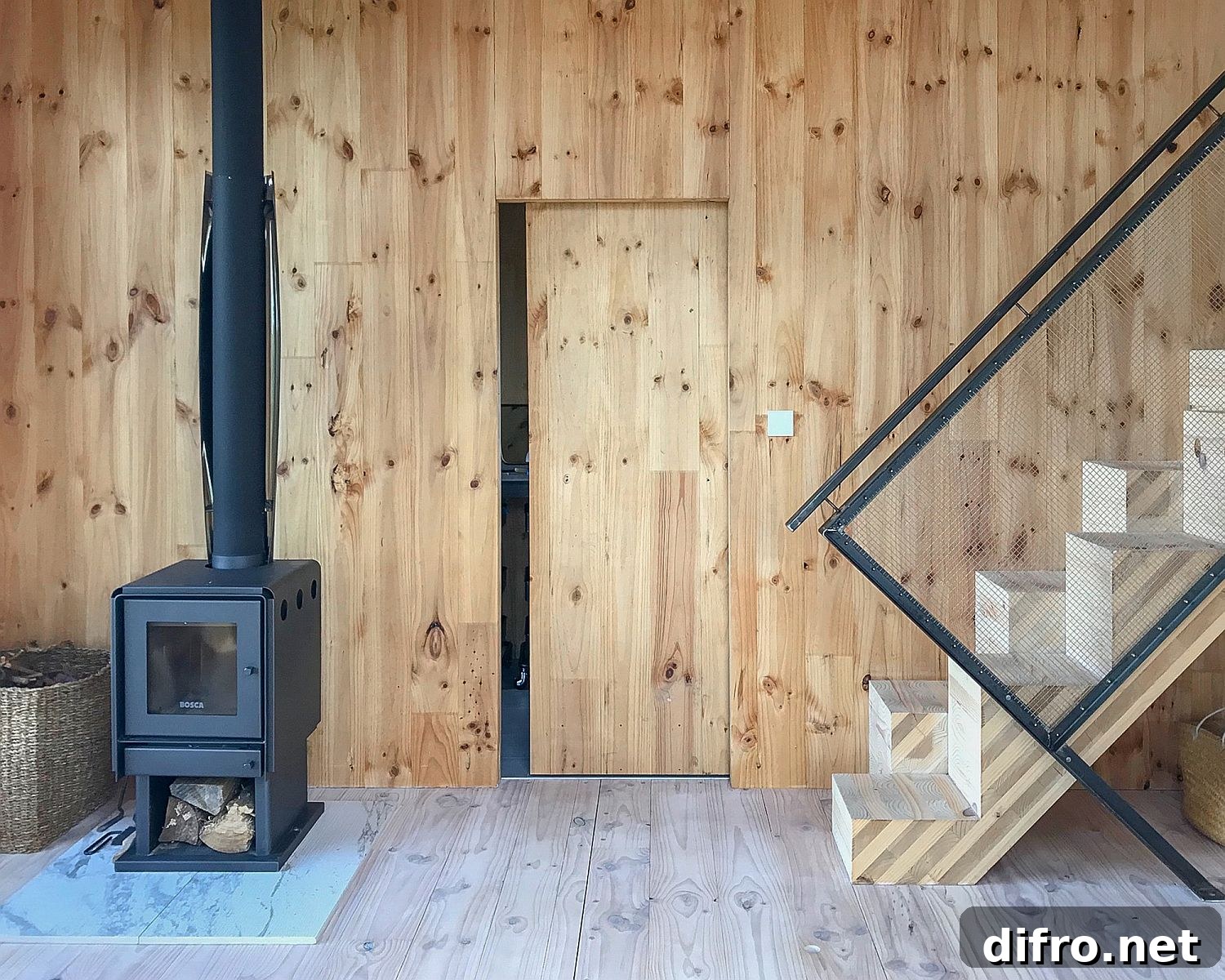
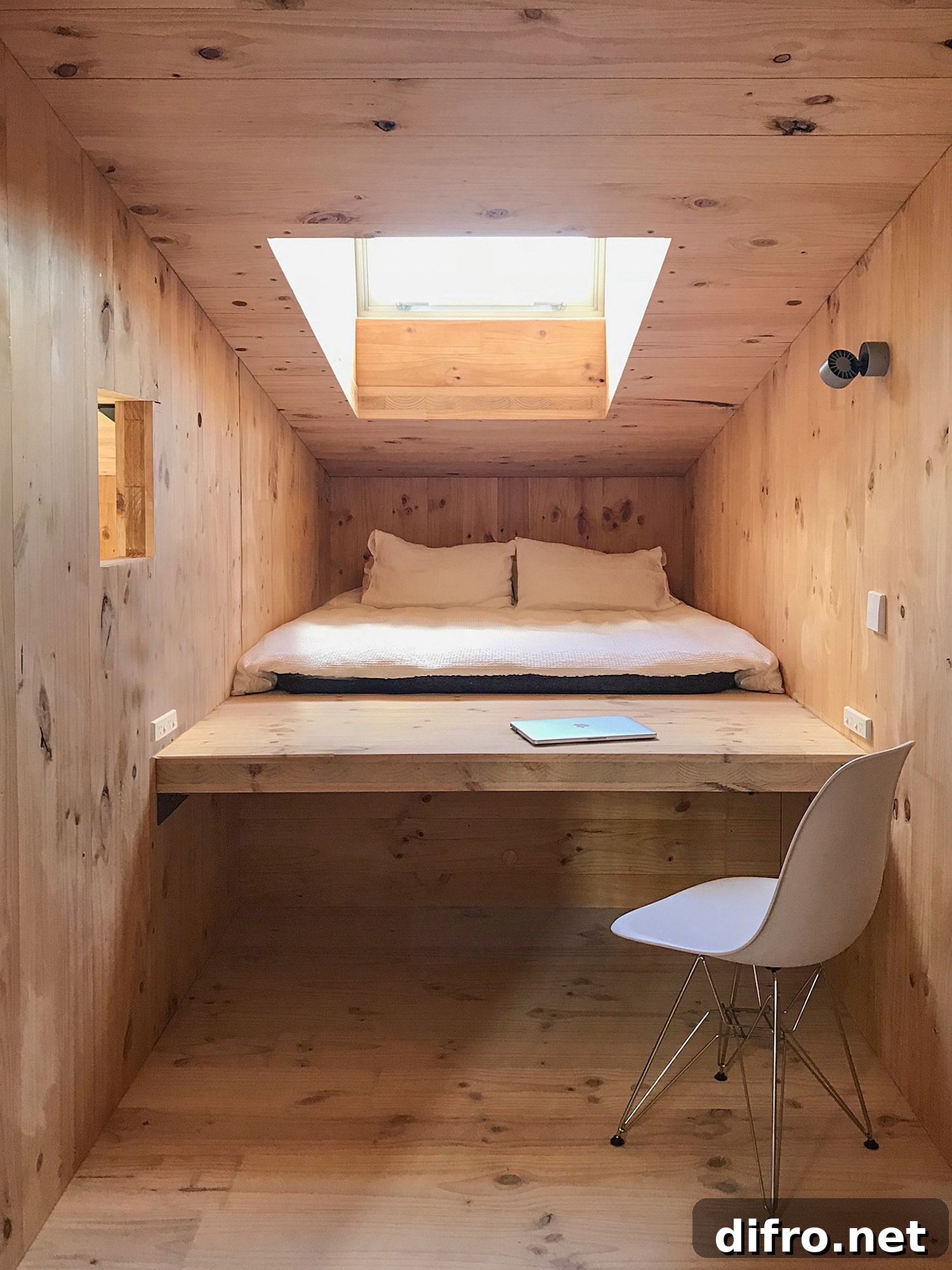
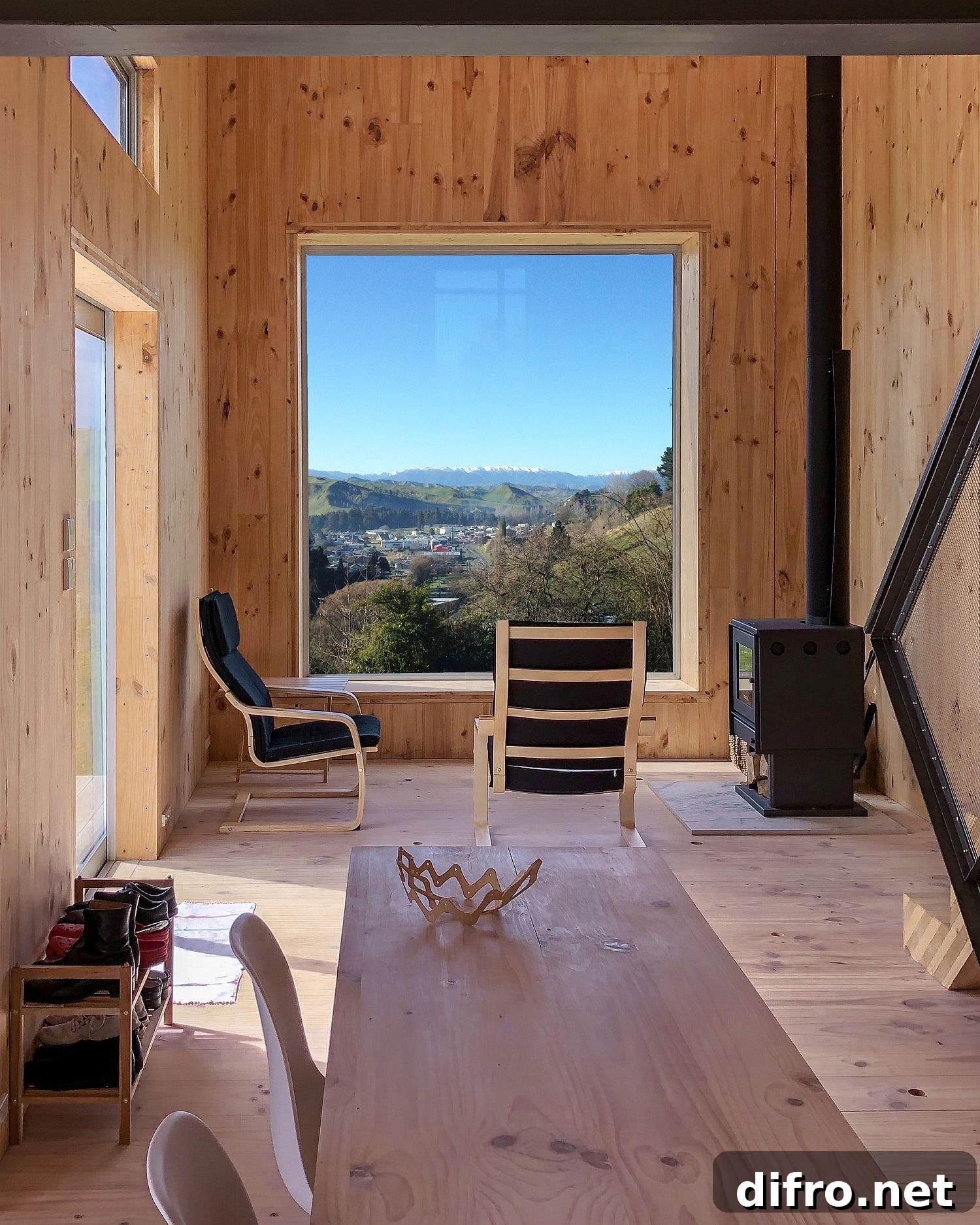
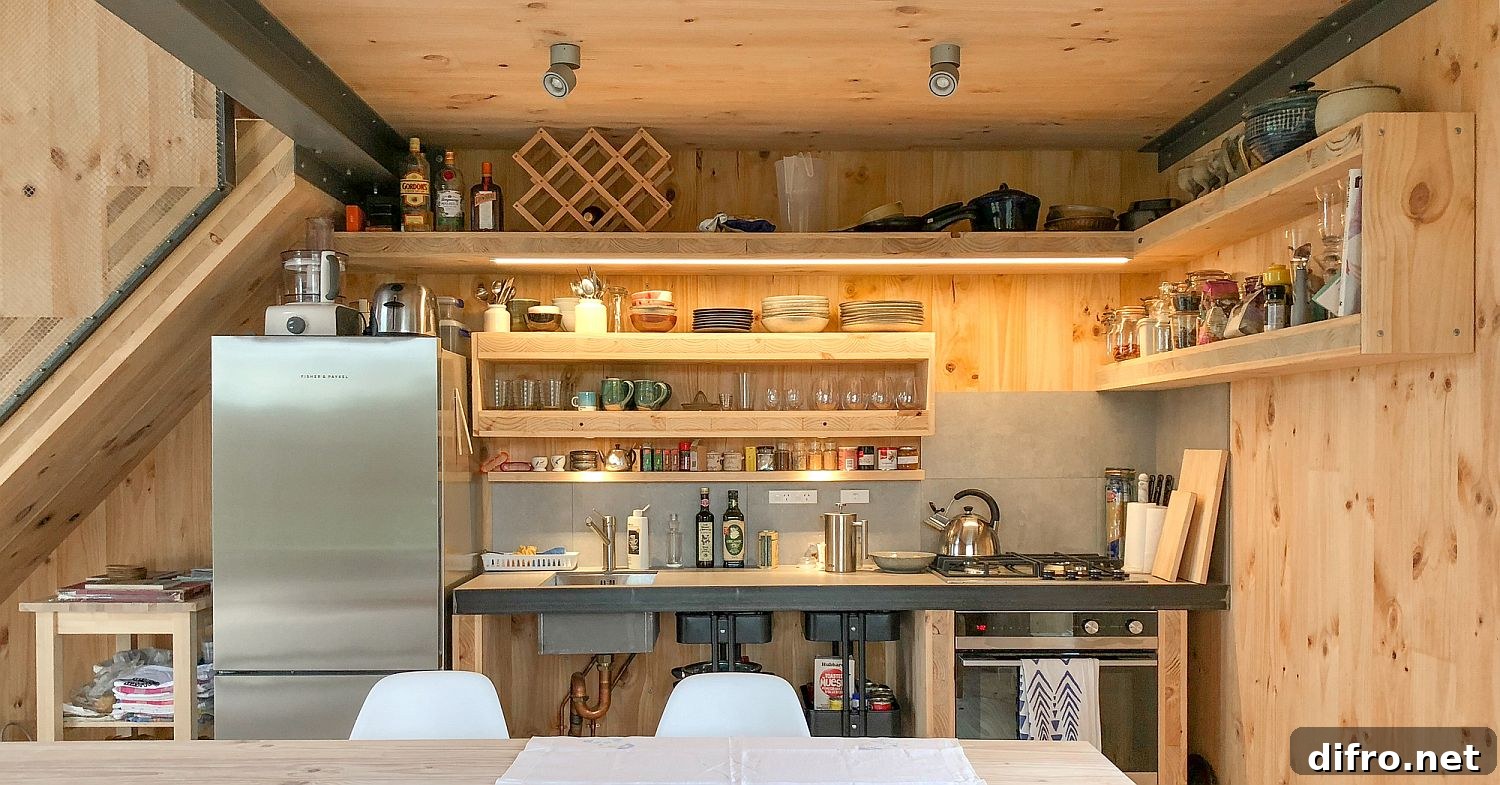
The interior design is compact and purposeful. A small kitchen and adjacent dining niche open to the outdoors, encouraging a seamless connection between inside and outside life. A simple fireplace provides a central, cozy focal point for the living area. The mezzanine bedroom makes efficient use of vertical space and offers a private nook that feels intimate without feeling cramped. Additional sleeping accommodations are cleverly integrated, and multifunctional furniture—like a daybed that doubles as a work surface—supports both relaxation and creative activity.
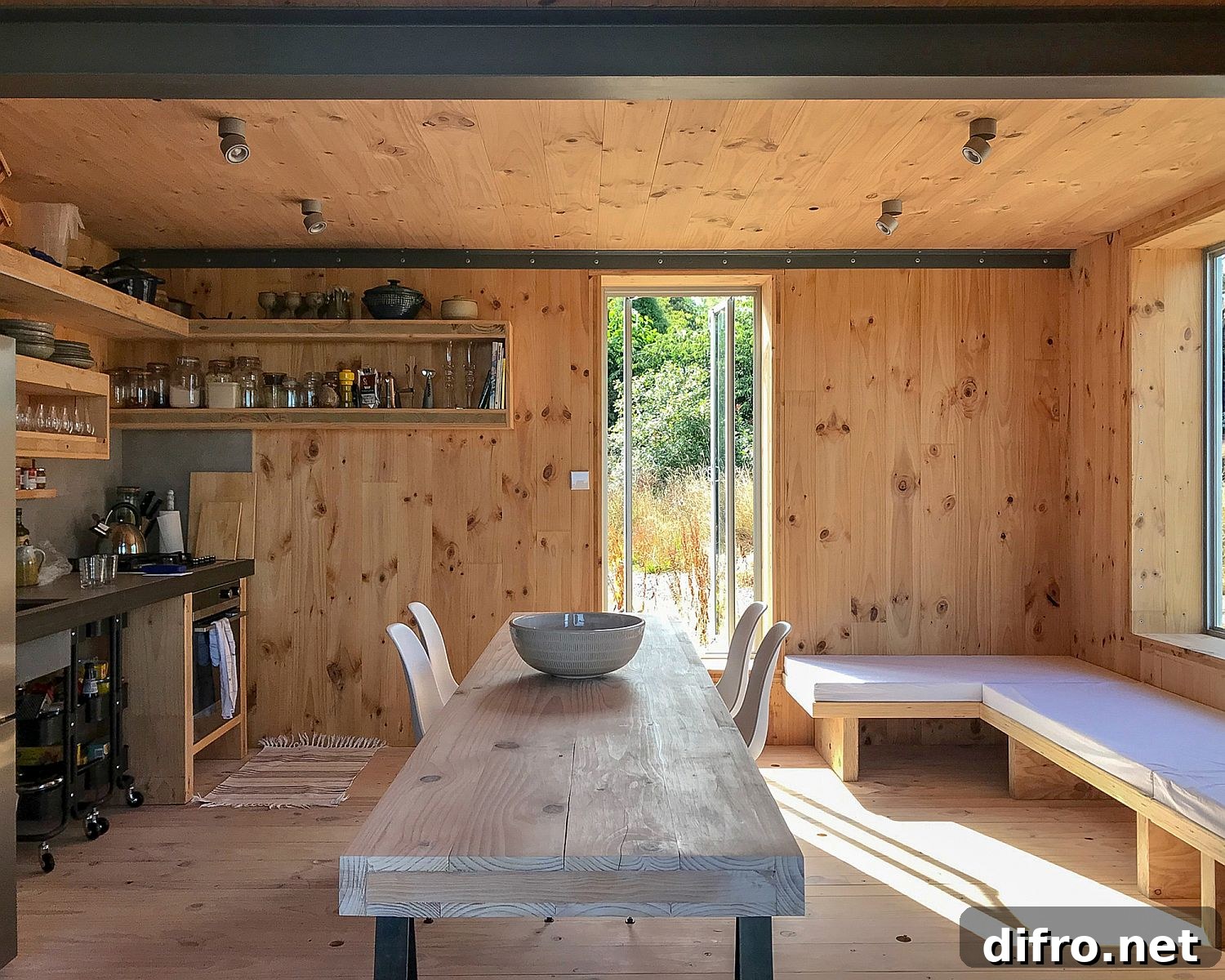
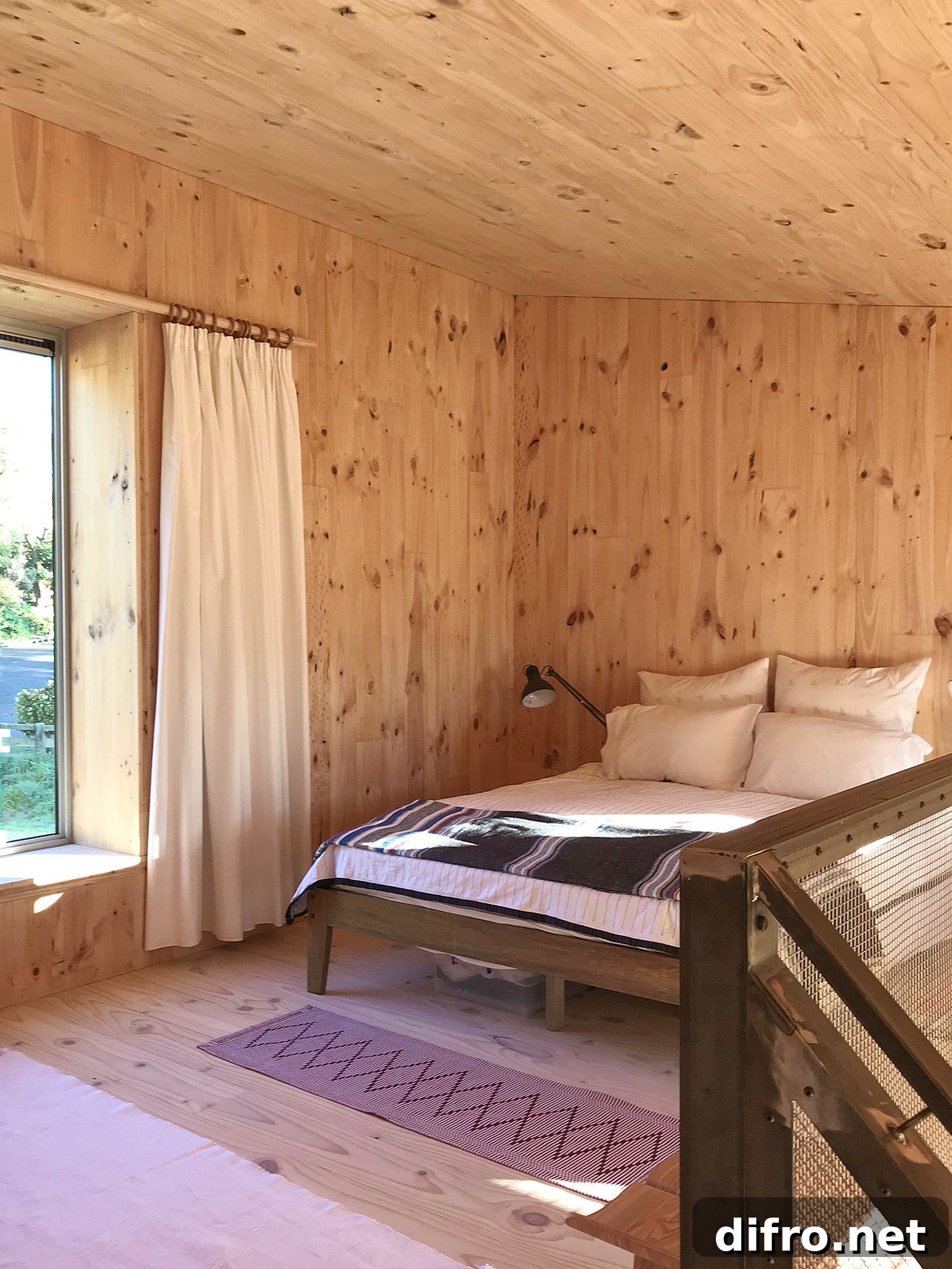
Initially we camped on the site enjoying its beautiful views and constantly changing light and atmospheric conditions. The desire emerged for the retreat to be a studio for art practice and a base from which to explore the landscapes of the Rangitikei – Manawatu. The brief then extended to require accommodation for occasional gatherings of friends.
RELATED: Tiny Cabin in the Woods Charms with Dark Exterior and Versatile Design
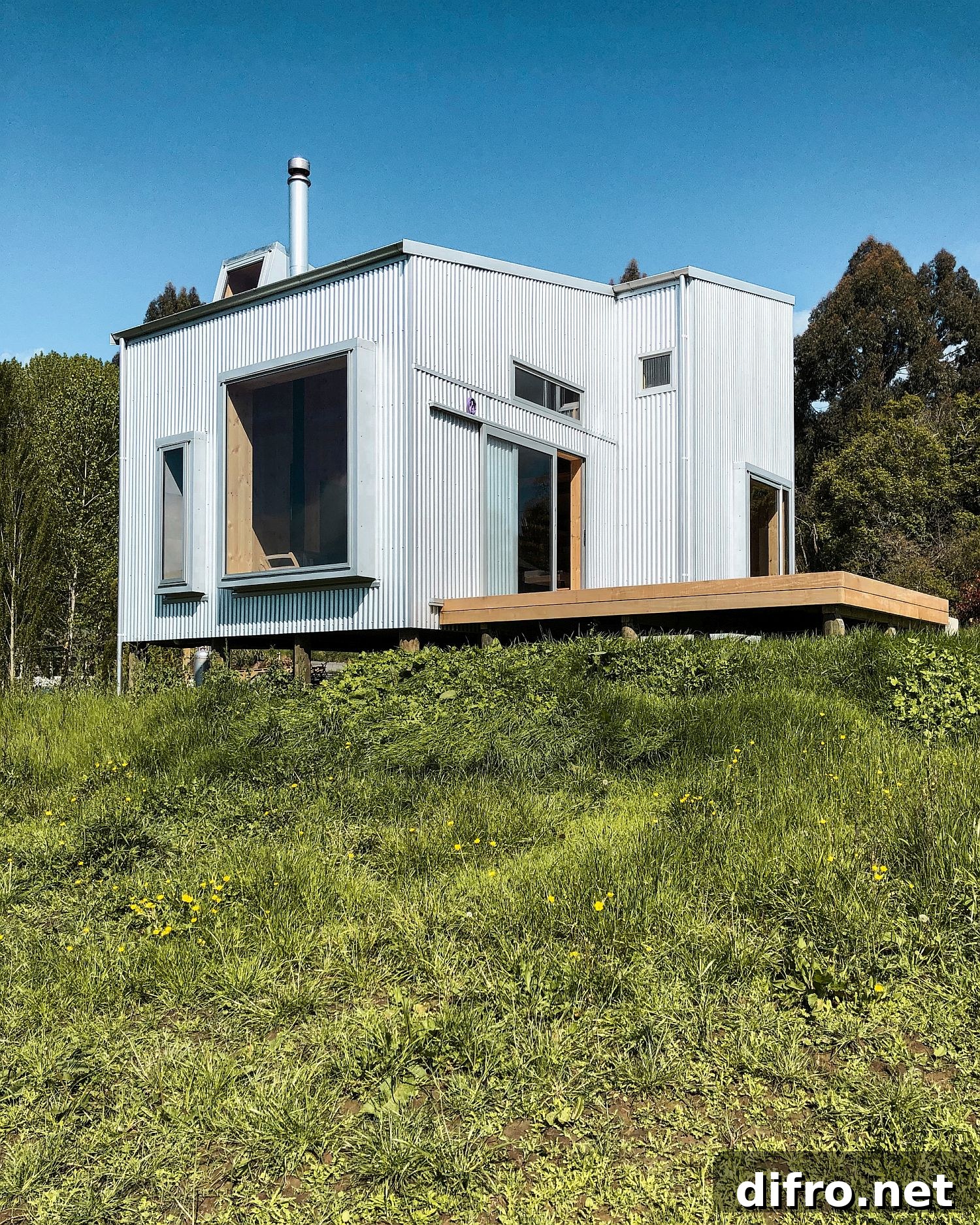
In summary, the AB Studio Cabin demonstrates how careful design, prefabrication and a restrained material palette can produce a small building that respects its landscape while delivering comfort and warmth. Its compact program—an art studio, a restful sleeping loft, a simple living space and modest cooking facilities—serves both everyday retreats and occasional social gatherings. For anyone seeking a low-footprint escape that foregrounds nature, daylight and efficient construction, this cabin is an instructive example of sustainable, site-sensitive design.