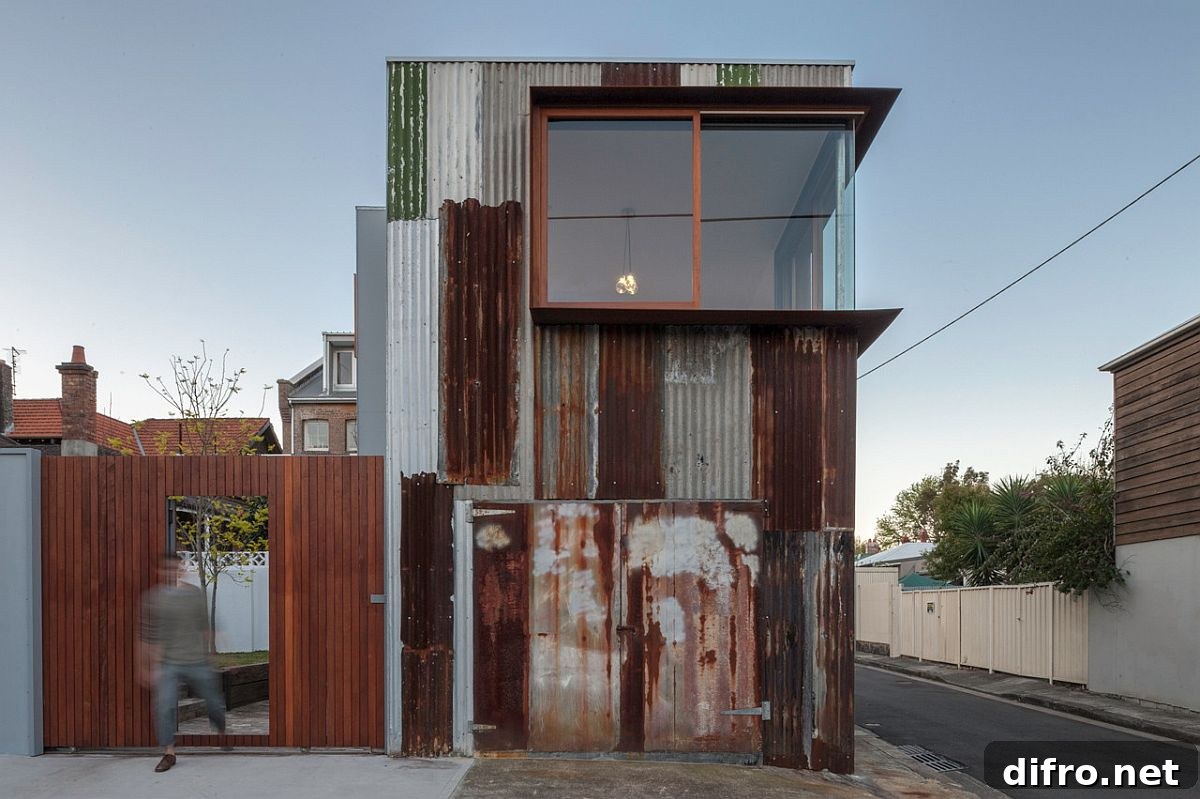
Tinshed: Reimagining a Sydney Tin Shed by Raffaello Rosselli
The tin shed once defined many parts of the Australian streetscape. In recent decades, however, many of these humble structures fell into disrepair and were left abandoned. The Tinshed project, located in a busy inner-city suburb of Sydney, rescues that history and translates it into a contemporary, functional building. Architect Raffaello Rosselli replaced an old, worn tin structure with a new timber-framed house that preserves the memory of the original through carefully salvaged materials and a restrained, modern aesthetic.
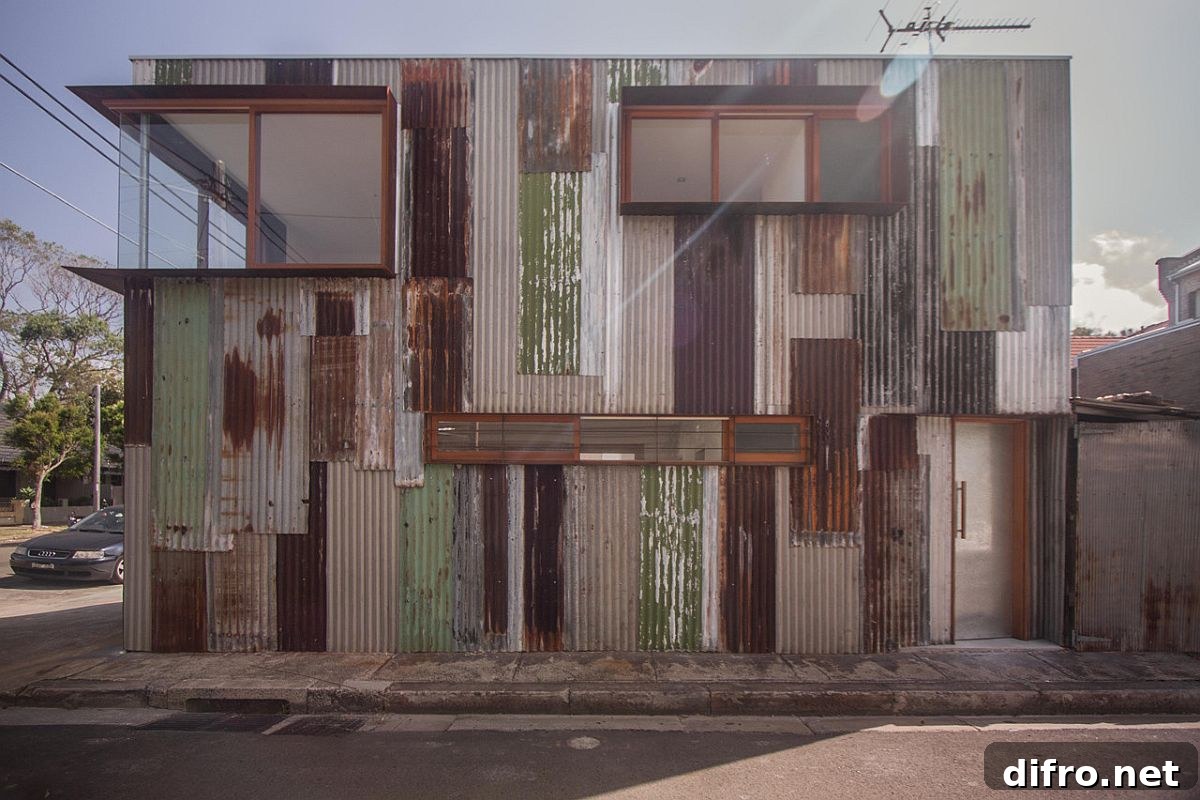
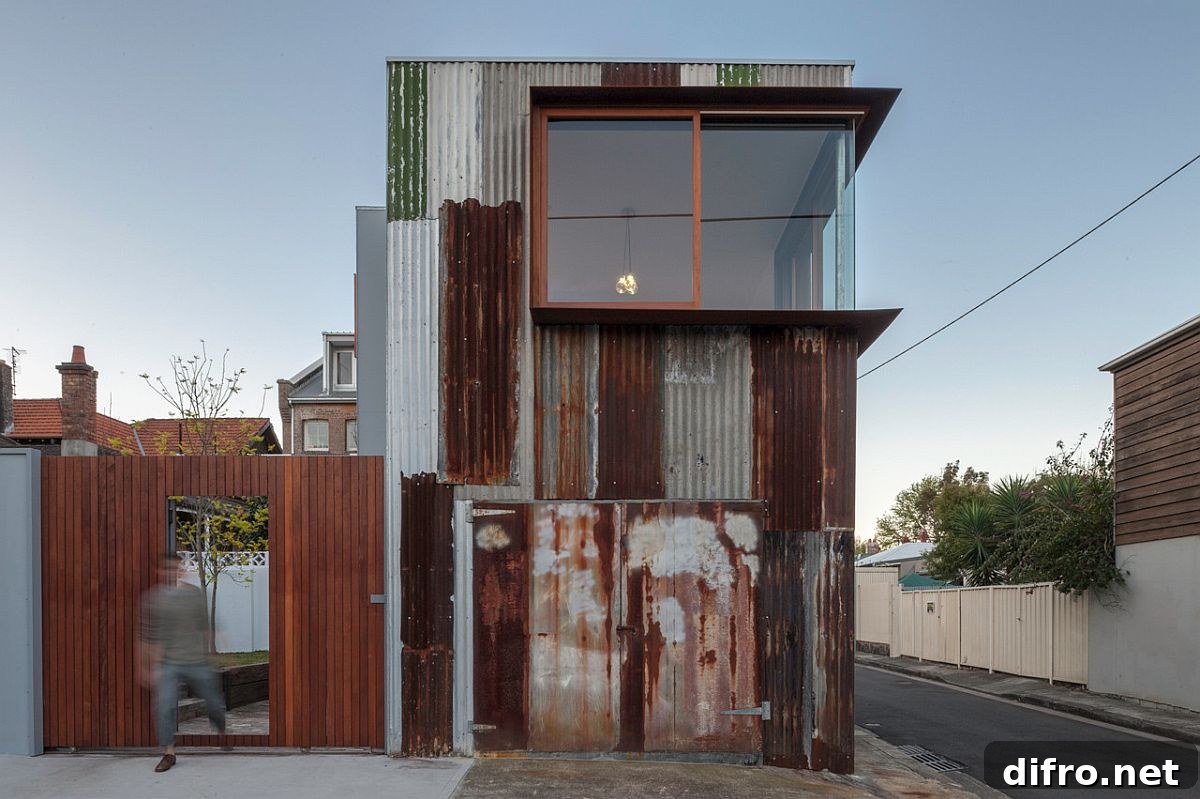
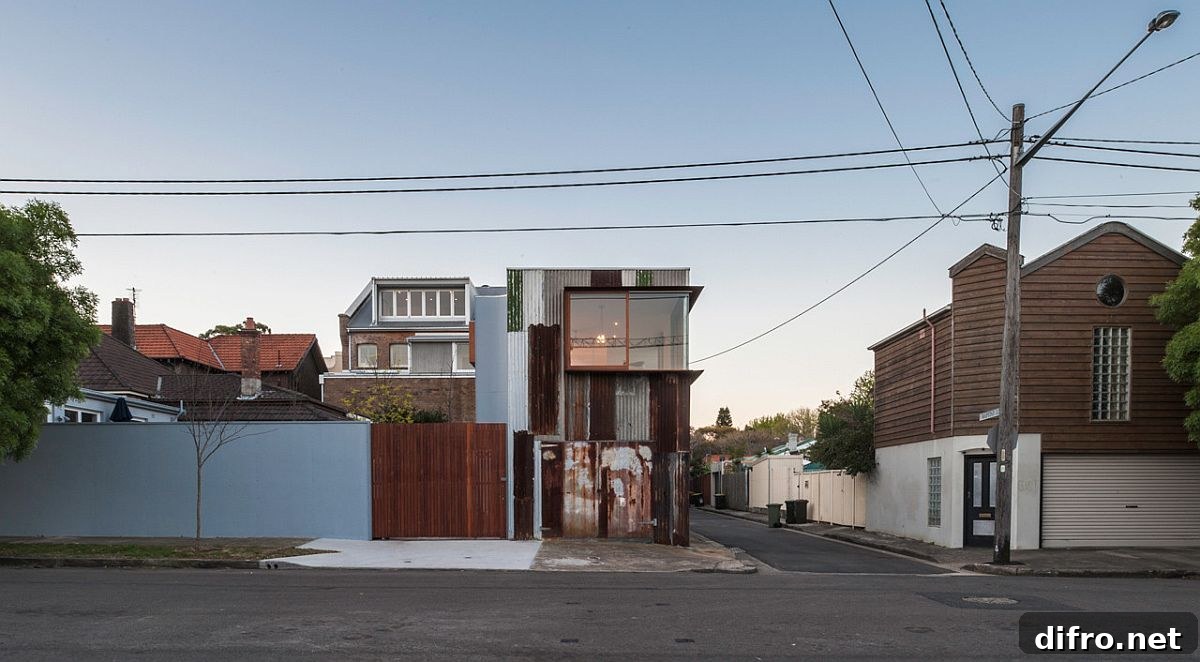
The new build keeps a direct link to the site’s industrial past: the rusted corrugated iron from the original shed was carefully dismantled and reused to clad three sides of the new façade. That salvaged metal gives the street elevation a unique, weathered character that reads like a contemporary ruin—an intentional patina that contrasts with the fresh timber structure behind it. Large corten-steel-framed windows puncture the metal cladding, bringing daylight deep into the interior while maintaining the material’s rugged presence on the street.
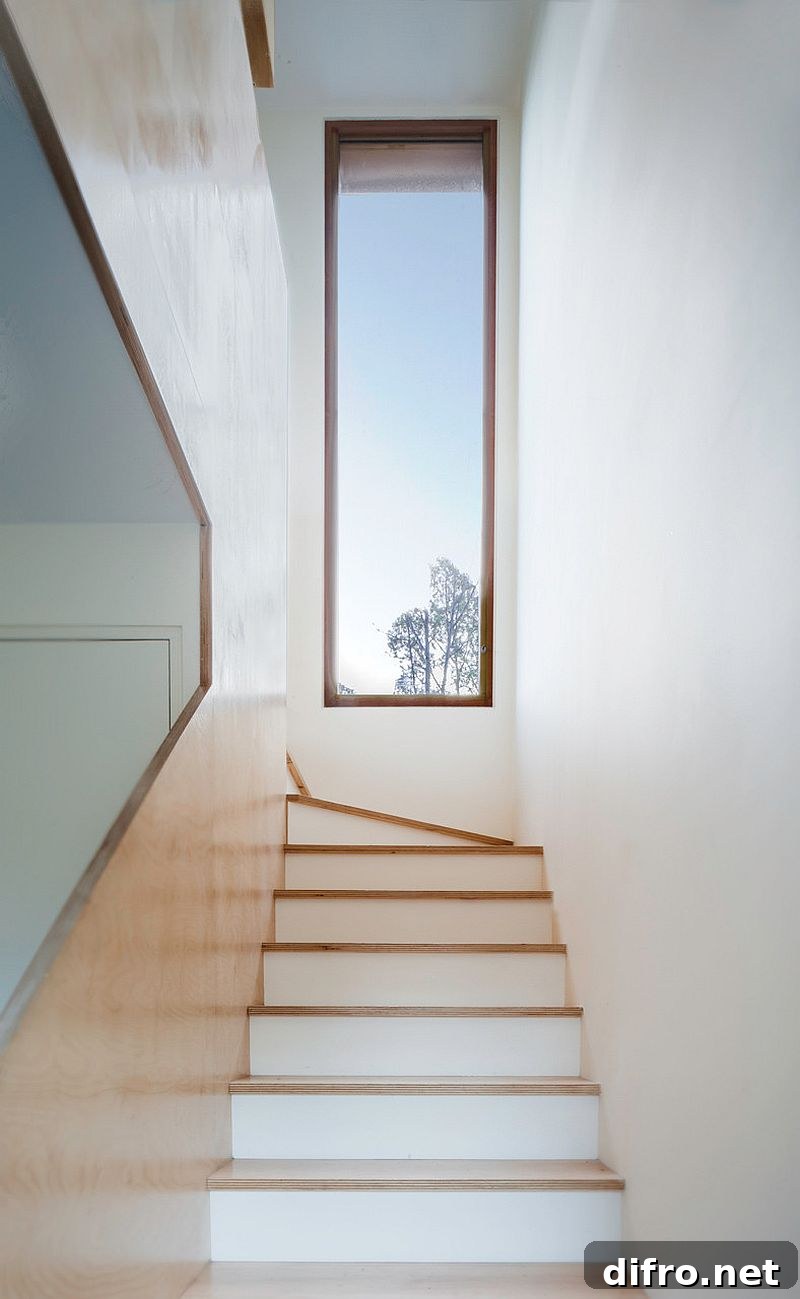
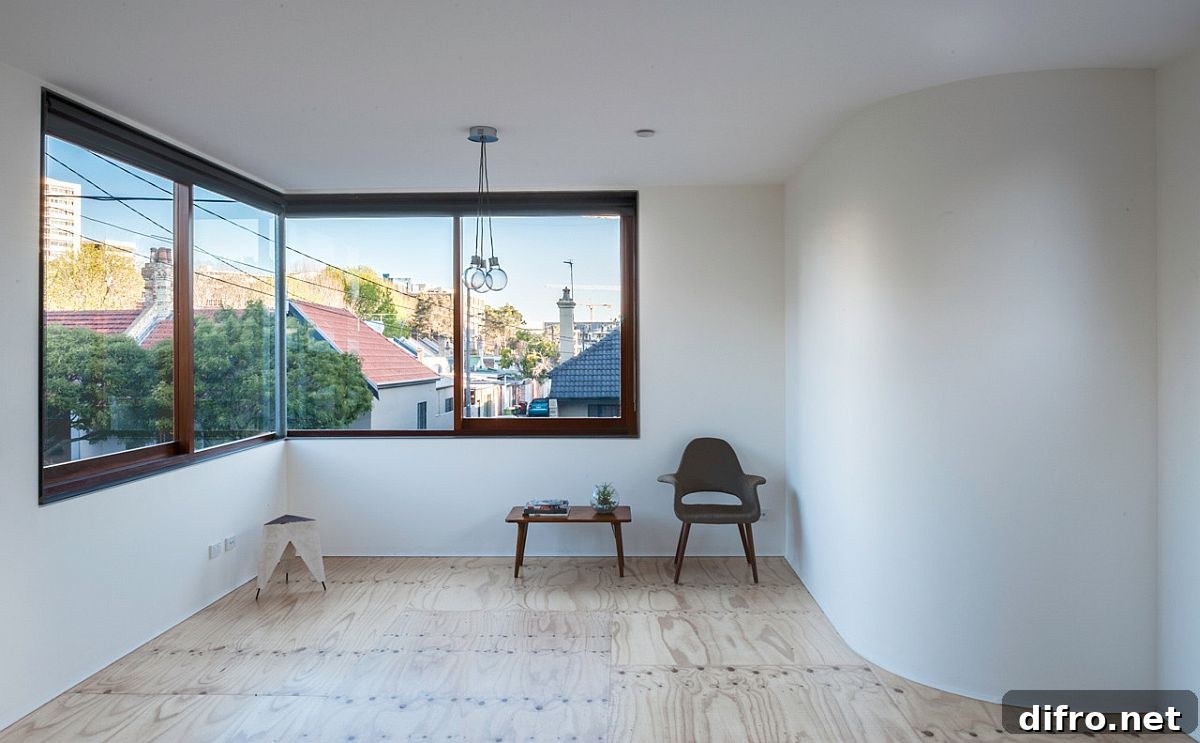
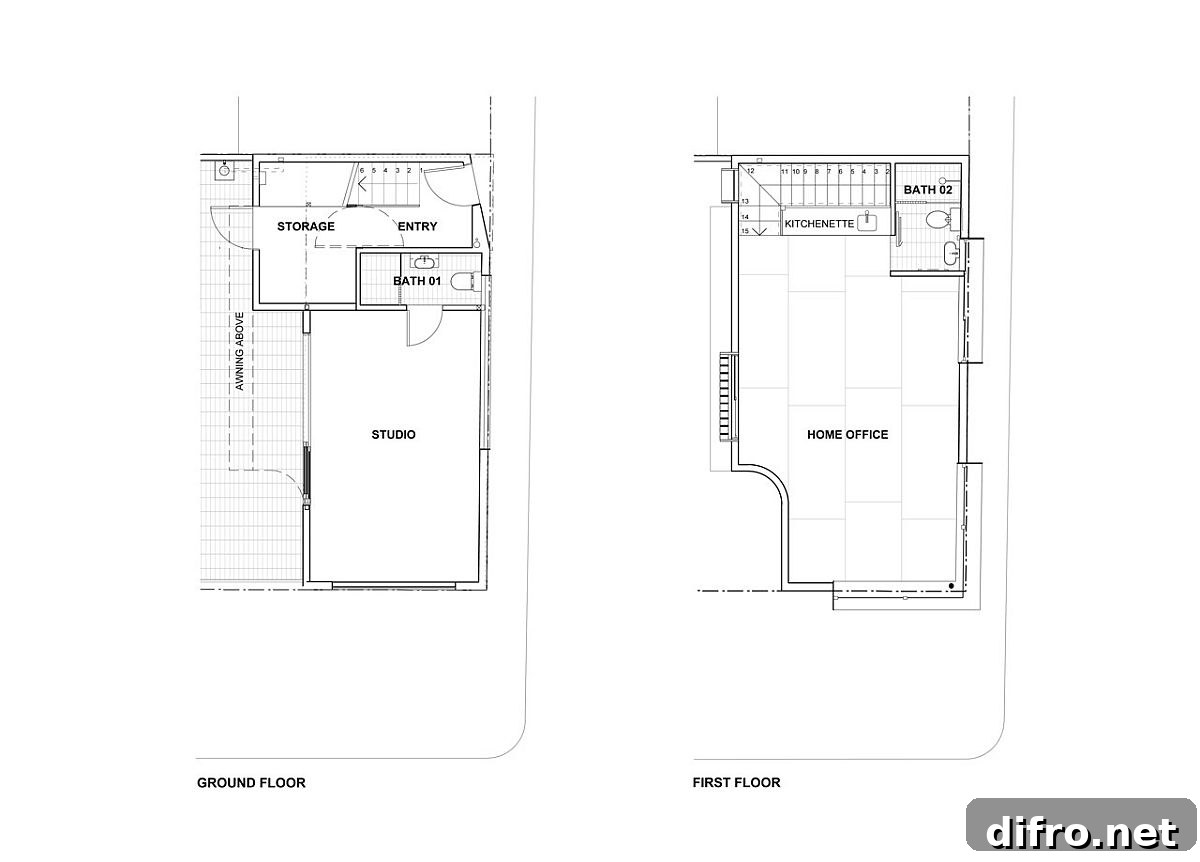
Internally, the house is organized around a compact, efficient plan that accommodates a home office and an artist’s studio, along with bathrooms and dedicated storage. The studio occupies the lower level, while the home office sits on the upper floor. A timber staircase, positioned to capture daylight, links the two floors and becomes a central architectural element. Natural light is a recurring theme throughout the design: large windows and careful placement of openings ensure the interior feels bright and airy despite the darker, weathered exterior.
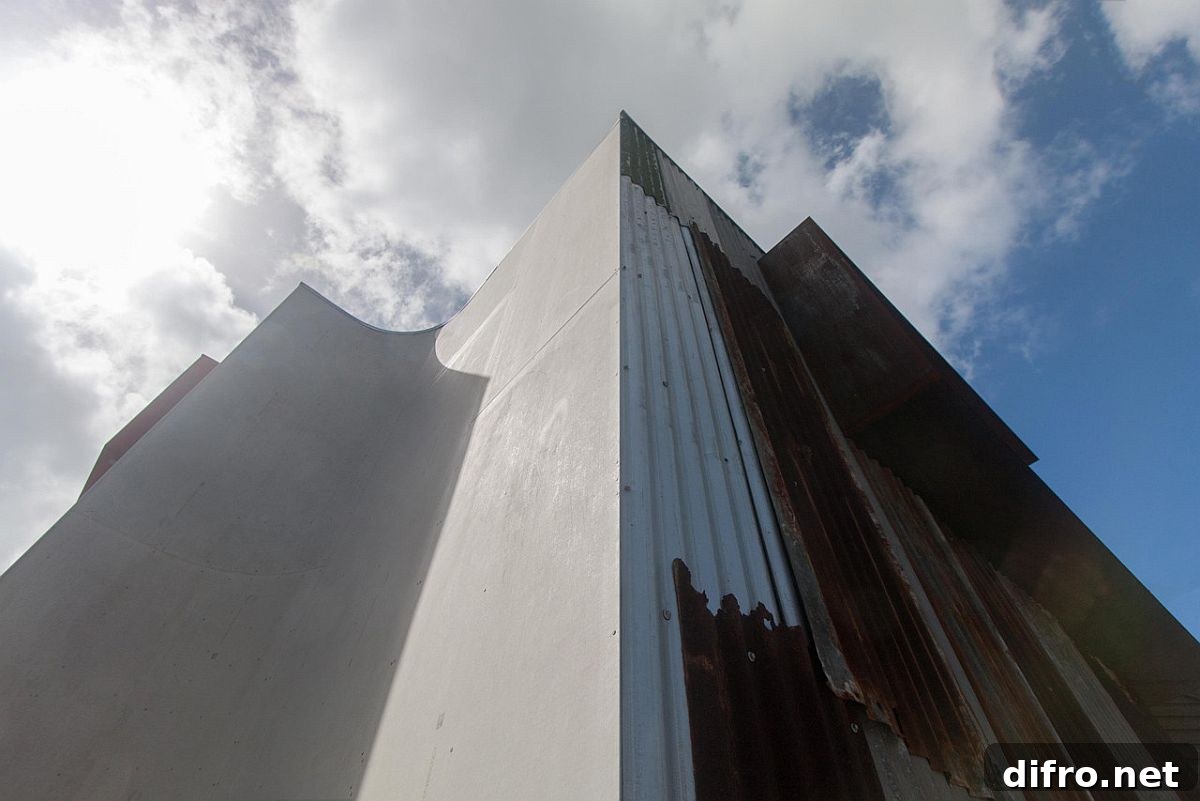
Material contrasts are central to the project’s character. Inside, finishes are polished and contemporary—soft timber tones, clean lines and considered lighting create a calm, functional workspace. Outside, the weathered metal retains visible signs of age, rust and texture. That juxtaposition reinforces the idea of adaptive reuse: the project preserves fragments of the former building while introducing a refined, durable structure designed for daily use.
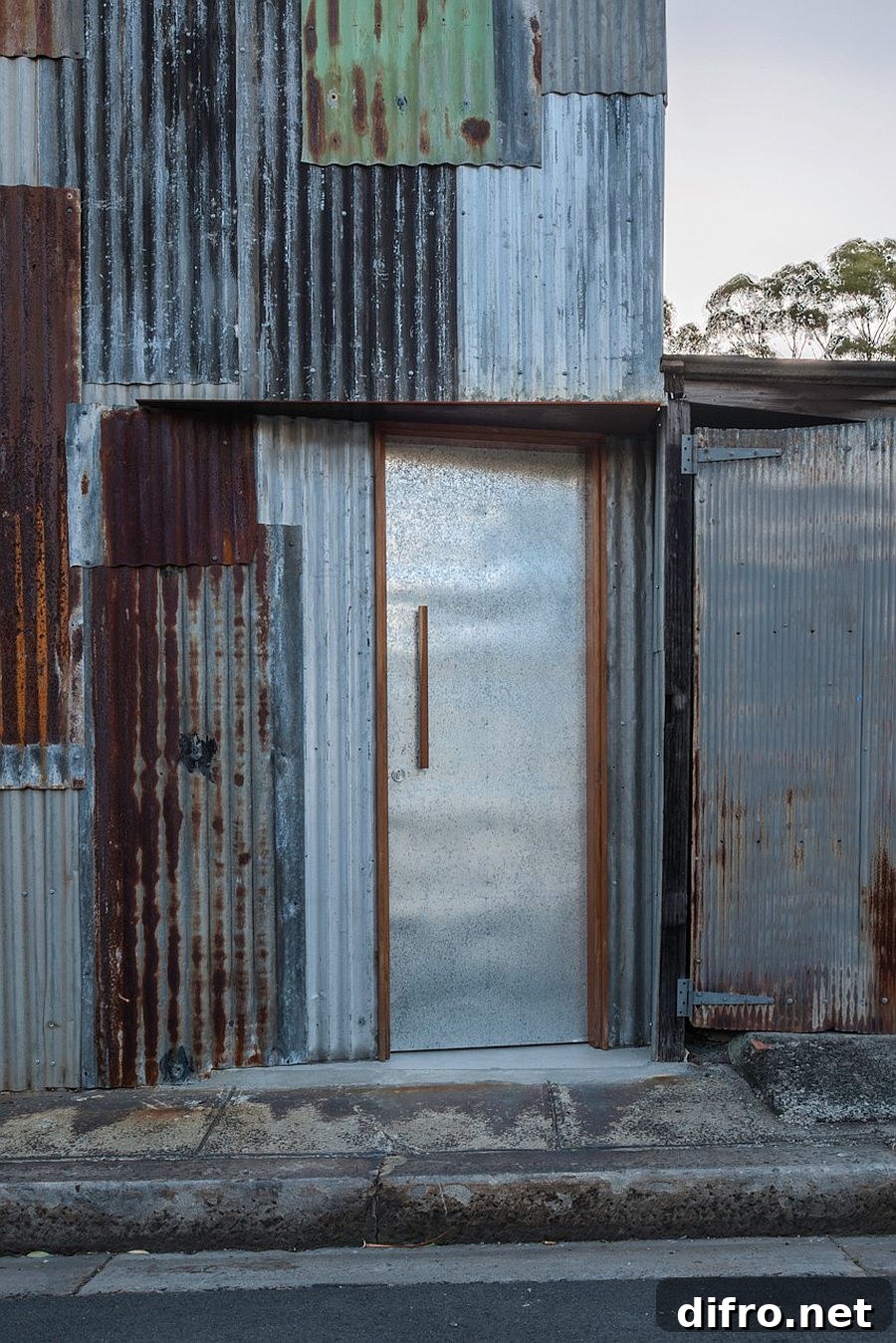
Practical considerations guided the layout: compact service spaces such as bathrooms and storage are integrated without compromising the feel of openness in the main work areas. The timber structure provides a warm, tactile backdrop for daily activities, while smart lighting enhances usability and atmosphere. The result is a modest urban building that balances utility, comfort and a clear respect for local history.
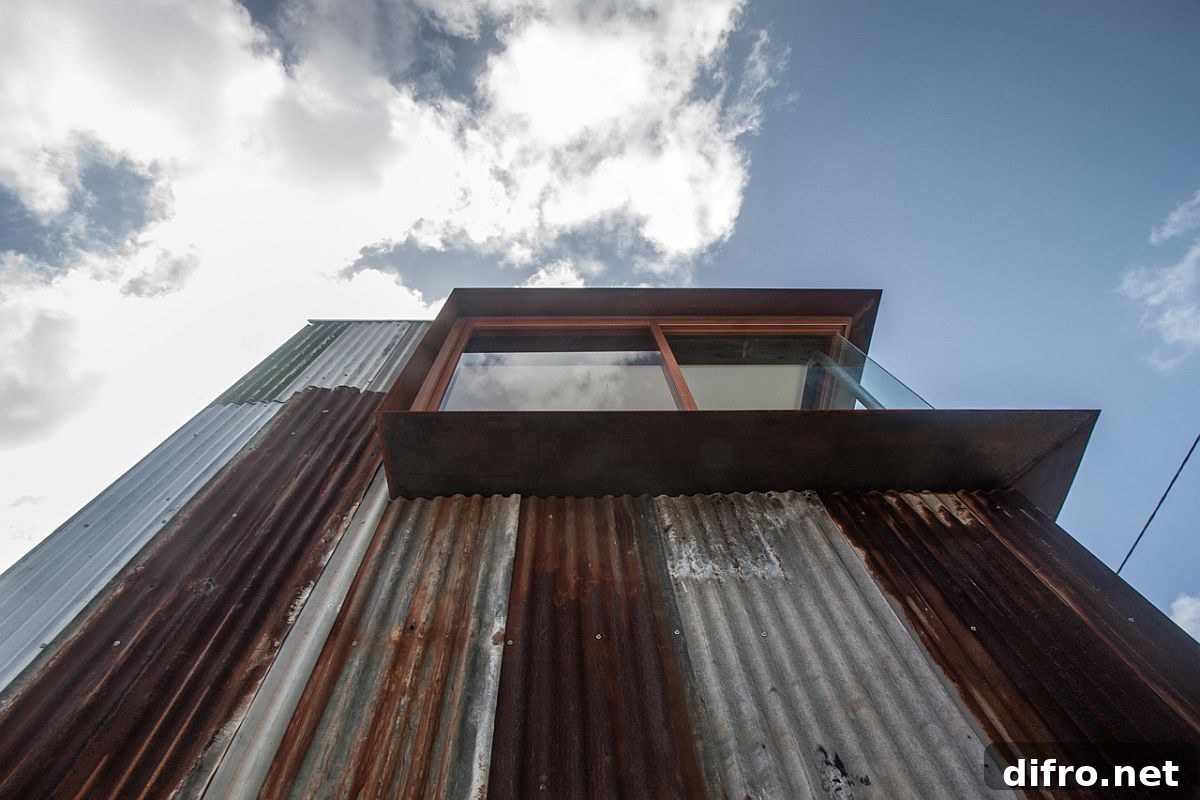
Visually, the Tinshed reads as both a nod to the past and a contemporary intervention that fits its urban context. From the street, the rusted iron envelopes the building with an industrial silhouette; from within, timber warmth and abundant daylight create a welcoming environment for work and creative practice. Photography of the project highlights these contrasts and the careful detailing that binds them together (Photography: Mark Syke / Richard Carr).
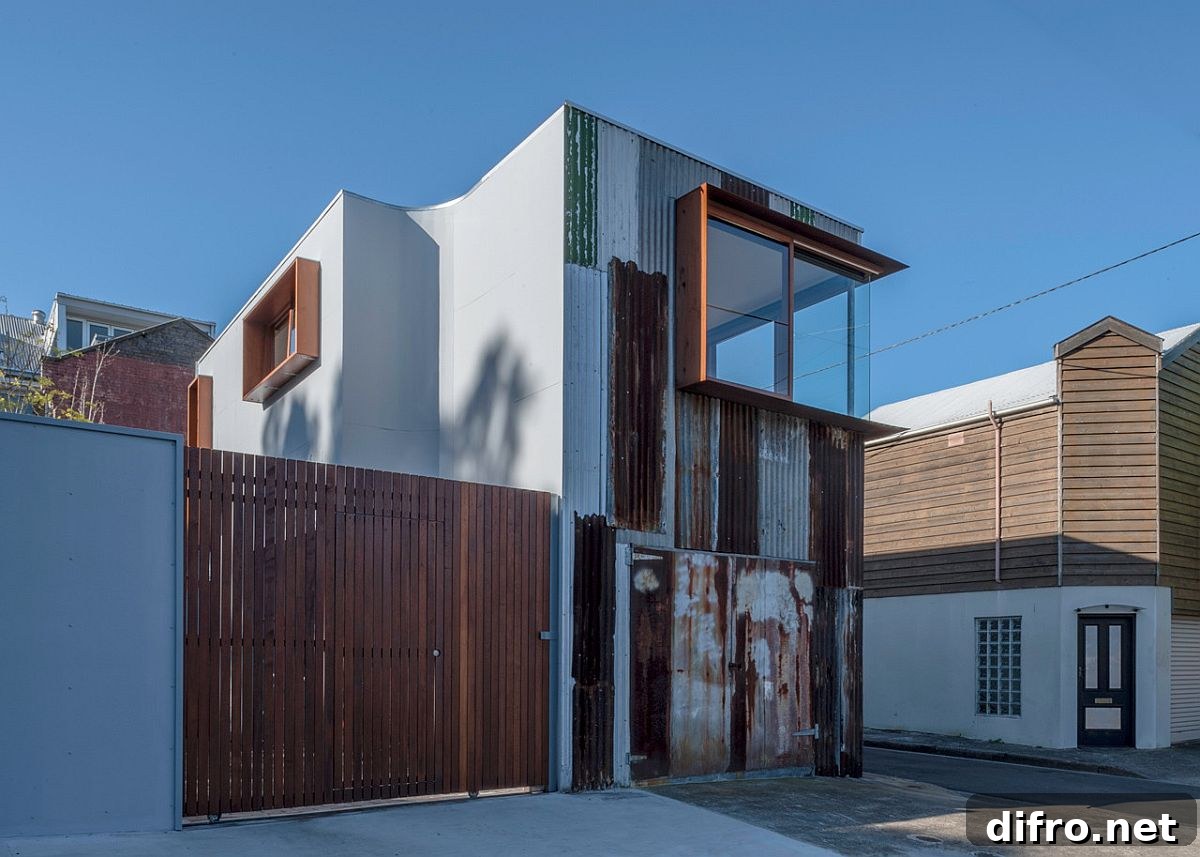
Beyond the immediate visual appeal, the project demonstrates how small-scale, thoughtful design can extend the life of existing materials and acknowledge a neighborhood’s industrial heritage. The weathering corrugated iron exterior, refined interior finishes and considered lighting combine to produce a compact, adaptable building that is both of its place and of its time. The Tinshed is an example of pragmatic creativity: a modest renovation and rebuild that keeps memory alive while delivering contemporary comfort and function.