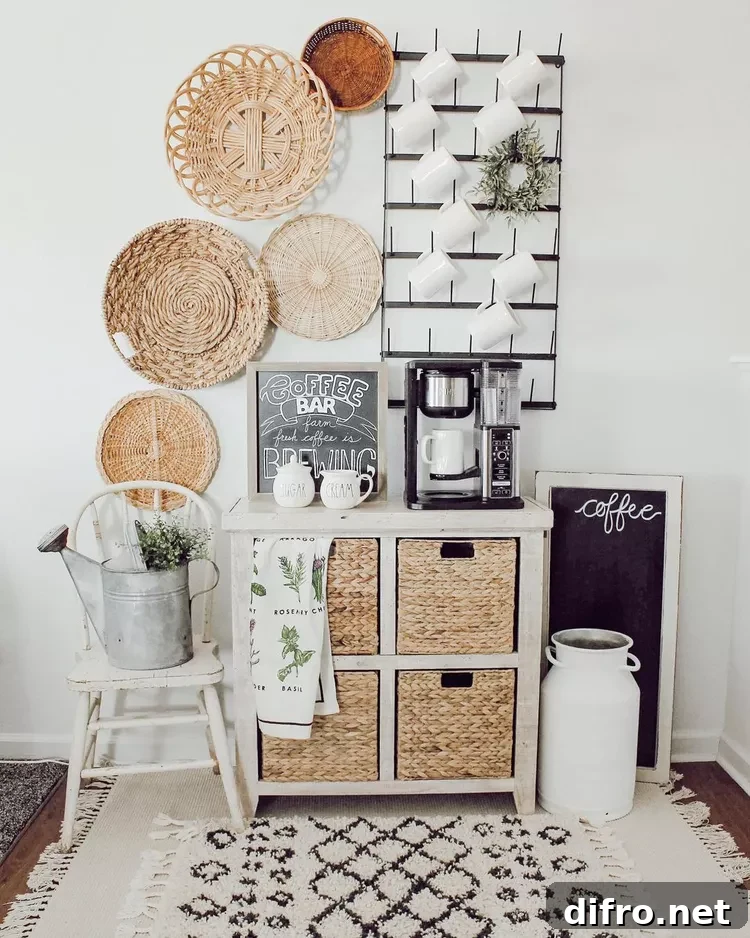
Creating a modern coffee bar at home adds style, convenience, and a little daily luxury to your routine. Whether you love espresso-based drinks, prefer classic drip coffee, or enjoy experimenting with different brewing methods, a thoughtfully designed coffee station makes it easier to brew consistently excellent coffee and keeps everything organized. This guide covers location, design principles, essential equipment, storage solutions, and styling tips to help you build a modern, functional coffee bar that fits your home.
Start by choosing the right location. The best spot is easy to access, near a water source if possible, and large enough to hold the equipment and supplies you use frequently. Common locations include a dedicated corner of the kitchen, a niche in the dining area, a built-in cabinet, or even a stylish bar cart in the living room. Think about workflow: place the machine, grinder, and pantry items so making coffee is an efficient, pleasant process.
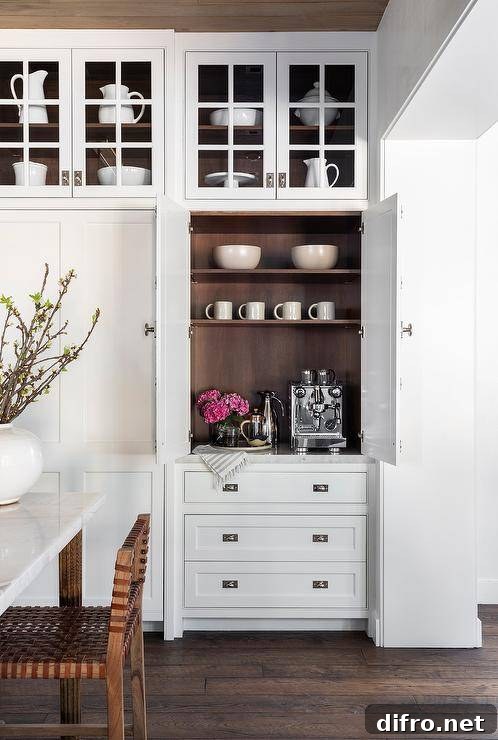
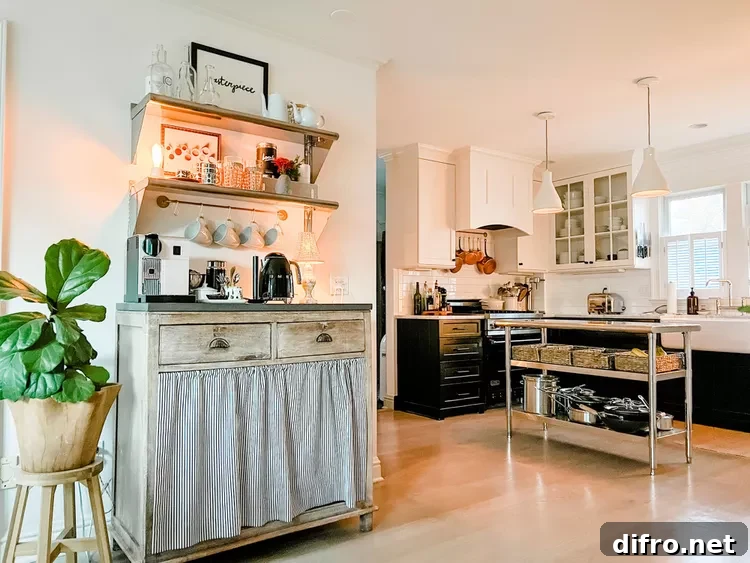
Design for a clean, modern aesthetic. Minimalist lines, neutral palettes, and uncluttered surfaces create a calm, professional-looking setup. Choose a sleek coffee machine with a compact footprint or install a built-in unit behind cabinet doors for a streamlined look. Open shelving, floating cabinets, or wall-mounted racks keep frequently used items visible and easy to reach while maintaining an airy feel.
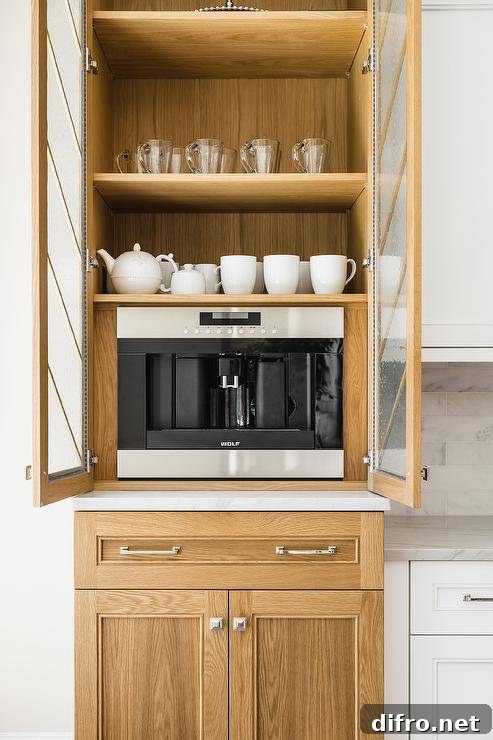
Choose a cohesive color scheme that complements your home. Whites, soft grays, beiges, and warm wood tones are classic choices for modern coffee bars. Add carefully chosen accents—colored mugs, a textured tray, or a small vase—to introduce personality without overwhelming the space.
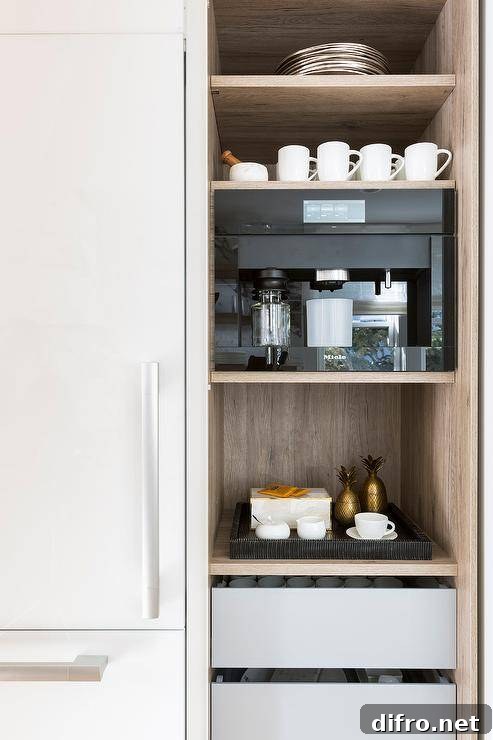
Essential items for a modern coffee bar depend on the drinks you enjoy. At minimum, include a reliable coffee maker—drip brewer, espresso machine, or a dedicated pour-over setup—plus a grinder if you use whole beans. Other useful tools are a milk frother or steam wand, a tamper and distribution tool for espresso, a scale for consistent dosing, and airtight containers for beans. Keep frequently used items on a tray or mat to protect surfaces and make cleanup simple.
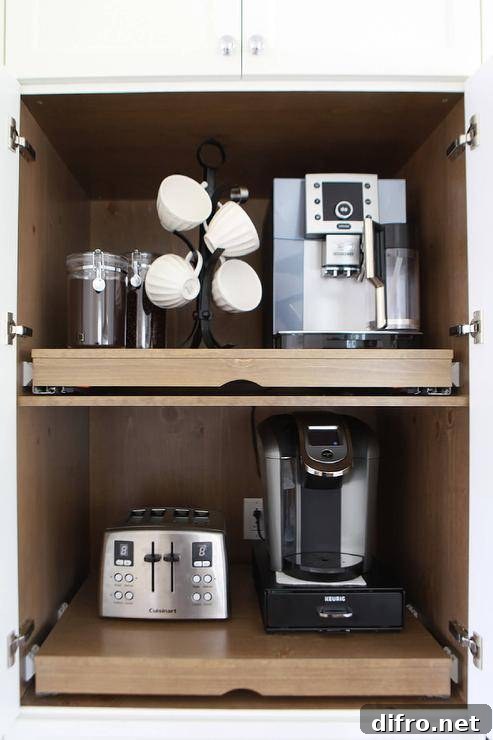
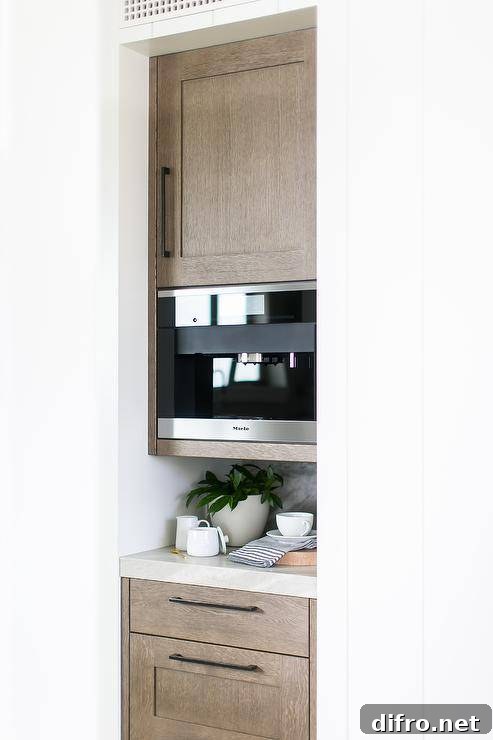
Storage keeps your coffee bar functional and tidy. Open shelves work well for display items like mugs and decorative jars, while drawers and closed cabinets hide bulk supplies such as beans, filters, and spare pods. Use labeled airtight containers for beans and grounds to preserve freshness. Drawer inserts or small canisters keep spoons, tampers, and accessories organized. A small tray on the counter groups daily essentials and creates a neat focal point.
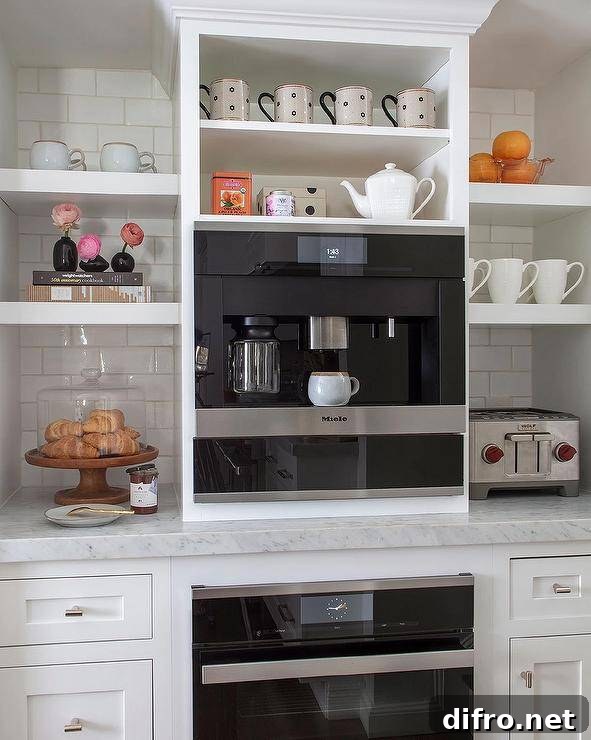
Personalize the space. Add a small plant or vase of fresh flowers for life and color. A chalkboard or framed menu can display drink options or daily specials, while a curated selection of mugs and glassware adds charm. For tight spaces, a compact coffee cart or a cabinet with folding doors creates a dedicated station that can be closed away when not in use.
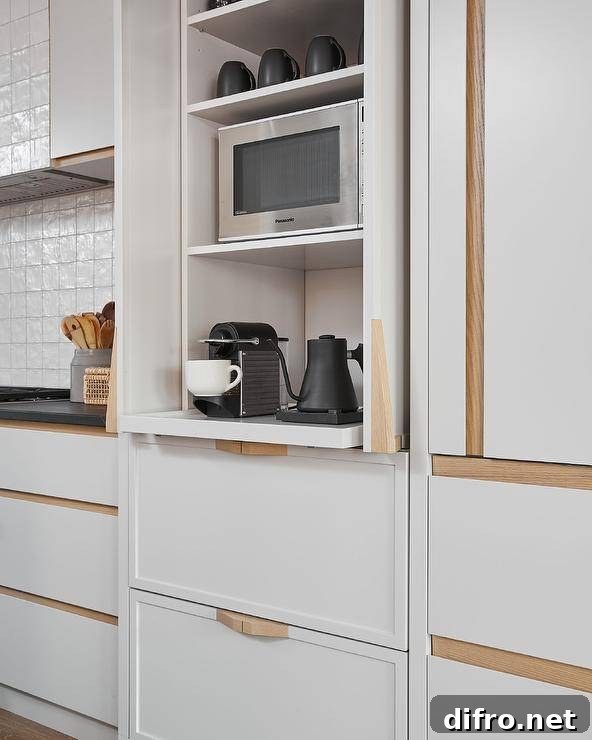
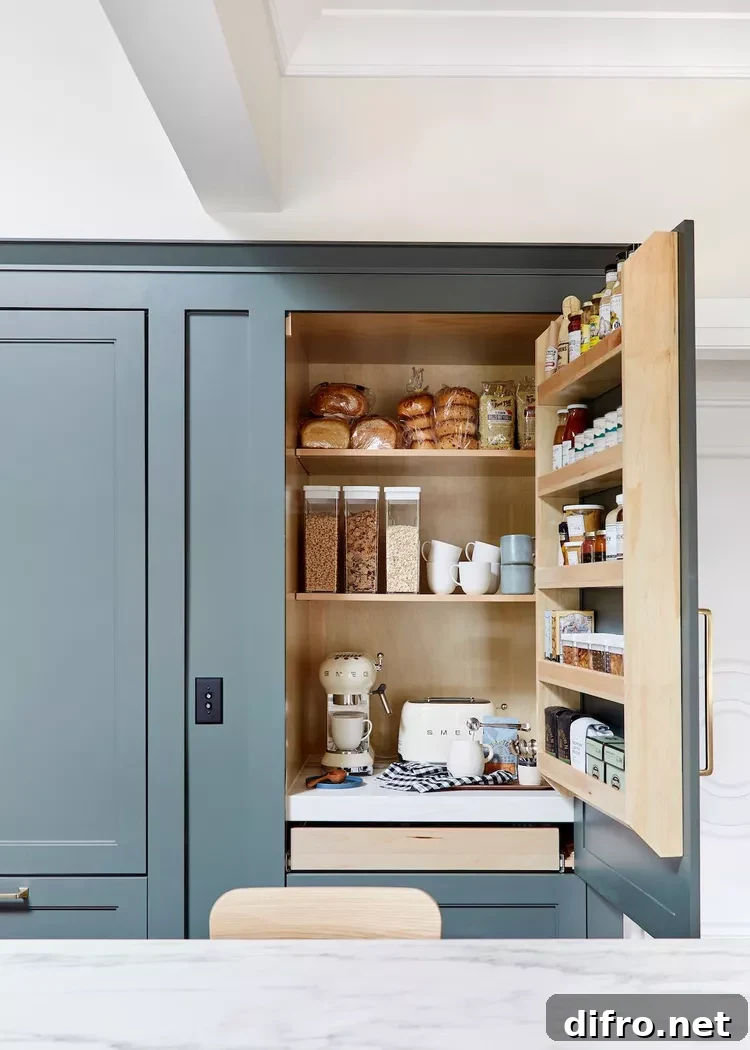
With mindful design and quality tools, a modern coffee bar becomes a reliable part of your daily ritual. Keep the layout efficient, select equipment that fits your routine, and use coordinated storage to maintain a clean look. Small styling touches—artwork, plants, or a favorite mug collection—make the station uniquely yours while keeping the overall design contemporary and uncluttered.
Frequently Asked Questions (FAQs)
What equipment do I need for a coffee bar at home?
At minimum, you need a coffee maker or espresso machine and a grinder for whole beans. Additional helpful equipment includes a milk frother or steam wand, a scale for precise dosing, a tamper for espresso, and airtight containers for coffee storage.
How should I set up my coffee bar?
Reserve an easily accessible space and arrange your equipment by workflow: water source, machine, grinder, and storage. Use trays, shelving, or dedicated drawers to keep tools and accessories organized and within reach.
What types of coffee drinks can I make at home?
You can make everything from drip coffee to espresso shots, lattes, cappuccinos, and specialty pour-overs. The variety depends on your equipment: an espresso machine enables lattes and cappuccinos, while pour-over gear and a burr grinder support single-cup specialty brewing.
What types of coffee beans should I use?
Choose fresh, high-quality beans with a visible roast date and use them within a few weeks of roasting for optimal flavor. Try beans from different regions and roast levels to explore varied flavor profiles.
How do I froth milk for lattes and cappuccinos?
Use a steam wand or electric frother. Start with cold milk in a pitcher, submerge the wand just below the surface to introduce air, then lower to heat and create a smooth, velvety texture. Practice and small adjustments will refine your technique.
How do I clean my coffee equipment?
Follow manufacturer instructions for descaling and maintenance. Rinse grinders and wipe machines regularly to remove oils and residue. Clean milk frothers after each use to prevent buildup and bacteria.
How can I make my coffee bar feel like a special treat?
Add special touches: a favorite cup, a decorative spoon, small flavoring dishes with cinnamon or chocolate, or rotating seasonal syrups. Changing brewing methods or trying new beans also keeps the ritual exciting.