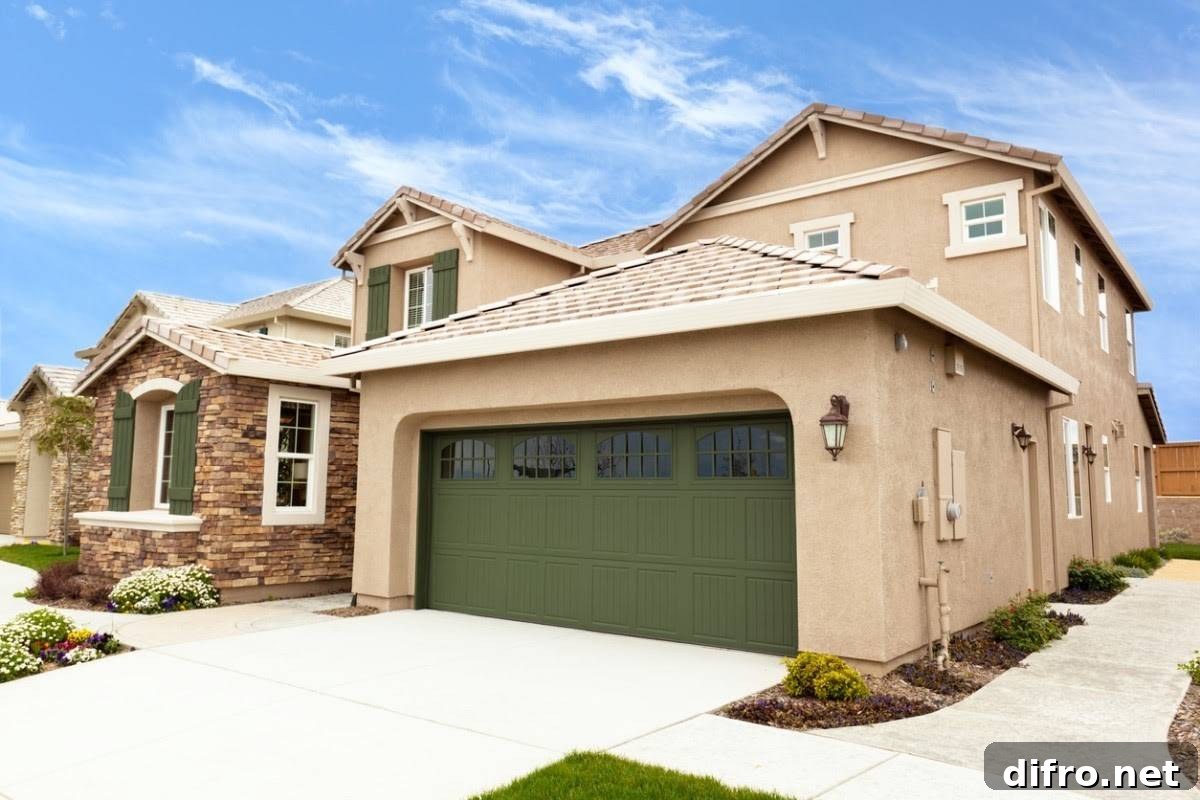
One of the first features that draws attention when you approach a house is the garage door. Positioned prominently at the front of the home, the garage door plays a major role in the house’s curb appeal and first impression.
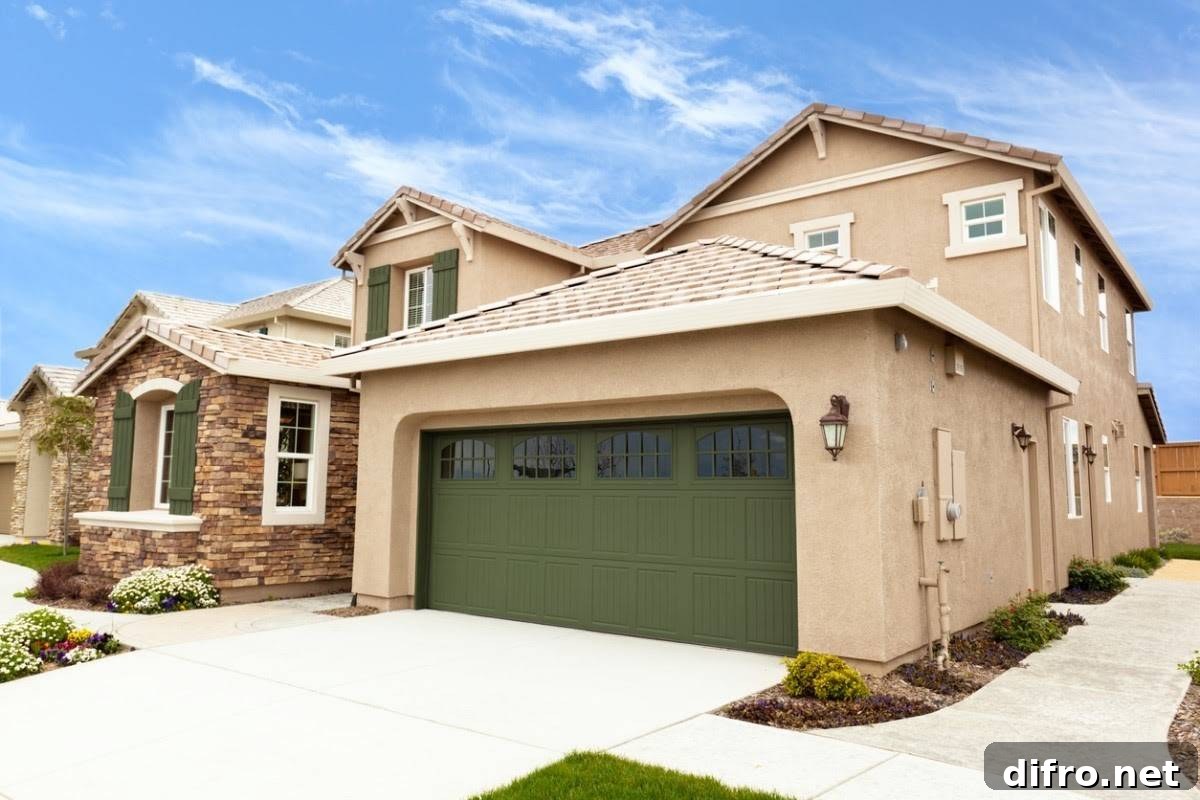
The garage door you choose says a lot about your personal style and the character of your home. Selecting the right door requires balancing appearance, budget, materials, and practical needs such as insulation, durability, maintenance, and security.
Garage doors are available in many materials—steel, vinyl, fiberglass, aluminum, and wood being the most common. Each material has its own advantages and trade-offs for cost, maintenance, appearance, and longevity. Understanding these options helps you make a choice that complements your home while meeting daily needs.
When planning a new installation or a replacement, consider not only the visual style but also the door’s function, insulation level, and how it will perform in your local climate. For many homeowners the decision comes down to a blend of aesthetics, lifespan, and cost of ownership.
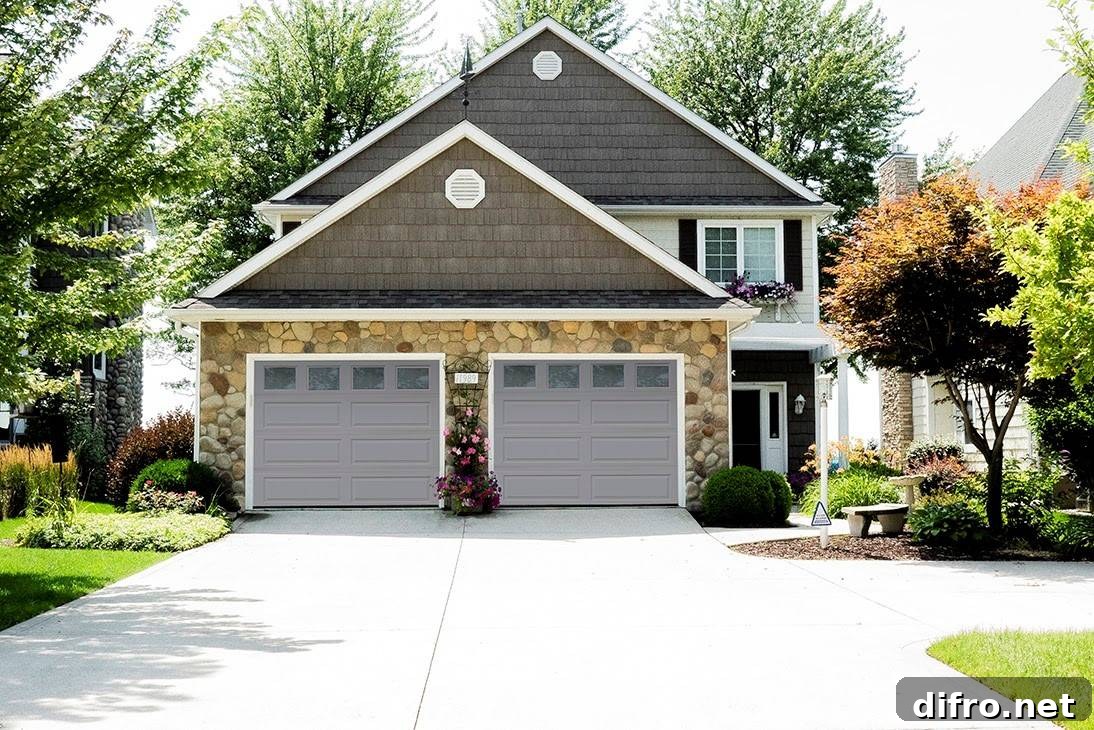
Types of garage doors
In the past there were just a few common door styles. Today, advances in materials and manufacturing mean you can choose from a wider variety of designs, finishes, and performance features. Below are the most common types found on residential properties, with practical notes to help you decide.
Sectional garage doors
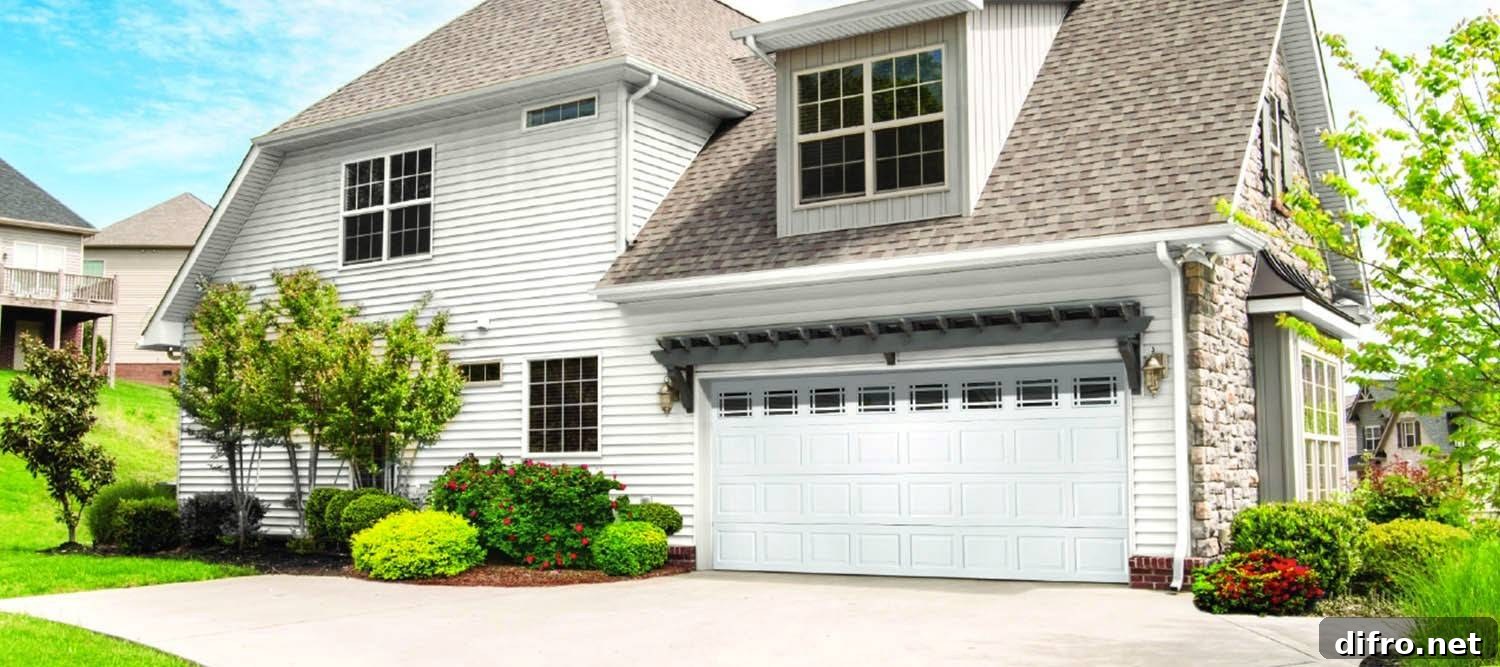
Sectional doors are among the most popular residential choices. Built from horizontal panels connected with hinges, they travel vertically on tracks and then sit parallel to the ceiling when open. Sectional doors are available in manual and automatic configurations and can be insulated to improve energy efficiency. Their straightforward operation and low maintenance make them a practical option for many homeowners.
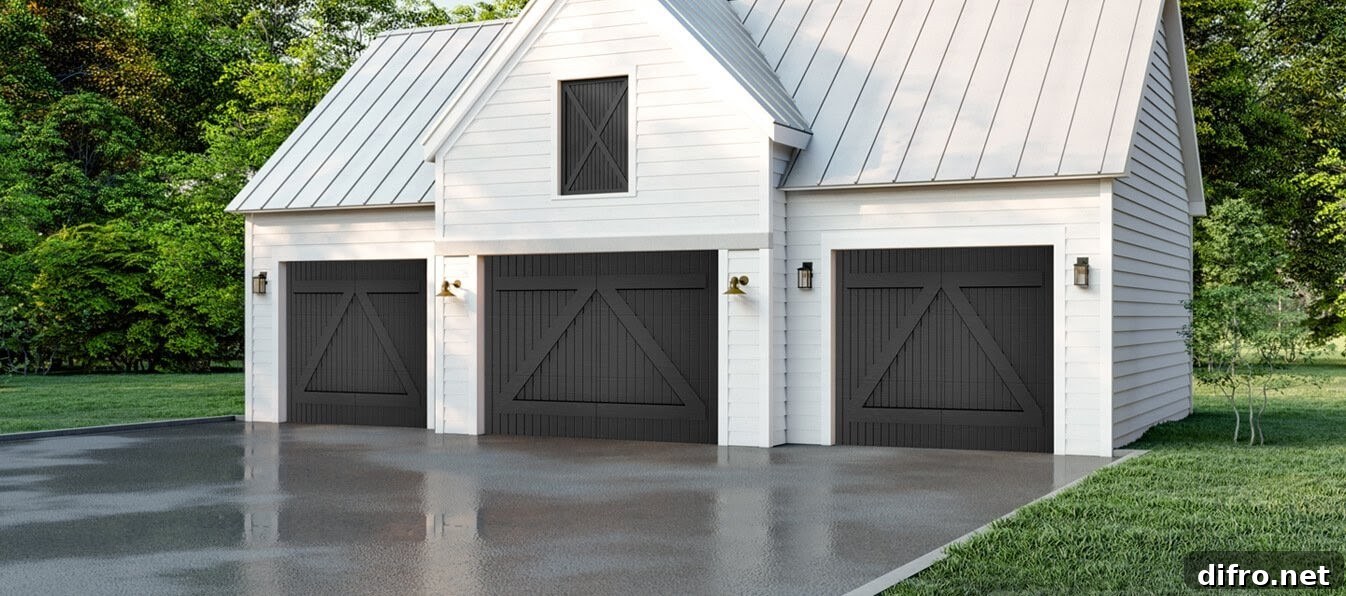
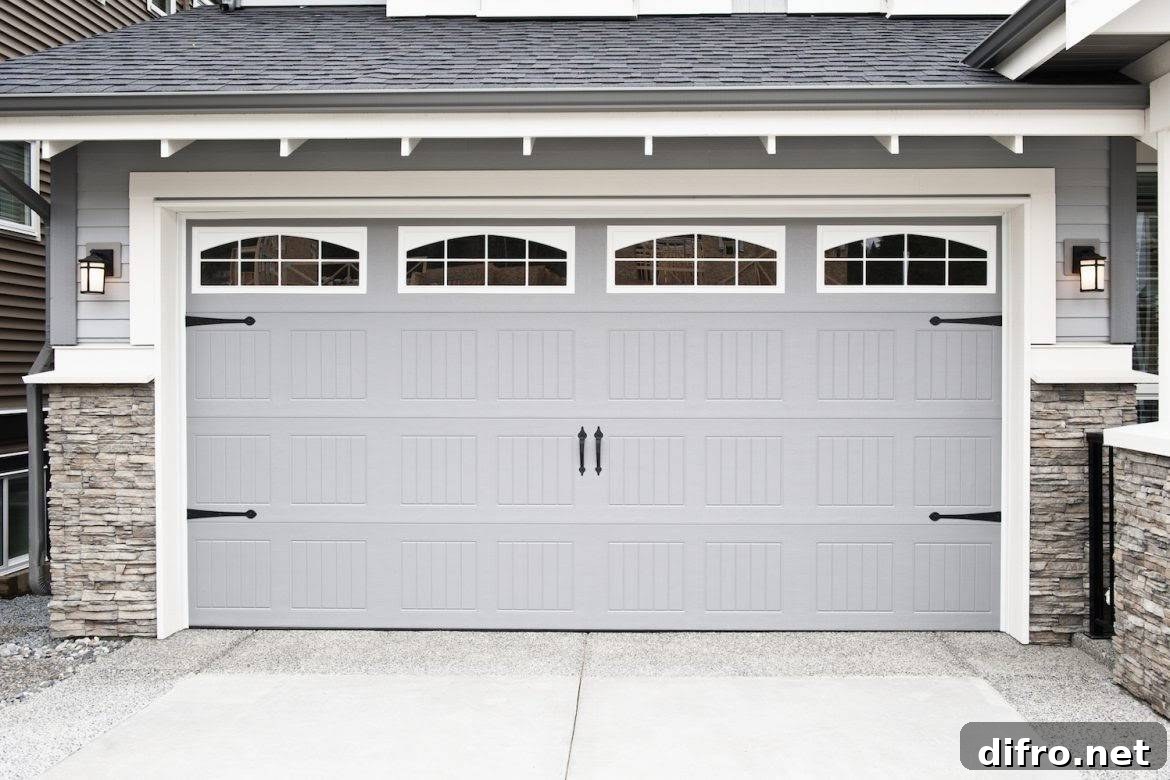
Carriage house garage doors
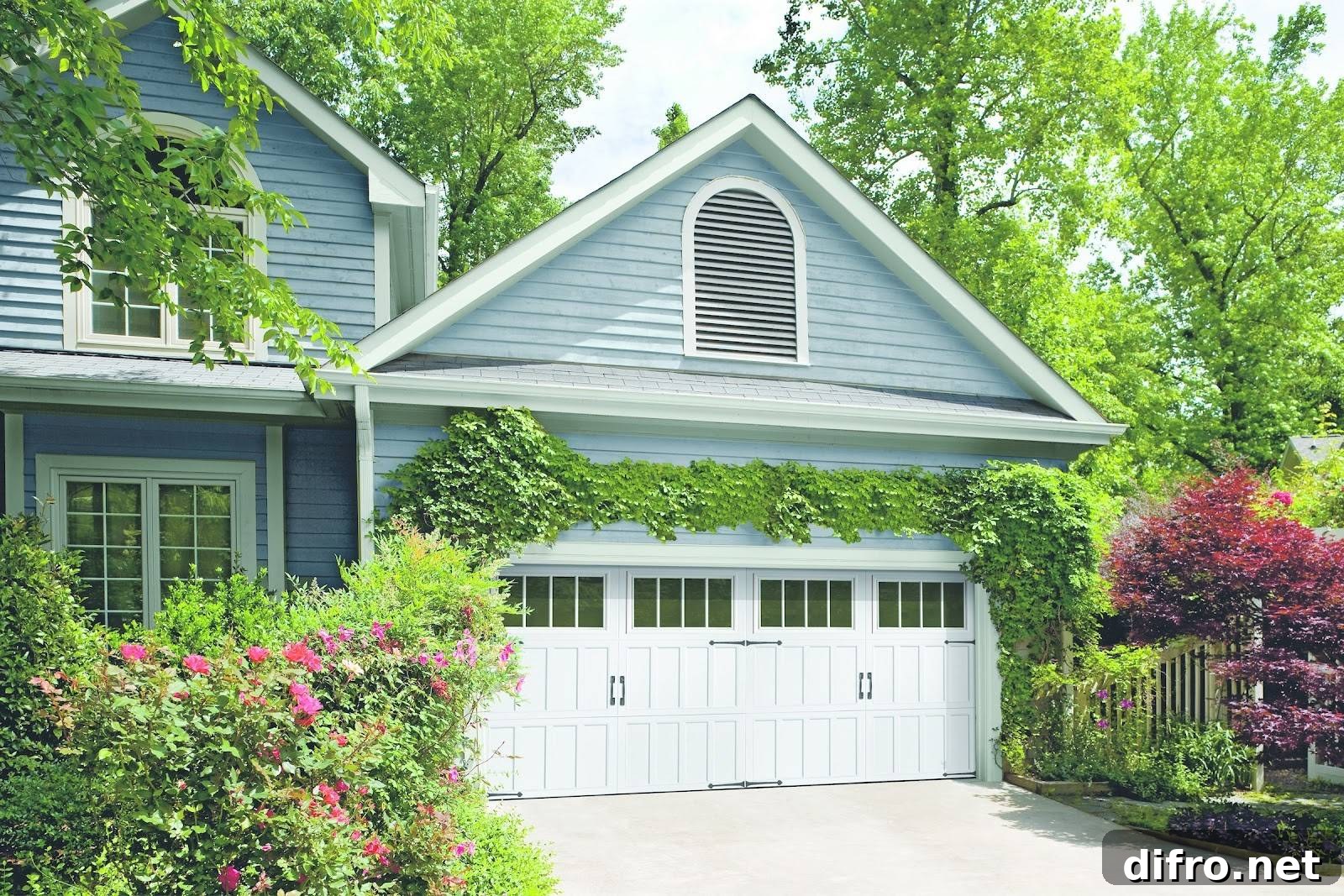
Carriage house doors mimic the look of old barn or carriage doors, often featuring decorative hardware, windows, and a traditional aesthetic. They pair especially well with historic or cottage-style homes but are versatile enough to suit modern designs when finished appropriately. Carriage-style doors can be configured to open manually or with modern automatic openers, combining classic appeal with contemporary convenience.
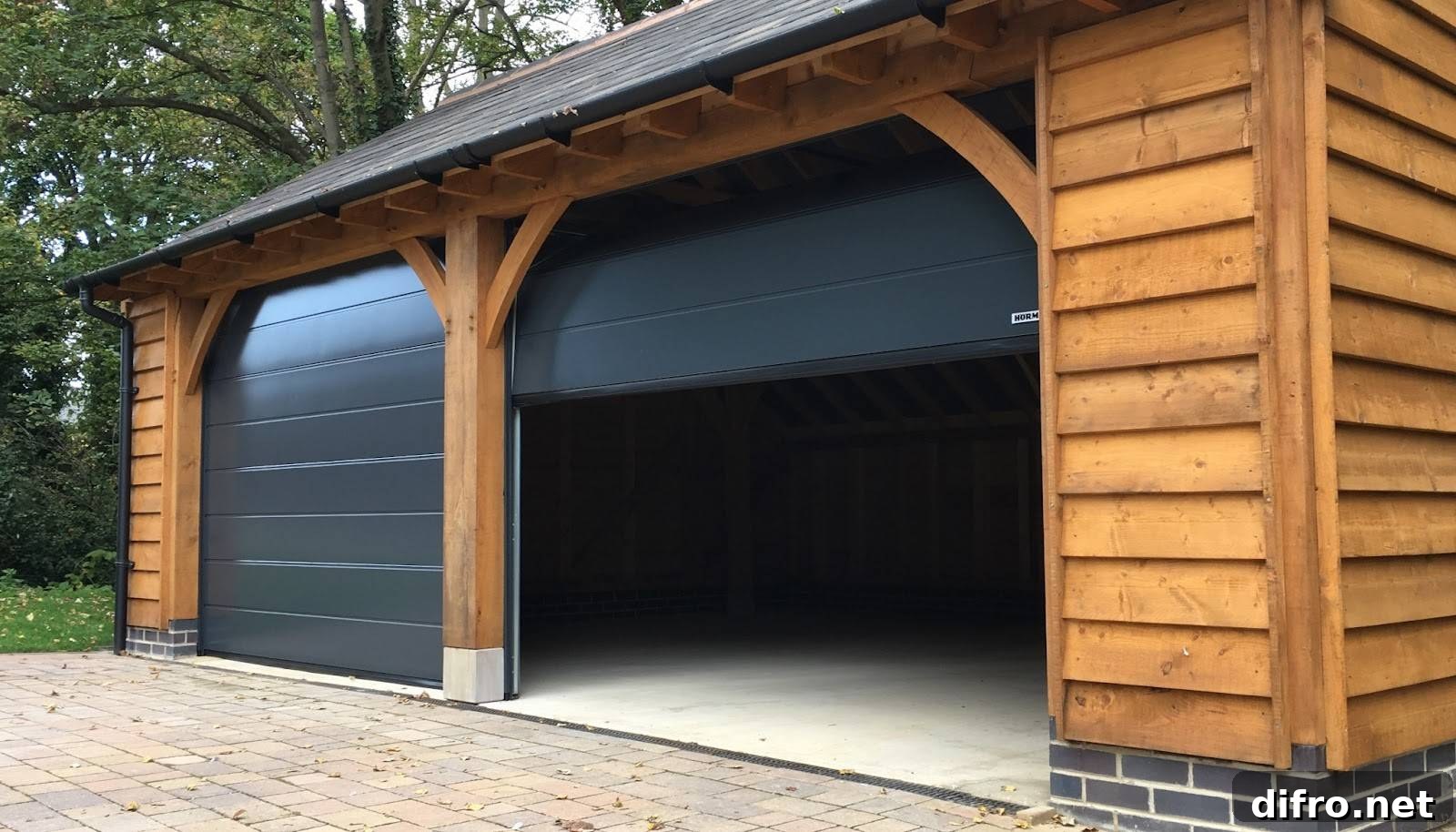
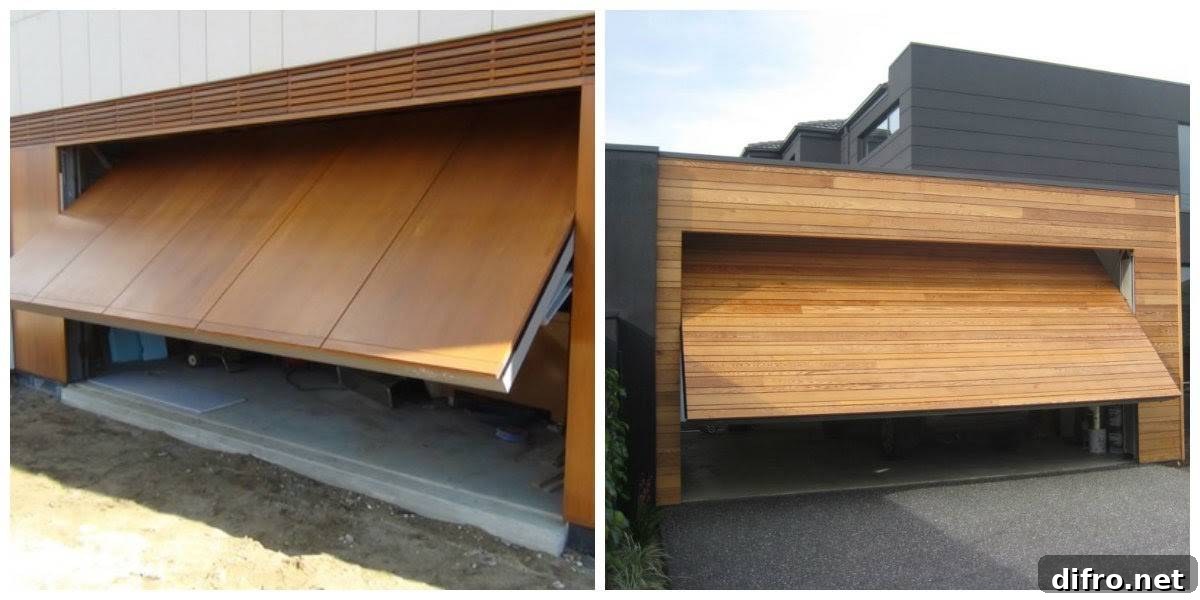
Tilting garage doors
Tilt-up doors use a single solid panel that tilts outward and then up into the garage, often creating an overhang when open. They provide a distinctive look and can be manufactured in various materials. Because they hinge as a single unit, clearance requirements differ from sectional doors, so check headroom and driveway geometry before choosing this style.
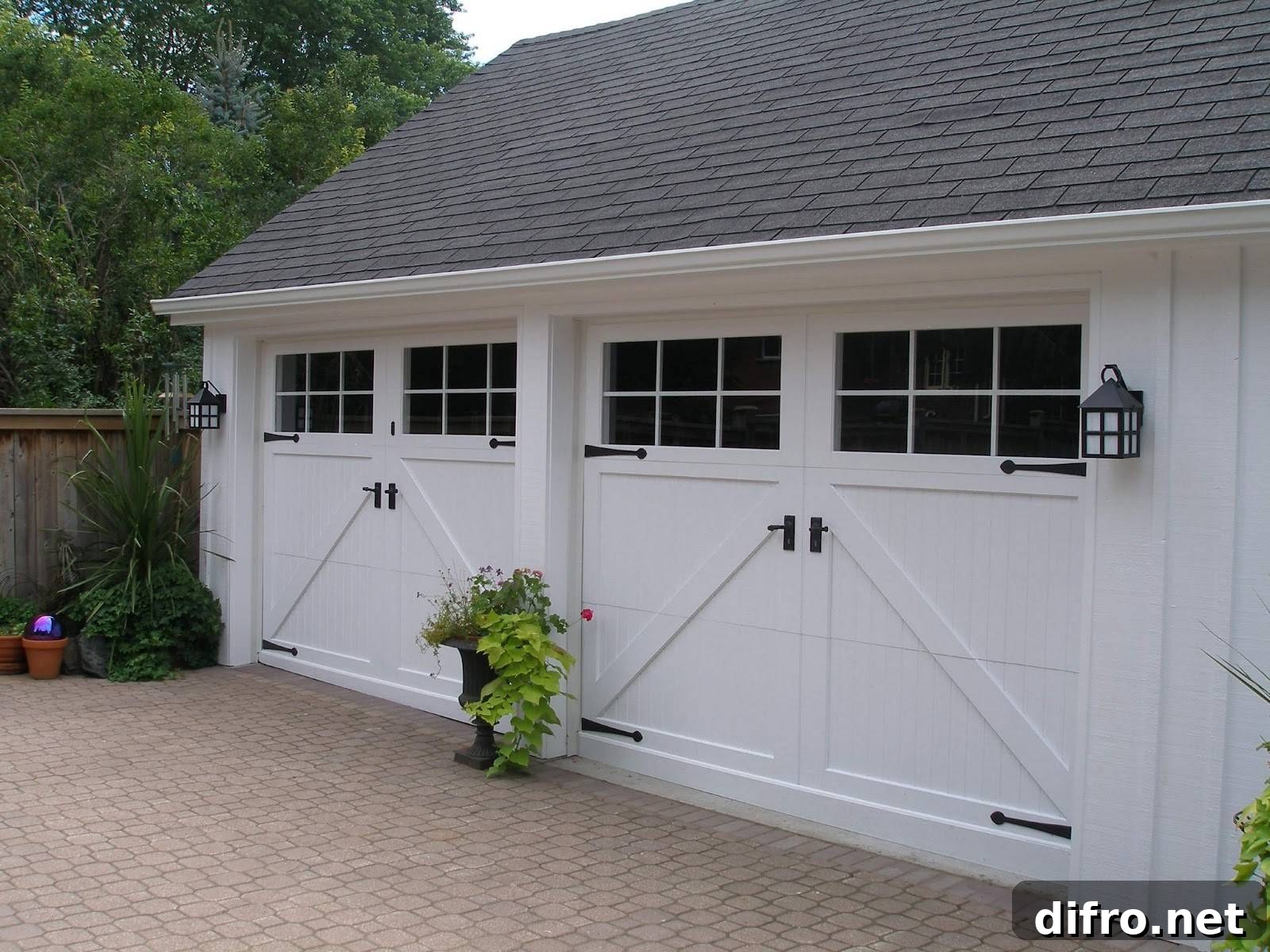
Side opening garage doors
Side-hinged or swinging doors open like a traditional pair of doors and are typically made of wood or steel. They work well where ceiling space is limited because they don’t lift upward, but they require clear space in front of the garage for swing clearance. Side-hinged doors are often chosen for their classic, carriage-like appearance and ease of pedestrian access.
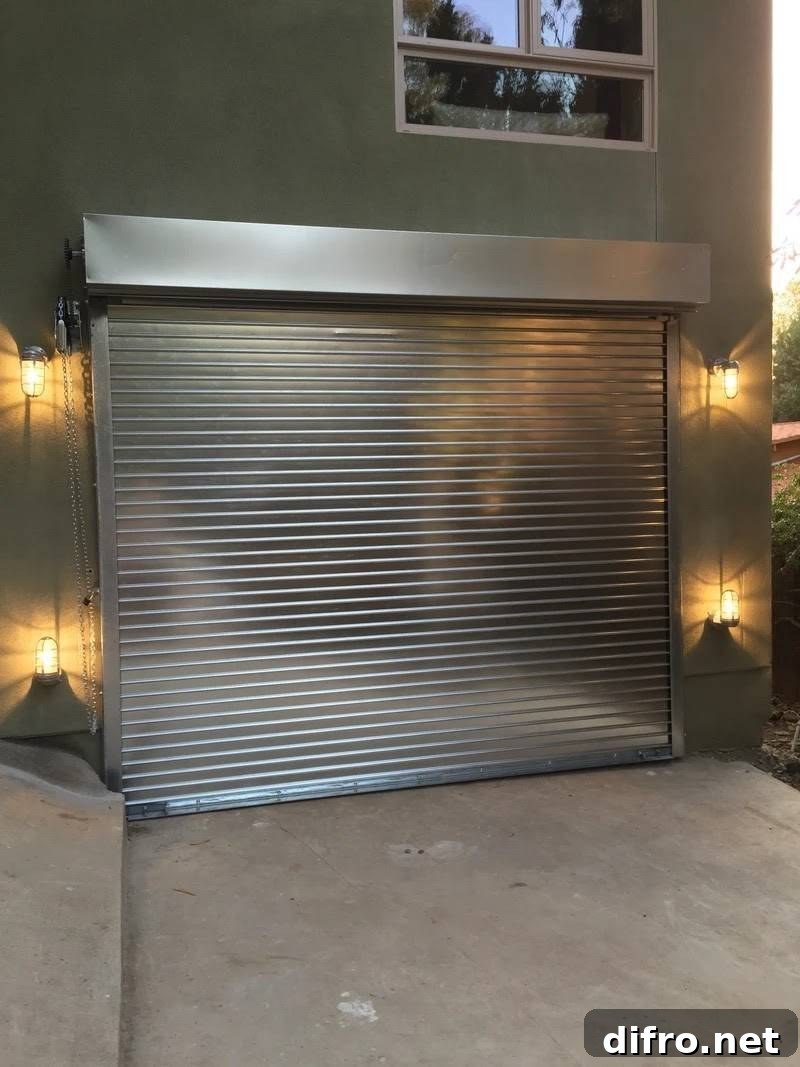
Roll-up garage doors
Roll-up doors consist of narrow horizontal slats that roll up into a compact coil above the opening. Common in commercial and industrial settings, roll-up doors are also suitable for residential garages where space efficiency and durability are priorities. Constructed mainly from steel, they offer robust performance and can be an excellent choice when minimal headroom is available.

Choosing the right garage door also involves practical considerations:
- Insulation and energy efficiency: Insulated doors help maintain temperature and reduce energy costs when the garage is attached or used as a workspace.
- Durability and maintenance: Materials like steel typically require less upkeep, while wood provides a warmer look but may need regular finishing.
- Security and safety: Look for reliable locking systems, safety sensors, and quality openers to protect your property and family.
- Budget and long-term cost: Initial price varies by material and features; consider long-term maintenance and replacement costs when comparing options.
- Style and curb appeal: Select a design, color, and hardware that complement your home’s architecture and enhance curb value.
Before deciding, measure your opening carefully, review warranty and installation details, and consult with a reputable dealer or installer to ensure proper fit and safe operation. A well-chosen garage door not only enhances the appearance of your home but also improves functionality and long-term value.