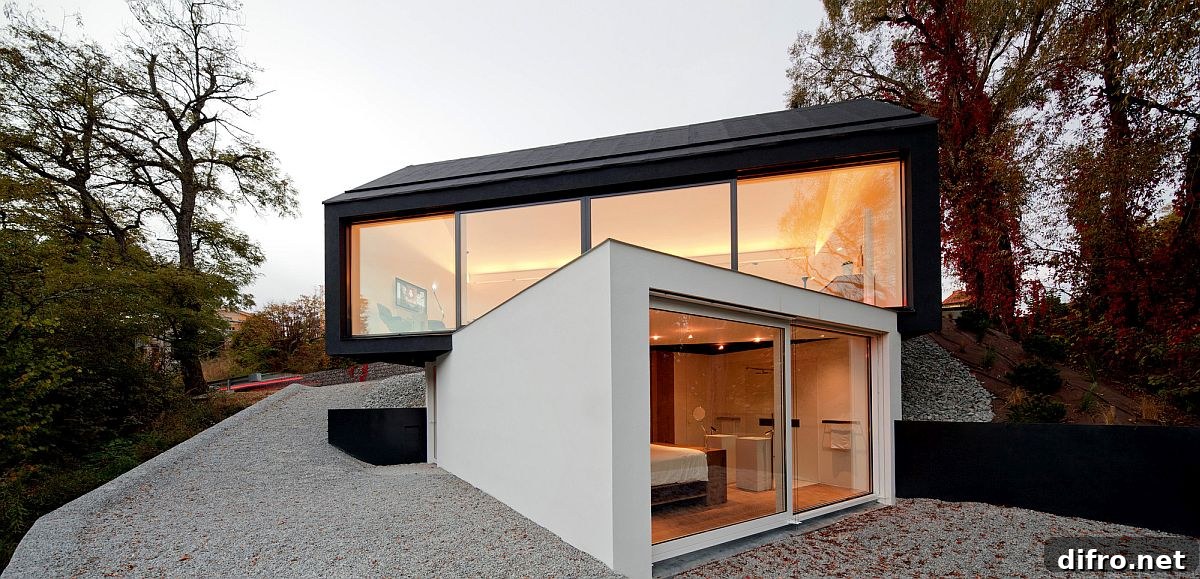
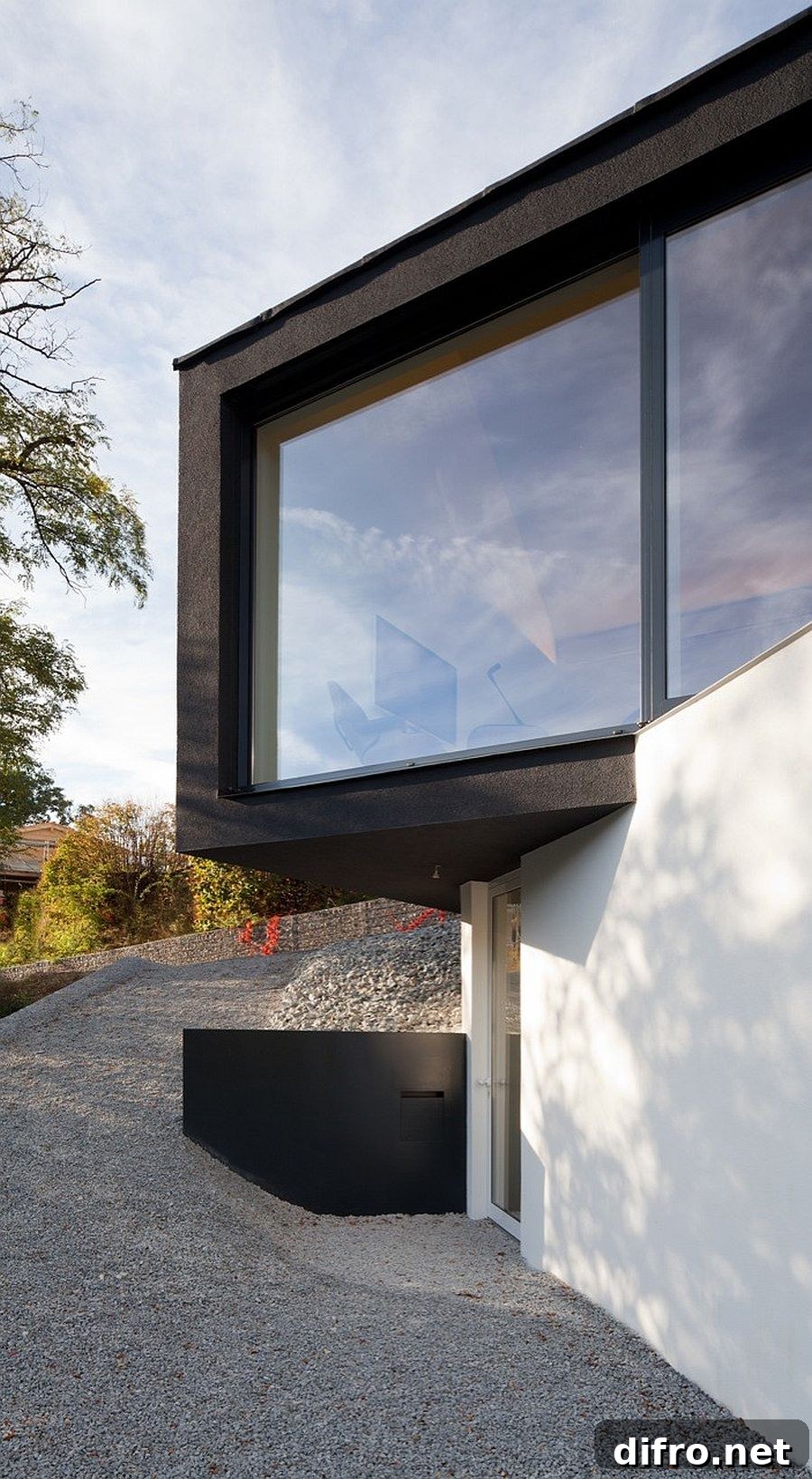
Minimal, contemporary and visually striking, the Studio House by fabi architekten bda in Germany is a refined exercise in contrast and site-specific design. Composed of two distinct volumes—a white lower box and a cantilevered black upper volume—the house creates a strong geometric silhouette against the hillside. Floor-to-ceiling glazing on the upper level dissolves the boundary between interior and forest, filling the living spaces with natural light and providing sweeping views of the surrounding trees. Inside, a restrained palette of white finishes and warm wood gives the home a calm, modern character that complements the dramatic exterior.
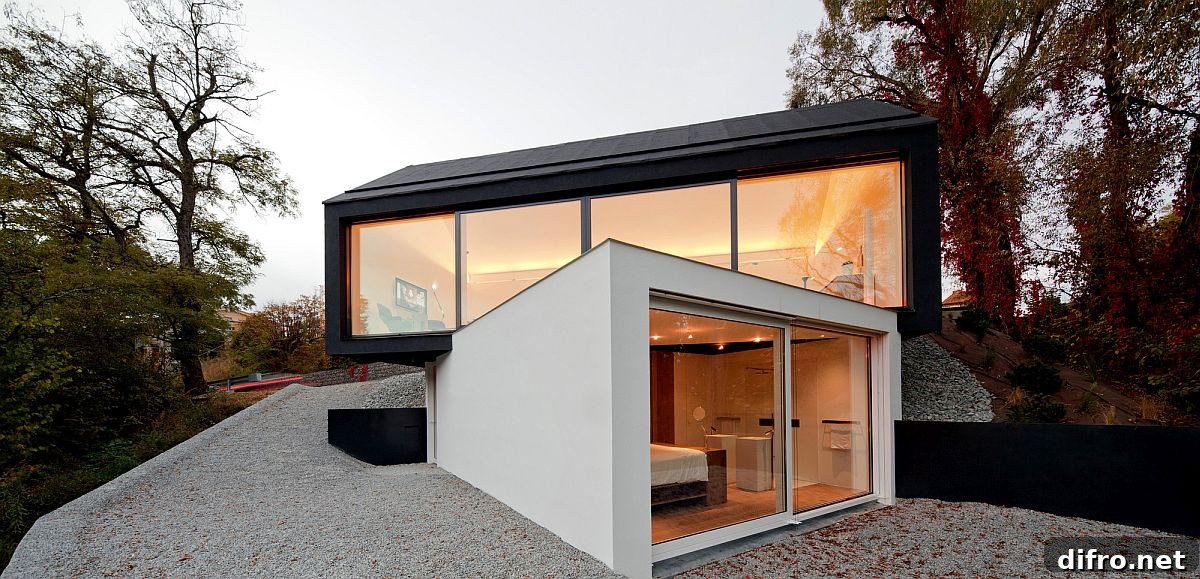
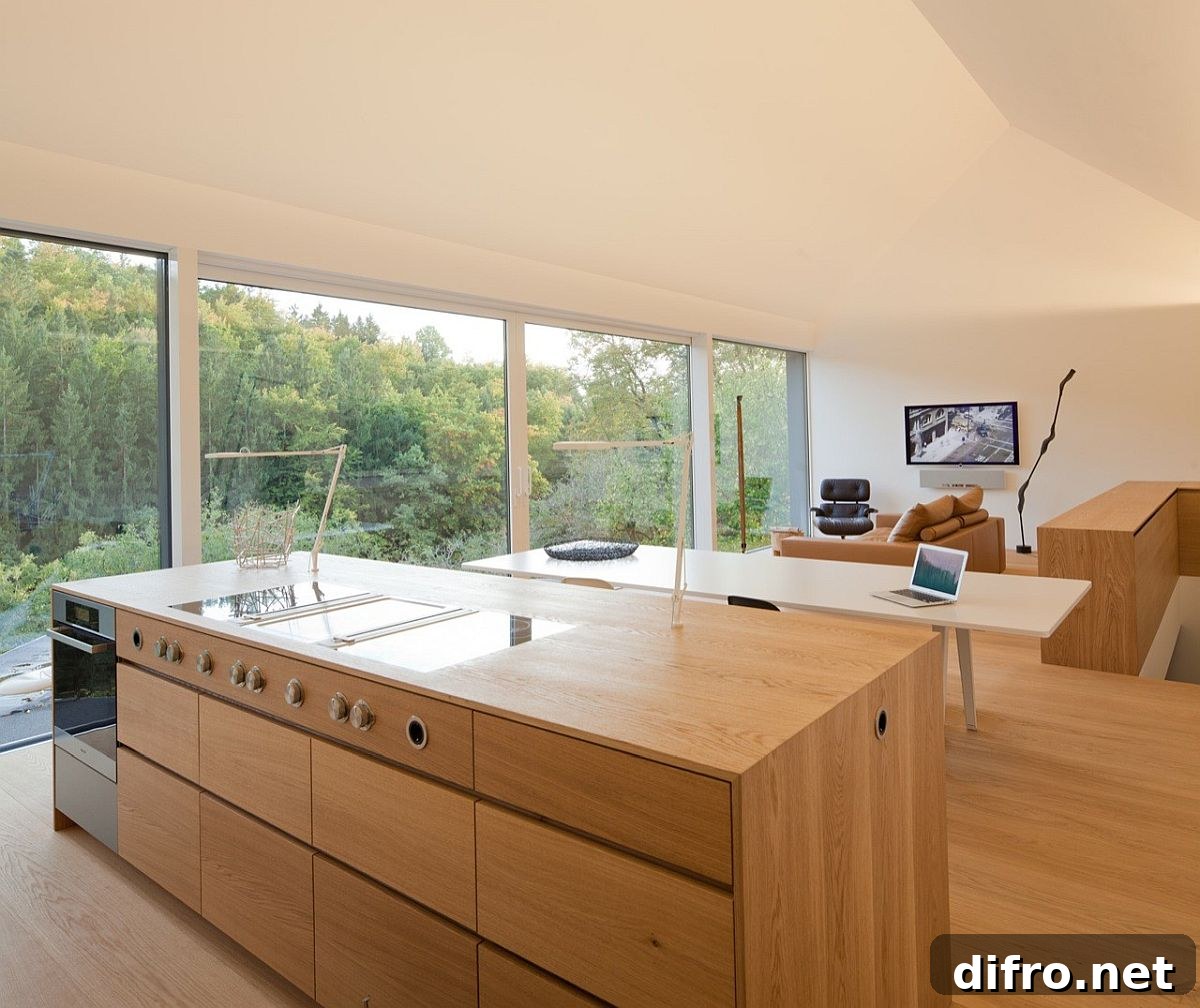
The upper black volume contains the principal, open-plan living areas—kitchen, dining and lounge—arranged to maximize views and daylight for entertaining and everyday life. Large sliding glass walls frame the forest beyond, turning the outdoor landscape into a living backdrop for daily routines. The lower white volume is set into the slope and houses the private zones: bedrooms and quieter spaces that benefit from greater shelter and privacy. The deliberate stacking and offsetting of the two boxes not only produce a compelling visual composition but also respond intelligently to topography, making efficient use of a sloped site.
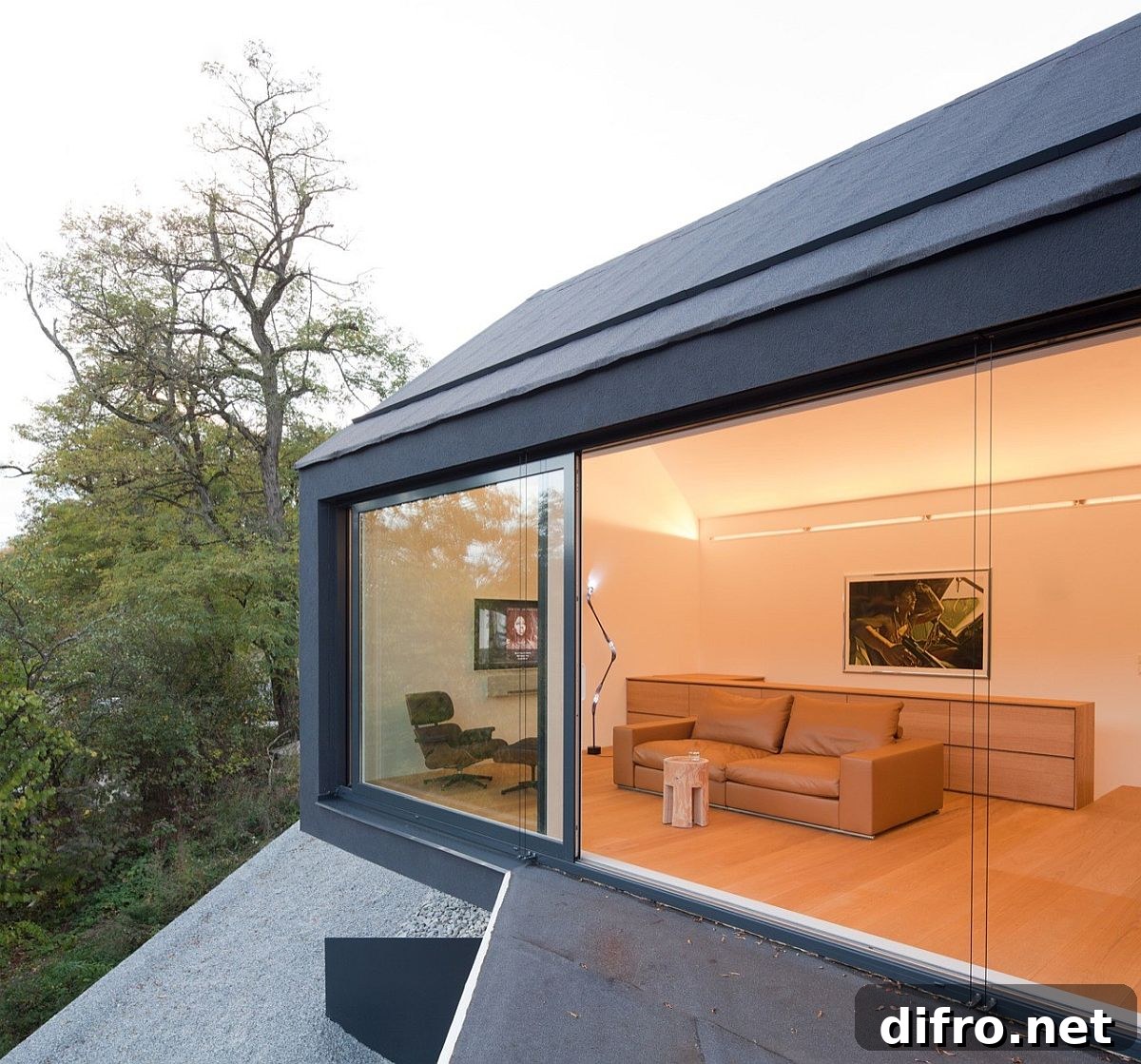
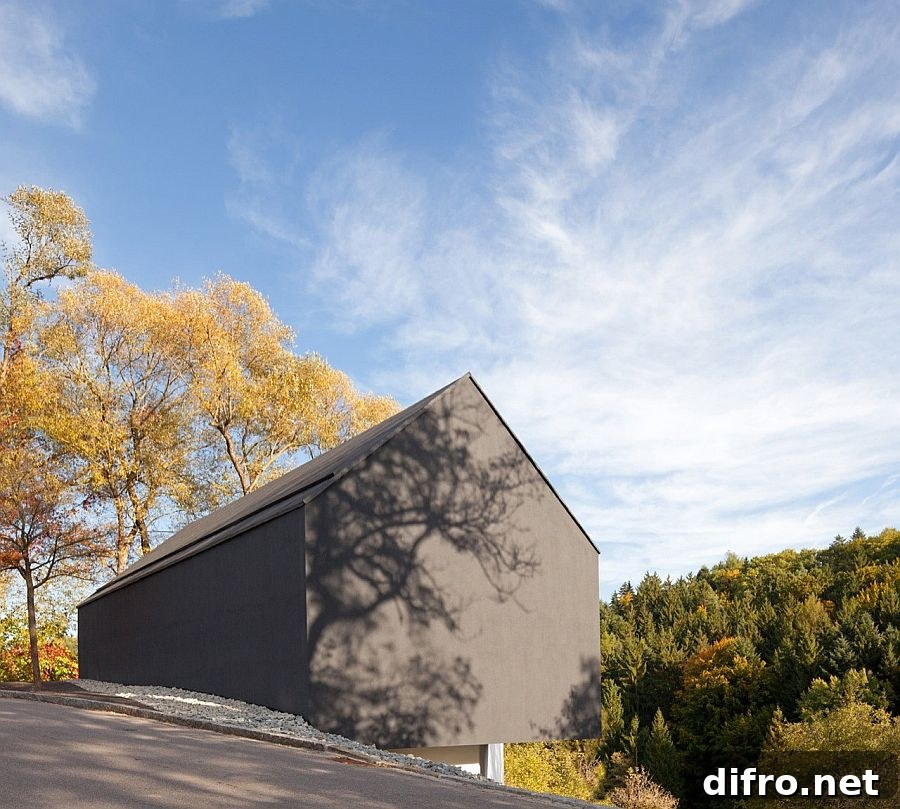
Externally, the material contrasts continue. The dark, cantilevered upper level reads as a sculptural object hovering above the white base, while terraces and outdoor surfaces use black asphalt and natural stone to create a composed, low-maintenance landscape palette. These hardscape choices frame outdoor living areas and pathways, allowing the architecture to sit comfortably within the hillside setting rather than dominate it. The overall effect is both bold and quietly integrated into the environment.
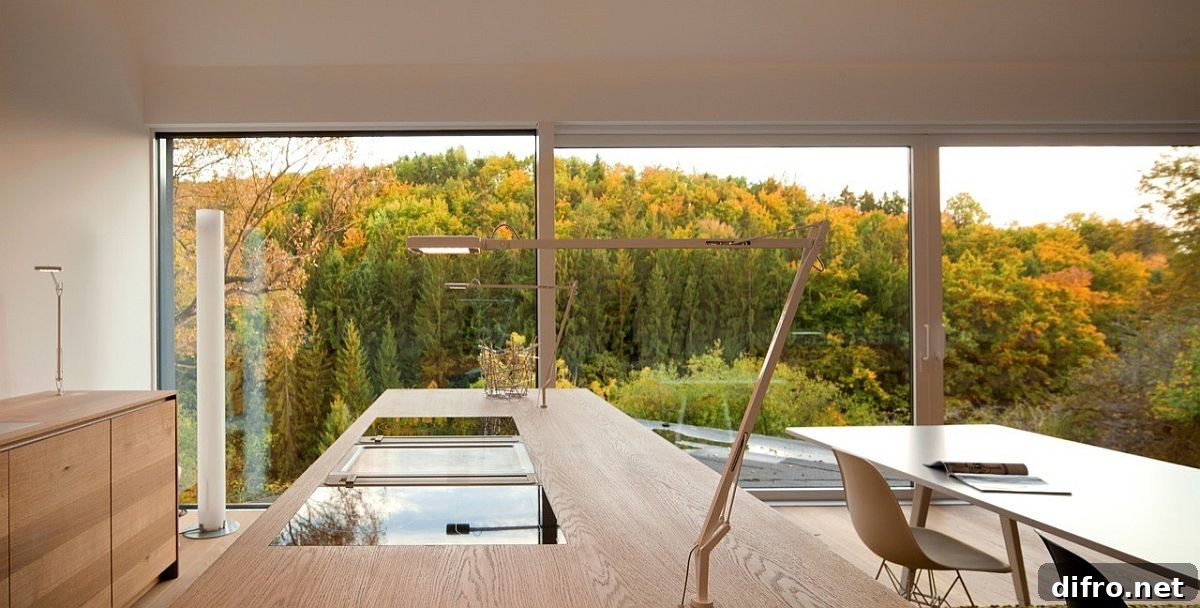
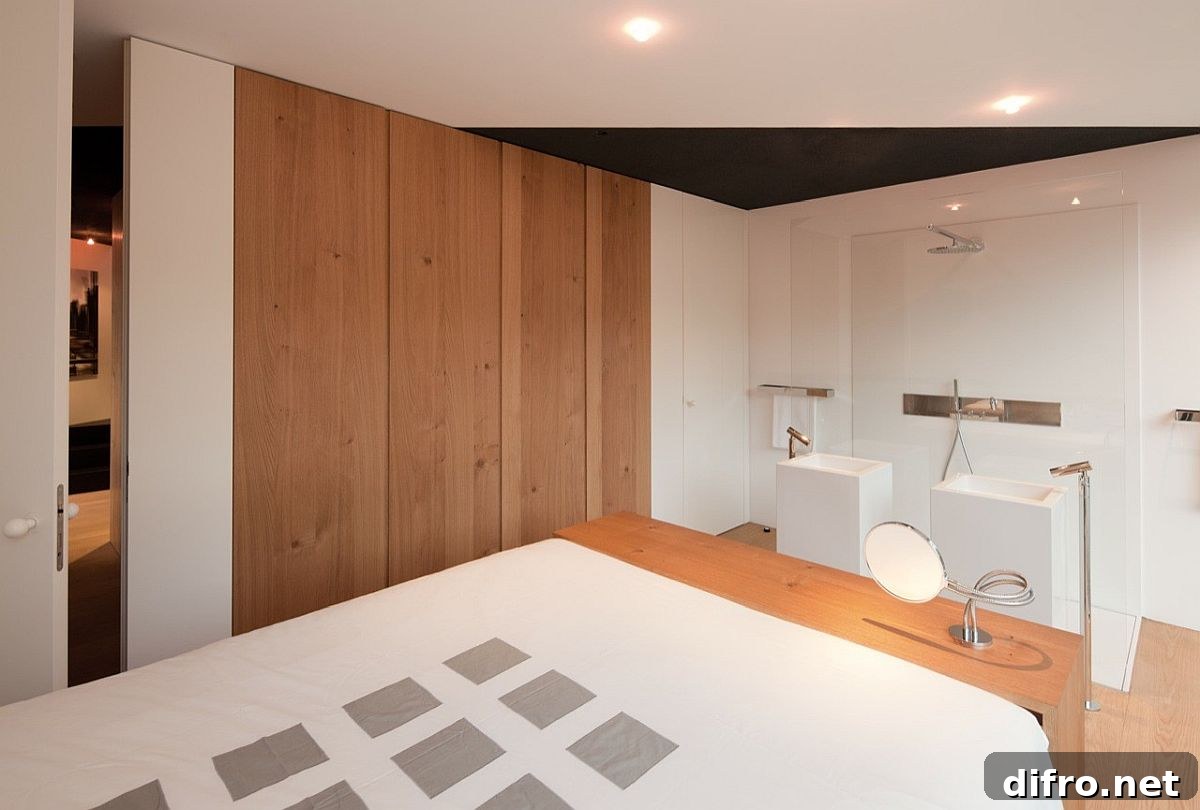
Inside, the interior treatment is intentionally minimal. White walls and ceilings amplify natural light while warm wooden floors and built-in elements provide tactile contrast and comfort. The open-plan living area flows seamlessly from kitchen to dining to lounge, with sightlines focused outward toward the forest. The master suite and bathrooms follow the same pared-back language—clean lines, muted tones and natural materials—creating a cohesive and restful home environment.
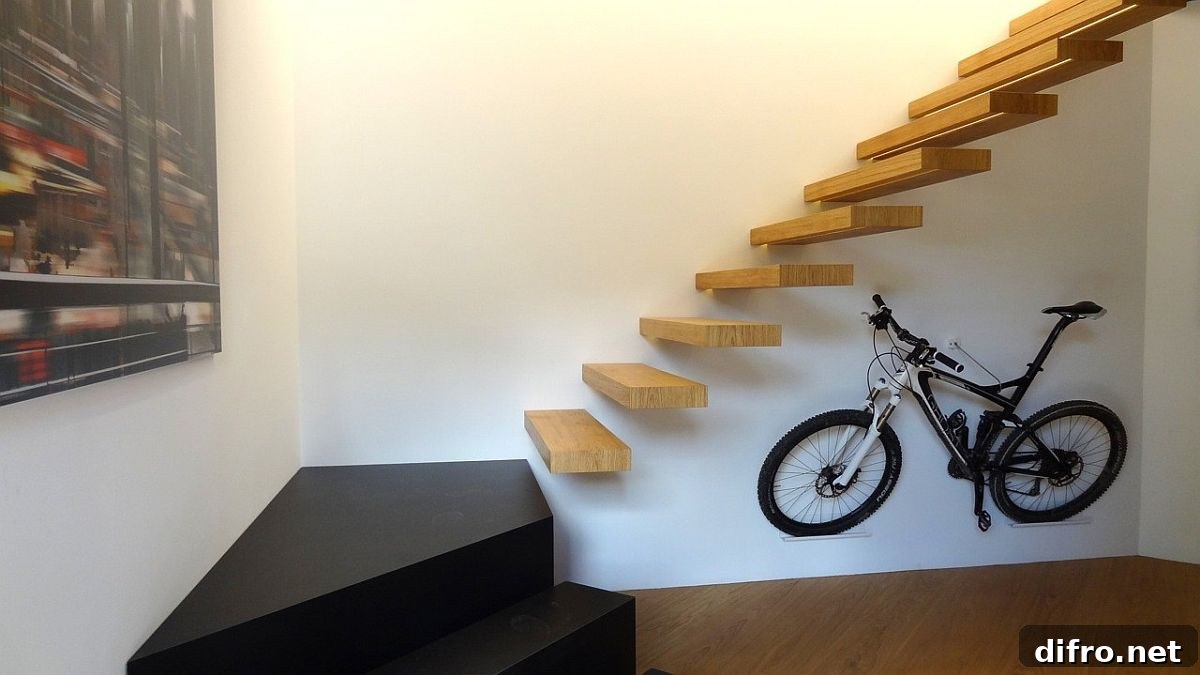
A simple, sculptural wooden staircase links the two levels, its minimal profile echoing the house’s overall aesthetic. The stair becomes an architectural connector—both visually and physically—tying together public and private zones while admitting light from above. The sequence of spaces, from the entrance through the reception and down into the lower bedrooms, is carefully staged to make the most of the sloped site and the surrounding natural light.
The project demonstrates how contrasting volumes, a modest material palette and an orientation toward landscape can produce a memorable contemporary home. The house’s two-box arrangement exploits the slope to create covered exterior spaces and elevated viewpoints, while large glazed walls keep the interiors visually connected to the forest. By balancing bold exterior geometry with soft, natural interior materials, the Studio House achieves a refined simplicity that feels both contemporary and grounded in place.
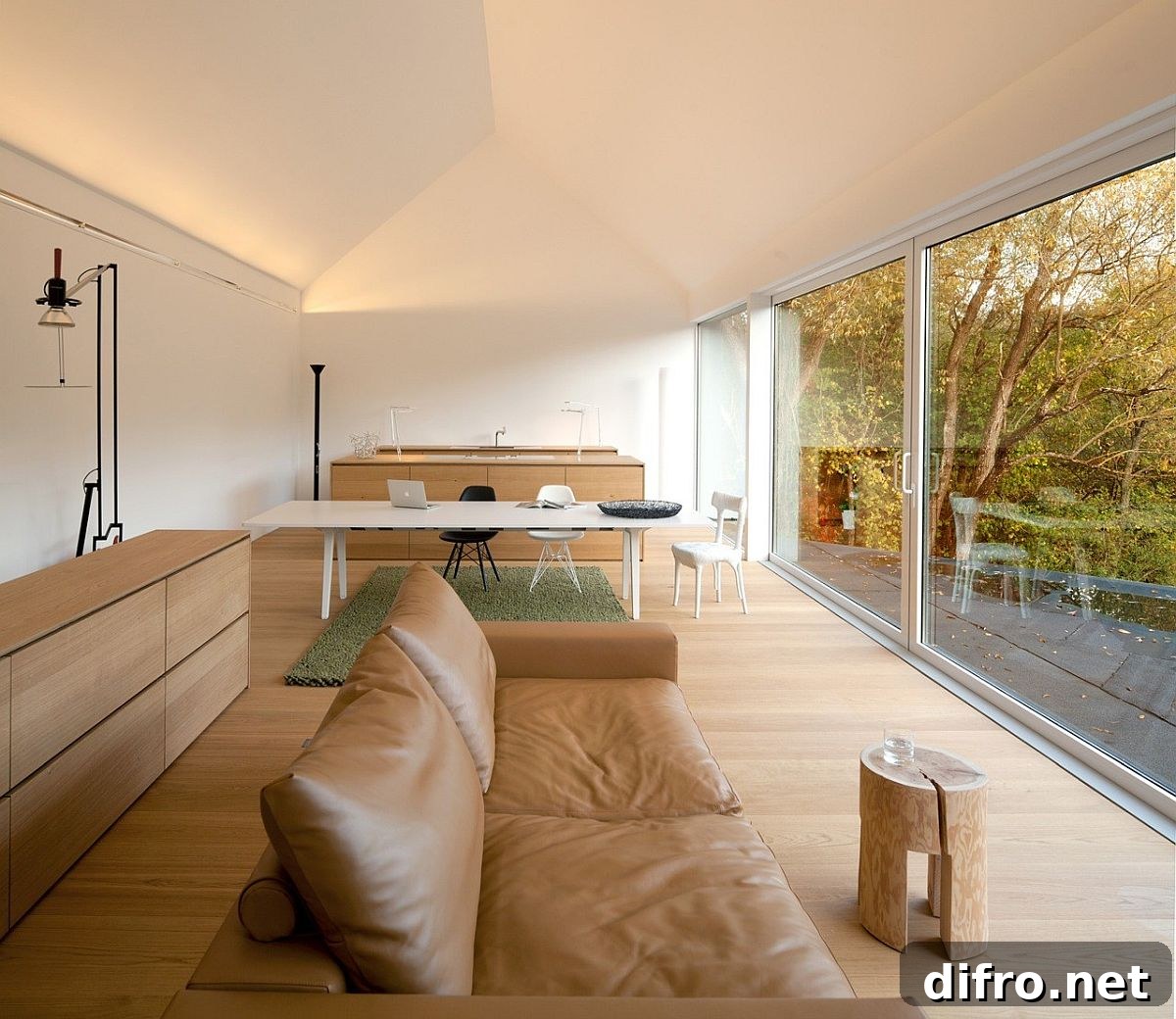
The volumes are opened deliberately toward the forest, allowing the architecture to engage the natural surroundings with clarity and restraint. As the house steps into the slope, visitors are led down into an entrance and wardrobe area, with light admitted along the free-hanging stair that connects the levels.
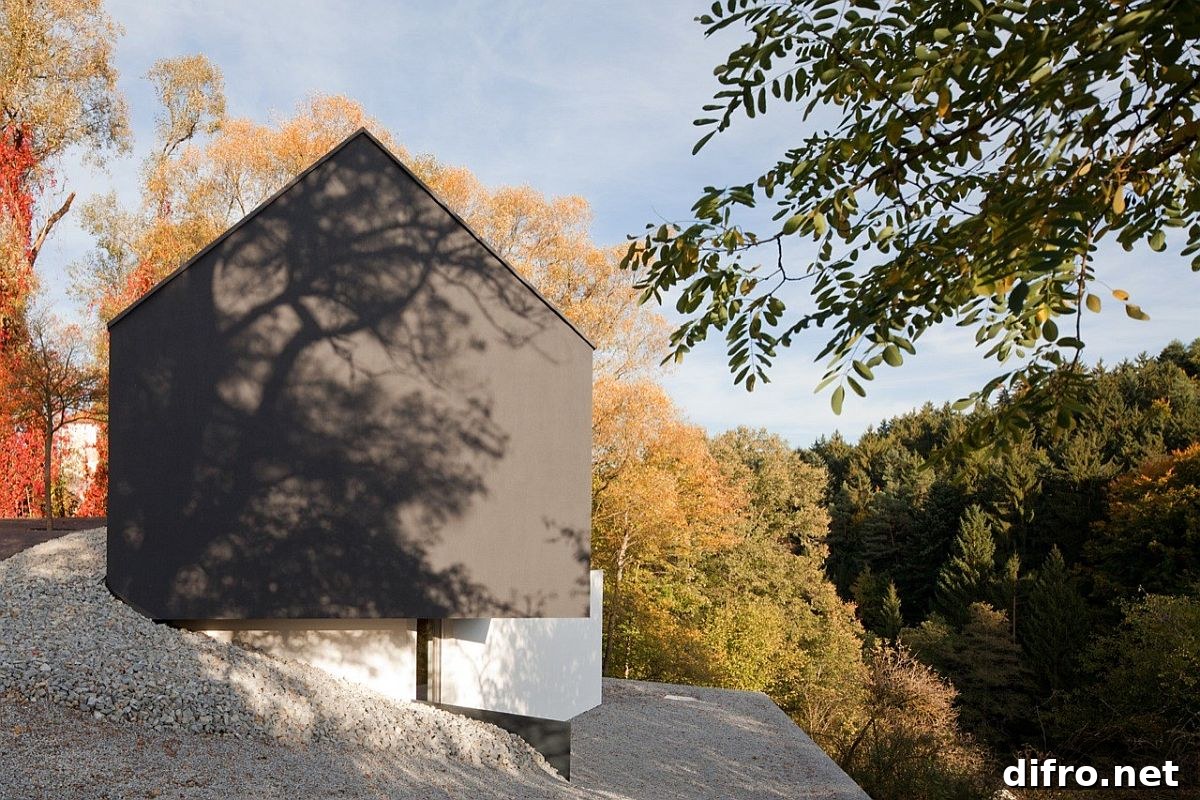
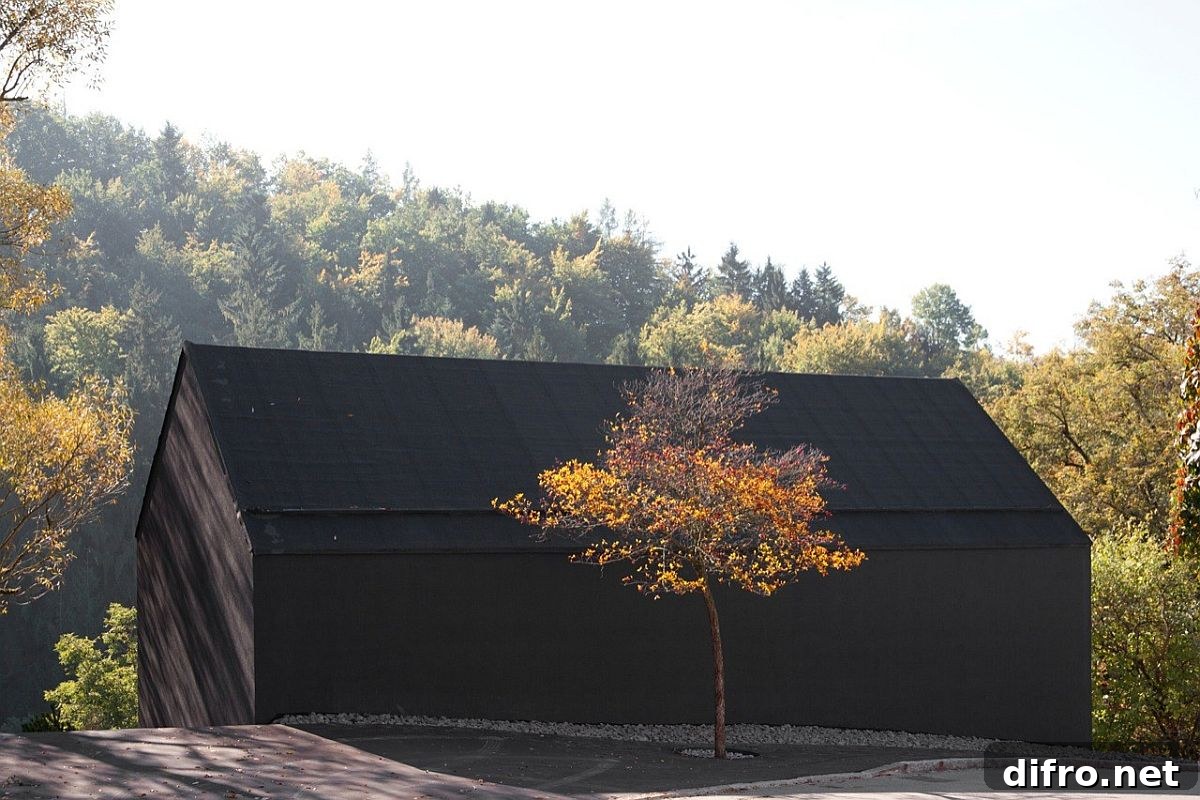
Seen from the street, the dark upper level announces the house’s contemporary presence, while from the hillside the design reads as an integrated addition to the landscape. Thoughtful material choices and careful siting result in a home that is at once dramatic and quietly responsive to its forested setting.
Photography: Herbert Stolz