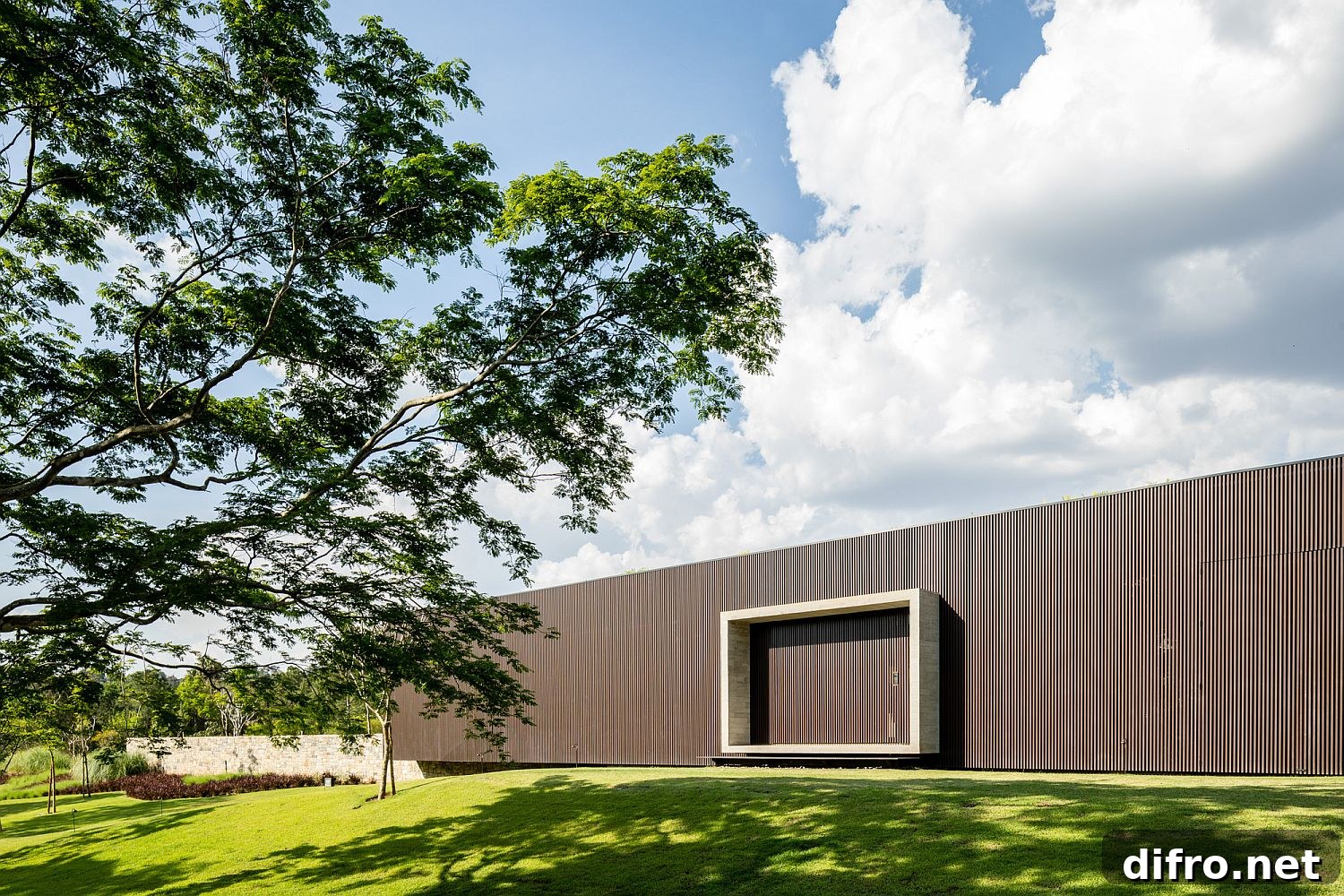
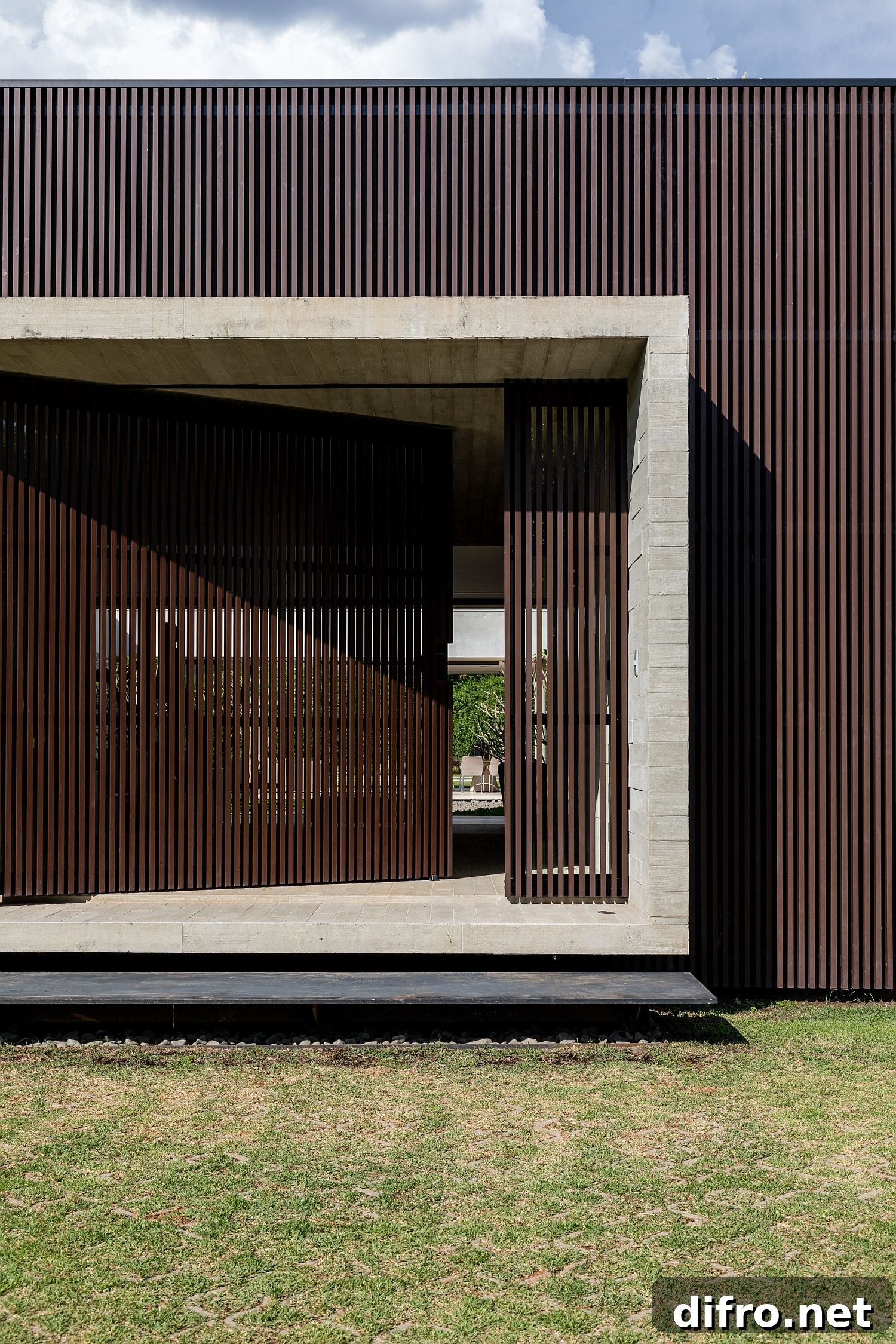
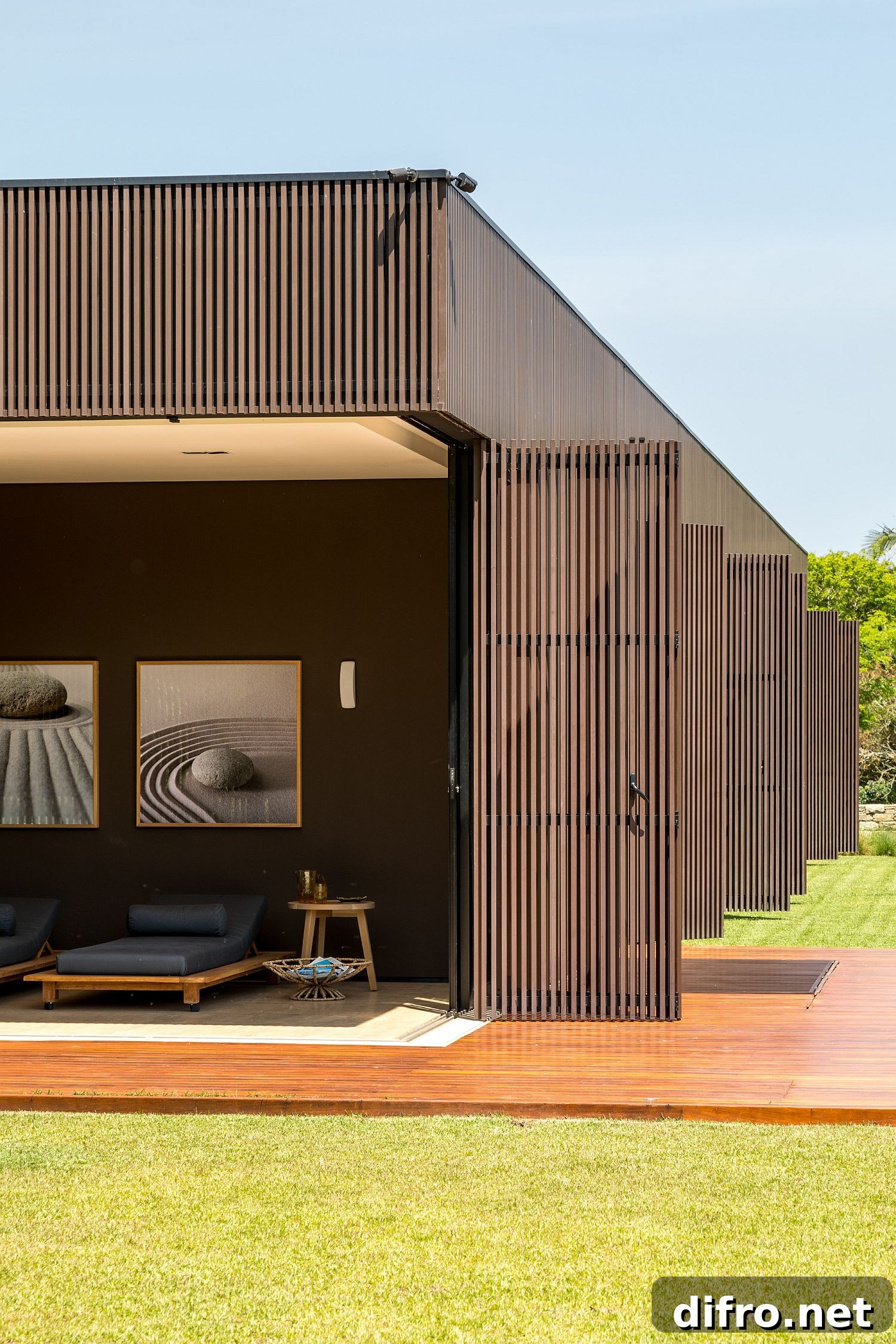
Minimalism is a defining thread in contemporary Brazilian design, and concrete plays a central role in that story. The Tunnel House, designed by Consuelo Jorge Arquitetos, fuses elements of brutalist architecture with restrained, contemporary minimalism and abundant greenery to create a home that is both sculptural and inviting. The overall design reads as simple, clean and modern: concrete volumes are softened by warm wood shutters and screens that protect the interior from direct sun while admitting a gentle, filtered light. Those wooden elements establish a visual dialogue between inside and outside, preserving privacy without severing the connection to the landscape. Inside, the décor follows the same pared-back approach—calm, functional and deliberately uncluttered.
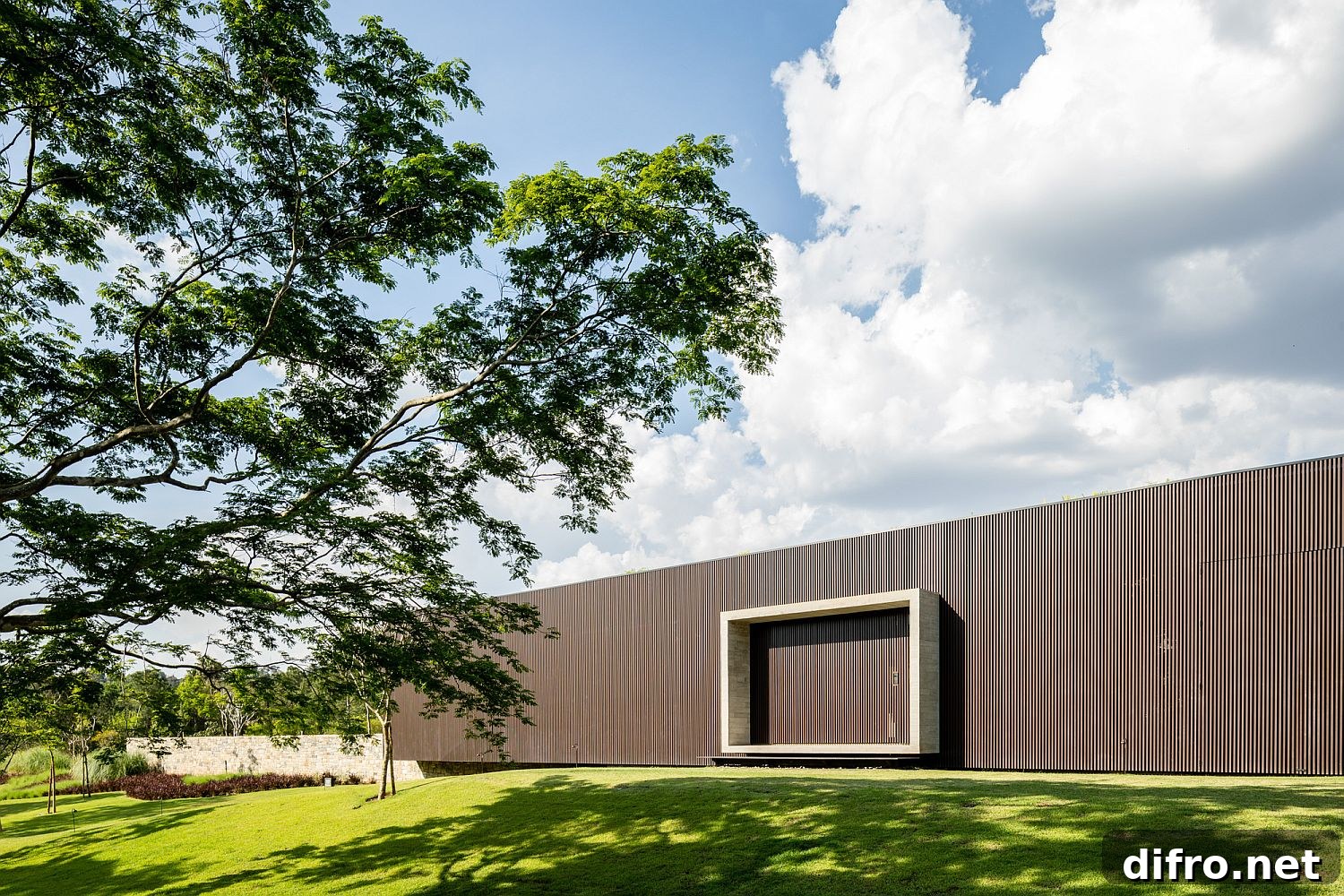
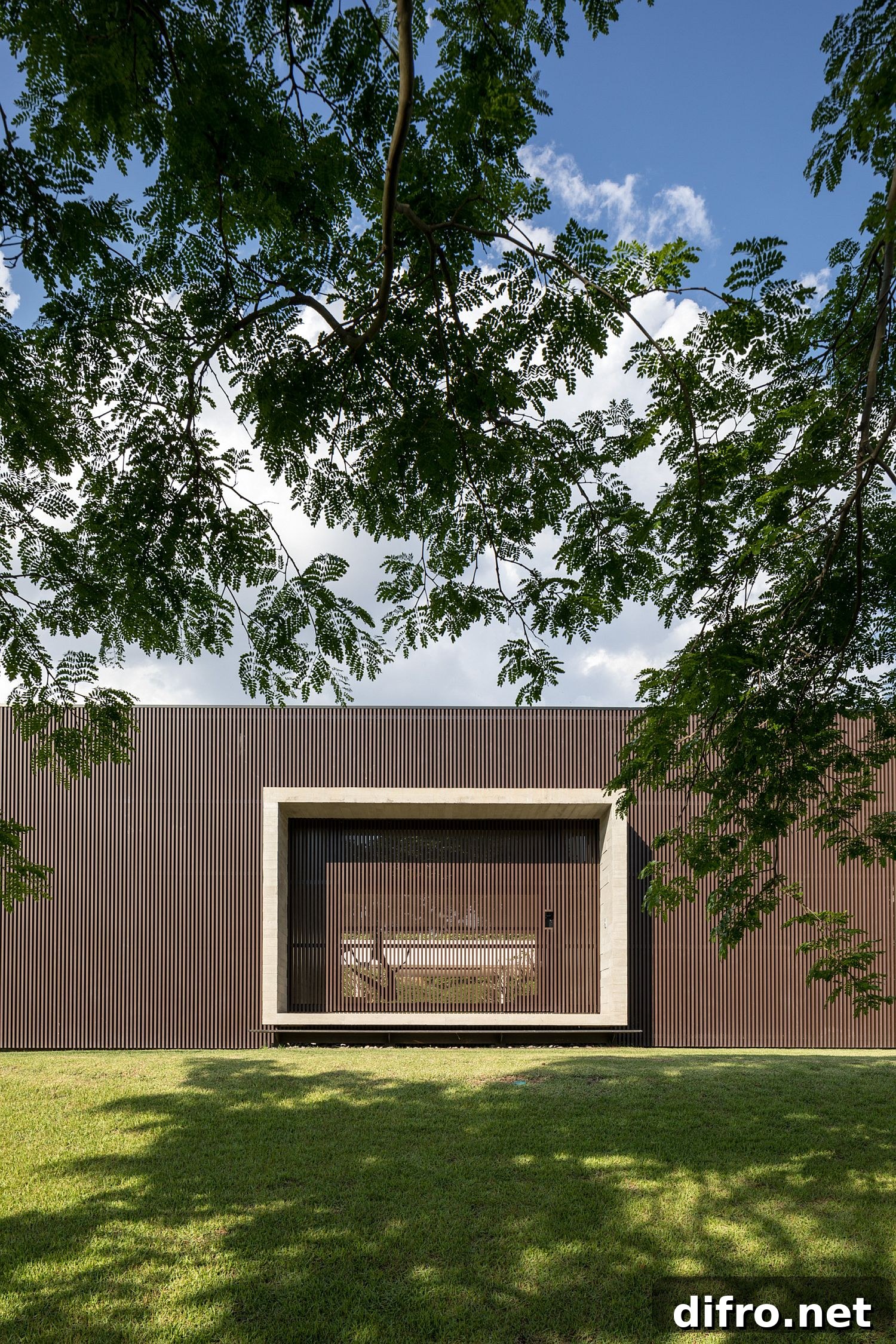
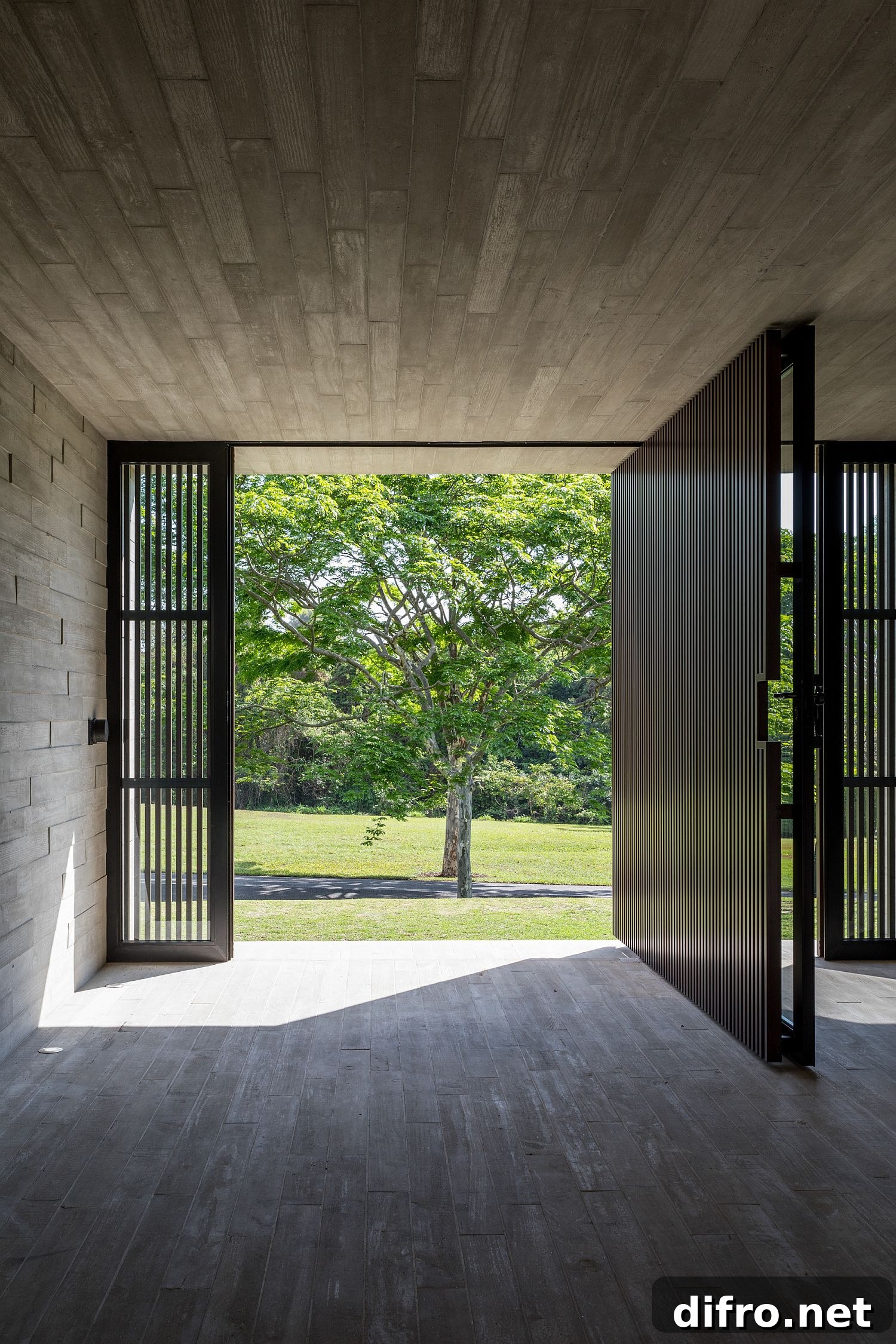
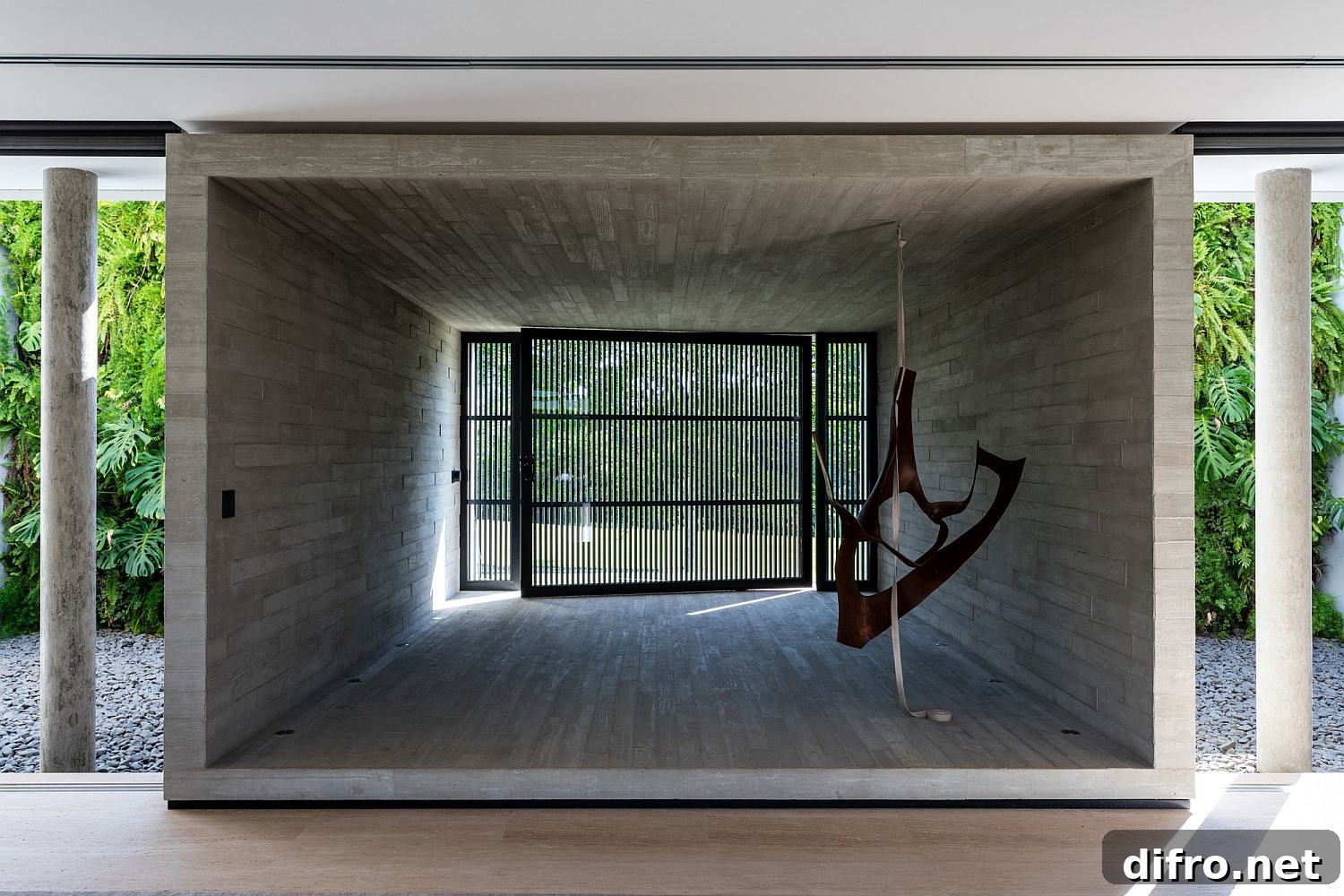
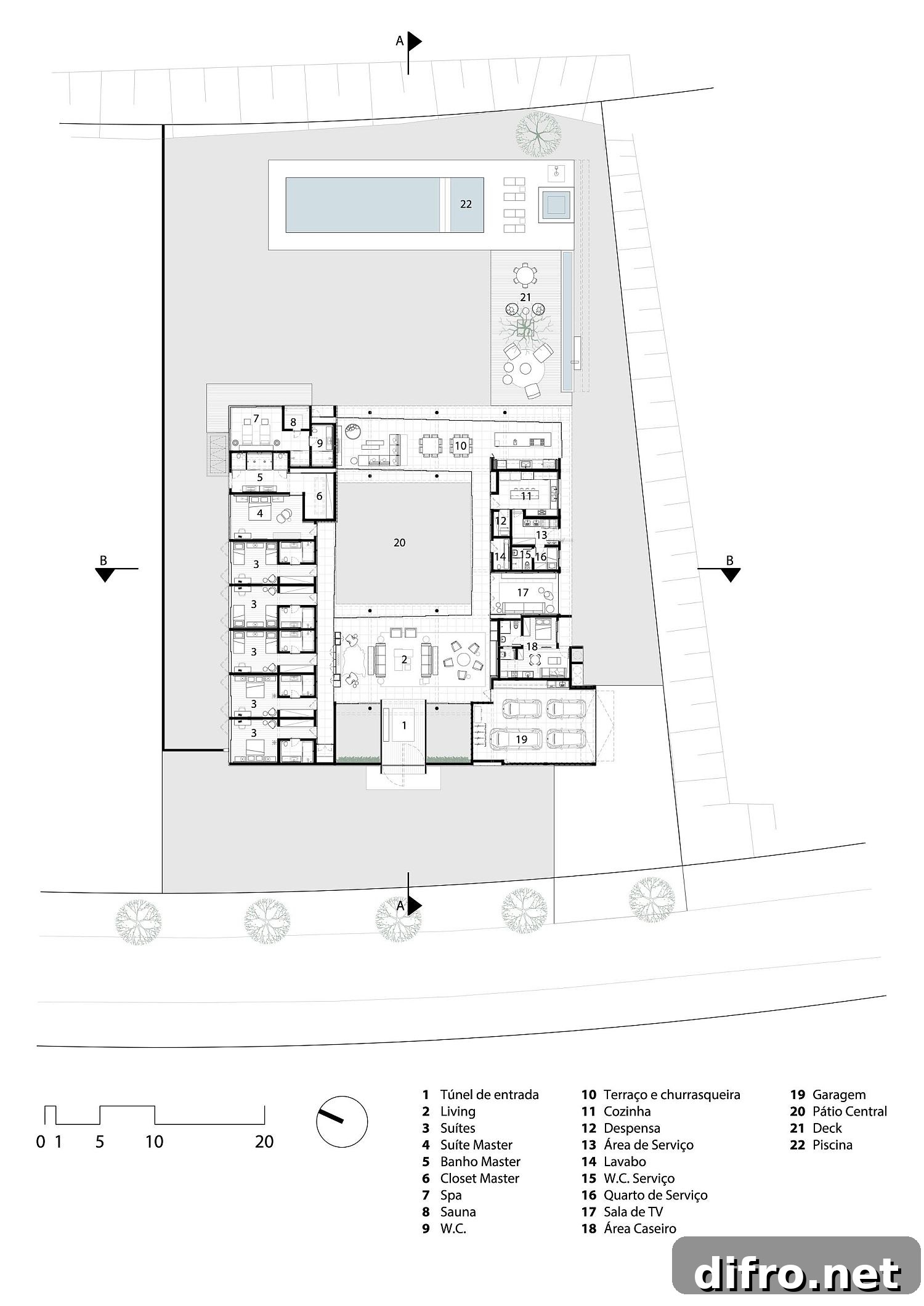
The house gets its name from a distinctive entrance tunnel that frames the approach and sets a strong architectural tone. Designed for a family with two children, the plan emphasizes flexibility: living areas can adapt to different uses and inhabitant needs over time. The open-plan living space functions as the home’s social core, while smaller, more intimate areas provide retreat and privacy. Landscape is treated as an integral part of the composition—trees, planted borders and a carefully planned outdoor sequence become extensions of interior rooms, blurring boundaries and enriching the everyday experience.
Material choices are purposely restrained. Dark hexagonal tiles stretch across ceilings in the bathroom and bedrooms, introducing texture and a subtle geometric rhythm that contrasts with the softer tones of wood and concrete. Elsewhere, a neutral color palette—muted greys, natural wood tones and discreet metal accents—creates a cohesive backdrop that highlights form, light and landscape rather than ornament. The combination of robust concrete and tactile timber creates a balance between permanence and warmth, a hallmark of contemporary Brazilian houses that value both durability and domestic comfort.
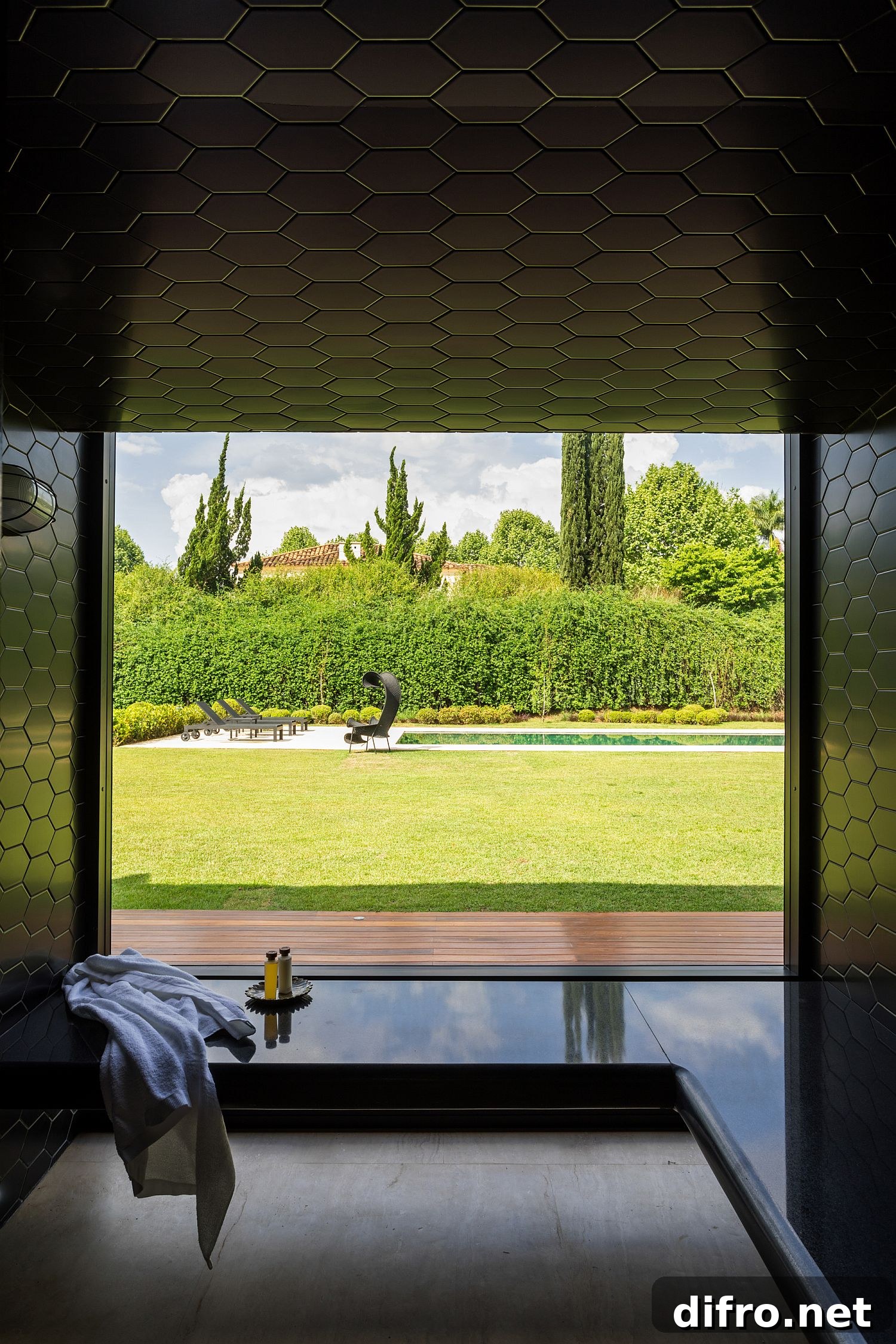
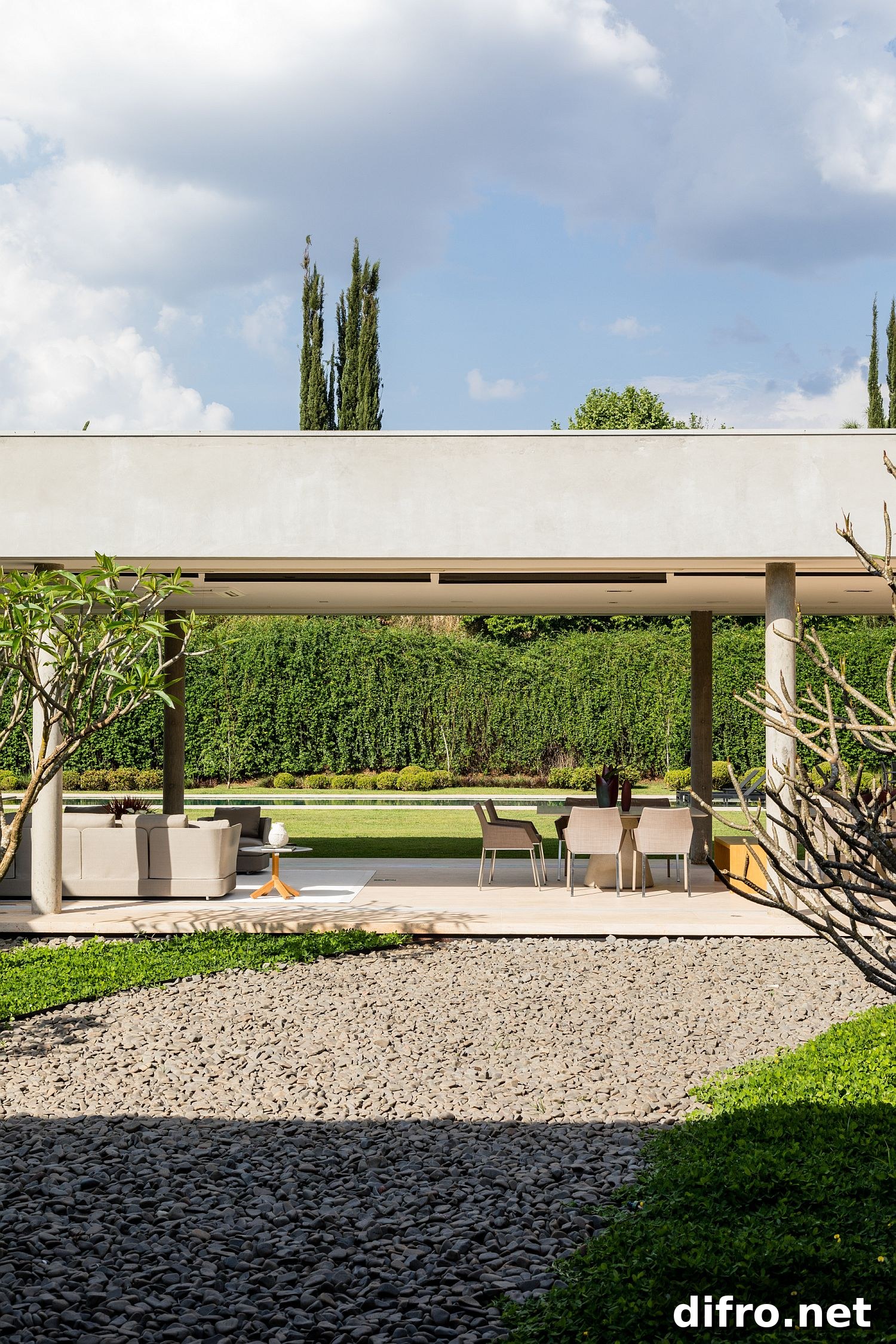
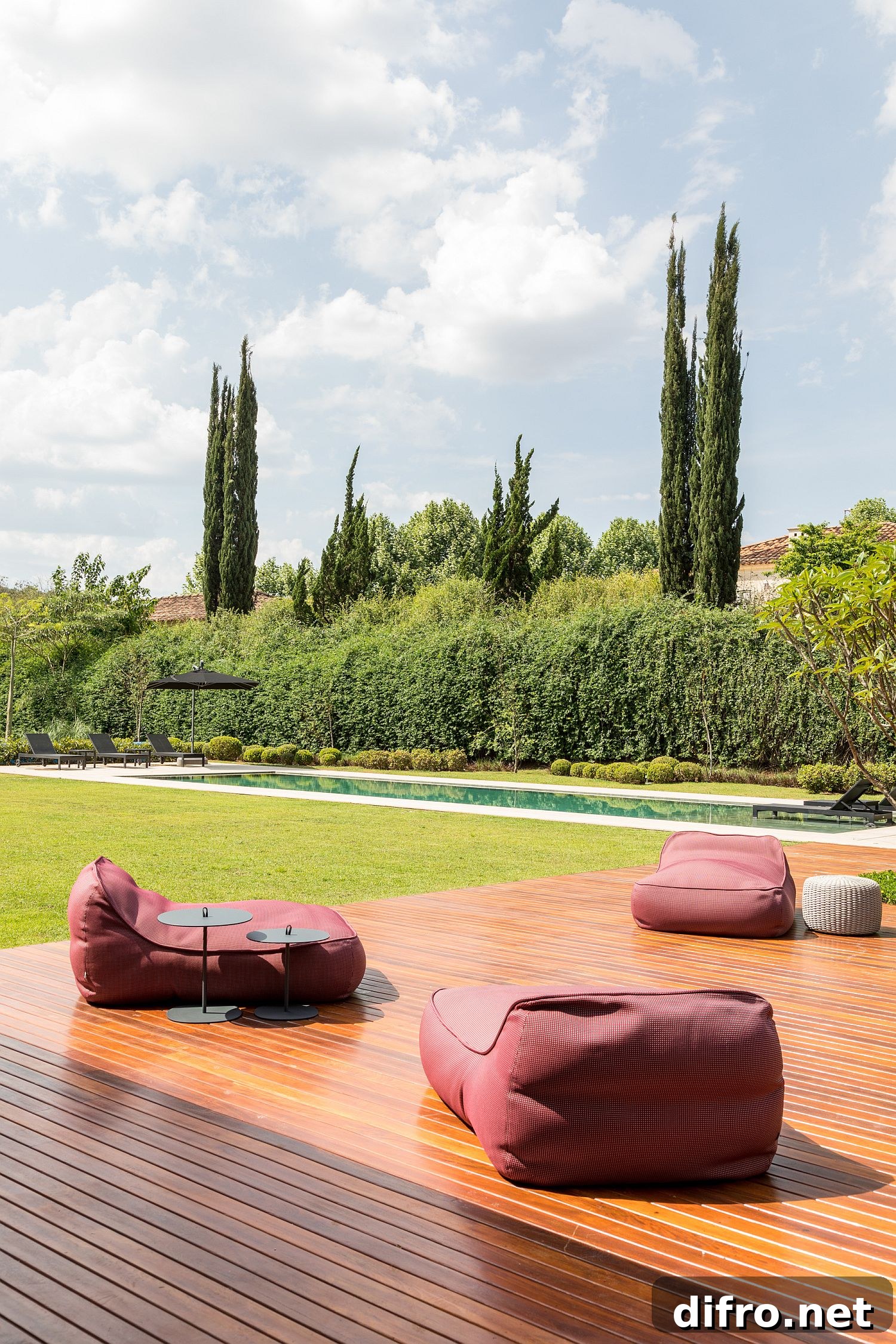
The project demonstrates a careful attention to how spaces are experienced rather than to decorative layering. An outdoor pavilion and wooden deck beside the pool extend daily life outdoors, allowing dining, play and relaxation to flow between open air and sheltered interior zones. The poolside deck—built from warm timber—becomes a natural companion to the house’s concrete volumes, offering a place for sun, shade and social gatherings. Within the home, concrete box-like volumes organize circulation and define program while allowing openings and voids that invite light deep into the plan.
The design intent emphasized hospitality without sacrificing the cozy atmosphere that mattered to the residents. The living room operates as the protagonist and the main connector between rooms—an adaptable core where family life unfolds. Interior designer João Armentano worked on the interiors, bringing an approach that harmonizes the architecture with furnishings and finishes to enhance comfort and livability. The result is a house that reads as deliberately minimal yet warm, where each material and spatial decision contributes to a calm, functional home environment.
“The house is prepared to receive people without losing the coziness that was very important to the residents. The living room, in this way, is the protagonist and the connecting element among the rooms. João Armentano was in charge of the interior design project and, with a lot of ability, harmonized architecture with the inside of the residence, providing comfort and coziness.”
Wooden shutters and sliding screens are a recurring device throughout the home, opening up to reveal framed views of the garden, patio and pool or closing to protect privacy and control light. These adjustable elements allow the family to fine-tune the balance between openness and enclosure according to weather, season or activity. The concrete massing, careful landscaping and restrained palette together create a home that is both modern in its architectural expression and very much attuned to daily family life.
Overall, the Tunnel House is a study in restrained materiality and flexible living. It demonstrates how strong, monolithic materials such as concrete can coexist with warm, human-scaled details like wood shutters, thoughtful landscaping and flexible interior planning. The result is a modern family home that feels both architecturally rigorous and intimately livable—quiet in its aesthetic but generous in its relationship to light, landscape and daily life.