MARTaK: Passive, Energy-Efficient Cabin in the Colorado Rocky Mountains
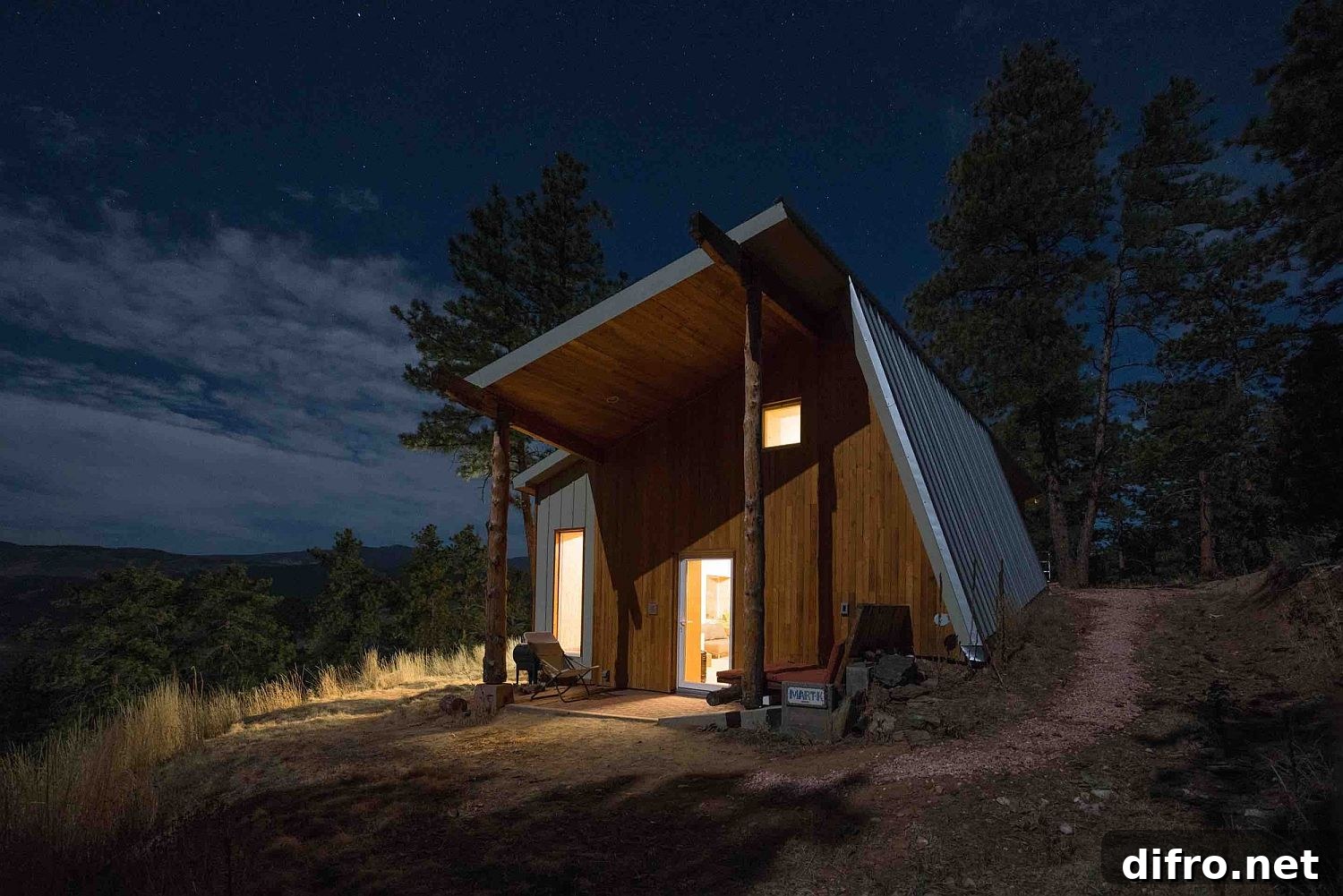
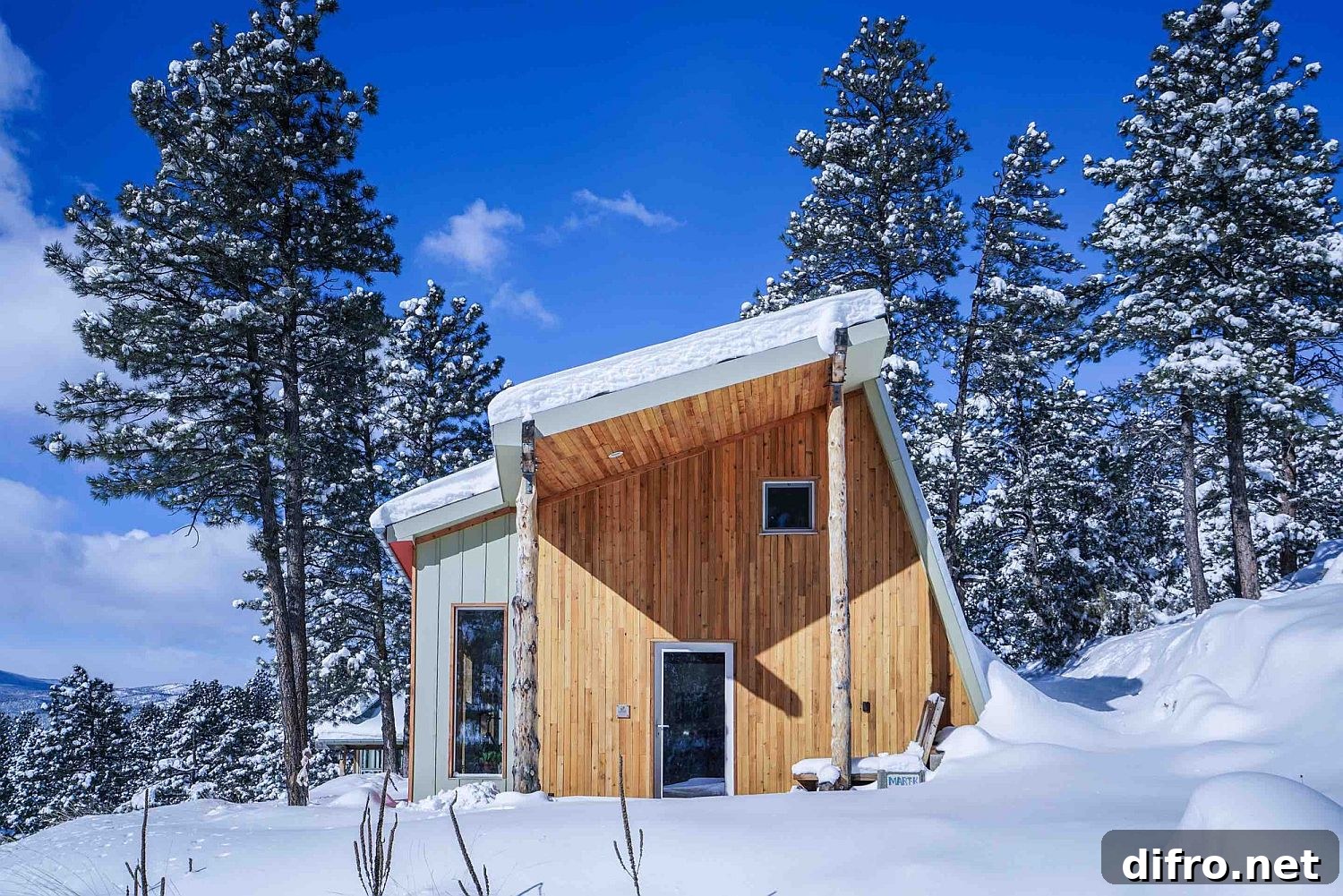
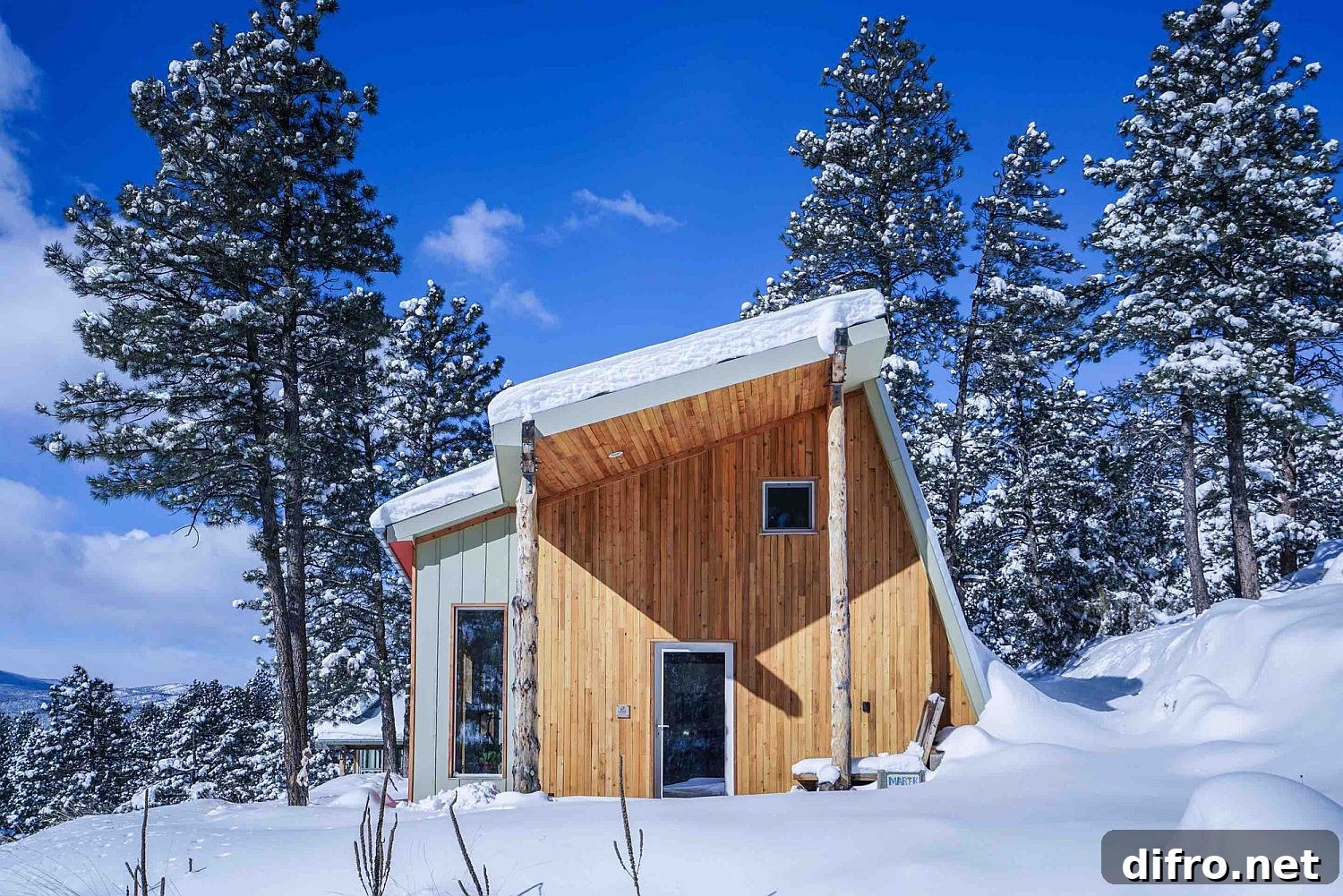
Going green is as much about thoughtful design as it is about modern technology that reduces energy consumption and the carbon footprint. Dubbed the first international passive house in the Colorado Rocky Mountains, MARTaK demonstrates careful use of energy-conserving materials, top-tier insulation and a restrained material palette. The cabin-like home, sited at roughly 6,800 feet above sea level, takes its simple form and quiet elegance from Japanese architectural principles. With a compact floor plan, generous natural light and a seamless relationship between public and private spaces, this eco-friendly residence by Baosol captures warmth and clarity while prioritizing performance and sustainability.
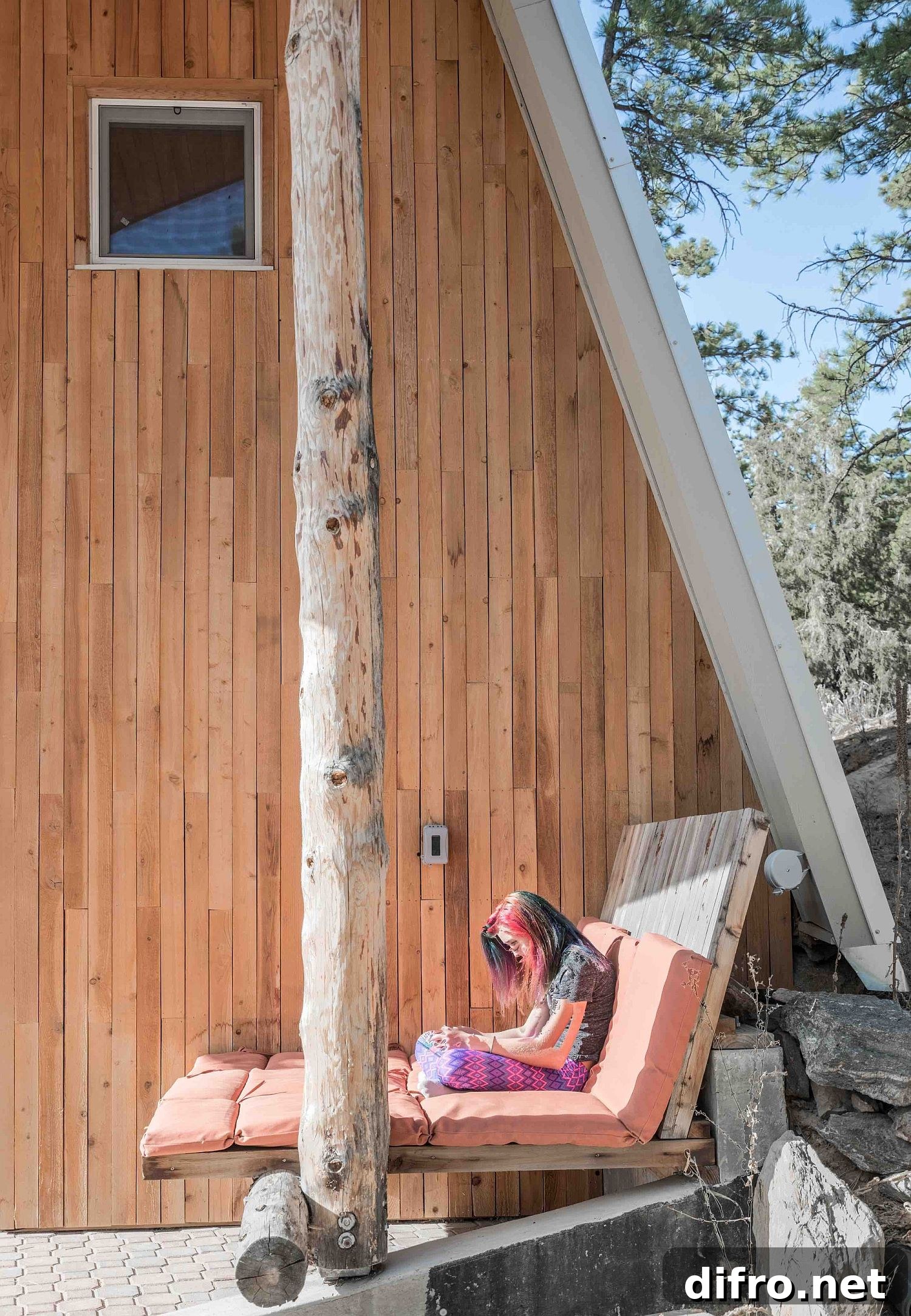
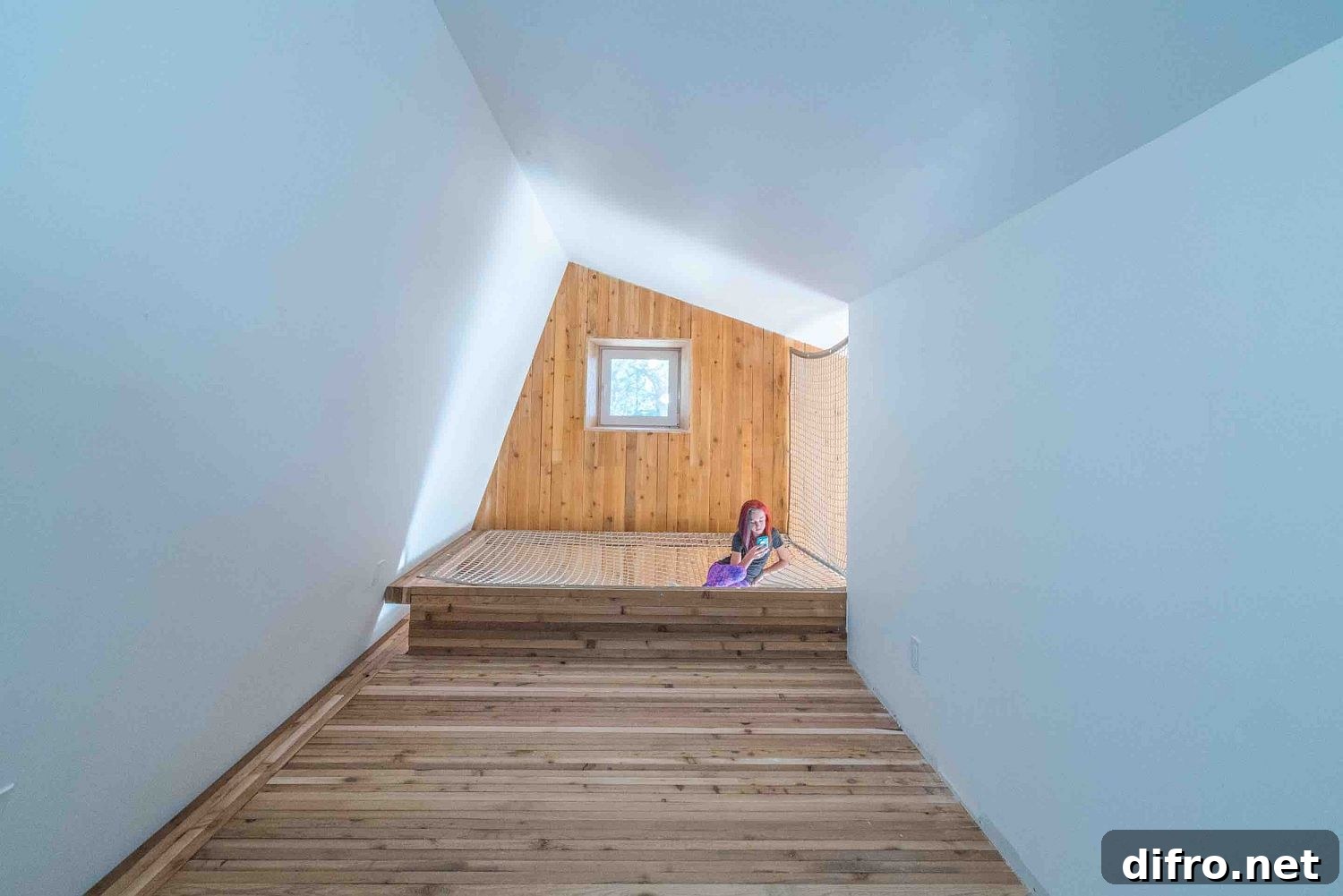
The interior emphasizes efficiency, light and purposeful simplicity. At the top level, a suspended net bed functions both as a playful lounge and as a light well that helps bring daylight and ventilation down to the living areas below. This inventive use of vertical space reinforces the home’s airy feeling without expanding the footprint, while also creating an intimate, layered interior experience.
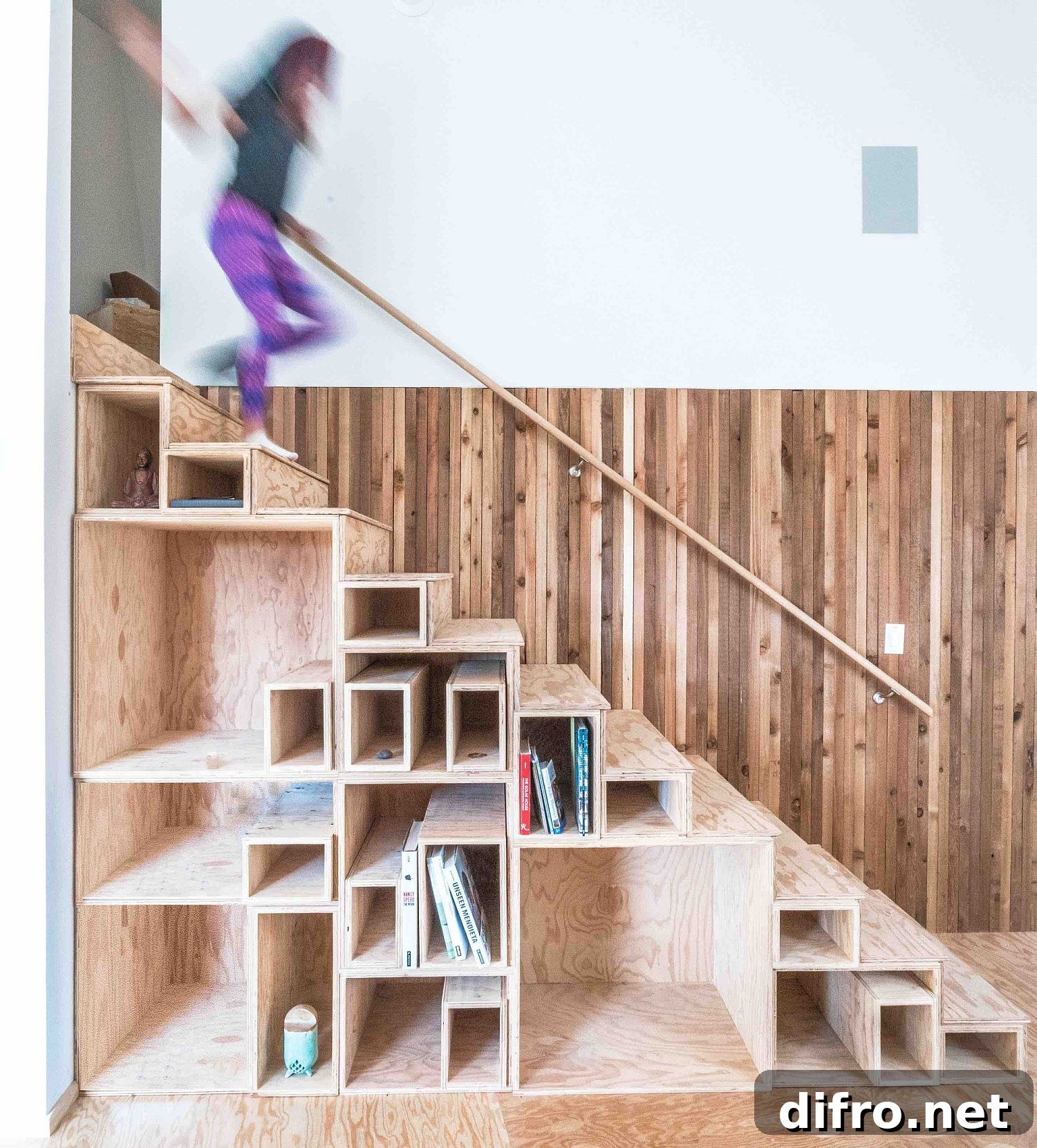
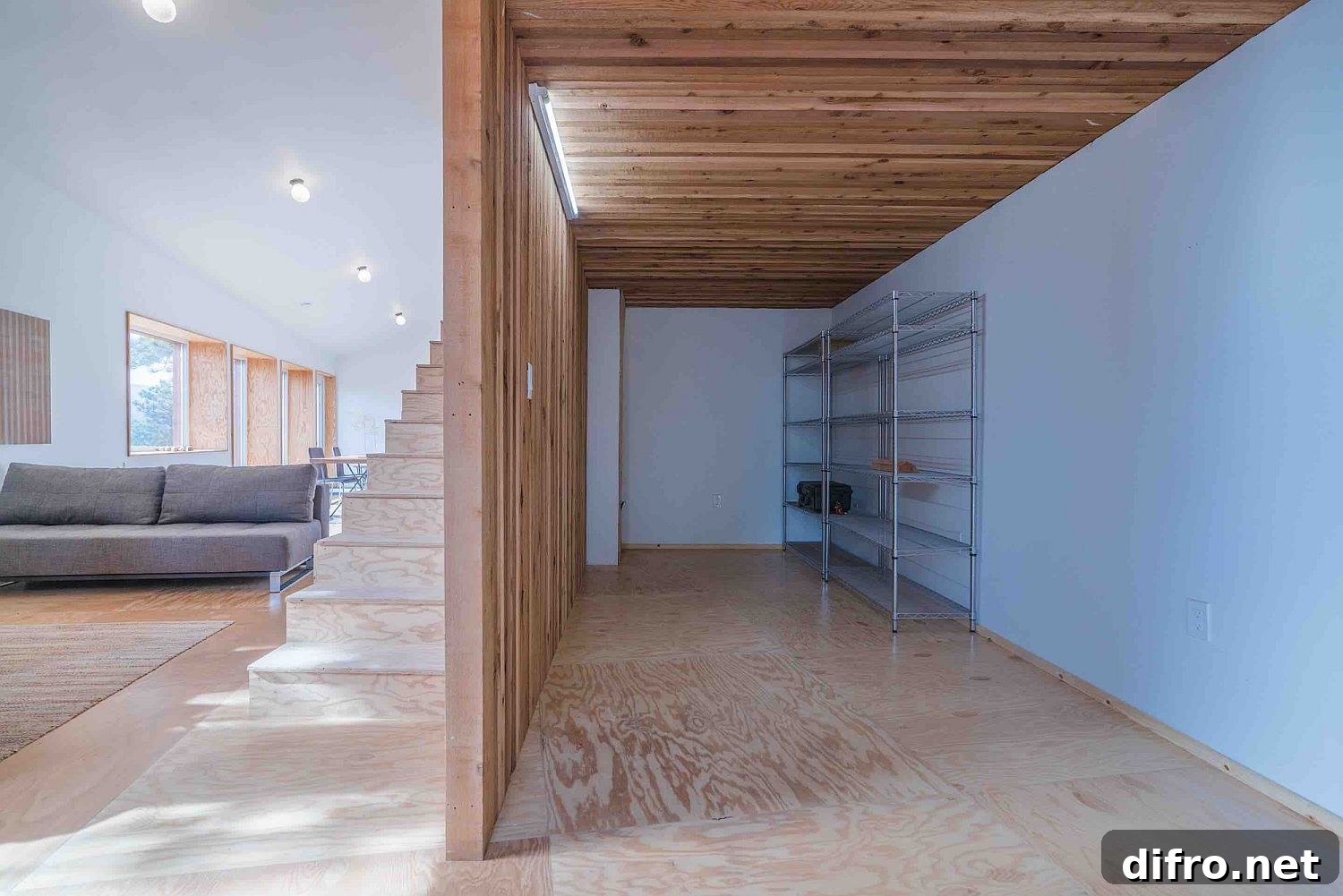
Storage and structure are integrated into the architecture. A staircase composed of plywood box treads doubles as shelving and display, saving space and avoiding clutter. The clean lines, the intentional absence of excess ornament, and the limited material choices all contribute to low embodied energy and simple maintenance. Interior finishes focus on FSC-certified plywood, cedar and plasterboard in a neutral palette that balances warmth with restraint — a hallmark of minimalist mountain design.
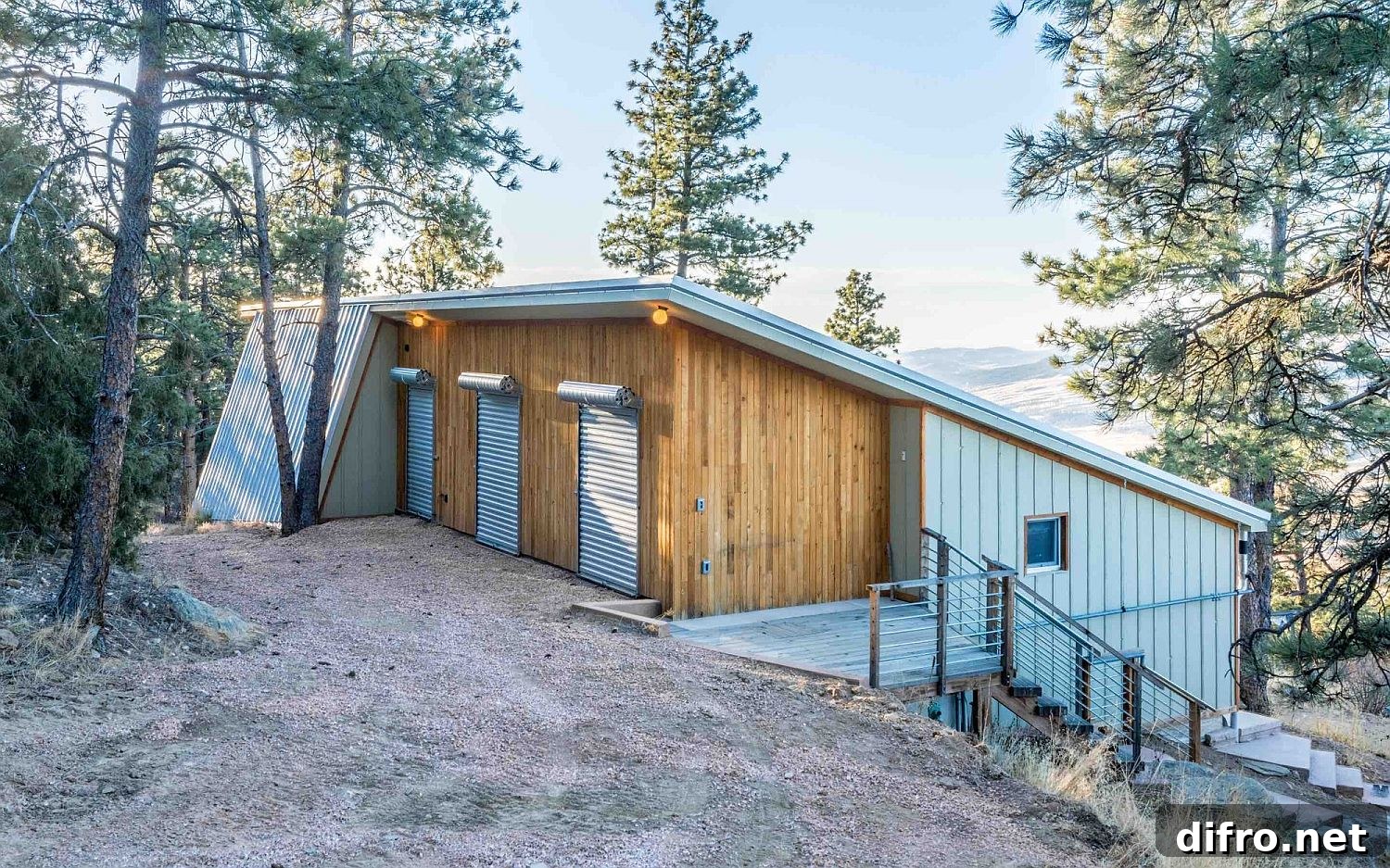
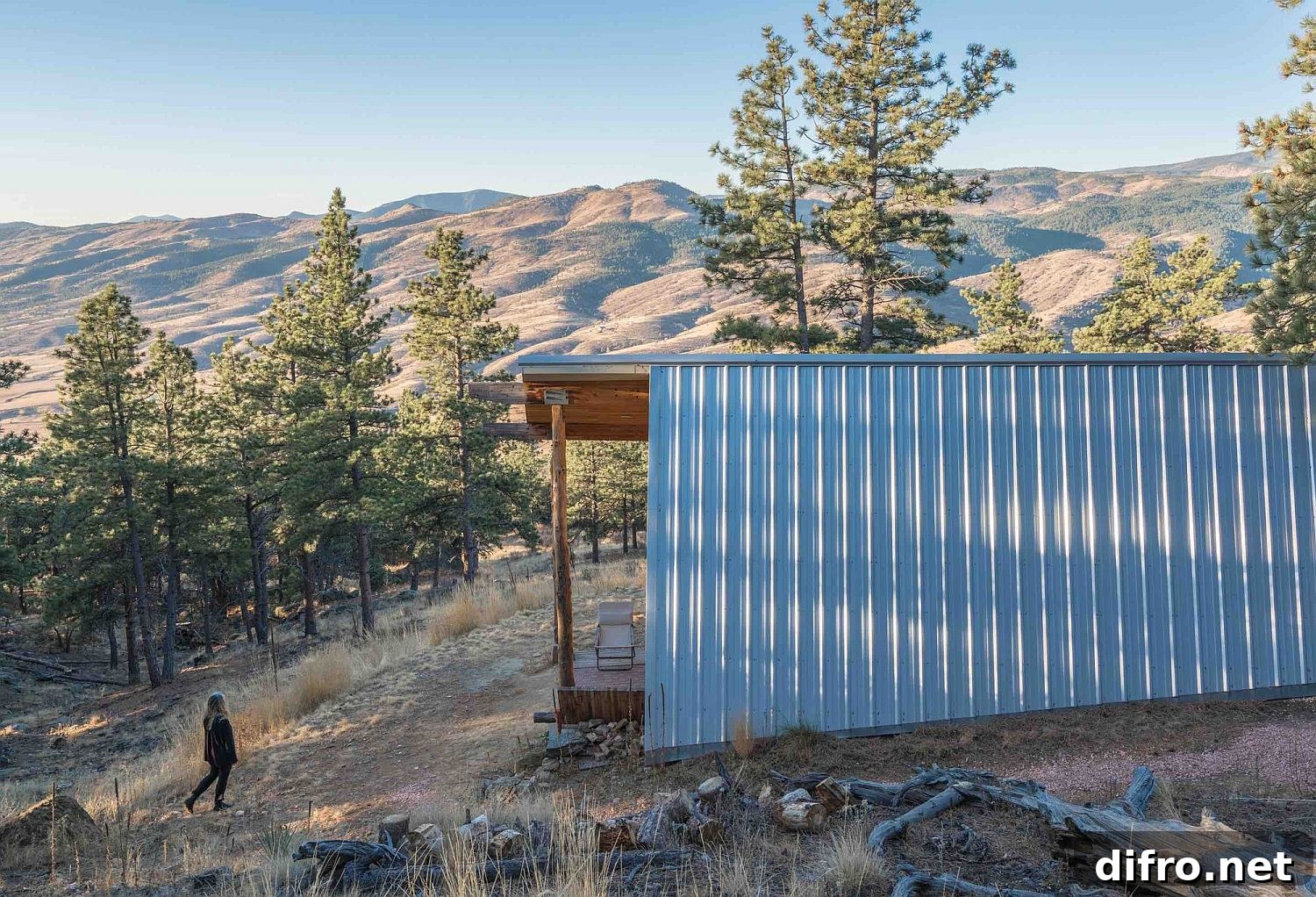
Performance is integral to every decision. The project employs high-performance insulation and careful thermal detailing to minimize heat loss in a demanding mountain climate. A metallic outer sheet contributes to the overall thermal envelope while the compact shape reduces exposed surface area. Mechanical systems are equally considered: a heat recovery ventilator filters and renews indoor air efficiently, maintaining comfort without sacrificing airtightness. Photovoltaic panels further reduce dependence on grid energy, allowing for a lifestyle that can be largely off-grid when desired.
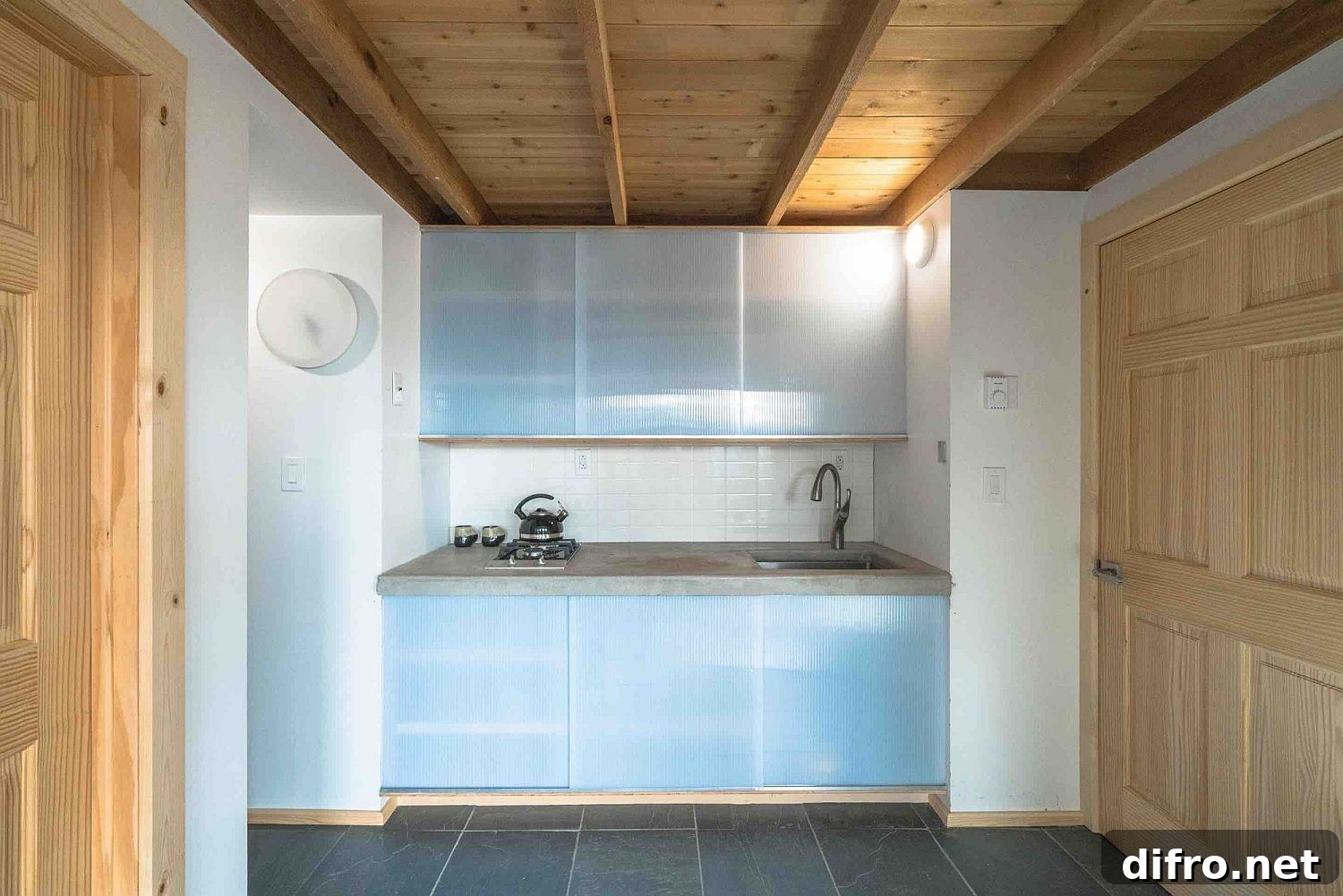
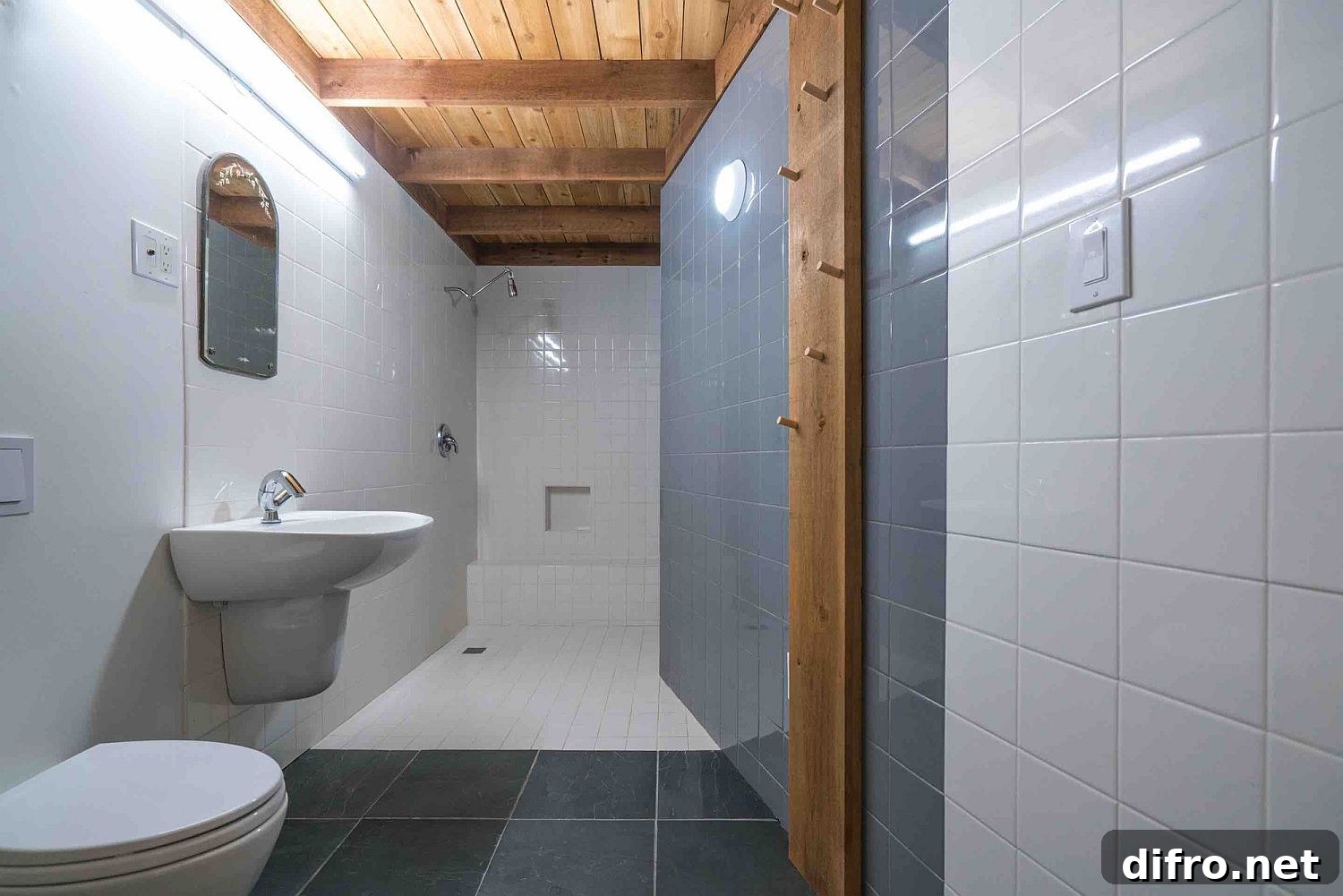
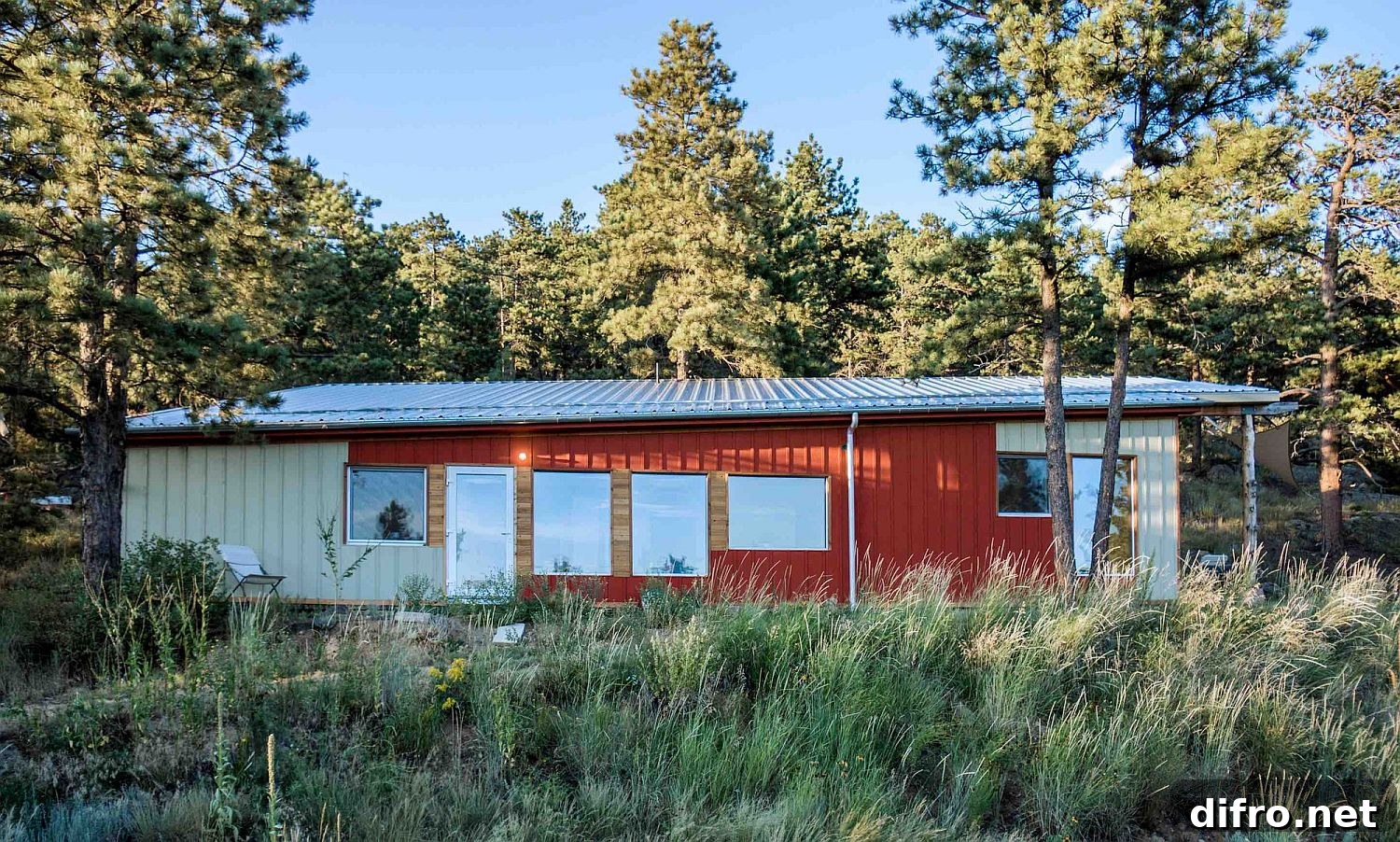
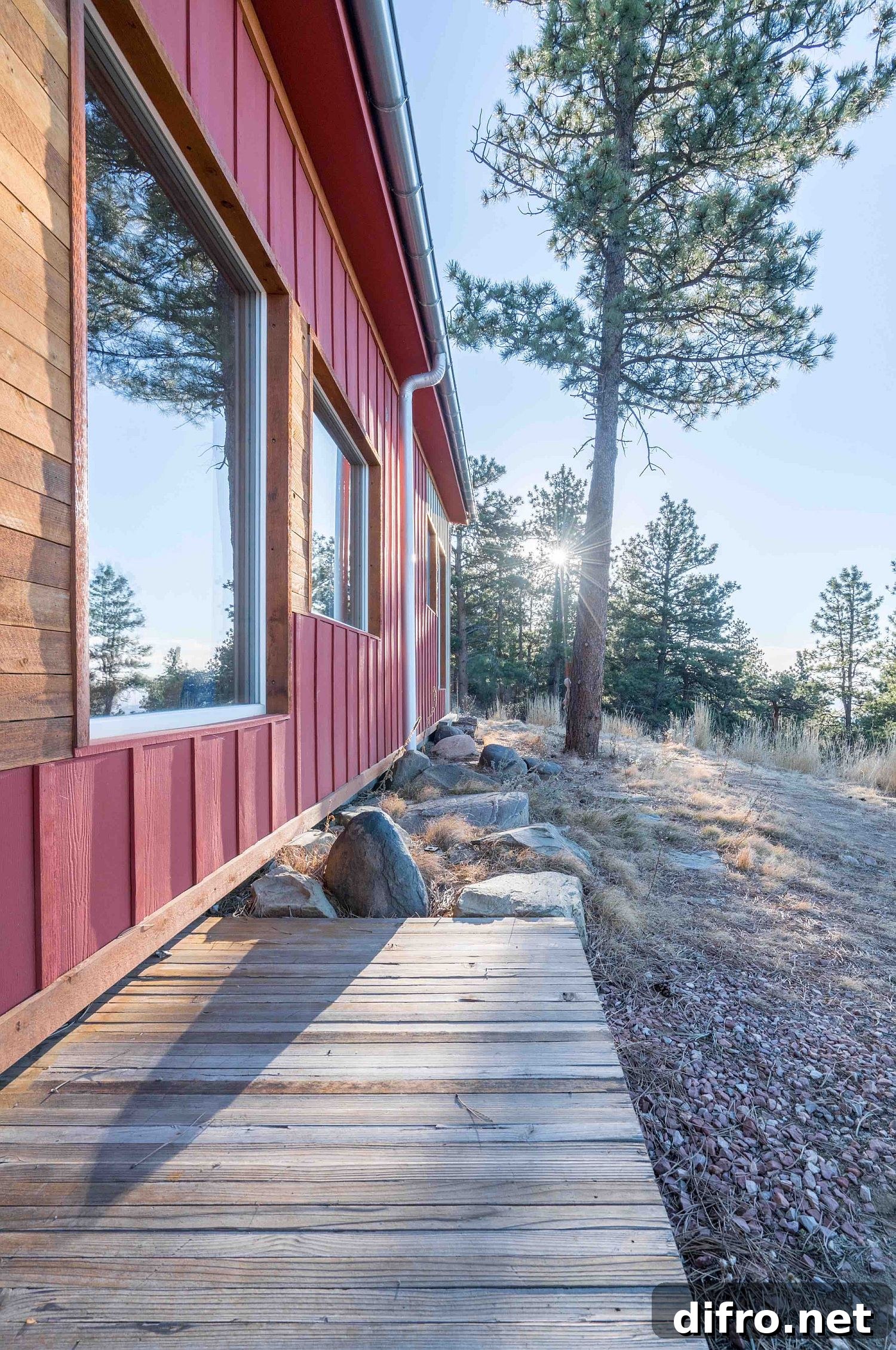
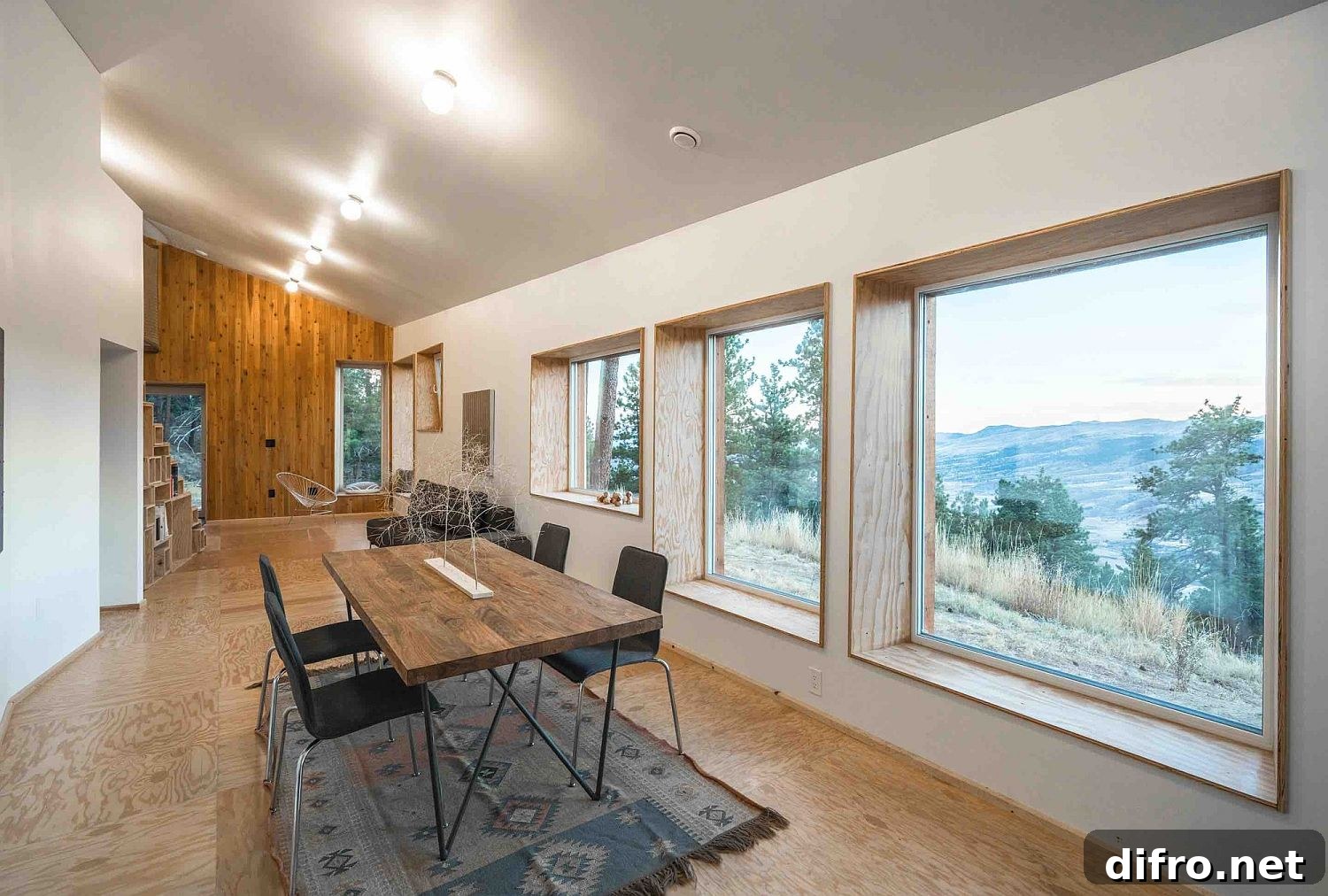
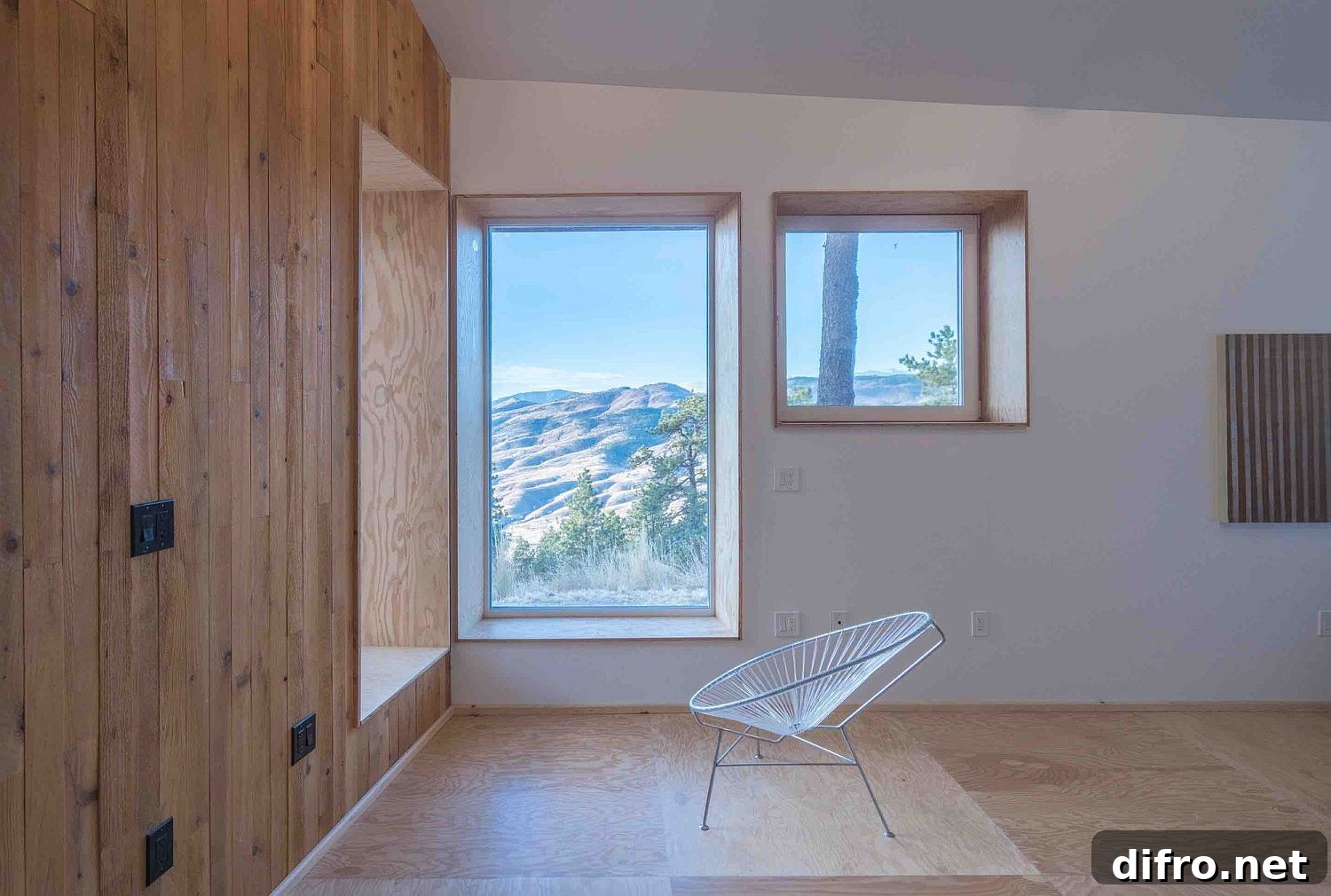
The kitchen and bathroom areas remain small but carefully considered, using frosted glass and simple cabinetry to keep the aesthetic calm and functional. Large windows and openings frame expansive mountain views, connecting the interior to the landscape and allowing occupants to enjoy daylight and seasonal shifts. The overall composition — from the red and wood exterior to modest, refined interiors — creates a cabin feel that is at once contemporary and rooted in tradition.
This project demonstrates how passive-house principles — airtight construction, superior insulation, controlled ventilation and efficient use of solar gains — can be combined with restrained, human-centered design. The result is a quiet, energy-efficient retreat that respects the mountain setting while delivering comfortable, healthy interiors. It’s a reminder that sustainable architecture can be both elegant and practical, offering low operational energy use without sacrificing comfort or the pleasures of a well-made home.
A heat recovery ventilator keeps indoor air fresh while photovoltaics lower dependence on conventional energy sources. Thoughtful materials, compact organization and careful detailing make MARTaK a model of eco-friendly mountain living — a retreat that is gentle on the planet and pleasing to the senses. [Photography: Andrew Michler]
Related projects mentioned: Solar panels and eco-sensitive design creating a smart home in the Sonoran Desert; contemporary mobile eco-friendly dwelling in the New Forest.