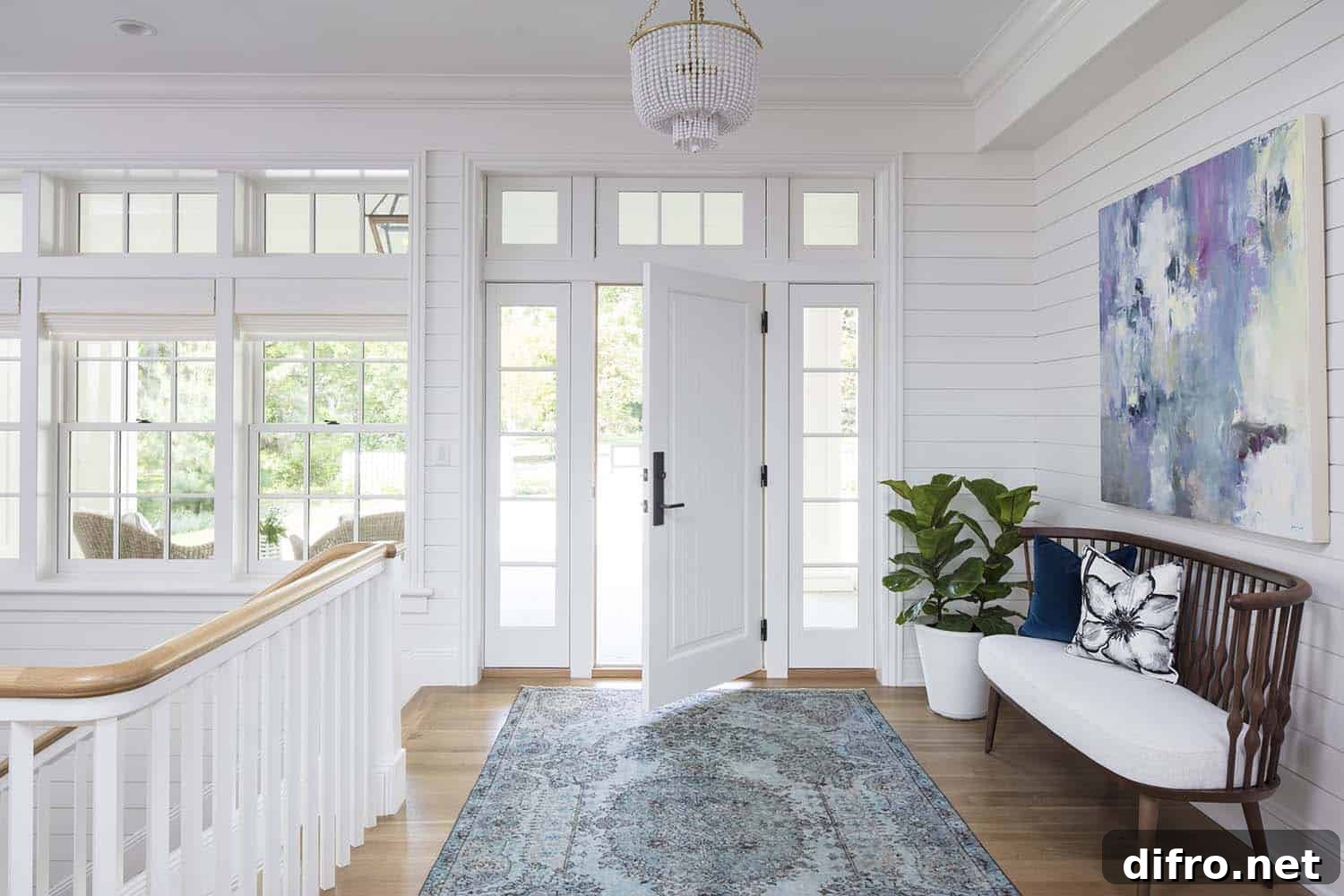
There are many choices when it comes to entryway decorations, but no matter your home’s style, the right entryway rug makes the biggest impact. A well-chosen rug warms up a chilly, tiled foyer, hides worn floors and prevents further damage from daily traffic, snow and dirt. Beyond looks, an entryway rug is first and foremost a practical investment: protect your floors, reduce cleaning, and add curb appeal at the same time.
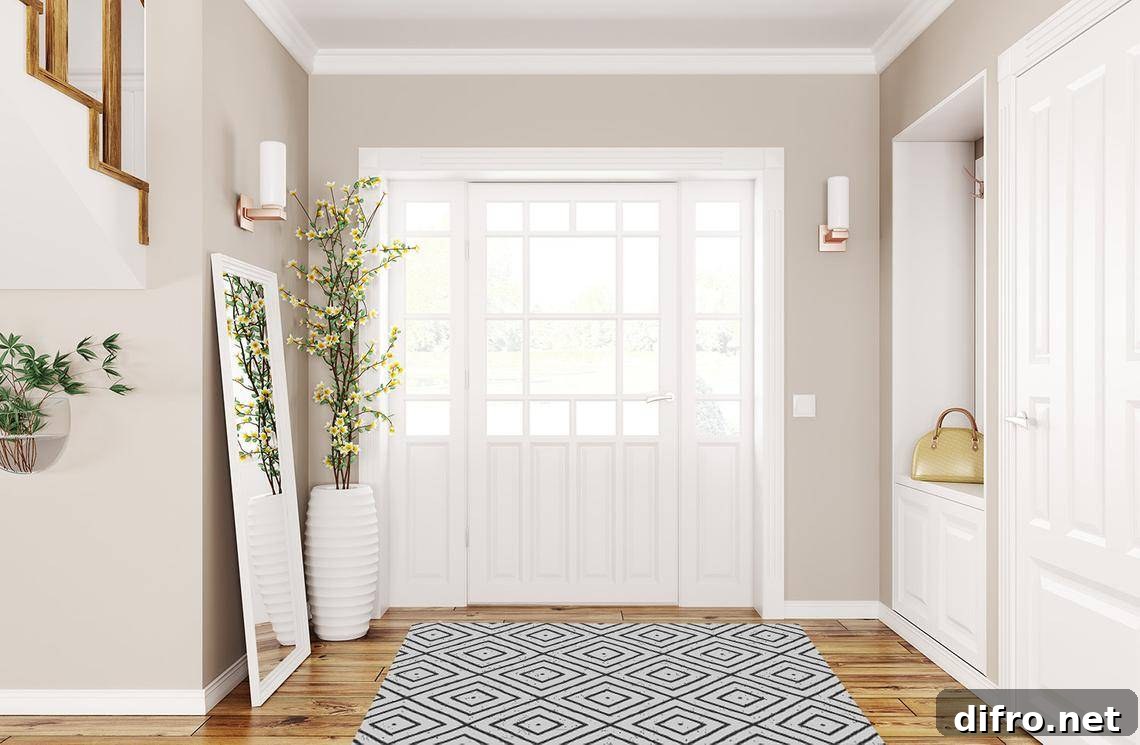
Choosing the perfect entryway rug can feel overwhelming with so many materials, shapes and patterns available. Below are 15 practical tips to help you select an entryway rug that balances style and function, and creates a welcoming first impression for guests.
15 Tips When Looking for Entryway Rugs
Define Your Space with a Plush Entryway Rug
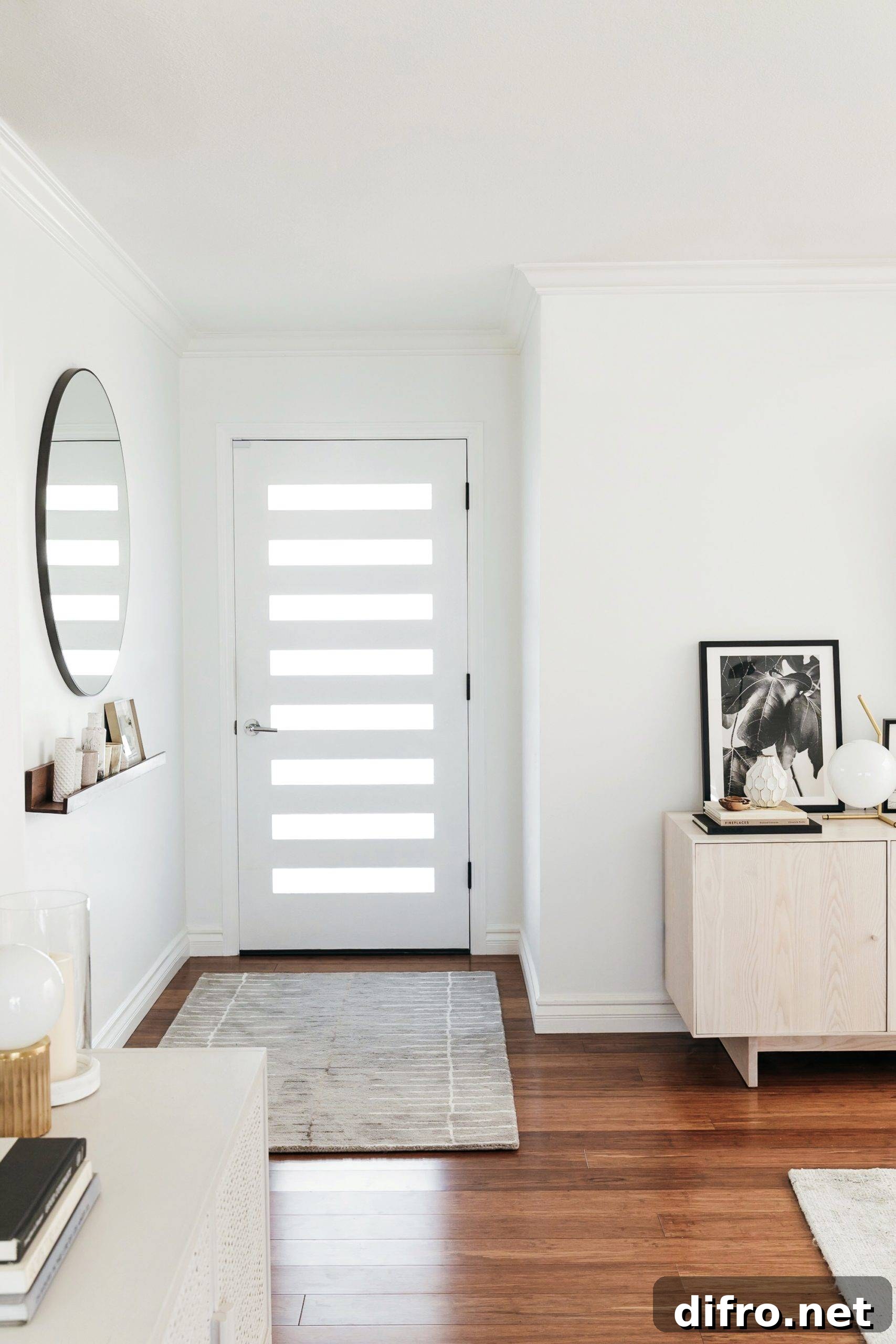
Plush, shaggy rugs instantly create a cozy foyer. Rather than carpeting the whole entry, choose a soft area rug to define the zone and add visual warmth while letting floor details show. A plush rug works particularly well in farmhouse or transitional foyers where comfort and texture are key.
Add Some Texture with Fringes
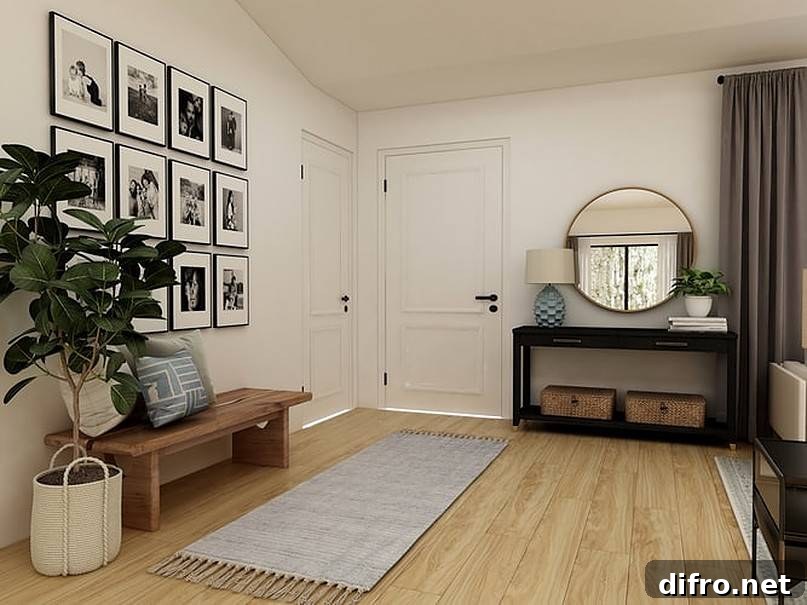
Tassel fringes and textured edges give a rug a boho or artisanal vibe and introduce extra visual interest. In busy entryways, choose rugs with shorter or fewer fringes to avoid tangling and wear. Fringes are decorative—but pick ones that withstand foot traffic.
Keep the Style in Season
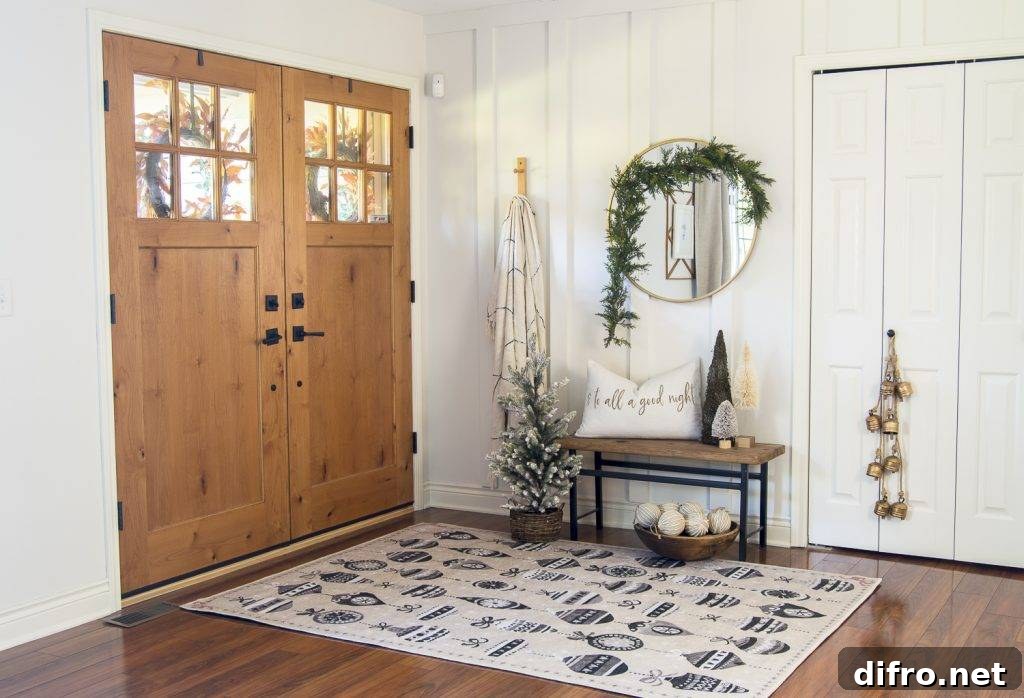
One benefit of entryway rugs is their versatility—swap them out seasonally. Choose brighter, festive colors for holidays or summer, and switch to neutral or textured pieces for colder months to refresh your foyer without a full redesign.
Pick the Right Size
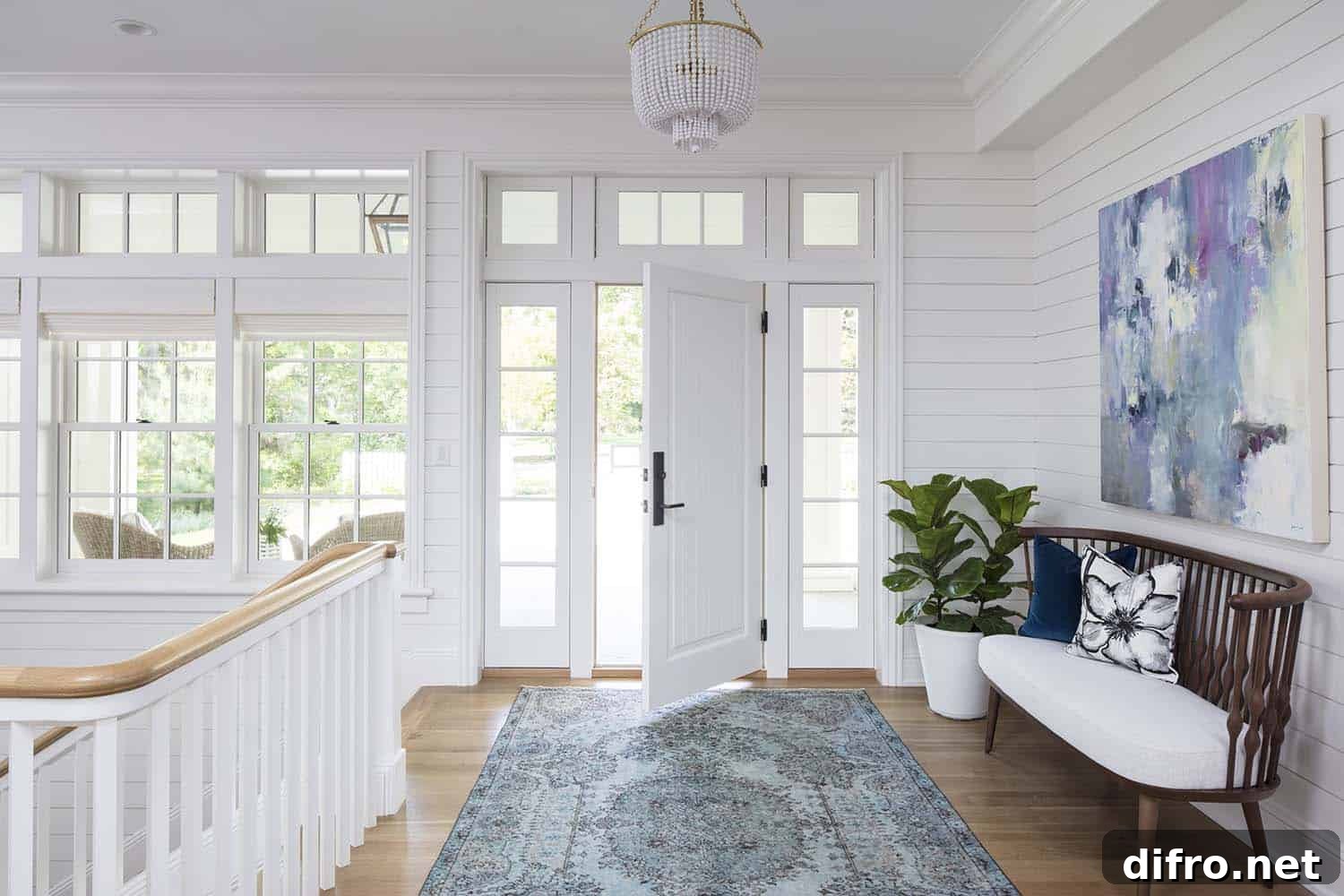
A good rule of thumb is to leave 18–24 inches of bare floor between the rug edge and the wall. This frames the space and prevents the rug from overwhelming the room. In small foyers, showing less floor can create the illusion of width, while larger entryways can accommodate bigger rugs or layered pieces.
Choose Easy-to-Clean Materials
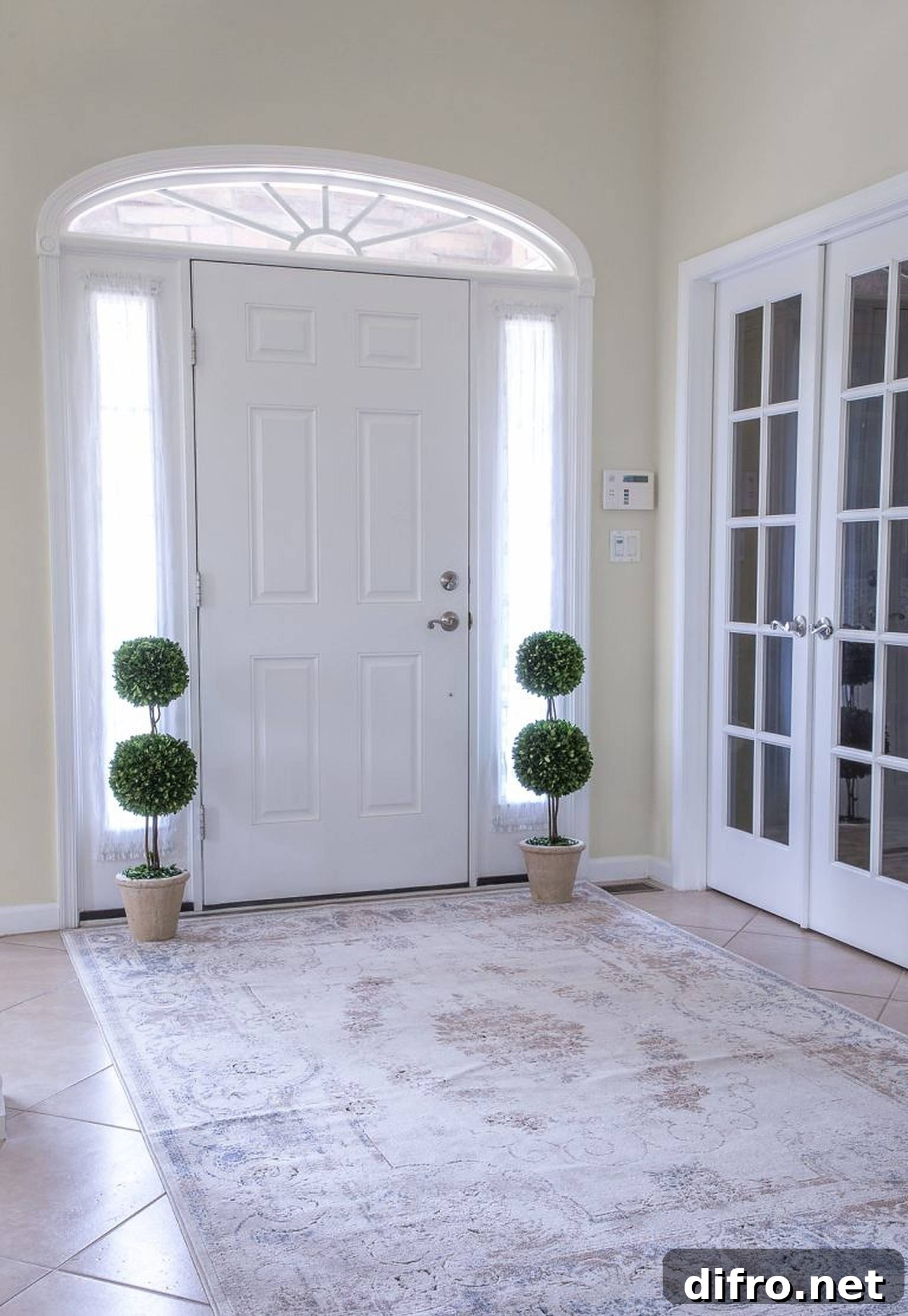
Because the foyer sees heavy traffic, pick materials that are durable and easy to clean. Synthetic fibers (polypropylene, nylon) resist stains and dry quickly and are budget-friendly. Natural fibers like jute or sisal add texture but require more care and can absorb moisture—so consider your climate and maintenance needs.
Circle Rugs for Wide Spaces
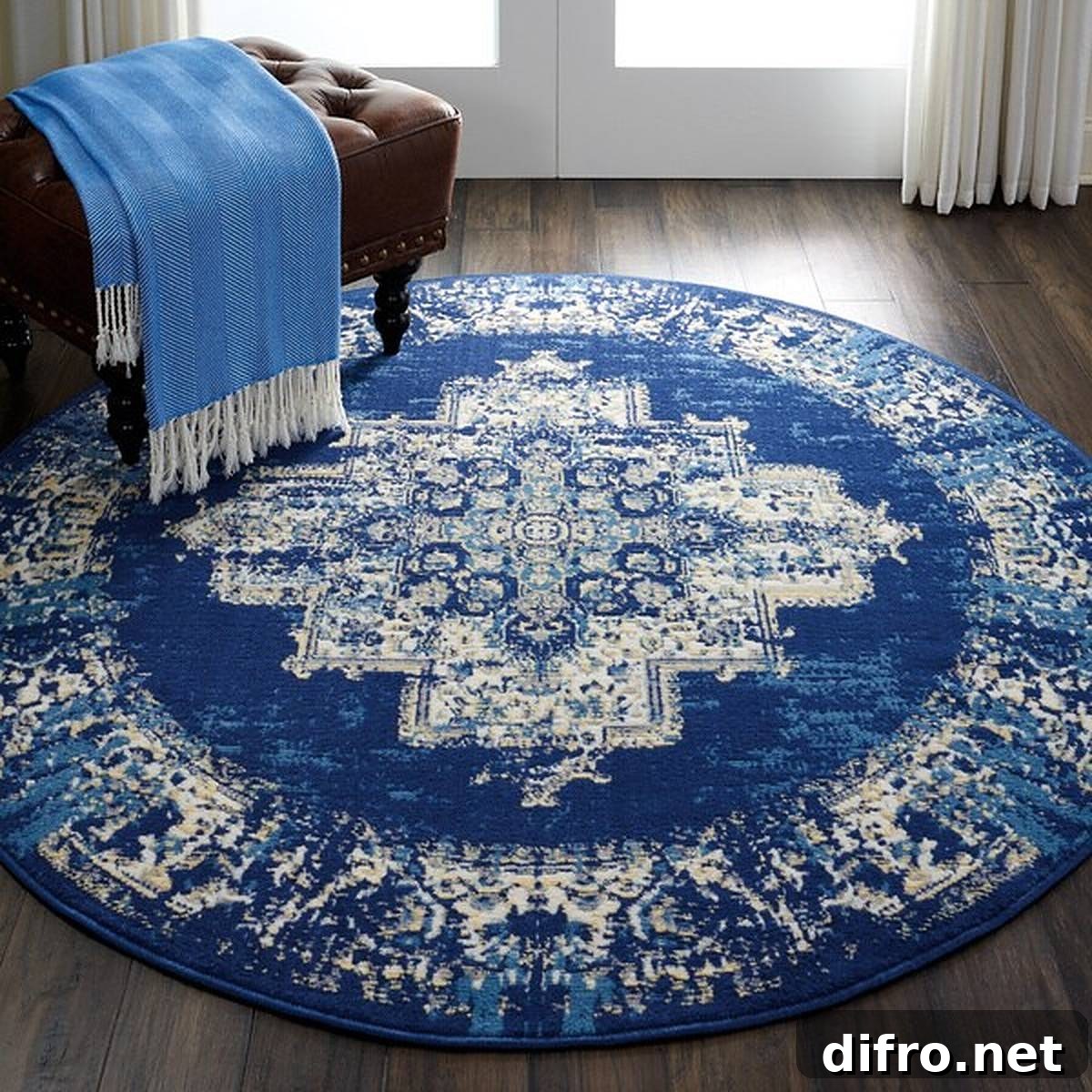
Shape matters. Rectangular rugs suit long halls, while round rugs work beautifully in wide or square foyers to create a focal point. A circular rug can soften hard lines and emphasize a central light fixture or console table.
Get a Non-Slip Rug
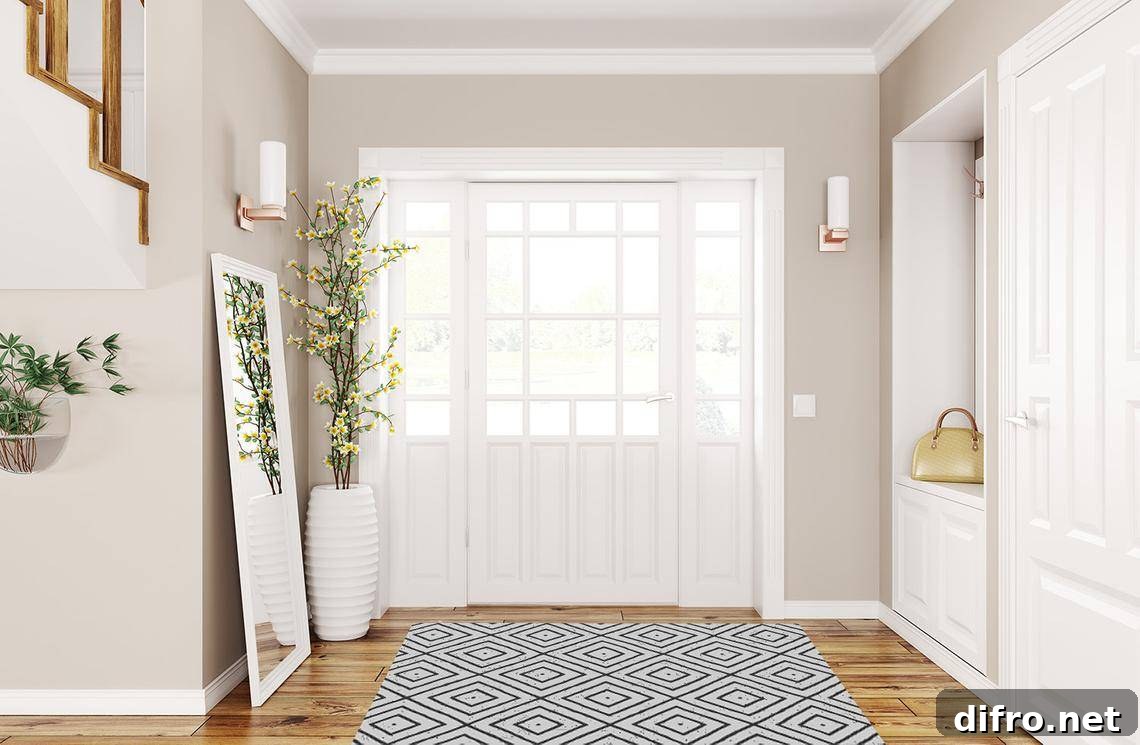
Safety matters: choose rugs with a non-slip backing or pair them with a rug pad to prevent sliding and curling. Vinyl-backed or rubberized rugs are waterproof, stain-resistant, and ideal for entryways that face wet weather.
Match Your Rug and Doormat
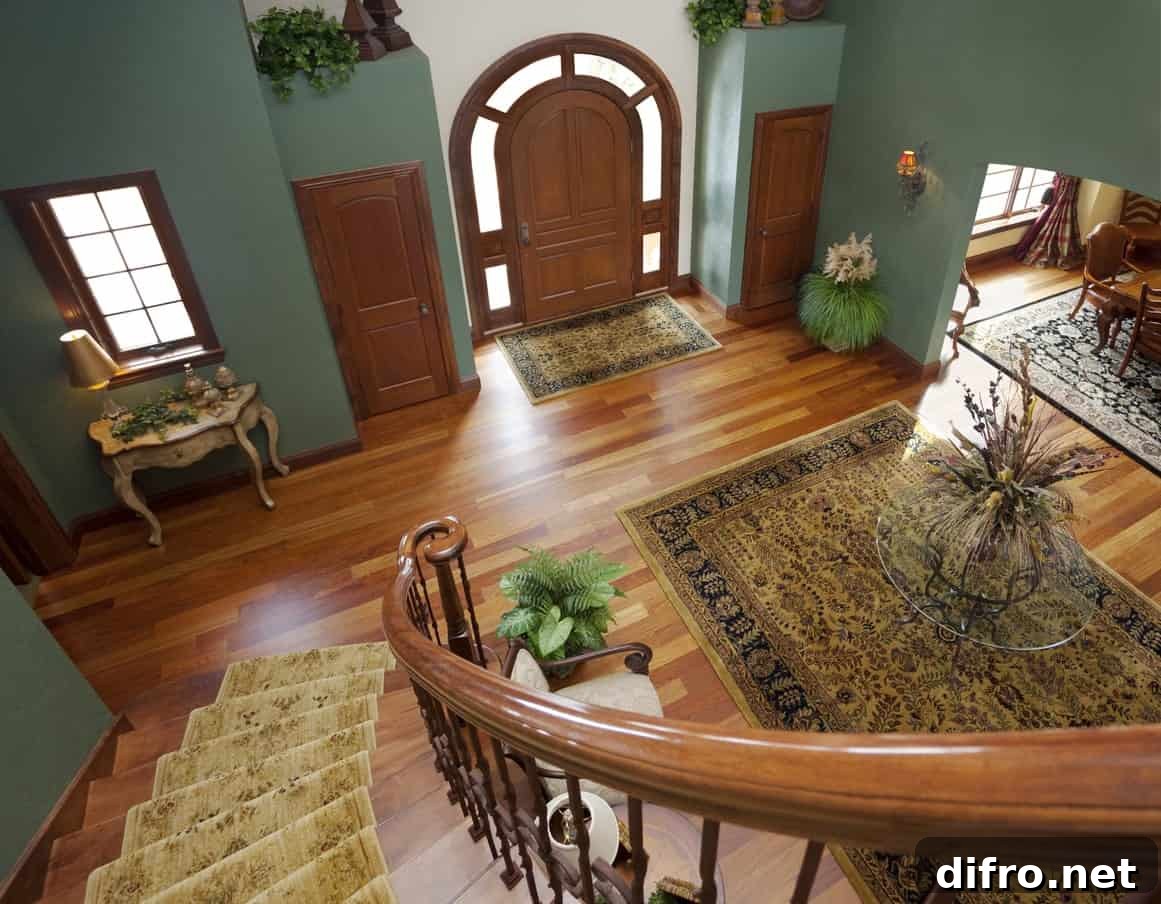
Doormats and area rugs serve different functions—mats catch dirt right at the threshold while rugs sit further inside—but coordinating patterns or colors creates a cohesive look. A matching set ties the entry together and feels more intentional.
Place a Welcoming Rug By the Door
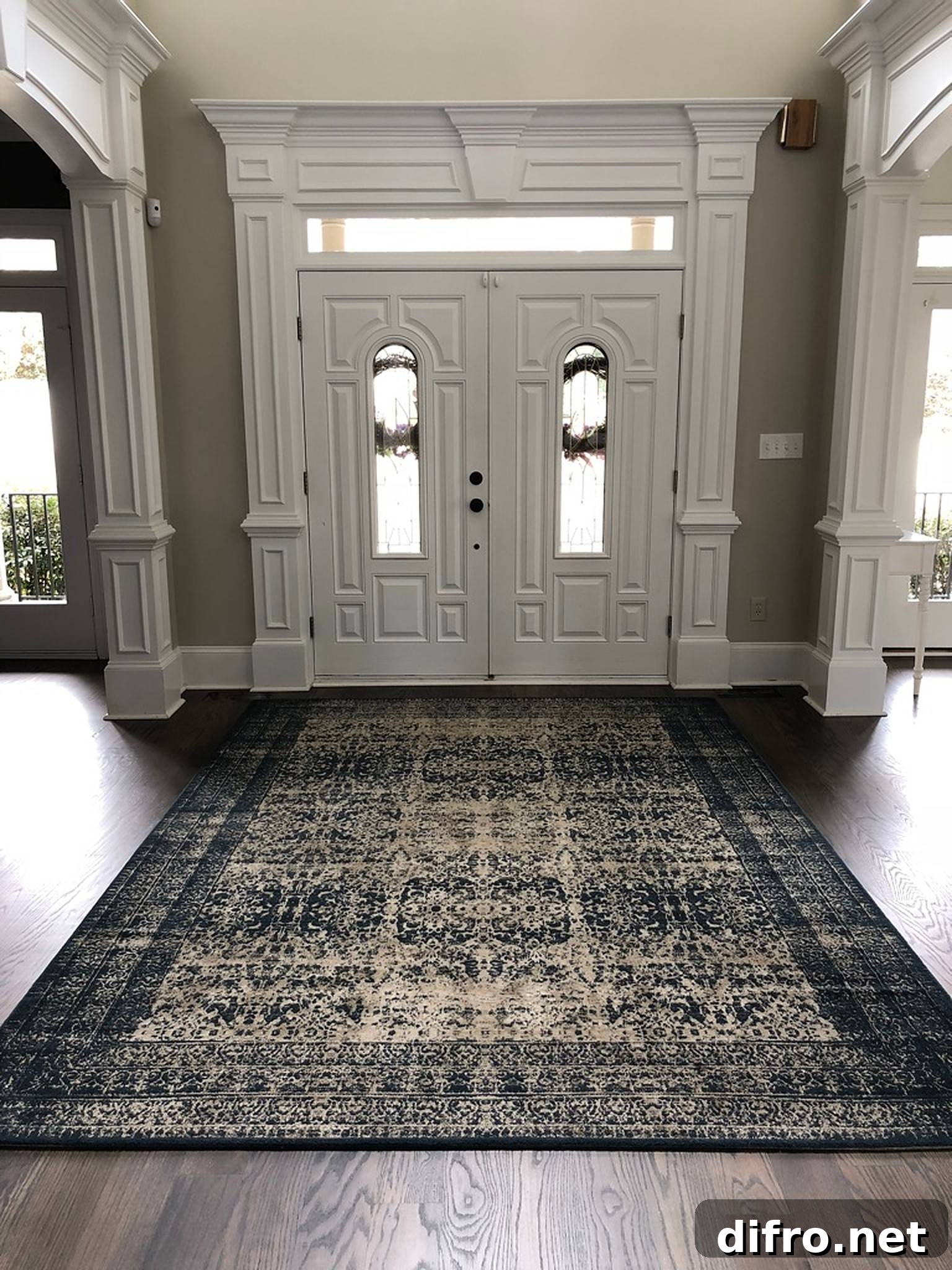
Positioning a rug immediately inside the door creates an inviting transition from outdoors to indoors. It signals hospitality and gives guests a soft landing spot while protecting flooring against grit and moisture tracked inside.
Style It with Furniture
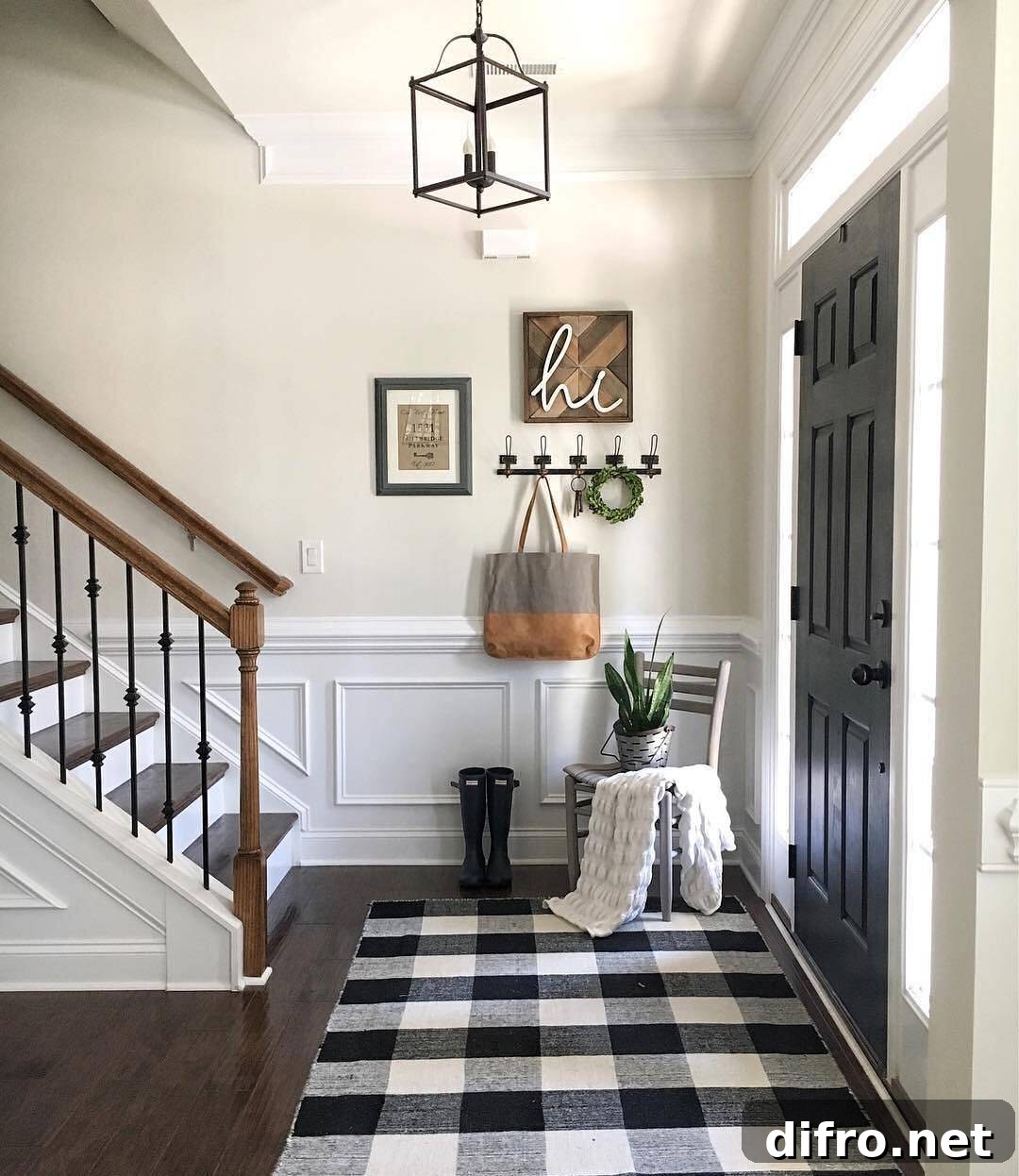
Rugs can anchor furniture in the foyer—a small bench, console table or accent chair placed partially on the rug creates a purposeful vignette. This makes the space feel lived-in and functional, especially in a modern farmhouse or eclectic entry.
Layer It Up
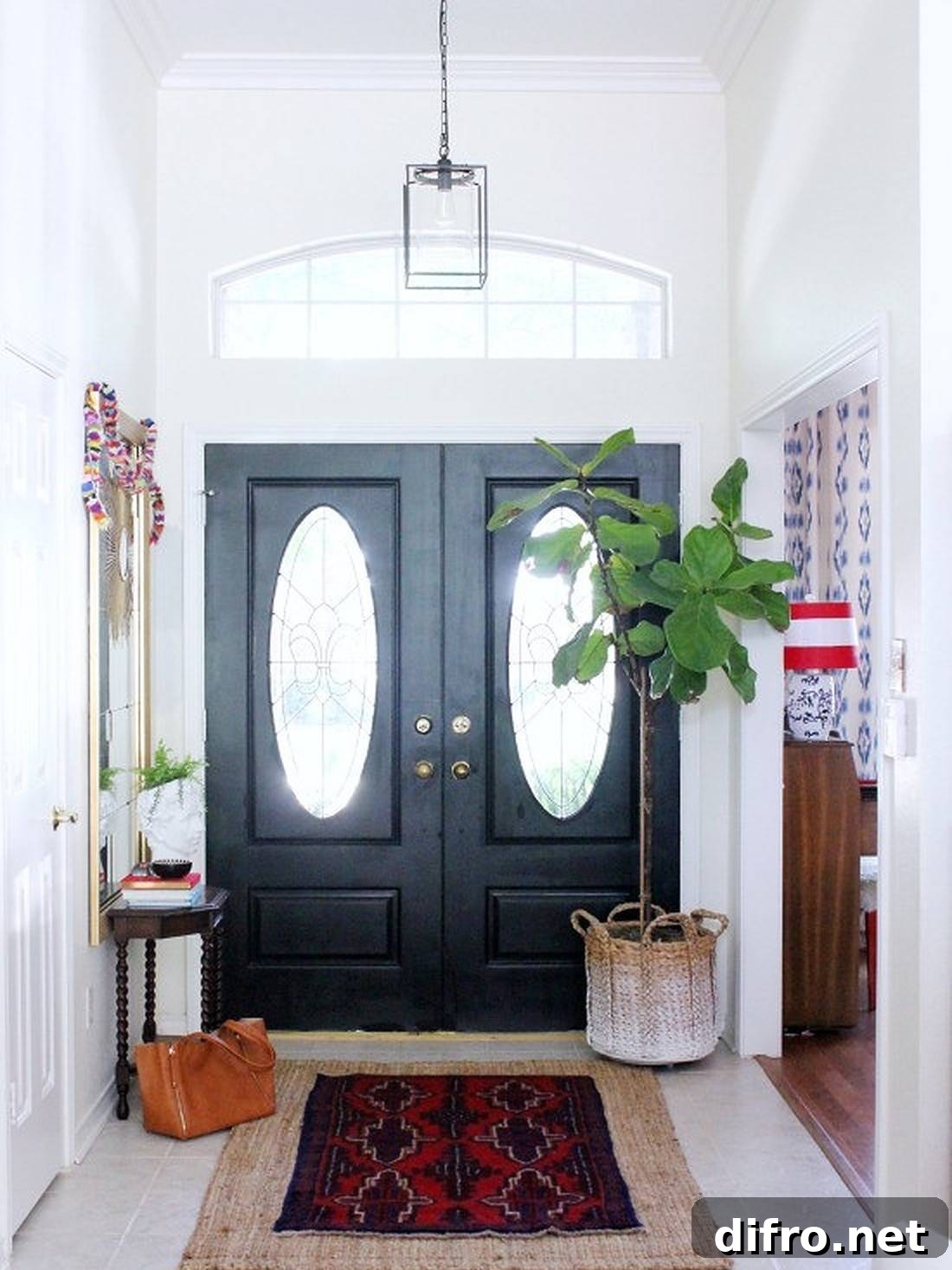
Layering a smaller patterned rug over a large neutral base rug adds depth and personality. This approach is popular in bohemian and eclectic designs and helps protect the larger rug while showcasing a focal accent piece.
Use a Jute Rug
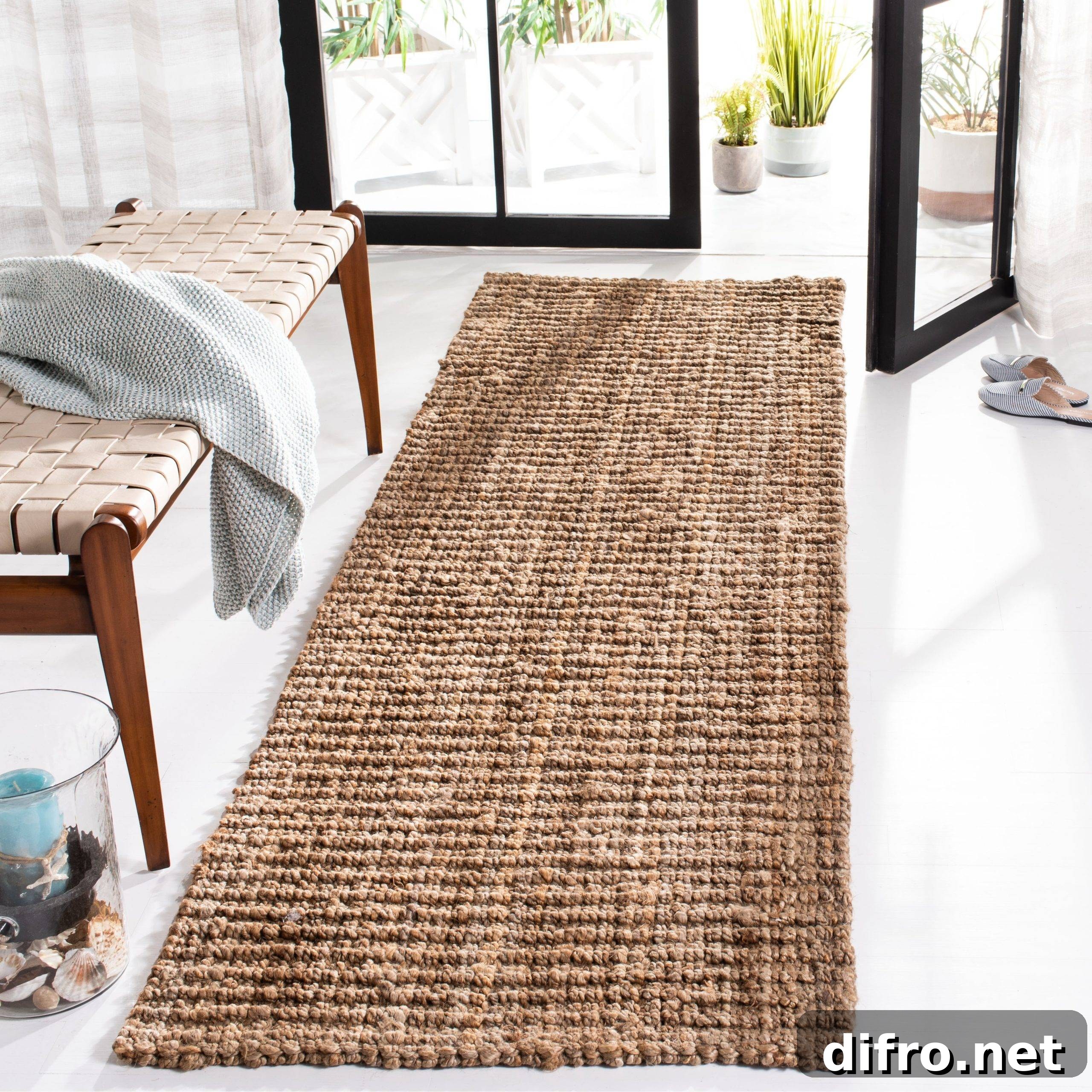
Jute and other natural-fiber rugs offer great texture and durability for dry climates. They hide dirt well and require minimal maintenance, but can absorb moisture and take longer to dry—avoid them in areas that get wet frequently.
Float a Piece of Furniture
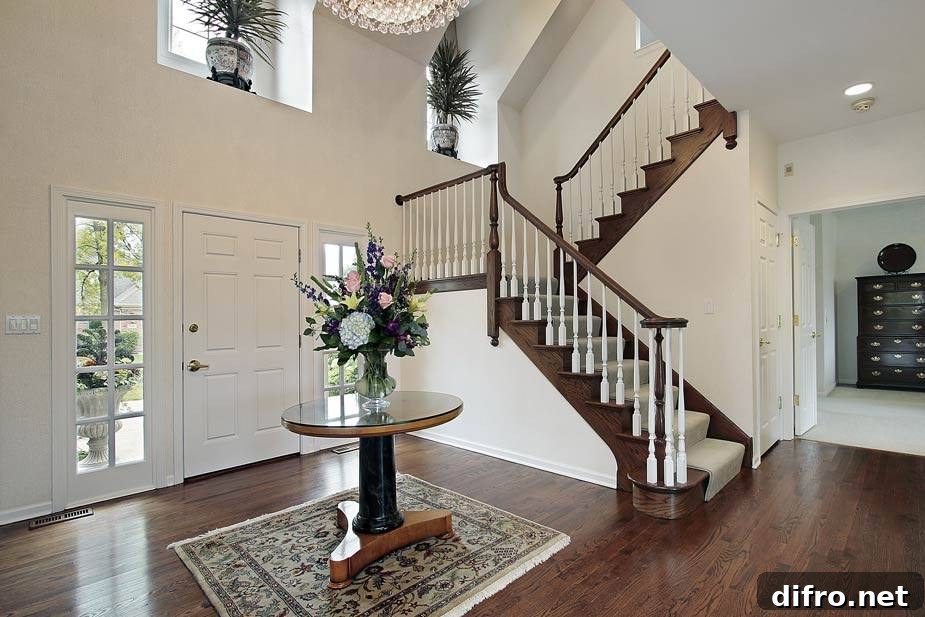
Centering a small table or decorative piece on a rug helps fill a wide foyer and creates a focal point. This “floating” technique makes the layout feel intentional and reduces visual emptiness in large entry spaces.
Add a Runner for Narrow Halls
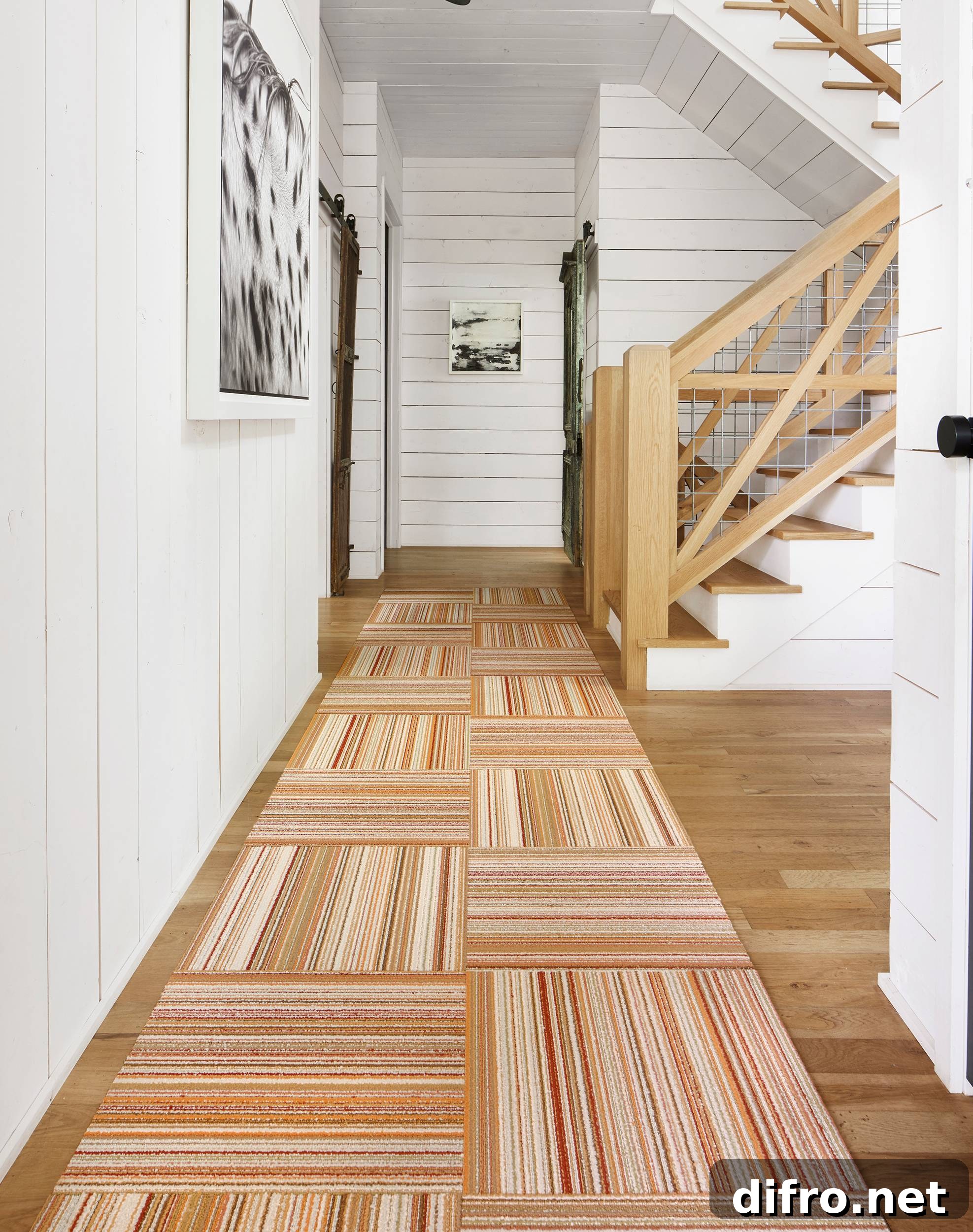
Runners are ideal for long, narrow entryways. They guide the eye through the space, protect high-traffic paths and follow the 18–24 inch rule for balanced framing. Runners are also great for open-plan homes where you want to define a transition zone.
Adore the Wool
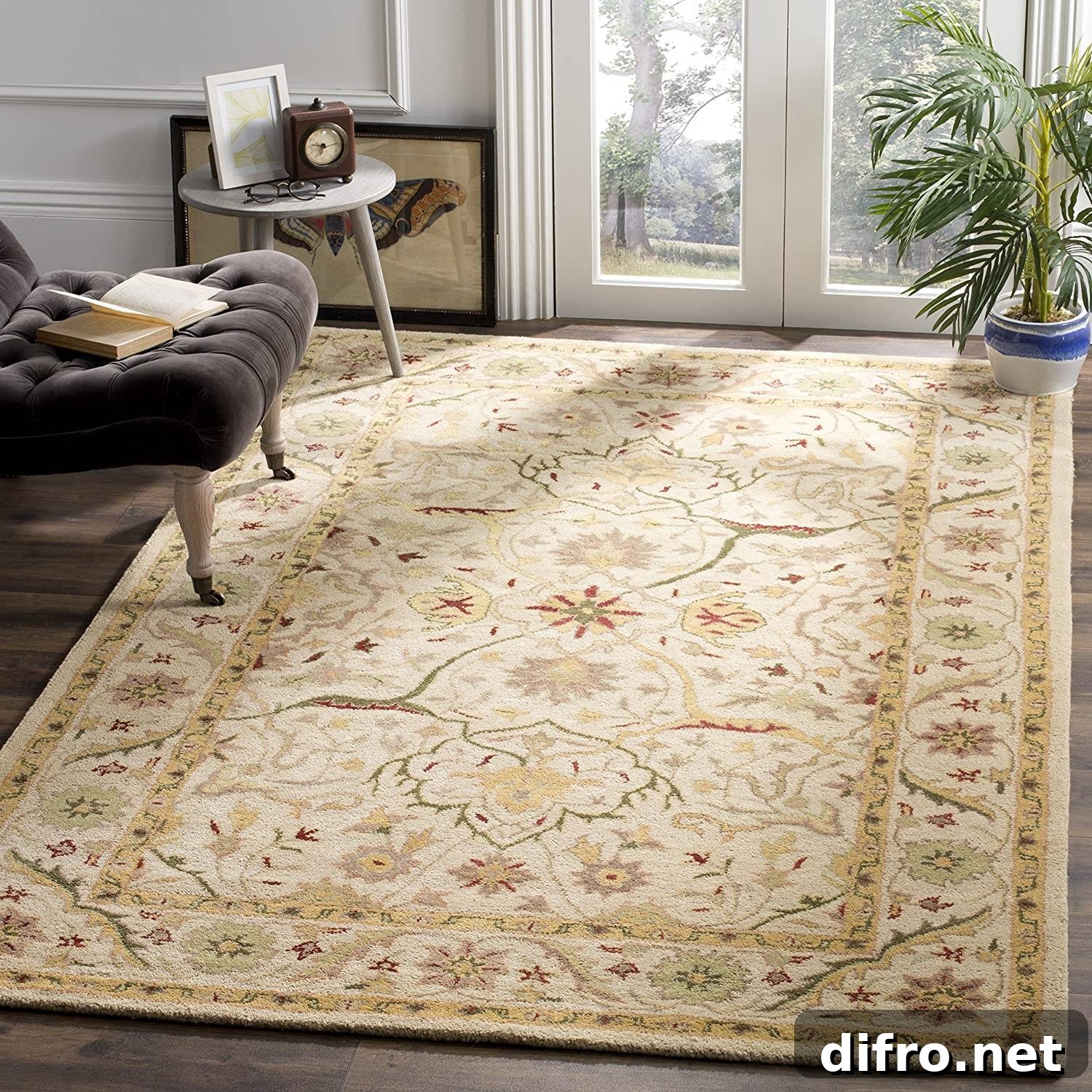
Wool rugs offer a luxurious feel and excellent durability. They clean well, resist crushing and are naturally dirt-repellent, making them a premium choice for busy entryways—though they are typically pricier than synthetics.
Takeaway
An entryway rug is a small investment with big returns: it protects floors, reduces cleaning, and sets the tone for your home. Consider size, shape, material and safety when choosing one. With the right rug—whether a durable synthetic, textured jute, plush wool or layered combination—you can create a foyer that’s both functional and inviting.